








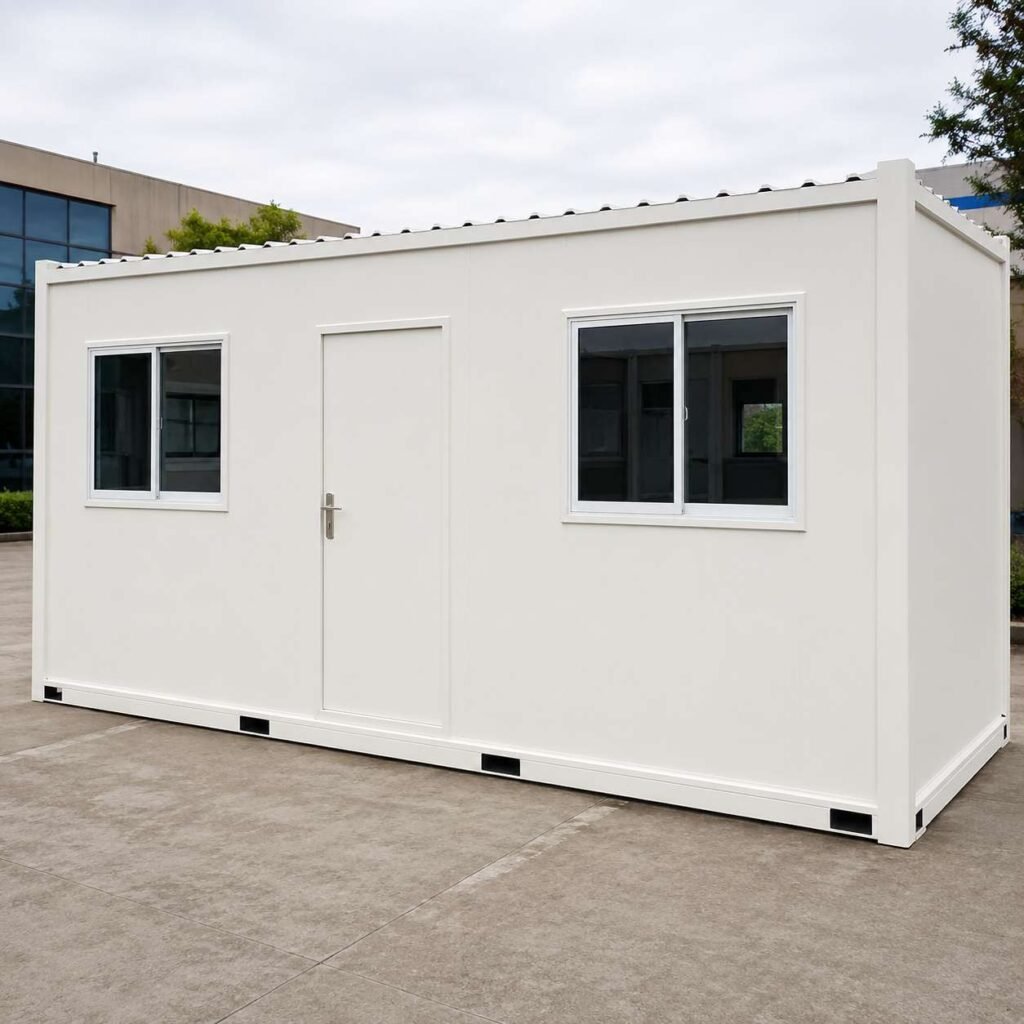

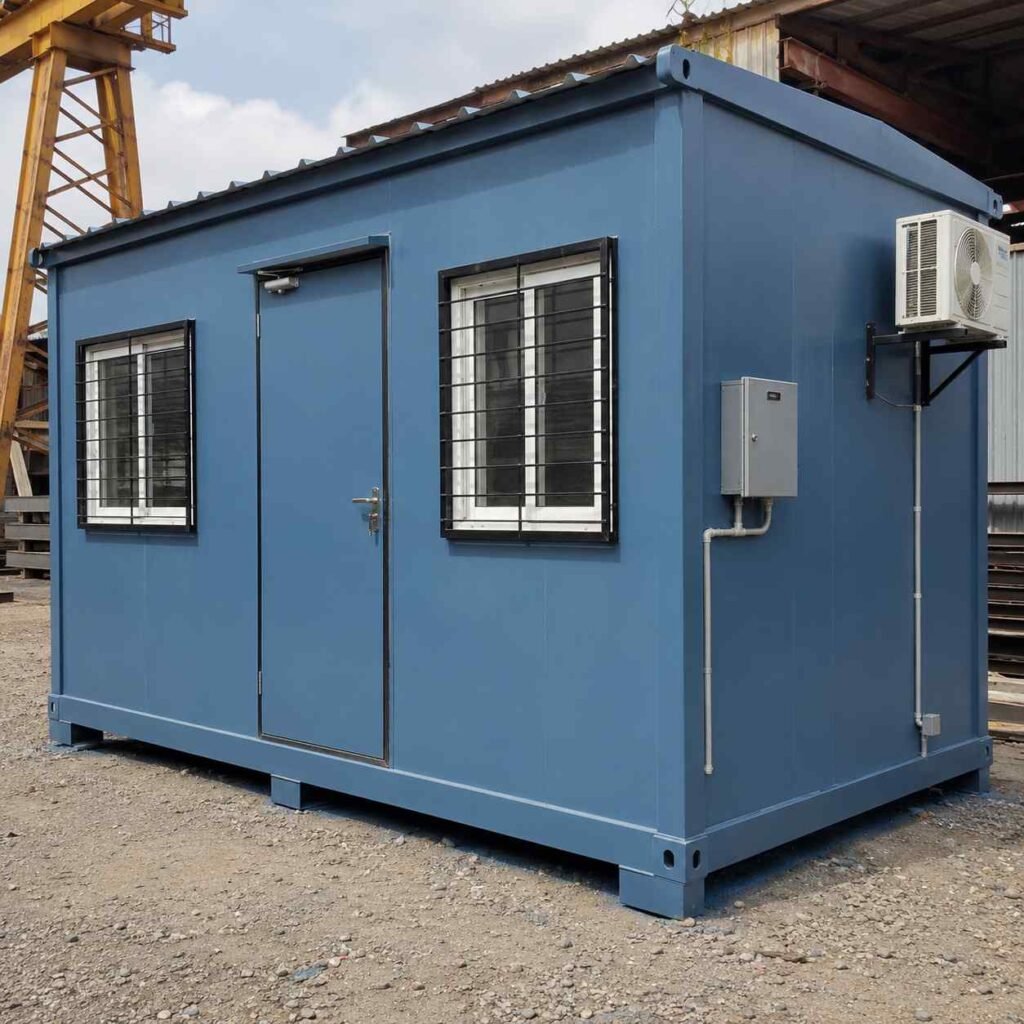
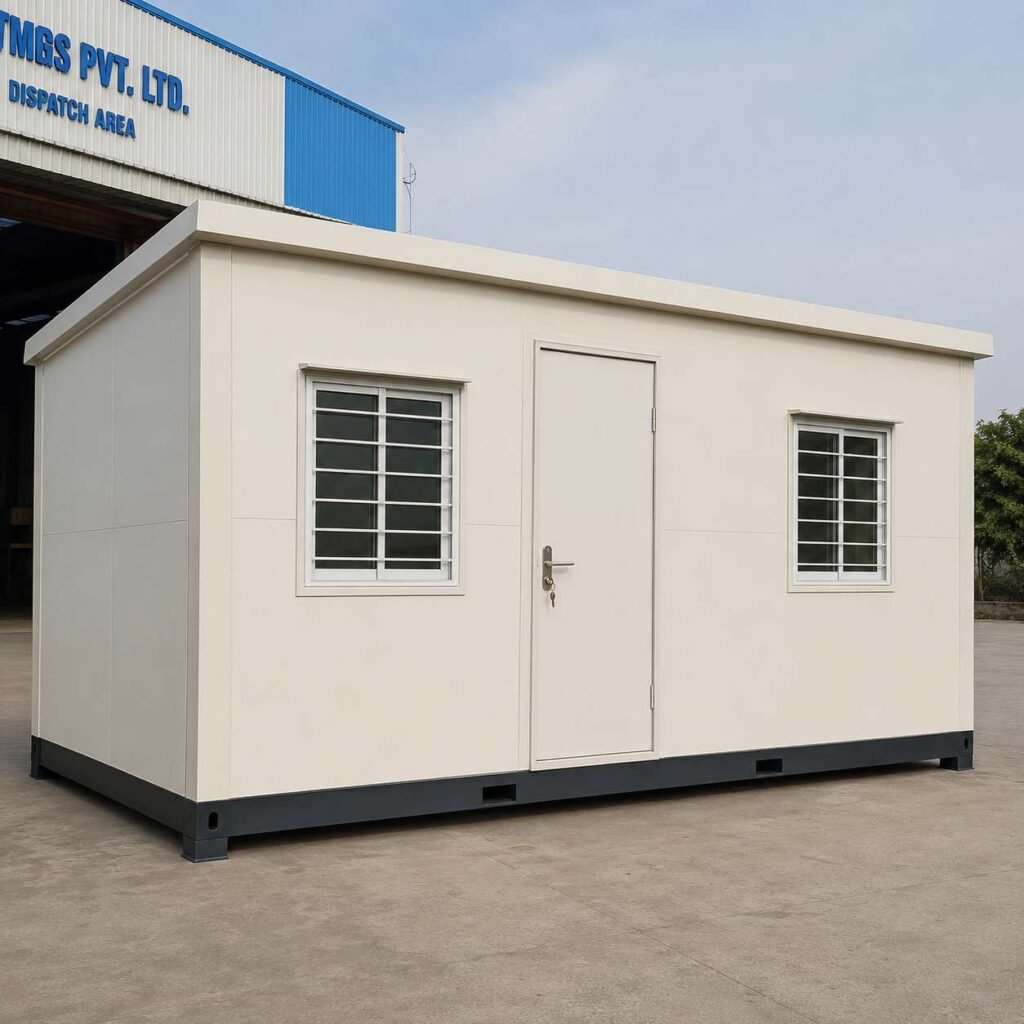
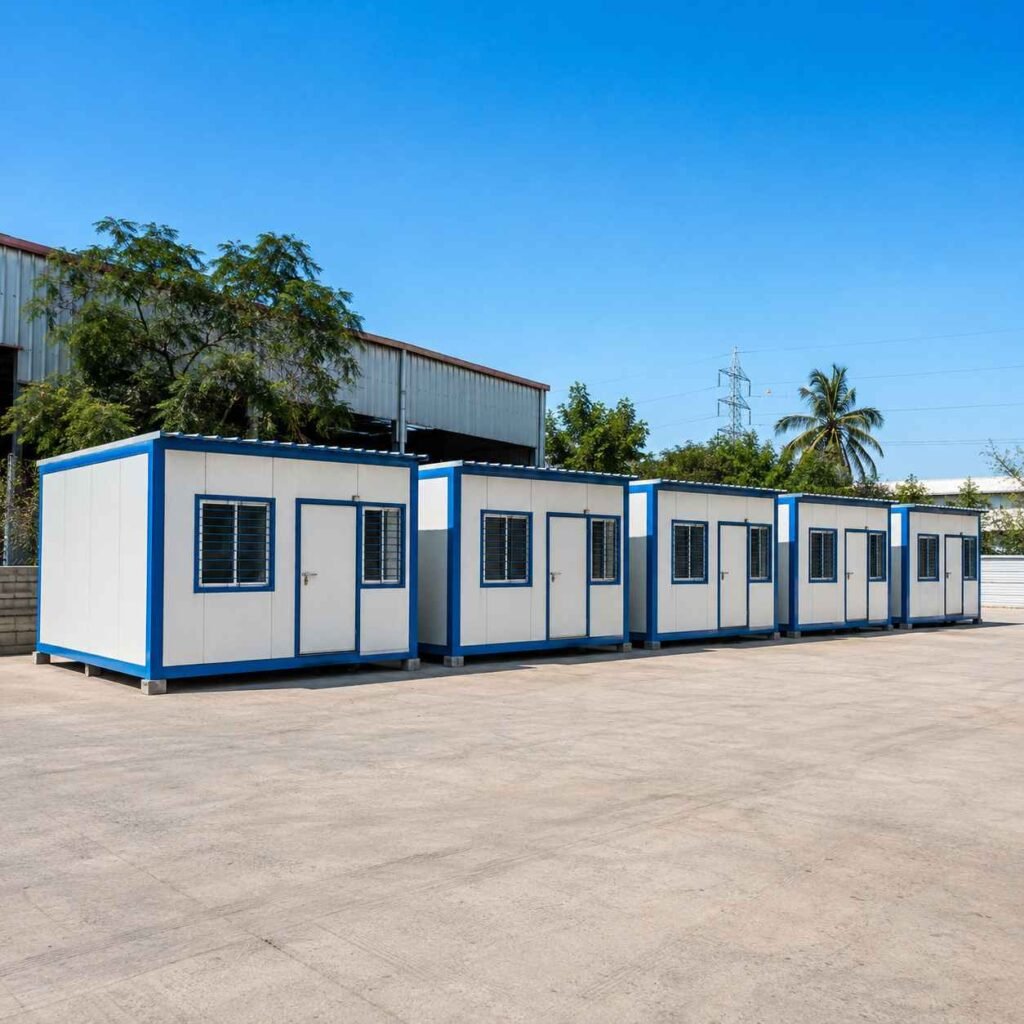








Innovative Labor Colony in Bangalore: Transforming Construction Worker Accommodation


Introduction: The Rise of Modern Workforce Housing Solutions in India
The way companies provide accommodation for their workers has transformed significantly over the last decade. What once consisted of makeshift shelters and tin sheds has evolved into modern workforce housing solutions designed for safety, hygiene, and productivity. In fast-growing cities like Bangalore, Chennai, and Pune, where infrastructure and real estate projects operate under tight deadlines, offering structured housing to laborers has become both a regulatory and ethical necessity.
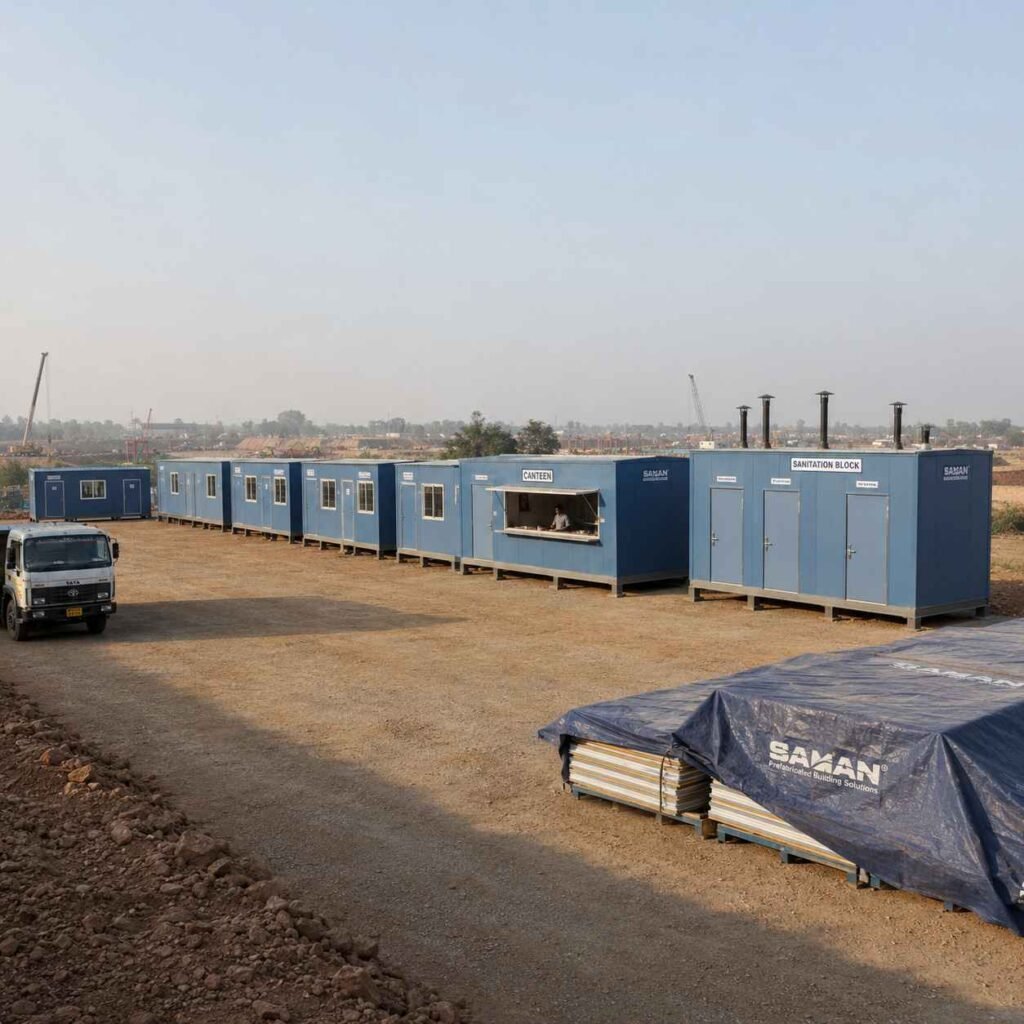
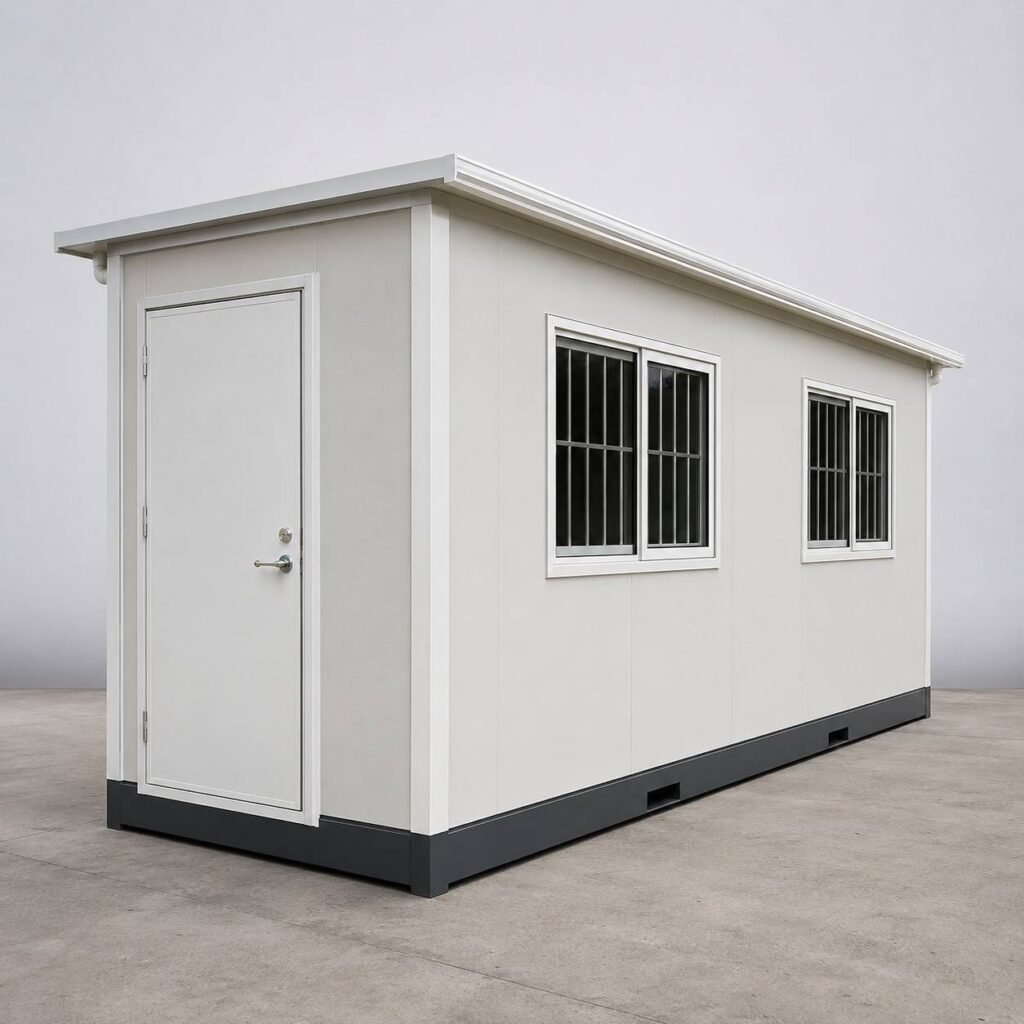
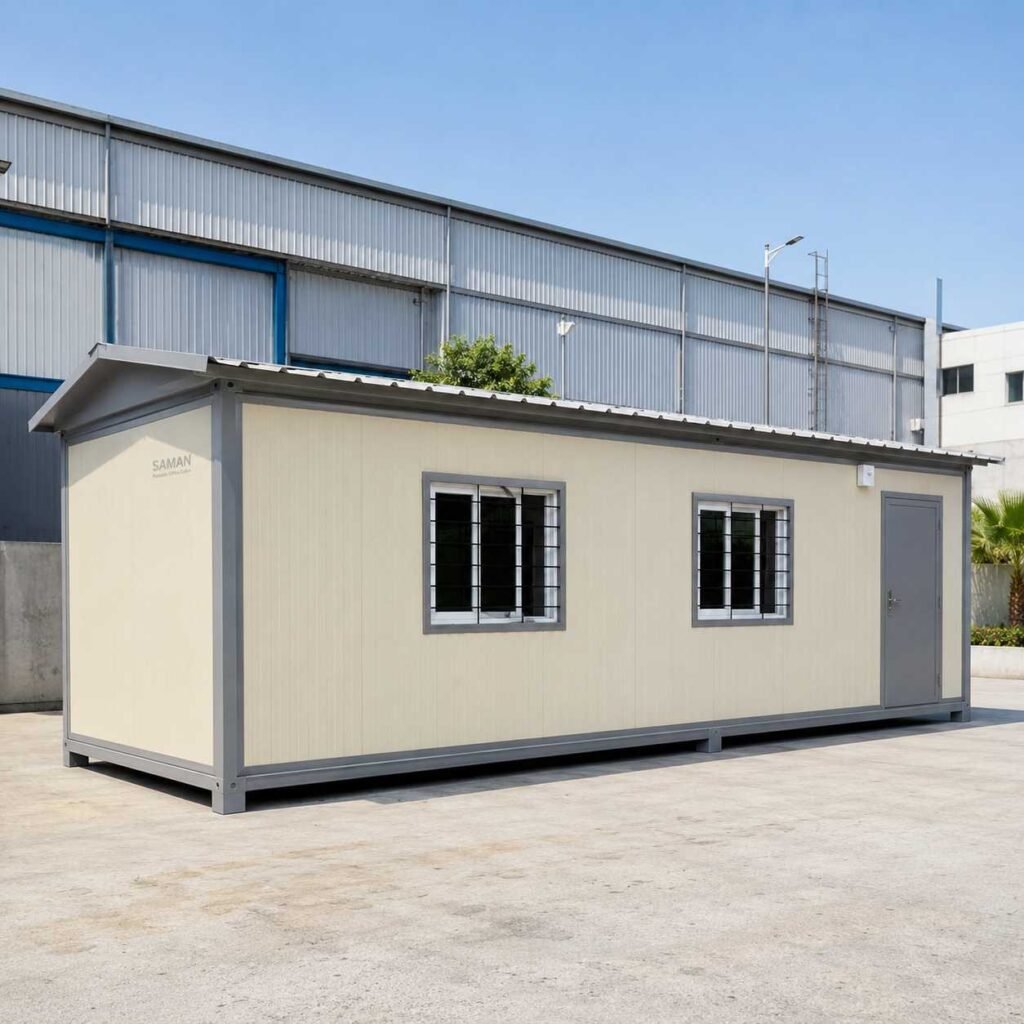
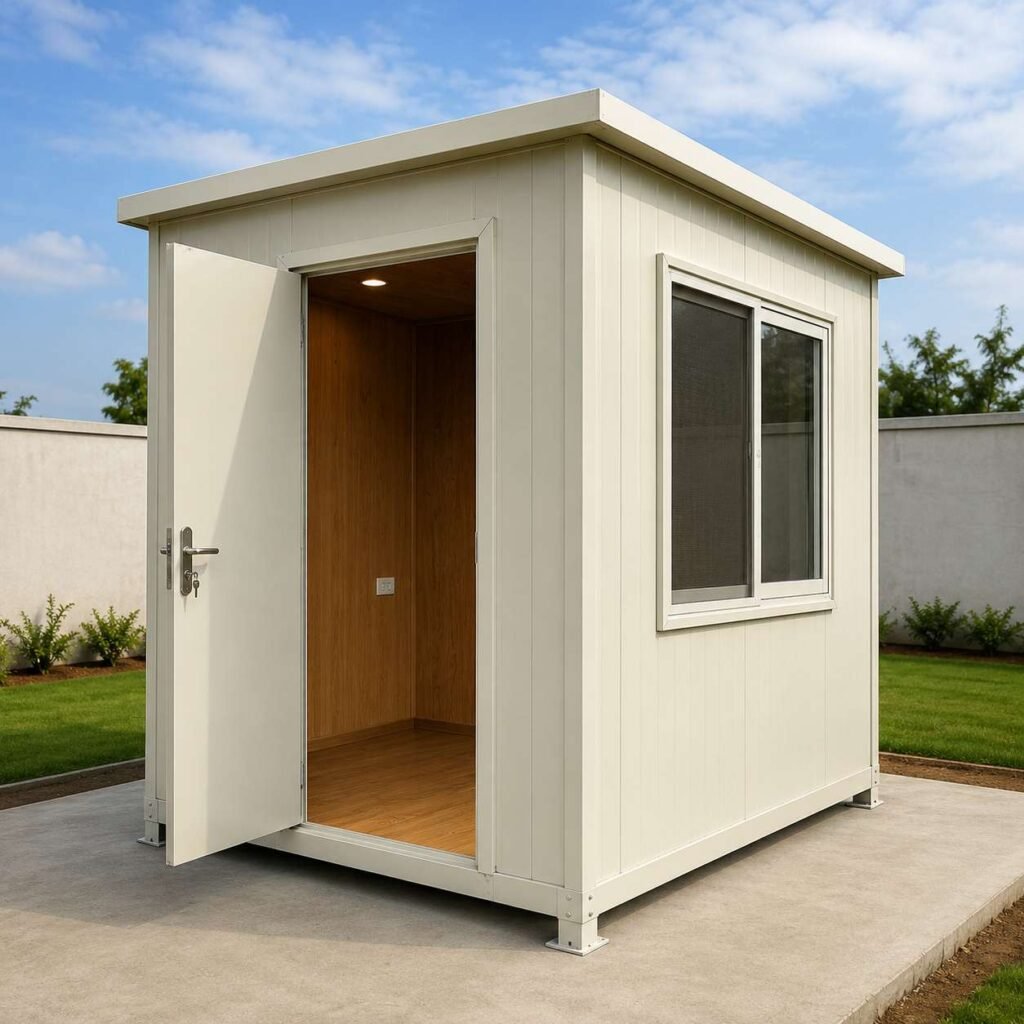
Modern workforce accommodations are no longer temporary shanties. They are well-planned, prefabricated living units designed to improve worker comfort while maintaining cost efficiency. Each facility includes hygienic toilets, drinking water systems, dining areas, and recreational spaces — all aligned with the Building and Other Construction Workers (BOCW) Act and national safety norms. These organized setups ensure that laborers can rest comfortably and stay productive, reducing absenteeism and fatigue-related incidents at construction sites.
Comparing Traditional Worker Housing vs. Modern Workforce Housing
| Parameter | Traditional Setup | Modern Workforce Housing (Prefab & Modular) |
|---|---|---|
| Setup Time | 8–12 months | 15–25 days (modular construction) |
| Sanitation | Shared, unhygienic | Dedicated washrooms and wastewater systems |
| Mobility | Fixed, non-reusable | Portable and relocatable |
| Worker Safety | Minimal precautions | Fire-safe, insulated, weather-resistant |
| Energy Efficiency | Nil | Solar-ready, insulated, LED-based systems |
Modern workforce housing is also flexible — units can be easily expanded or relocated as projects shift locations. This adaptability makes them ideal for EPC contractors, developers, and manufacturing companies managing multiple sites.
The Role of Sustainability in Workforce Accommodation
Sustainability is now central to every housing design. Prefabricated cabins are built using energy-efficient panels, solar systems, and rainwater collection setups, minimizing the carbon footprint while improving long-term cost efficiency. Companies that adopt such eco-friendly solutions demonstrate social responsibility and gain compliance advantages under environmental norms. For deeper insights into green design practices, explore Sustainable Porta Cabins.
Connecting Worker Comfort with Business Efficiency
Comfortable accommodation directly enhances worker morale, retention, and output. Providing well-equipped spaces for rest and recreation reduces turnover and ensures consistent workforce availability — a critical factor for project timelines. If you’re looking for scalable models and design options for your next site, visit our detailed Labor Colony page, which outlines SAMAN Portable’s modular workforce living solutions.
To understand broader industry trends, see how modular construction reshaping workforce accommodation is globally at Modular.org’s Workforce Housing Guide.

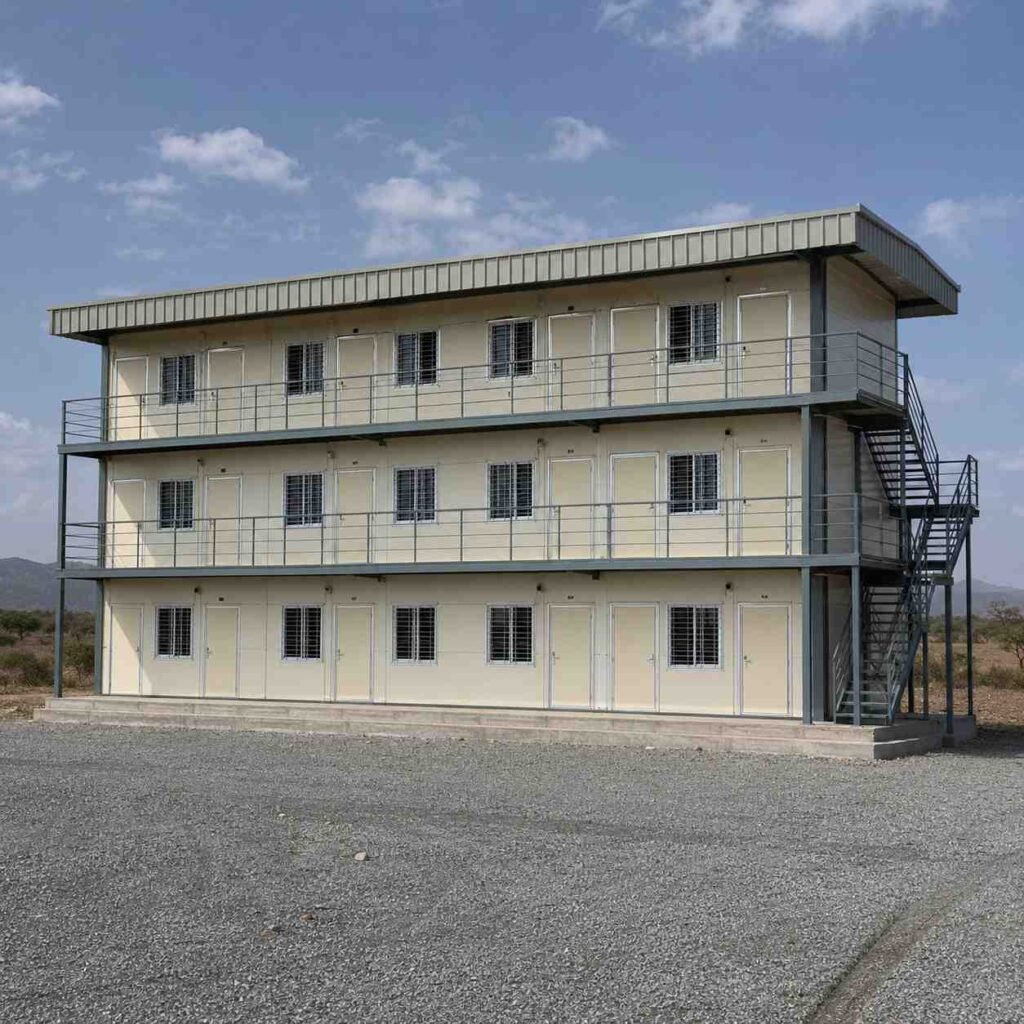
three-storey prefab labor colony
Evolution of Workforce Housing Design in India
The evolution of workforce housing solutions reflects India’s rapid industrialization and shifting labor policies. Early worker accommodations were informal setups—temporary tin sheds or tents near sites with limited access to sanitation and clean water. As infrastructure projects expanded, this informal system proved unsustainable. Today, companies invest in organized modular housing that meets both human and environmental standards.
Modern workforce designs prioritize livability and safety. Prefabricated steel or PUF-panel units are insulated, weather-resistant, and compliant with the National Building Code. Each unit is factory-built for precision and assembled quickly on-site. This transformation is not merely aesthetic—it represents a deeper understanding of how living conditions influence morale, retention, and productivity.
From Basic Shelters to Smart Living Units
| Era | Design Focus | Key Features | Impact on Workers |
|---|---|---|---|
| Pre-2000s | Temporary shelters | Tin roofs, shared washrooms, poor ventilation | Health issues and high attrition |
| 2010–2020 | Prefab units emerge | Insulated panels, RCC plinths, better sanitation | Improved comfort and retention |
| 2021 onward | Smart modular designs | IoT monitoring, solar power, recyclable materials | Safety, efficiency, sustainability |
This shift mirrors global trends where prefabrication and smart construction technologies shorten timelines by up to 60 percent while cutting waste. For example, SAMAN Portable manufactures modules in controlled environments, ensuring quality, faster delivery, and reduced on-site disruption.
Human-Centric Design and Well-Being
Unlike older dormitory-style camps, today’s housing layouts balance privacy and social interaction. Rooms typically accommodate 4–6 workers with dedicated washrooms and shared kitchenettes. Recreational areas and green corridors promote physical and mental well-being. By aligning housing with ESG (Environmental, Social & Governance) standards, organizations demonstrate commitment to worker welfare and sustainability goals simultaneously.
Modern workforce housing also supports gender-inclusive facilities, enabling companies to employ skilled women across construction, logistics, and manufacturing sectors—a positive cultural shift within India’s labor ecosystem.
Why Design Innovation Matters
Innovative design improves not only aesthetics but also long-term cost control. Efficient layouts reduce energy consumption, optimize land use, and ensure faster assembly on shifting project sites. As India’s construction boom continues, adopting flexible modular layouts will define the next generation of workforce accommodation.
To explore how prefabrication impacts construction efficiency, see our detailed guide on Porta Cabins vs. Prefabs. For organizations seeking durable on-site housing, our Labor Colony page explains scalable options built for India’s toughest project environments.

A large, three-storey prefab labor colony in a tropical setting, surrounded by lush greenery.
Evolution of On-Site Modular Housing for Workers
Modern infrastructure projects now recognize that worker accommodation isn’t a cost center — it’s a productivity asset. The new era of on-site modular housing blends efficiency, comfort, and environmental accountability into one cohesive design. These smart living spaces promote safety, dignity, and long-term well-being for the people who build our cities.
1. From Temporary Camps to Engineered Living Spaces
Earlier worker camps were improvised setups with minimal standards. Today, modular systems are precision-fabricated in controlled factories and installed on-site within days. This engineering shift has transformed worker housing from makeshift shelters into scalable, reusable habitats.
| Aspect | Old-Style Camps | Modern Modular Housing |
|---|---|---|
| Construction Time | 2–3 months | 2–3 weeks |
| Material Type | GI or tin sheets | PUF/ACP panels, MS frame |
| Durability | 3–5 years | 15–25 years |
| Mobility | Fixed | Fully relocatable |
| Energy Efficiency | Low | High (Solar + LED systems) |
This evolution ensures structural safety while reducing project downtime and environmental strain.
2. Integrating Health, Safety & Well-Being
Healthy living conditions directly enhance workforce output. The latest prefabricated layouts include insulated walls, hygienic restrooms, anti-skid vinyl flooring, and emergency exits. Separate sanitation areas for men and women maintain dignity and reduce health risks.
If you’re exploring adaptable modular housing tailored for large teams, view prefabricated worker accommodation solutions by SAMAN Portable — engineered for long-term deployment and compliance.
3. Balancing Economy and Longevity
Prefabricated structures pay for themselves through reuse and minimal maintenance. Once installed, units can be relocated between projects without damage, helping companies cut waste and carbon emissions.
Key Savings Benchmarks
Setup Time: 60% faster than conventional builds
Power Efficiency: 25–30% reduction via solar integration
Waste Reduction: 40% fewer site leftovers
For energy-optimized cabins, review our article on Sustainable Porta Cabins.
4. The Social Dimension of Worker Housing
Community spaces—like shared kitchens, open lounges, and shaded courtyards—encourage workers to unwind and connect. This design philosophy transforms housing from basic shelter into a source of belonging and morale.
A global study by Modular.org emphasizes that such integrated workforce facilities drive retention and quality outcomes across projects.
5. Looking Ahead
As India expands its smart-city and infrastructure programs, scalable prefabricated housing will define ethical construction standards. Modular systems are proving that speed, safety, and human comfort can coexist in every project site.

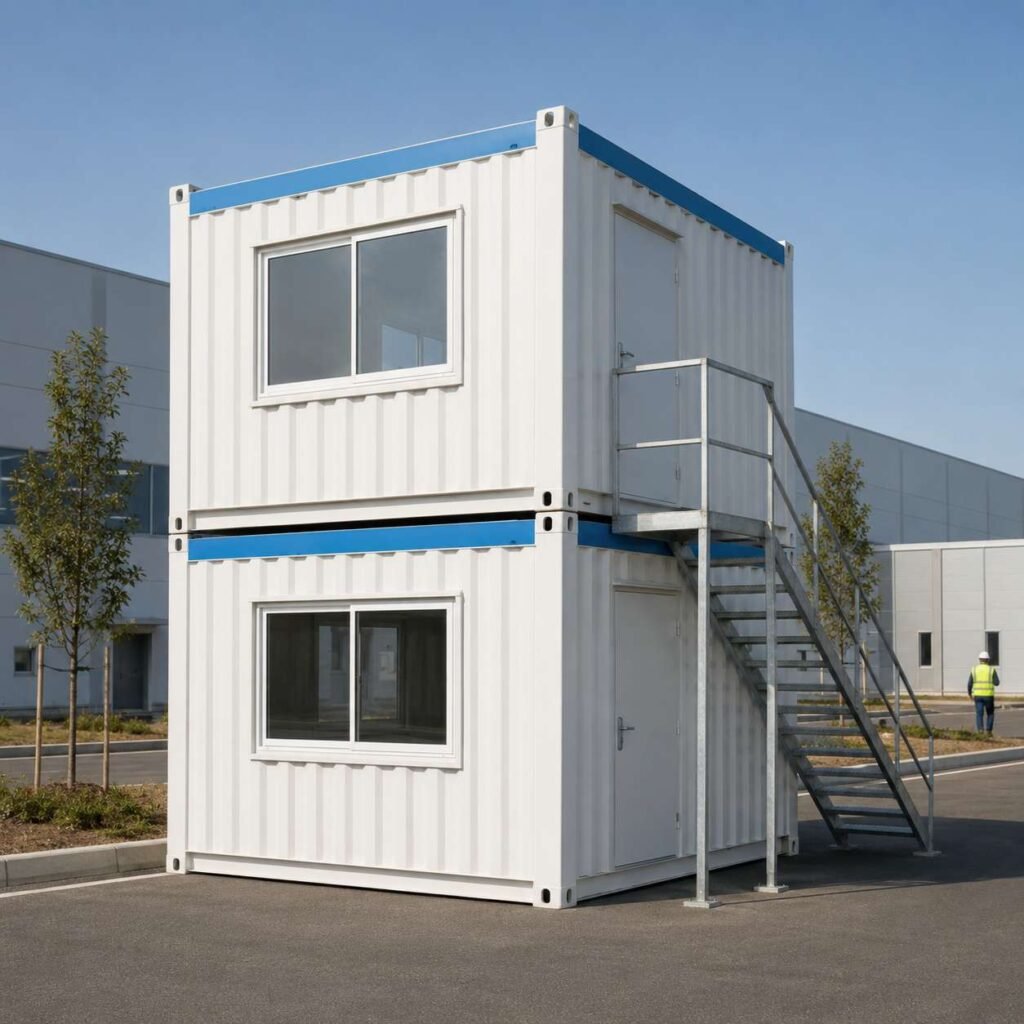
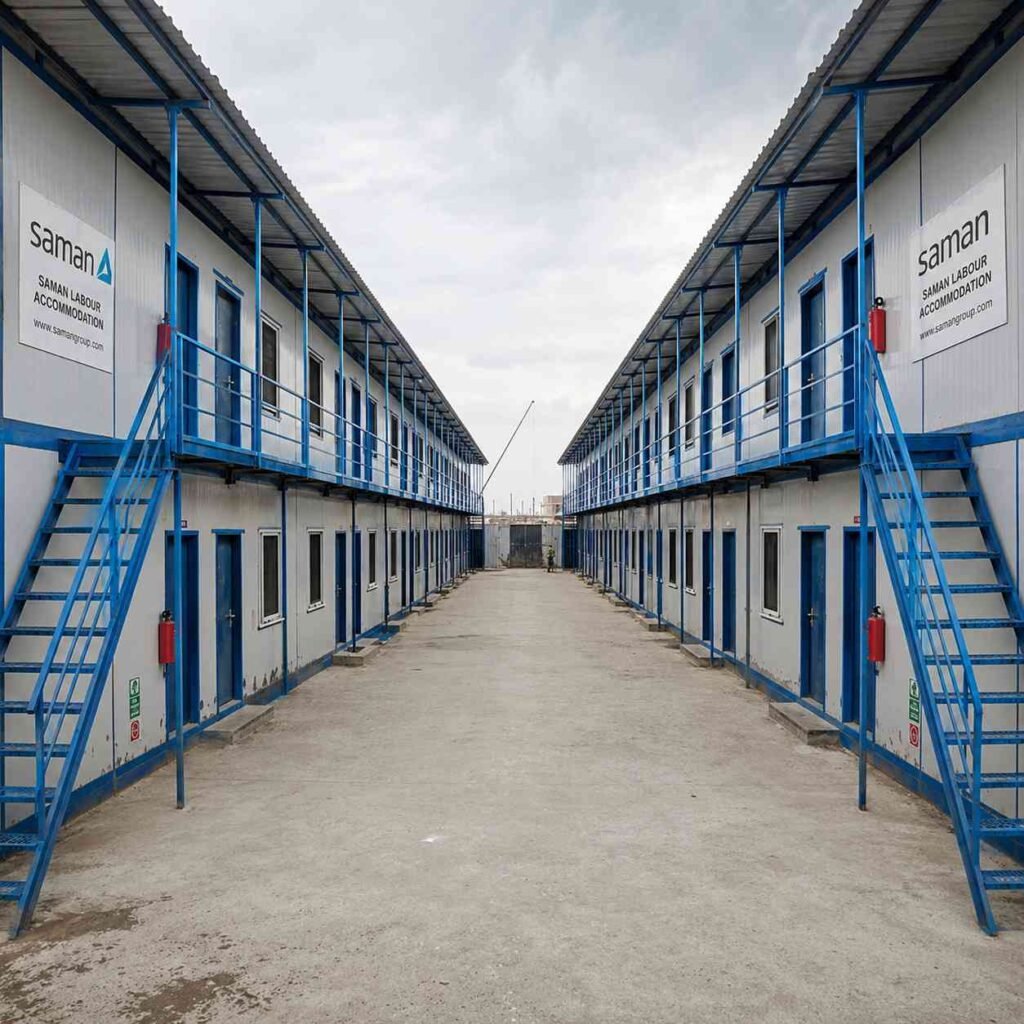
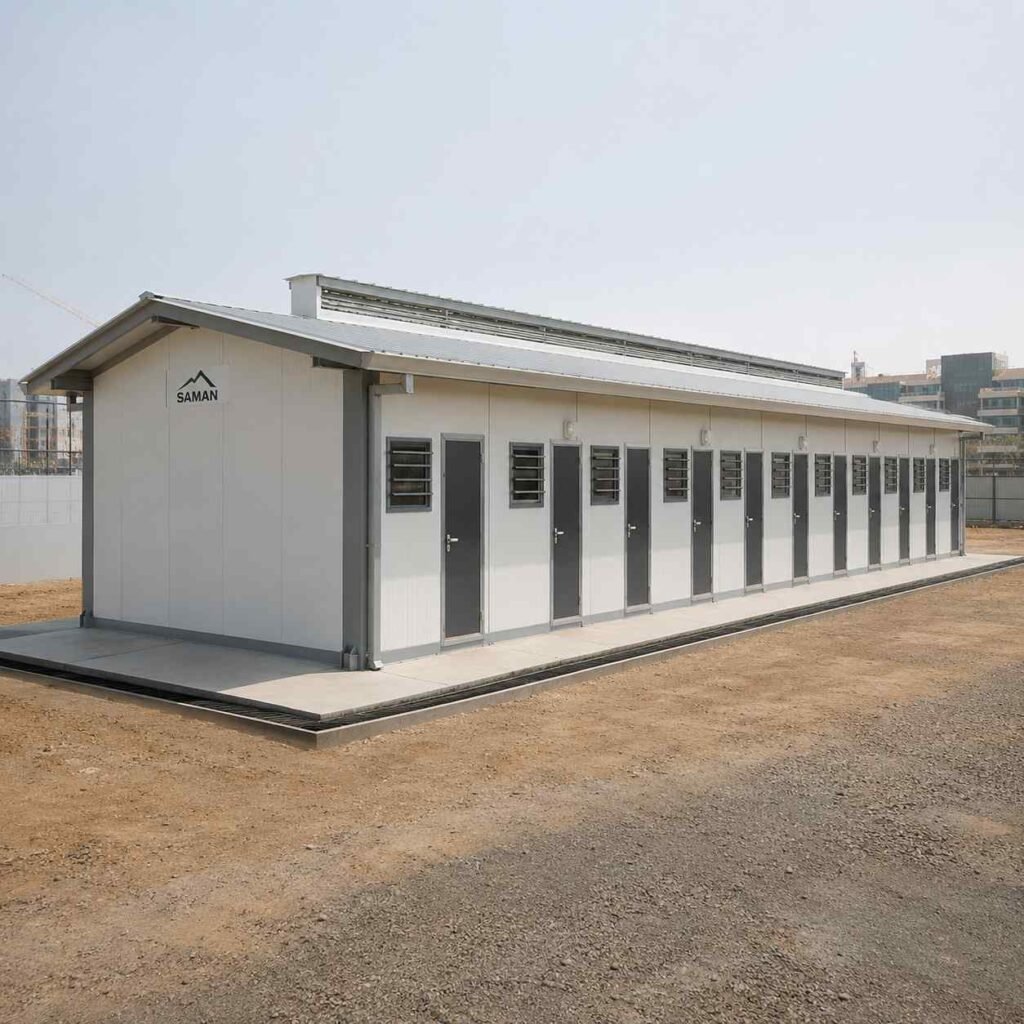
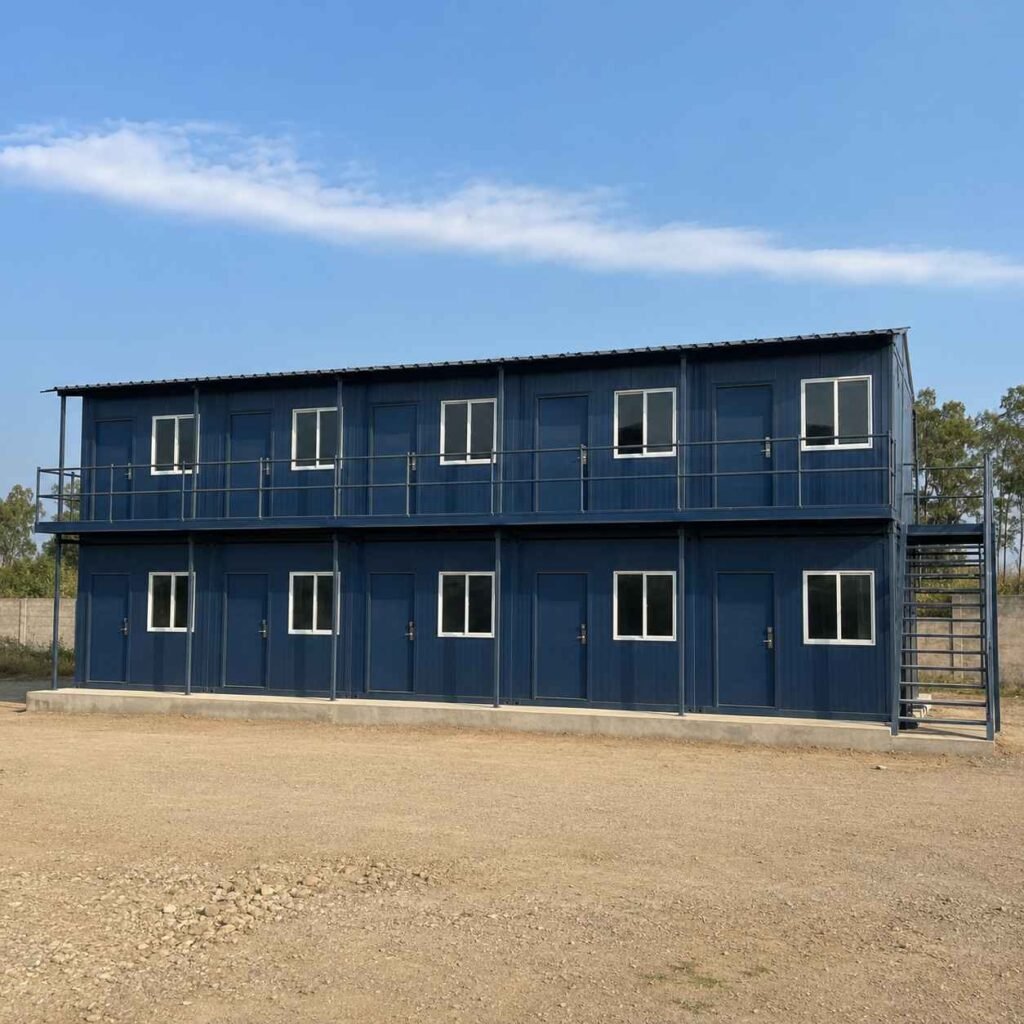
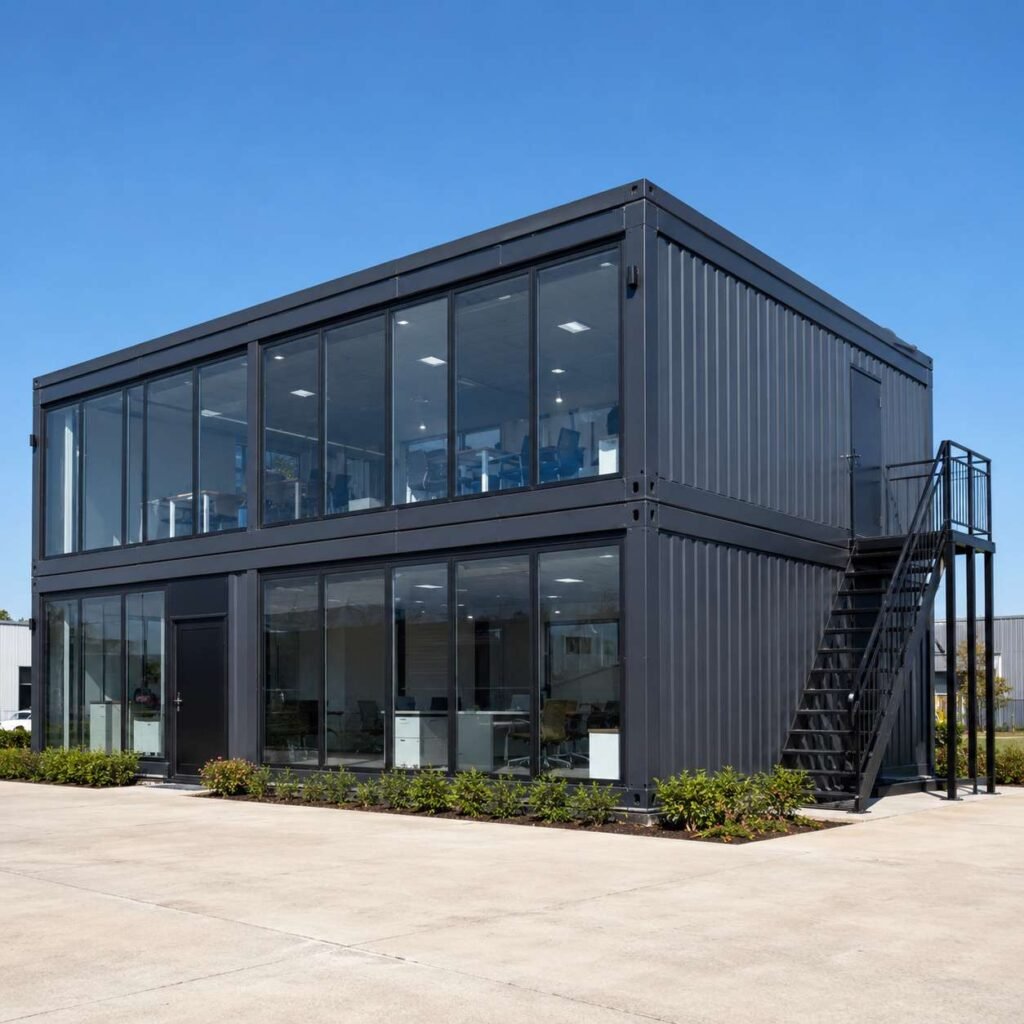
A medium-sized, double-storey prefab labor colony in a bustling city center
Sustainability & Green Building Practices in Workforce Housing
Modern modular living quarters are redefining what sustainable construction looks like. These setups don’t just meet compliance—they actively reduce waste, energy use, and operating costs. With the right design, worker accommodations can achieve near-zero environmental impact while enhancing daily comfort.
1. Eco-Friendly Materials and Lifecycle Benefits
Prefabricated housing now uses recyclable steel, PUF panels with low-VOC coatings, and energy-efficient glazing. Every component is selected for durability and recyclability, cutting the carbon footprint from production to dismantling.
| Component | Conventional Build | Eco-Optimized Modular Unit | Impact |
|---|---|---|---|
| Wall Panels | Brick + Cement | PUF / ACP / Sandwich panels | 60 % less embodied carbon |
| Roofing | Galvanized sheets | Solar-ready PPGI panels | Generates renewable power |
| Paint & Coating | Chemical based | Low-VOC eco-coating | Improves indoor air quality |
| Flooring | Concrete mix | Vinyl anti-skid | Easier maintenance, less water use |
Choosing materials that can be reused or upcycled extends each unit’s service life, turning temporary setups into sustainable assets.
2. Energy and Water Optimization
Efficient portable staff accommodations combine passive cooling, reflective roofing, and LED lighting to minimize energy demand. Solar panels handle a major portion of power needs, while greywater recycling systems reduce water waste by up to 35 %.
Common Green-Tech Additions
Motion-sensor LED lights
Dual plumbing for reuse cycles
Solar-assisted water heaters
Roof rainwater harvesting tanks
For businesses seeking verified green construction practices, explore Sustainable Porta Cabins — an in-depth guide to eco-ready prefabrication.
3. Waste Management & Circular Design
A well-managed site isn’t just clean; it’s circular. Modular units generate less than 5 % onsite waste, and most materials can be reassembled elsewhere. Construction debris from concrete, sand, and steel offcuts is almost eliminated compared to traditional setups.
Companies integrating circular design principles can relocate entire housing clusters after project completion—saving both money and landfill space.
This mobility is central to SAMAN Portable’s labor accommodation solutions, designed for repeated, low-impact deployment.
4. The Measurable Payoff
Independent research shows that sustainable worker housing can cut lifecycle costs by 20 – 25 %, while improving worker satisfaction scores by over 30 %. Reduced heat load means less strain on HVAC systems, extending equipment life and reducing emissions.
Green infrastructure isn’t a luxury for construction firms; it’s now a measurable performance advantage.

A medium-sized, double-storey prefab labor colony in a rural setting
Designing for Dignity: Comfort, Privacy & Community in Modern Worker Housing
A great workspace begins with dignified living. Today’s modular workforce housing focuses not just on shelter but on comfort, privacy, and belonging elements that define long-term productivity and worker satisfaction.
1. Human-Centric Design Philosophy
Modern accommodation design moves beyond the idea of shared dormitories. Each unit is built around ergonomic principles, adequate natural lighting, and acoustic comfort.
Workers now expect environments that mirror residential quality—spacious layouts, insulated partitions, and good ventilation.
| Design Element | Purpose | Impact on Workforce |
|---|---|---|
| Natural daylight windows | Reduces eye strain | Increases focus by 17 % |
| Acoustic panels | Cuts noise transmission | better rest & sleep quality |
| Ventilation crossflow | Fresh air circulation | Fewer health complaints |
| Zoned lighting | Personalized control | Boosts comfort and mood |
Such attention to micro-comfort helps workers feel respected, creating a psychological connection with their workspace.
2. Privacy and Functionality
Unlike older clustered dorms, prefabricated workforce quarters integrate private or semi-private rooms with smart partitions. Built-in wardrobes, noise-insulated walls, and modular bathrooms ensure comfort without wasted space.
Each cabin can be rearranged for gender-segregated housing or family use. This modular flexibility makes it suitable for construction teams, industrial units, or remote infrastructure projects.
To explore space-optimized layouts for site-specific needs, visit the product overview for portable staff accommodations.
3. Building Community through Shared Amenities
The best modern accommodations balance privacy with connection. Common lounges, dining halls, and outdoor zones allow workers to unwind collectively—promoting mental wellness and teamwork.
Standard Shared Features
Multipurpose recreation areas
Reading corners and indoor games
Outdoor gyms and walking tracks
Cafeteria-style dining facilities
These shared spaces foster community pride and a sense of equality, which is critical for long-term retention in high-pressure sectors like construction or infrastructure development.
4. Wellness as a Productivity Multiplier
A comfortable environment doesn’t just look good—it delivers measurable ROI. Studies by the World Green Building Council show that worker comfort correlates directly with up to 12 % gains in task performance.
With smart lighting, ergonomic furniture, and temperature control, fatigue decreases dramatically—helping teams deliver consistent output even in challenging climates.
By integrating human-centered design, SAMAN Portable’s modular living solutions create environments where workers feel valued, engaged, and motivated every day.

A medium-sized, double-storey prefab labor colony on a bustling construction site

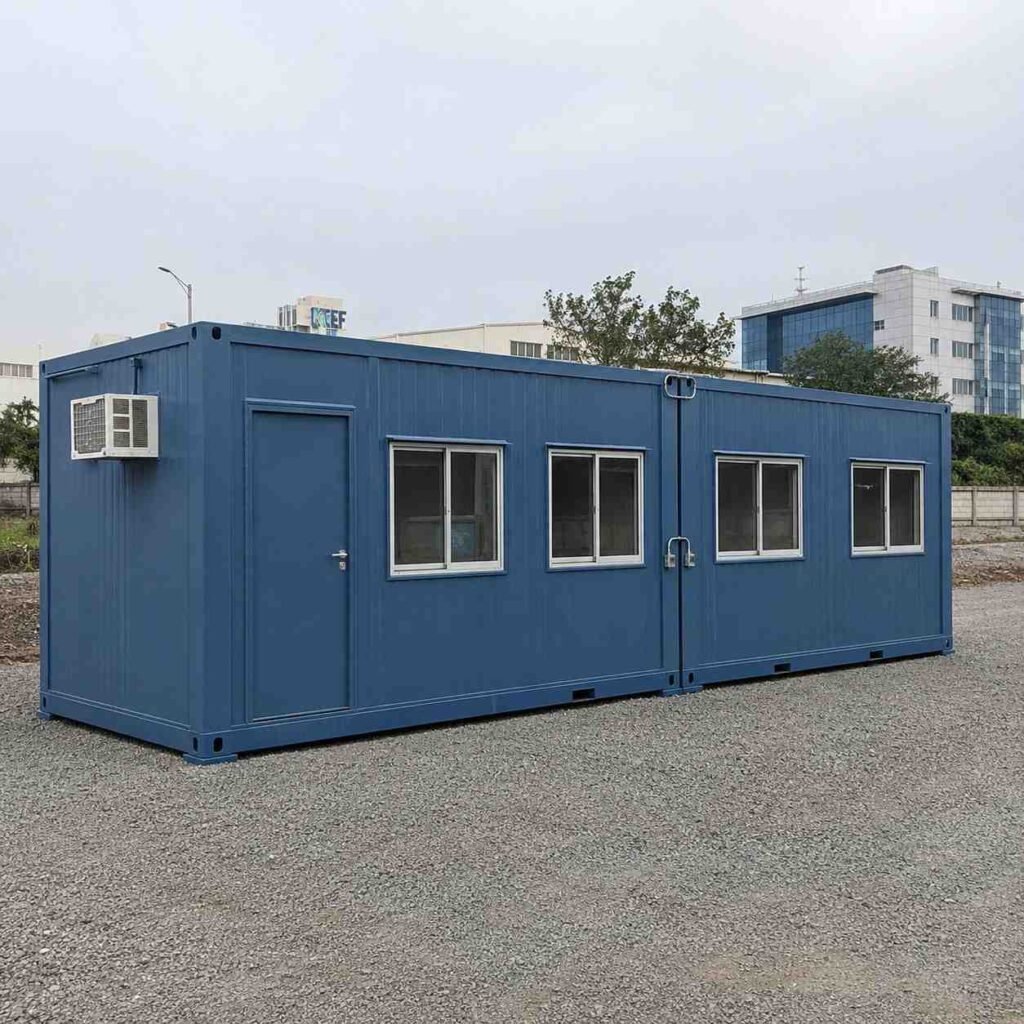
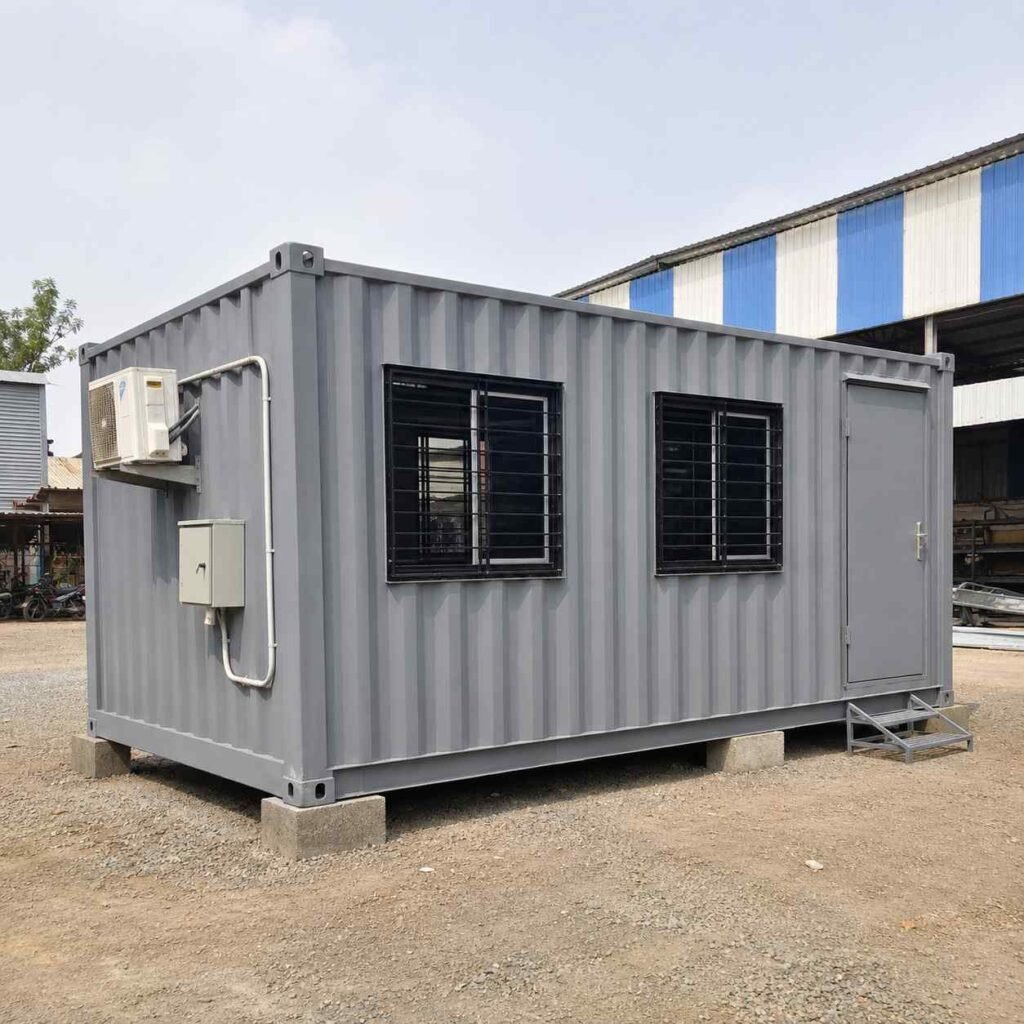
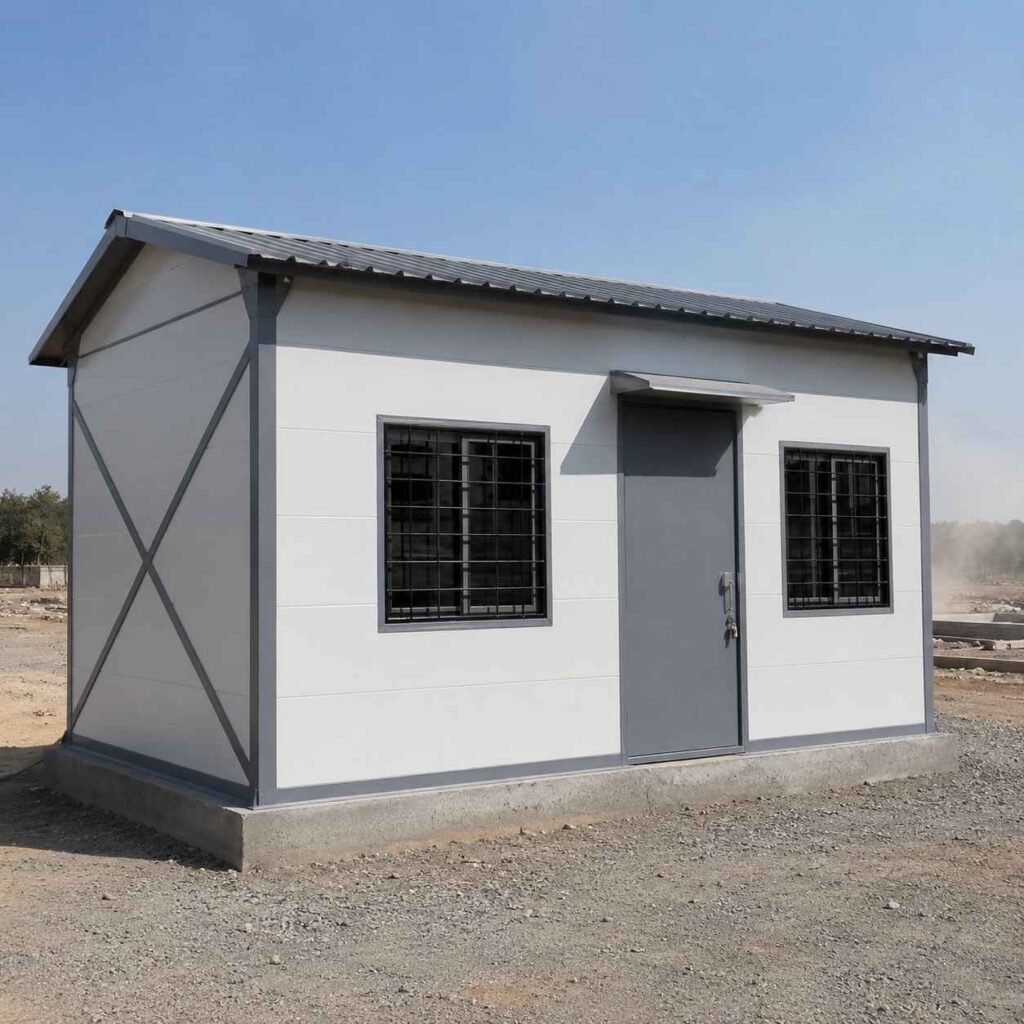
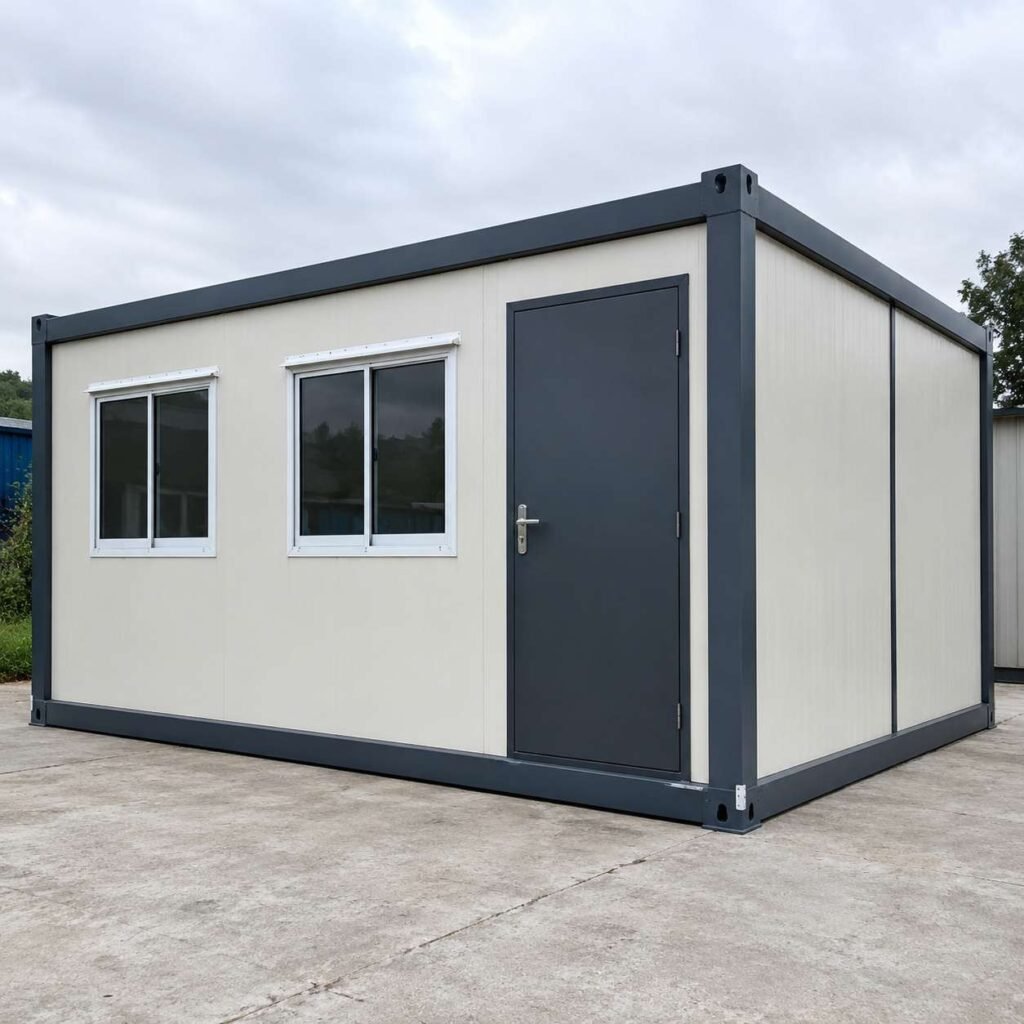
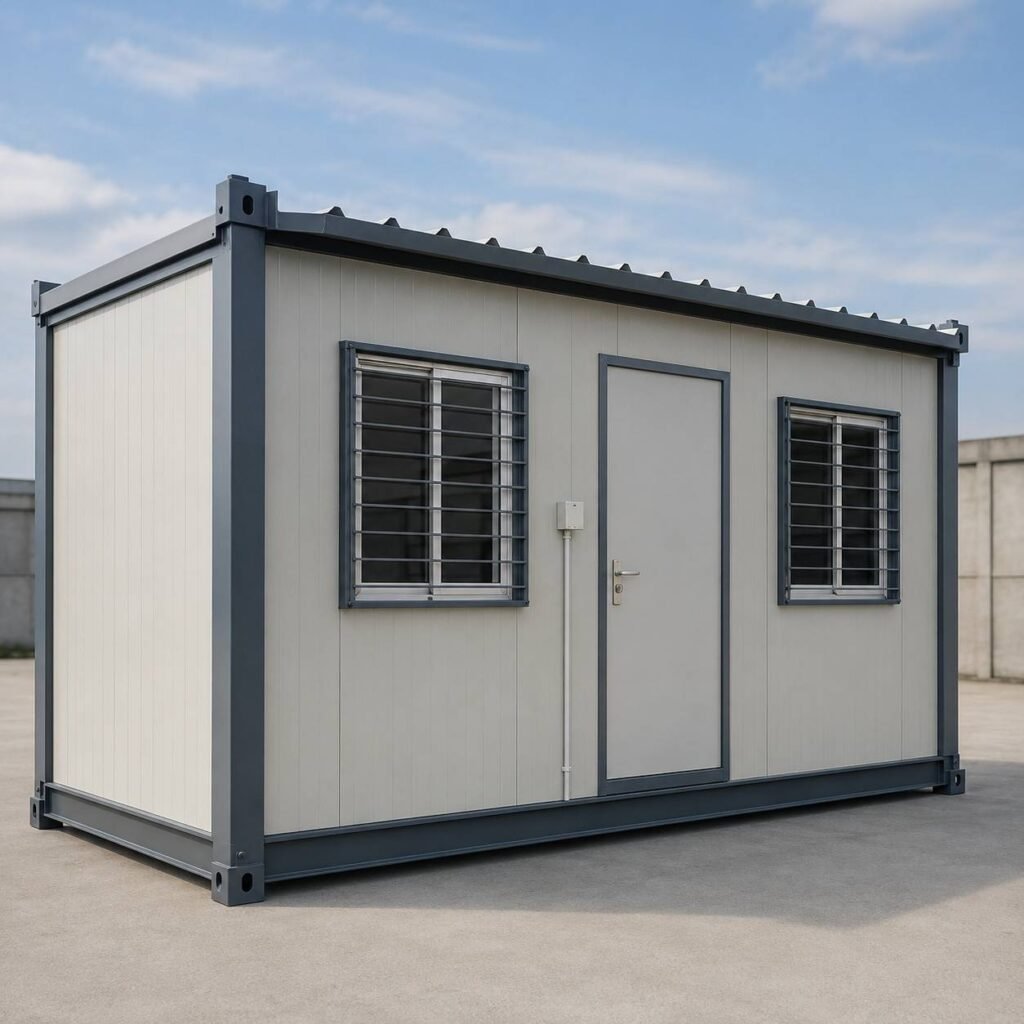
A small, single-storey prefab labor colony on a construction site near a river

A small, single-storey prefab labor colony in a suburban area
Social and Cultural Design Aspects in Worker Colonies
Modern worker housing is no longer just about providing a roof—it’s about creating inclusive, humane, and community-driven environments that respect cultural diversity and enhance worker morale. In India’s vast construction ecosystem, laborers come from different states, each with unique traditions, food preferences, and languages. Recognizing this diversity is essential for designing labor accommodations that foster belonging and harmony.
1. Designing for Diversity and Inclusivity
Prefabricated worker colonies are now being built with customizable communal areas and multi-purpose halls where cultural events and social gatherings can take place. These spaces encourage unity among workers from various backgrounds, promoting cross-cultural understanding and team cohesion.
For example:
Separate kitchen sections may be provided for vegetarian and non-vegetarian cooking preferences.
Prayer and recreation rooms are included to support different religious and social needs.
Recreational zones with televisions, sports areas, or open courtyards give workers a sense of relaxation after long hours of work.
These thoughtful features create a home-like atmosphere and help companies maintain a stable, satisfied workforce.
2. Promoting Mental and Emotional Well-being
A strong focus on mental wellness is a defining feature of next-generation labor colonies. Workers often stay away from their families for months, leading to isolation or fatigue. Prefabricated colonies designed by SAMAN Portable incorporate spaces that encourage social interaction and community bonding.
Companies have also started organizing:
Weekend recreational activities (sports, movie nights, or cultural evenings)
Counseling sessions for stress management
Community kitchens to promote teamwork and shared responsibility
This holistic environment ensures not just physical comfort but emotional stability—leading to better performance on construction sites.
3. Cultural Integration and Retention Benefits
Socially responsive housing enhances both retention and loyalty. When workers feel valued and culturally accommodated, they tend to stay longer, reducing hiring and training costs.
The table below shows how socially inclusive colonies outperform conventional ones:
| Aspect | Conventional Camps | Socially Inclusive Colonies |
|---|---|---|
| Worker Turnover Rate | 35–40% | 10–15% |
| Average Retention Duration | 3–4 months | 8–12 months |
| Worker Satisfaction Score (1–10) | 4.5 | 8.7 |
| Productivity Impact | Low | High |
Culturally sensitive designs, paired with organized social activities, result in a more motivated, cohesive, and long-term workforce, directly benefiting project efficiency.
4. Collaboration Between Comfort and Functionality
To ensure comfort and function coexist, SAMAN Portable designs its labor accommodations with modular flexibility, allowing companies to integrate social areas, prayer rooms, and kitchens according to worker demographics. These modular layouts support:
Gender-segregated dorms for safety and comfort
Shared dining halls promoting social interaction
Integrated first-aid and recreation centers to balance wellness with utility
To see how sustainable and humane design principles combine in real-world housing solutions, explore Sustainable Porta Cabins — a model of innovation and well-being in modular living.

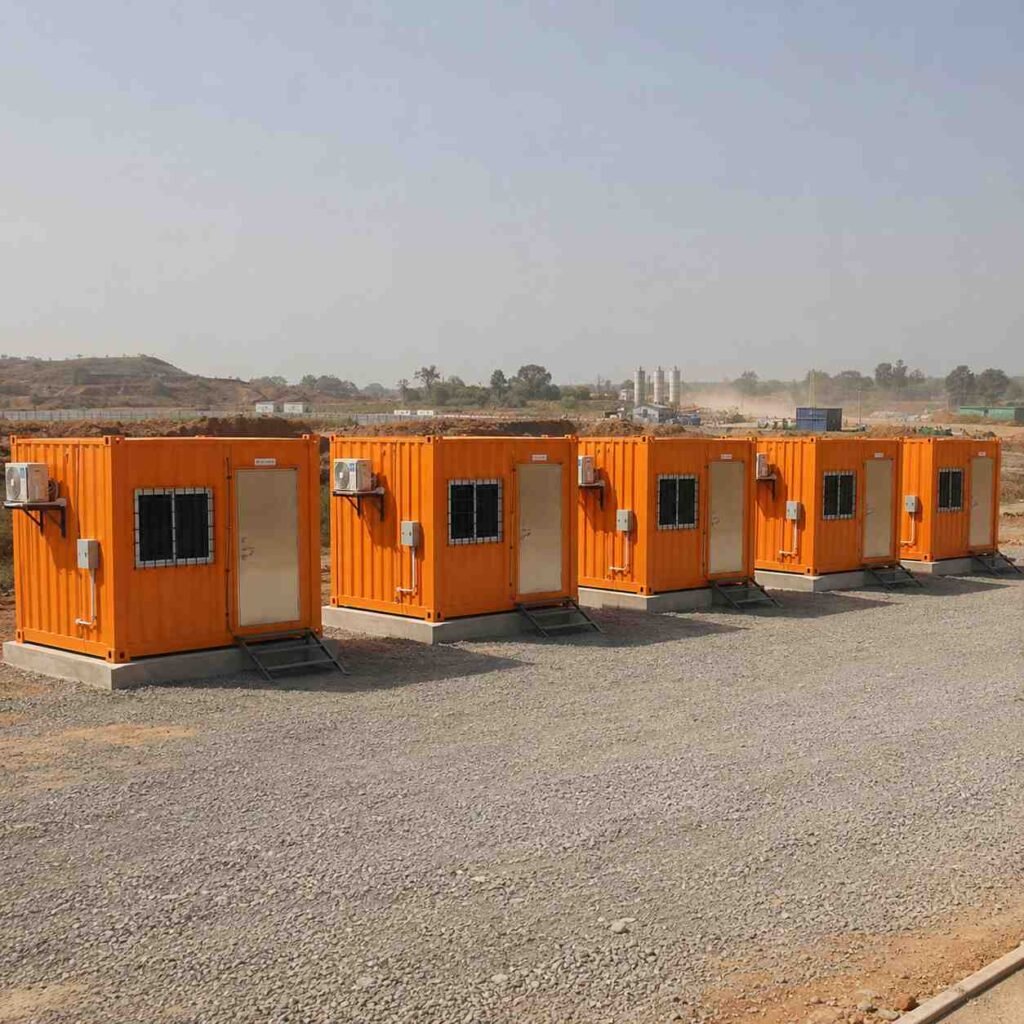
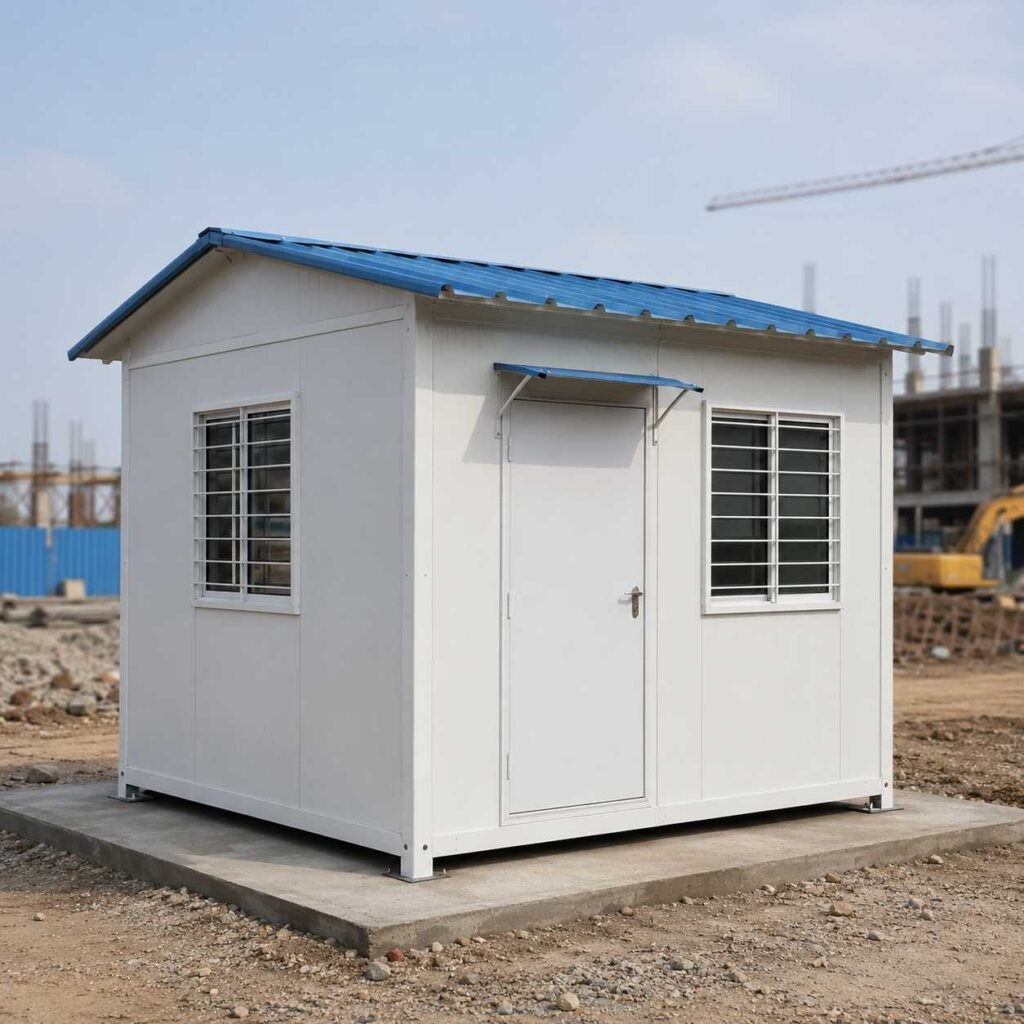
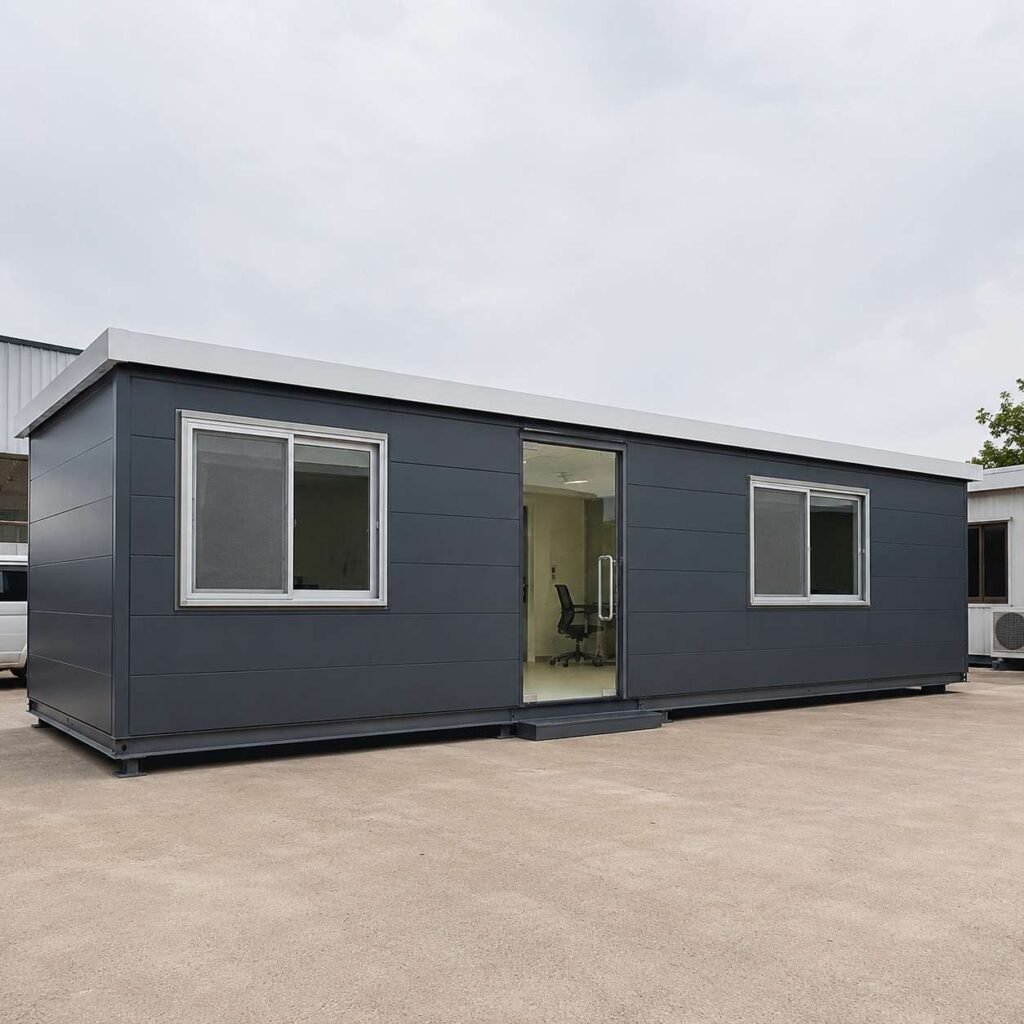
A small, single-storey prefab labor colony on an island construction site, designed for a small team
Future Outlook and Global Innovations in Worker Housing
The future of worker housing—especially prefabricated and modular labor accommodations—is rapidly evolving with the global shift toward sustainability, technology, and human-centered design. The next decade will redefine how worker colonies are perceived: not as temporary settlements, but as smart, efficient, and welfare-driven ecosystems that enhance workforce well-being and project outcomes.
1. The Global Shift Toward Smart Worker Housing
Countries like Singapore, UAE, and Japan are leading the movement by transforming their worker accommodations into digitally managed smart colonies. These colonies are equipped with:
IoT-based monitoring systems for air quality, temperature, and hygiene.
Automated waste management and water recycling systems.
Smart access control and surveillance for improved safety.
For example, Dubai’s modular labor colonies use prefabricated pods with integrated solar panels and climate control to create energy-efficient living environments. This combination of comfort and automation sets new global benchmarks for efficiency and livability.
Indian modular housing companies like SAMAN Portable are aligning with these practices, delivering prefabricated solutions that can rival global standards while remaining cost-effective and adaptable for Indian terrains.
2. The Future of Worker Housing in India
In India, future-ready labor accommodations will integrate sustainability, scalability, and digital management as core features. Construction companies are increasingly adopting prefabricated technologies that:
Reduce carbon footprints by up to 60%.
Enable deployment of colonies within 7–10 days.
Include rainwater harvesting, solar power, and natural ventilation systems.
These eco-efficient designs not only meet government ESG and green-building mandates but also align with India’s growing focus on sustainable infrastructure.
To understand how modular construction supports workforce housing and productivity worldwide, refer to the Modular Building Institute’s report on workforce housing:
👉 Workforce Housing Modular Construction – MBI
3. Integrating Global Practices with Local Innovation
The next generation of Indian labor accommodations will blend global innovations with local adaptability. For instance:
Incorporating passive cooling designs suitable for Indian climates.
Designing gender-inclusive dorms and sanitation facilities.
Using PUF panels and ACP cladding to achieve thermal efficiency.
Furthermore, AI-driven resource planning will optimize space utilization, while predictive maintenance systems will keep living conditions healthy and safe.
SAMAN Portable is pioneering this integration—using factory-built, reusable, and relocatable structures that deliver both comfort and compliance. Each design is tailored to client needs, from single-floor dorms to three-storey smart colonies.
4. The Road Ahead: From Temporary Shelters to Human-Centric Ecosystems
In the coming years, labor accommodations will no longer be seen as project overheads—they’ll be recognized as strategic investments in workforce stability and productivity. The focus will shift to:
Worker mental wellness programs and community design.
Integration of renewable materials and zero-waste principles.
Certification models (like GRIHA and LEED) for ethical worker housing.
As India modernizes its infrastructure ecosystem, the role of innovative labor colonies will be pivotal. They will shape not just construction efficiency, but the dignity and well-being of the nation’s workforce.
For more insights on sustainable modular housing, you can explore
🌍 Sustainable Porta Cabins.

A small, single-storey prefab labor colony on an island construction site
FAQs About Modern Worker Housing and Prefabricated Living Solutions
How are prefabricated worker accommodations transforming modern construction sites?
Prefabricated worker accommodations save months of setup time compared to traditional housing. Built in factories and assembled onsite, they deliver clean, safe, and durable living environments that improve worker morale and reduce absenteeism.
What makes modular worker housing more sustainable than conventional options?
Modular housing minimizes waste and carbon emissions by using recyclable steel, PUF panels, and solar-compatible roofing. These eco-friendly designs reduce energy usage by up to 40%, aligning with global green-building standards.
Can portable worker units be relocated for multiple project sites?
Yes. Portable units are designed to be dismantled, transported, and reassembled easily. This flexibility allows construction firms to reuse the same infrastructure across projects, cutting costs and ensuring consistent worker comfort.
How do modern prefab colonies support worker safety and hygiene?
Modern colonies are equipped with proper ventilation, first-aid rooms, and clean water facilities. They also include sanitation blocks designed per ISO and Indian labor welfare standards to prevent contamination and health risks.
Are prefabricated dormitories customizable for different workforce sizes?
Absolutely. Prefabricated dorms can be customized for 10 to 500+ workers with flexible layouts including shared kitchens, recreation halls, and private cabins. Companies like SAMAN Portable offer modular layouts based on site needs.
What are the cost advantages of using prefabricated housing for workers?
Prefab housing can reduce total project housing costs by 30–50%. Fast installation, minimal material waste, and reduced labor dependency make it one of the most cost-efficient options for infrastructure and industrial projects.
How long does it take to set up a modular housing complex?
Setup time depends on size and location. A 100-person facility can typically be installed within 10–15 days after fabrication, ensuring rapid deployment without interrupting project timelines.
What materials are commonly used in prefabricated worker housing?
High-quality mild steel, PUF panels, and ACP cladding are standard materials. These are paired with vinyl flooring, insulated roofing, and fire-retardant coatings for safety and durability across climates.
How is technology improving the management of worker accommodations?
IoT-enabled monitoring systems track air quality, energy use, and occupancy. Smart management software helps supervisors control lighting, temperature, and water consumption efficiently, creating safer and more eco-conscious living spaces.
Where can I explore innovative prefab worker housing solutions in India?
You can explore India’s leading prefabricated solutions at
👉 SAMAN Portable’s Modular Worker Housing Page,
which features scalable, relocatable, and sustainable living units built for long-term industrial and infrastructure needs.


