


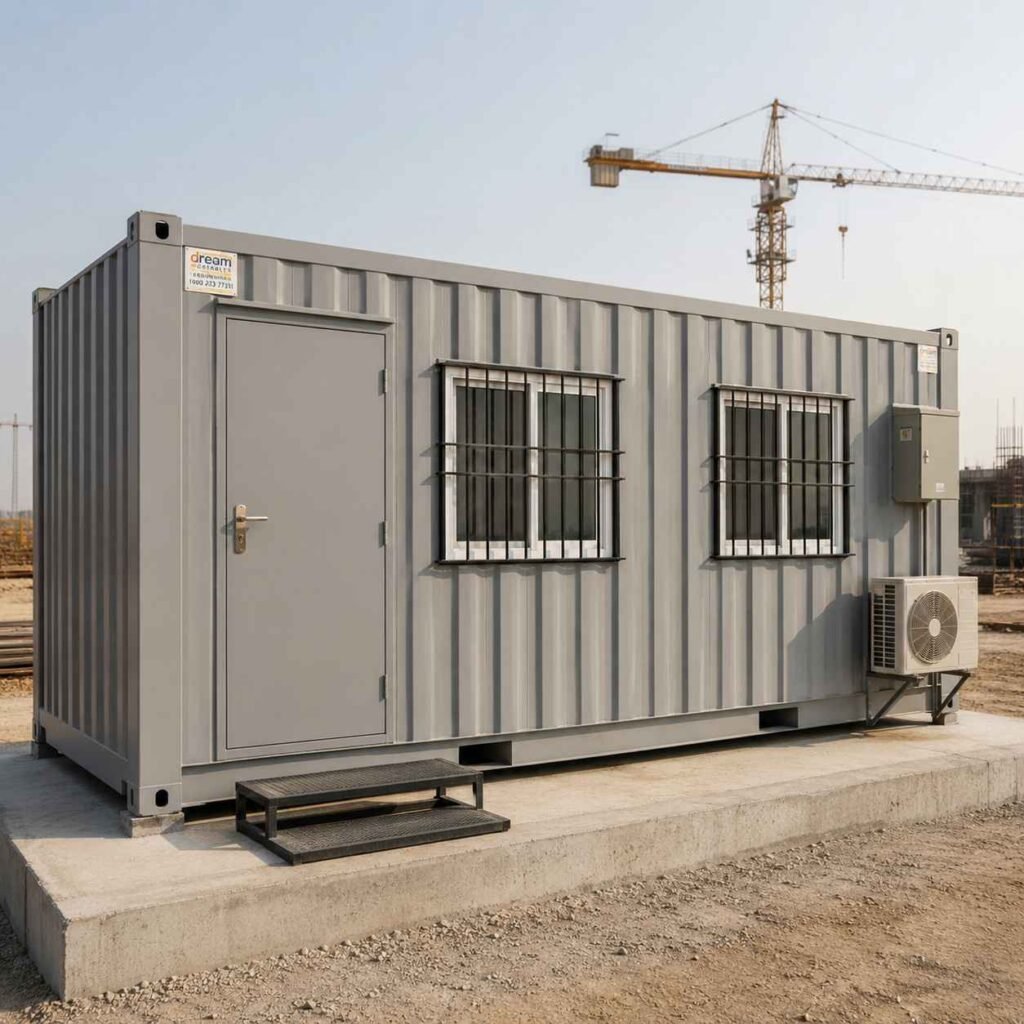
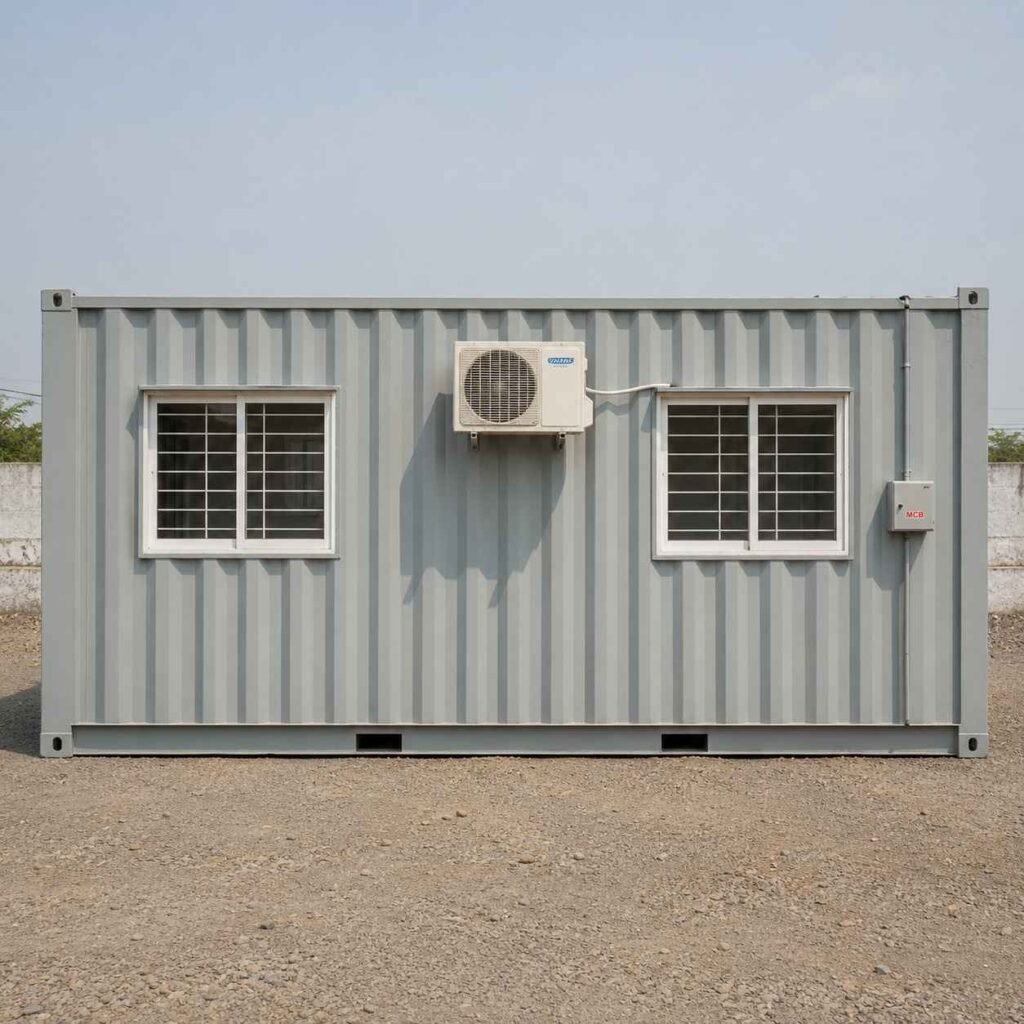
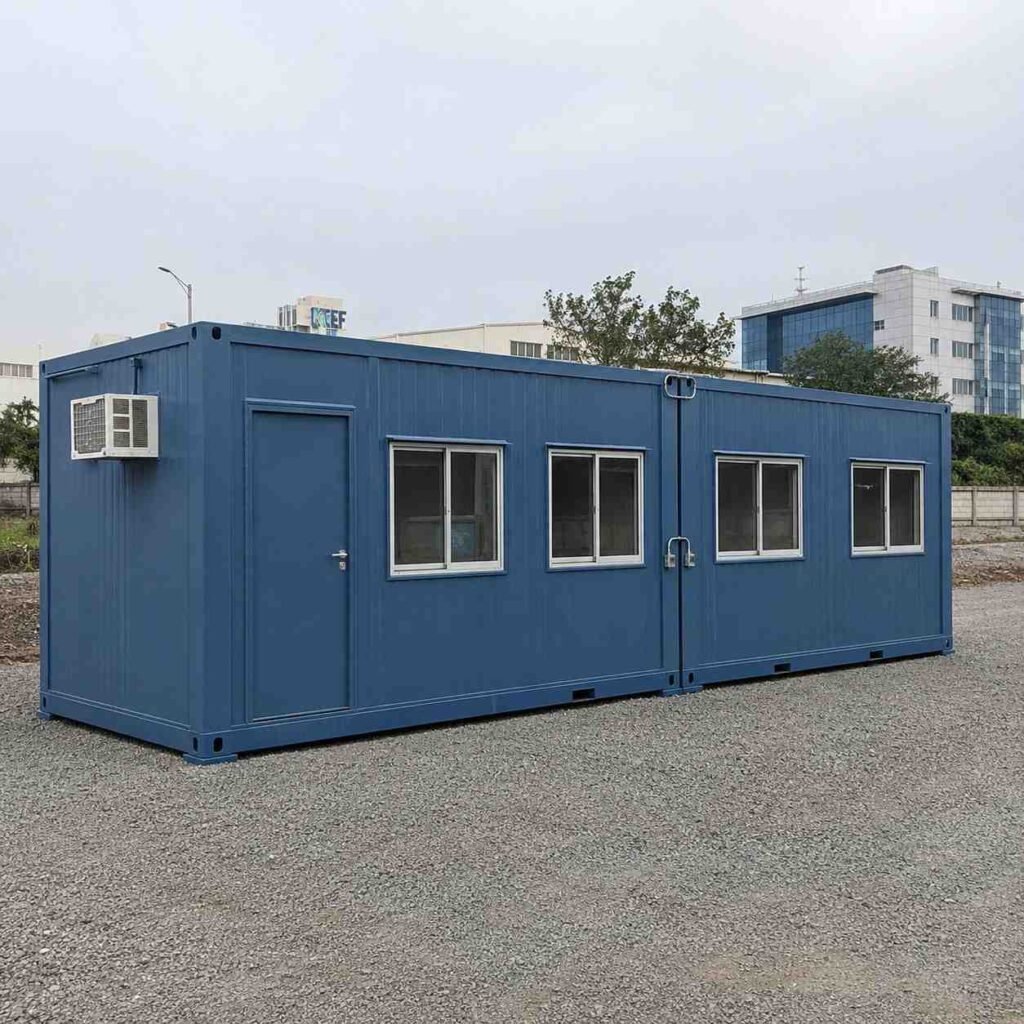
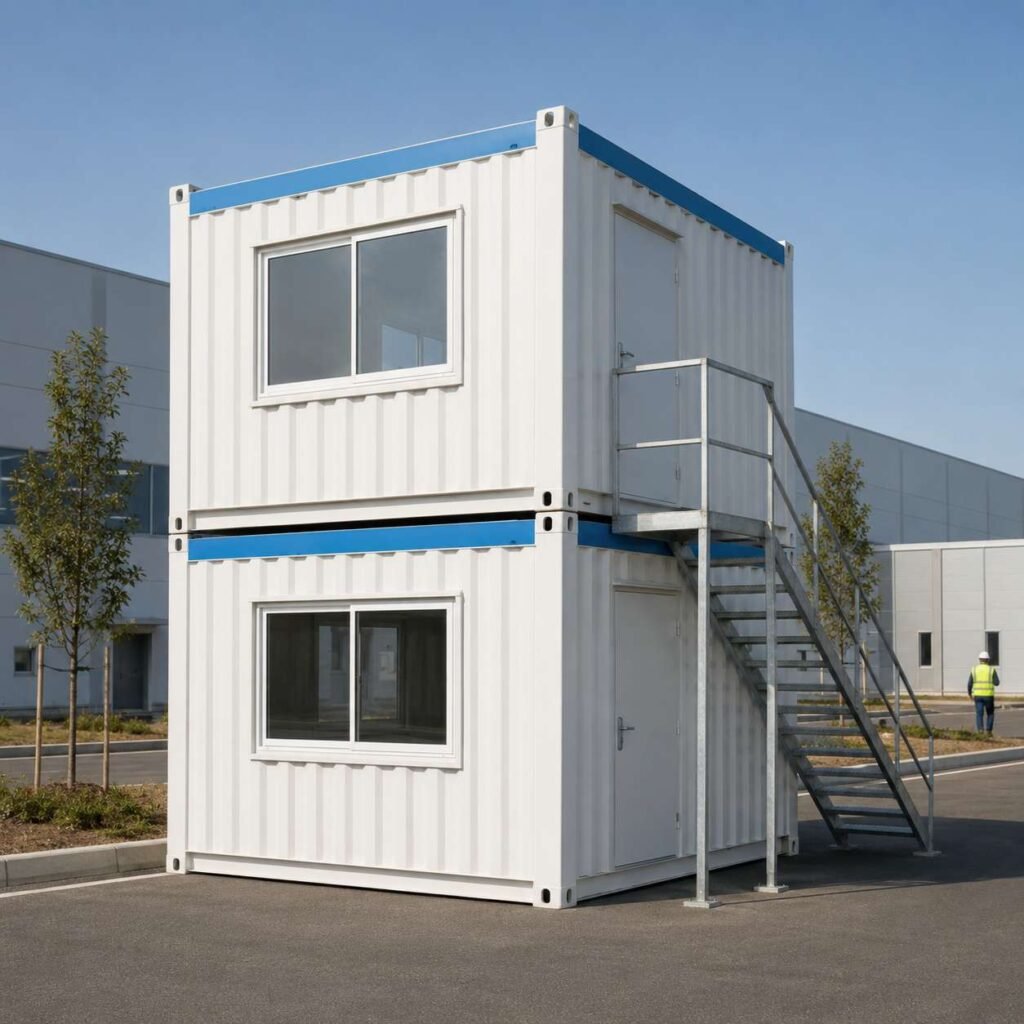
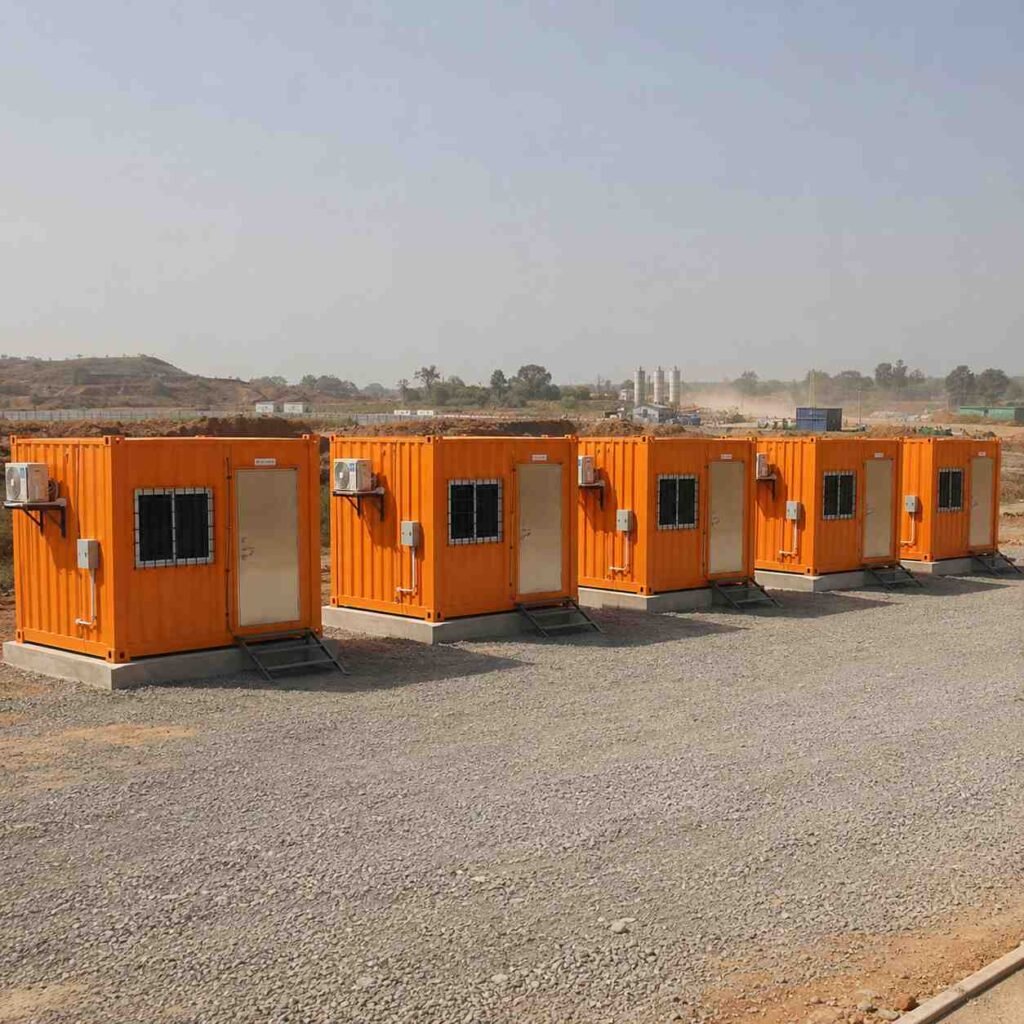

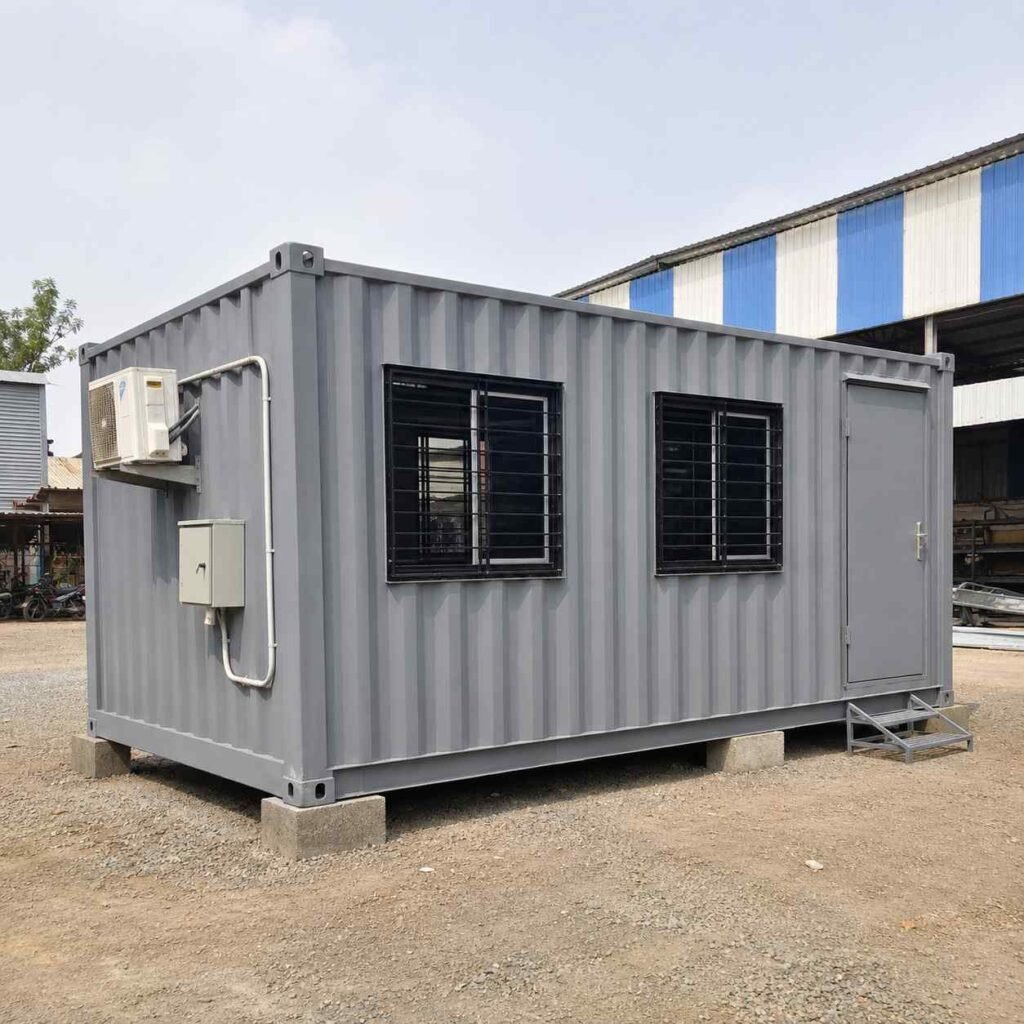
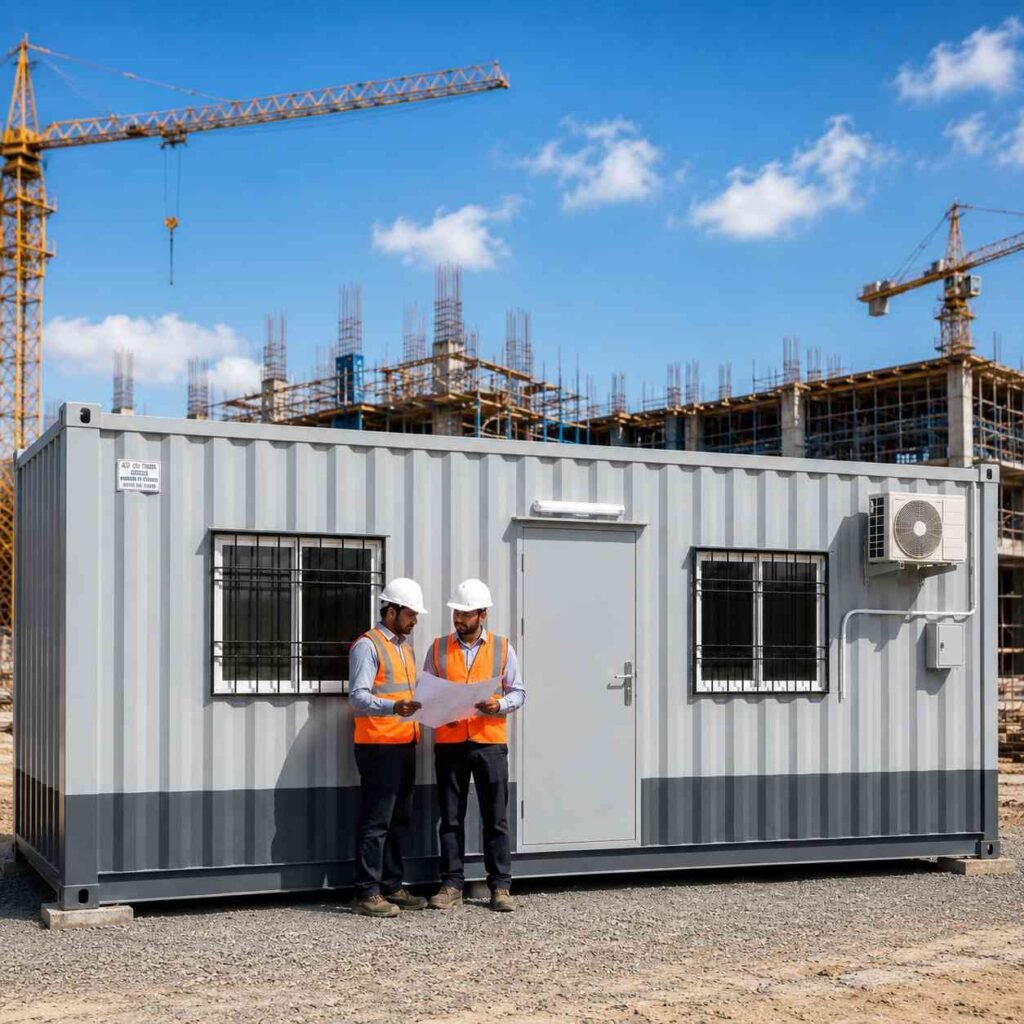
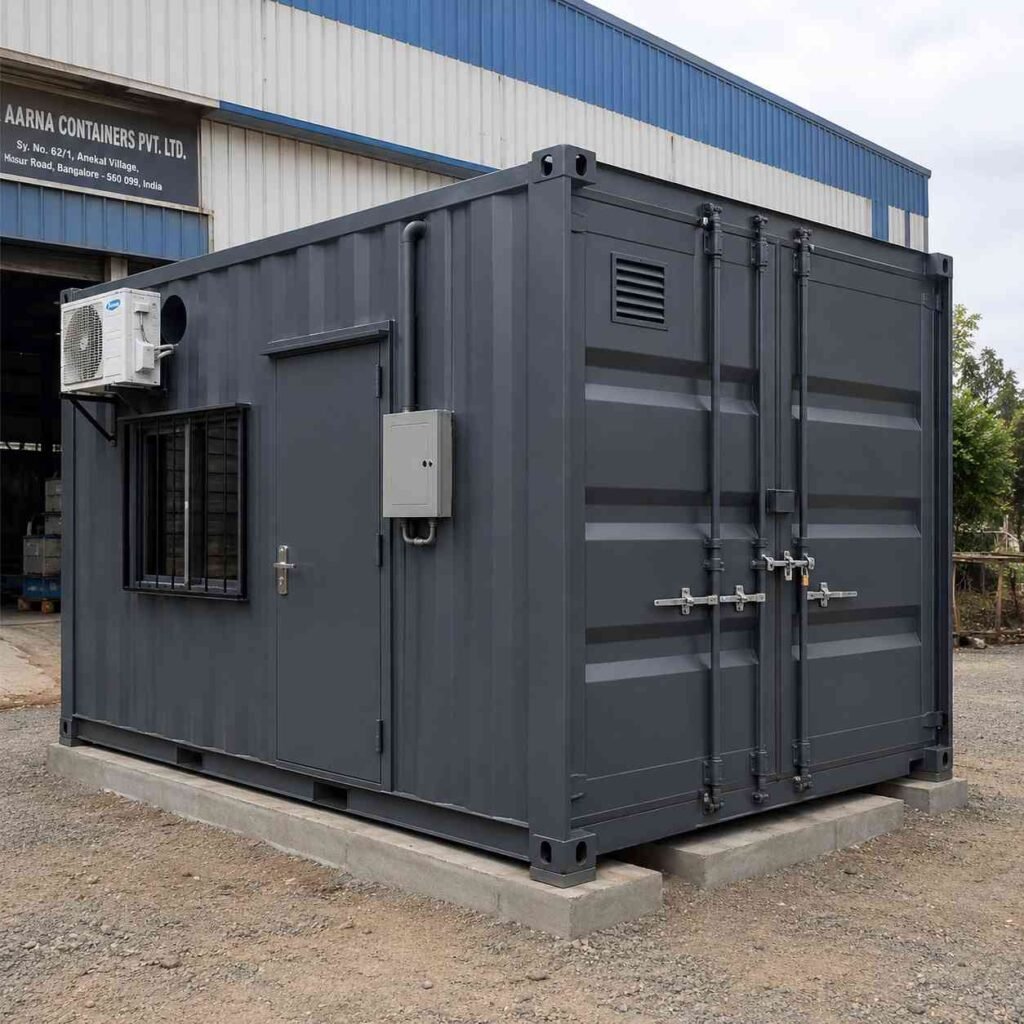


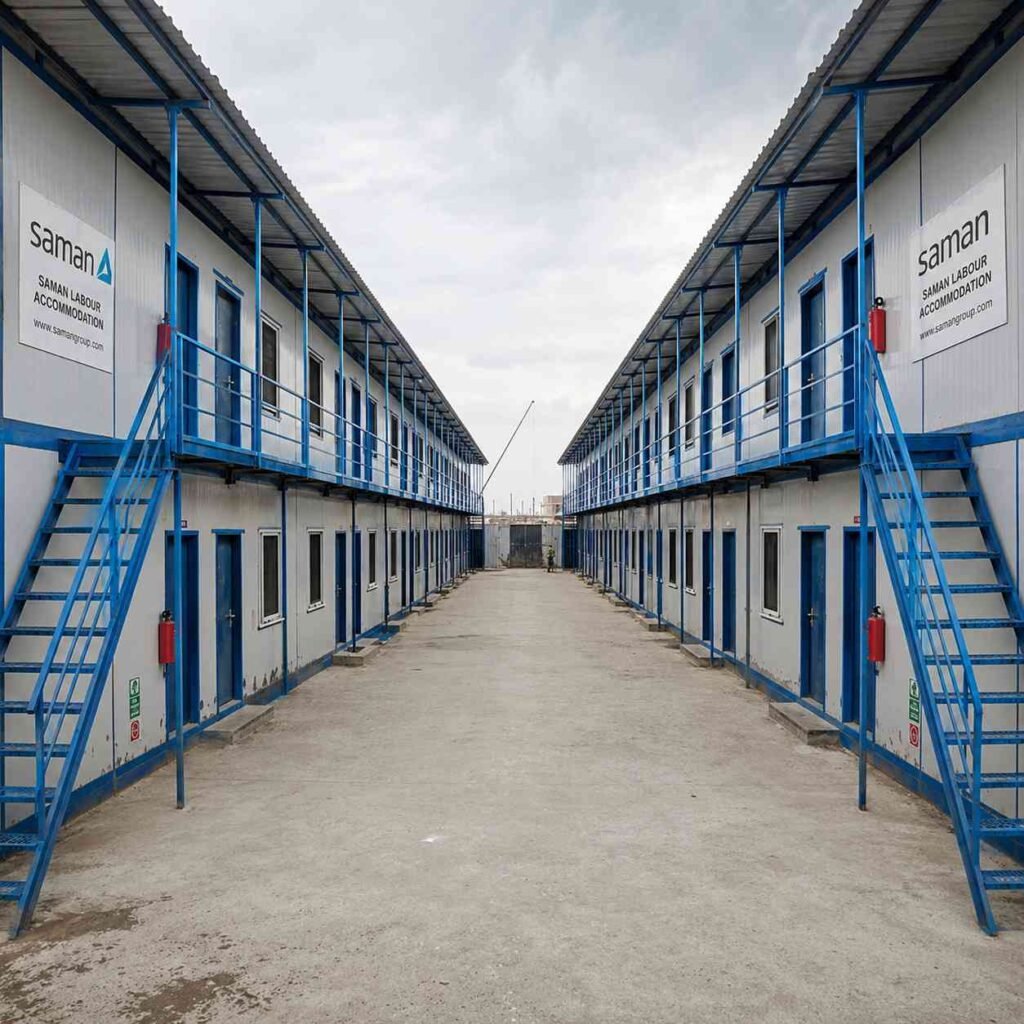
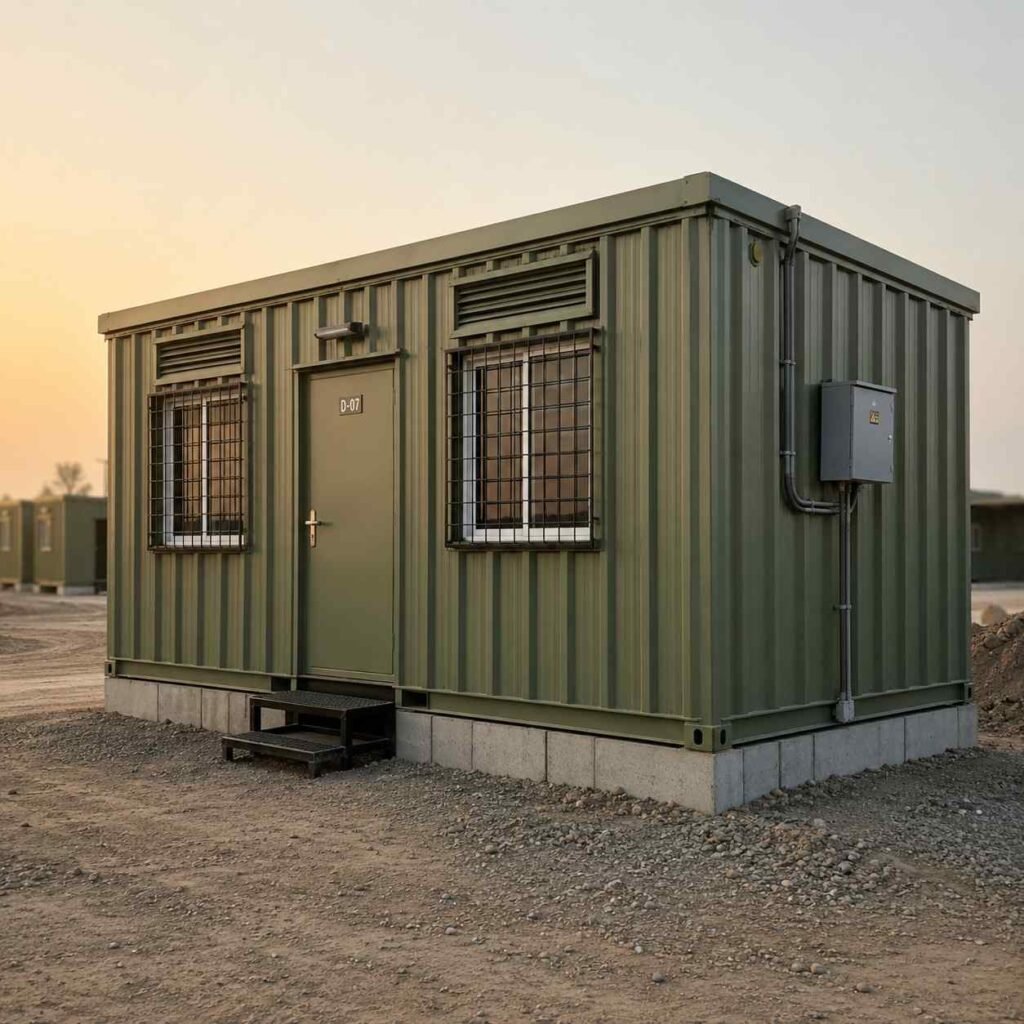

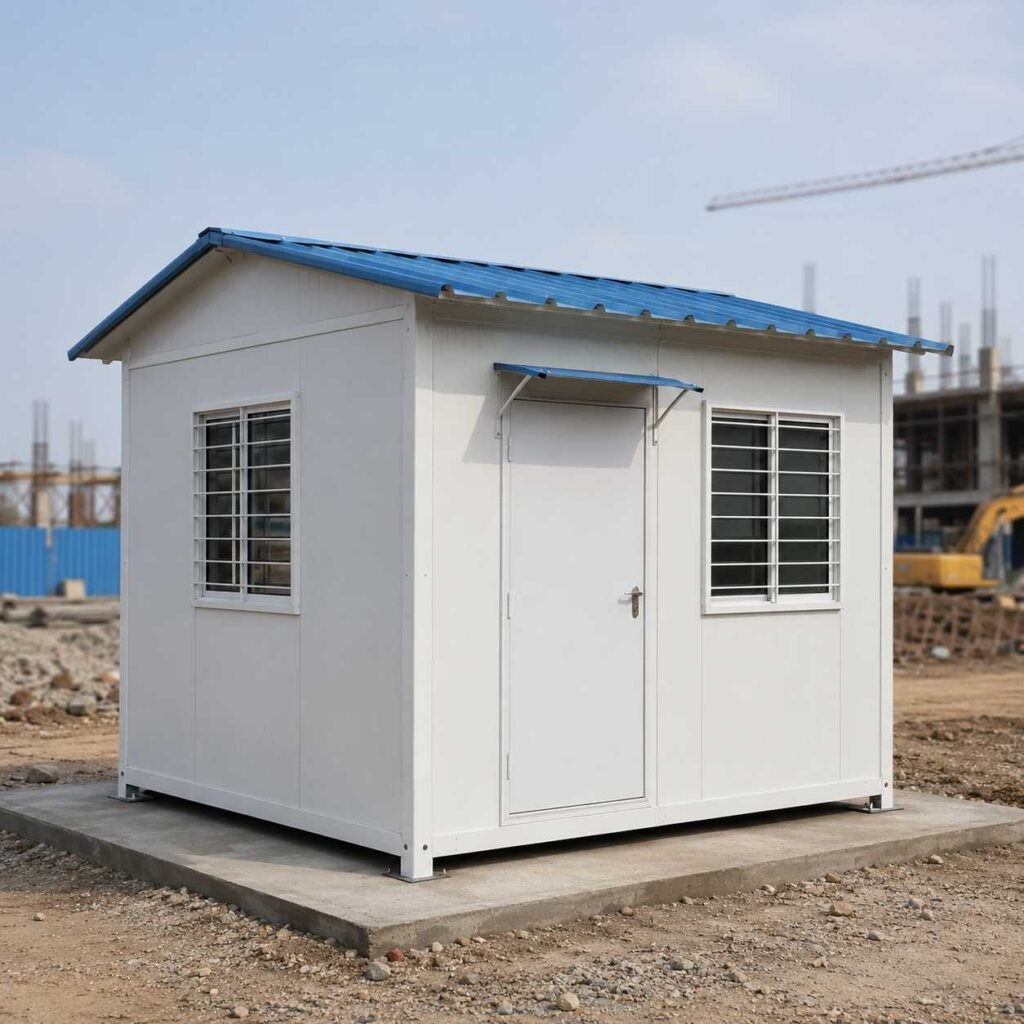
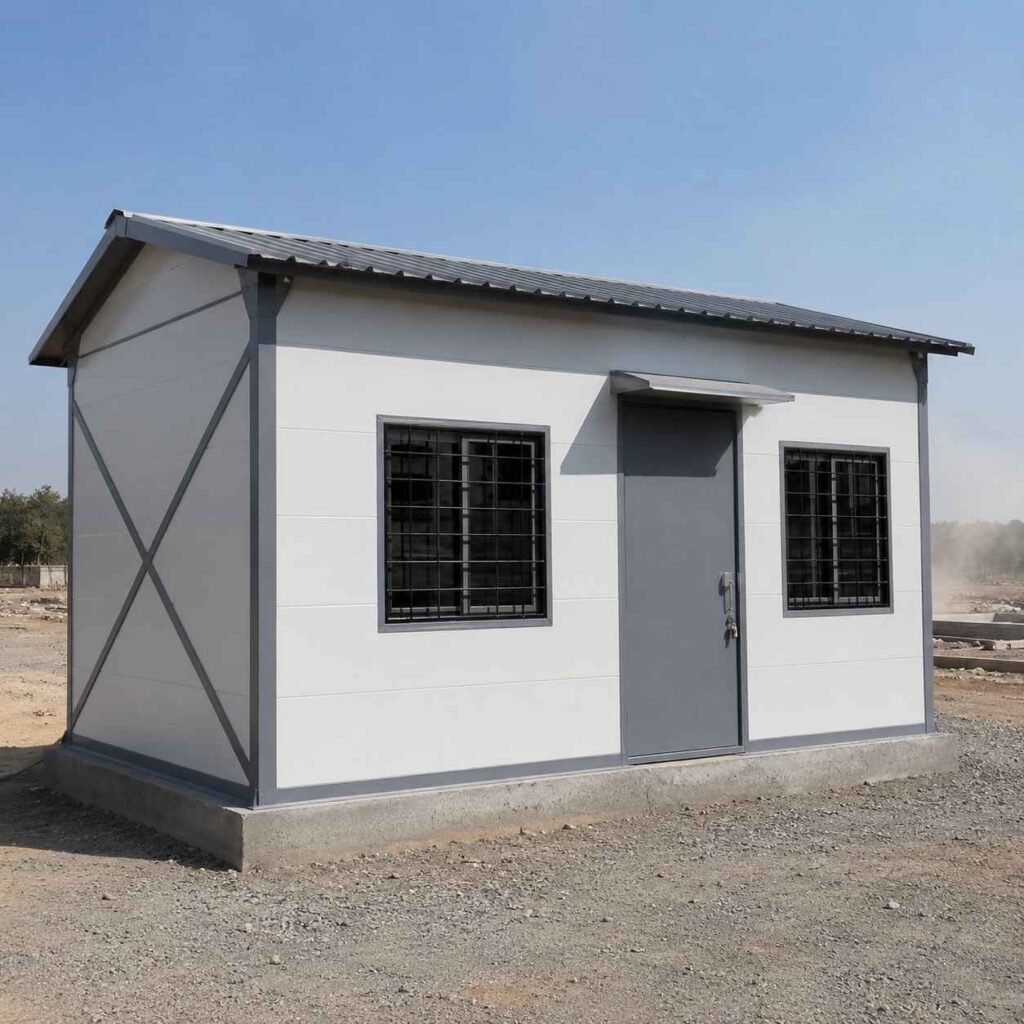
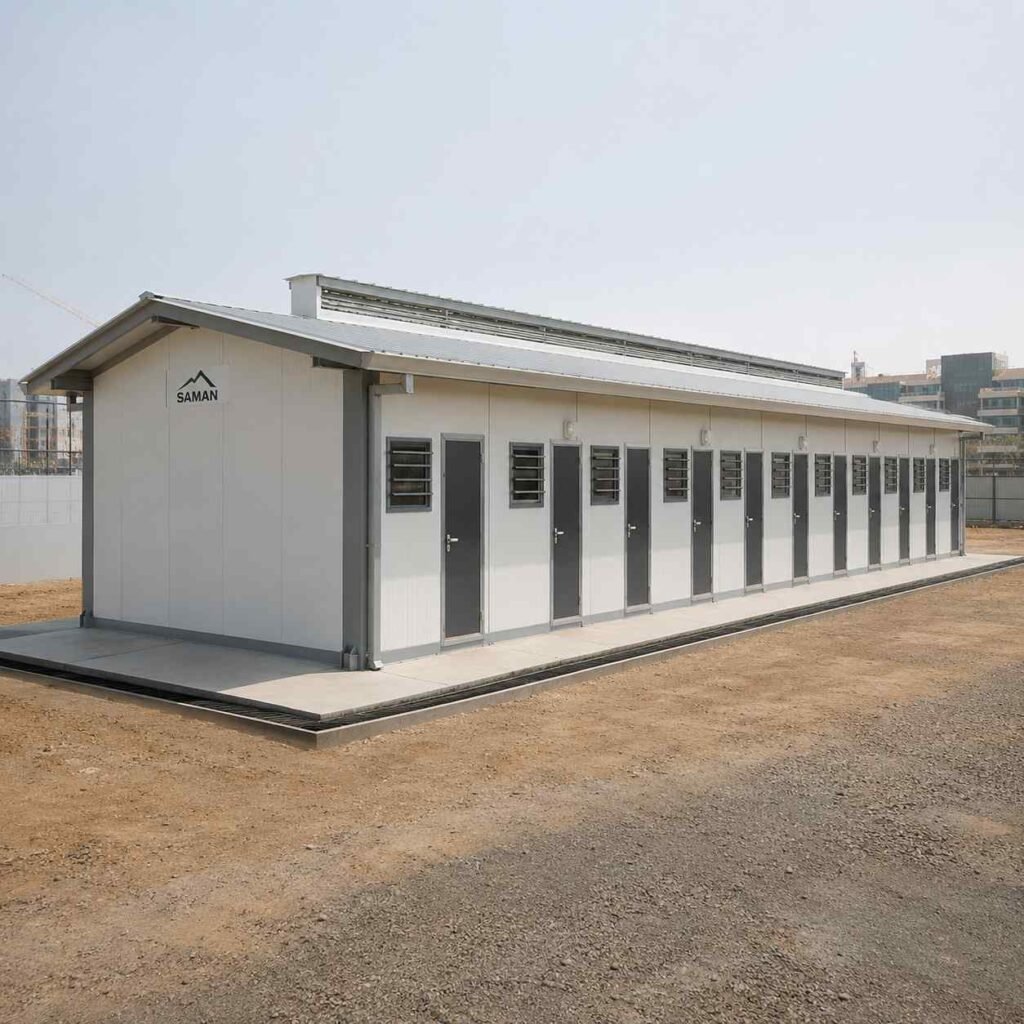
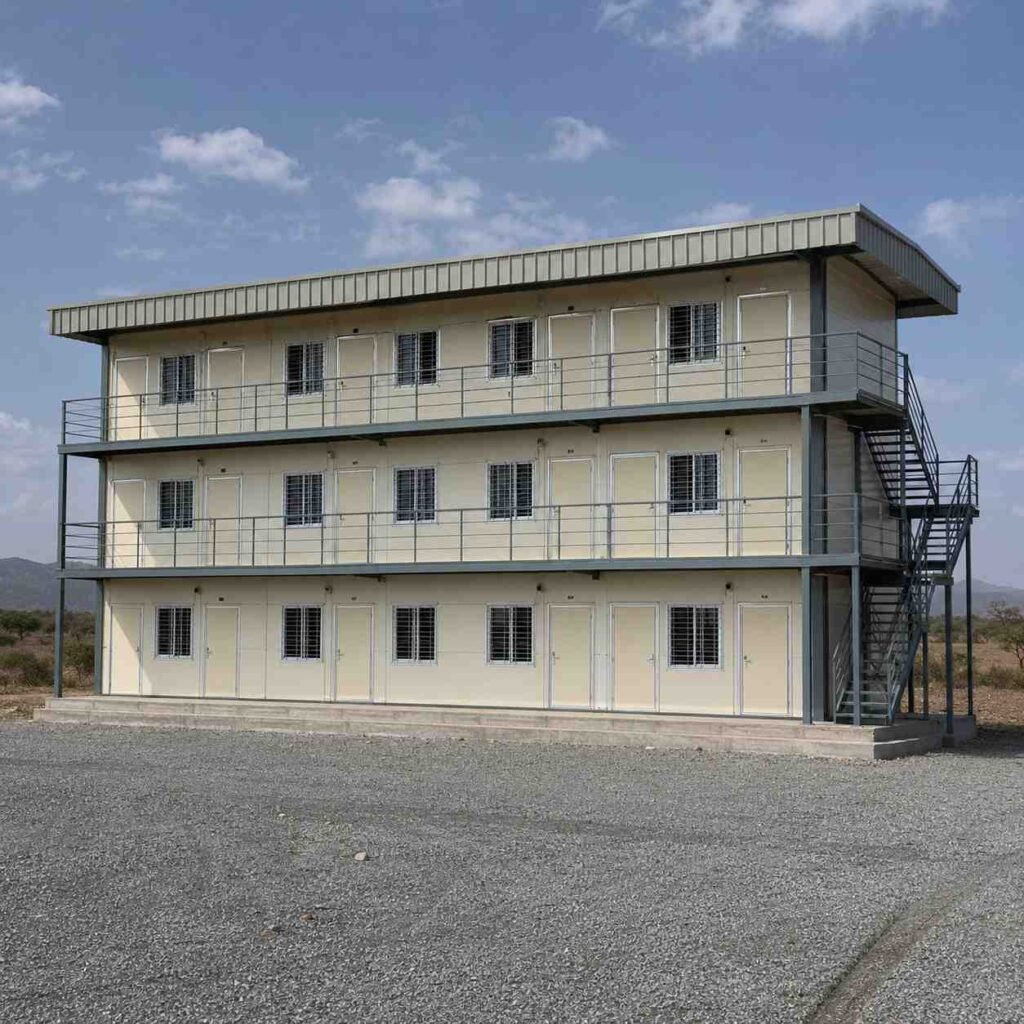
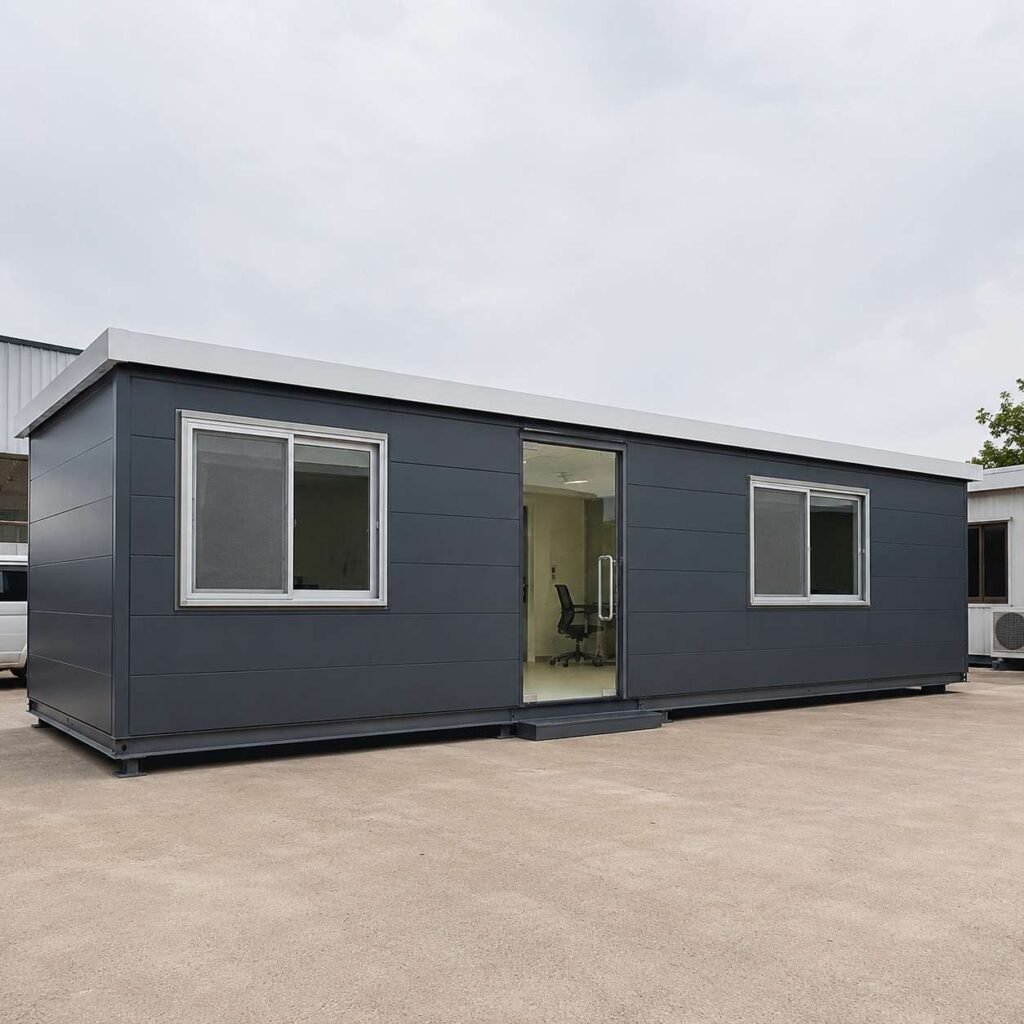

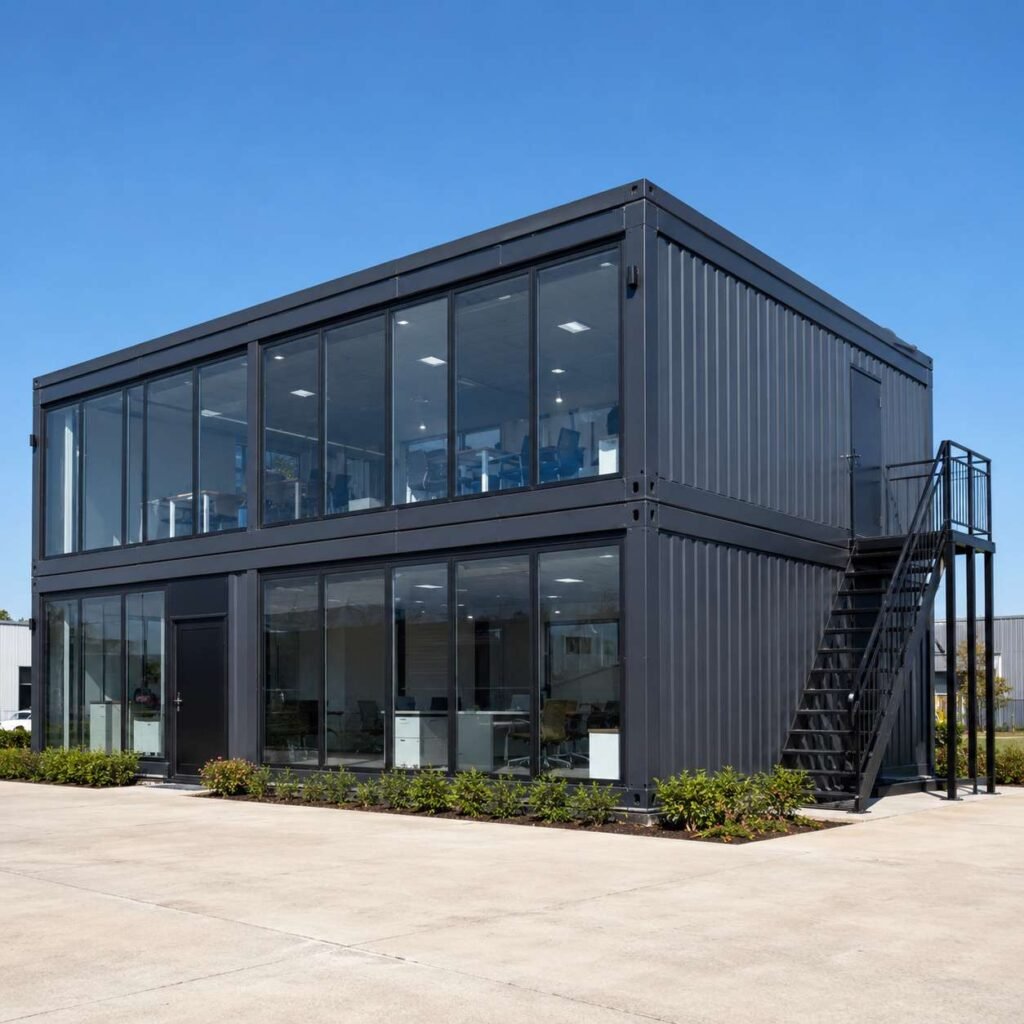
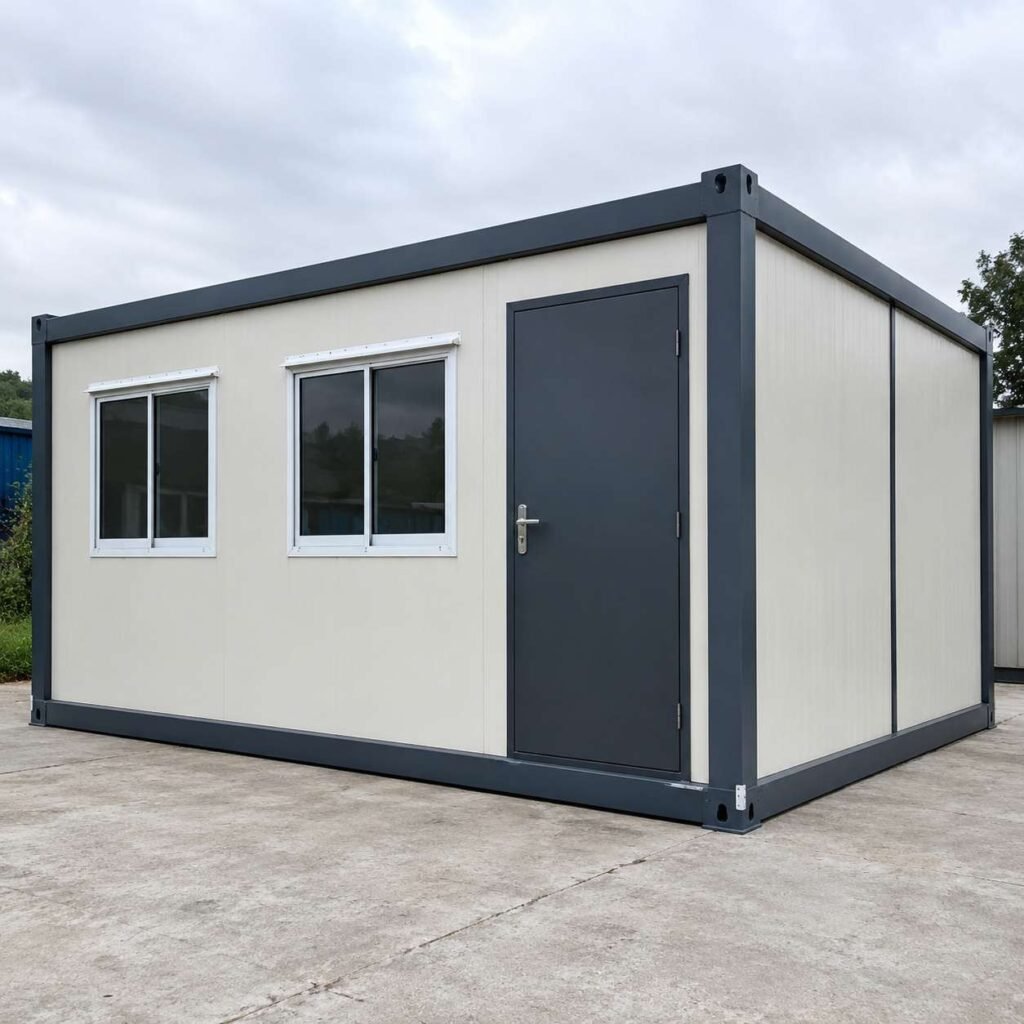
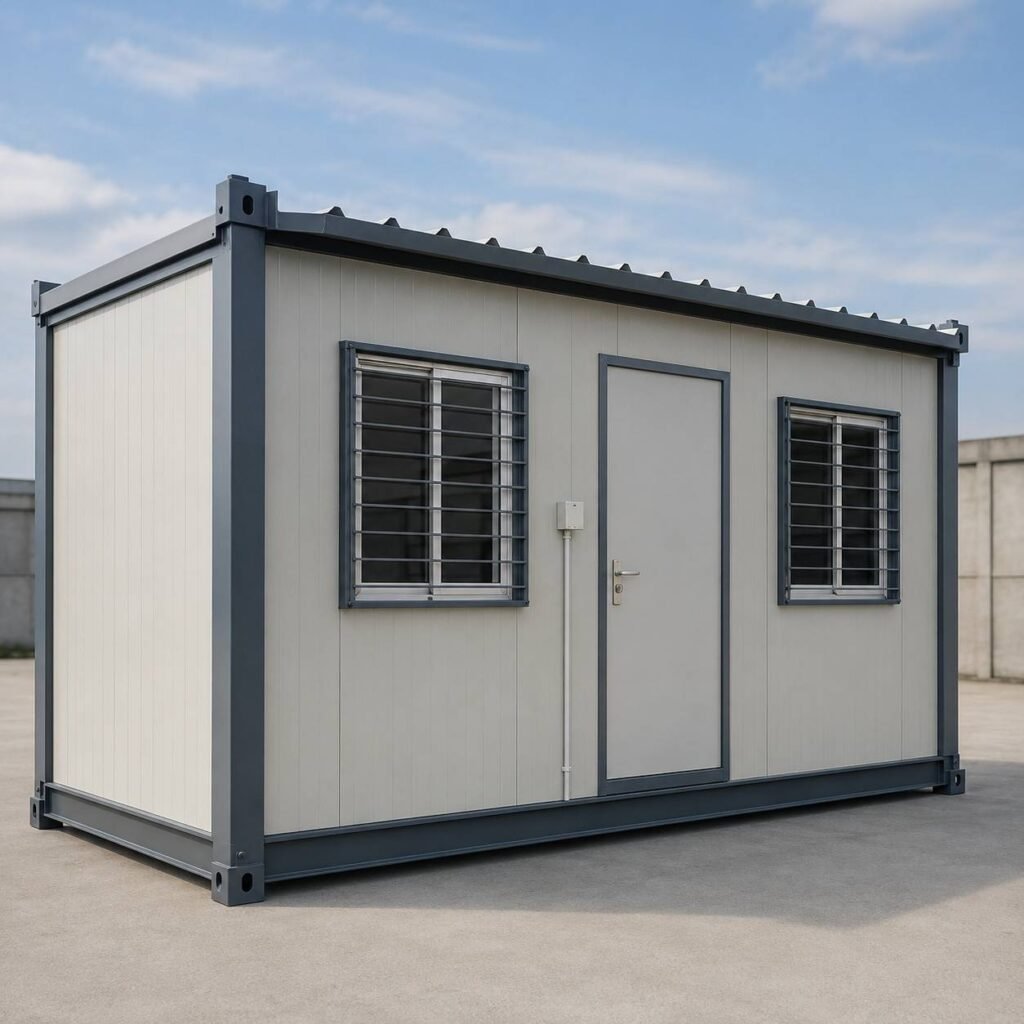

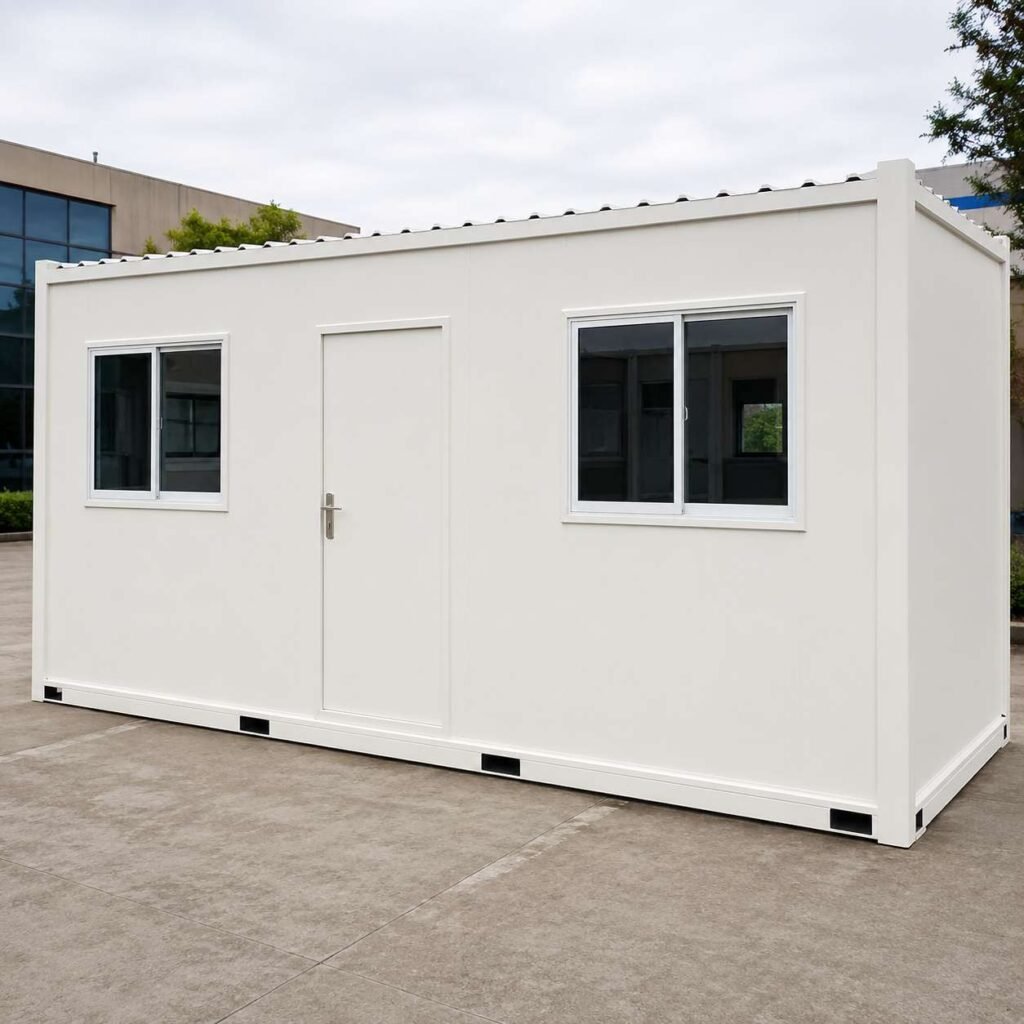

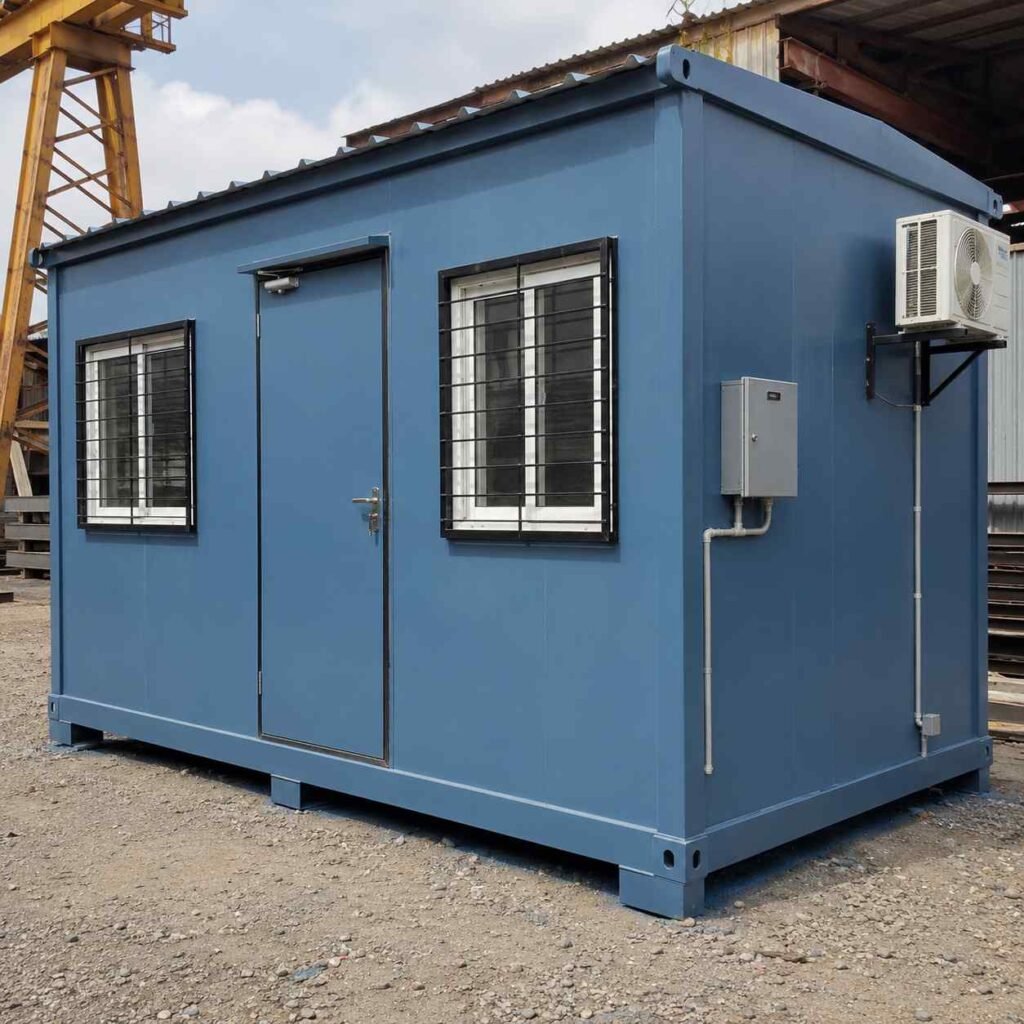
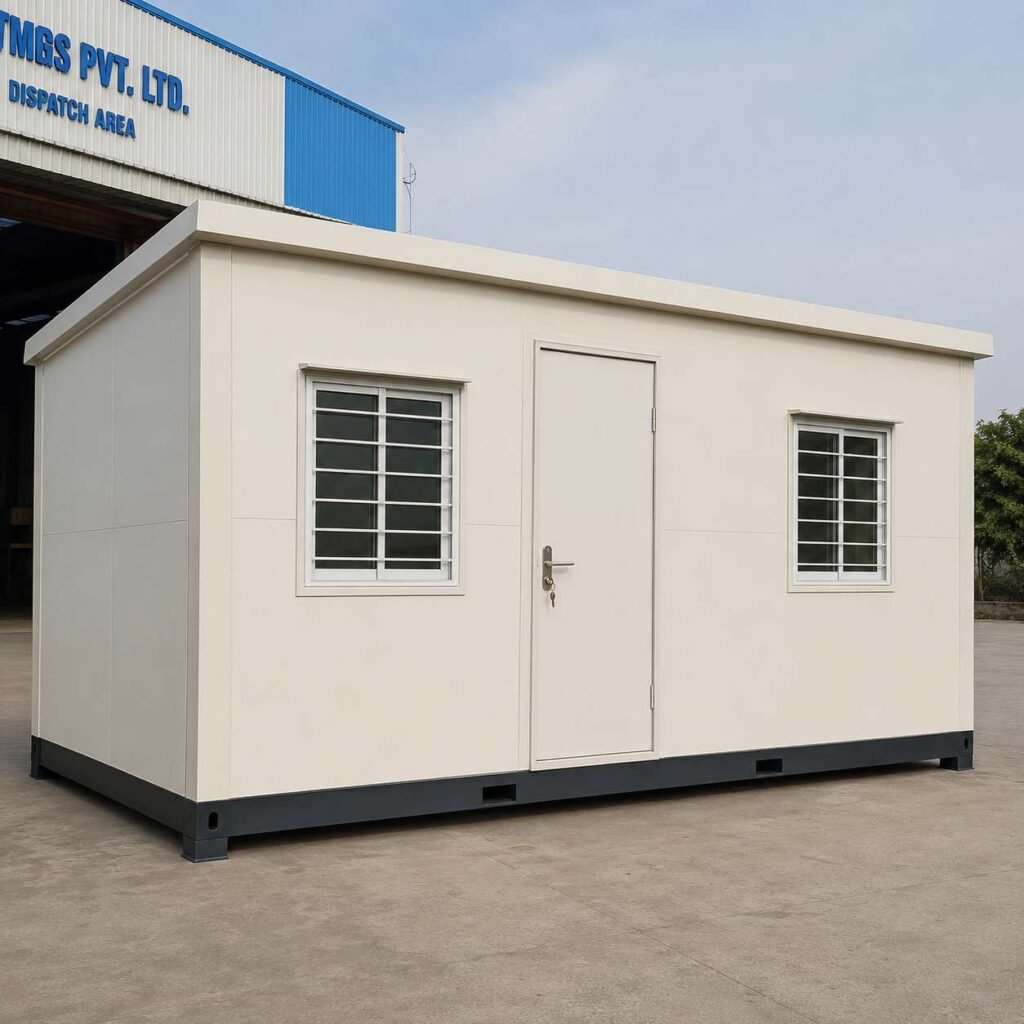
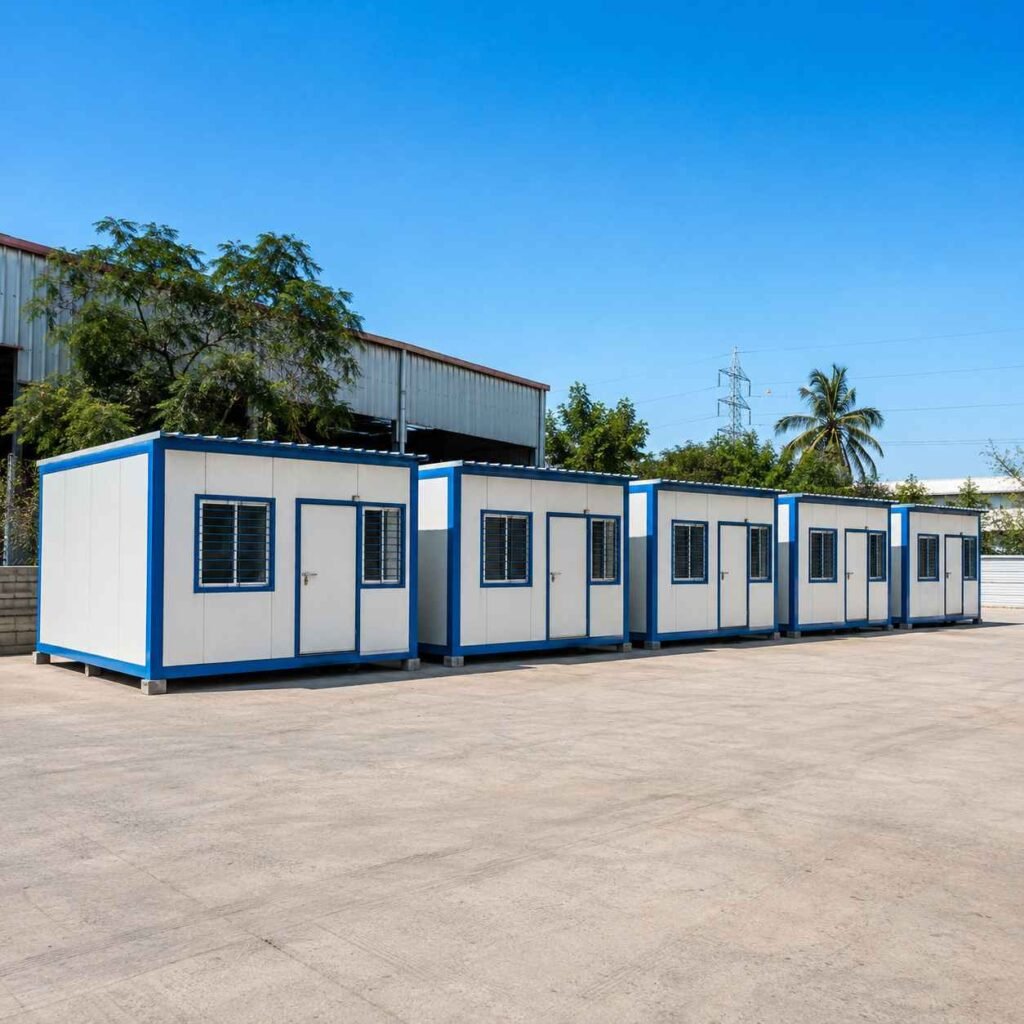
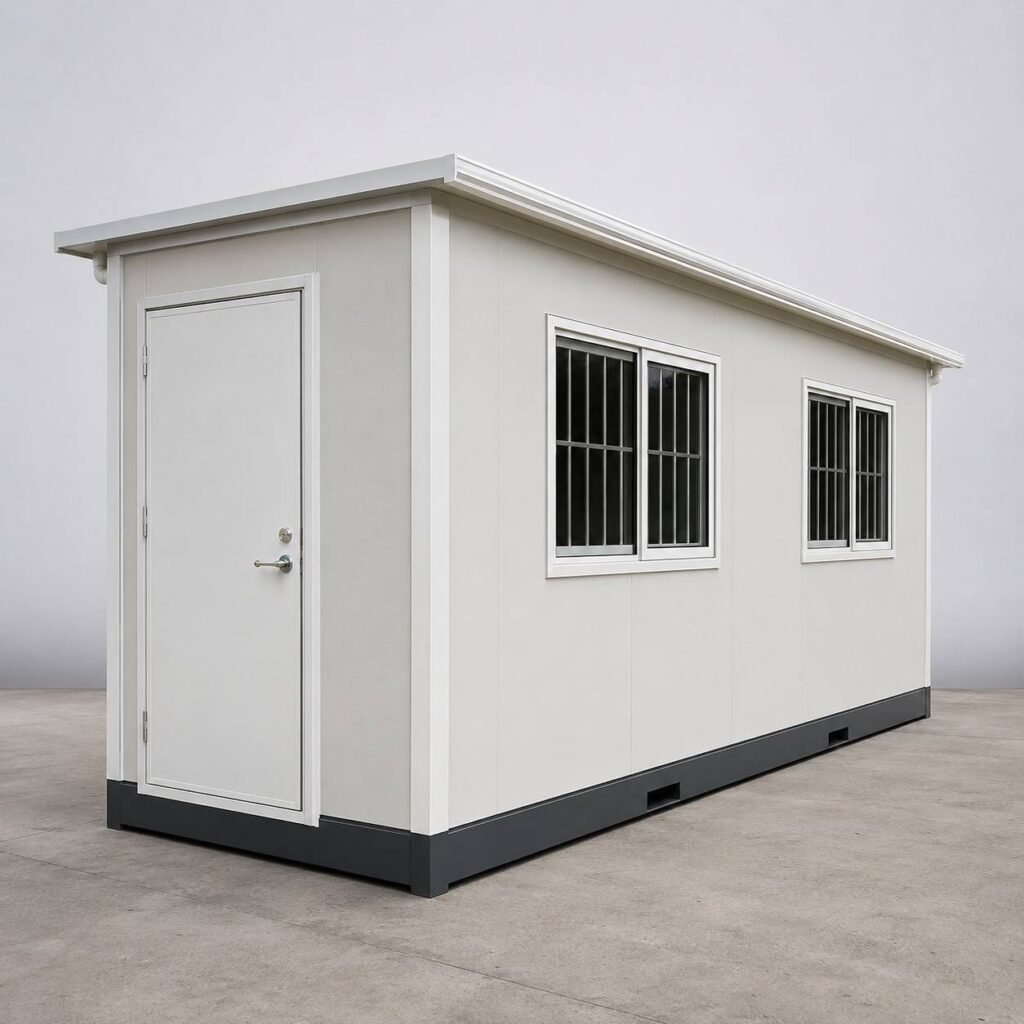
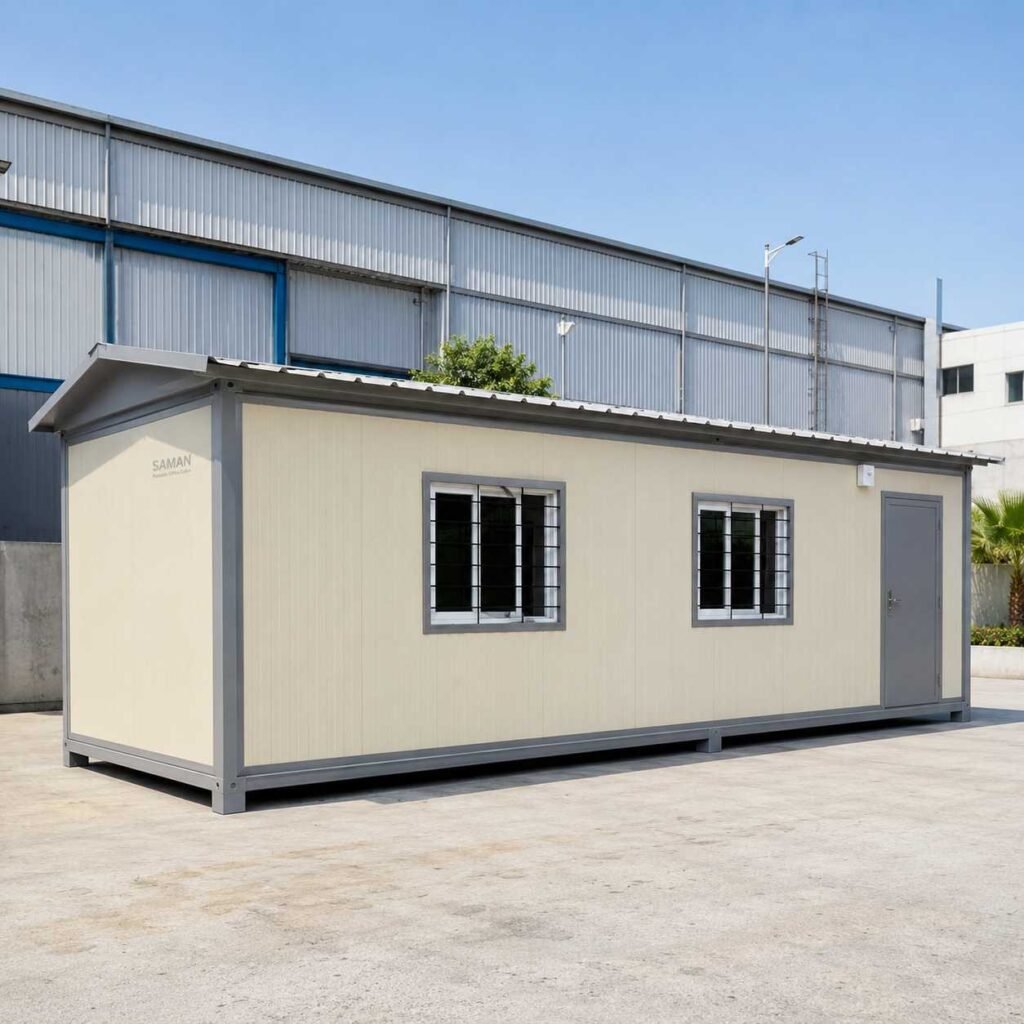
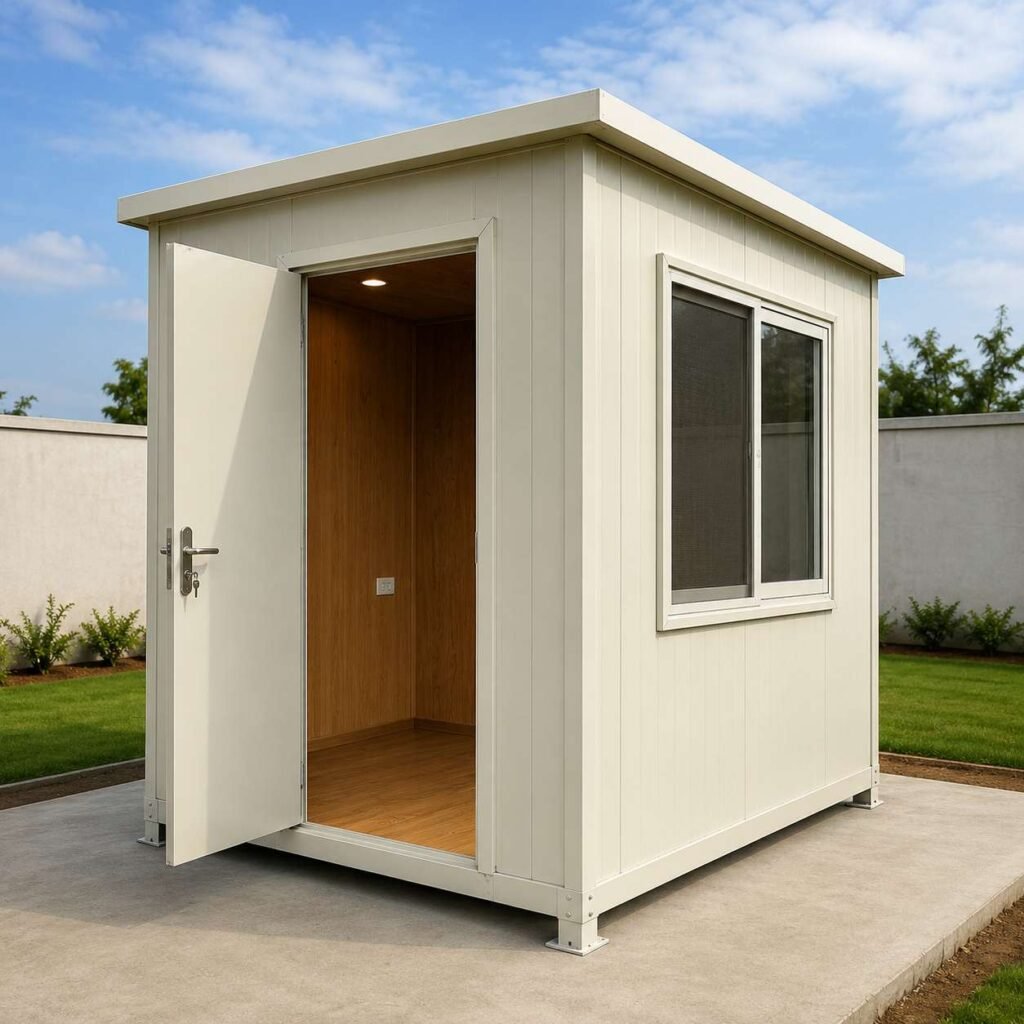


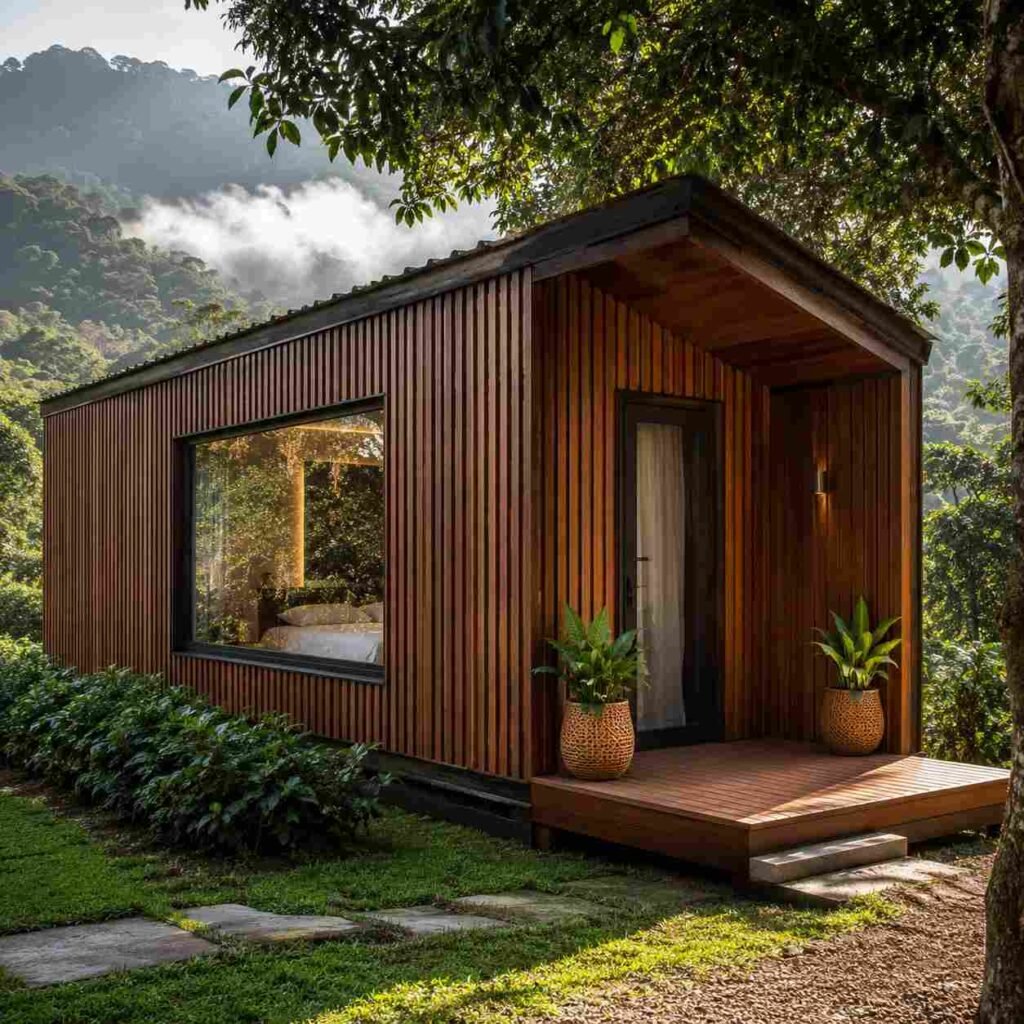






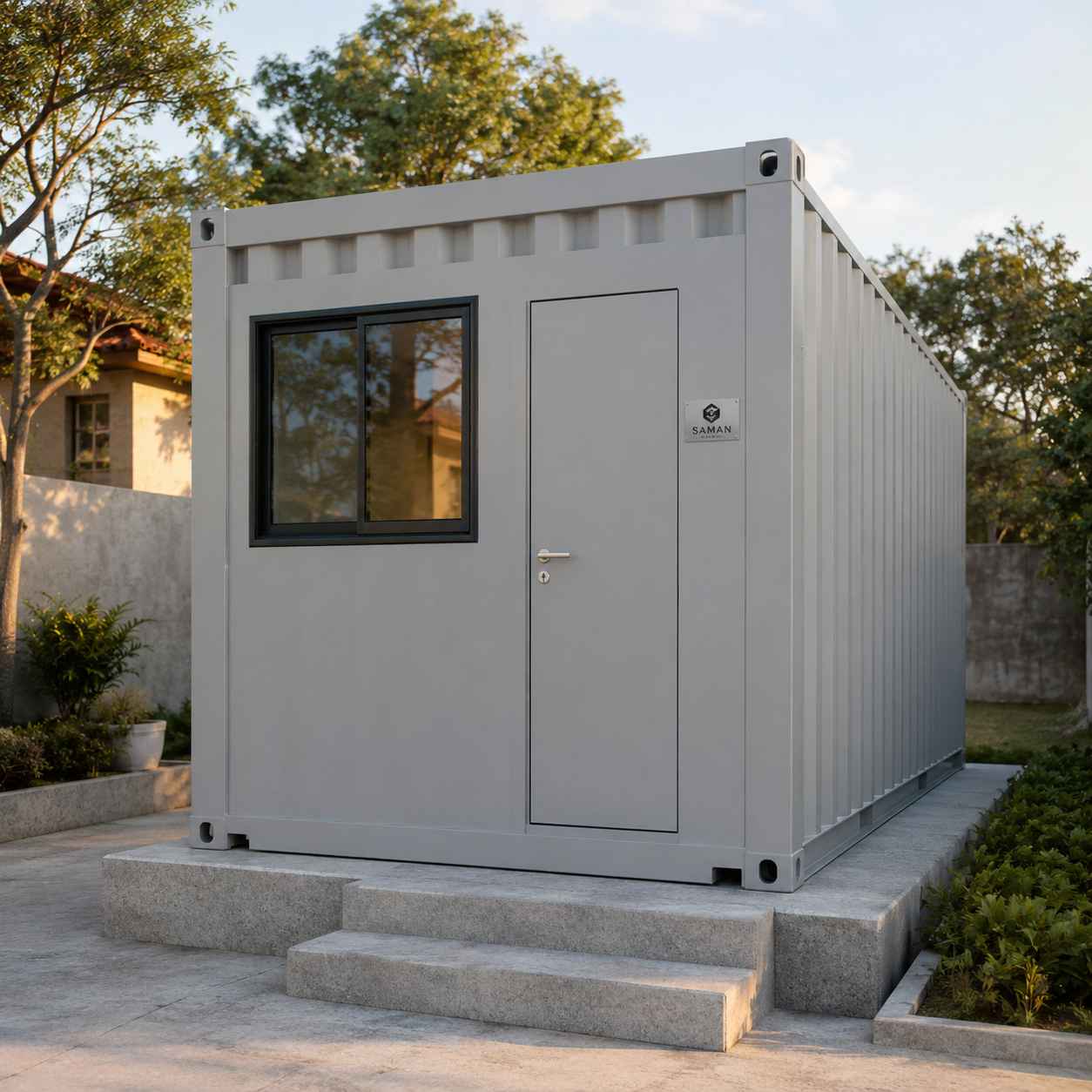




Tiny container homes are the smallest configuration in SAMAN’s container house range — a single 20-ft container converted into a complete, factory-fitted living unit, starting at ₹12,00,000. The question most buyers arrive with is direct: is 160 square feet enough to live in comfortably? For a solo buyer, a couple with a minimalist lifestyle, or a farmhouse-plot owner wanting a functional weekend home, a properly designed 20-ft container home is complete and practical — not a compromise. This page covers what that format delivers, what ₹12 lakh includes, and how to decide whether the tiny footprint is the right call for your brief.
Tiny in name, full in function — what 160 sq ft of container home actually delivers
A single 20-ft ISO container measures 20 feet long by approximately 8 feet wide externally, giving around 160 sq ft of usable internal floor area once insulation is in place. That is roughly the size of a large studio flat or a 1RK in a tier-1 Indian city. What container tiny homes offer that a rented 1RK doesn’t: the unit arrives to your land fully factory-fitted, quality-checked at our Bangalore or Greater Noida facility, and set on a prepared plinth in 7 to 21 working days from order confirmation. For buyers on rural plots, farmland, or locations where managing a construction crew over weeks is neither practical nor affordable, this delivery model is the primary reason the tiny container format makes sense over conventional construction.
The 20-ft format is genuinely suited to a solo resident on a rural plot, a couple who live with intentional minimalism, a buyer who wants a permanent guest cottage on a farmhouse property, or anyone who needs a functional holiday home on land that can’t support the timeline or cost of conventional construction. It is not the right format for a family of three or more — that buyer should look at the 40-ft configurations in our prefab container homes range, which start at ₹8.65 lakh and include 1 BHK and 2 BHK layouts.
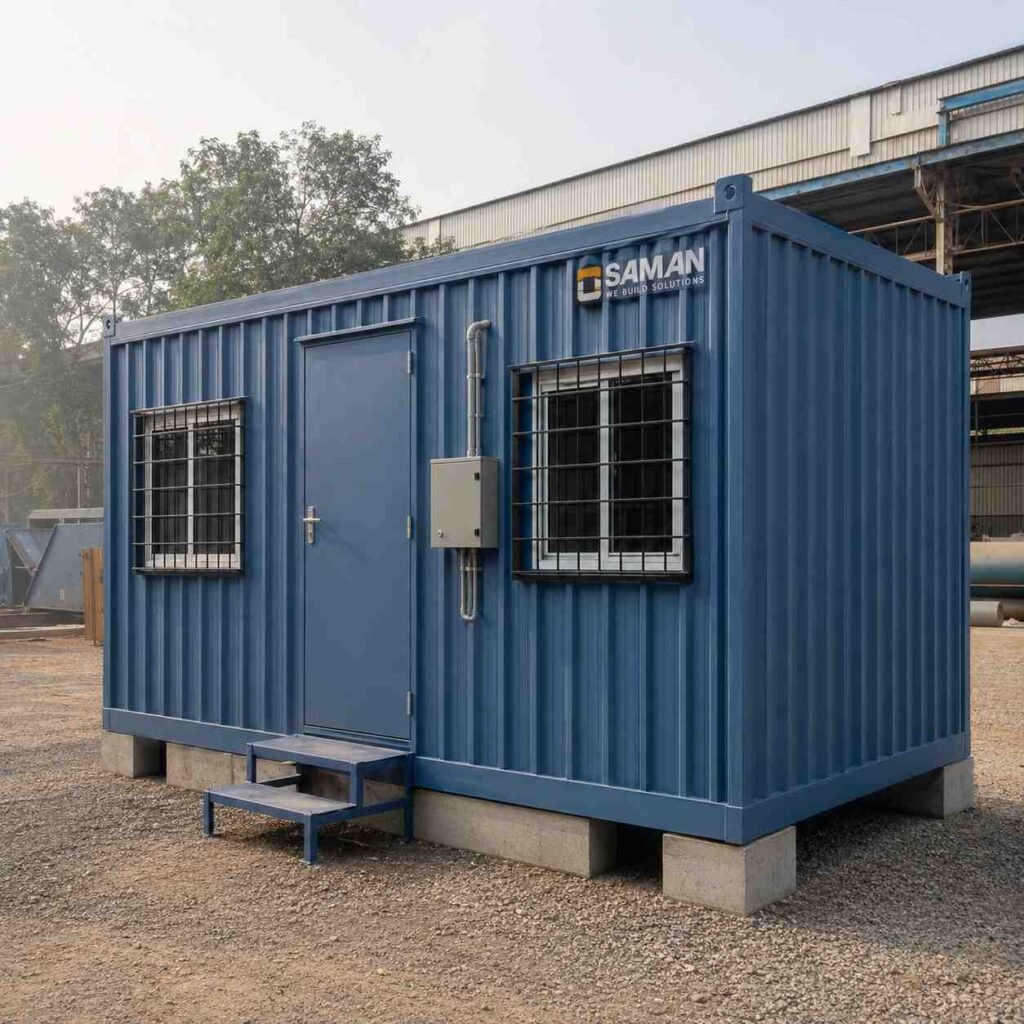
The 20-ft build uses the same structural specification as every SAMAN container home: heavy-gauge MS frame, 50mm PUF insulation on all six faces, factory-applied exterior treatment, and a quality check before the unit leaves our manufacturing facility.
The standard layout of a 20-ft tiny container home — what fits where
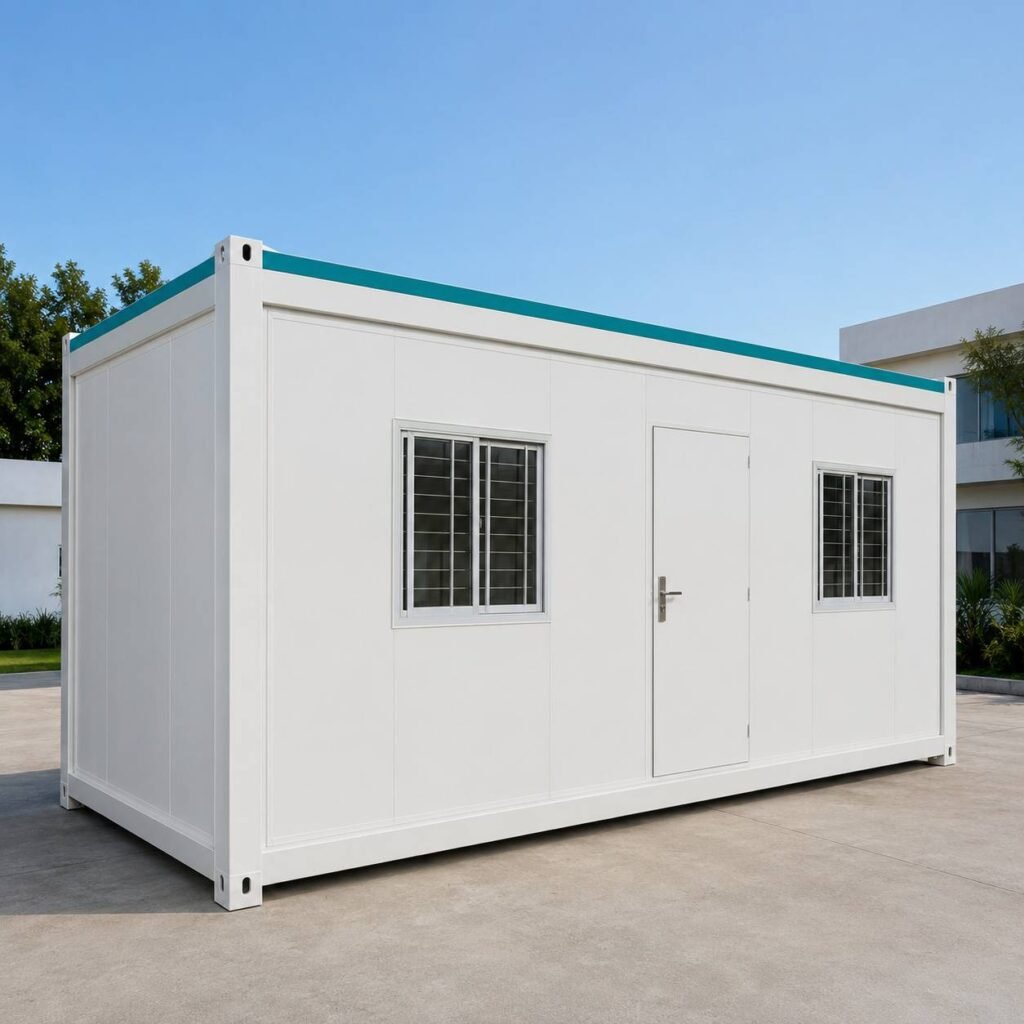
A SAMAN tiny container home is built on a standard 20-ft container frame measuring approximately 20 ft × 8 ft externally — around 160 sq ft of usable internal floor area after insulation. The standard layout divides this into a sleeping zone, a kitchen platform with sink and chimney provision, a wet area with WC and shower, and a lounge or work area.
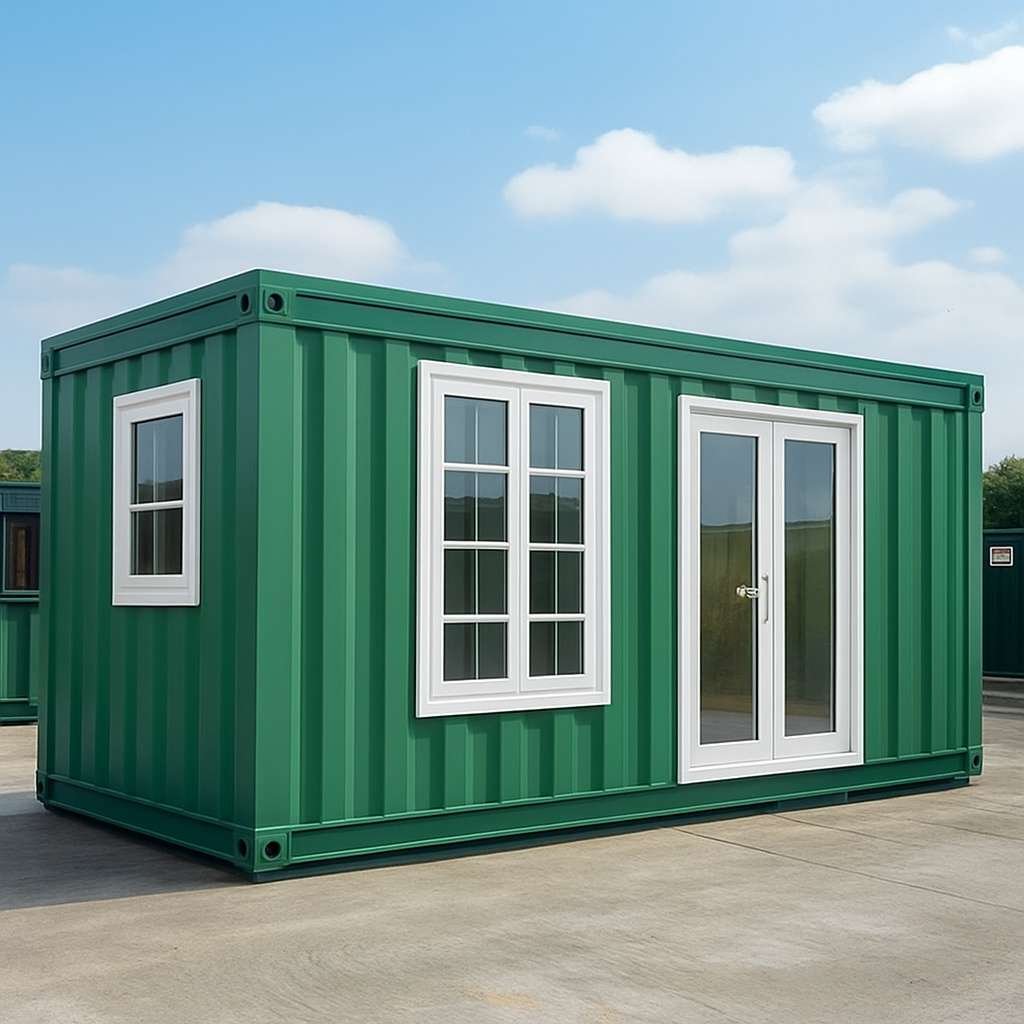
Door and window positions are confirmed during design alignment — the first step of your order — before fabrication begins. Standard units open with a single main door on the short end wall; extra doors, sliding glass panels, and additional windows are available as configuration options.
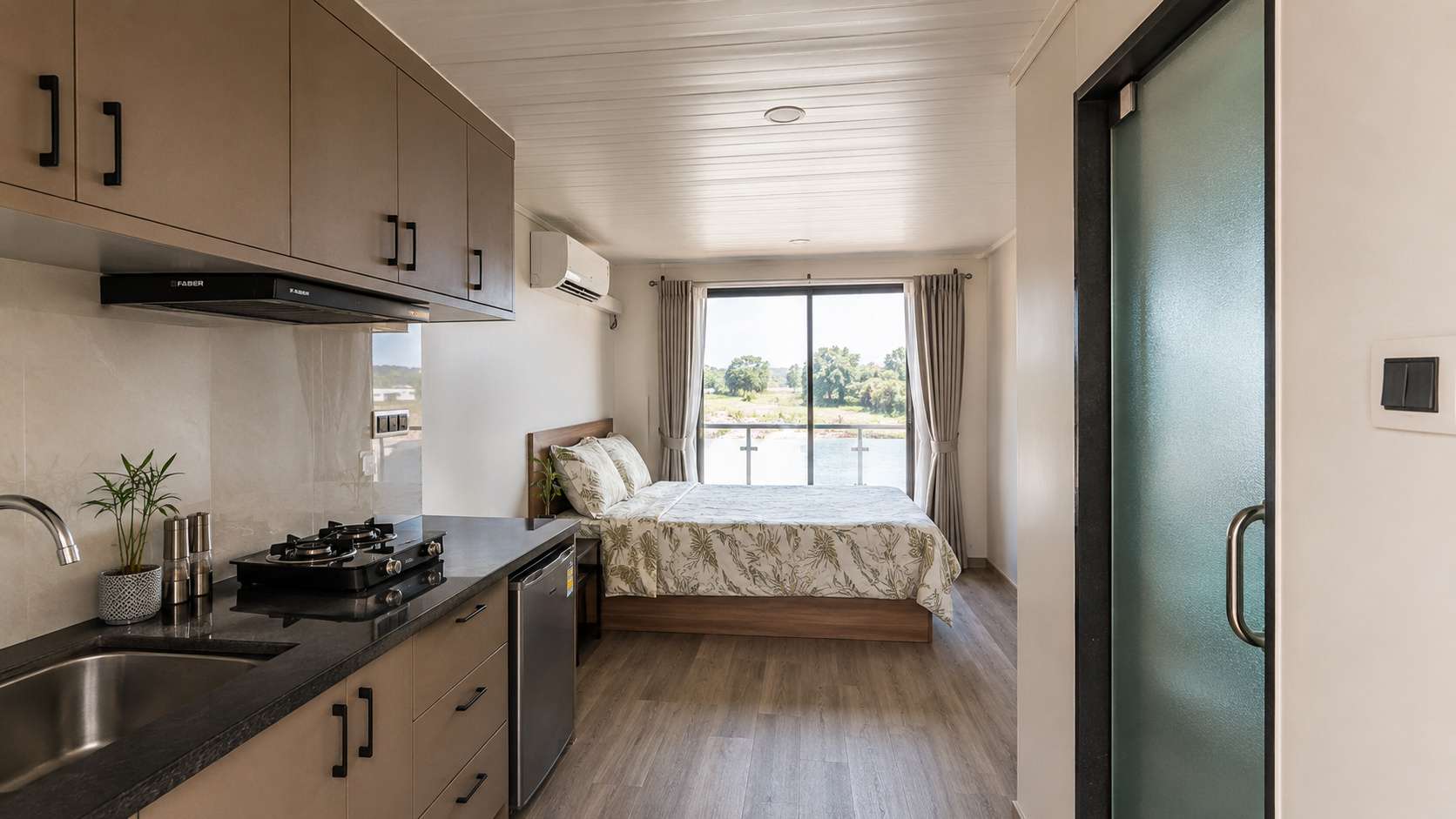
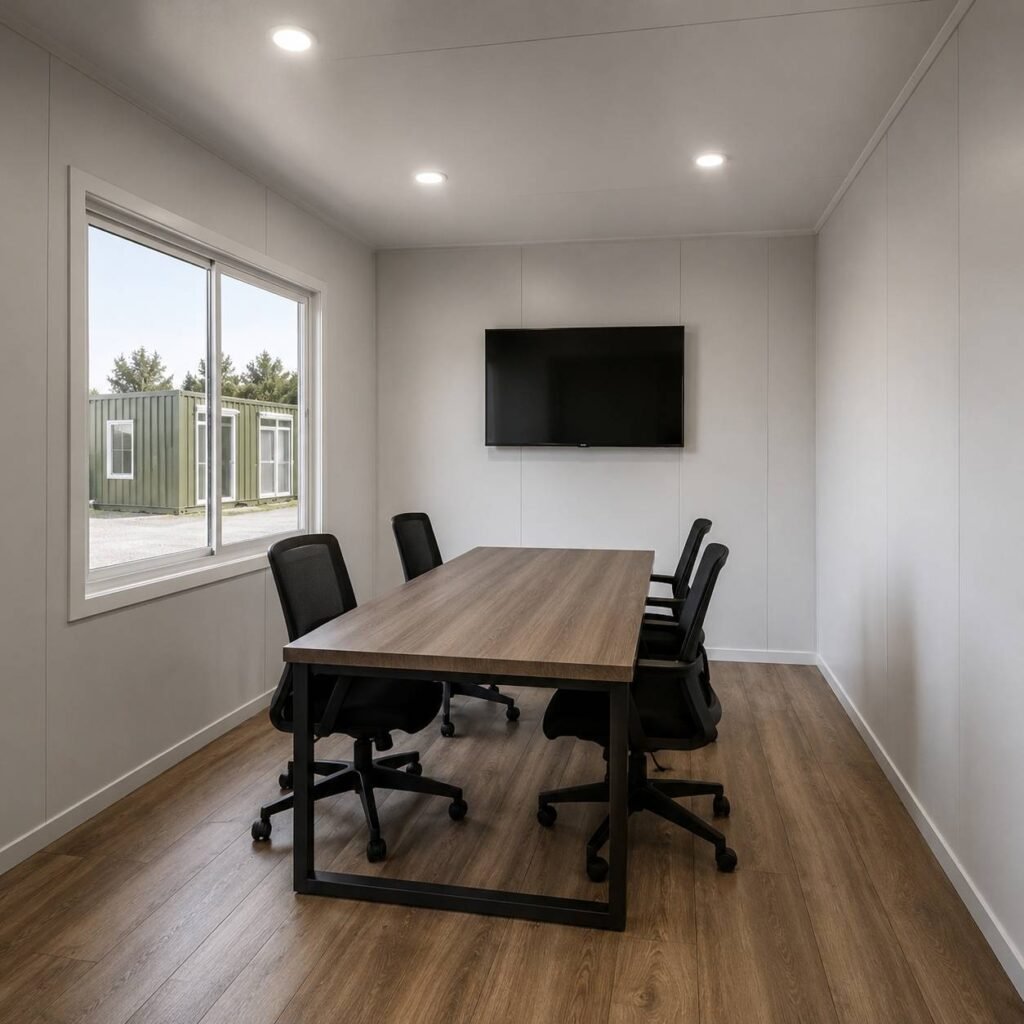
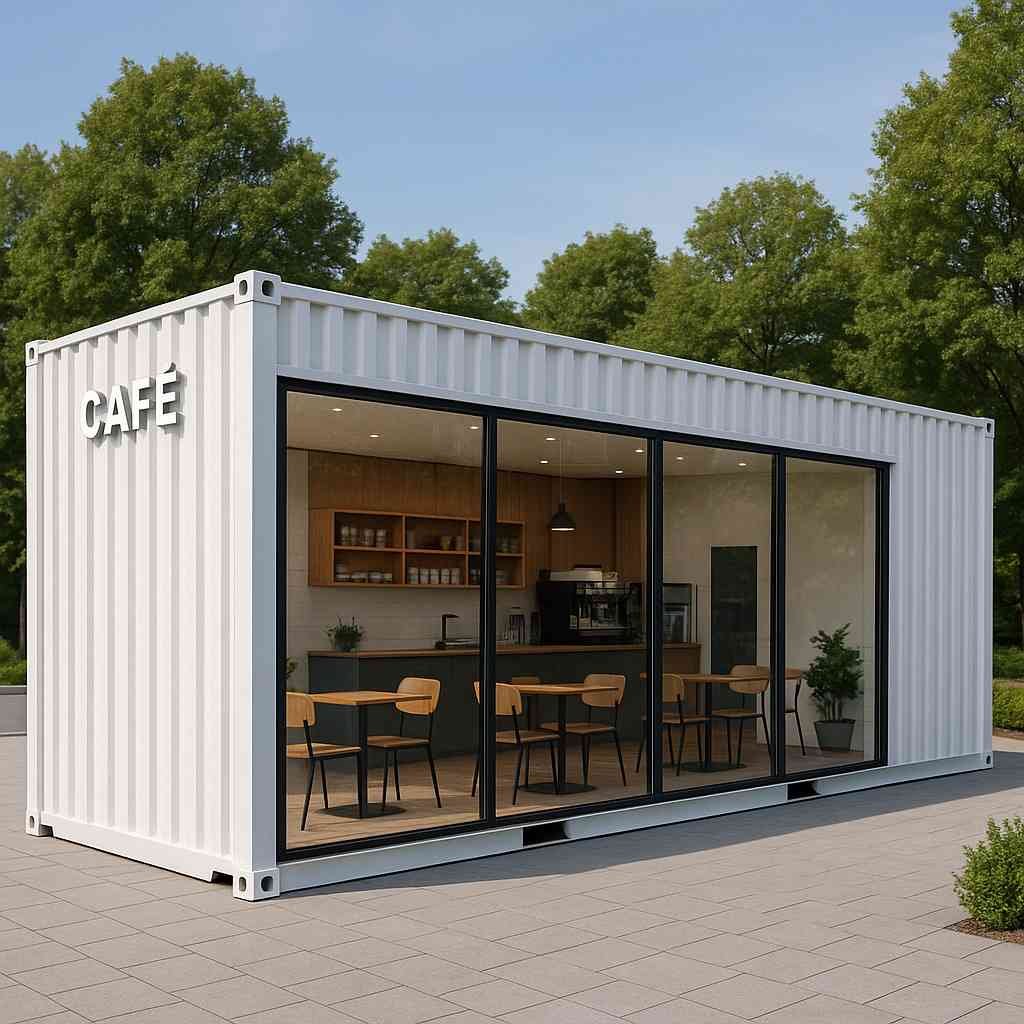
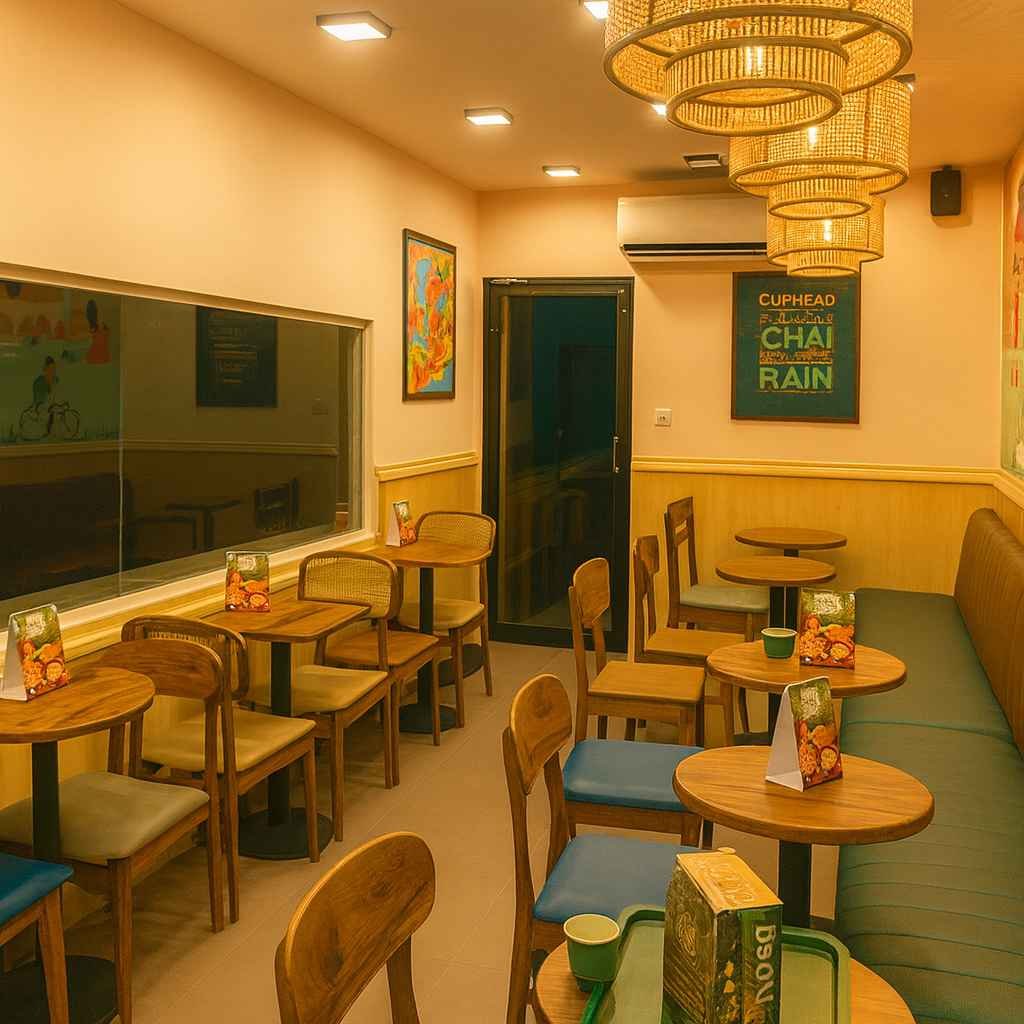
A fully fitted SAMAN tiny container home interior — kitchen platform, sleeping zone, and bathroom door all visible within the 200 sq ft footprint.
Most buyers fit comfortably: a single or queen-size bed with side tables, a compact kitchen platform with a two-burner cooktop and refrigerator nook, a bathroom with Western-style WC, washbasin, and shower zone, and a 4×6 ft lounge or work-desk area near the window. Fitted storage runs under the bed platform and above the kitchen counter.
| Format | Usable floor area | Starting price | Best suited for |
|---|---|---|---|
| Tiny — single 20-ft | ~160 sq ft | ₹12,00,000 | Solo buyer, couple, holiday home |
| Mainstream — single 40-ft | ~320 sq ft | From ₹8.65 lakh | 1–2 BHK, staff accommodation |
| Two-container 2BHK | ~640 sq ft | On request | Family home, resort suite |
The ₹12 lakh tiny container home — what SAMAN includes, what’s scoped separately
The ₹12,00,000 starting price covers the complete factory conversion at our Bangalore or Greater Noida facility.
Included in ₹12,00,000: 50mm PUF insulation on all six faces (walls, roof, floor) · MS frame with anti-corrosion treatment · plywood-and-vinyl flooring · pre-wired electrical with lighting, fan, and switchboard points plus one AC provision point · compact wet area with WC, washbasin, and tiled shower zone · kitchen platform with sink and chimney provision · exterior paint in standard colour · road transport within our standard delivery zone · crane placement on your prepared plinth.
Scoped separately — buyer arranges: Site plinth (four levelling pads on compacted ground; no concrete slab required for most installations) · electrical service from your meter point · municipal building plan sanction if required by your local authority · water supply and drainage connections at the plinth.
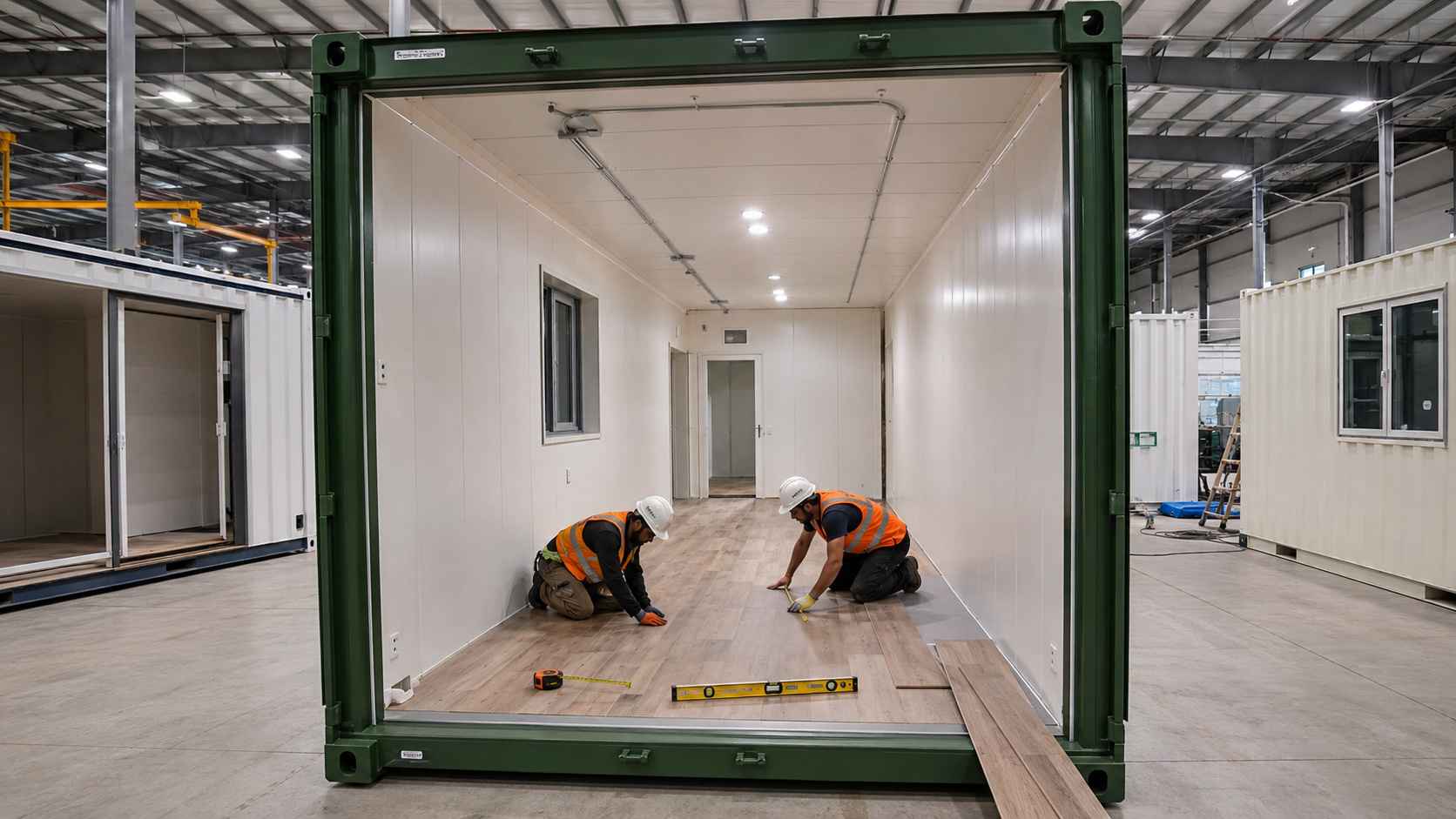
Factory fit-out in progress at SAMAN’s facility — PUF insulation panels visible on walls, vinyl flooring being laid, electrical conduit pre-installed in the roof panel.
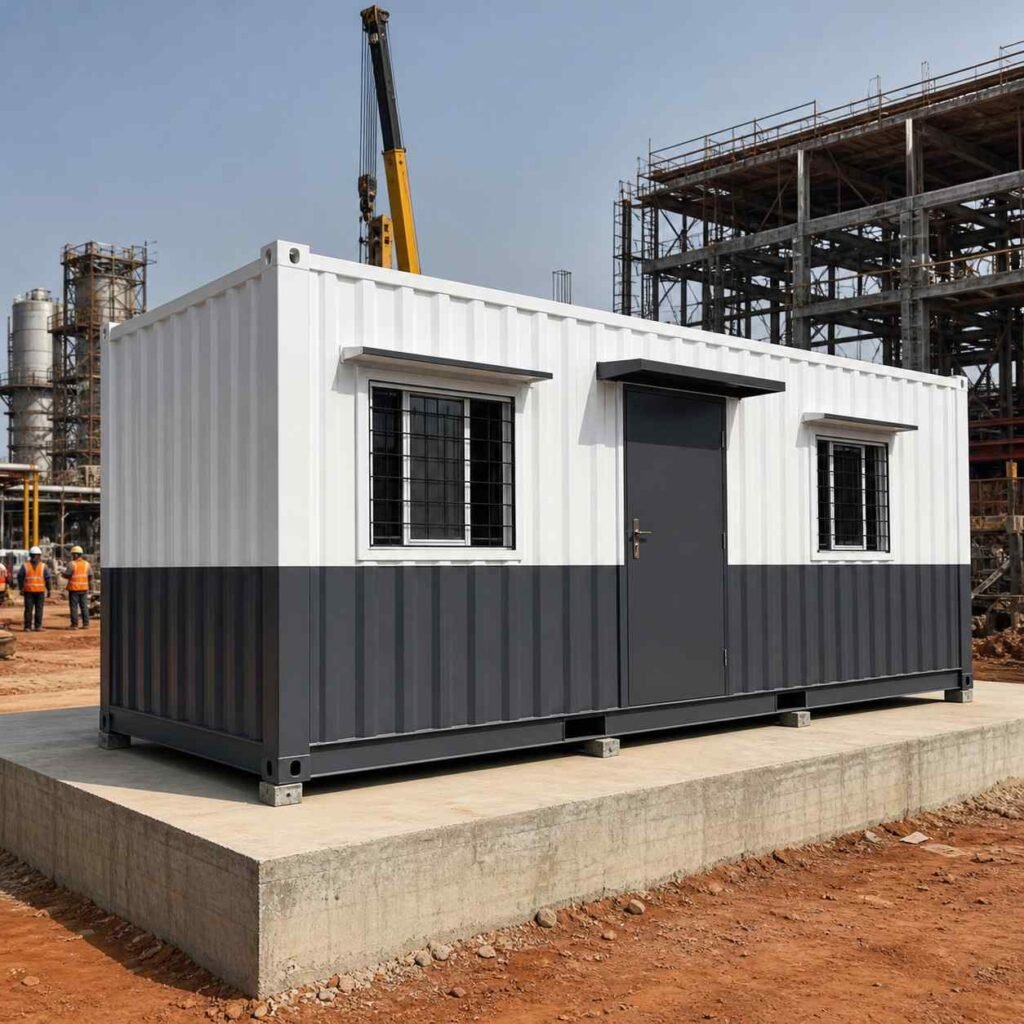
Customisation within the ₹12 lakh to ₹13 lakh band includes exterior cladding, additional windows, granite kitchen counter, upgraded bathroom fittings, and ACP interior wall panels. These are priced and confirmed during design alignment — no surprises mid-build.
Thermal performance in a smaller footprint — why the 20-ft container cools more efficiently than you’d expect
Every SAMAN container home ships with 50mm PUF insulation on all six faces as a factory-applied standard, not an optional upgrade. In tiny house container homes at the 20-ft format, this specification performs proportionally better than in larger units because the internal volume is smaller.
The thermal logic: 50mm PUF on a 160 sq ft internal volume creates a tighter envelope than the same specification on a 320 or 640 sq ft unit. A smaller volume stabilises temperature faster when the AC is running, and holds that temperature longer when the unit is sealed. In practice, a 1-tonne split AC is typically sufficient for a 20-ft tiny container home at most Indian locations — versus 1.5 to 2 tonnes for a full 40-ft build.
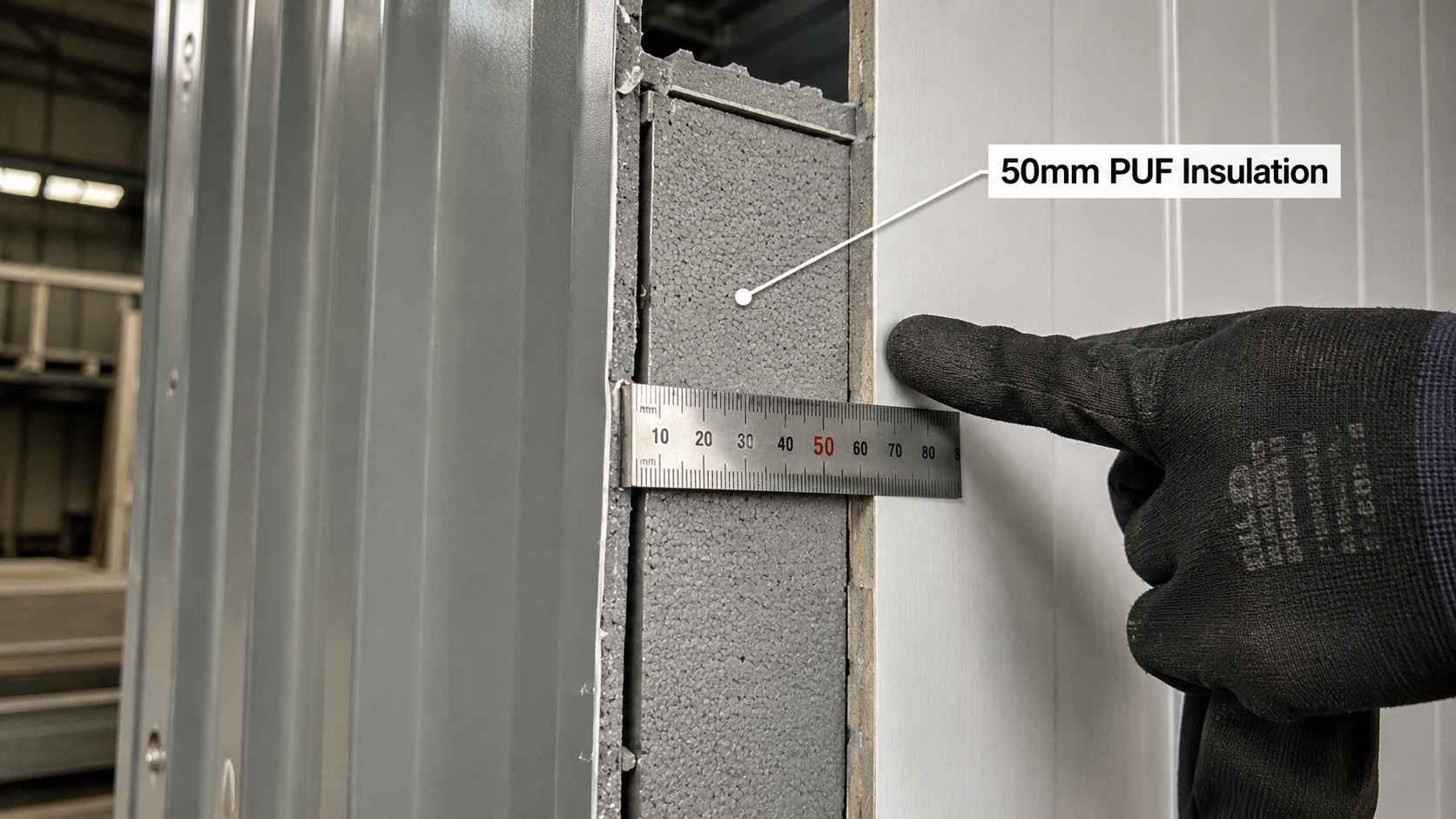
50mm PUF insulation layer inside the wall of a SAMAN tiny container home — structural thermal break factory-applied to all six faces before interior fit-out begins.
At 38–42°C outdoor temperature, a properly insulated and AC-equipped 20-ft unit maintains interior comfort comparable to a well-built brick room of the same area. The insulation is factory-applied to the container shell before interior fit-out begins — not a foam layer added to an existing wall, but a structural thermal break built into the unit from the start. This makes the tiny format particularly practical for hot-climate locations, exposed farmland, and coastal plots where an under-insulated structure would be unusable in peak summer.
Tiny container home vs shipping container tiny house — how to choose the right format
Both are single-container, small-format homes. The distinction is in the buyer’s primary decision driver.
A tiny container home — this page — is the right choice when your primary question is: how small can I go and still live comfortably? Size efficiency, a 20-ft footprint, compact layout design, and ₹12 lakh entry are the decision variables. The container is the structure; livability is the goal.
A shipping container tiny house serves a different buyer: one for whom the shipping container’s visual identity — the ISO corrugated steel exterior, the form factor of a freight container as a home — is itself part of the design intent. That page covers the aesthetic, the movement identity, and the buyers who want the visible container silhouette as the centrepiece of their home.
Both pages share the same 20-ft base container. If you’re choosing by footprint and price efficiency, you’re on the right page. If the shipping container look is the point — the visible corrugated steel as a design statement — see our shipping container tiny house range.
Who the tiny format is built for — and when to consider a larger container home
The 20-ft tiny container home works best for:
- Solo residents on rural or farmland plots who want a permanent, compact, low-maintenance home that delivers on day one.
- Couples with a minimalist lifestyle — one bedroom, one bathroom, a working kitchen, no rooms sitting empty.
- Weekend and holiday home buyers — a complete, insulated, lockable home on a farmhouse, hill-station, or coastal plot; delivered and operational in 3 to 4 weeks from order, without a building project.
- Eco-conscious buyers — the 20-ft format has the smallest footprint, the lowest operational energy use, and the minimum site disruption of any SAMAN container home.
- Buyers with compact or constrained plots — where a larger container or conventional build is not viable.
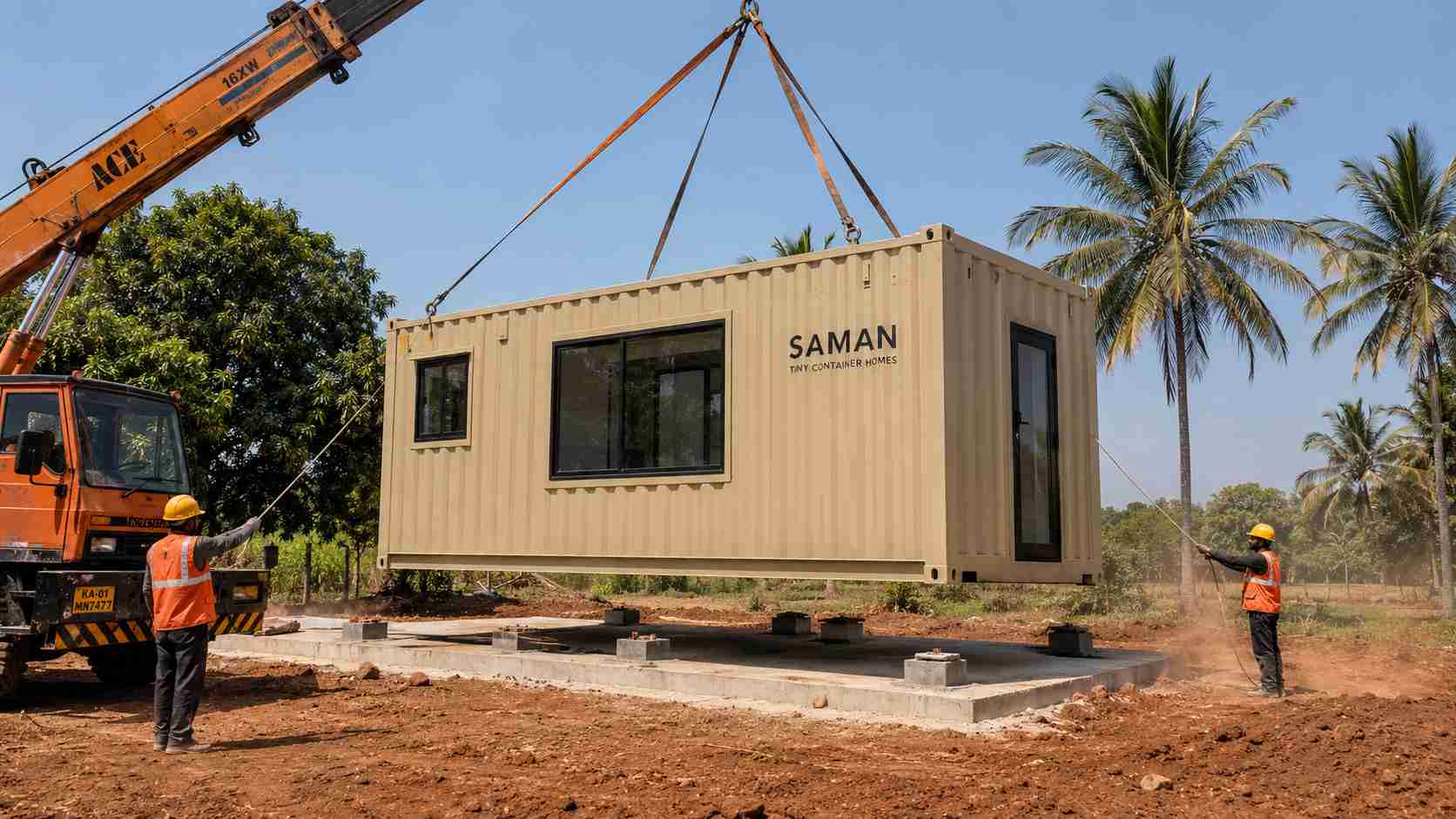
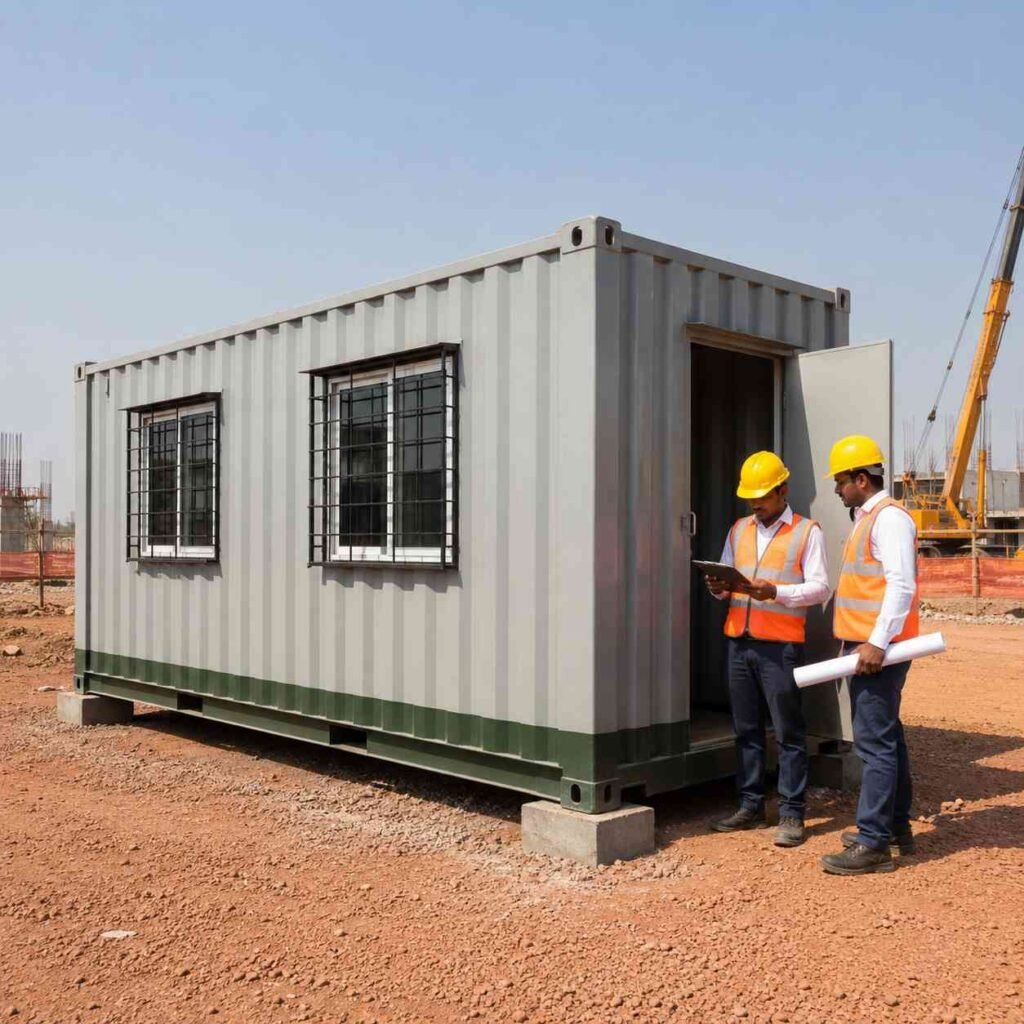
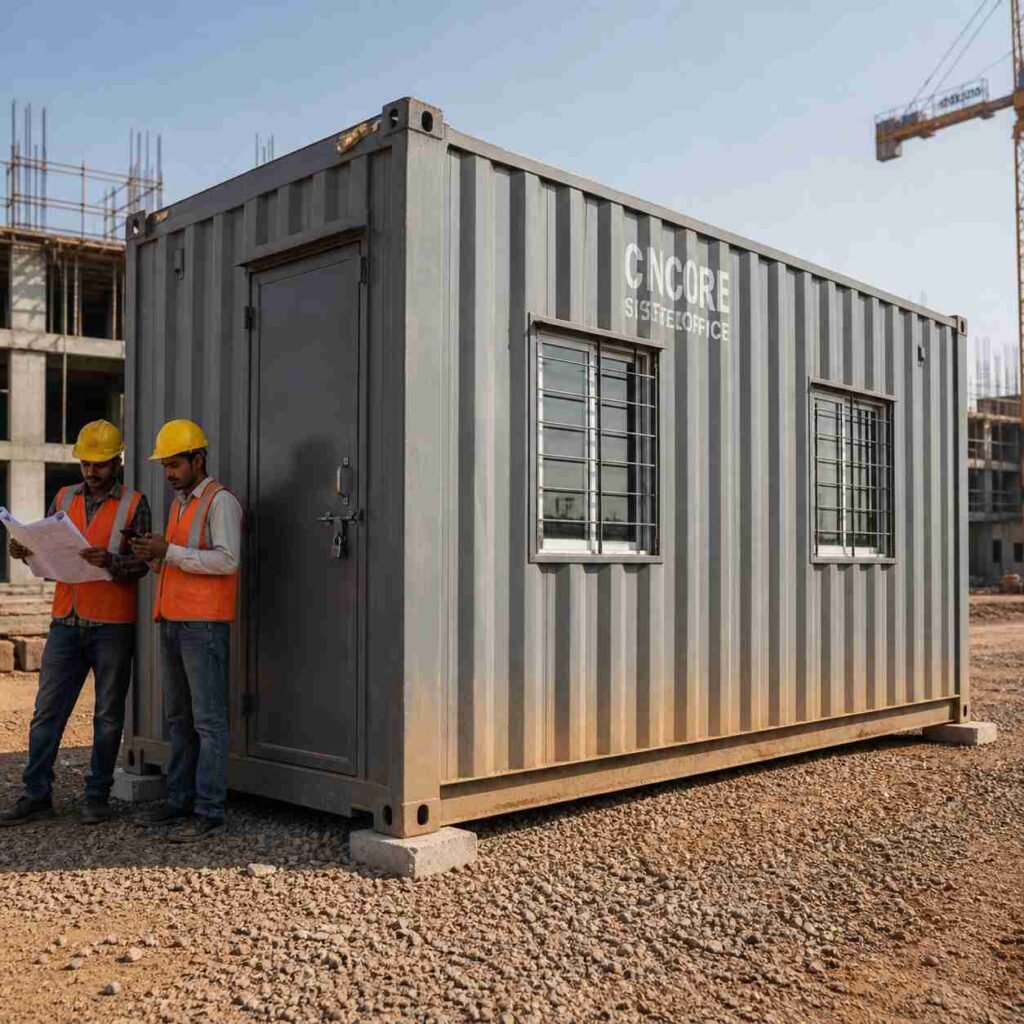
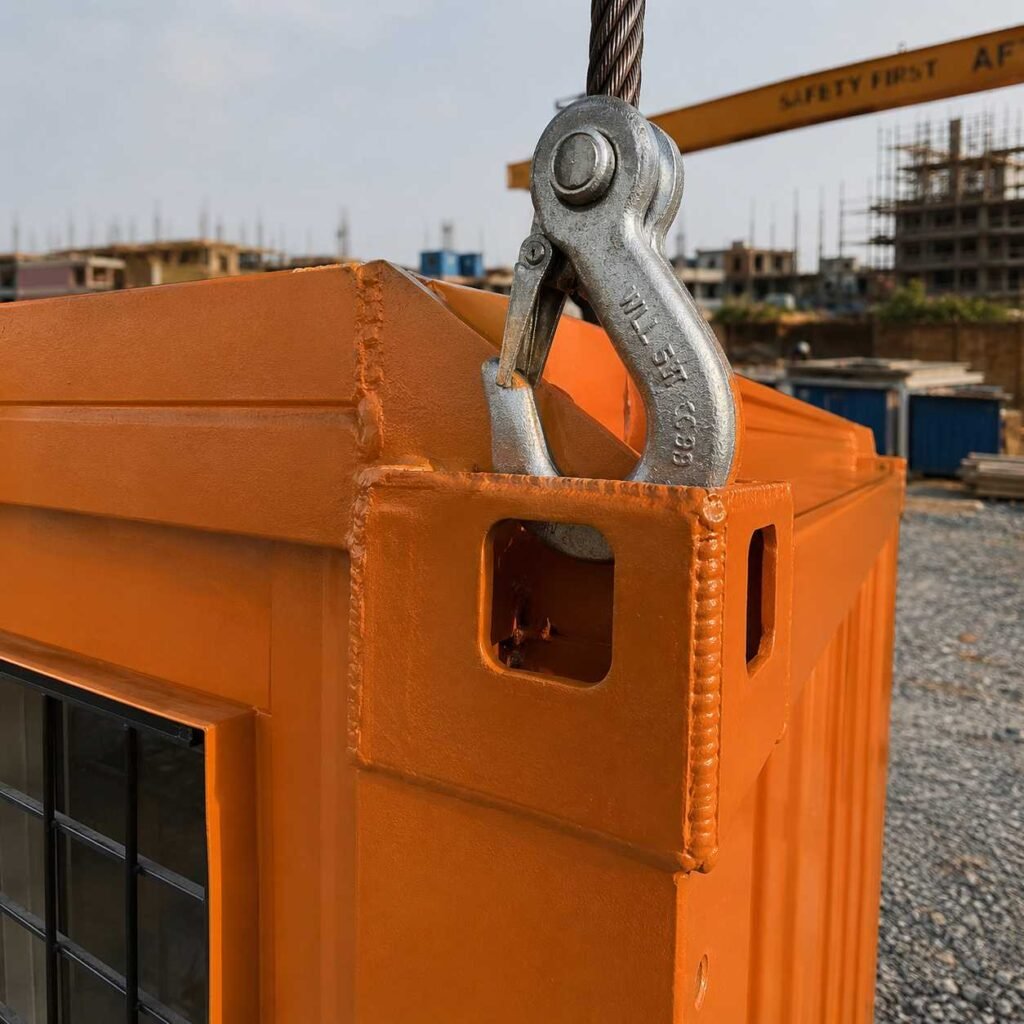
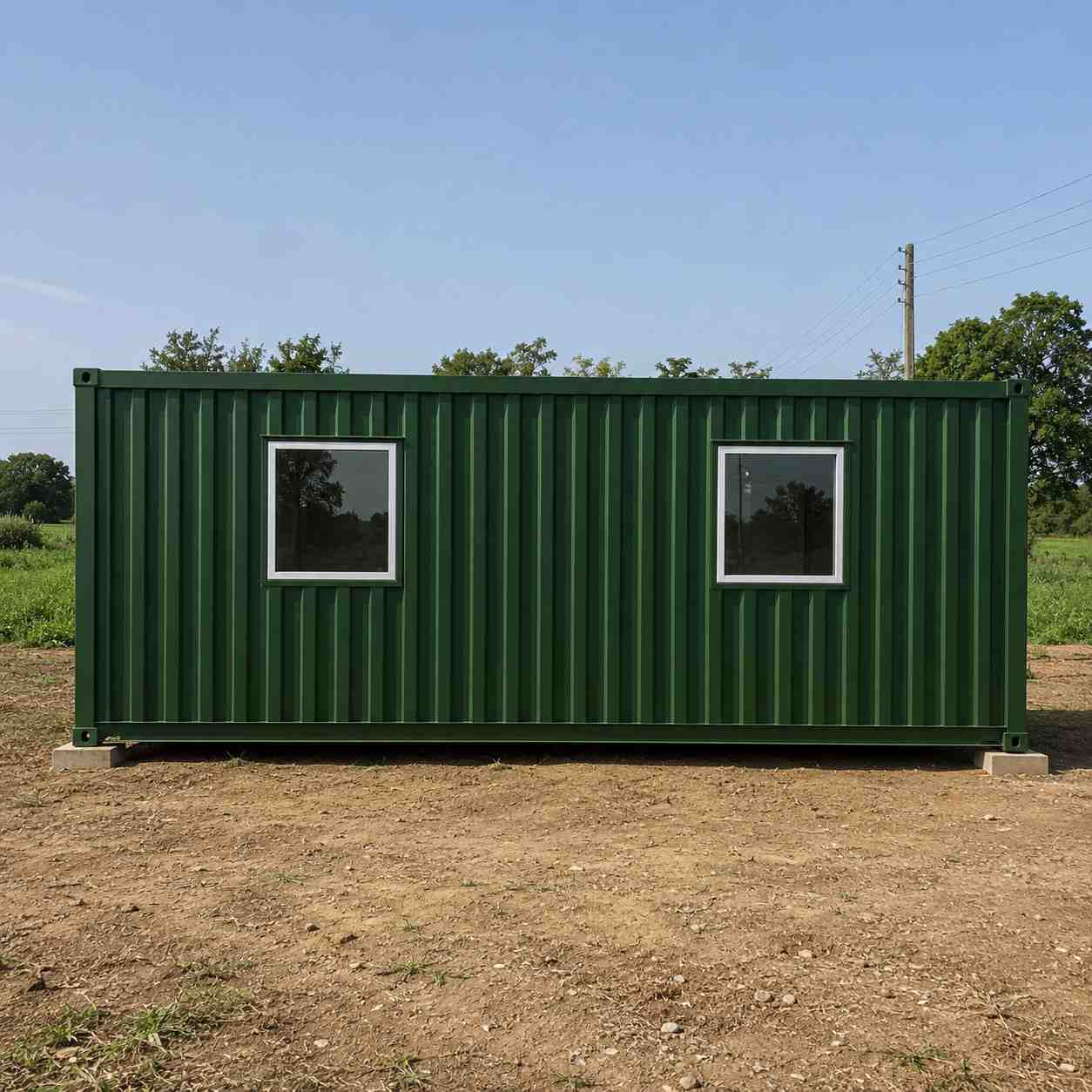
Single-truck crane delivery of a SAMAN tiny container home on a rural farmland plot — one crane placement, no construction crew, operational within 7 to 21 working days from order.
For buyers on agricultural or farmland plots: a container home sits on a raised plinth and is not a permanent structure under most state definitions, but you should verify the specific land-use classification and panchayat or urban local body requirements for your district before ordering. Most rural residential and agricultural zone plots where the owner has patta rights accept a container home on a temporary or semi-permanent basis — but approvals vary by state and district.
The 20-ft format is also expandable. If your space requirements grow after installation, a second 20-ft unit can be placed adjacent on the same plot — creating a two-container configuration with separate or connecting interiors. SAMAN designs multi-unit extensions at order time or as a phased add-on once the first unit is in place.
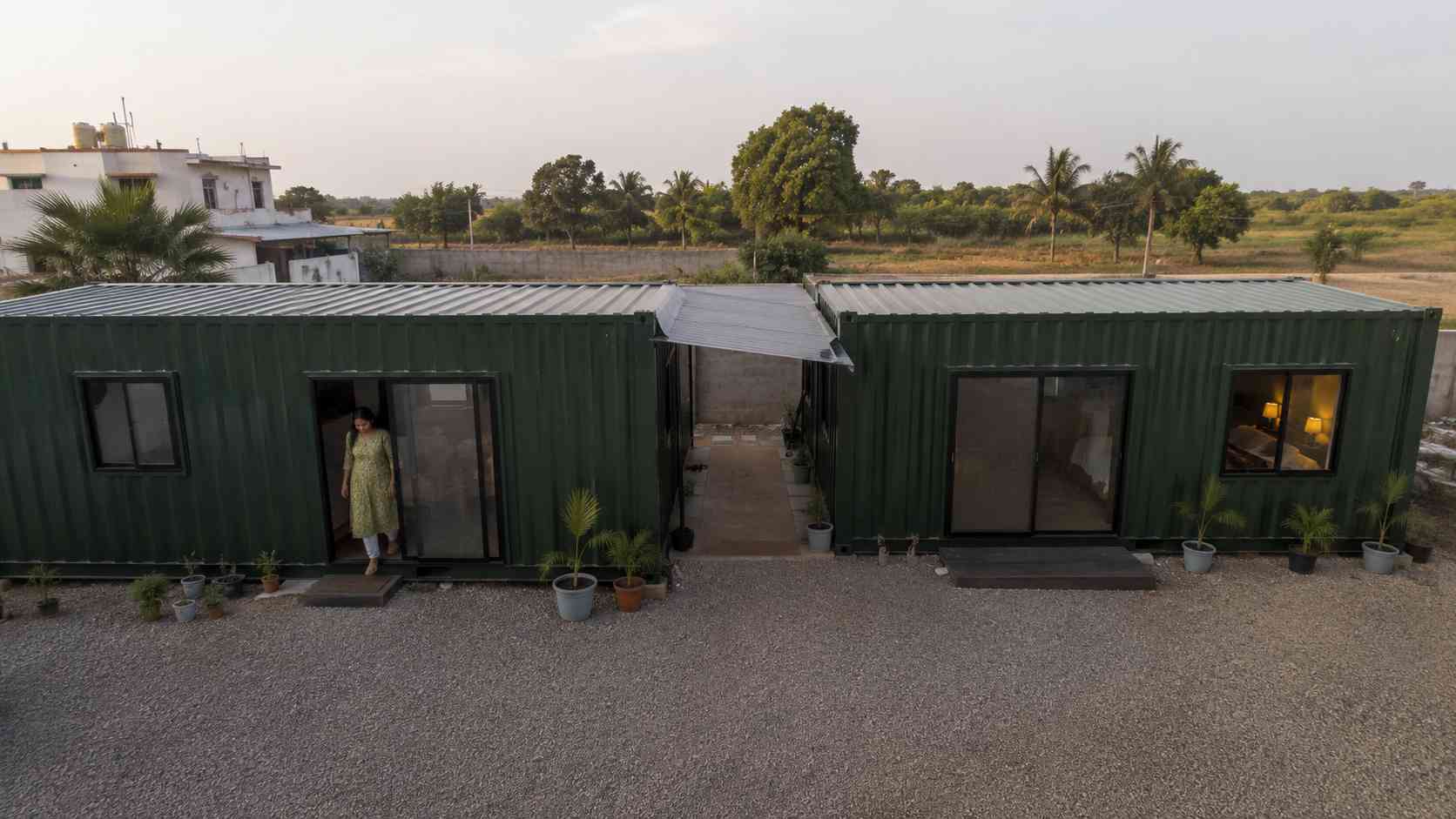
Expandable from one to two units — a second 20-ft container home placed adjacent on the same plot creates a two-room configuration without any new construction.
It is not the right format when you need more than 300 sq ft. For a family home or a larger single-person home, the next step is our prefab container homes range — 40-ft configurations from ₹8.65 lakh covering 1 BHK through 2 BHK layouts, available as a single unit or in colony quantities. For buyers who need a certified-grade build with IS 2062-documented structural steel, our cargo container house covers that requirement. For a full overview of SAMAN’s container home range across all sizes and price tiers, start at our container house overview and return to this page when the compact 20-ft format fits your brief.
Common questions about tiny container homes
How many square feet is a tiny container home, and what does that floor area actually hold?
A SAMAN tiny container home is built on a 20-ft container frame — approximately 20 ft × 8 ft external — giving around 160 sq ft of usable internal floor area after insulation. That space holds a sleeping zone, a kitchen platform with sink, a wet area with WC and shower, and a compact lounge or work area. It is a complete one-room home, not a module within a larger structure. Buyers who need more floor area should look at our 40-ft single-container format, which gives approximately 320 sq ft from ₹8.65 lakh.
Does a tiny container home get too hot in India — what insulation does it have?
Every SAMAN tiny container home ships with 50mm PUF insulation on all six faces as a factory-applied standard, not an add-on. The 20-ft format benefits from a tighter thermal envelope than larger configurations: a smaller internal volume stabilises faster and holds its temperature longer under AC. A 1-tonne split AC is typically sufficient for a 20-ft unit at most Indian locations. The insulation is built into the container shell before the unit leaves our factory — not a lining applied to an existing wall.
How does a tiny container home differ from a shipping container tiny house?
Both are single-container, small-format homes on a 20-ft base. The difference is the primary decision driver. A tiny container home is chosen on size efficiency — the smallest livable footprint at the lowest entry price. A shipping container tiny house is chosen when the visual identity of the shipping container itself — the ISO corrugated silhouette — is part of the home’s design intent. Same structural base, different buyer motivation and finish emphasis.
What is the delivery and installation timeline for a tiny container home in India?
Factory build at our Bangalore or Greater Noida facility takes 14 to 21 working days from design confirmation for a standard 20-ft configuration. A single-unit tiny container home is the simplest delivery scenario in our range: one truck, one crane placement on a prepared plinth. No structural site work required. Delivery within our standard zone is included in the ₹12,00,000 price; remote locations or states outside standard zone carry a transport surcharge confirmed at the time of order.
Share your site location, plot dimensions, plinth-readiness, and configuration preferences — our design team will confirm a layout drawing and a buildable quote within 48 hours. Call 09708989937, WhatsApp +91 9708989937, or email sales@samanportable.com.
| Weight | 274.32 kg |
|---|---|
| Dimensions | 609.6 × 304.8 × 274.32 cm |
Shipping and Delivery Information
At SAMAN Portable Office Solutions, we are committed to ensuring a seamless shipping experience for our customers. Our shipping and delivery policy has been crafted to provide you with clear details and expectations when you place an order for our portable cabins or container offices.
Delivery Timeline
Once your order is confirmed, we will process and dispatch your product within 15 to 21 working days. This timeline is calculated from the date we receive your order and ensures that your product is fabricated, inspected, and packed securely for transportation. We strive to adhere strictly to this delivery window, guaranteeing that your order reaches you in a timely manner.
Shipping Costs
Our shipping charges are structured based on the size and type of the trailer used for delivery. Below are the detailed rates:
- For a 40 Feet Open Trailer: The cost is ₹80 per kilometer, excluding Over Dimensional Cargo (ODC) and Regional Transport Office (RTO) charges.
- For a 20 Feet Open Trailer: The cost is ₹60 per kilometer, also excluding ODC and RTO fees.
Note: ODC and RTO charges may vary depending on your location and state regulations. We ensure transparency in our billing and will provide you with an accurate estimate before shipment.
Within Bangalore Shipping Rates
For customers within the Bangalore region, we offer competitive fixed shipping rates for hassle-free delivery:
- 40 Feet Open Trailer: ₹15,000
- 20 Feet Open Trailer: ₹10,000
These rates are designed to be cost-effective while ensuring your product reaches its destination safely and securely. We work with reliable transport partners to provide efficient and on-time delivery services within Bangalore.
At SAMAN Portable Office Solutions, customer satisfaction is our priority. For any queries related to shipping or delivery, please feel free to contact our customer support team. We are here to assist you every step of the way.

Reviews
Clear filtersThere are no reviews yet.