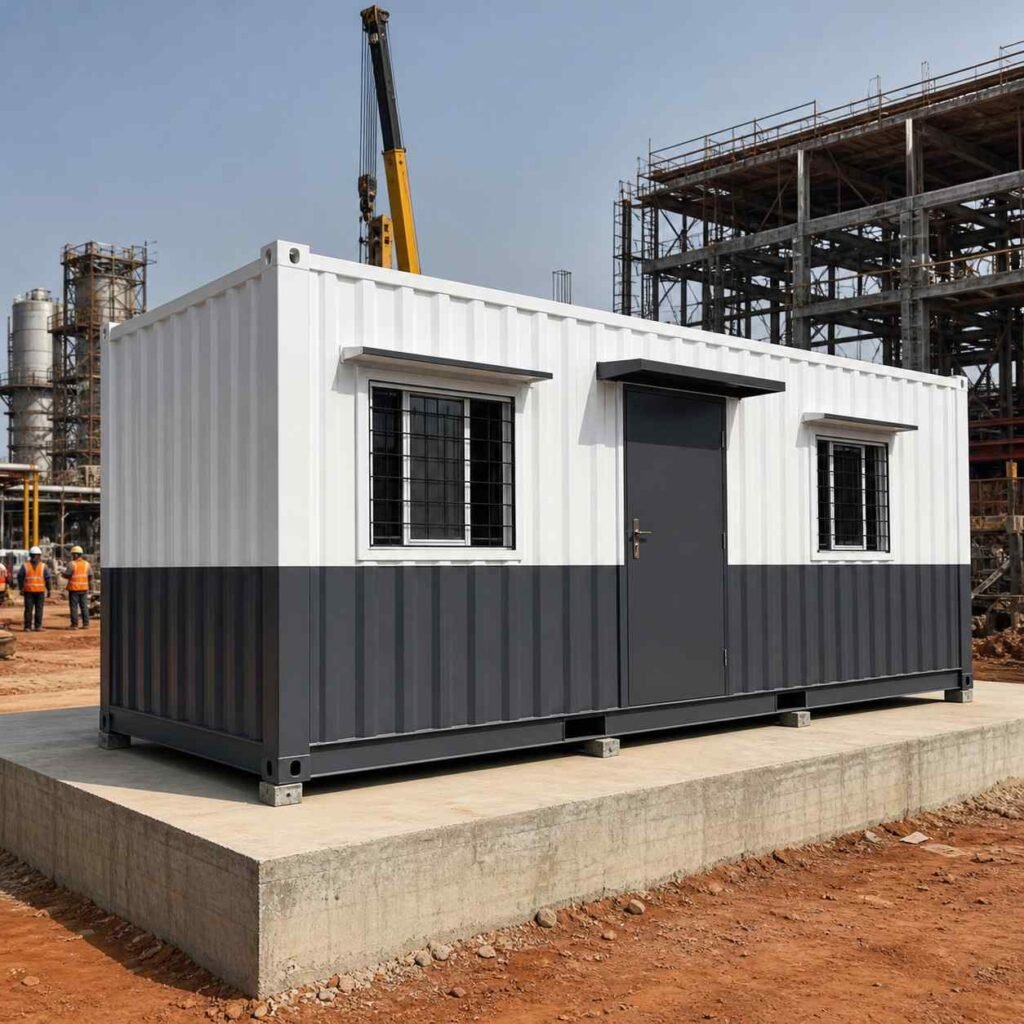
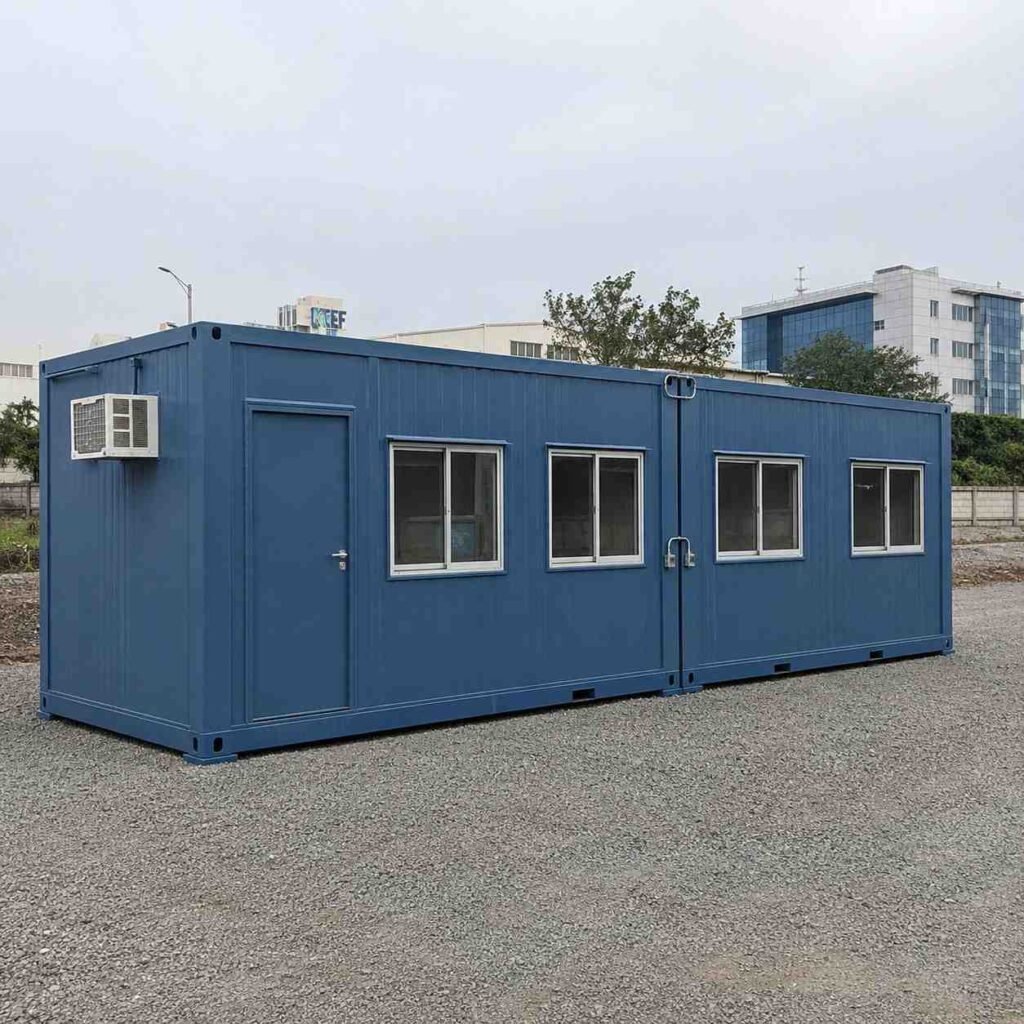
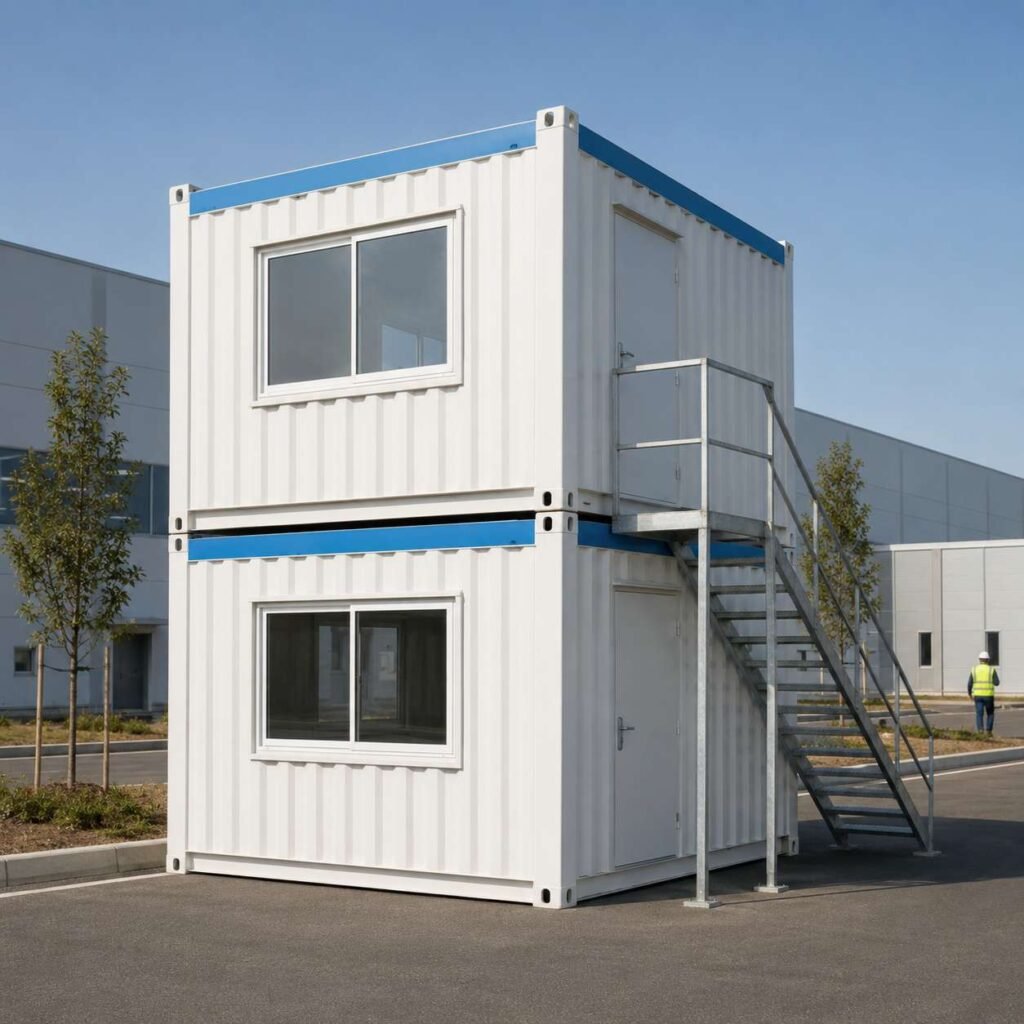
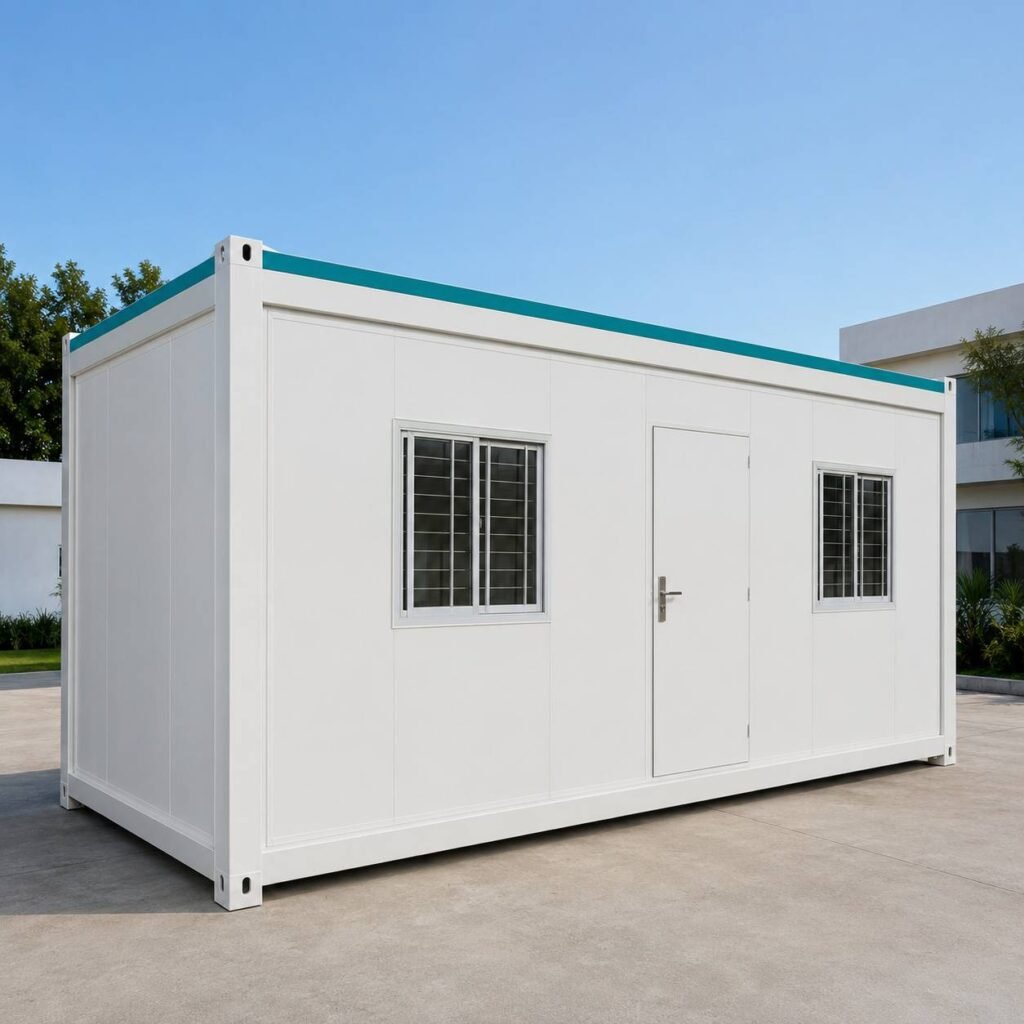
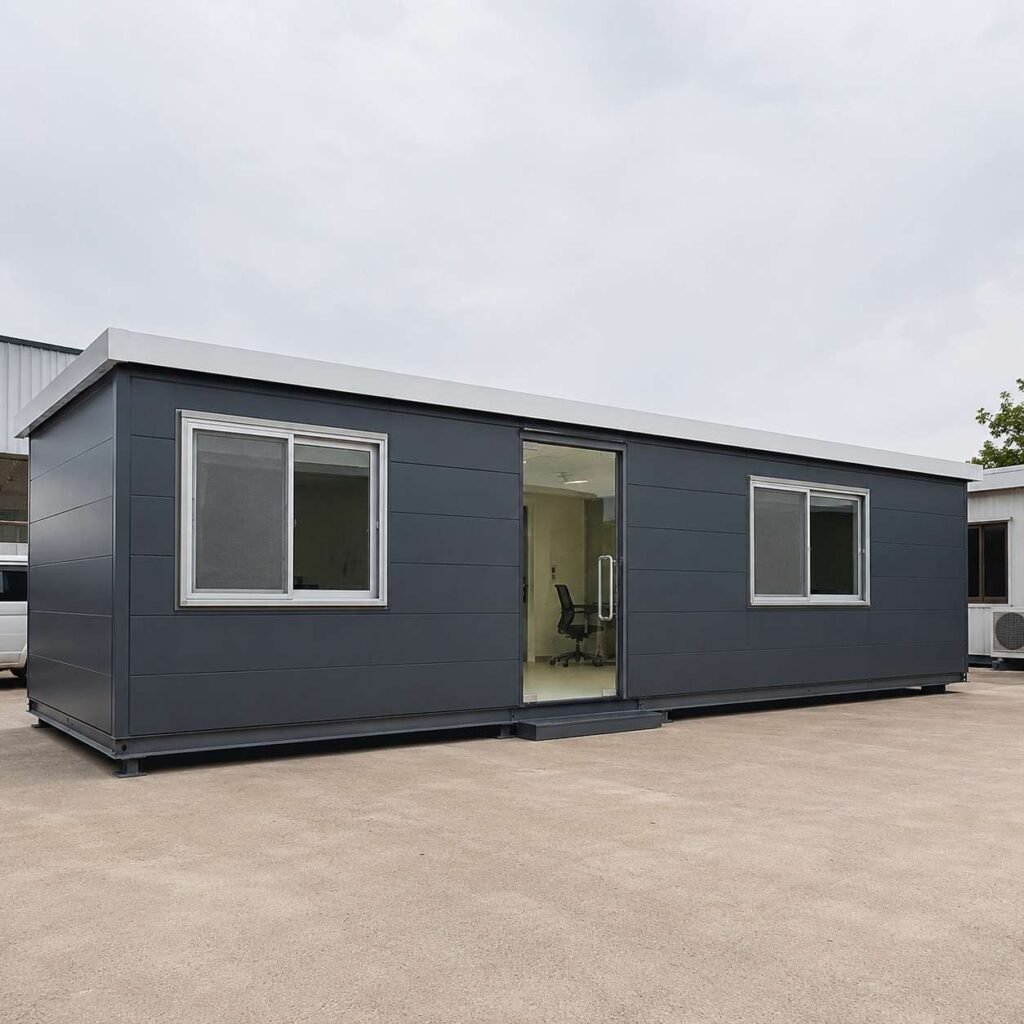
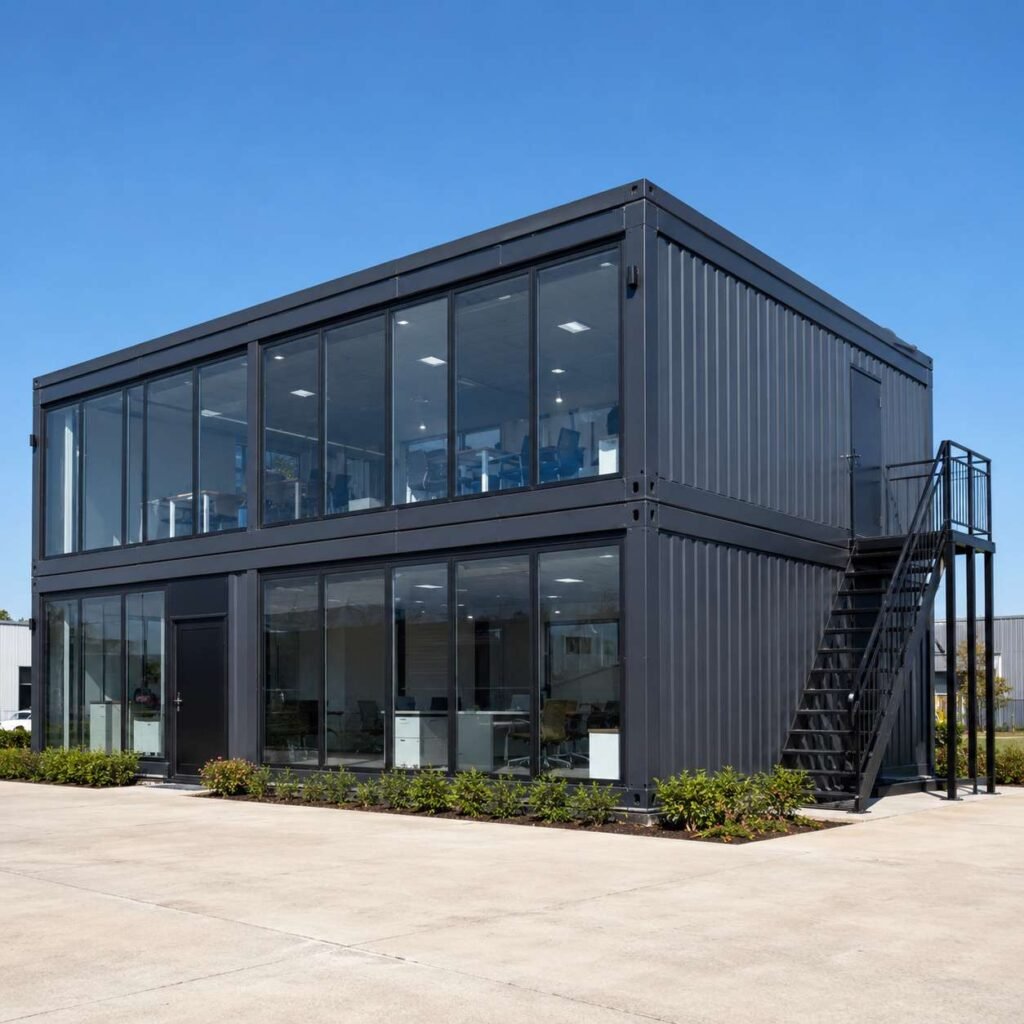
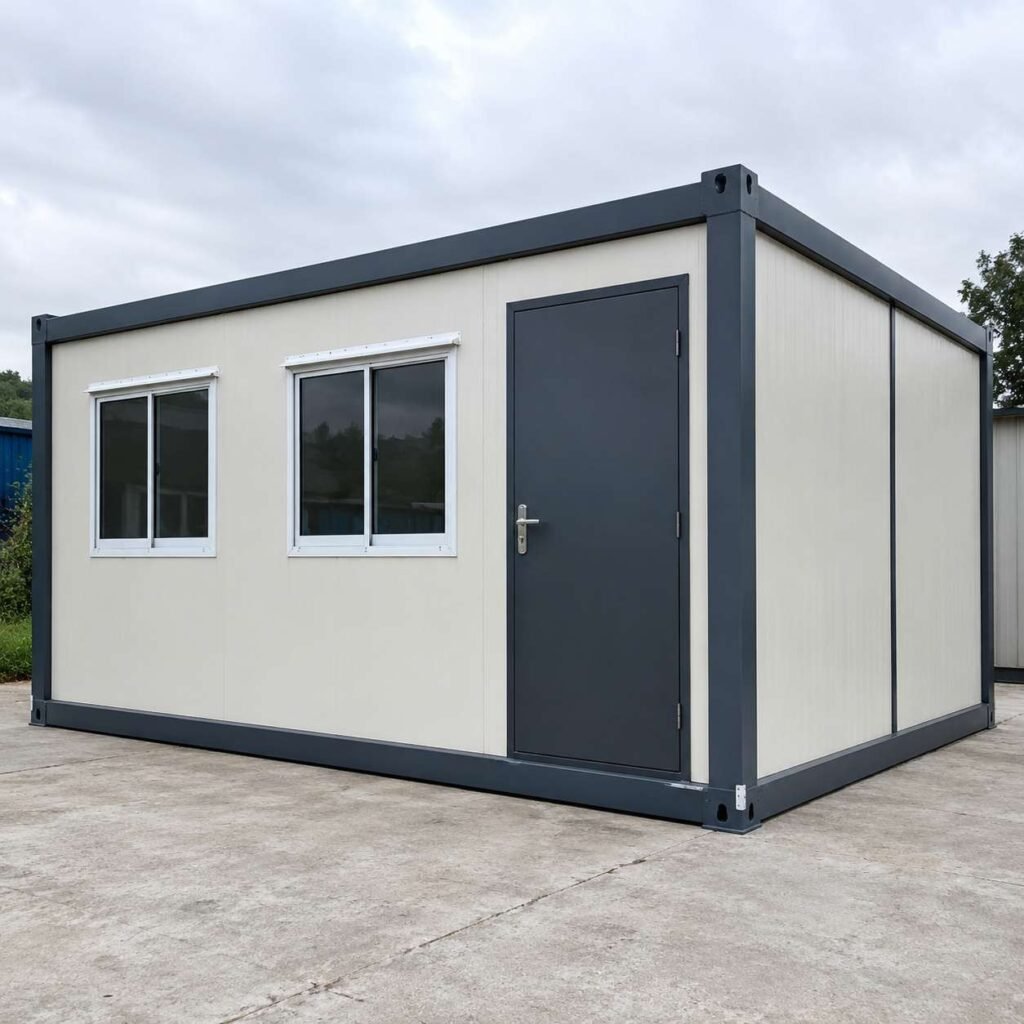
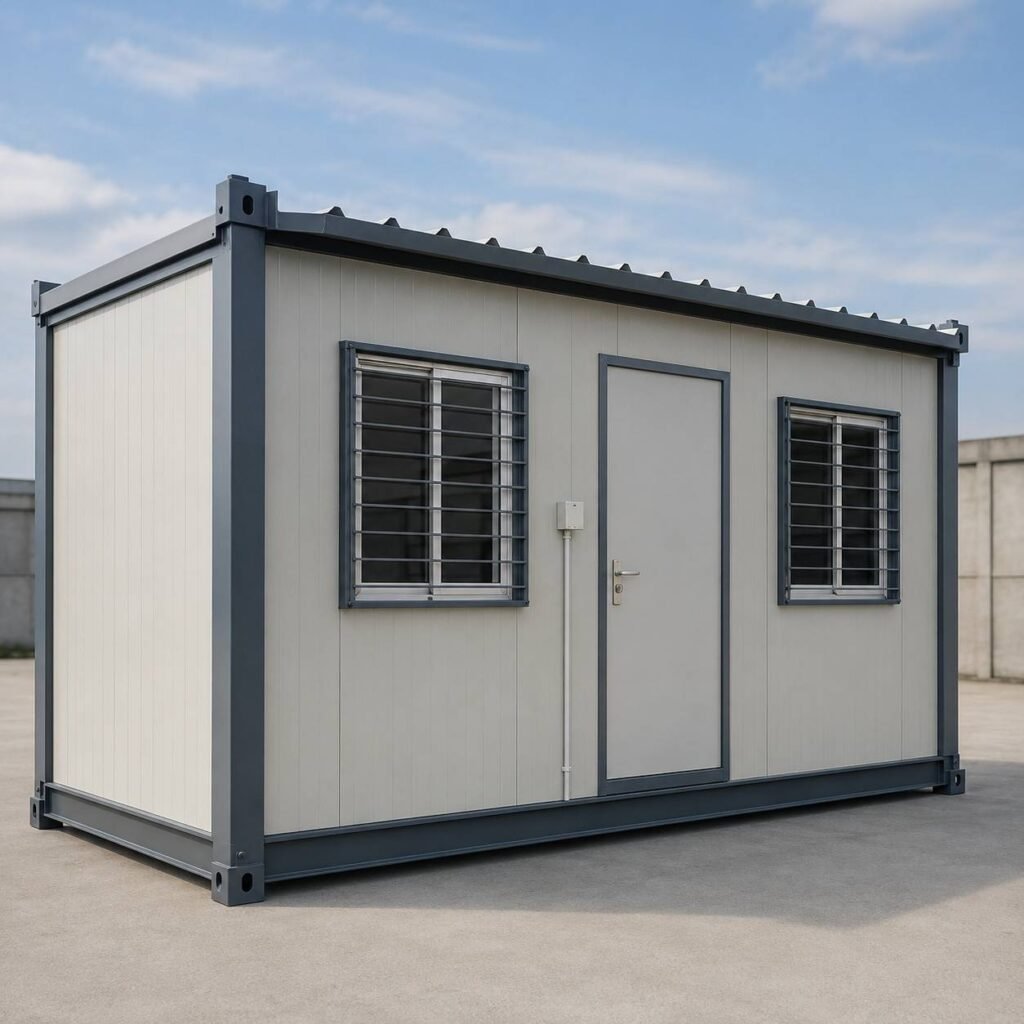
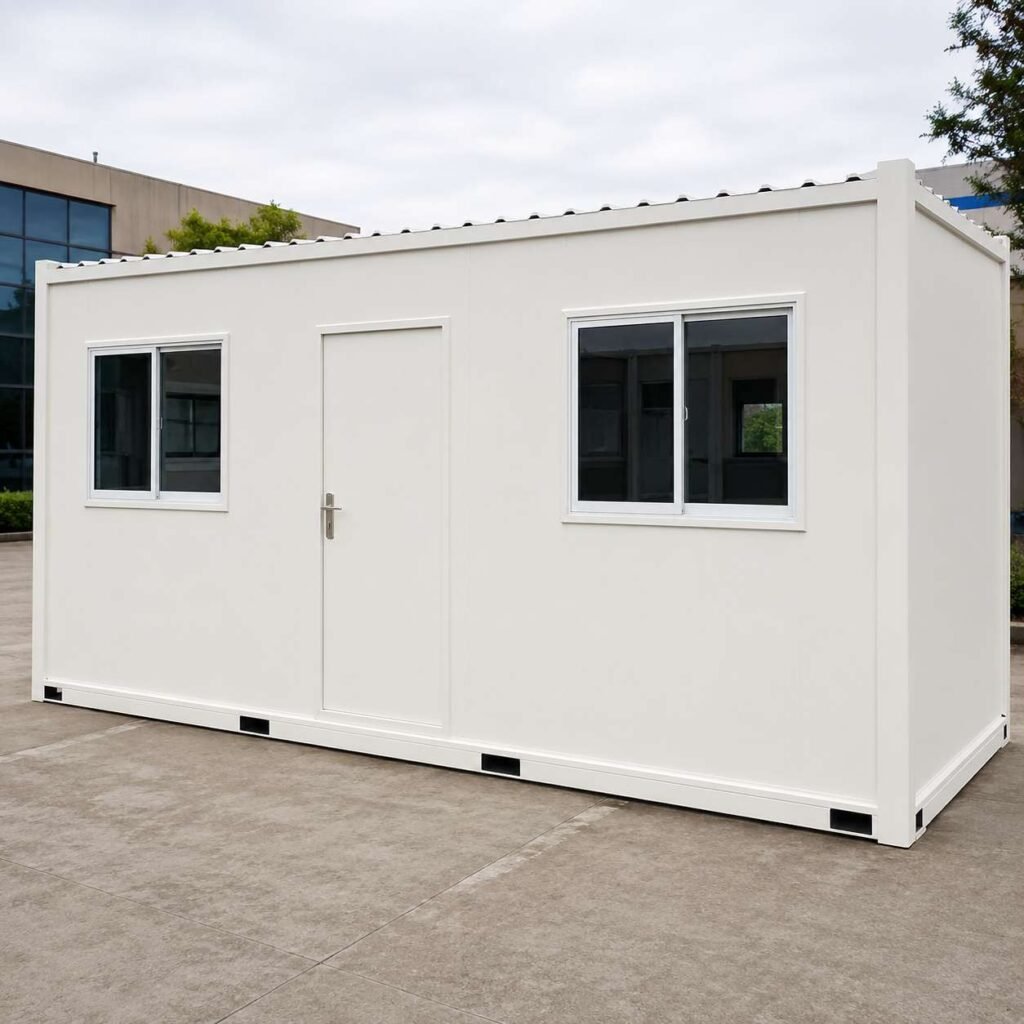
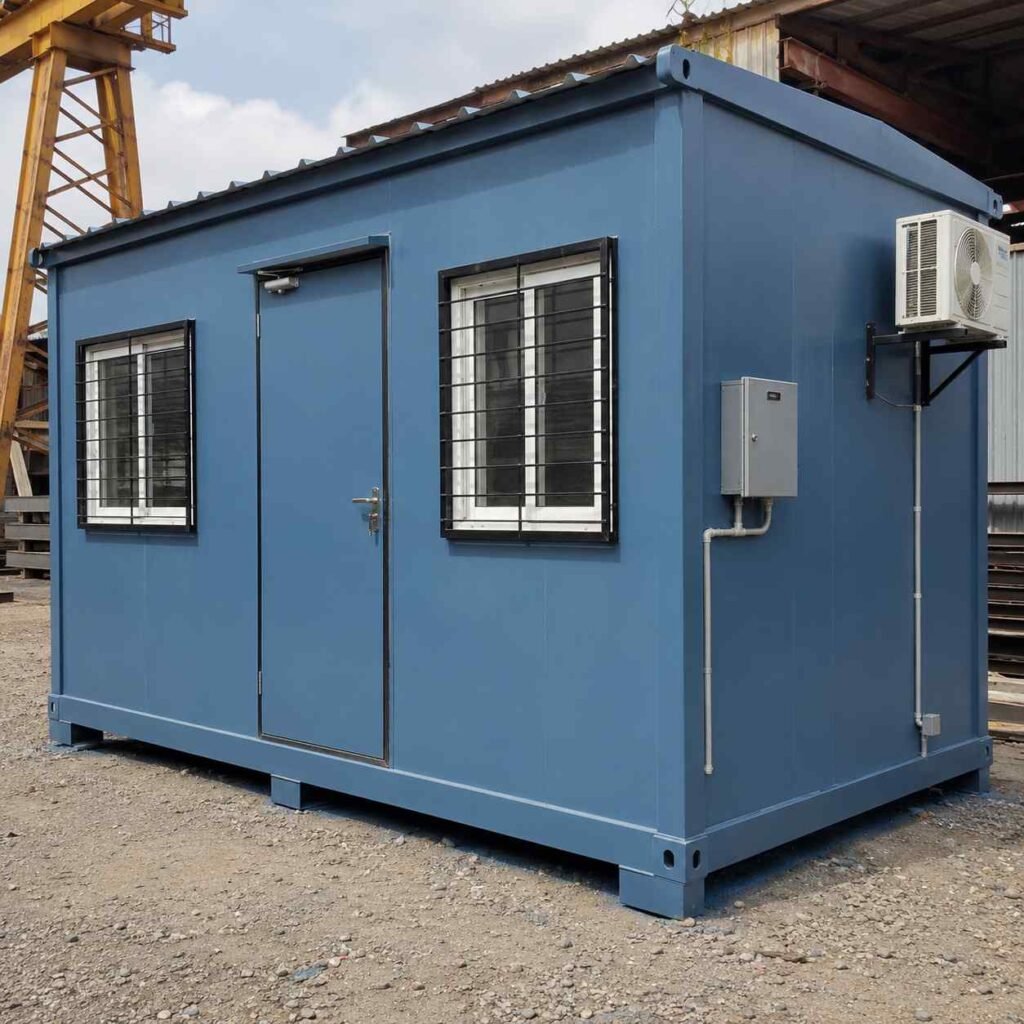
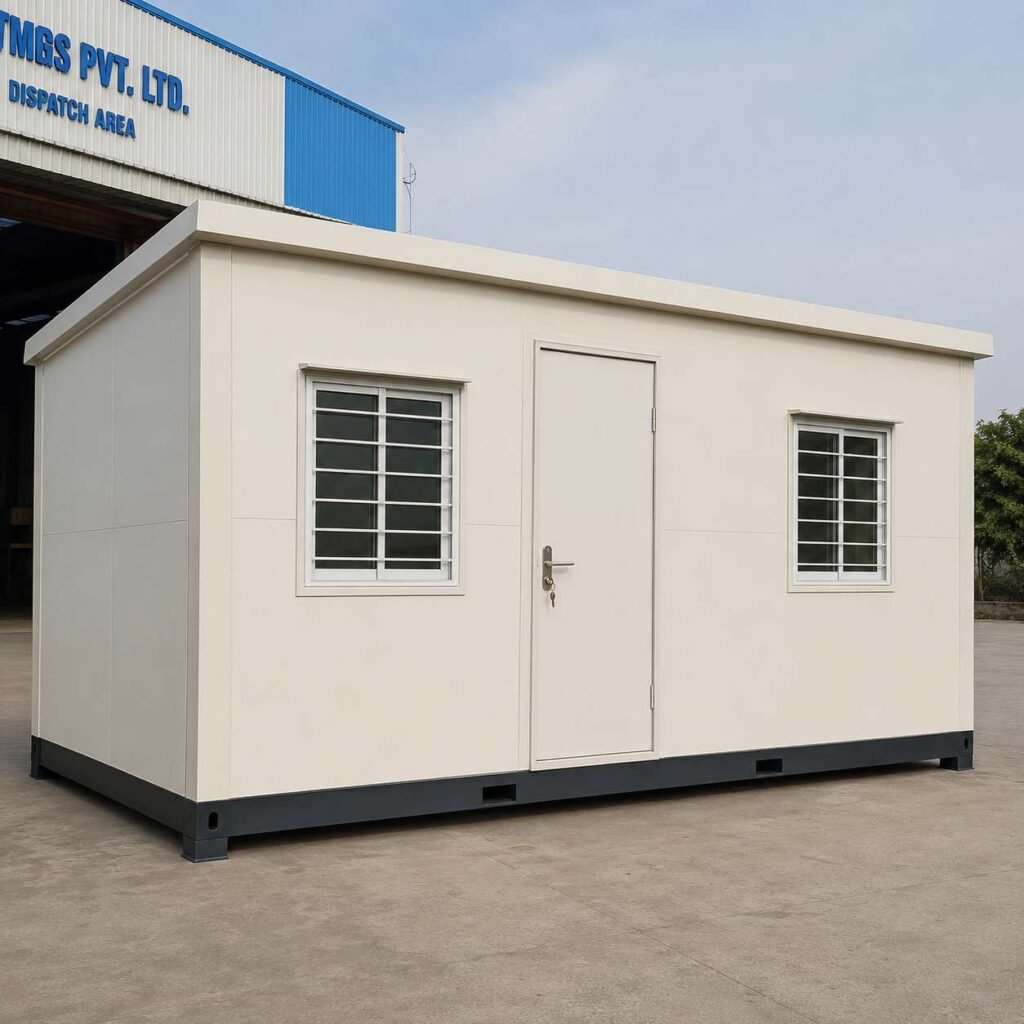
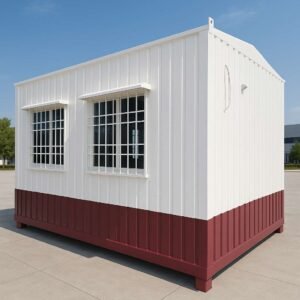



White and red porta cabin with toilet facility
Porta Cabin with Toilet Original price was: ₹275,000.00.Current price is: ₹265,000.00.
Back to products
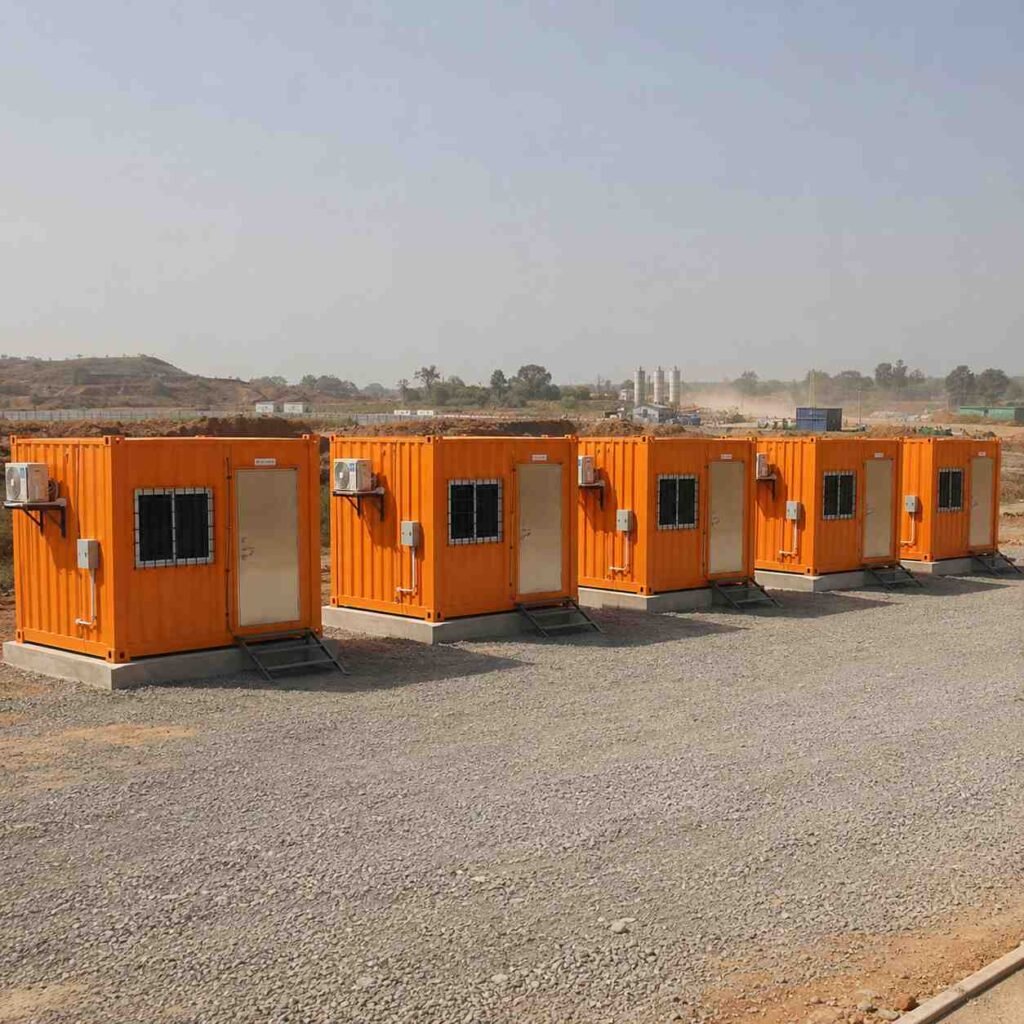
Mini porta cabin with orange-white exterior, steel door, and grilled window in Electronic City, Bangalore.
Mini Porta Cabin Original price was: ₹135,000.00.Current price is: ₹125,000.00.
Description

India’s Shift Toward Smart Portable Sanitation (2025)

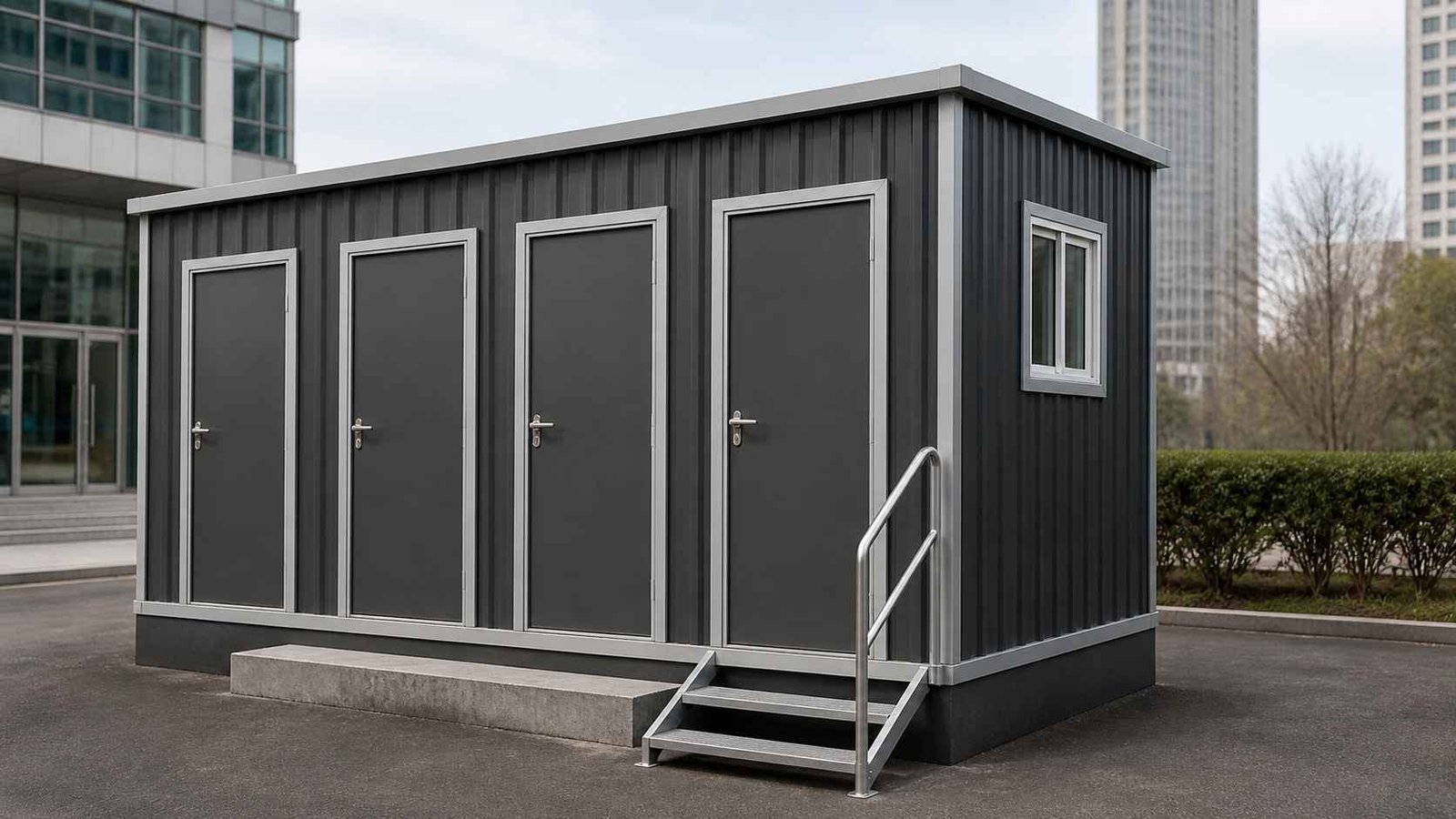
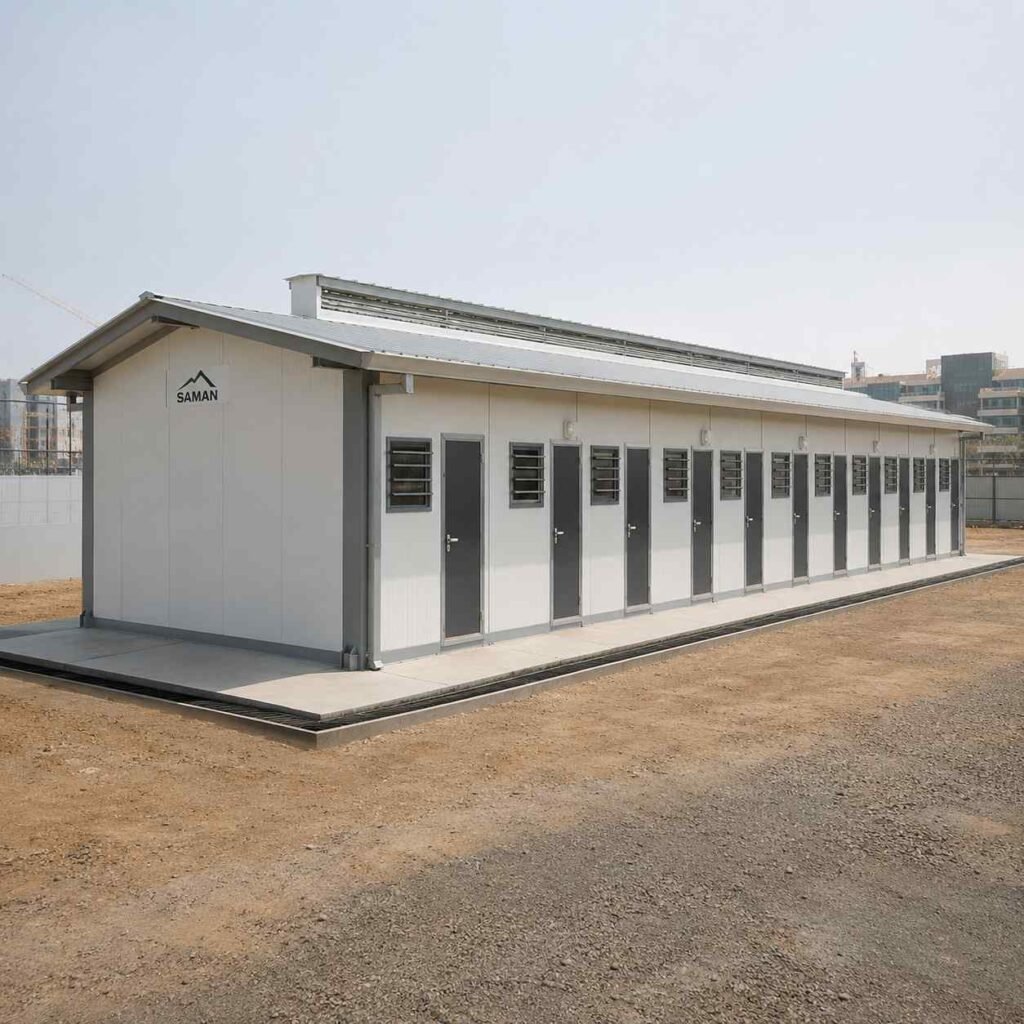
Grey 4-Door Toilet Porta Cabin

A modern grey-colored toilet porta cabin with four separate doors and side ventilation, suitable for commercial complexes and outdoor events.

India’s sanitation priorities are changing fast. Toilet porta cabins are now standard infrastructure on worksites, festivals, and public projects where civil toilets are too slow or costly. They install within two days, need no brickwork, and help organizations stay compliant with the nation’s ODF++ mandate.

Market Context

The portable toilet industry is worth USD 19.2 billion worldwide and is growing to USD 34.6 billion by 2032. India’s segment alone is projected to hit USD 1.8 billion by 2030, expanding at 9.6 % CAGR — faster than any other region. That growth is fueled by three drivers:

  • Urban projects under Swachh Bharat Mission 2.0

  • Smart City tenders demanding modular sanitation

  • Corporate CSR and event regulations requiring portable restrooms

Each driver adds a new buyer segment, from government departments to private contractors and social enterprises.

Table 1 – India vs Global Market Overview (2024 – 2025)

AspectGlobalIndiaKey Insight
Market Value (2024)USD 19.2 BUSD 948 M (rental)India ≈ 5 % of global
Projected ValueUSD 34.6 B by 2032USD 1.8 B by 2030India CAGR 9.6 % > Global 7.7 %
Top Use SectorsEvents, Disaster ReliefConstruction, Smart CitiesIndia is policy-driven
ROI Cycle≈ 12 months6 – 9 monthsQuicker payback
Average Unit Cost$ 500 – $ 1 500₹ 25 000 – ₹ 6 LBroader choice range

Adoption Highlights

  • Setup speed saves three weeks over civil construction.

  • Bio-toilets cut waste volume by 83 % and water use by 90 %.

  • Solar and IoT modules reduce maintenance visits by 40 %.

  • FRP and PUF panels extend lifespan to 10–15 years.

  • Typical ROI window is 6–9 months for contractors.

Policy and Sustainability Perspective

The FSSM guidelines and BIS IS 15916 standards govern design, safety, and waste treatment for these cabins. Unlike cement toilets that need manual desludging, prefab models use sealed bio-digesters and recyclable materials. This reduces both labor hazards and carbon emissions.

Each installation saves tens of thousands of litres of fresh water annually. That’s why portability has shifted from being a temporary fix to becoming part of India’s long-term urban sanitation strategy.

Key Takeaway

Toilet porta cabins are no longer a backup option. They represent India’s new model of rapid, eco-compliant infrastructure — built to move where people work and deliver safe sanitation without delay.

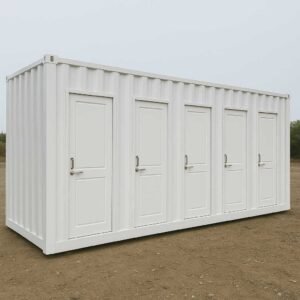
Five-door porta toilet cabin

Spacious red porta toilet cabin featuring five individual sections, ideal for labor colonies and industrial setups.

What Is a Toilet Porta Cabin & Why It Matters

A toilet porta cabin is a prefabricated sanitation unit made for quick installation and easy relocation.
It combines durable materials, enclosed plumbing, and compact design to deliver hygienic facilities anywhere—construction sites, events, relief camps, or roadside projects.

How It Works

The cabin arrives ready to use. It needs only a leveled RCC plinth and a water / power connection.
Waste is stored or treated inside a sealed tank system—either a bio-digester or a chemical holding unit.
Each design prevents groundwater contamination and odor leakage.

Core Components of a Modern Toilet Porta Cabin

ComponentTypical MaterialFunctionBenefit
Structure FrameMild Steel (Square Pipe 50×50 mm)Gives rigidityLong life, shock resistant
Wall PanelsFRP / PUF / ACPProvides insulationKeeps interior cool, easy clean
FlooringMarine ply + vinyl sheetPrevents leakageNon-slip, hygienic surface
RoofCorrugated PPGI sheetHandles heat & rain2-way slope for drainage
Waste TankFRP / HDPE / SS 316Stores / treats wasteLeak-proof and odor-free
VentilationLouver vents + exhaust fanAir circulationReduces humidity and odor
Door SystemFRP / ACP panel with lockAccess & privacyDurable and secure
Electrical SetLED light + switch boardVisibilityLow energy consumption
Plumbing LineCPVC pipes + ball valvesWater flowEasy maintenance
Finish CoatingEpoxy paint / powder coatProtectionCorrosion resistant

Why It Matters in 2025

Government policies now tie sanitation directly to worker welfare and project approval.
Using porta cabins satisfies three major needs:

  • Regulatory Compliance: Meets BIS, NBC & FSSM norms for onsite facilities.

  • Speed of Deployment: Ready within 48 hours from dispatch.

  • Sustainability: Bio-toilets cut fresh-water use by up to 90 %.

  • Worker Safety: Reduces open defecation and health risks.

  • Reusability: Units shift across projects for 10 + years.

Performance in Numbers

MetricTypical Value (India 2024-25)Industry Benchmark
Installation time1–2 days≤ 3 days
Water use per flush≤ 5 L≤ 6 L
Odor control efficiency95 %≥ 90 %
Service interval (bio-toilet)6 months6–9 months
Structural life span10–15 years10 + years

User Perspective

For site workers, access to a porta cabin toilet means fewer sick days and better morale.
For project owners, it means compliance without delays.
For cities, it means scalable hygiene infrastructure that moves as fast as the work itself.

Key Takeaway

A toilet porta cabin isn’t just a temporary facility; it’s a mobile health asset.
Its ability to combine regulation, comfort, and mobility is why it matters more than ever in 2025.

For a deeper breakdown of models and costs, see our complete porta cabin price guide 2025.

Single cabin toilet unit

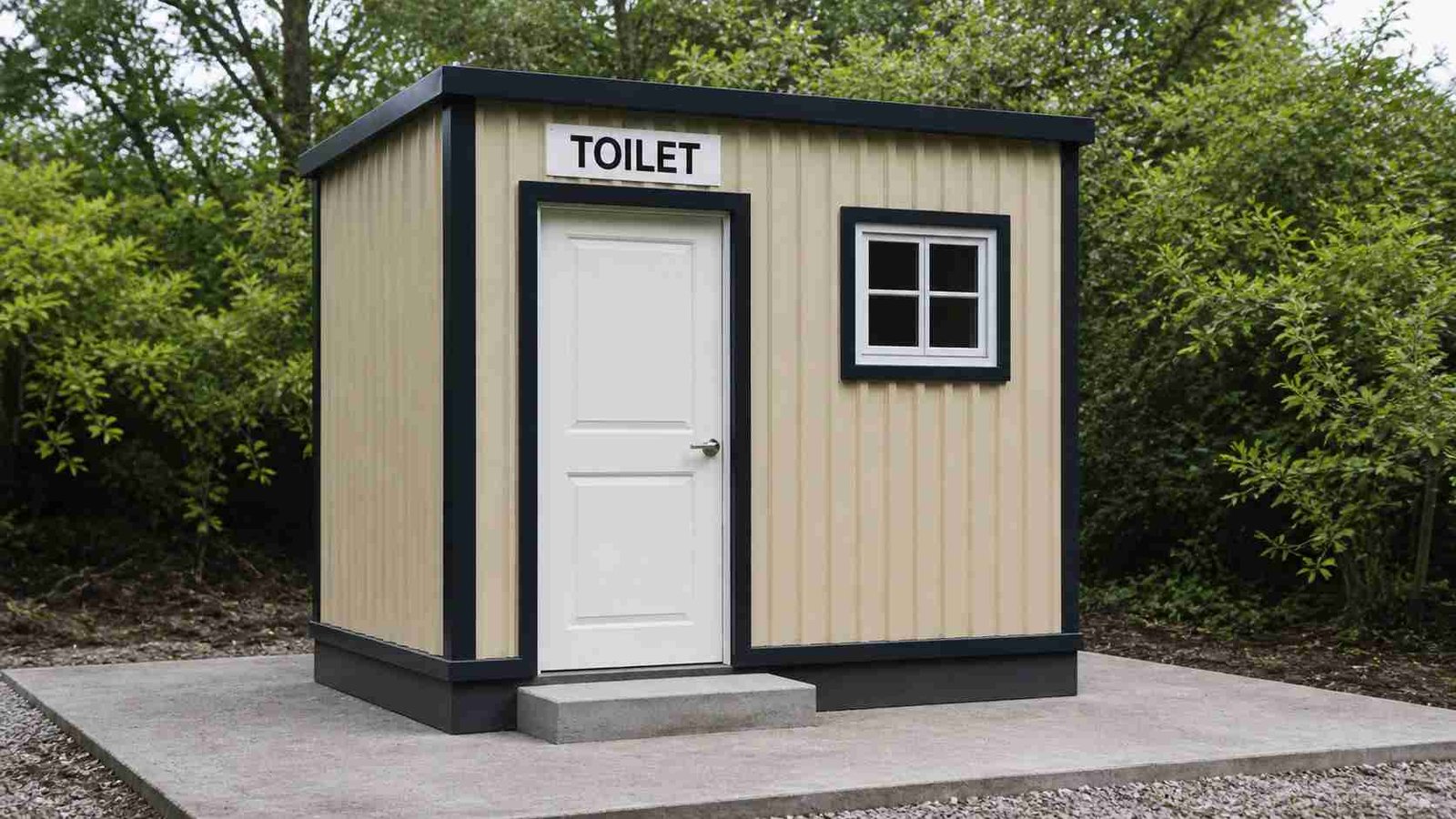
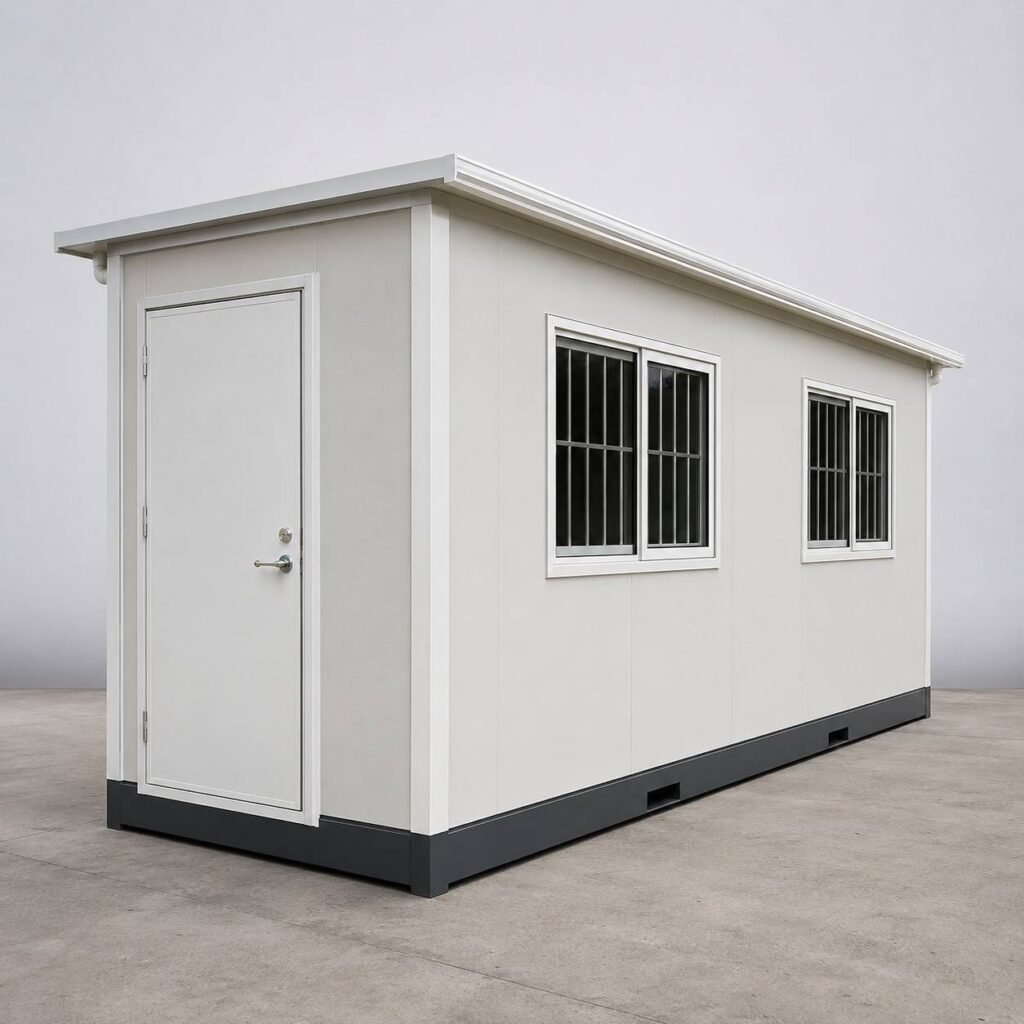
A compact beige porta cabin designed as a single toilet unit, suitable for small outdoor spaces or individual use.

Market Overview: Growth, Regulations & Opportunities

The market for toilet porta cabins has moved from rental convenience to regulated necessity. India now leads South Asia in modular sanitation deployment—supported by central schemes, green-building codes, and a rising private rental ecosystem.

Growth Snapshot (2024–2030)

India’s portable sanitation segment is expanding at a CAGR of 9.6 %, faster than the global average of 7.7 %.
Urbanization, highway projects, and Smart City missions are creating continuous demand for quick, compliant restrooms.

Key growth factors include:

  • National sanitation policies encouraging prefab adoption.

  • Labour welfare norms requiring hygienic onsite toilets.

  • Large events, tourism, and CSR programs boosting rentals.

  • Public-private partnerships (PPP) making maintenance feasible.

  • Preference for eco-friendly, bio-digester-based designs.

Indian Porta Cabin Toilet Market Segmentation (2025 Forecast)

SegmentShare (%) Approx.Growth DriverTypical Buyer
Construction & Infrastructure45 %Labour welfare mandatesContractors & developers
Smart Cities & Urban Projects20 %Municipal complianceULBs, Smart City SPVs
Events & Tourism Sector15 %Outdoor events & CSREvent agencies
Industrial & Defense Use10 %Long-term deploymentsPSUs, defense sites
Emergency & Relief Operations10 %Disaster managementNGOs & state relief cells

Regulatory Framework

India’s policy shift is anchored in four key guidelines:

  1. Swachh Bharat Mission 2.0 (ODF ++) – mandates mobile sanitation for all large worksites.

  2. BIS IS 15916:2024 – defines design safety for prefabricated structures.

  3. FSSM Manual 2022 – governs faecal-sludge and septage management.

  4. National Building Code Part 9 (2023 Update) – details toilet-to-user ratios for temporary facilities.

Together they ensure that porta cabins meet structural, environmental, and hygiene criteria nationwide.

Investment & Opportunity Outlook

The next five years will see:

  • 40 % increase in demand from highway & metro projects.

  • Tier-II cities adopting bio-toilets for bus stands and markets.

  • Corporate rentals rising 25 % year-on-year for short projects.

  • Export potential to Nepal, Sri Lanka & Africa as manufacturing scales.

Compliance Benefits in Numbers

Compliance StepTime SavedCost ImpactTypical Fine Avoided
Using BIS-approved model– 2 weeks of approvals₹ 10 000 saved in paperwork₹ 50 000 non-compliance penalty avoided
Following FSSM desludging planLess manual labour₹ 3 000 / month savingsLegal risk removed
ODF++ certified operationInstant CSR eligibilityFunding accessHigher project score

Regional Highlights

  • South India leads in PUF and steel toilet cabins due to industrial projects.

  • North India sees FRP cabins preferred for construction corridors.

  • Western India adopts solar-powered units under ESG targets.

Key Takeaway

The Indian market has matured into a structured, standards-driven industry.
For buyers, the opportunity lies in choosing certified, service-ready porta cabins that align with both compliance and sustainability goals—making sanitation faster, safer, and investment-worthy.

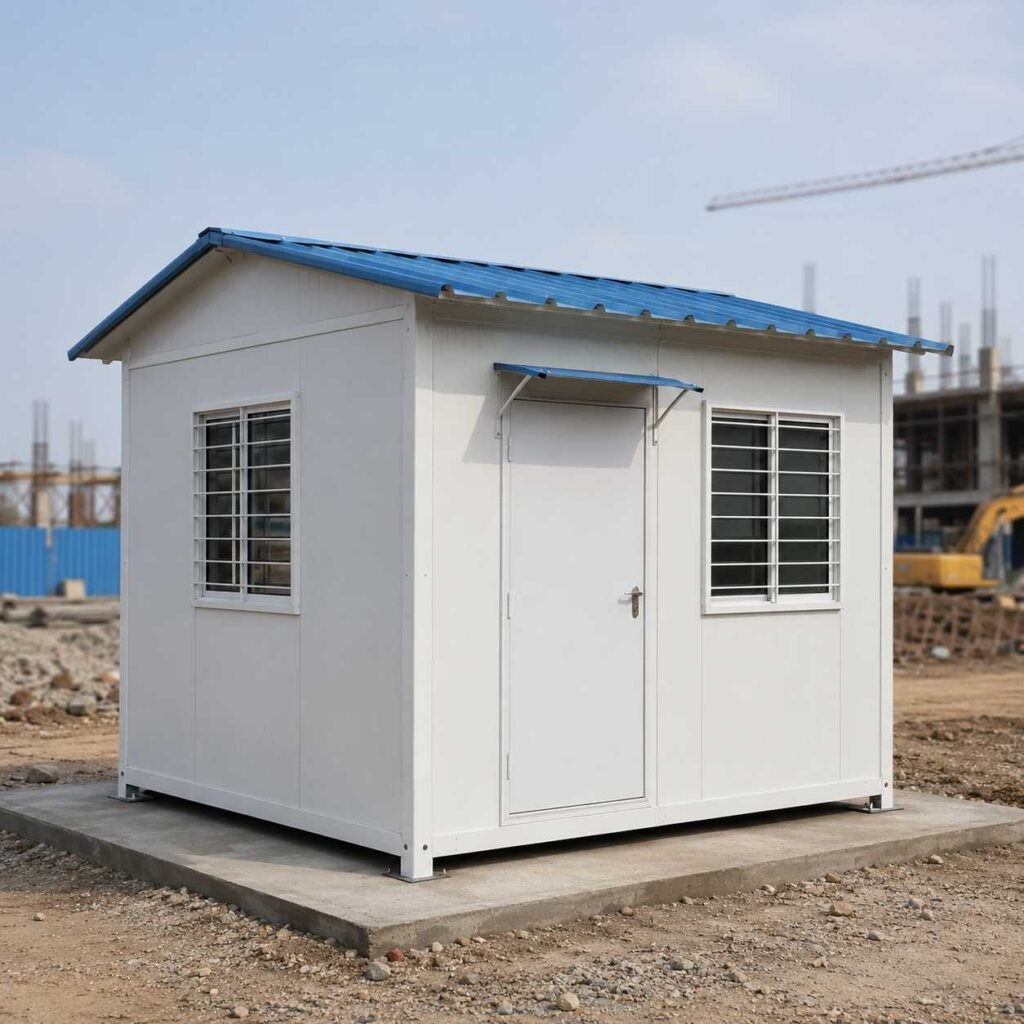
White-blue toilet cabin

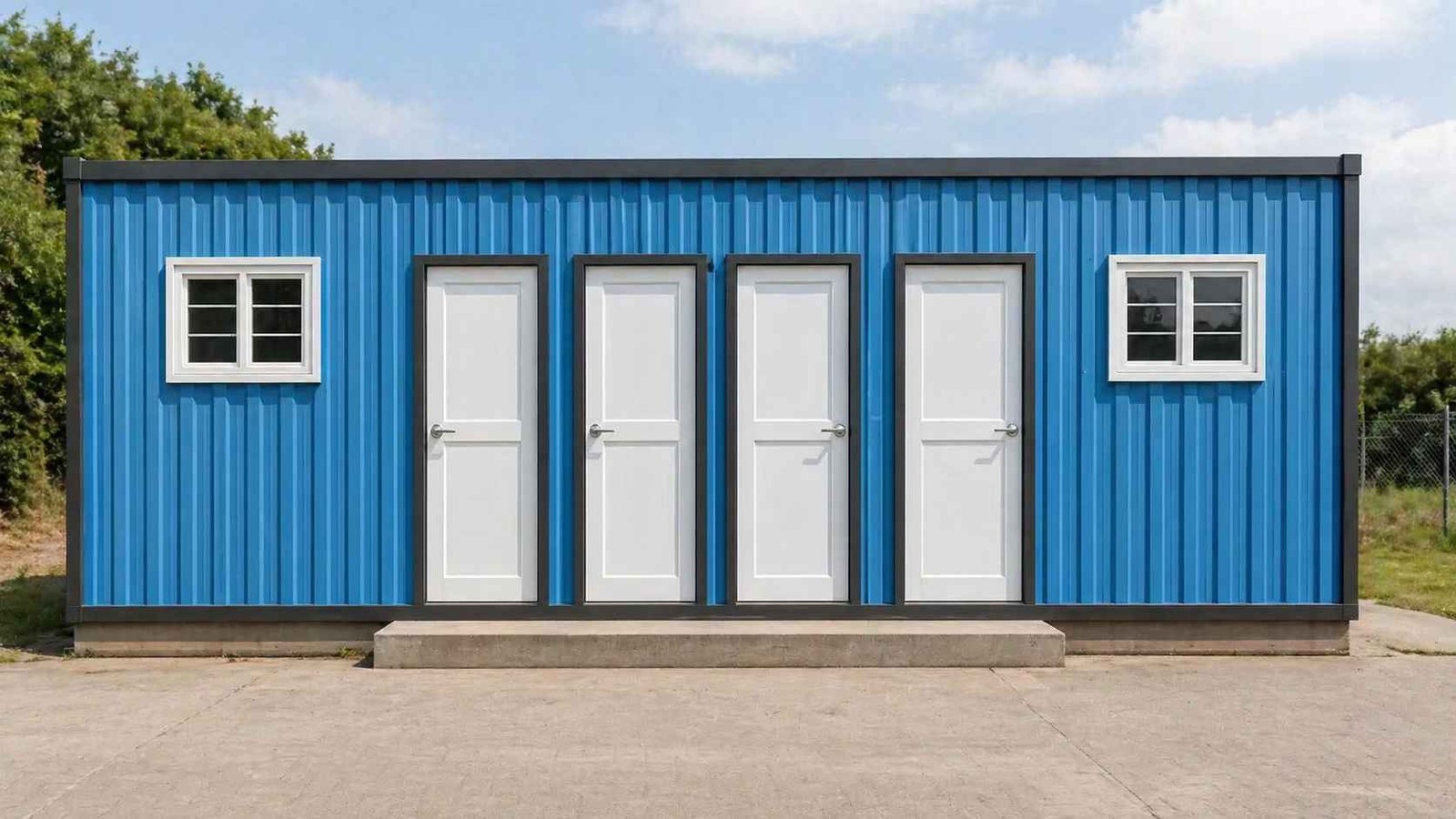
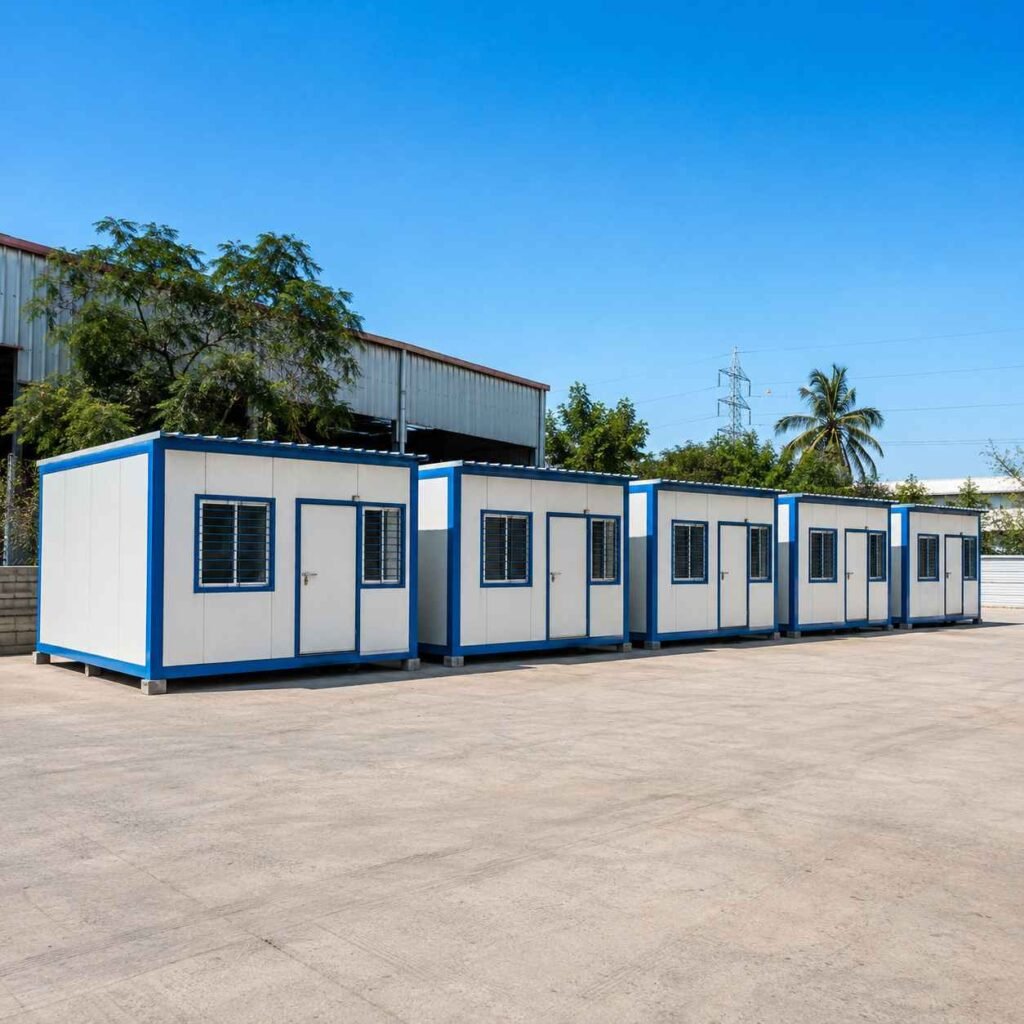
A sleek white and blue portable toilet cabin with two side windows and one main entry door for hygiene facilities at temporary sites.

Types & Price Range of Toilet Porta Cabins

Not every project needs the same sanitation setup.
From basic FRP units to luxury ACP cabins, each model serves a different environment, budget, and user load.
Knowing the variations helps buyers choose the right fit without overspending.

1. Standard Toilet Cabins – Affordable Everyday Utility

Built with FRP walls and a mild-steel frame, these are the workhorses of construction and public-sector sites.
They install in one day, tolerate rough use, and stay hygienic with weekly servicing.

  • Cost: ₹ 25 000 – ₹ 40 000

  • Ideal for: labour colonies and highway projects

  • Lifespan: 7 years average

  • Servicing: every 15 days recommended

2. PUF Insulated Cabins – Comfort and Climate Control

Designed for hotter regions or premium job sites, these cabins use PUF panels for thermal insulation and noise reduction.
They provide better comfort for long shifts and executive camps.

  • Cost: ₹ 50 000 – ₹ 1 25 000

  • Advantages: cooler interior, lower odor retention

  • ROI: within 8 months for multi-site use

3. Luxury Event Cabins – Sanitation with Style

These models mimic indoor restrooms, finished in ACP or tile cladding with LED lighting, mirrors, and flush systems.
They serve weddings, expos, and corporate events.

  • Cost: ₹ 1 L – ₹ 3 L+

  • Add-ons: AC unit, mirror lighting, water heater

  • Lifespan: 10 years with storage maintenance

4. Multi-Seater Steel Cabins – High-Volume Facilities

Large projects, relief camps, or public parks often require multi-user cabins.
Steel and ACP combinations make them strong yet movable.

  • Cost: ₹ 3 L – ₹ 6 L

  • Capacity: 4 – 8 users simultaneous

  • Deployment: 2 – 3 days with plumbing setup

For projects that require dedicated workspace cabins with built-in restrooms, explore our portable cabin with toilet options — ideal for on-site offices and manager units.

Comparison of Toilet Porta Cabin Types

TypeMaterialCapacityPrice Range (₹)Ideal Use
Standard CabinFRP + MS FrameSingle25 000 – 40 000Construction sites & rural works
PUF InsulatedPUF Panel + MSSingle50 000 – 1 25 000Smart city projects & hot zones
Luxury EventACP / Tile FinishSingle / Dual1 00 000 – 3 00 000+Weddings, corporate events
Multi-Seater SteelSteel + ACP Sheet4 – 83 00 000 – 6 00 000Industrial / public facilities

Smart Buying Tip

Buyers exploring different configurations can explore our full range of Porta Cabins to see structure options before finalizing sanitation modules.
For tailored layouts or mixed-use combinations, consider custom porta cabins designed for specific projects.
Both approaches help match compliance, budget, and space efficiency perfectly.

Key Takeaway

Price variation in porta cabins reflects purpose—not quality.
A basic FRP unit and a multi-seater steel model share the same compliance core, but their scale, comfort, and aesthetic differ.
Selecting the right type ensures savings today and smoother maintenance tomorrow.

Green dual toilet cabin

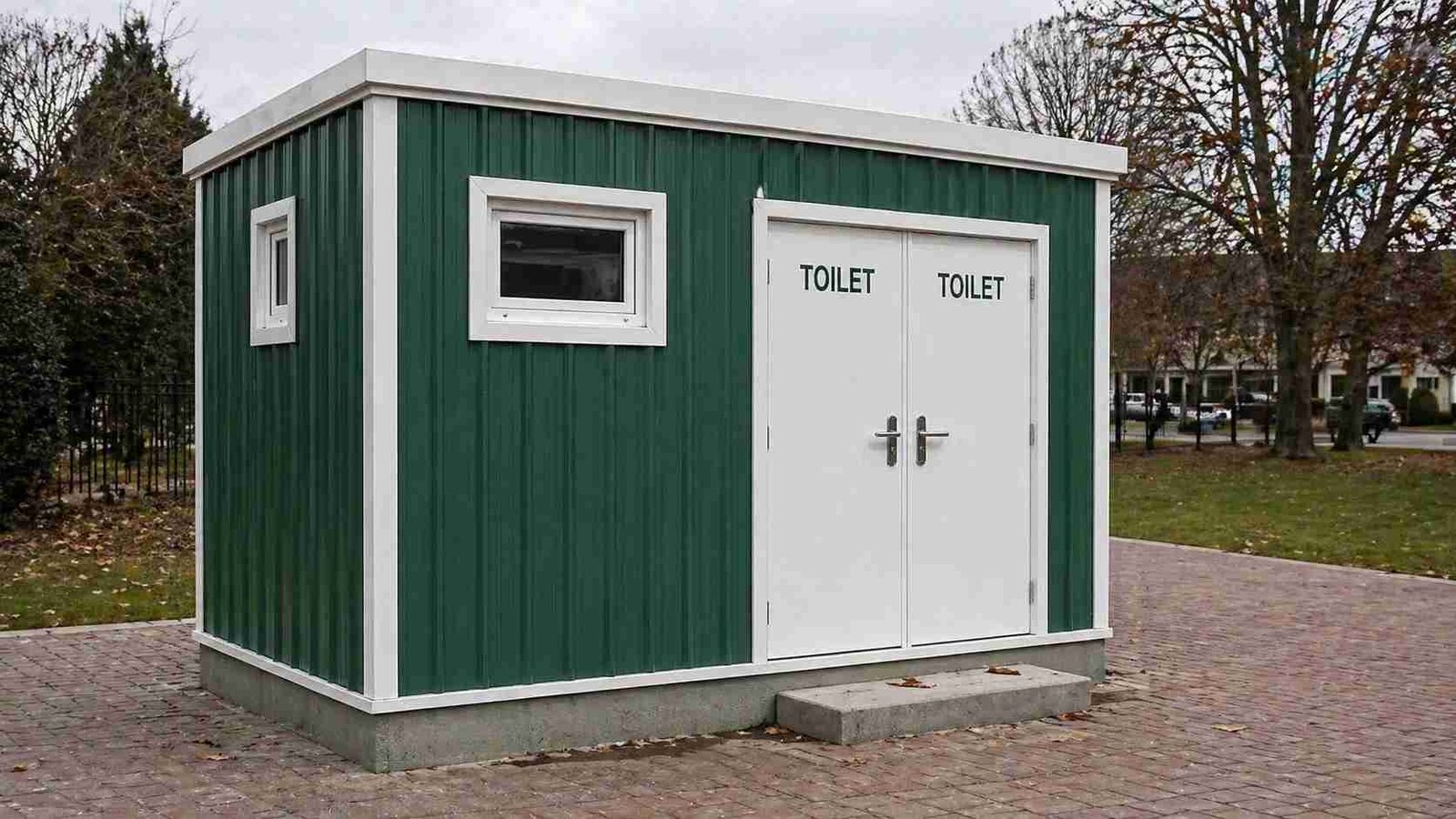
Green twin-door porta cabin with symmetrical layout and side windows, suitable for outdoor functions and small work crews.

Material & Build Comparison

The build decides life, comfort, and cost. Pick materials to match climate, usage, and movement. Strong frames protect the shell. Good panels cut heat and noise. Smart finishes make cleaning fast.

Material roles, at a glance

  • MS frame gives strength during lifting and transport.

  • FRP panels are light, washable, and budget friendly.

  • PUF panels keep interiors cool and quiet.

  • ACP skins add a premium look and weather shield.

  • PPGI roofs reflect heat and drain rain quickly.

Material Performance & Best Use (Aligned)

MaterialCore RoleStrength (Years)Thermal ComfortWeight ClassMaintenanceTypical Cost (₹/sq ft)Best For
MS Frame (structural)Skeleton & lifting points12–15BasicHeavyRepaint 24 moMulti-seater, rough sites
FRP PanelsWashable wall shell7–10ModerateLightLow450–550Frequent relocation
PUF PanelsInsulated wall shell10–12High (cooler by 5–7 °C)LightLow550–700Hot zones, long shifts
ACP CladdingPremium exterior skin10–12GoodMediumMedium700–900Events, VIP use
PPGI RoofWeather shed & reflection10+ReflectiveLightLowAll climates, heavy rain

How to read it:

  • “Strength” is the typical service life with regular care.

  • “Thermal comfort” shows how well interiors resist heat gain.

  • Costs are indicative; final quotes depend on thickness and brand.

Practical selection guide

  • Hot climate? Choose PUF walls on an MS frame.

  • Move often? Use FRP walls to keep weight low.

  • Need premium look? Add ACP skin on public-facing sides.

  • Heavy footfall? Keep MS frame thicker; add PPGI roof.

Shell Configurations: ROI & Upkeep (Aligned)

ConfigurationAvg Lifespan (Years)Monthly Upkeep (₹)Service SkillPayback (Typical)Notes
MS Frame + FRP Shell7–10800–1,000Basic cleaning~6 monthsBest budget choice for sites
MS Frame + PUF Shell10–121,000–1,200Basic cleaning~8 monthsComfort + lower odor
MS Frame + ACP Skin (Single/Dual)10–121,500–1,800Periodic polish~12 monthsEvent-ready finish
MS Heavy Frame + ACP/PUF (Multi-Seater)12–152,000–2,500Scheduled servicing~12–14 monthsHigh-volume, durable

Notes:

  • Upkeep includes cleaning materials, minor seals, and periodic checks.

  • Payback assumes reduced downtime, fewer penalties, and multi-site reuse.

Key takeaways

  • Frame first: thickness and paint cycle decide core life.

  • Panels next: PUF lowers heat; FRP lowers weight.

  • Finish last: ACP helps branding; PPGI keeps rain out.

  • Balance budget with climate, service access, and user load.

Red porta toilet block

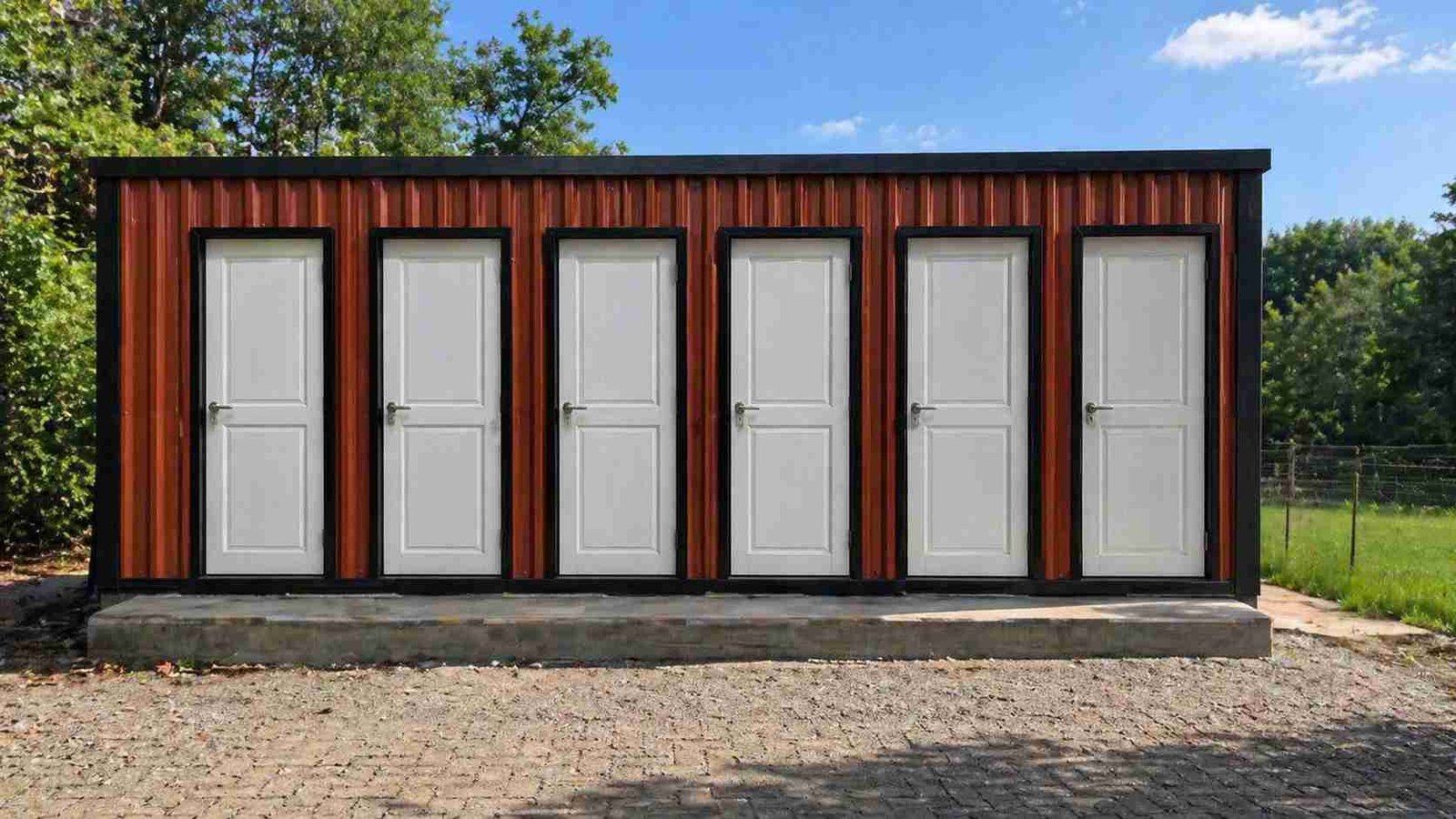
Red corrugated porta cabin featuring four cream doors and two side windows, best for schools, colonies, and outdoor projects.

Waste-Treatment Technologies (Bio-Toilet vs Chemical vs Septic)

A toilet porta cabin is only as good as its waste-management system.
Three technologies dominate today’s market—bio-digester, chemical holding tank, and mini-septic systems.
Each serves different project durations and maintenance styles.

How These Systems Work

  • Bio-toilet: uses anaerobic bacteria to digest waste into water and gas.

  • Chemical tank: stores waste and neutralizes odor with non-formaldehyde liquids.

  • Mini-septic: treats waste partially inside a chamber before pumping to disposal.

Technology Comparison

FeatureBio-DigesterChemical HoldingMini-Septic
Treatment TypeBiological digestionChemical neutralizationPhysical settling + partial digestion
Water Use / Flush≈ 1 – 3 L≈ 2 – 5 L≈ 4 – 6 L
Service Interval6–12 months2–4 weeks3–6 months
Odor ControlExcellent (95 %)Good (85 %)Moderate (75 %)
Disposal NeedNone — self-sustainingYes — pumping truckYes — pumping tank
Eco ImpactHigh (eco-friendly)Medium (depends on chemicals)Low (risk of leakage)
Initial Cost (₹)30 000 – 80 00020 000 – 45 00035 000 – 70 000
Ideal UseLong-term, smart projectsEvents & short rental sitesFixed semi-permanent installations

Cost Cycle & Efficiency

MetricBio-ToiletChemicalMini-Septic
Avg Service Cost / Cycle (₹)2 0001 2001 800
Waste Reduction %80 – 9020 – 3050 – 60
Monthly Operating Cost (₹)≈ 300≈ 700≈ 500
Average Lifespan (Yrs)10 – 157 – 98 – 10

Choosing the Right System

  1. Short events or rentals: chemical tanks are cheap and quick.

  2. Permanent or repeat use: bio-toilets save water and service trips.

  3. Semi-fixed sites: mini-septic units suit schools or small factories.

  4. Always check chemical certification under CPCB Non-Formaldehyde Guidelines 2024.

Environmental Notes

  • Bio-digesters convert sludge into reusable greywater or biogas.

  • Proper bacterial culture lasts 8–10 years before renewal.

  • Solar-powered exhaust fans improve airflow and cut odor.

  • Disposal partners must hold PCB Waste Transport License for chemical systems.

Key Takeaway

Choose treatment technology by duration, access, and regulation—not price alone.
For long-term or ESG-focused projects, bio-toilets remain the most sustainable and compliant solution under India’s 2025 sanitation standards.

Blue porta toilet cabin

A blue porta cabin featuring three toilet compartments with white doors labeled “TOILET,” suited for outdoor gatherings and worksites.

Installation, Servicing & Maintenance Costs

Even the best porta cabin fails without proper setup and scheduled servicing.
A structured maintenance plan ensures safety, hygiene, and long service life while keeping operating costs predictable.

Installation Overview

Every toilet porta cabin arrives 80 – 90 % factory-finished.
On-site work is minimal—just base preparation, plumbing, and electrical hook-ups.
Installation speed depends on cabin size, site accessibility, and foundation type.

Typical Installation Steps

  • Step 1: Site leveling and compacted base.

  • Step 2: RCC pad or block placement.

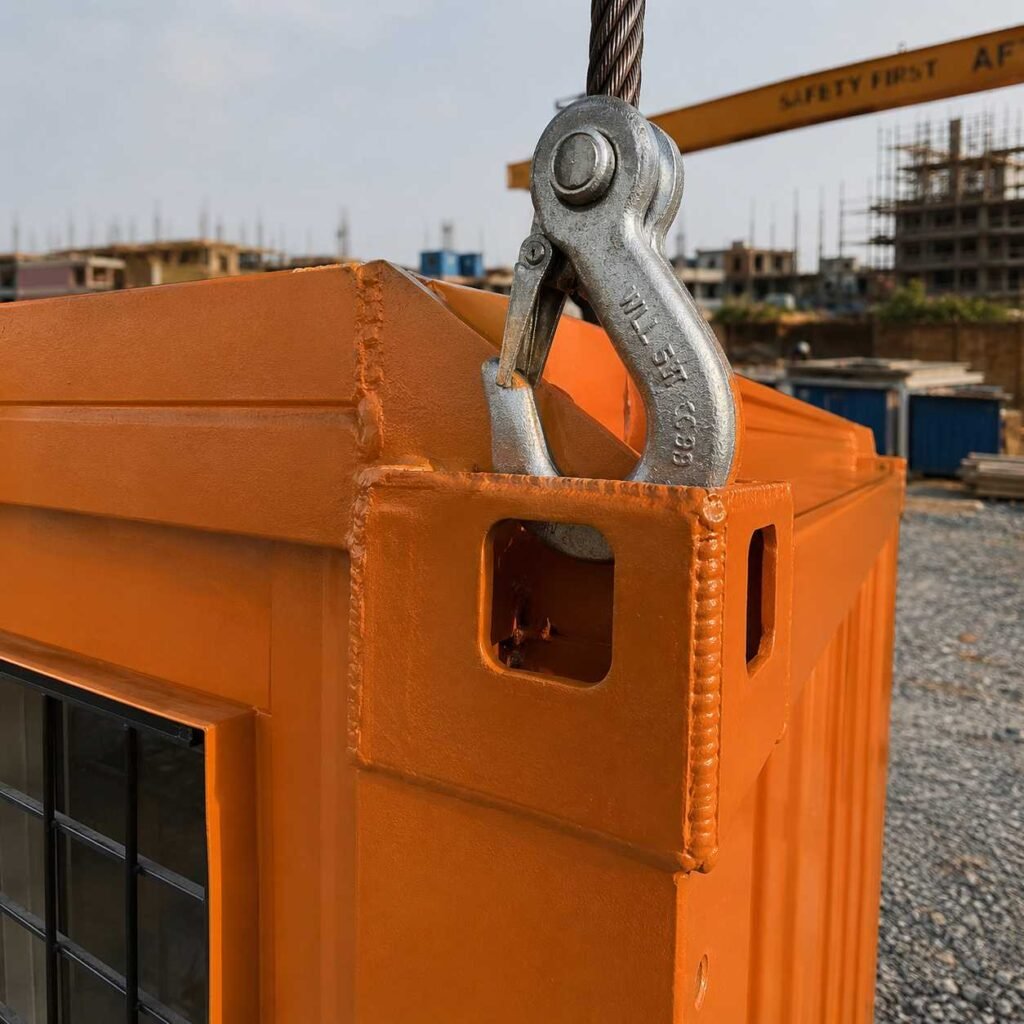
  • Step 3: Cabin unloading by crane or forklift.

  • Step 4: Power and water connection.

  • Step 5: Final testing — flush, light, and ventilation check.

Average Installation Timelines

Cabin TypeSite Prep (days)Setup (days)Total Time (days)Skilled Crew (people)Equipment Used
Single FRP Unit0.50.512Forklift / manual
Dual PUF Cabin1123Crane + plumber
Multi-Seater MS Cabin2244 – 5Crane + electrician
VIP ACP Cabin1234Crane + HVAC team

Insight: A two-door MS unit can be live within 48 hours of arrival if foundation pads and utilities are pre-readied.

Servicing Frequency

  • Daily / Weekly: Cleaning & refilling consumables.

  • Monthly: Check seals, flush valves, door hinges.

  • Quarterly: Tank inspection and bio-culture top-up.

  • Yearly: Full repaint or panel reseal for steel cabins.

Maintenance Schedule & Average Cost

Cabin ModelCleaning CycleDesludge CycleMonthly Cost (₹)Annual Overhaul (₹)Responsibility
Standard FRPWeekly3 – 4 months1 0004 000Local vendor
PUF InsulatedWeekly4 – 6 months1 2005 000Facility team
Luxury ACPDailyMonthly2 5008 000OEM service
Bio-Toilet UnitMonthlyYearly8003 500Vendor / OEM mix

Observation: Bio-toilets have the lowest recurring cost because they process waste internally.

Service Optimization Tips

  1. Keep spare seals and flush valves on site.

  2. Use eco-safe cleaners to protect bio-cultures.

  3. Rotate units every 6 months to reduce uneven wear.

  4. Keep a log of service dates and vendor sign-off.

  5. For multi-site operations, schedule servicing in clusters to cut fuel costs.

Cost Insights

  • Maintenance ≈ 4 – 6 % of unit value per year.

  • Neglect can reduce lifespan by 30 %.

  • Bulk service contracts save up to 15 % compared to ad-hoc visits.

Key Takeaway

Proper installation and periodic servicing turn a one-time purchase into a long-term asset.
With structured maintenance, a porta cabin can deliver 10–15 years of reliable service while keeping operational costs under control.

Four-compartment toilet cabin

A practical grey-colored toilet porta cabin with four doors and two ventilation windows for industrial and commercial applications.

Applications & Real-World Case Studies

Toilet porta cabins have moved from temporary site aids to essential infrastructure.
They serve construction, events, rural missions, and emergency relief — wherever hygiene, speed, and mobility matter most.

1. Core Applications Across Sectors

  • Construction & Infrastructure: Workforce sanitation at highways, power plants, and metros.

  • Event Venues: Concerts, fairs, and sports events requiring quick setup.

  • Disaster Relief: Emergency camps needing deploy-ready sanitation.

  • Smart Cities: Integrated units with IoT tracking and solar lighting.

  • Rural & Public Health: Swachh Bharat Mission and Gram Panchayat projects.

India’s Most Common Use Cases (2024–25)

SectorAvg Deployment Size (units)Model Type UsedService IntervalKey AdvantageROI Period (months)
Highway Projects15 – 30FRP or PUF Standard45 daysMobility & Low cost6–8
Smart City Sites10 – 20Bio-toilet PUF90 daysCompliance + Eco impact9–10
Labour Colonies8 – 12MS PUF Hybrid60 daysDurability & ROI7–9
Public Events20 – 40Luxury ACP15 daysComfort & Aesthetics10–12
Disaster Relief Camps30 – 50FRP Readymade30 daysFast Deployment5–6

Insight: Projects using modular bio-toilets achieve over 80 % lower waste disposal cost per month than manual temporary toilets.

2. Global Success Stories

Across Asia and Africa, porta cabins are bridging hygiene gaps for remote populations.
NGOs and governments deploy portable sanitation as part of health and education campaigns.

Global Deployments & Impact

Country / RegionUnits DeployedTechnologyDuration of UseReported OutcomeSource / Partner
Kenya – UNHCR Camps2 000+FRP Chemical6 months avg70 % drop in disease spreadUNHCR 2024
UAE – Labour Housing1 200PUF Bio-toilet3 yearsImproved worker retention + complianceDubai Municipality
Germany – Music Festivals1 500Luxury ACPSeasonal rotation93 % user satisfactionEvent Clean Study 2024
Bangladesh – Flood Relief3 000FRP Quick Build2 months82 % women safety improvementIFRC Data
India – Smart City Pilot (Pune)800IoT Bio-toiletOngoing95 % uptime via remote monitoringSBM Urban 2025

3. Performance Metrics Learned

  • Projects using bio-digester units cut servicing frequency by 50 %.

  • ACP cabins in events show 90 % repeat bookings due to guest comfort.

  • MS PUF hybrids outlast FRP by ≈ 3 years in coastal zones.

  • Average ROI across India = 7.5 months for construction deployments.

4. Case Snapshot — Bangalore Metro Phase-2

Client: URC Construction
Deployment: 18 bio-toilet cabins (10 male, 8 female)
Outcome:

  • Worker absenteeism down by 12 % within 2 months.

  • Local PCB inspection cleared in first visit.

  • Units moved to next section in under 5 hours.

Result: Payback within 7 months and zero non-compliance penalties.

Key Takeaway

Across projects and continents, porta cabins prove scalable, clean, and profitable.
Whether for a metro corridor or a music festival, the formula is the same — modular design, timely servicing, and reliable waste technology drive returns and public trust.

Luxury and smart toilets are gaining share as user expectations rise. Design inspiration for modular cabins is also shaping the market, as shown in Dezeen’s prefab modular architecture features.

Toilet Porta Cabins

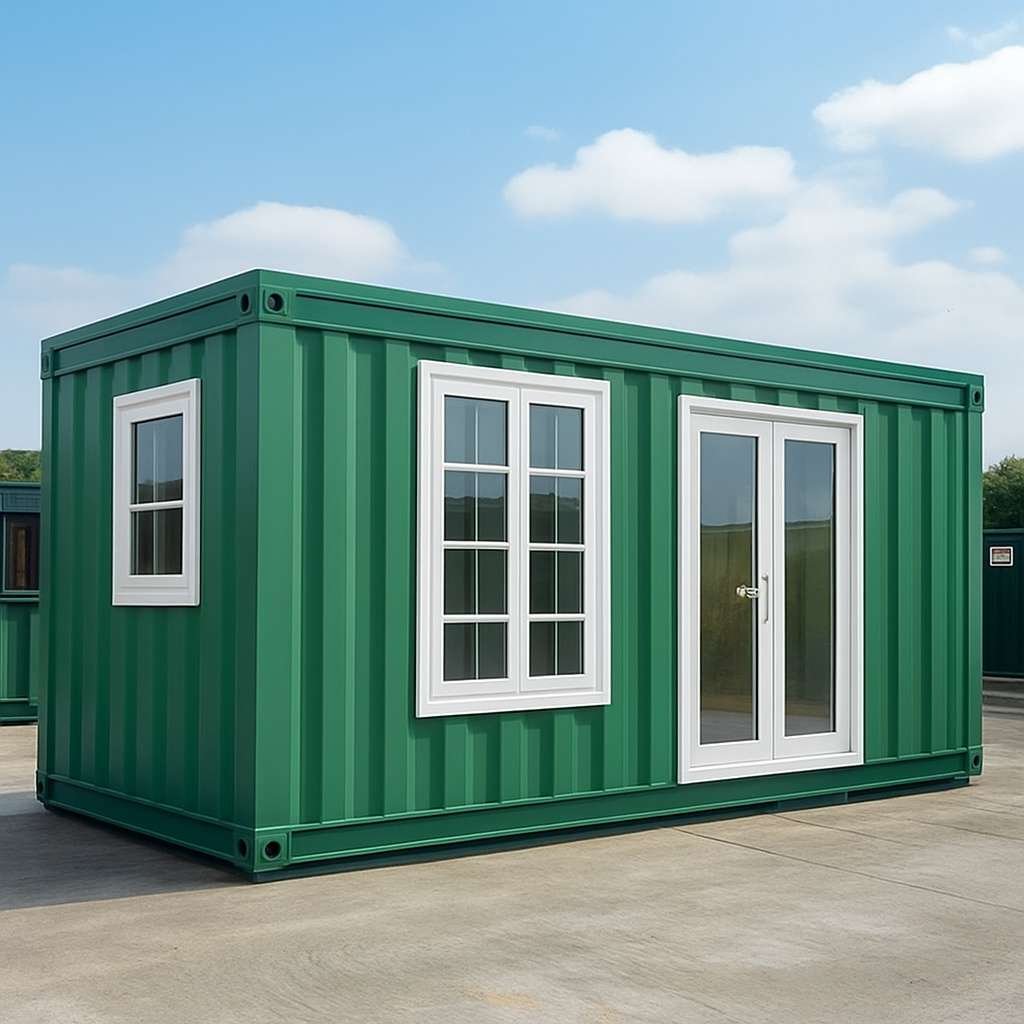
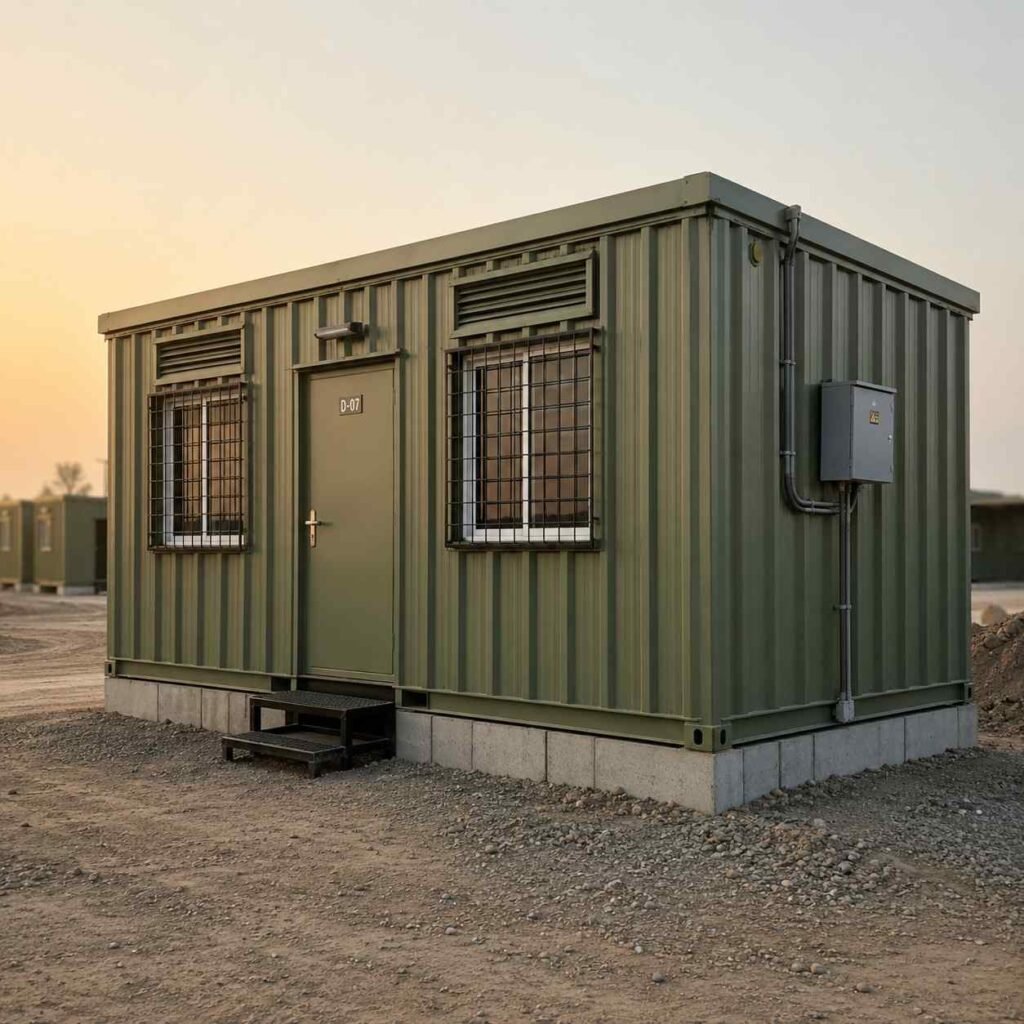
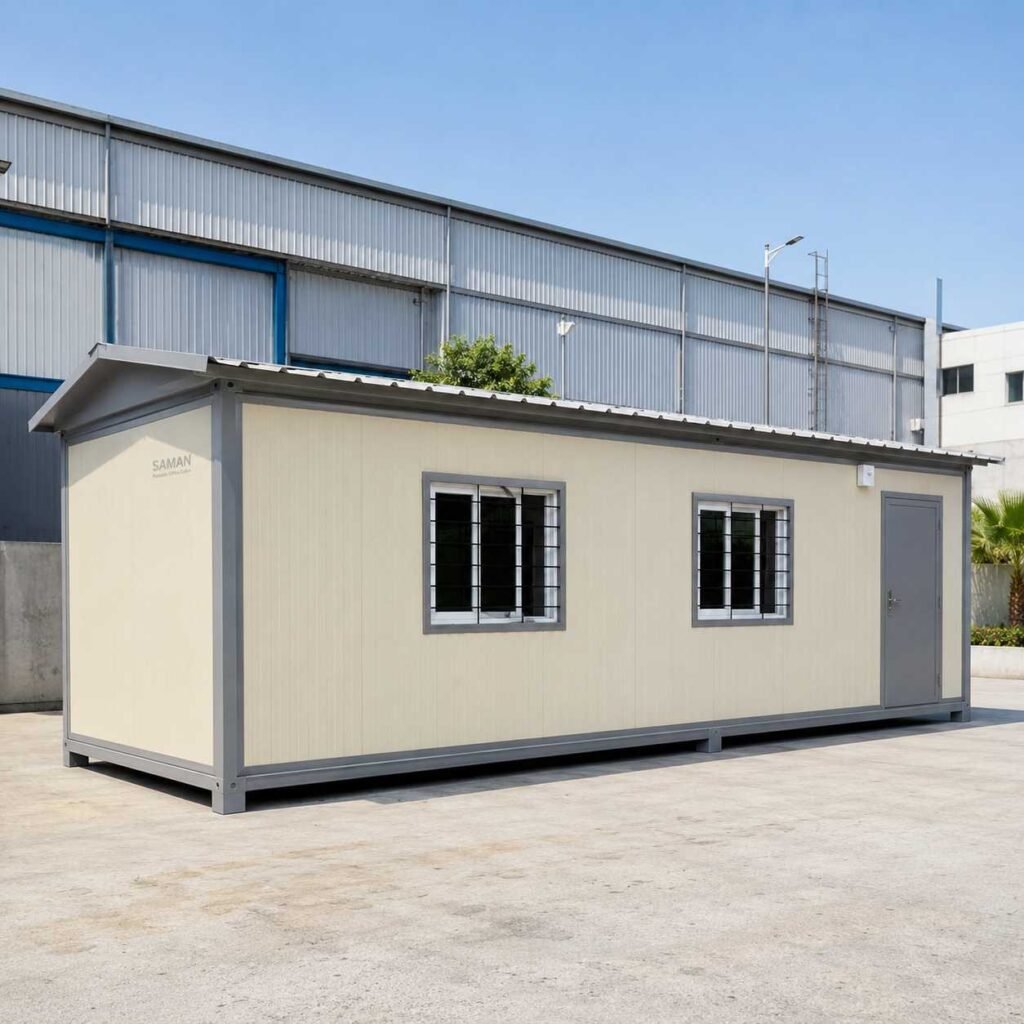
This olive-green porta toilet cabin was made using MS and ACP sheet

Compliance & Regulatory Standards (India vs Global)

Quality sanitation cabins are not just about panels and plumbing—they must meet safety, hygiene, and construction codes that evolve every year. Understanding these frameworks keeps procurement transparent and approvals fast.

1. Indian Regulatory Framework

India’s portable sanitation market now follows multi-agency standards that ensure strength, fire resistance, and public health safety.

Standard / CodeAuthorityKey RequirementApplied On
IS 15916 : 2010Bureau of Indian StandardsStructural safety for temporary buildingsCabin frame, joints
NBC Part 7 (2016)National Building Code of IndiaSanitation facilities & ventilationToilets, exhaust system
CPHEEO Manual (2020)Ministry of Housing & Urban AffairsWaste-treatment & drainage guidelinesPlumbing & tanks
FSSM Policy (2018)Swachh Bharat Mission – UrbanFaecal-sludge management protocolsBio-toilet integration
Fire & Safety BIS 1646 (2017)BISElectrical & thermal protectionWiring, insulation
ESG & Local PCB Rules (2024)State Pollution Control BoardsDisposal & emission normsChemical systems

Observation: Portable sanitation units are now treated as “temporary structures with permanent responsibility.”
Non-compliance can halt an entire project during inspection.

2. Global Benchmarks

Different regions apply modular-construction codes that directly influence how Indian exporters design their cabins.

RegionRegulatory BodyRelevant CodePrimary Focus
European UnionCEN / ISO 21542Accessibility & inclusivityDisabled-friendly design
USAEPA & OSHAChemical handling & worker safetyBio-tank certification
Middle EastDubai Municipality Regulation DCL 2019Sanitation & corrosion resistanceCoastal protection
AustraliaNCC Vol 1 Section FPlumbing & prefabrication testingPrefab restrooms
JapanMLIT Building CodeSeismic stability for temporary modulesStructural strength

3. Design & Sustainability Perspective

Portable cabins are part of the larger prefab and modular-housing ecosystem.
Globally, the movement toward factory-built, regulation-compliant units is reshaping both architecture and public infrastructure.
As noted by Architectural Digest’s feature on modular homes, prefab structures combine design control with faster approvals, proving that compliance and aesthetics can align.

The same principle drives high-end portable sanitation—engineered consistency leads to predictable safety outcomes.

4. Certification & Inspection Flow (India)

StageConducted ByDocument IssuedKey Check
FabricationOEM / Factory QA TeamIn-house QC ReportWelding & panel alignment
Pre-DispatchThird-Party Agency (PDIL / SGS)Inspection CertificateDimensions, paint thickness
InstallationClient / Site EngineerCompletion CertificateFunctionality & safety
Annual AuditLocal Authority / PCBSanitation Compliance ReportWaste disposal records

5. Key Compliance Takeaways

  • Keep IS 15916 and NBC Part 7 on-site during inspections.

  • Ensure bio-digesters carry DRDO or CPCB validation.

  • Export models must align with CE or ISO standards for global buyers.

  • Keep one service log per cabin for ESG audits.

  • Design modular layouts for wheelchair access and separate gender units.

Summary

Modern regulation no longer limits design—it defines quality.
By aligning with national and global codes, manufacturers like SAMAN Portable deliver cabins that not only pass inspections but also match the architectural standards shaping modular infrastructure worldwide. Both standard and office-integrated cabins from SAMAN Portable comply with BIS, NBC, and Swachh Bharat Mission standards. You can review our portable cabin with toilet specifications for workspace-ready versions or the porta cabin office with toilet for premium office use.

Brown porta toilet cabin

Brown porta cabin with two bright yellow toilet doors and a ventilation window, designed for durability and visibility.

Future Trends & Innovation (2025 – 2030)

India’s sanitation and prefab sector is entering a design-driven decade.
Toilet porta cabins are no longer stop-gap utilities—they’re becoming smart, sustainable, and circular.

1. Digital Monitoring and IoT Integration

  • Real-time odor, fill-level, and temperature sensors will soon be mandatory for public-sector cabins.

  • GSM-enabled dashboards already track 3 000+ smart toilets under Swachh Bharat Urban 2.0.

  • Predictive alerts reduce downtime by 40 % and extend service intervals to 90 days.

2. Green Materials & Circular Design

Manufacturers are shifting toward recyclable cladding, lead-free paints, and zero-VOC coatings.
Wastewater reuse and solar micro-grids are becoming standard in new tenders.

Material InnovationBenefitStatus (India 2025)
Recycled Steel Frames25 % lower carbon footprint60 % adoption
PUF with Bio-PolyolsCuts petroleum contentPilot stage
Bamboo CompositesLightweight, biodegradableNiche projects
Solar Vent SystemsZero-power airflowCommercial rollout
Greywater Recycling KitsSaves ~70 L daily per unitGovt subsidy in 6 states

3. Prefab Design Automation

  • 3D configurators will allow clients to preview layouts before fabrication.

  • Parametric models adjust ventilation, slope, and plumbing automatically.

  • Digital twins will simulate maintenance cycles—reducing warranty claims.

4. Policy and Market Forecast

Indicator2025 Base2030 ProjectionCAGR %
Indian Portable Sanitation Market Value₹ 7 900 Cr₹ 15 600 Cr≈ 9.8
Bio-Toilet Share of Market38 %63 %
Avg Cabin Life Expectancy10 yrs14 yrs
Export Share (Asia + Africa)8 %22 %

Insight: Exports will triple as Indian units align with ISO and CE standards—especially for eco-sanitation and prefab housing modules.

5. Human-Centered Design

  • Separate entry and ramp access will be universal in public projects.

  • Gender-inclusive layouts with baby-care zones are entering municipal norms.

  • Compact designs focus on comfort, not compromise.

6. AI in Manufacturing

Machine-learning quality checks detect welding or coating errors before shipment.
By 2030, 70 % of OEMs will rely on automated inspection and cloud-based production logs.

Verdict: Balancing Benefits and Risks

Toilet porta cabins remain a smart choice for speed, mobility, and ROI, but success depends on selecting quality materials, reliable vendors, and clear servicing contracts. Buyers who prepare for these challenges will find porta cabins a dependable sanitation investment. To discuss customization, delivery, or bulk pricing, contact us directly through our SAMAN Portable contact page.

Top 10 FAQs on Toilet Porta Cabins

1. What is a toilet porta cabin and how is it different from a portable toilet?

A toilet porta cabin is a prefabricated restroom unit with stronger materials, mobility, and customization options. Unlike basic portable toilets, porta cabins can include multiple seats, sinks, flushing systems, and even luxury interiors.

2. What is the average porta cabin toilet price in India?

The price ranges from ₹25,000 to ₹6,00,000, depending on type, materials, and features. Standard FRP cabins cost less, while premium steel or ACP cabins with luxury fittings are priced higher.

3. Should I rent or buy a toilet porta cabin?

Rent if you need a cabin for short-term events or projects. Buy if you plan to reuse it across multiple sites. Purchased units deliver ROI within 6–9 months, making them cost-effective long-term.

4. How long does a readymade toilet cabin last?

With proper servicing, an MS or PUF-based cabin lasts 10–15 years or more. Cheaper FRP models may last 5–7 years but require careful handling to prevent UV or structural damage.

5. Are toilet porta cabins hygienic?

Yes, when serviced regularly. Modern cabins use bio-digester tanks, ventilation, and odor-control systems. Service contracts ensure waste removal and cleaning, keeping units safe and hygienic even at high-traffic sites.

6. Can a porta cabin toilet be moved easily?

Yes, porta cabins are fully relocatable. Smaller units can be shifted with trailers, while larger cabins may require crane lifting. This mobility makes them valuable for projects across multiple locations.

7. Do porta cabin toilets meet Indian government standards?

Yes, certified cabins comply with BIS, NBC, and Swachh Bharat Mission norms. Buyers should request compliance certificates and NOCs from suppliers to avoid regulatory delays.

8. Are luxury porta cabin toilets suitable for events and weddings?

Absolutely. Luxury porta cabins feature flush systems, LED lighting, mirrors, and premium interiors. They provide a comfortable, private experience, making them popular for VIP areas at weddings, concerts, and corporate events.

9. How eco-friendly are porta cabin toilets?

Eco-friendly cabins use bio-toilets, composting systems, and water-saving fixtures. Some also run on solar power. These innovations cut water use by 90% and turn waste into reusable water or biogas.

10. What maintenance does a toilet porta cabin need?

Maintenance involves desludging the tank, cleaning interiors, restocking supplies, and inspecting for leaks. Service schedules vary by usage but are usually weekly or monthly for high-traffic sites.

Reviews (0)
0 reviews
0
0
0
0
0

There are no reviews yet.

Be the first to review “Toilet Porta Cabins”

Your email address will not be published. Required fields are marked *

Shipping & Delivery

Shipping and Delivery Information

At SAMAN Portable Office Solutions, we are committed to ensuring a seamless shipping experience for our customers. Our shipping and delivery policy has been crafted to provide you with clear details and expectations when you place an order for our portable cabins or container offices.

Delivery Timeline

Once your order is confirmed, we will process and dispatch your product within 15 to 21 working days. This timeline is calculated from the date we receive your order and ensures that your product is fabricated, inspected, and packed securely for transportation. We strive to adhere strictly to this delivery window, guaranteeing that your order reaches you in a timely manner.

Shipping Costs

Our shipping charges are structured based on the size and type of the trailer used for delivery. Below are the detailed rates:

  • For a 40 Feet Open Trailer: The cost is ₹80 per kilometer, excluding Over Dimensional Cargo (ODC) and Regional Transport Office (RTO) charges.
  • For a 20 Feet Open Trailer: The cost is ₹60 per kilometer, also excluding ODC and RTO fees.

Note: ODC and RTO charges may vary depending on your location and state regulations. We ensure transparency in our billing and will provide you with an accurate estimate before shipment.

Within Bangalore Shipping Rates

For customers within the Bangalore region, we offer competitive fixed shipping rates for hassle-free delivery:

  • 40 Feet Open Trailer: ₹15,000
  • 20 Feet Open Trailer: ₹10,000

These rates are designed to be cost-effective while ensuring your product reaches its destination safely and securely. We work with reliable transport partners to provide efficient and on-time delivery services within Bangalore.

At SAMAN Portable Office Solutions, customer satisfaction is our priority. For any queries related to shipping or delivery, please feel free to contact our customer support team. We are here to assist you every step of the way.
Frequently Asked Questions

Quick Answers to Common Portable Cabin Inquiries