


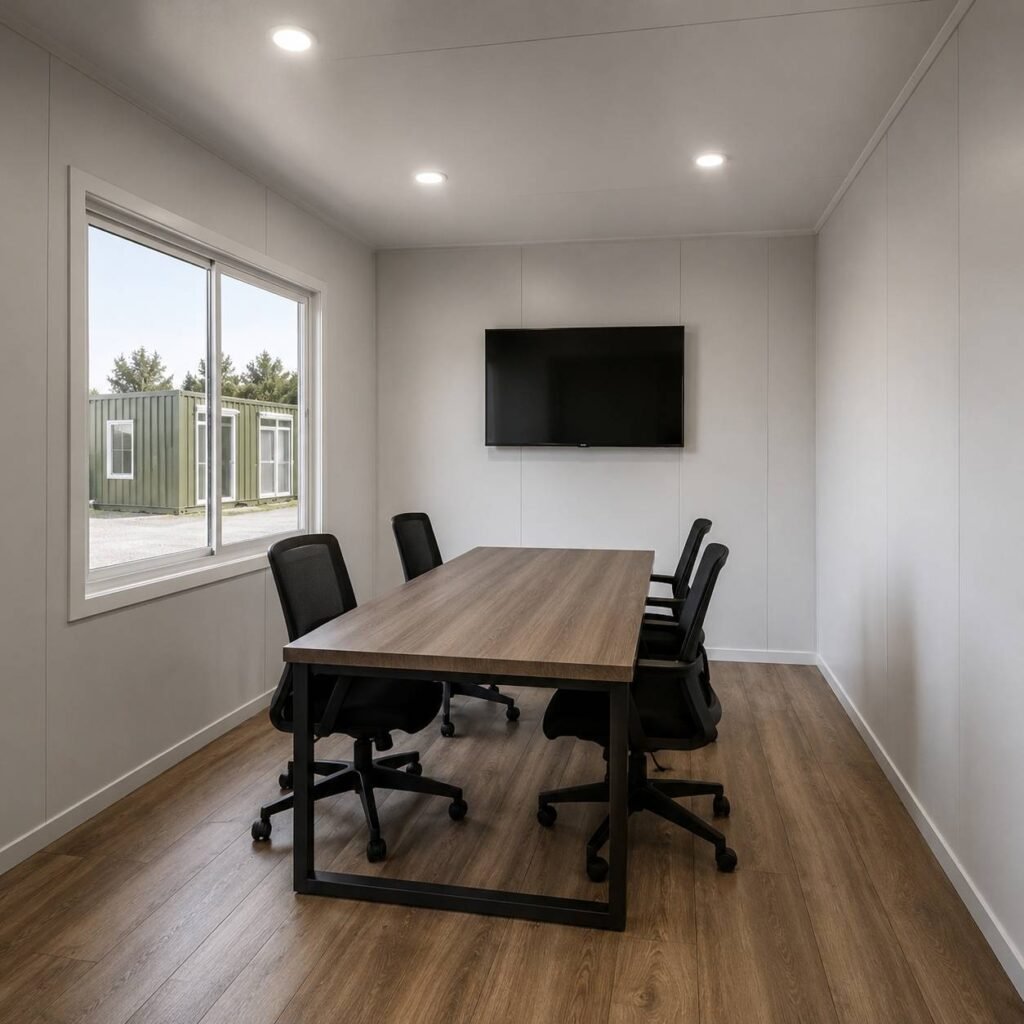
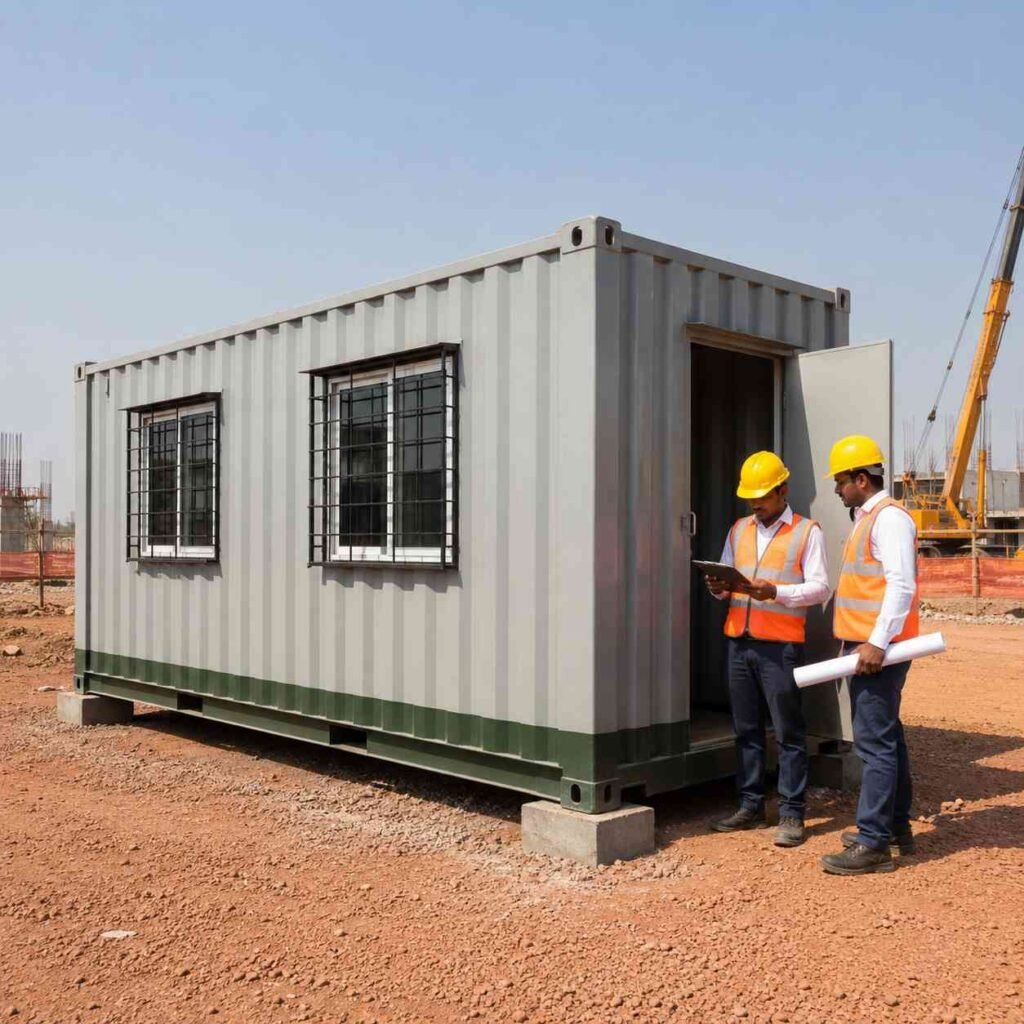
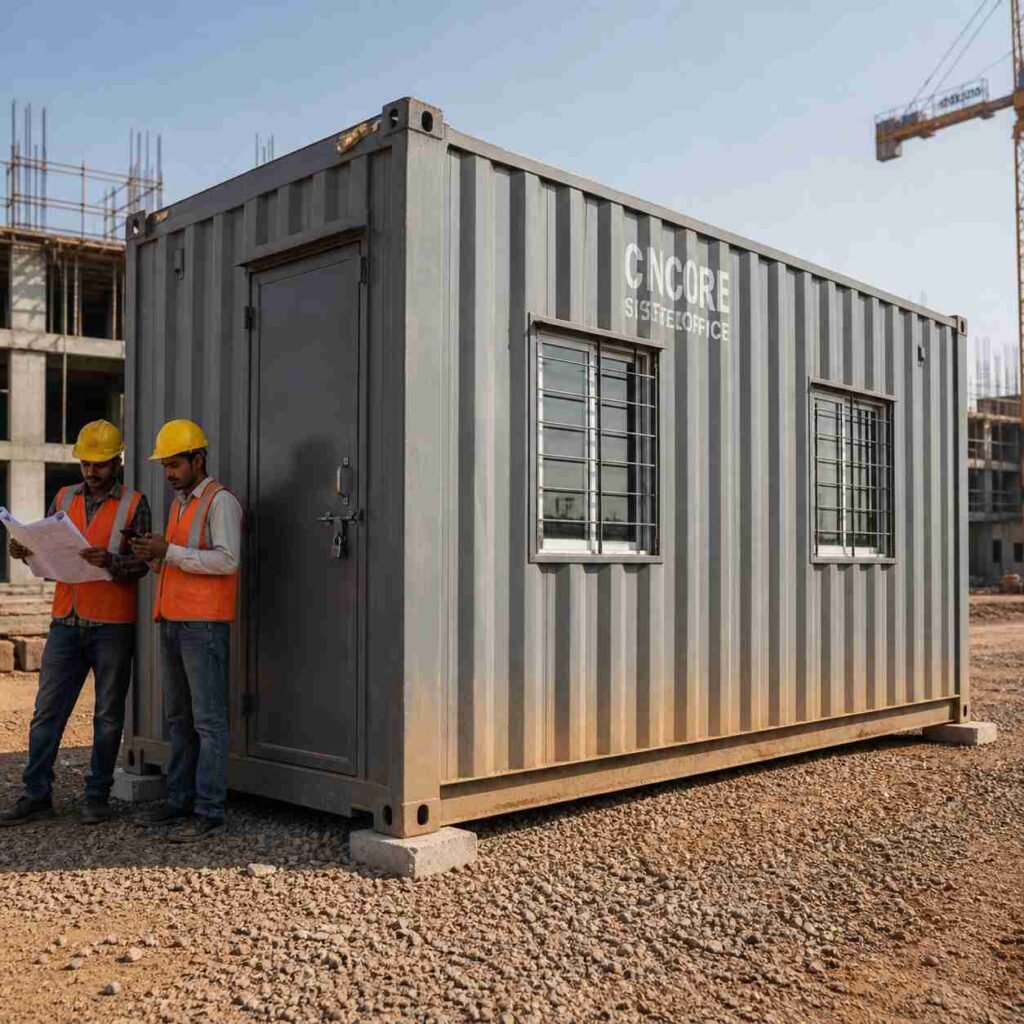
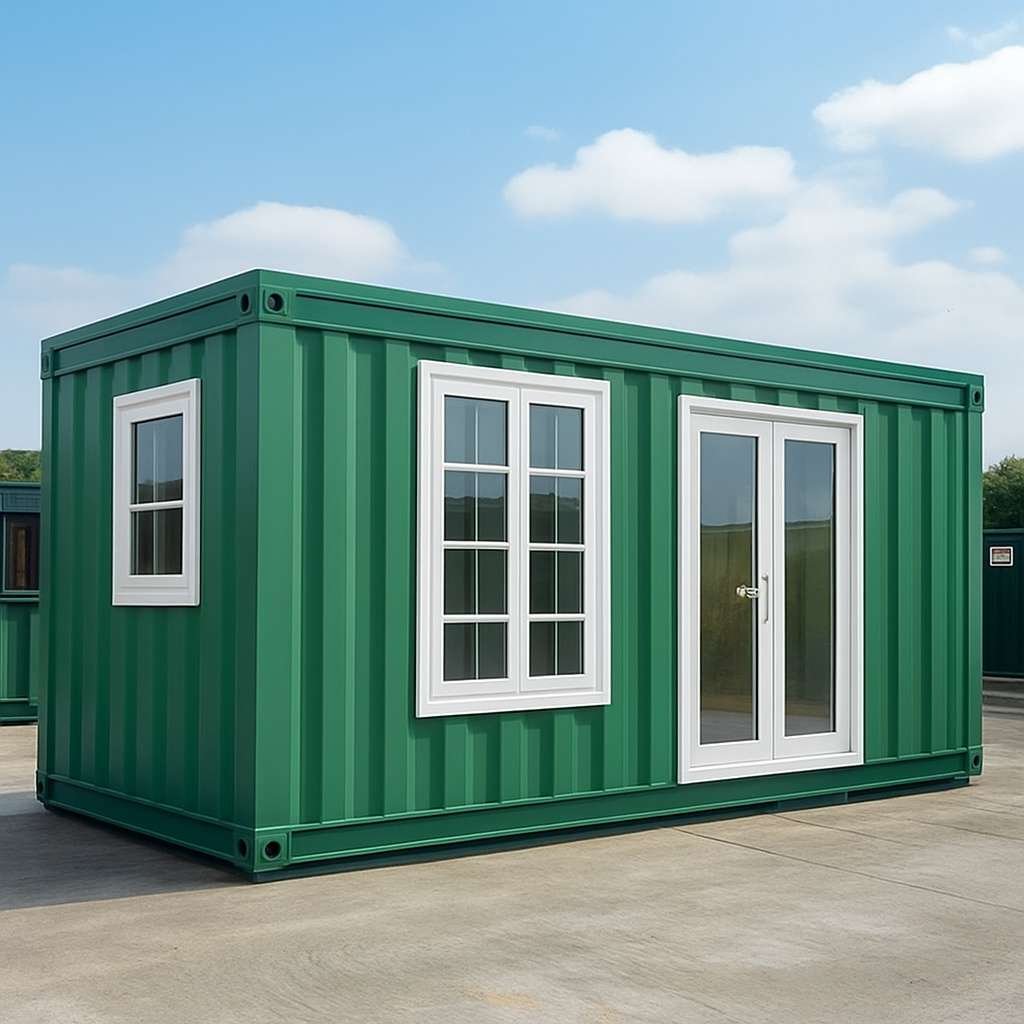
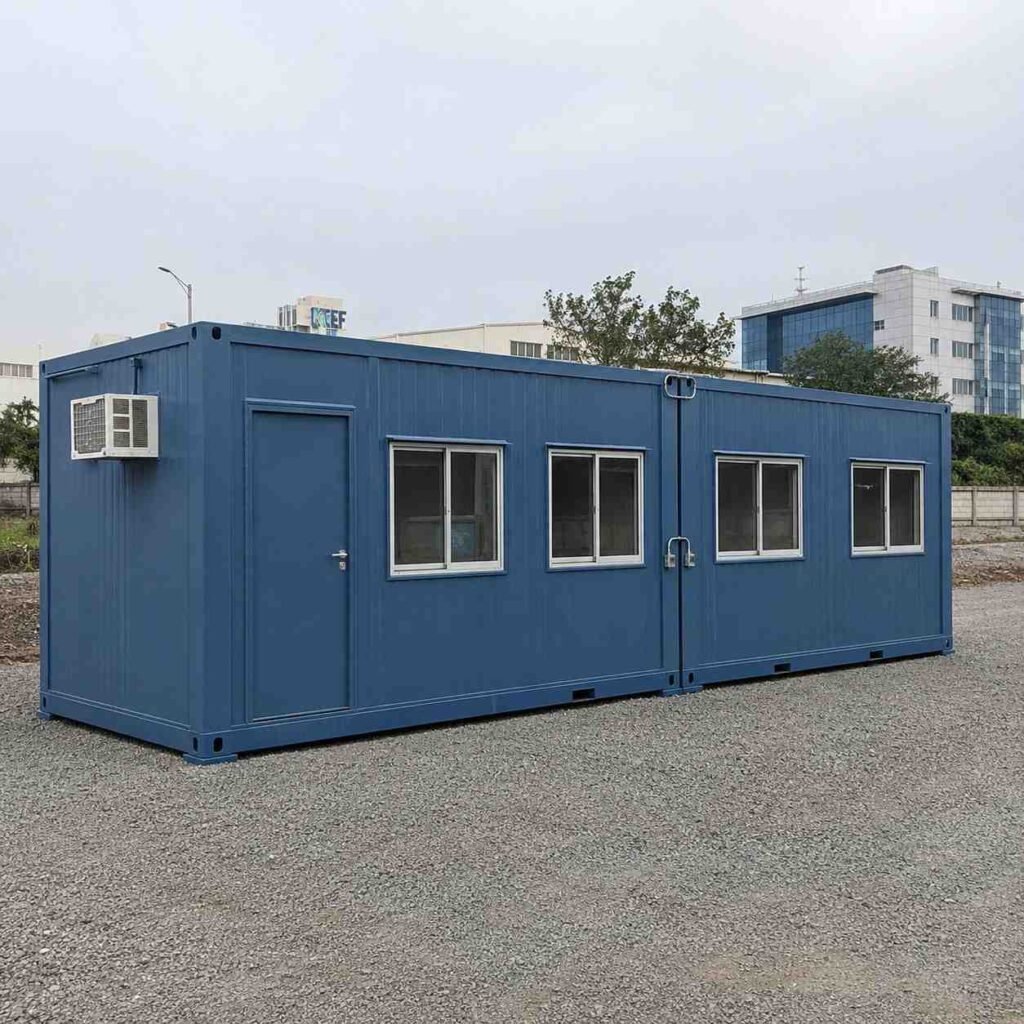
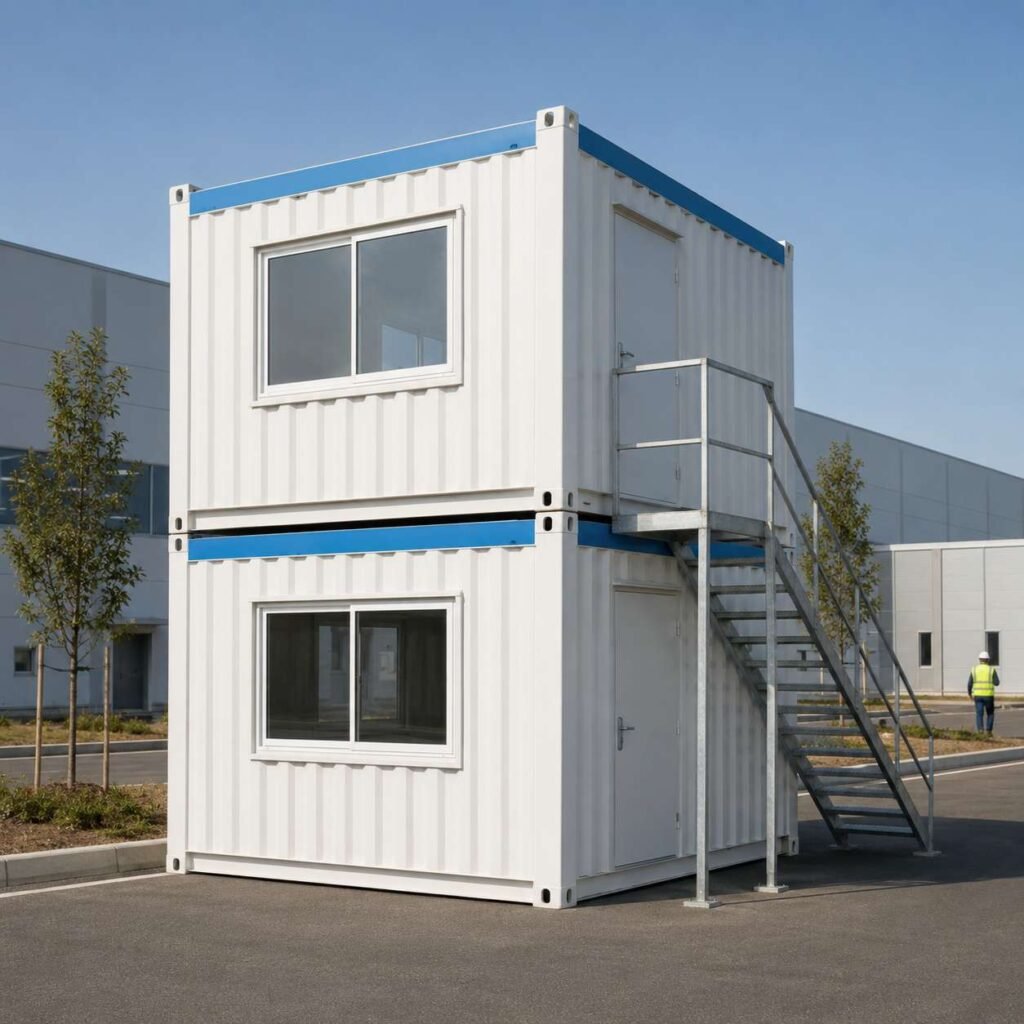
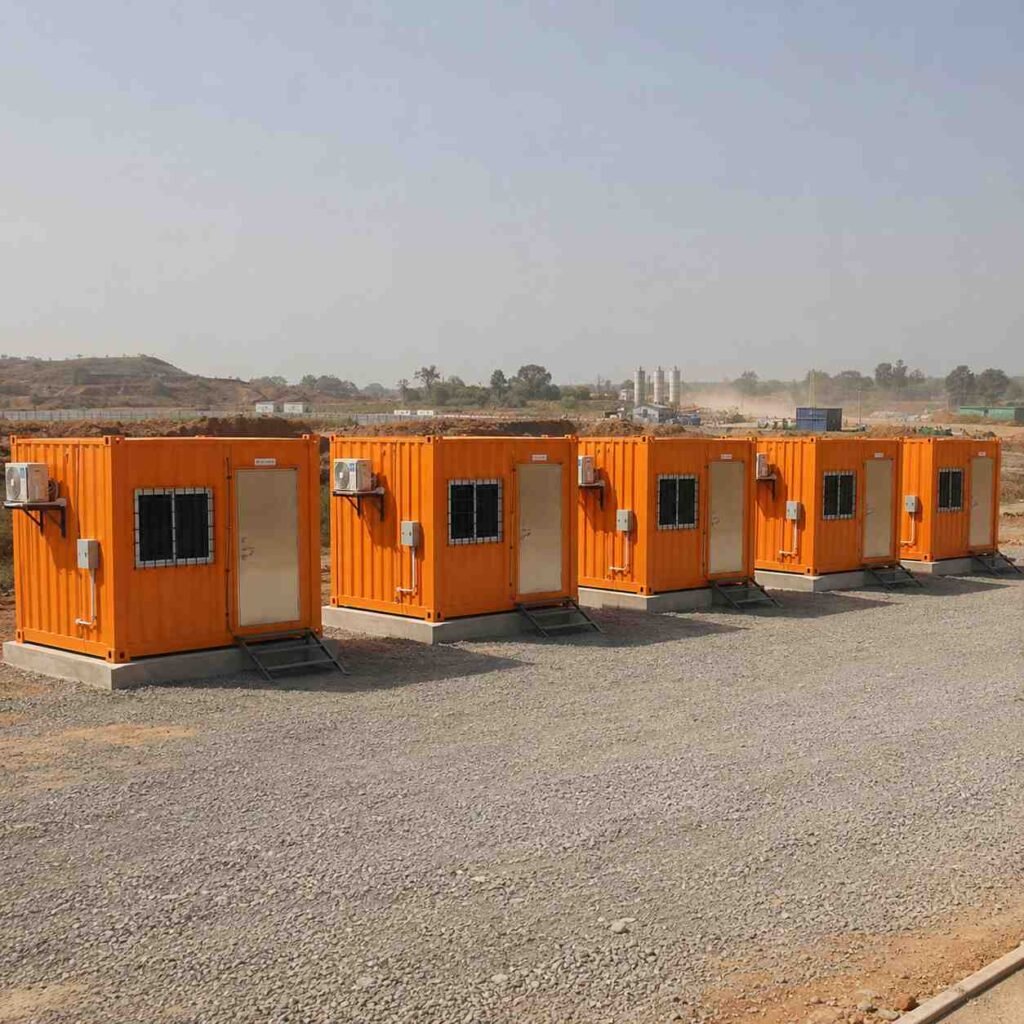

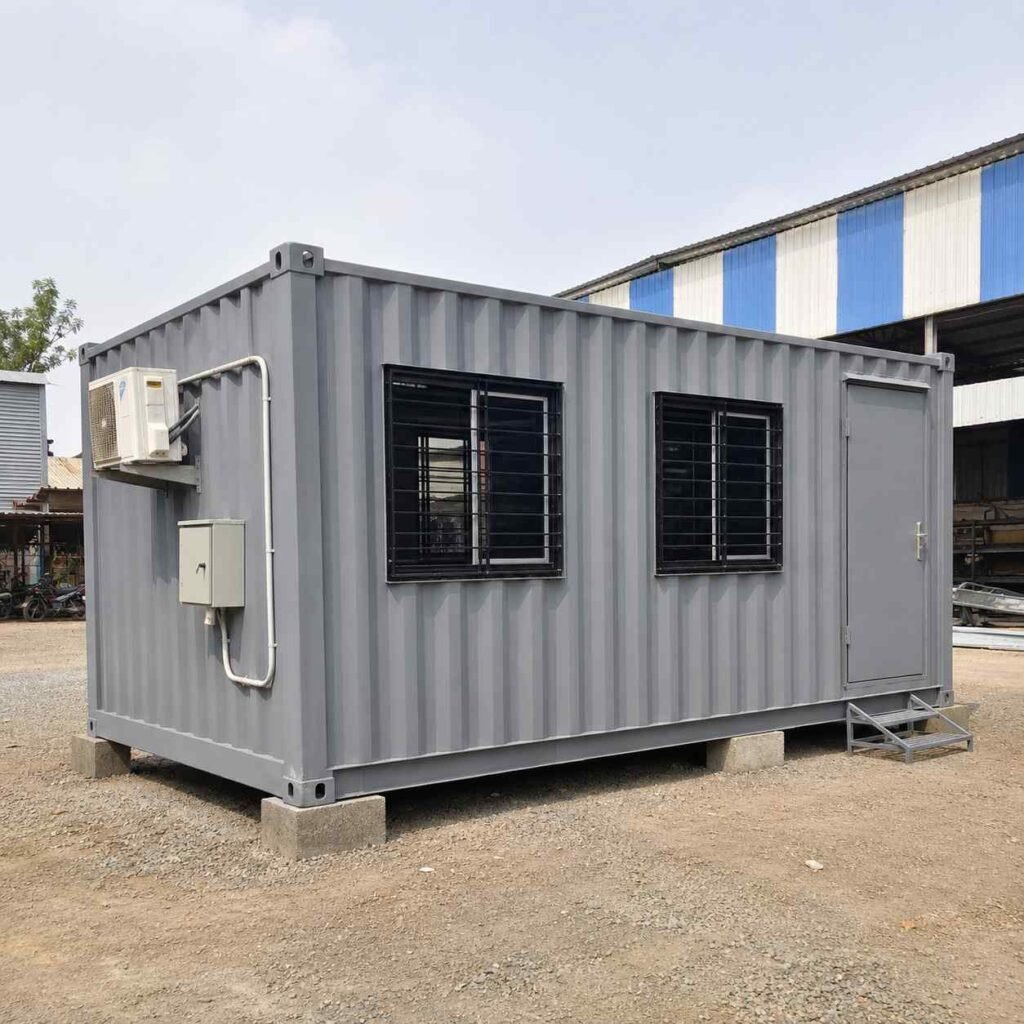



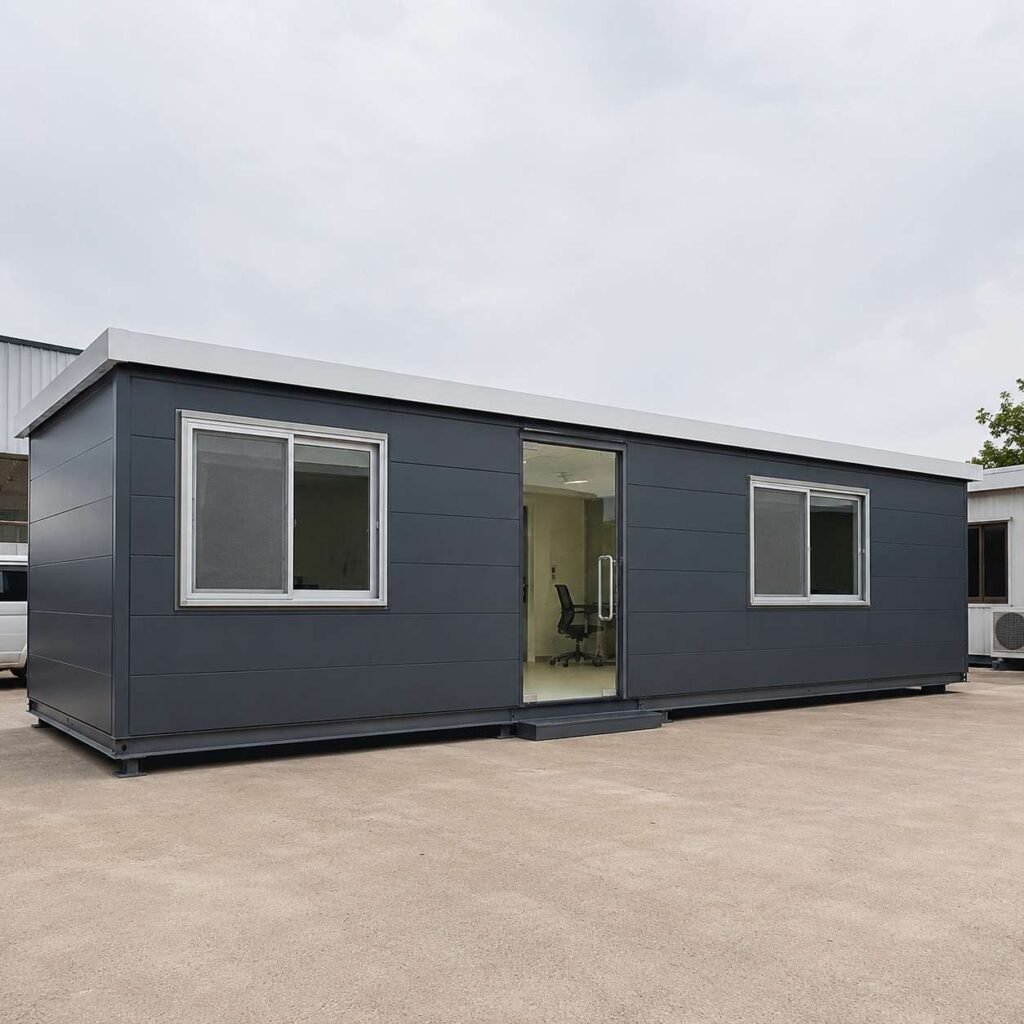

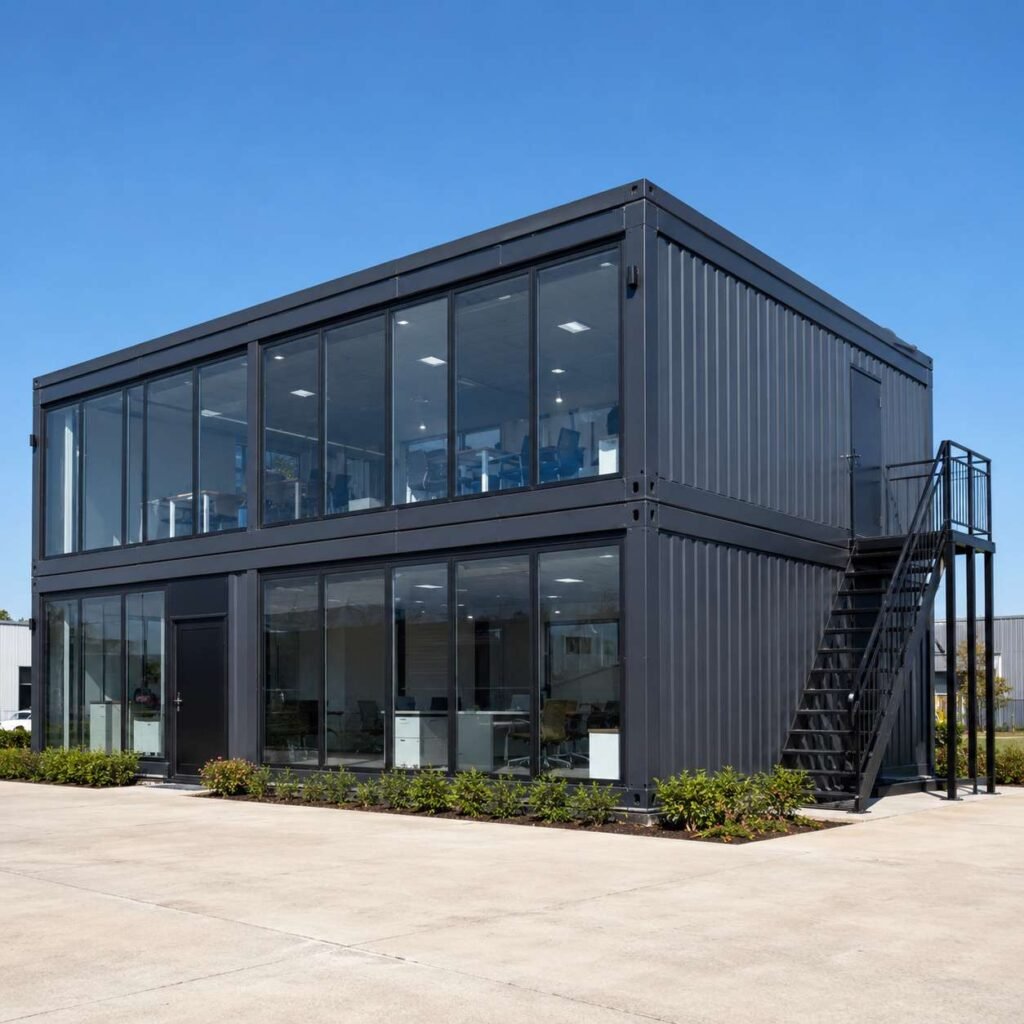
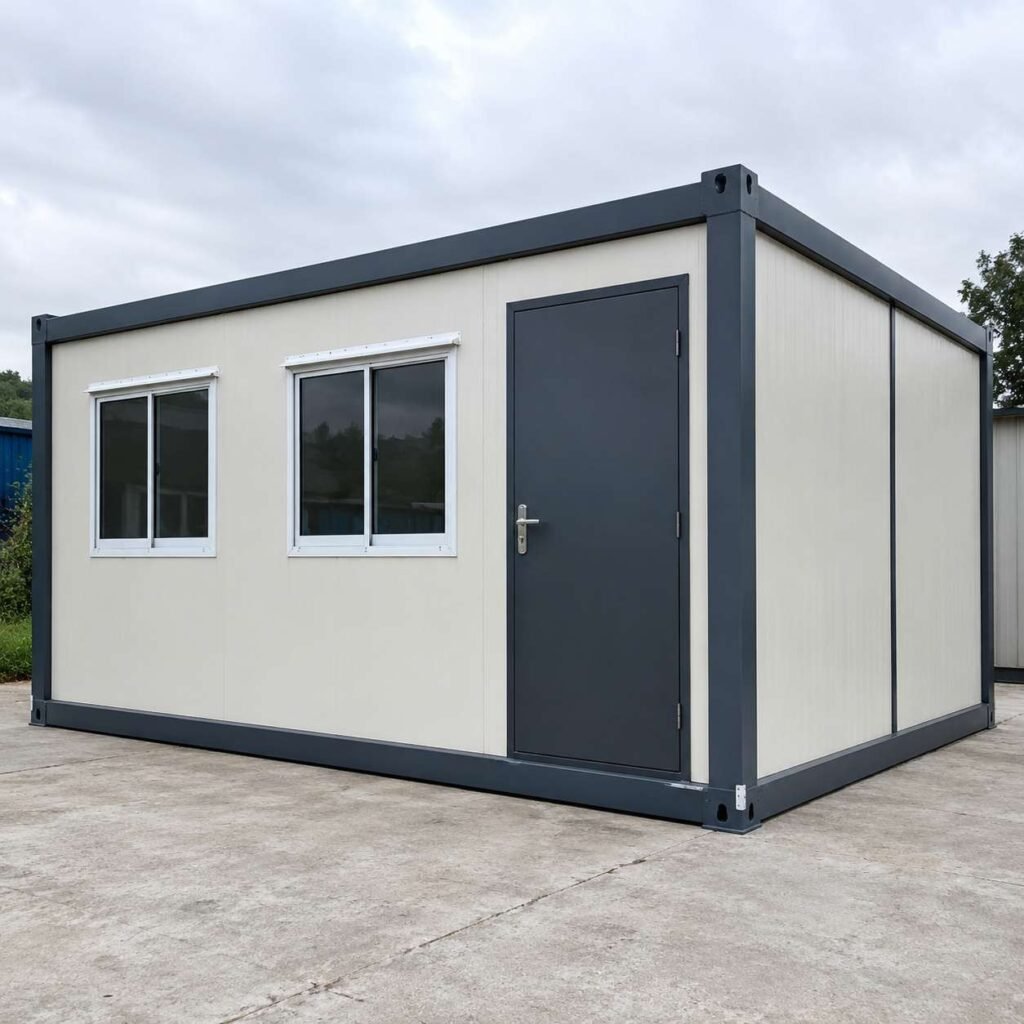
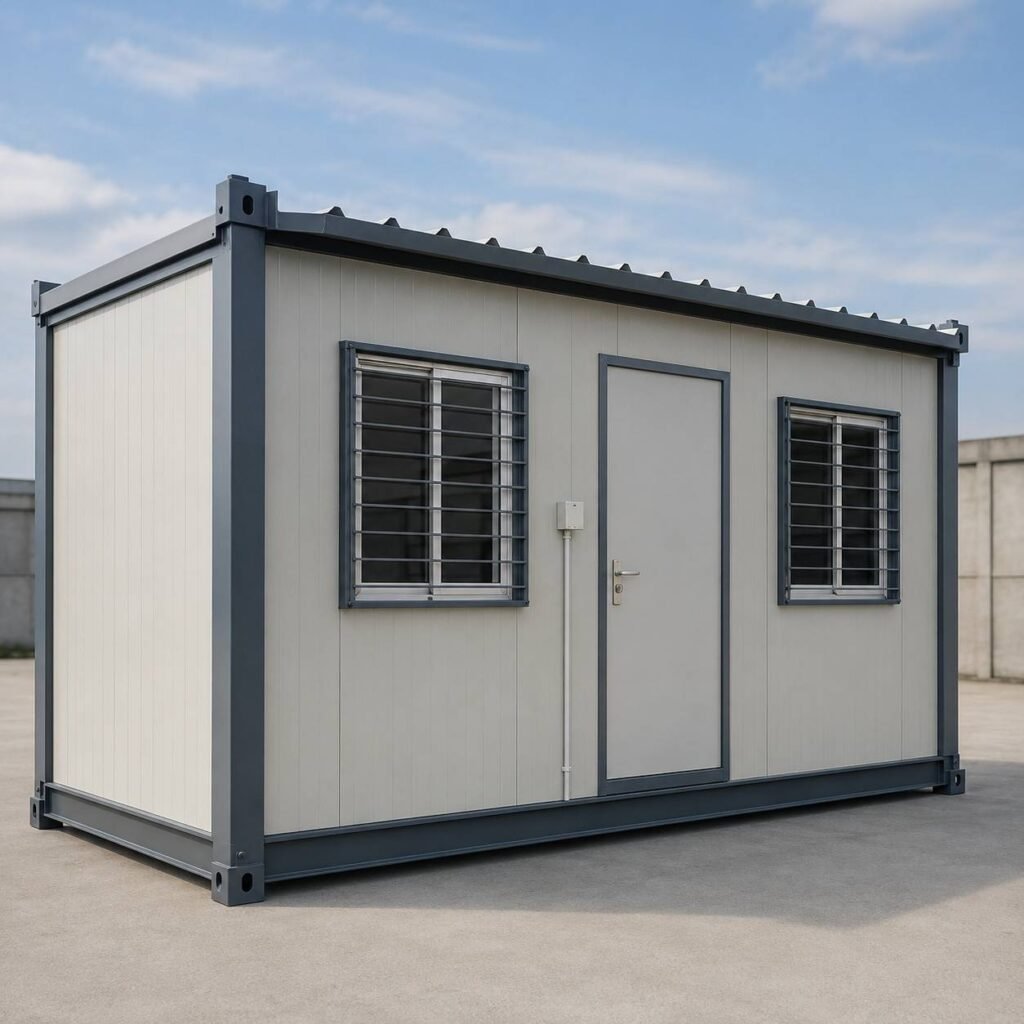


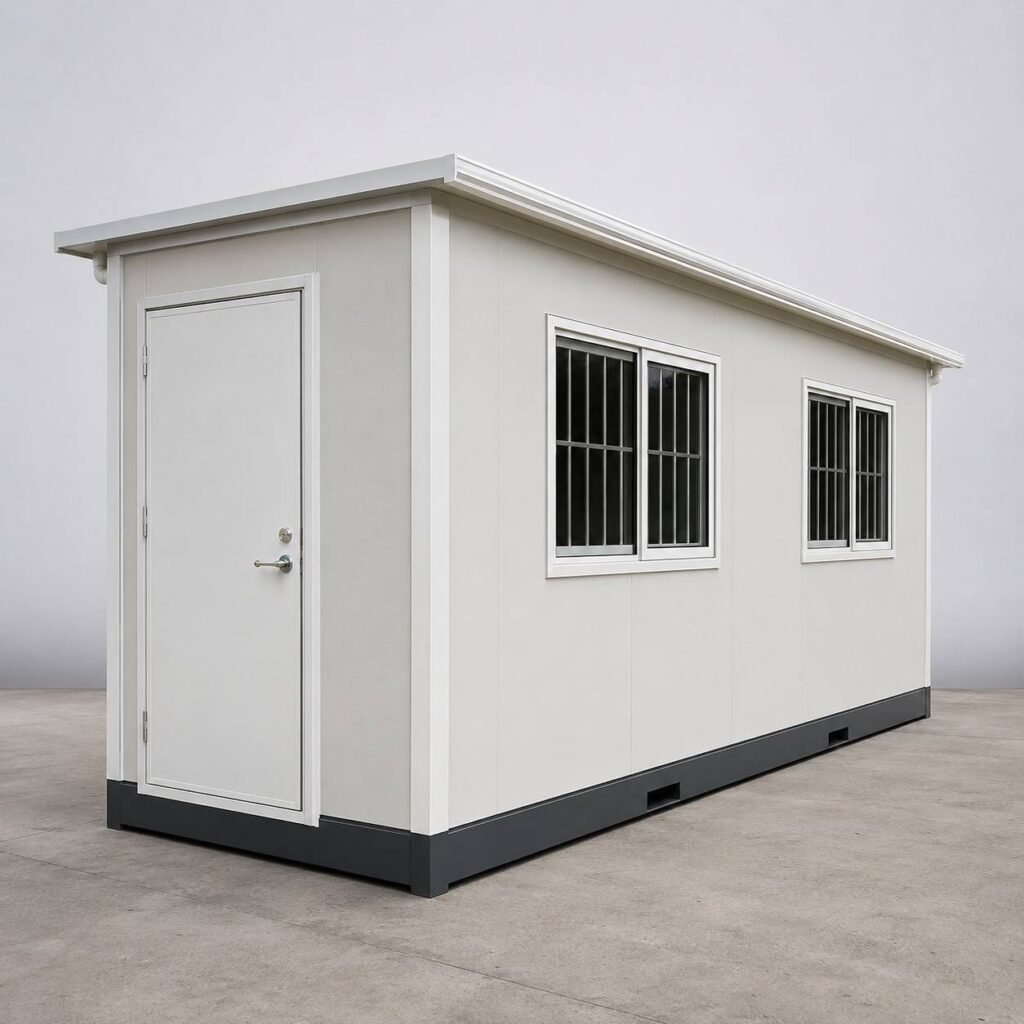
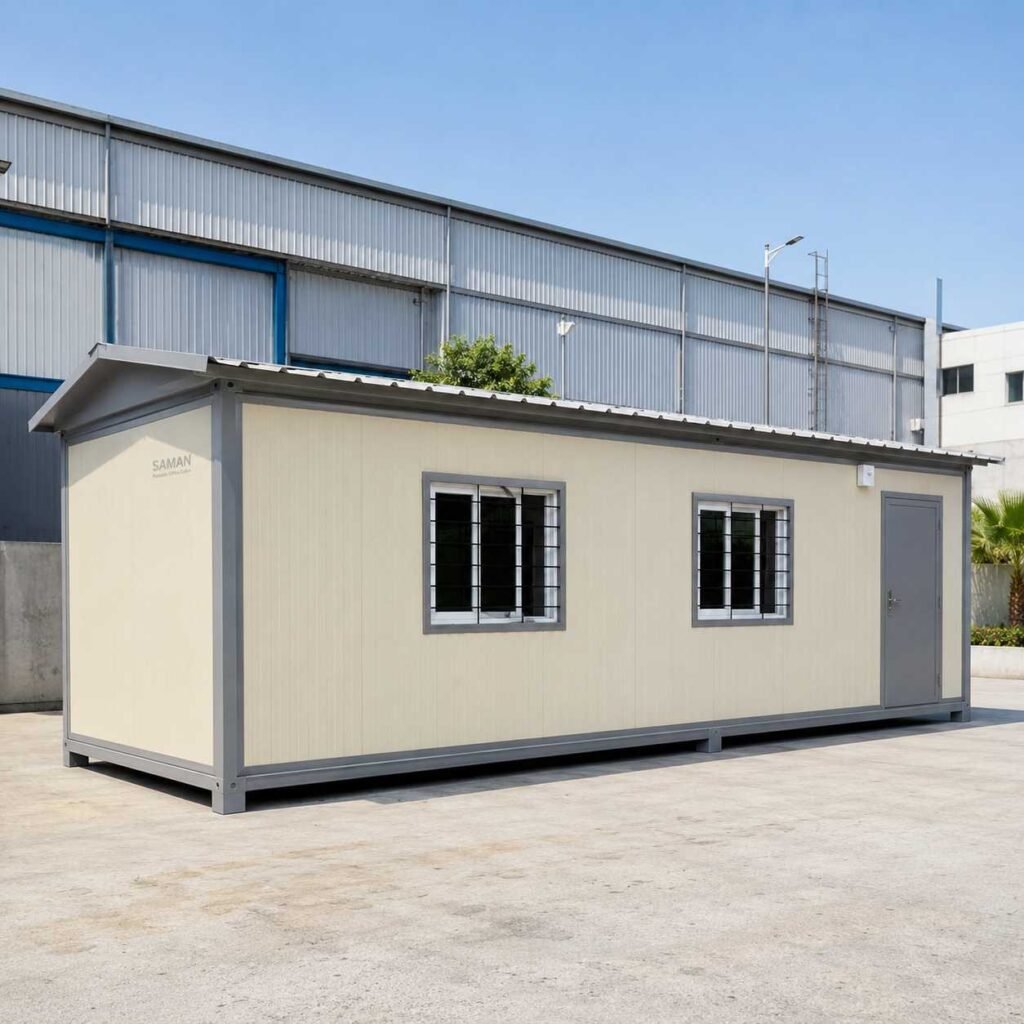
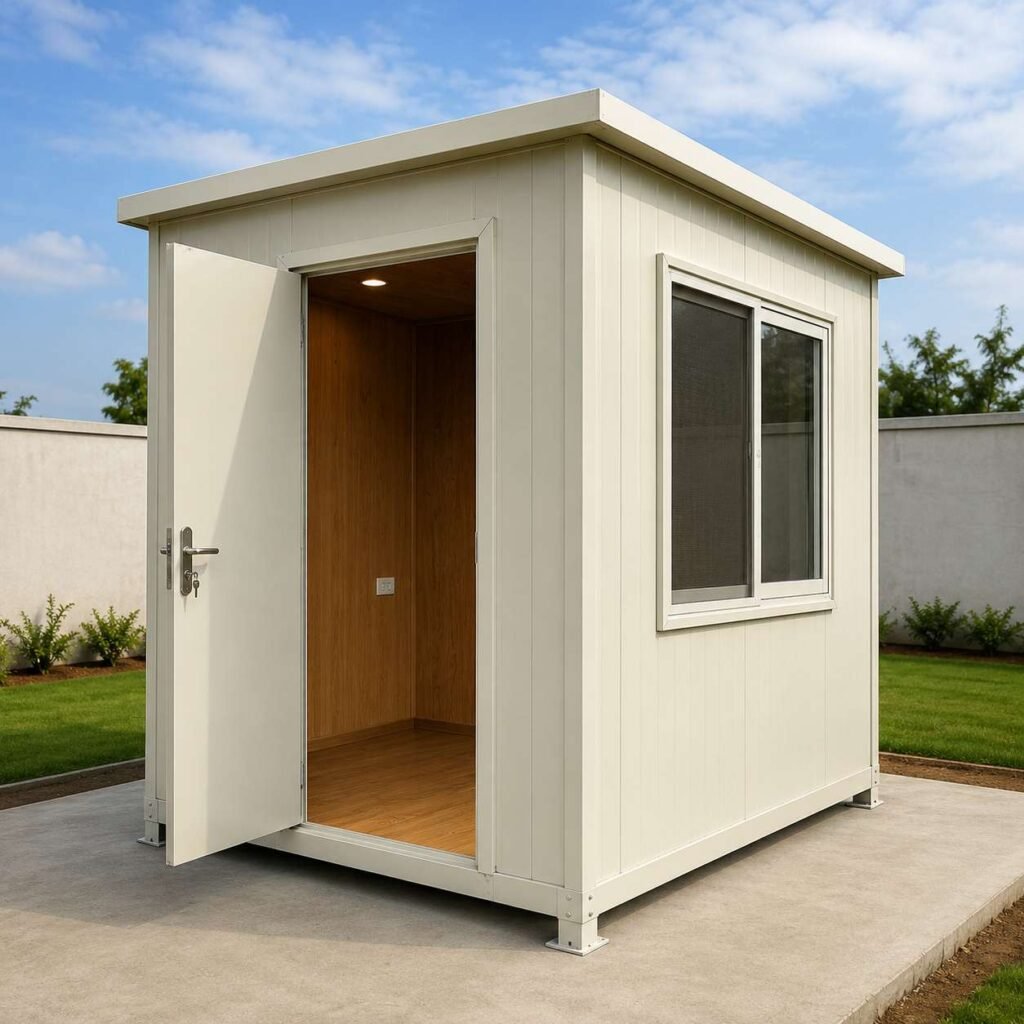


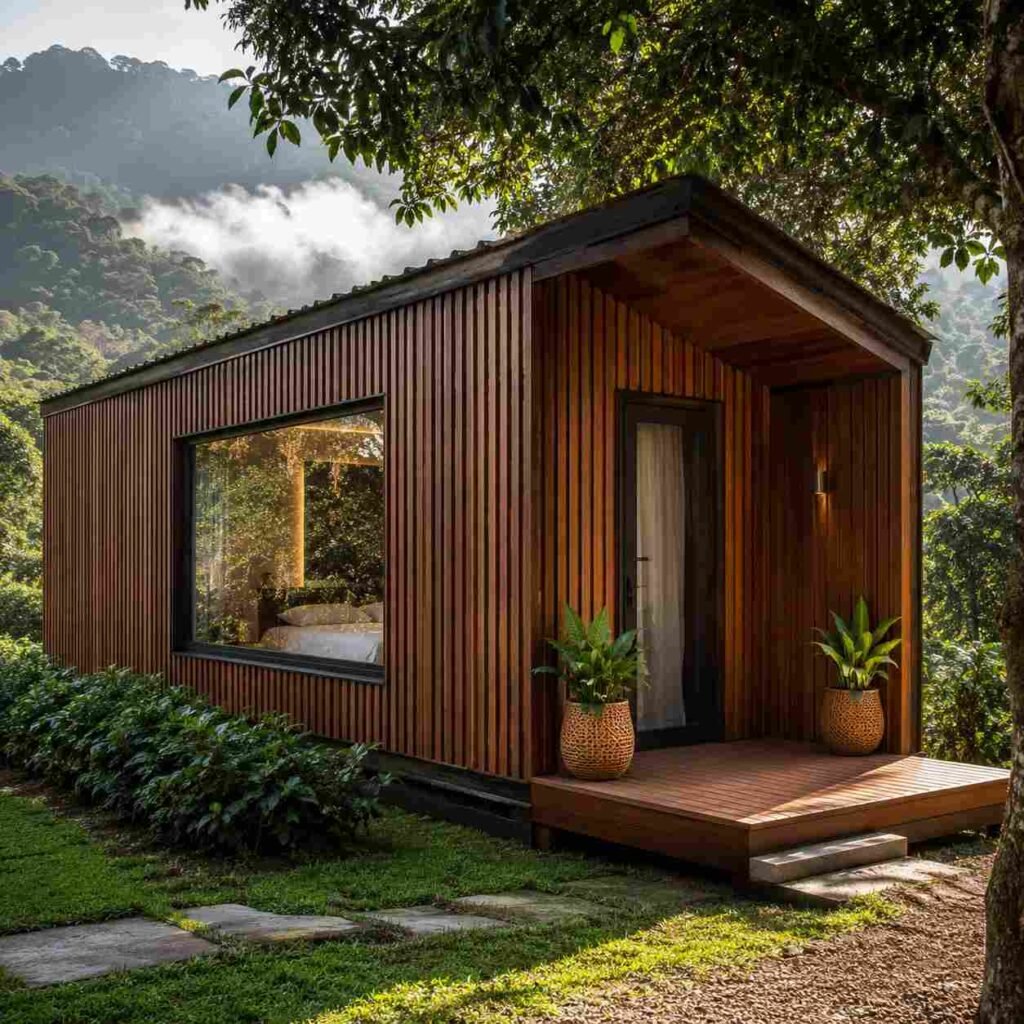











Prefab container homes from SAMAN are factory-fitted residential units delivered to your site at ₹8.65 lakh per unit, configured for either a single family residence or scaled into a colony build of 5–20 units for project staff or site accommodation. Two distinct buyers reach this page: a family choosing a finished home over a brick build, and a project team specifying multi-unit accommodation for a worksite or campus. The product is the same — a 30 ft × 20 ft × 8.6 ft steel-framed, factory-finished unit with wooden interior treatment — and the price holds whether you order one or twenty. What differs is procurement scope, site preparation, and lead time scaling.
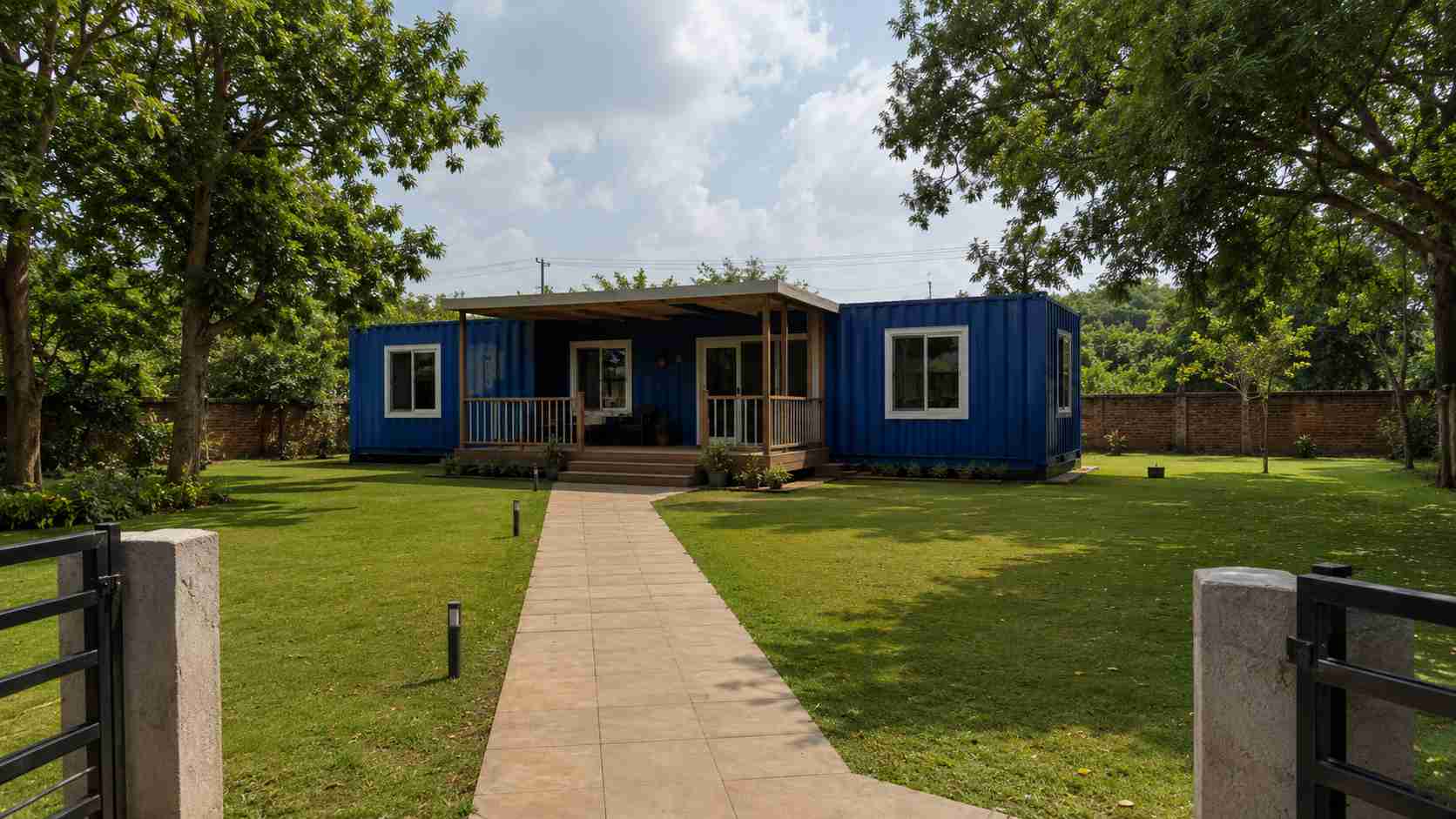
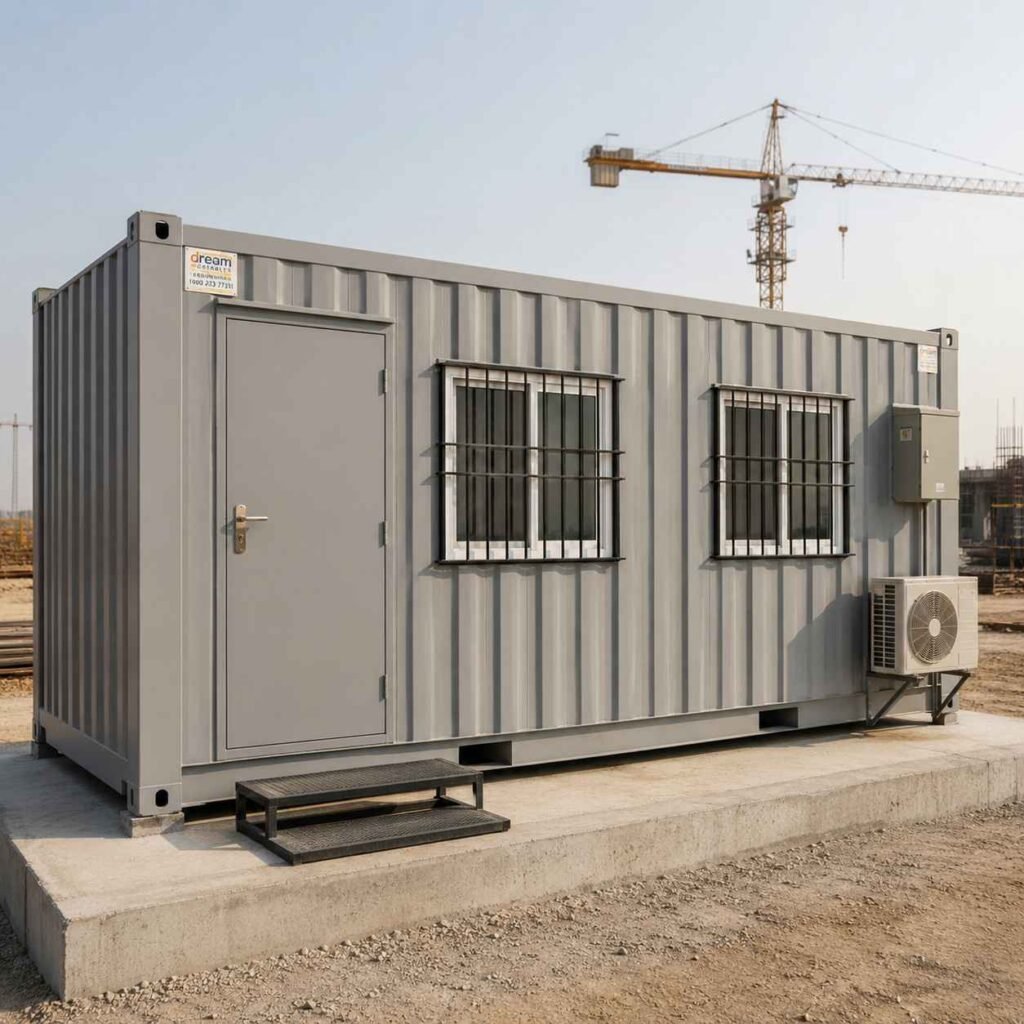
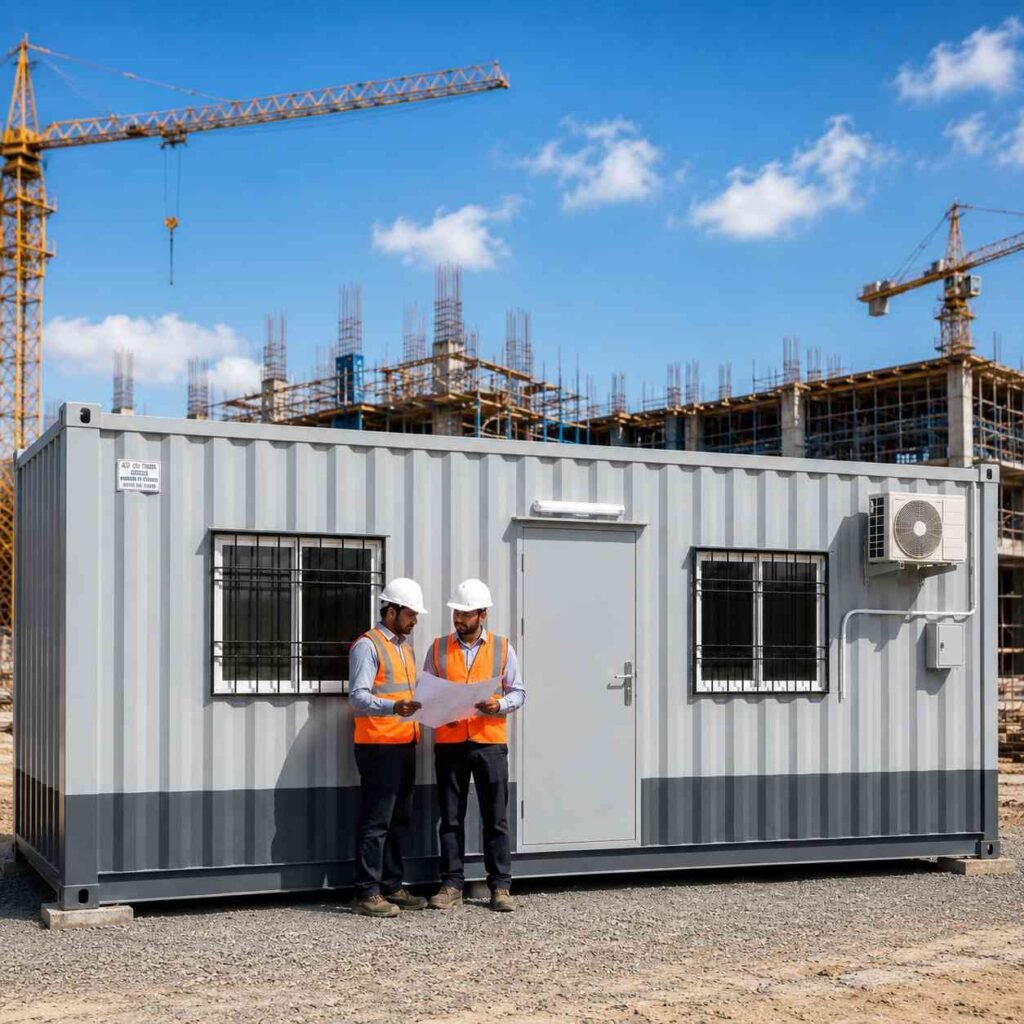
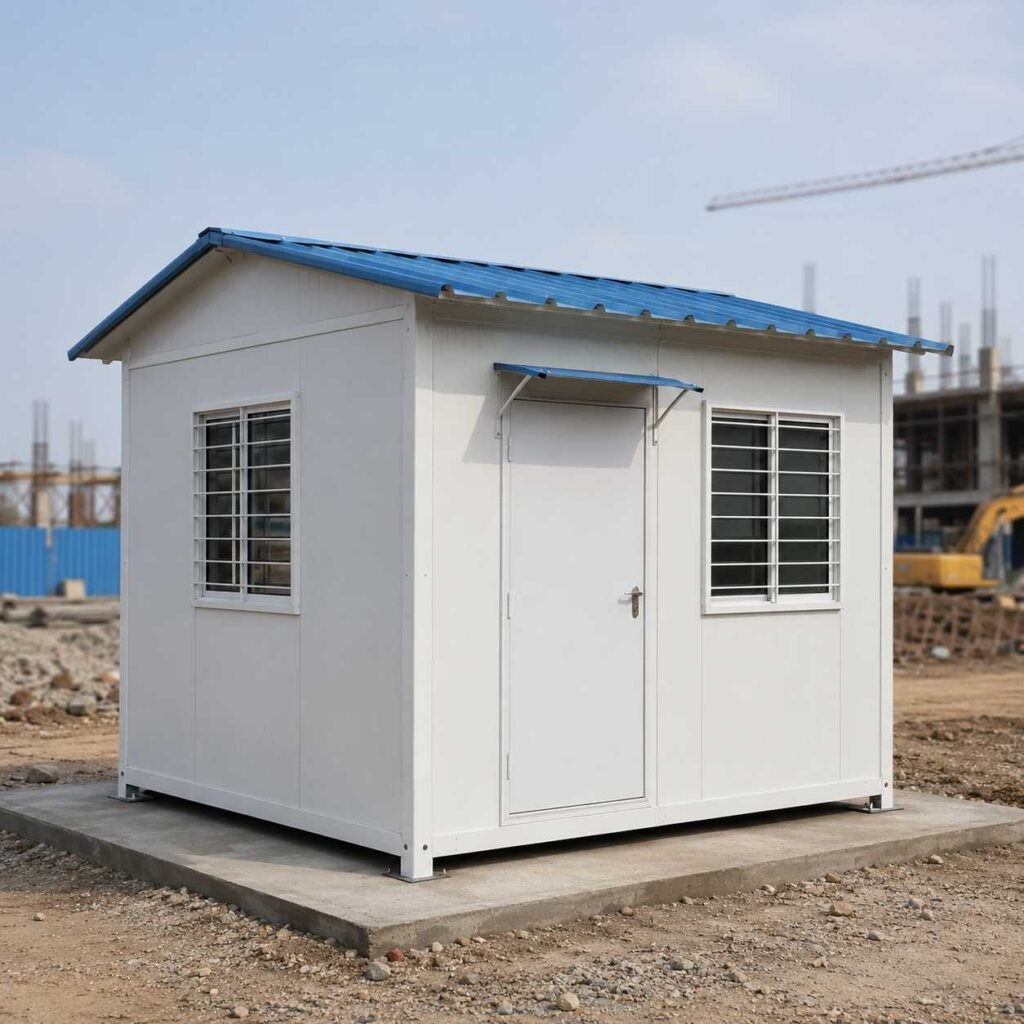
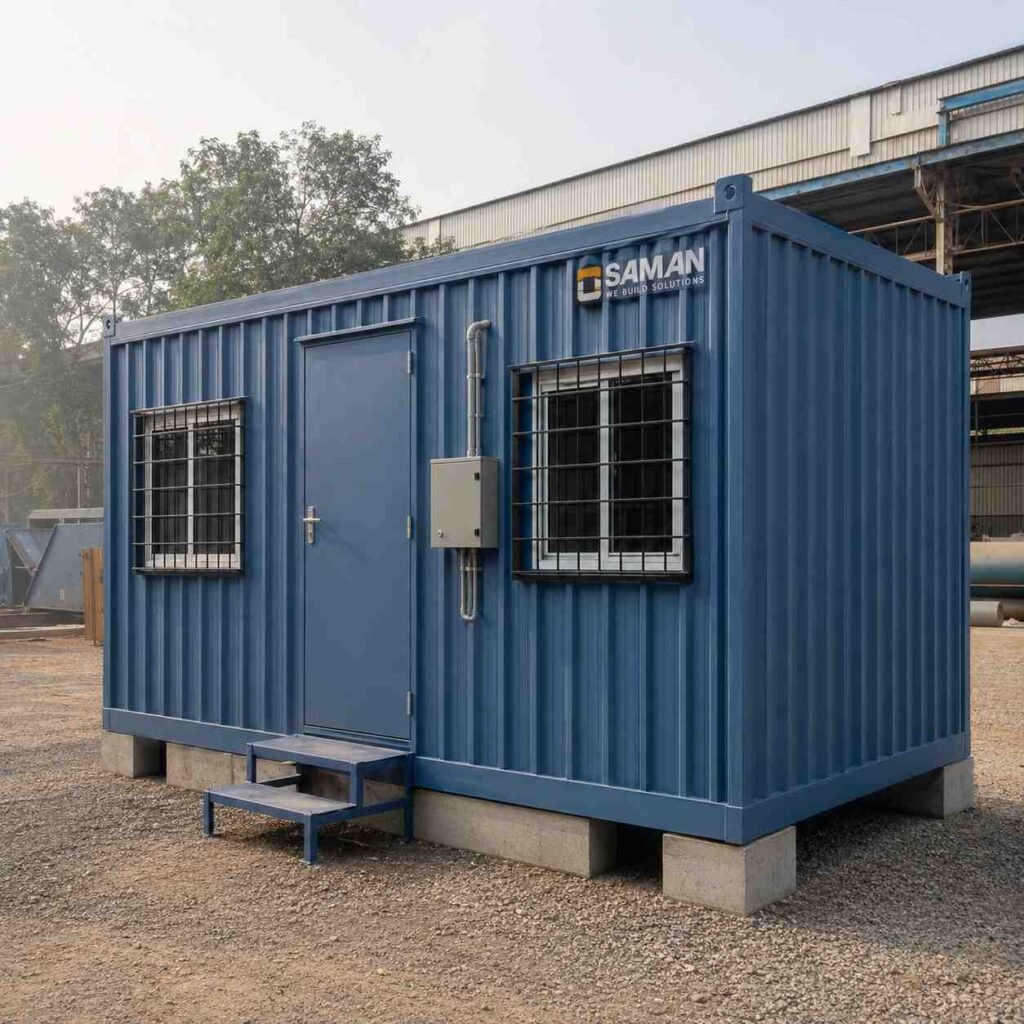
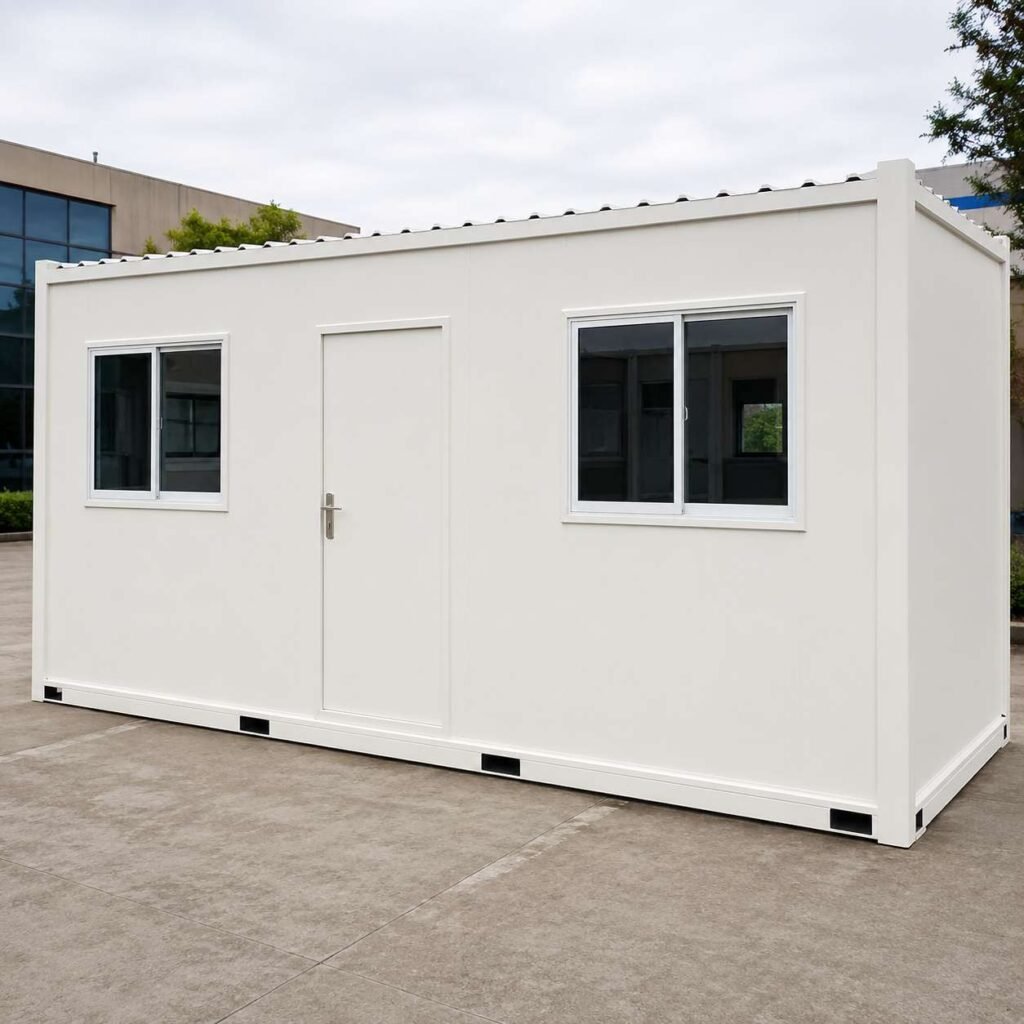
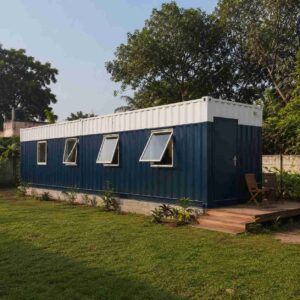
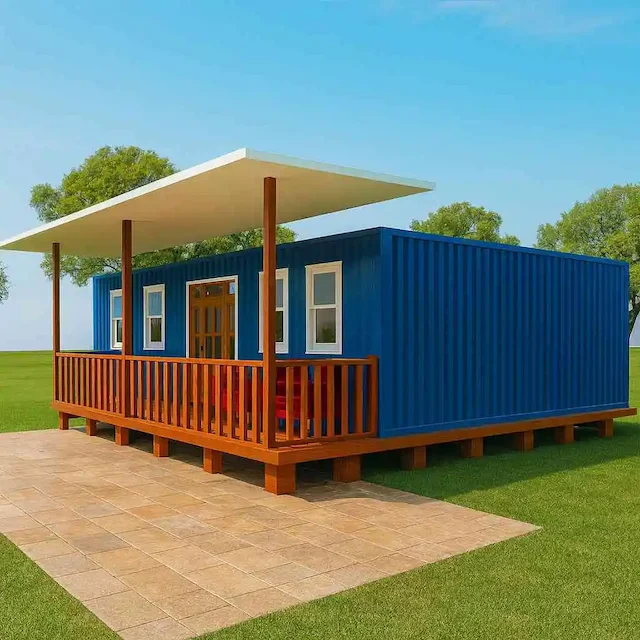
A configured prefab container home placed on a private Indian residential plot — the family-residence procurement route in real context.
What is a prefab container home and what does ₹8.65 lakh include?
A prefab container home is a factory-fitted residential unit built on a steel container frame, fully finished at the factory and road-transported to the buyer’s site. SAMAN’s prefab container homes start at ₹8.65 lakh for a 30 ft × 20 ft single unit with insulated panels, electrical wiring, interior finish, and external door and window — delivered ready to occupy after site connection.
Inside that price, the unit arrives with heavy-gauge MS steel framing, 50 mm PUF or EPS insulated wall and roof panels, plywood substrate flooring with vinyl plank or laminate finish, pre-wired electrical points with lighting and AC provision, a compact wet area with WC and washbasin, a powder-coated steel external door, openable windows with mosquito mesh, and factory-applied exterior paint. The wooden interior treatment referenced in the product specification is wood-effect laminate over the insulated wall core — a choice at this tier that lifts the interior feel above a painted panel finish without moving into the luxury price band.
What ₹8.65 lakh does not include: the foundation or plinth, the water inlet/outlet plumbing connection, the electrical service line from your meter to the unit, and municipal building plan approval. These are scoped in the next two sections.
Single unit or colony — which procurement route fits your project
The two procurement routes lead to the same product, but the order shape and the site work look entirely different.
A single-unit order suits a family residence on your plot, a holiday home, a single staff house on an estate, or a weekend cottage on owned land. One unit, one trailer, one site prep cycle, one delivery day. Most single-unit orders go from confirmation to occupiable in 21 to 28 working days — 7 days for design alignment, 14 to 21 days for factory build, and 1 to 3 days for transport and placement. For Indian families specifying a residence on an existing or inherited plot, this is the high-volume route.
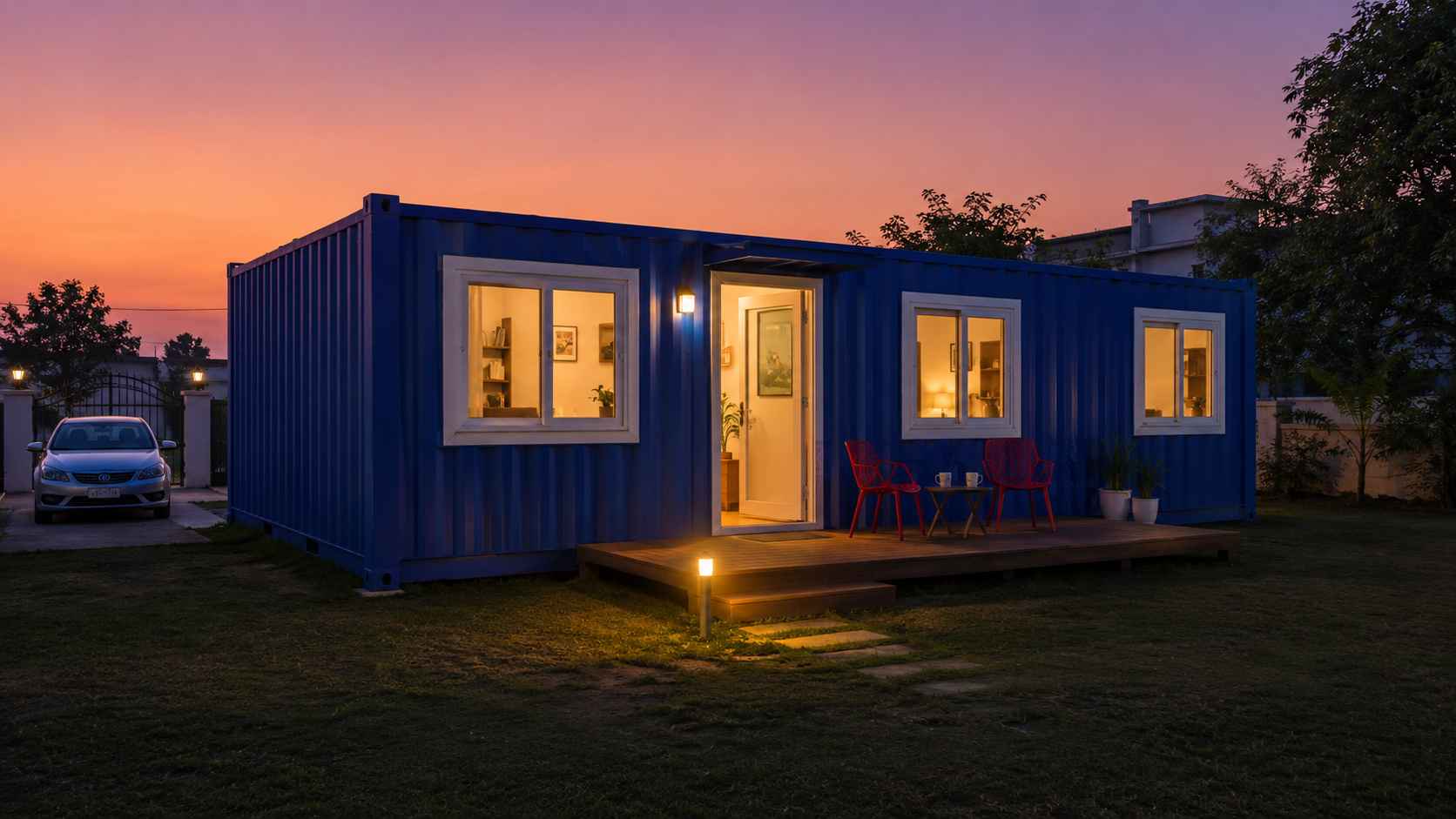
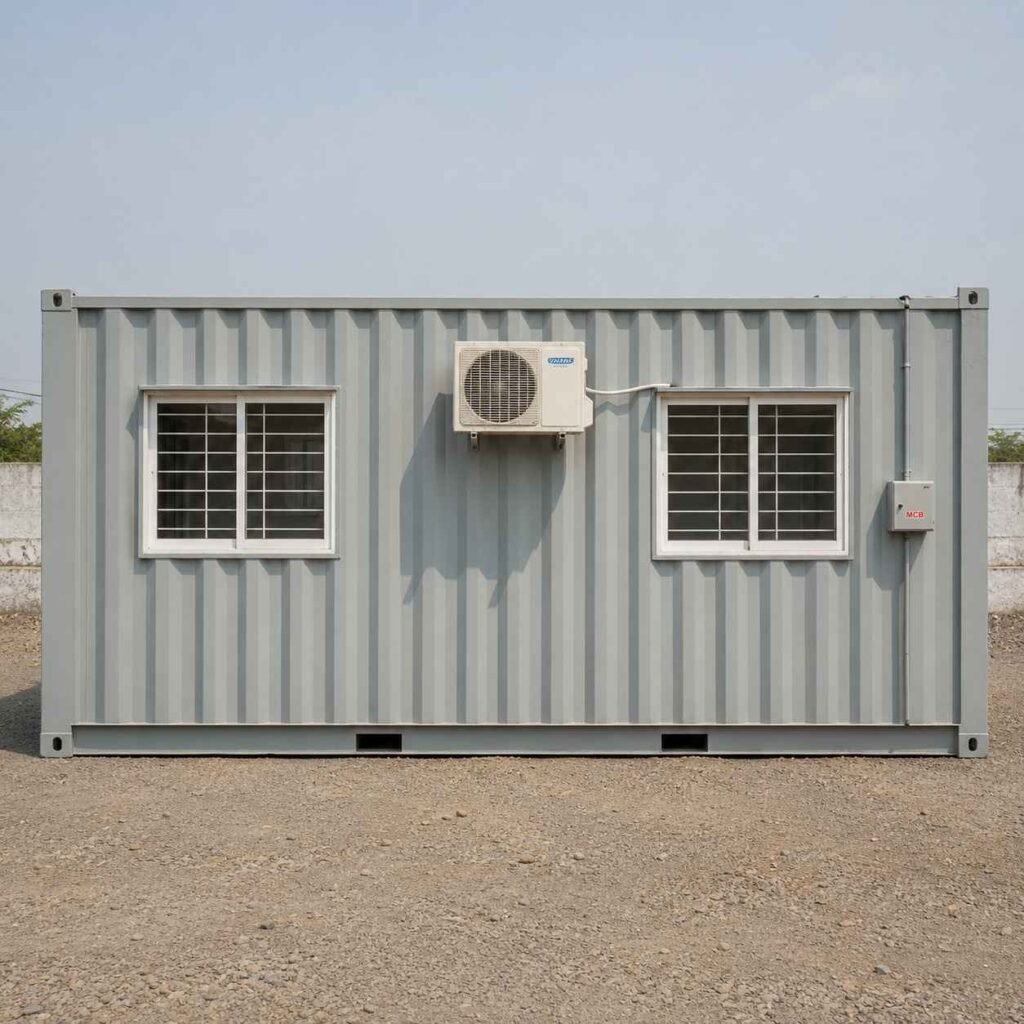
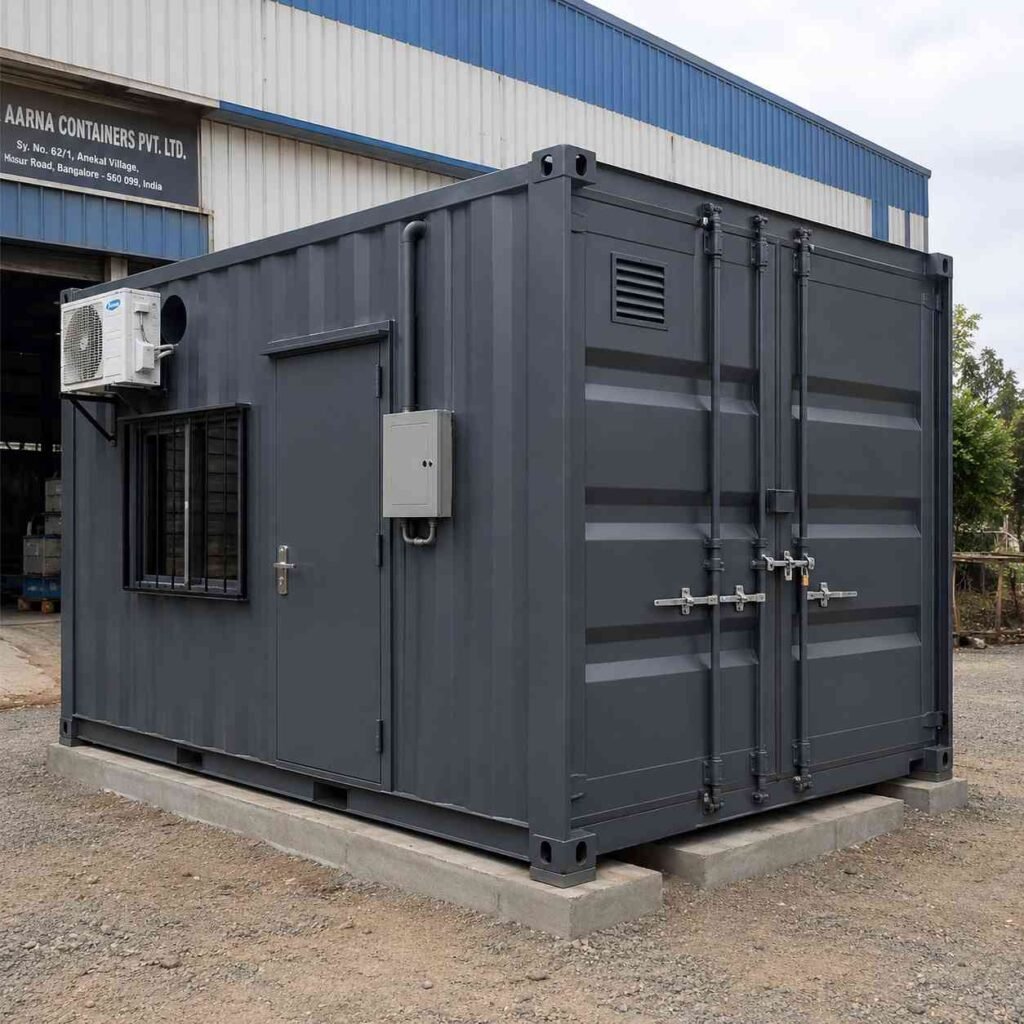
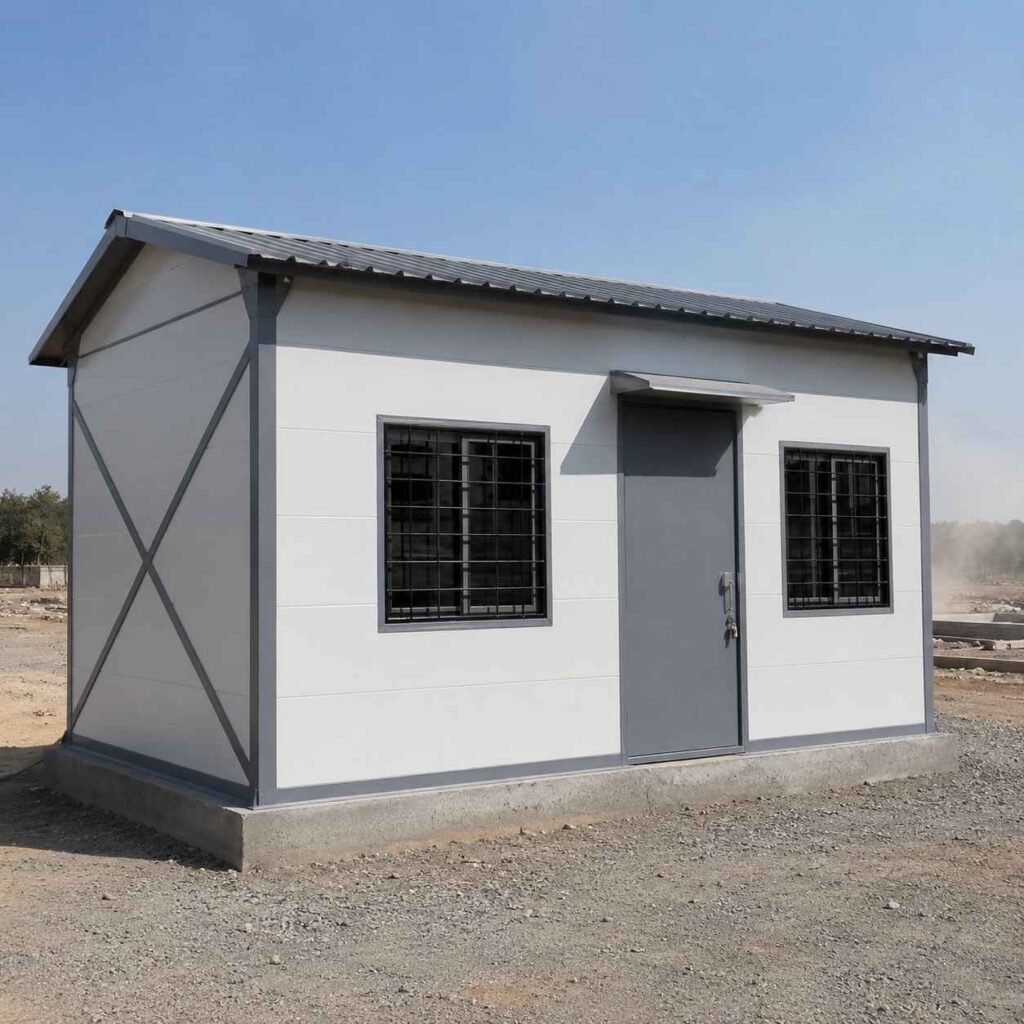
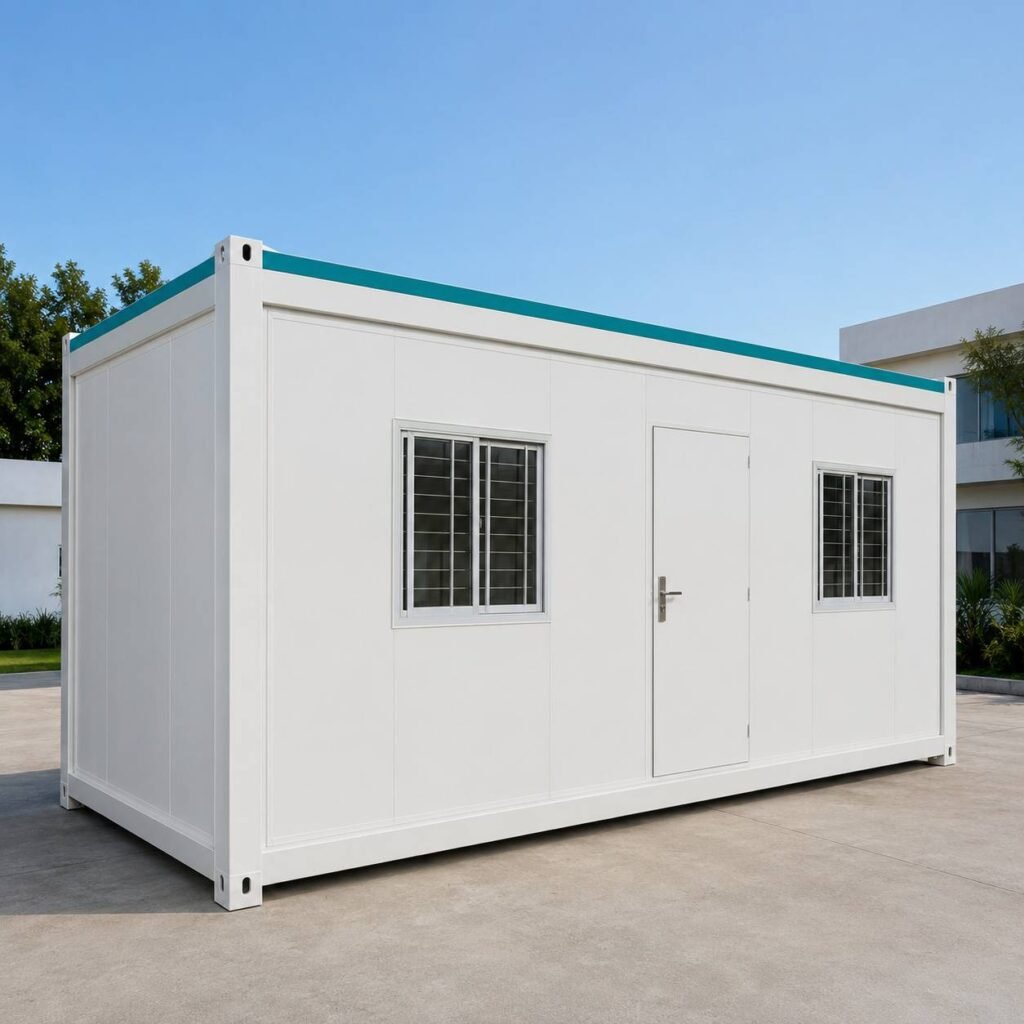
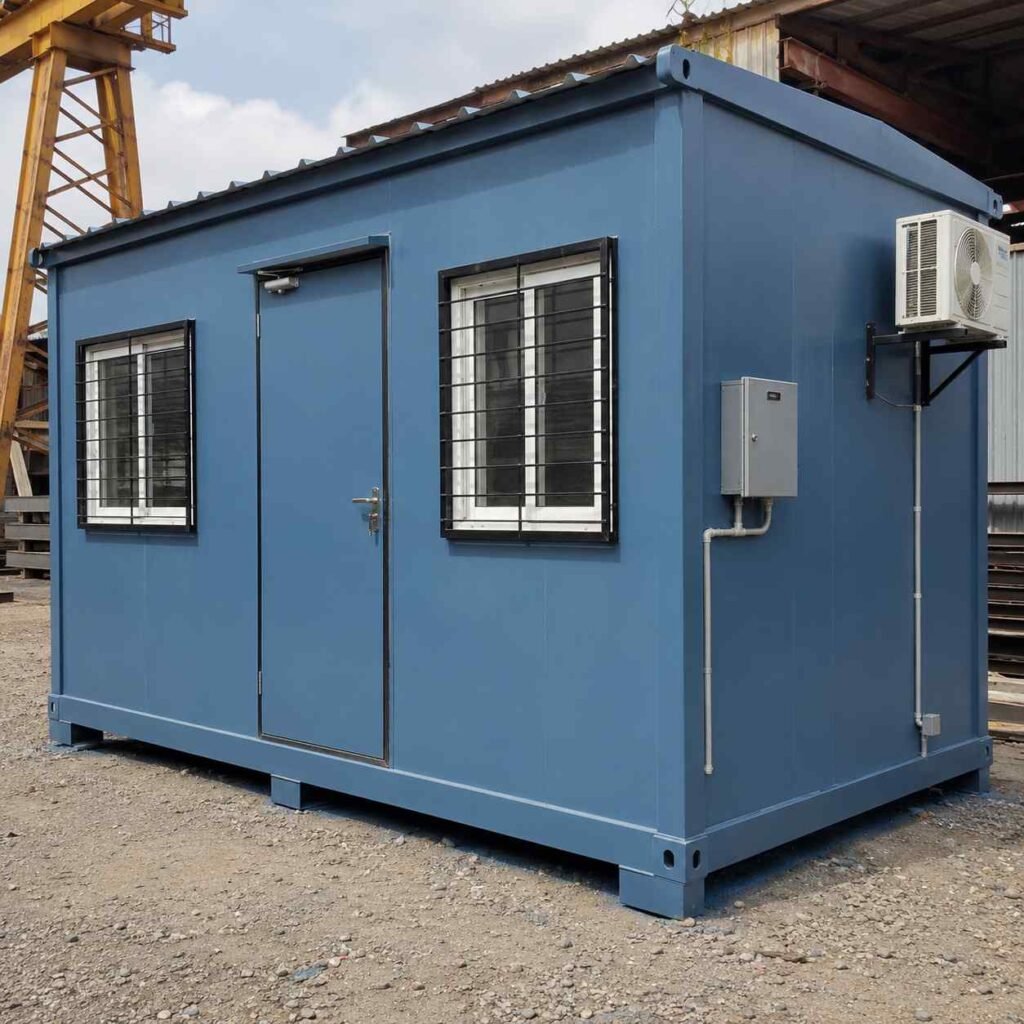
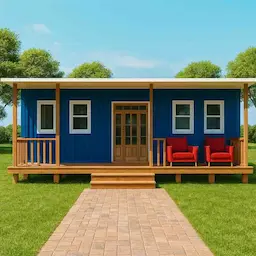
End-of-day shot of a single-unit prefab container home occupied as a permanent family residence in India.
A colony build — typically 5 to 20 units delivered together — suits project staff accommodation, construction site lodging, a training centre with dormitory rooms, or a contractor workforce camp. The per-unit rate holds up to bulk-volume thresholds; negotiated economics apply above 10 units. Site preparation scales with unit count: a 5-unit row needs a plinth runway and shared utility runs, a 15-unit cluster needs a planned layout with circulation, drainage, and a service core. Fabrication runs in batches rather than as a one-off, which is why colony lead time is 35 to 50 working days.
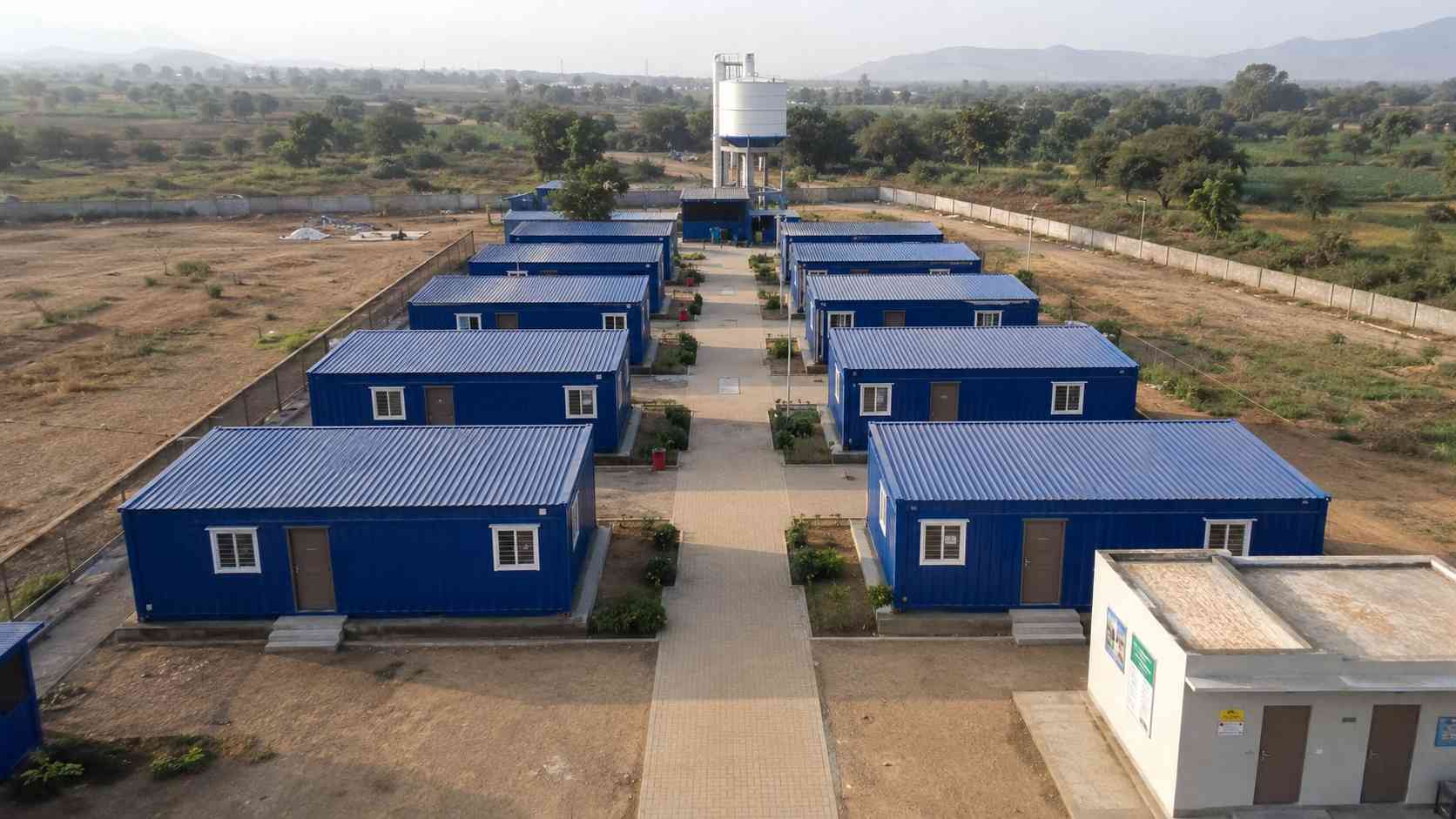
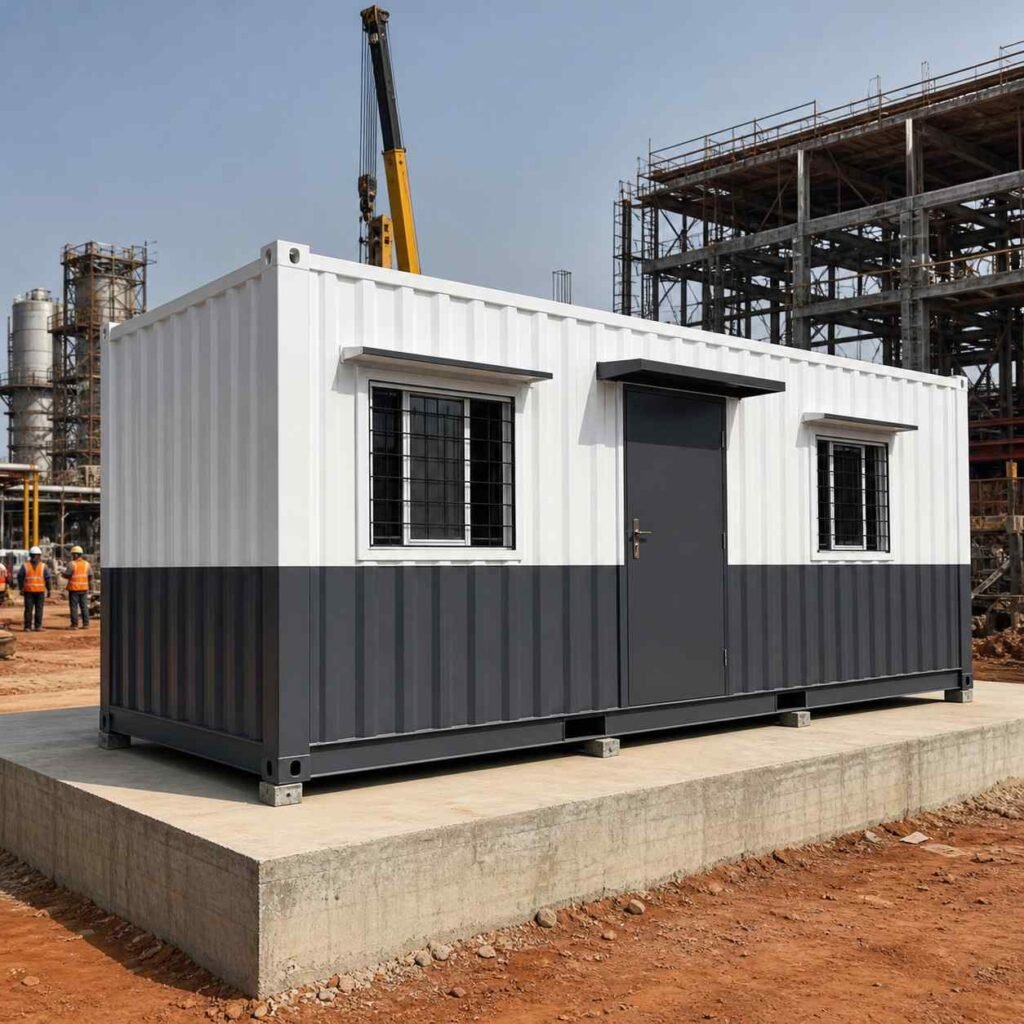
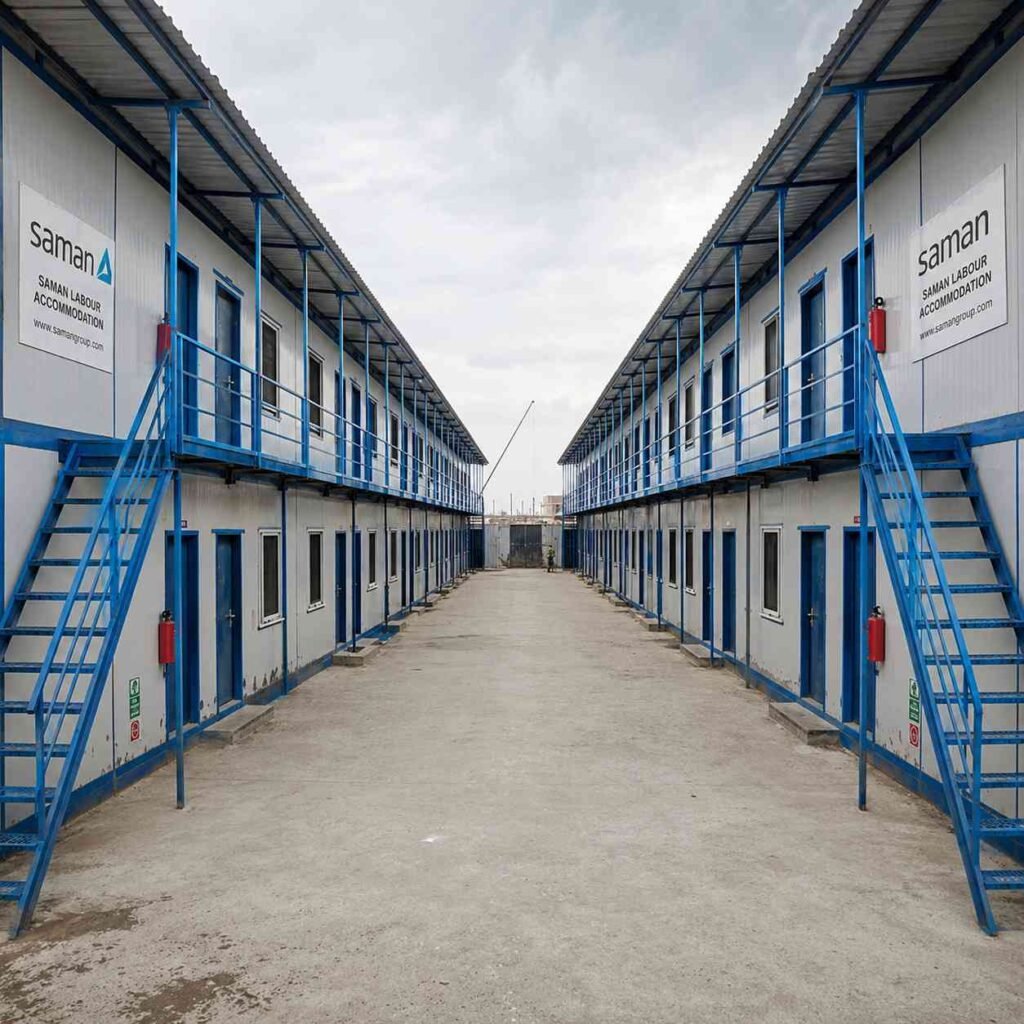
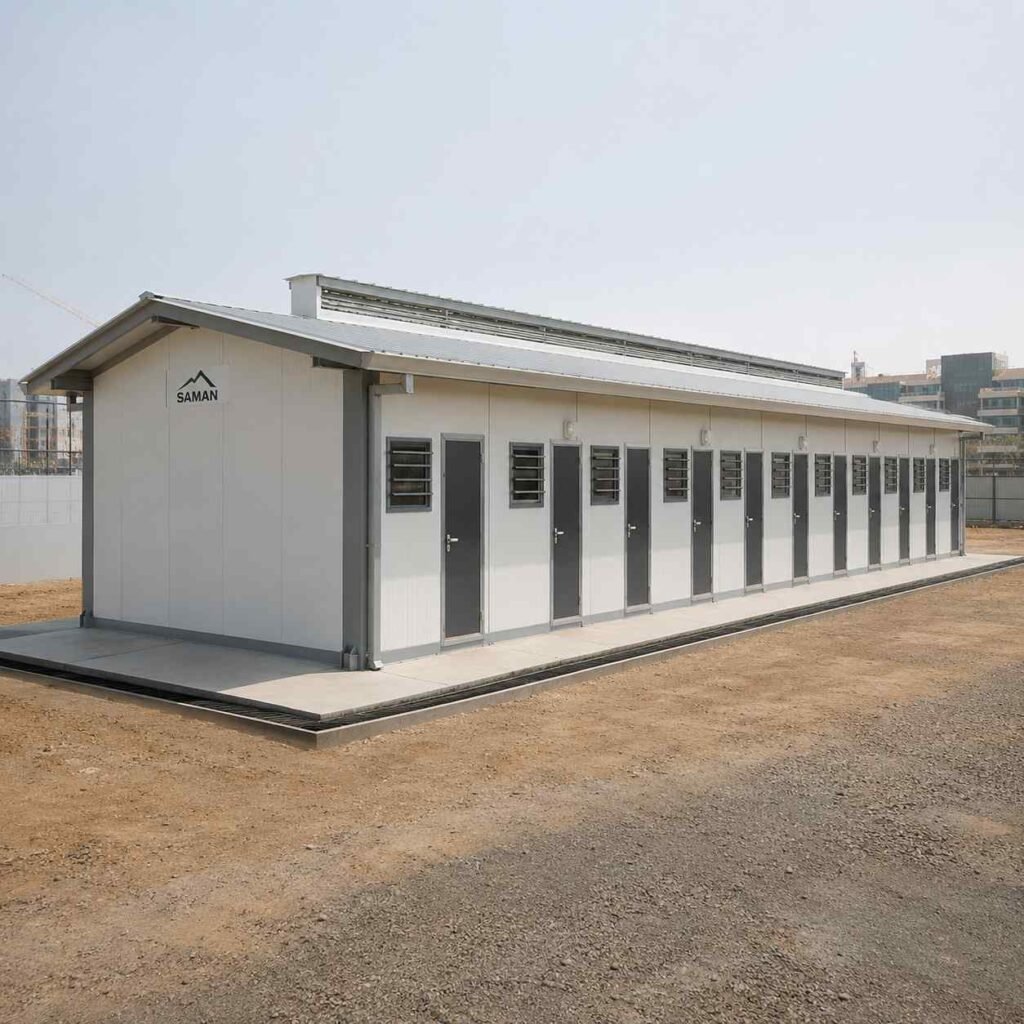
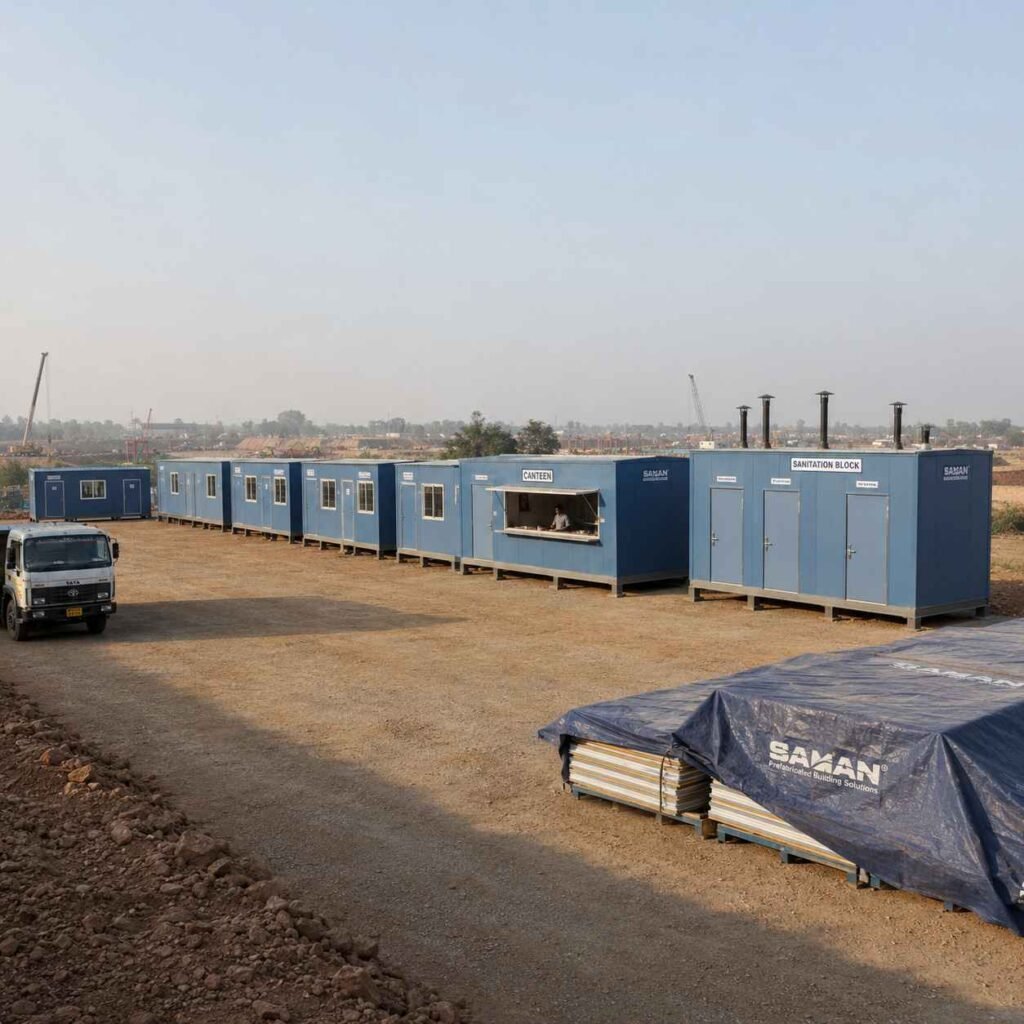
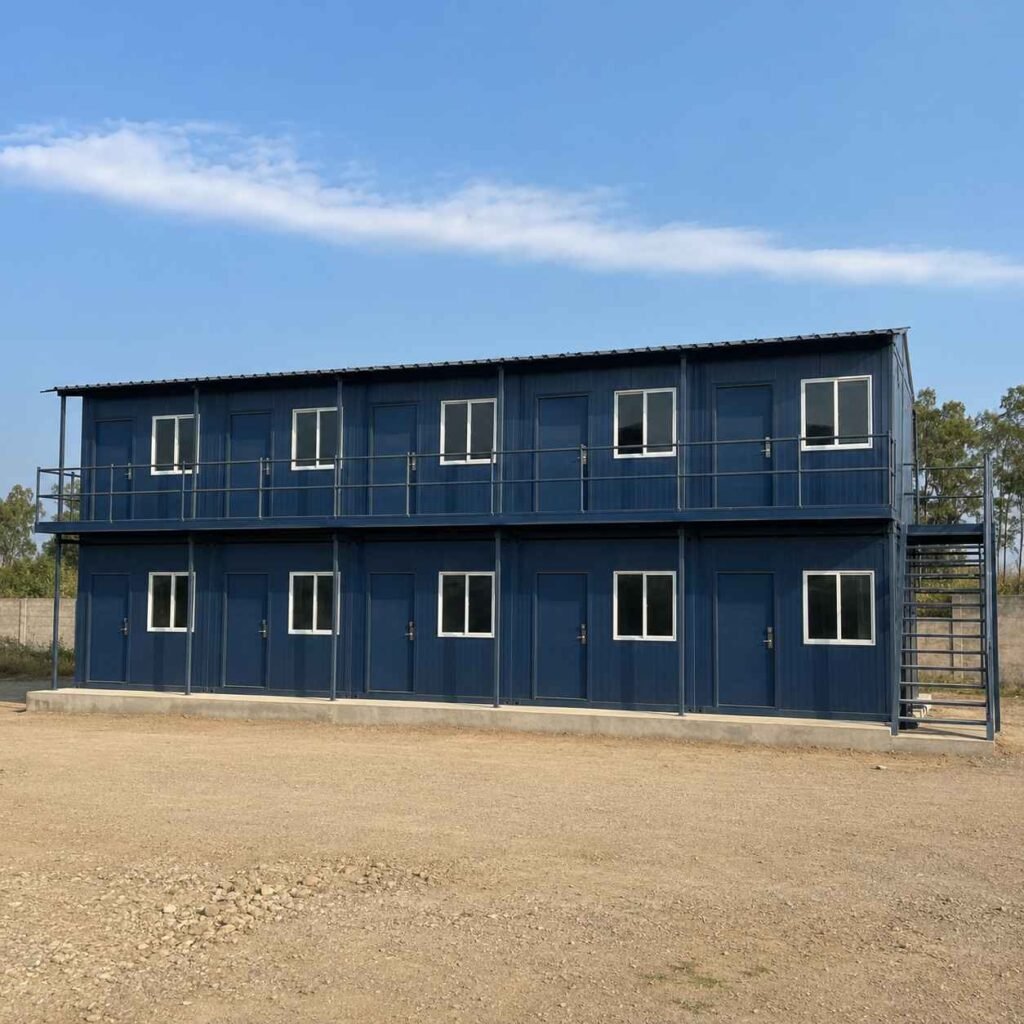
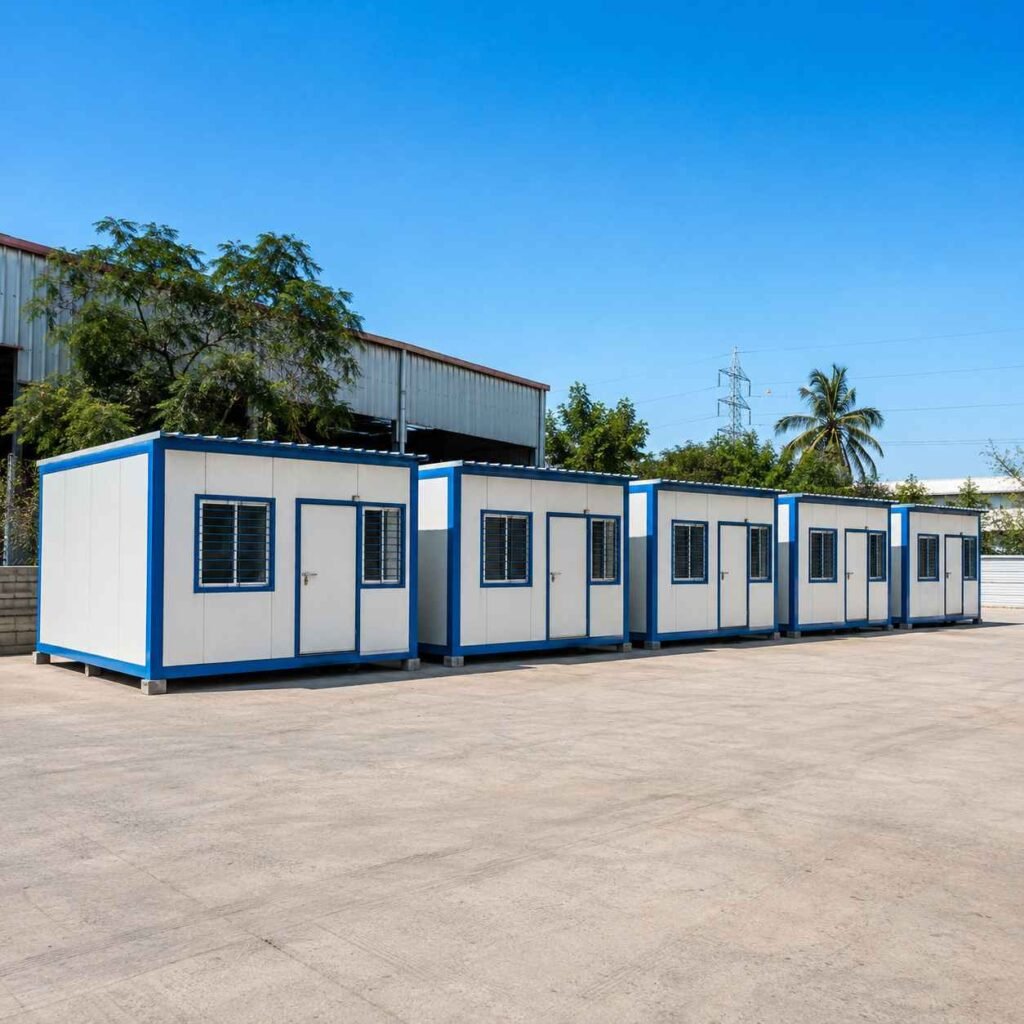
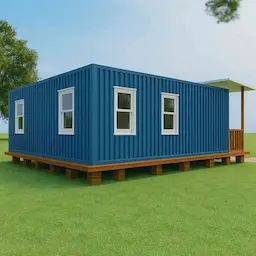
An eight-unit colony build of identical prefab container homes for project staff or construction site accommodation.
The decision is rarely “single or colony” in the abstract — it’s about whether your site is hosting one household or a workforce. If you’re scaling staff housing past 8 units with future expansion in mind, mention that at enquiry and we’ll design the layout for future addition, not just current scope.
Layouts at the ₹8.65 lakh tier — 1 BHK to 2 BHK family configurations
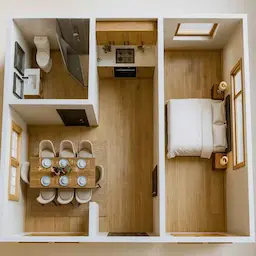
The 30 ft × 20 ft base unit gives approximately 480 sq ft of usable internal floor area — enough to comfortably configure a 1 BHK or a tight 2 BHK layout for a small family. The actual layout is decided in the design alignment phase based on how you intend to use the space.
A 1 BHK configuration fits one bedroom (≈ 100–120 sq ft) with attached or shared bathroom, a living-and-dining room (≈ 180–200 sq ft), a kitchen with cooking platform and chimney provision (≈ 80–100 sq ft), and a bathroom with shower, WC, and washbasin (≈ 40–50 sq ft). Door and window placement is set during design to suit your plot orientation.
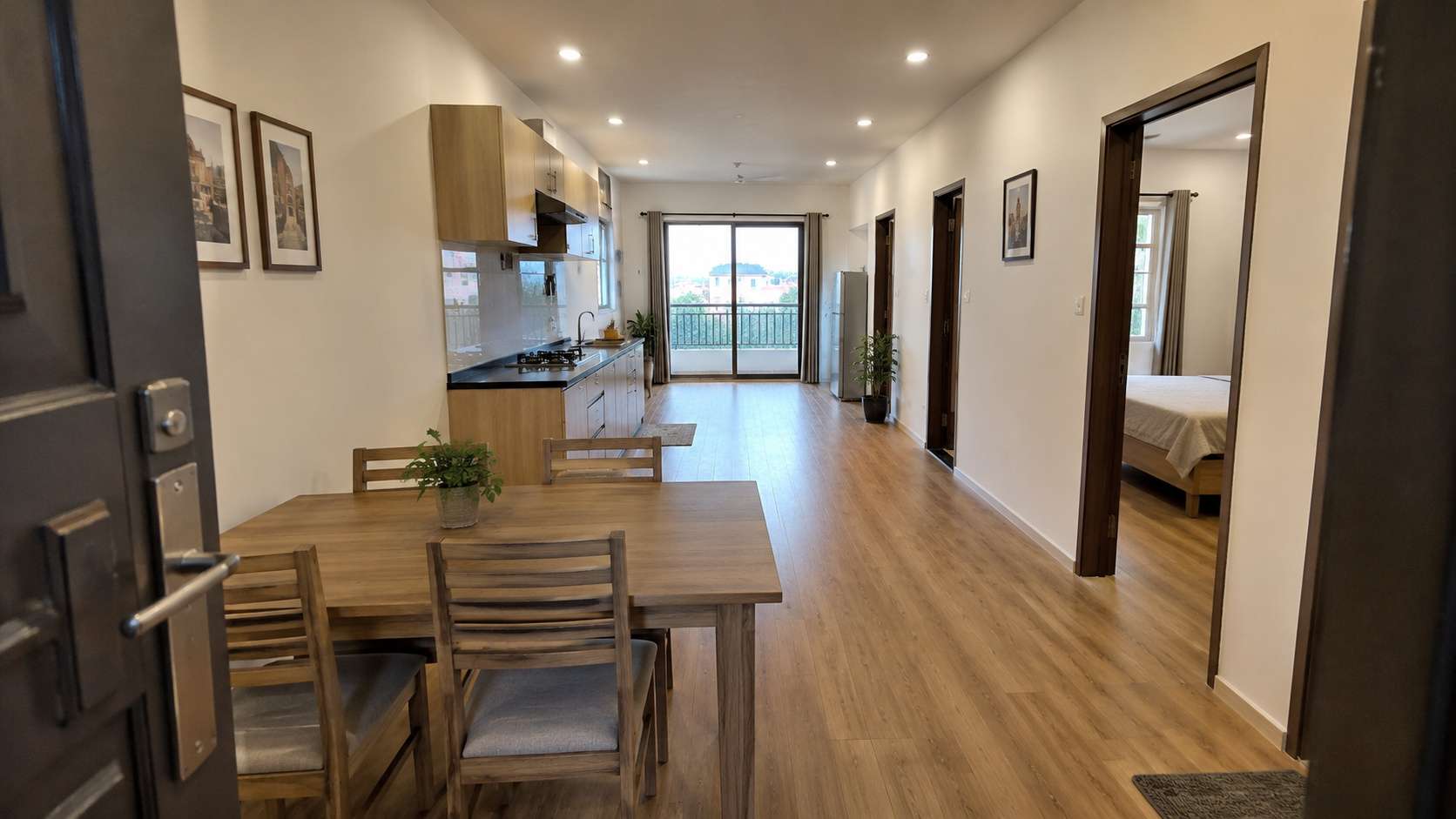
Through-the-door view demonstrating the 480 sqft 1 BHK layout — dining, kitchen, bedroom doorway, and balcony in a single frame.
A 2 bedroom prefab container home configuration at the same footprint compresses living-dining slightly and creates two bedrooms (≈ 90–100 sq ft each) sharing one bathroom, a kitchen, and a small living area. It works as a functional 2 BHK but it’s tight — buyers wanting a generous family layout usually order a 40 ft × 20 ft unit or two joined 30 ft units at higher price tiers than the base.
The working rule for Indian families: 480 sq ft suits a couple or a small family of three; a four-person family with separate sleeping for parents and children needs a joined two-unit build at ~640–960 sq ft. The base prefab container homes for sale at this tier cover the 1 BHK and compact 2 BHK range; larger configurations are quoted on a multi-unit basis.
Customisation scope — what you can change, what’s fixed at this price point
Within the ₹8.65 lakh band, what is buyer-decided: door position on any of the four sides, window count and placement on each face, exterior paint colour from our standard palette, interior partition layout (1 BHK or 2 BHK with internal walls in your specified positions), electrical point count and placement, kitchen platform length and counter material between two standard options, and mosquito-mesh window options.
What is fixed at this tier: the structural frame gauge (heavy MS steel, single grade), the wall panel specification (50 mm insulated sandwich, single grade), the flooring substrate (plywood with vinyl plank or laminate finish), the sanitaryware brand and tier (single specification across all units at this price band), and the external skin material (PPGI sheet with factory paint).
If your brief requires premium kitchen modules, branded sanitary fittings, gypsum or PVC-laminate wall treatment in place of vinyl, finished ceiling with cove and recessed lighting, or designer-custom exterior cladding, that scope lifts the unit out of the mainstream tier and into the luxury price band. The frame and factory process are the same; the finish-grade is not.
What SAMAN delivers vs what you organise on site — clear scope split
SAMAN’s scope for a prefab container homes order ends at the unit placed on your prepared site and the final connection walk-through.
What SAMAN delivers: factory fabrication including insulation, electrical wiring, plumbing rough-in, interior finish, and exterior paint; road transport from our Bangalore or Greater Noida facility; crane placement on your prepared plinth; connection of the unit’s electrical input to your service line; connection of the unit’s water inlet and outlet to your site stub; and a final walk-through inspection within 24 hours of placement.
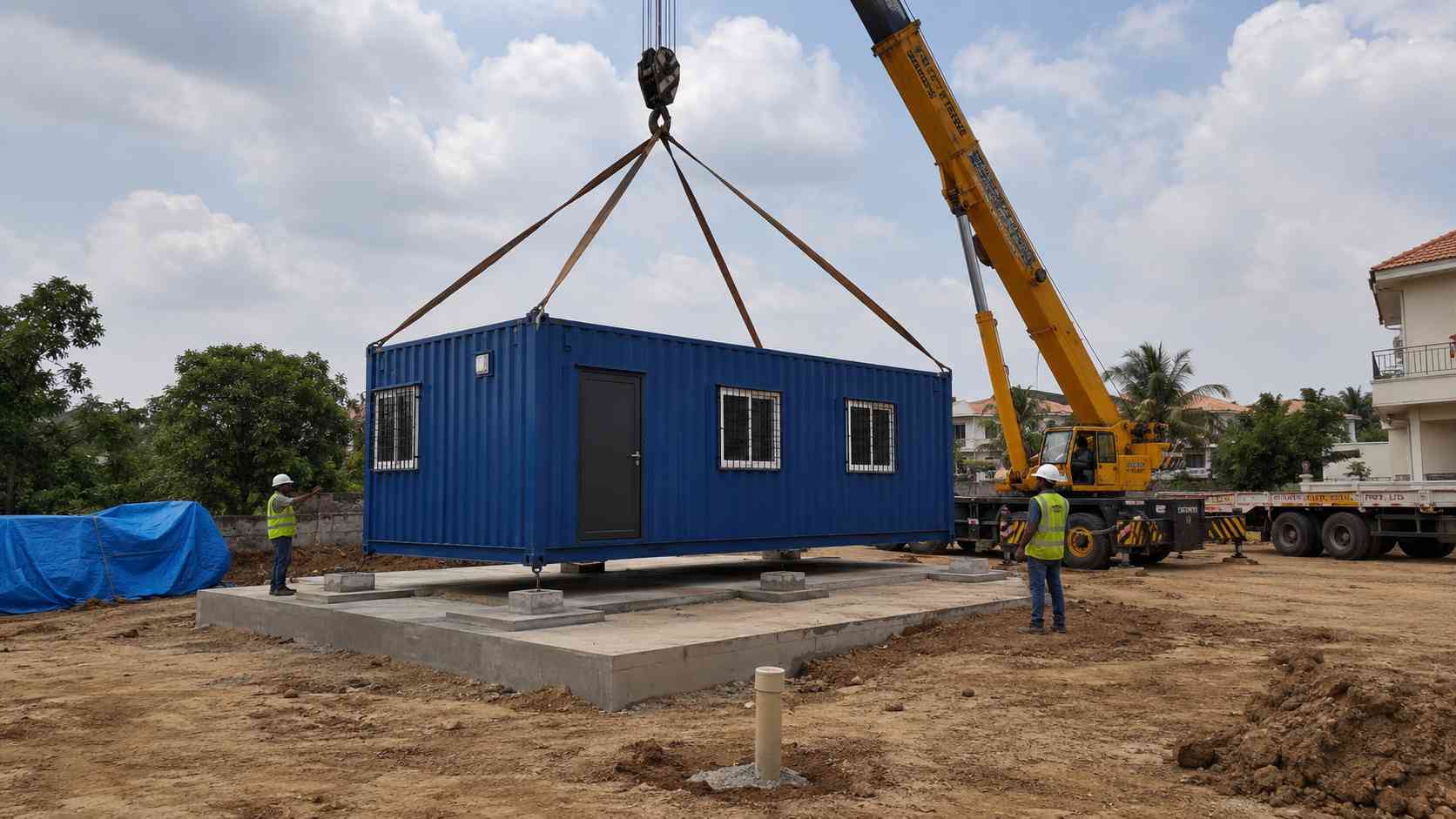
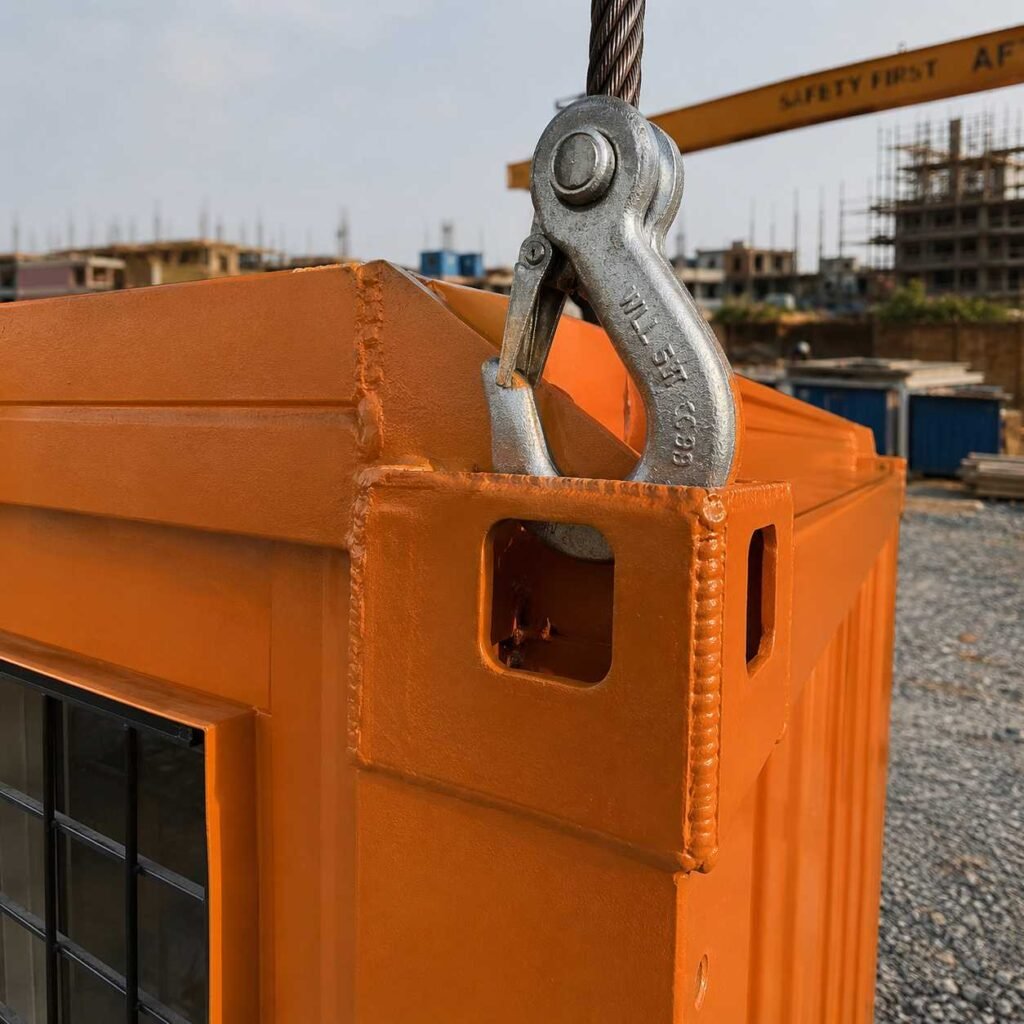
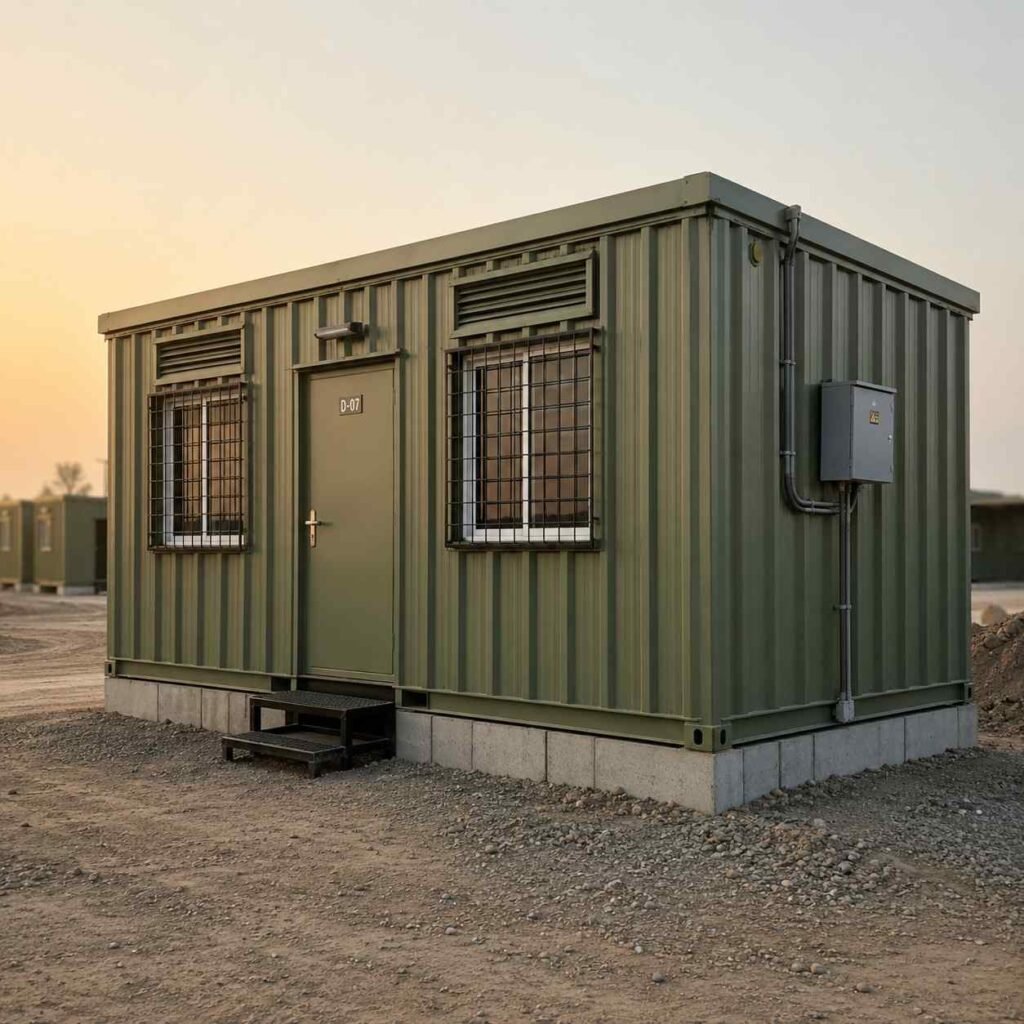
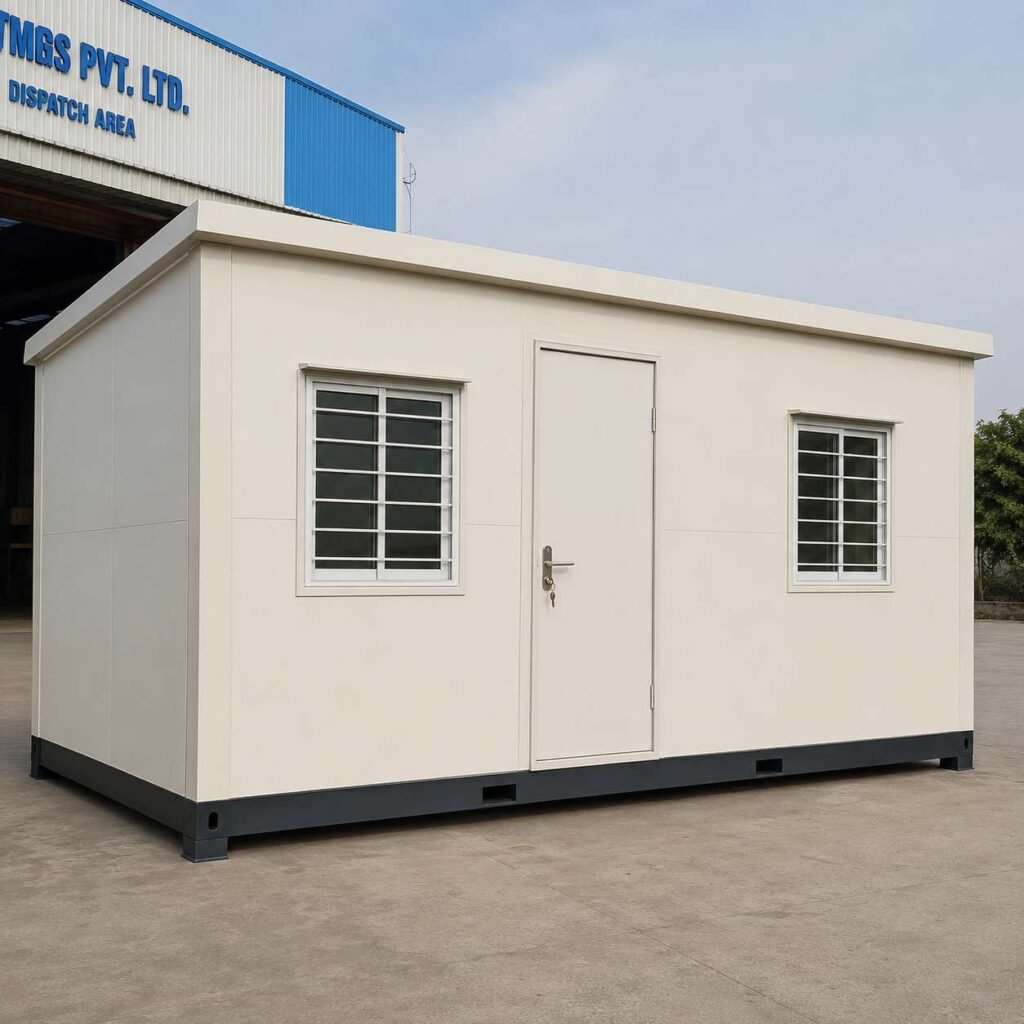
Crane placement of a factory-fitted prefab container home onto its prepared RCC plinth — single-day site install.
What you organise before delivery: a level RCC pad or concrete pier-block foundation at the load-bearing points (drawings supplied with order), water inlet and outlet plumbing stubs at the unit’s connection points, an electrical service connection point with main switch and earthing, municipal building plan sanction or applicable local approval, site clearance (vegetation, debris, slope), and trailer-access route from the public road to the placement spot.
Buyers within our free-delivery service zone — currently Bangalore and surrounds, 1 September to Good Friday — pay no road-transport surcharge. Outside that zone, transport is quoted separately based on distance and route.
When to choose this page vs our other container house pages
This page — prefab container homes at ₹8.65 lakh per unit — is the mainstream-tier product page for buyers ready to specify a finished single-unit residence or a colony order of 5 to 20 units. Inclusions, customisation scope, and procurement logic are above; FAQ-heavy and decision-ready.
For buyers wanting villa-grade finish at a higher price tier — premium interior finish, designer kitchens, gypsum ceilings, branded sanitaryware, and multi-unit villa configurations — the luxury page starts at a smaller ₹5.15 lakh base unit and climbs the finish ladder from there. That is the page for residence-as-statement rather than residence-as-utility.
For buyers where cost is the single biggest driver, our budget-tier container home range covers the cheapest livable container home that meets basic spec — lower finish, smaller base footprint, tighter customisation envelope, but still factory-fitted and delivered ready to occupy.
Earlier in research and not yet ready to spec a unit? Our container house overview covers the heat-loan-approval basics, the brick-vs-container cost comparison, and BHK space mapping from 1RK through 3BHK. Come back here once you’re ready to specify a mainstream-tier order.
Frequently Asked Questions
These questions reflect the most common pre-order queries we receive on prefab container home orders; answers are structured around the ₹8.65 lakh base tier.
How much does a prefab container home cost?
A SAMAN prefab container home starts at ₹8.65 lakh per unit for the configured 30 ft × 20 ft base specification — inclusive of factory fabrication, insulation, electrical, plumbing rough-in, interior finish, and exterior paint. Site work (foundation, utility connection, approval) is scoped separately.
How long from order to occupiable — single unit and colony?
For a single unit, 21 to 28 working days from order confirmation to occupiable — 7 days for design alignment, 14 to 21 days for factory build, and 1 to 3 days for transport and placement. Colony orders of 5+ units run 35 to 50 working days because fabrication runs in batches.
Can I order one unit, or do you only handle colony projects?
Both. Single-unit orders for family residences are the largest segment by order count. Colony orders of 5 to 20 units for project staff or site accommodation are the largest segment by volume. The per-unit rate holds; bulk economics apply above 10 units.
Are these durable enough for permanent residential living — what’s the lifespan?
Yes. With 50 mm PUF or EPS insulated panels, factory-applied anti-corrosion exterior, and proper foundation, a SAMAN prefab container home has a structural lifespan of 20 to 25 years. Exterior repainting every 5 to 7 years and door/window seal inspection are the main maintenance items.
What site preparation do I need to organise before delivery?
An RCC pad or concrete pier-block foundation at the load points (drawings supplied with order), water inlet/outlet stubs at the connection points, an electrical service line with main switch and earthing, trailer access to the placement spot, and municipal building plan sanction where applicable.
Can layouts be customised — 1 BHK, 2 BHK, kitchen, bathroom?
Yes within the ₹8.65 lakh tier. Door and window placement, internal partition layout (1 BHK or compact 2 BHK), electrical point count, exterior paint colour, and kitchen platform length are buyer-decided. Frame, wall panel spec, flooring substrate, and sanitaryware tier are fixed at this price band.
How is this different from your luxury container houses page?
Different finish-grade, different size of base unit. The luxury page starts at a smaller ₹5.15 lakh base unit (160 sq ft, 20 ft × 8 ft) with premium finishes climbing the price ladder to villa-scale builds. This page starts at the larger ₹8.65 lakh base (480 sq ft, 30 ft × 20 ft) with mainstream finish and single-or-colony scaling. Different size, different finish, different decision.
Can the home be relocated later?
Yes. A prefab container home is engineered for road transport throughout its lifespan, not only at delivery. Relocating requires disconnecting from foundation and utilities at the source site, road transport plus crane at both ends, and reconnection at the new site. We’ve handled three-to-four-relocation cycles on individual units; the unit itself is the durable asset.
Configure your prefab container home
Share your site location, footprint preference (single-unit or colony count), and intended use (family residence or project accommodation). Our design team will share 2–3 layout options and a buildable quote within 48 hours.
Call +91 80886 85440 · WhatsApp +91 9708989937 · Email sales@samanportable.com
| Dimensions | 914.4 × 609.6 × 262.13 cm |
|---|
Shipping and Delivery Information
At SAMAN Portable Office Solutions, we are committed to ensuring a seamless shipping experience for our customers. Our shipping and delivery policy has been crafted to provide you with clear details and expectations when you place an order for our portable cabins or container offices.
Delivery Timeline
Once your order is confirmed, we will process and dispatch your product within 15 to 21 working days. This timeline is calculated from the date we receive your order and ensures that your product is fabricated, inspected, and packed securely for transportation. We strive to adhere strictly to this delivery window, guaranteeing that your order reaches you in a timely manner.
Shipping Costs
Our shipping charges are structured based on the size and type of the trailer used for delivery. Below are the detailed rates:
- For a 40 Feet Open Trailer: The cost is ₹80 per kilometer, excluding Over Dimensional Cargo (ODC) and Regional Transport Office (RTO) charges.
- For a 20 Feet Open Trailer: The cost is ₹60 per kilometer, also excluding ODC and RTO fees.
Note: ODC and RTO charges may vary depending on your location and state regulations. We ensure transparency in our billing and will provide you with an accurate estimate before shipment.
Within Bangalore Shipping Rates
For customers within the Bangalore region, we offer competitive fixed shipping rates for hassle-free delivery:
- 40 Feet Open Trailer: ₹15,000
- 20 Feet Open Trailer: ₹10,000
These rates are designed to be cost-effective while ensuring your product reaches its destination safely and securely. We work with reliable transport partners to provide efficient and on-time delivery services within Bangalore.
At SAMAN Portable Office Solutions, customer satisfaction is our priority. For any queries related to shipping or delivery, please feel free to contact our customer support team. We are here to assist you every step of the way.
Reviews
Clear filtersThere are no reviews yet.