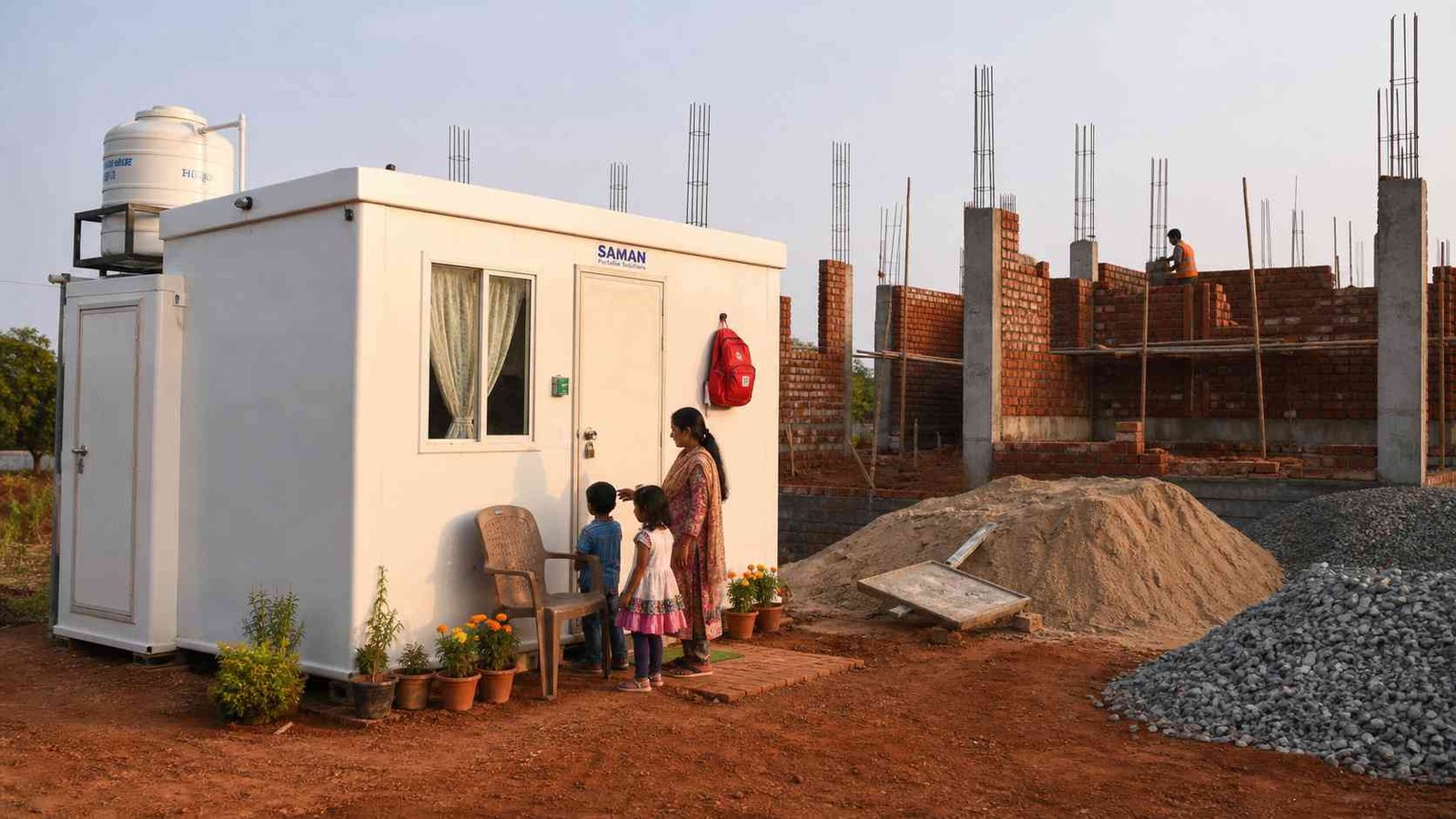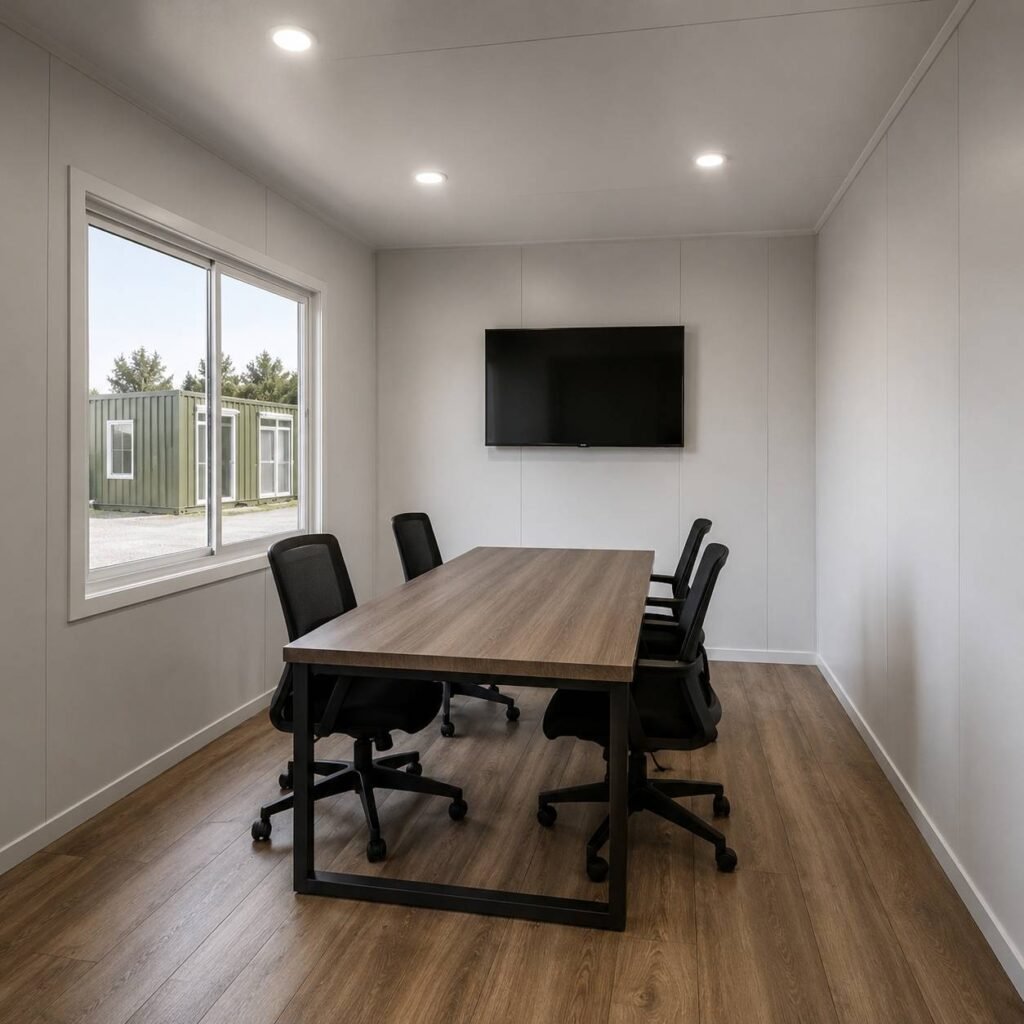
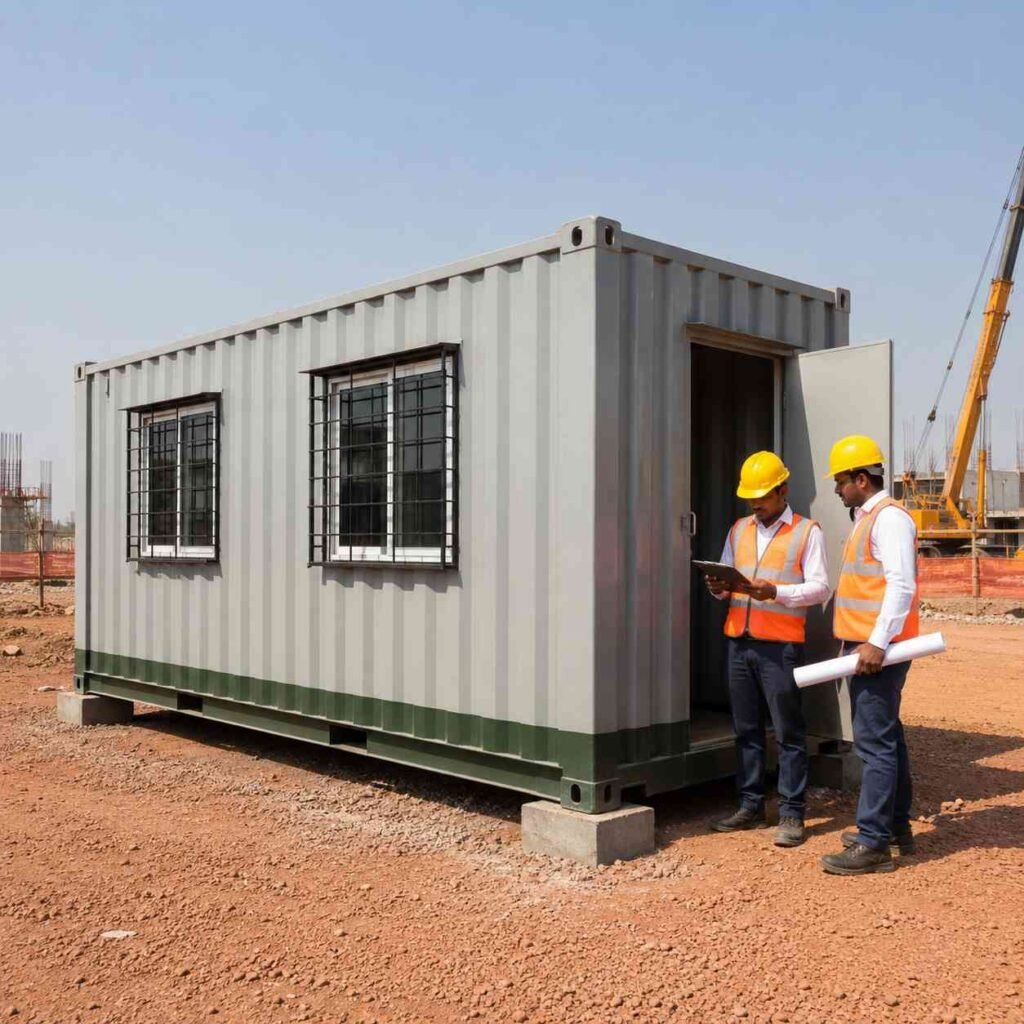
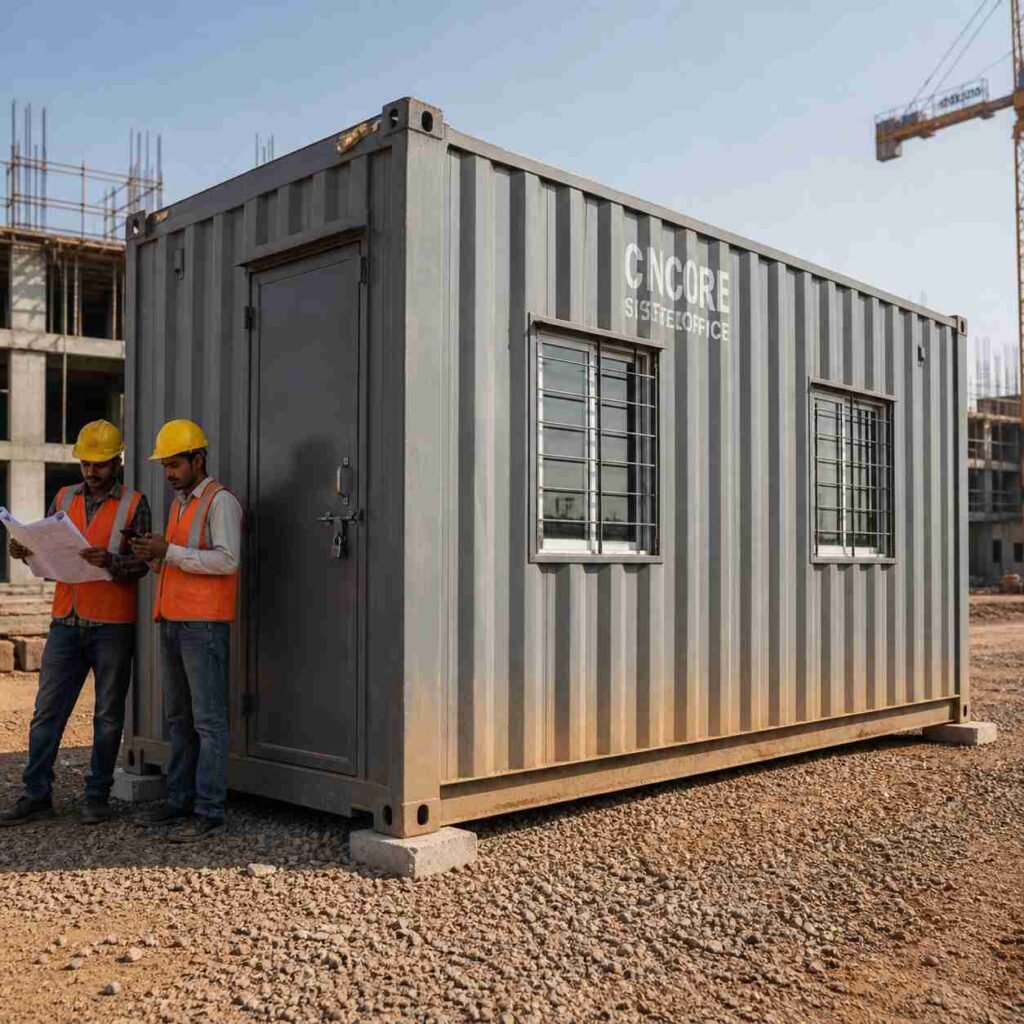
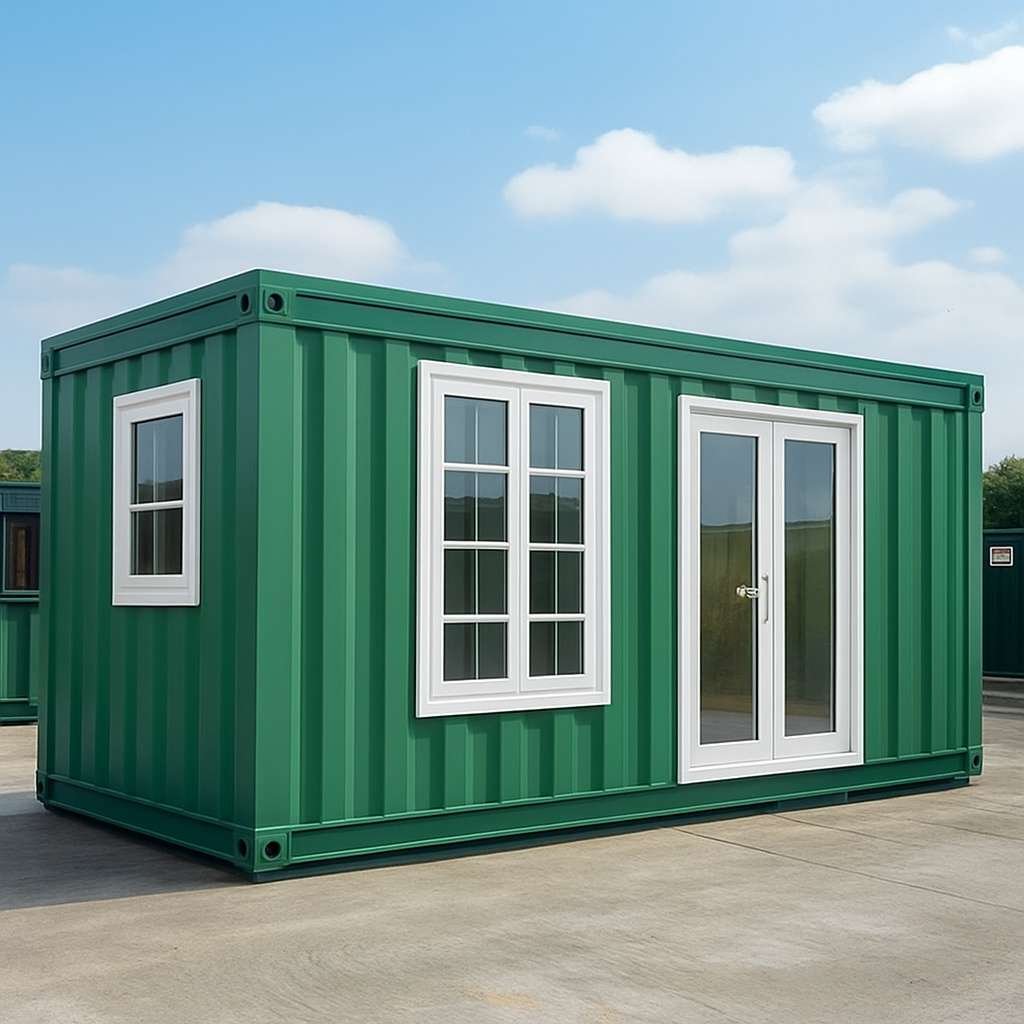
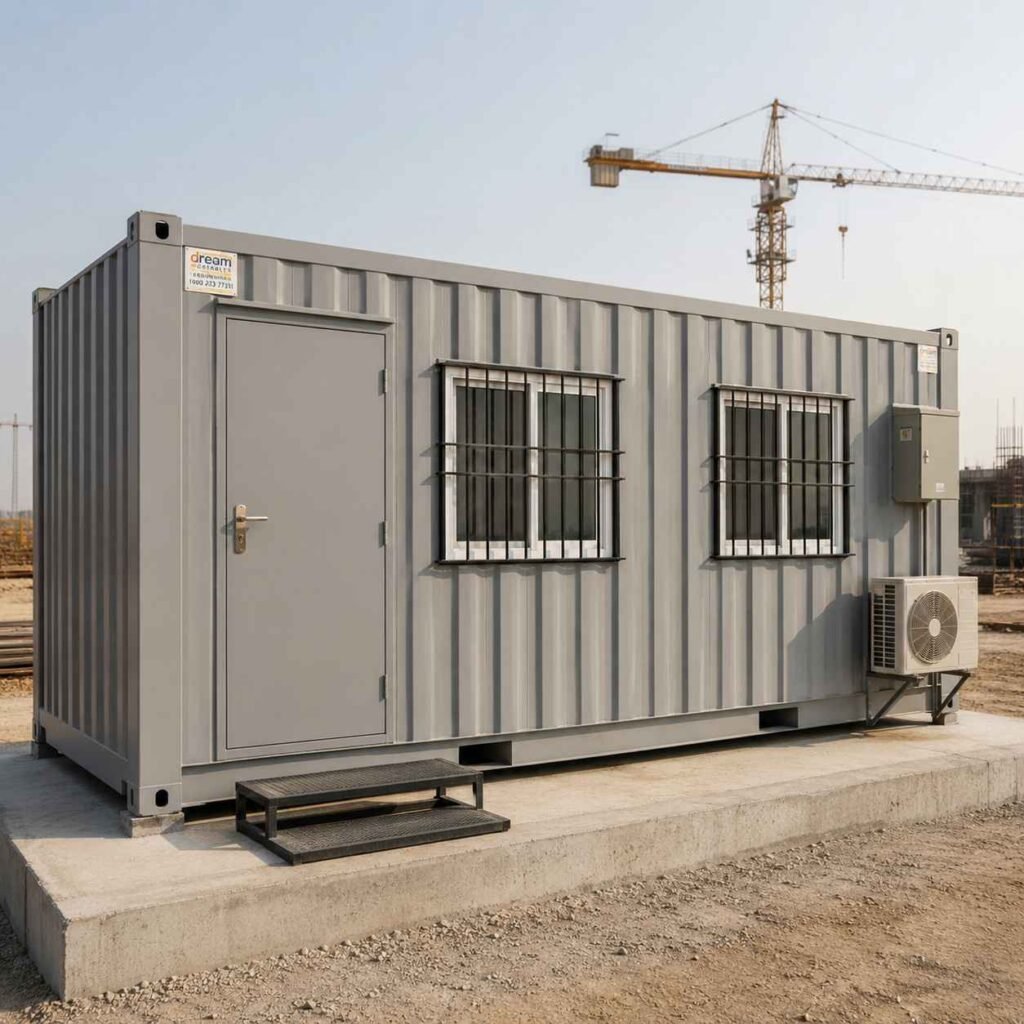
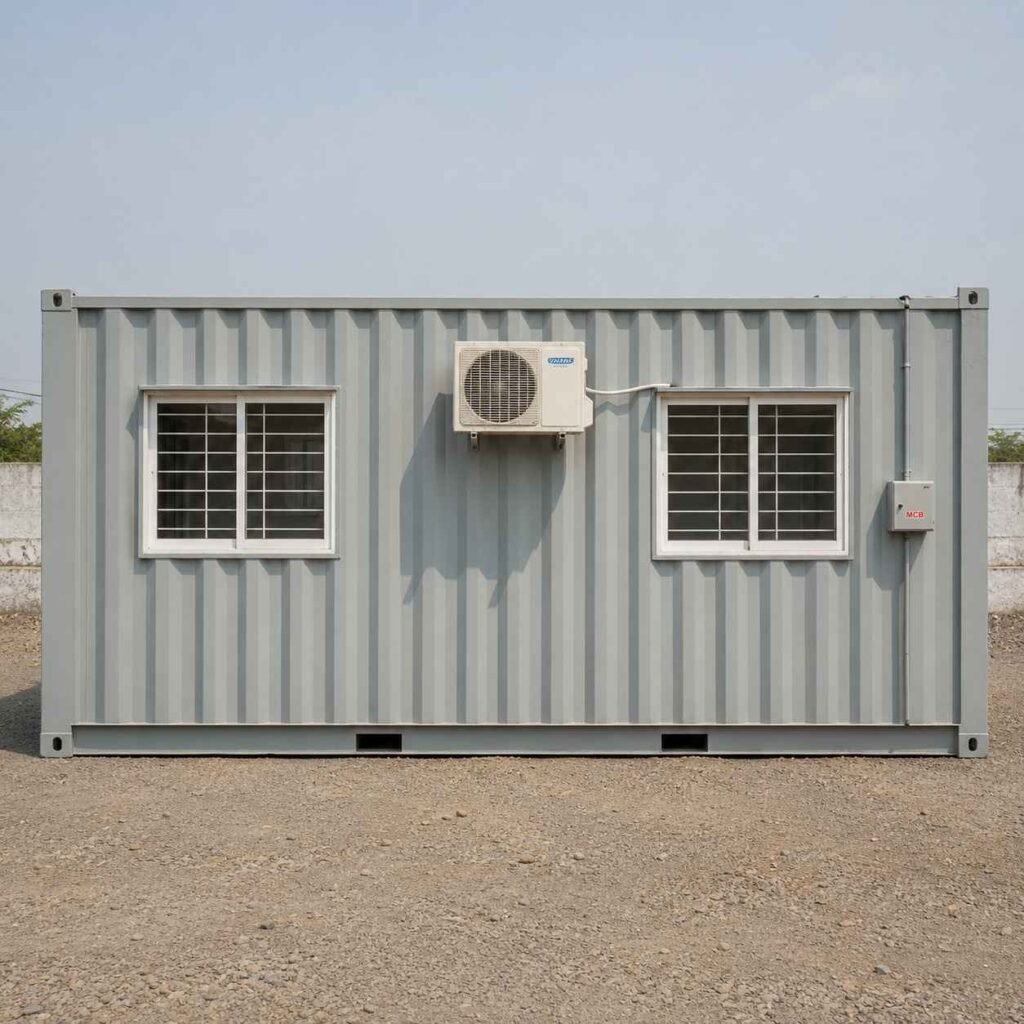
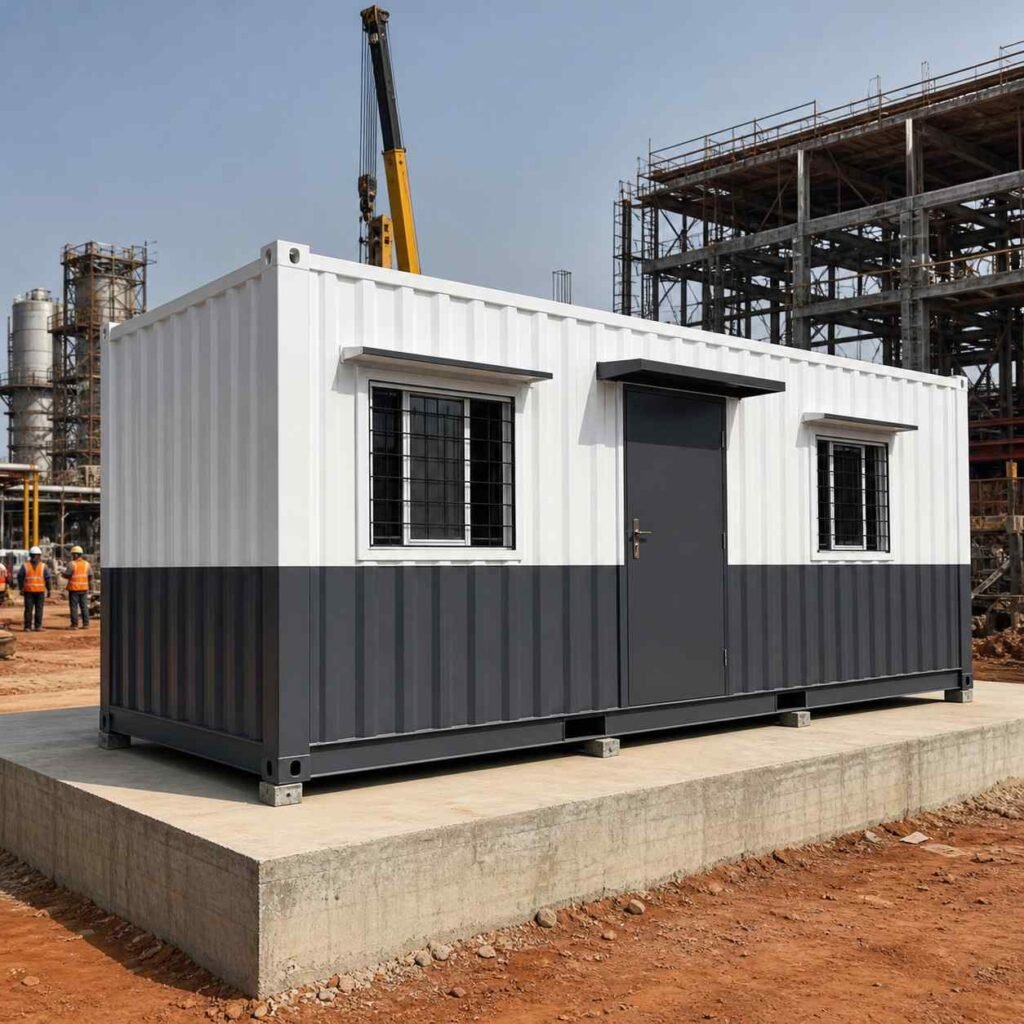
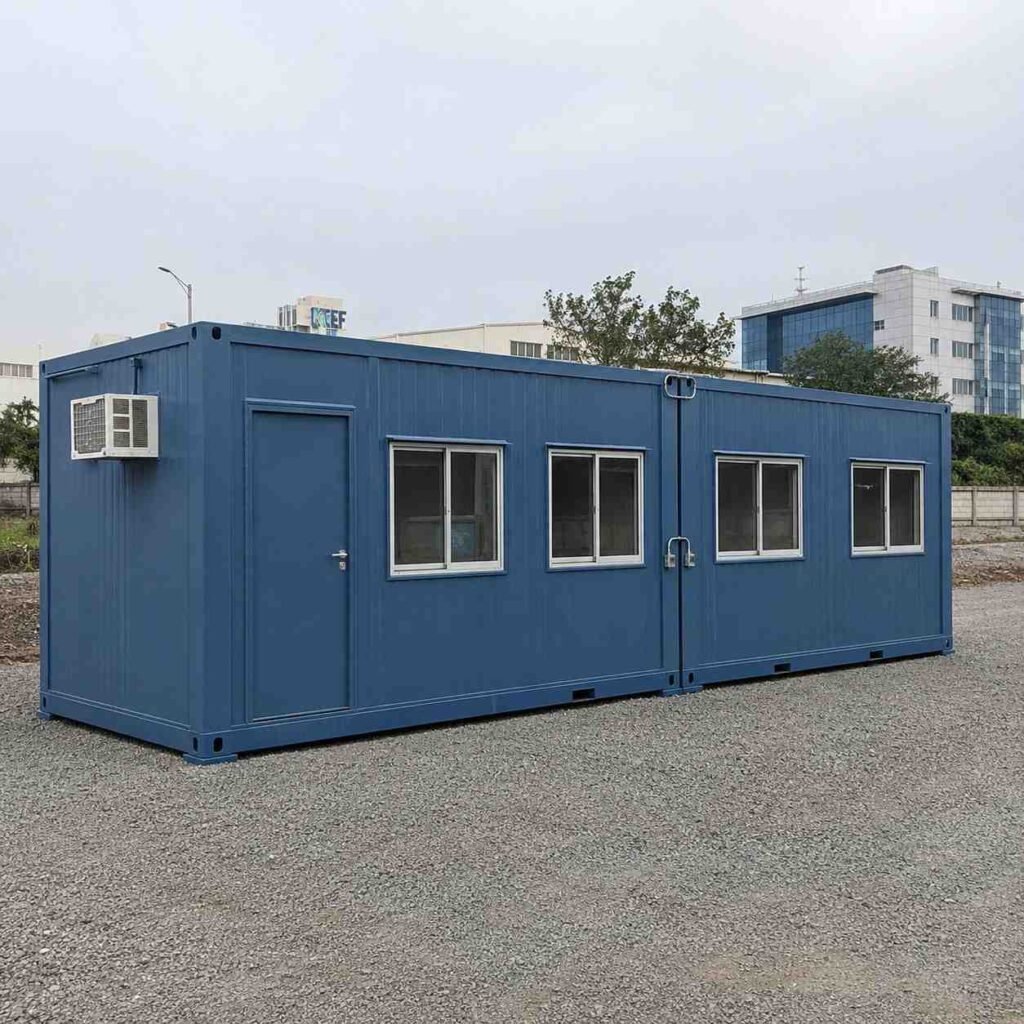
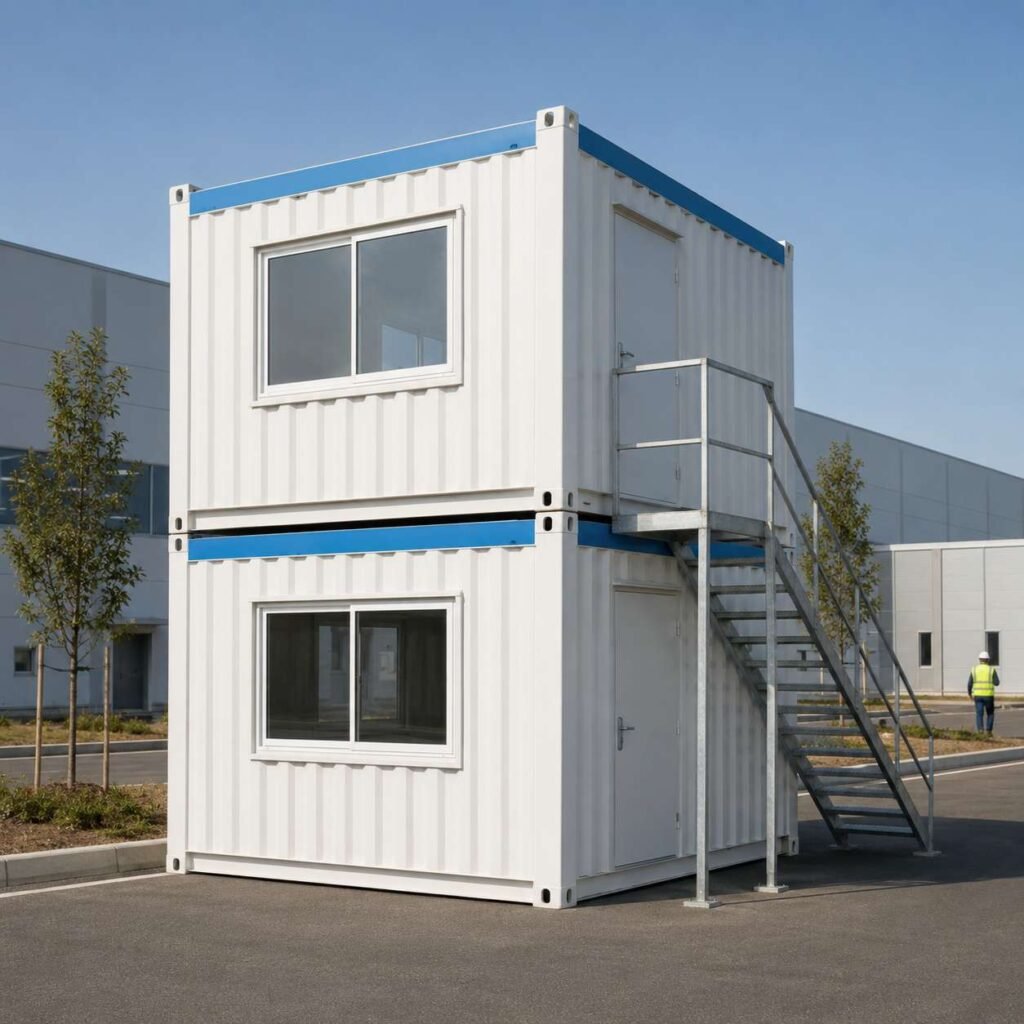
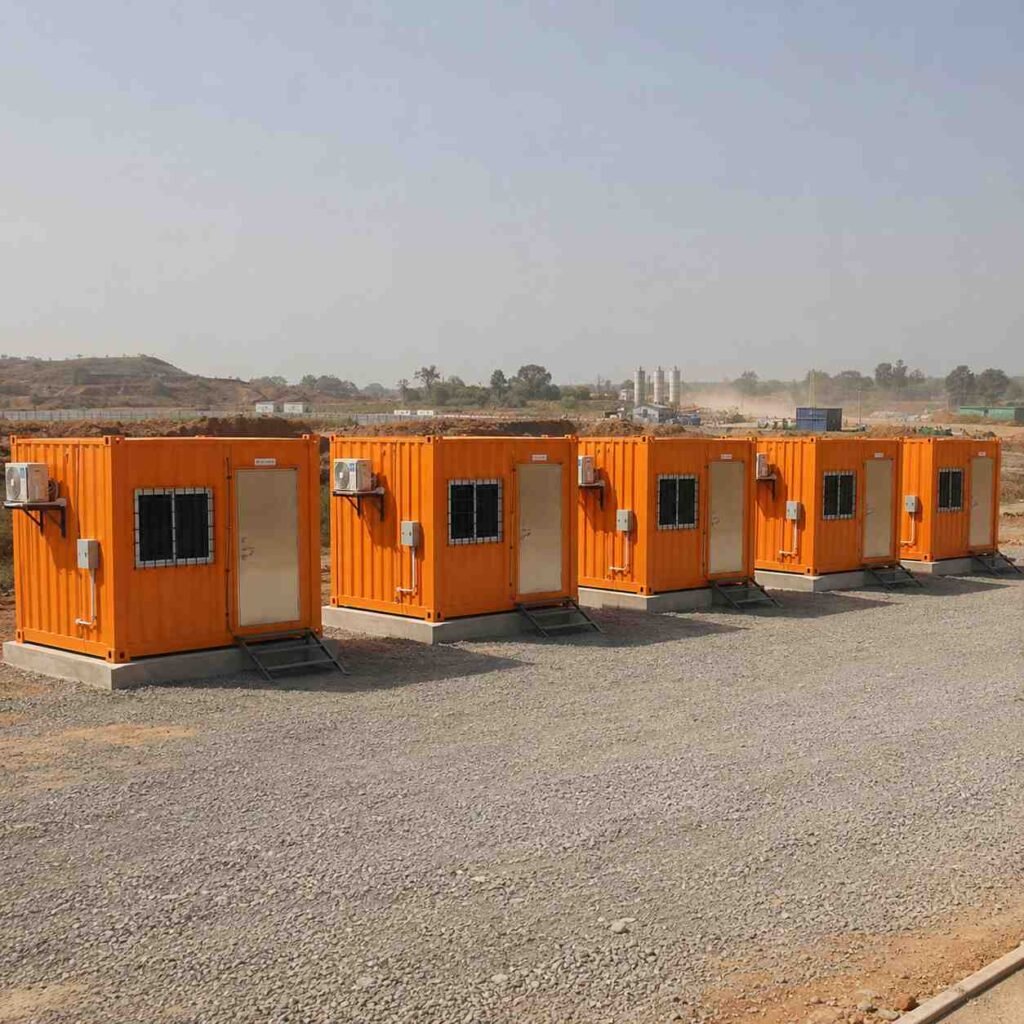
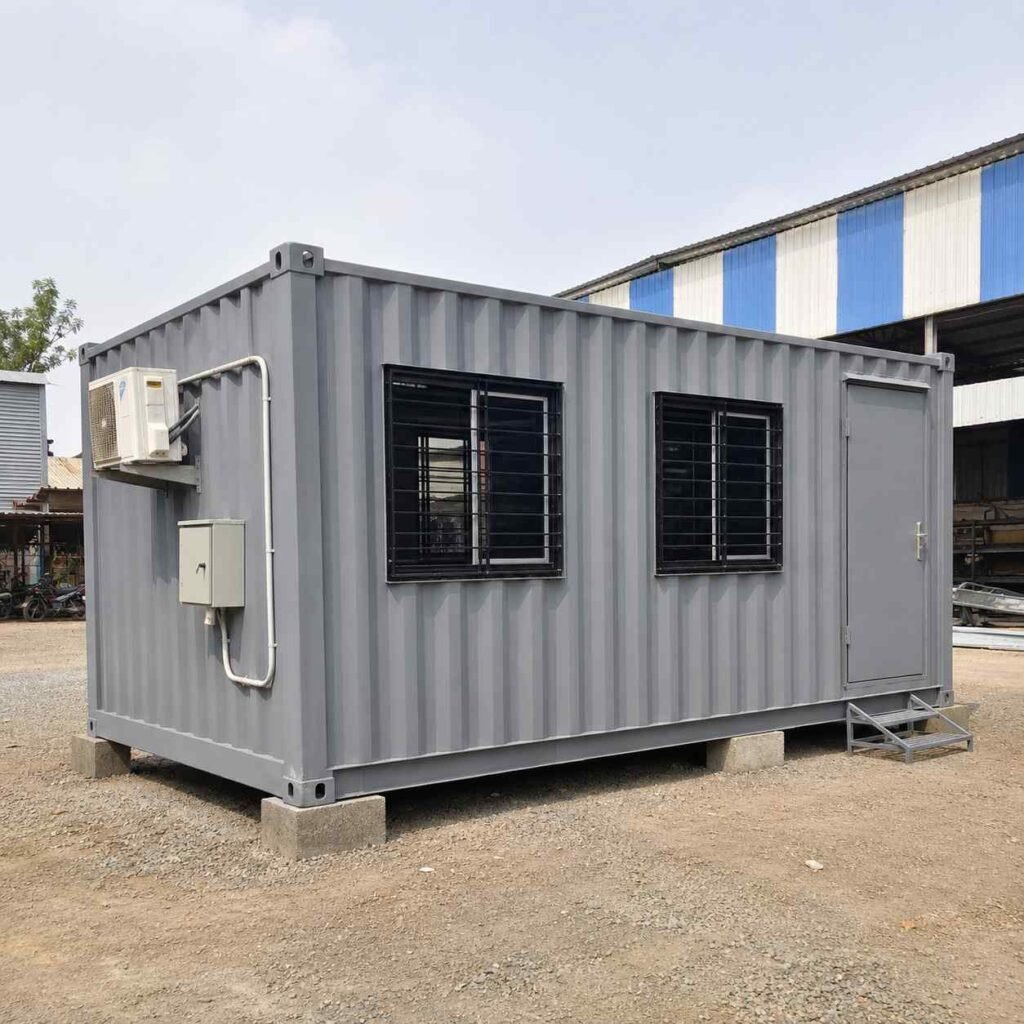
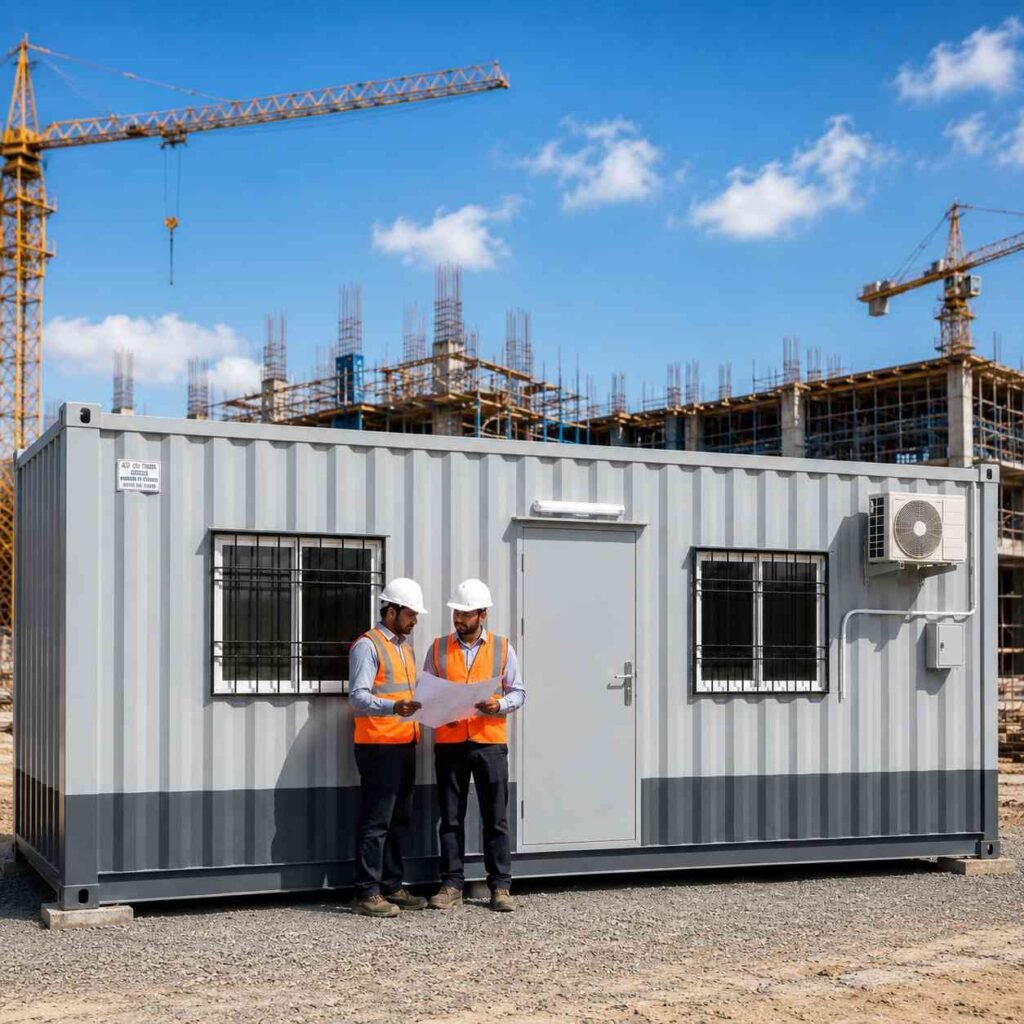
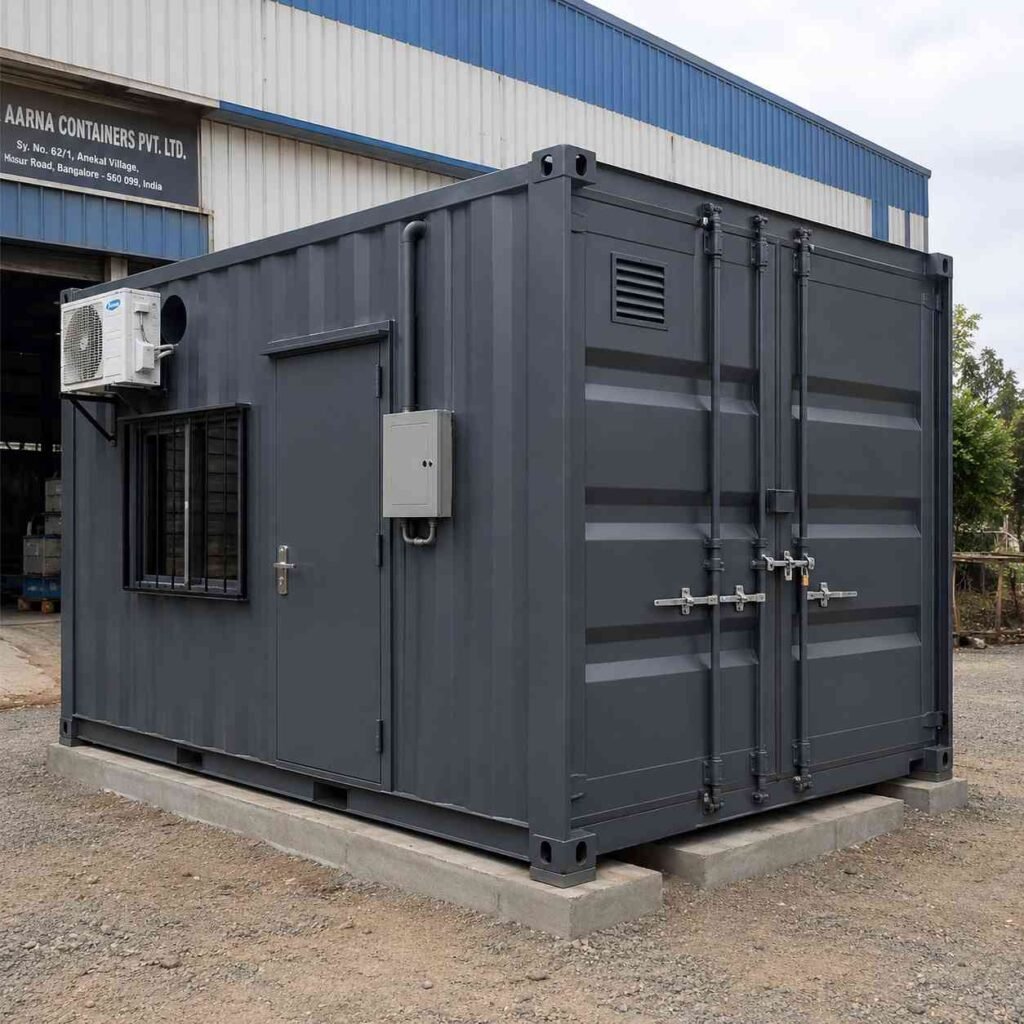
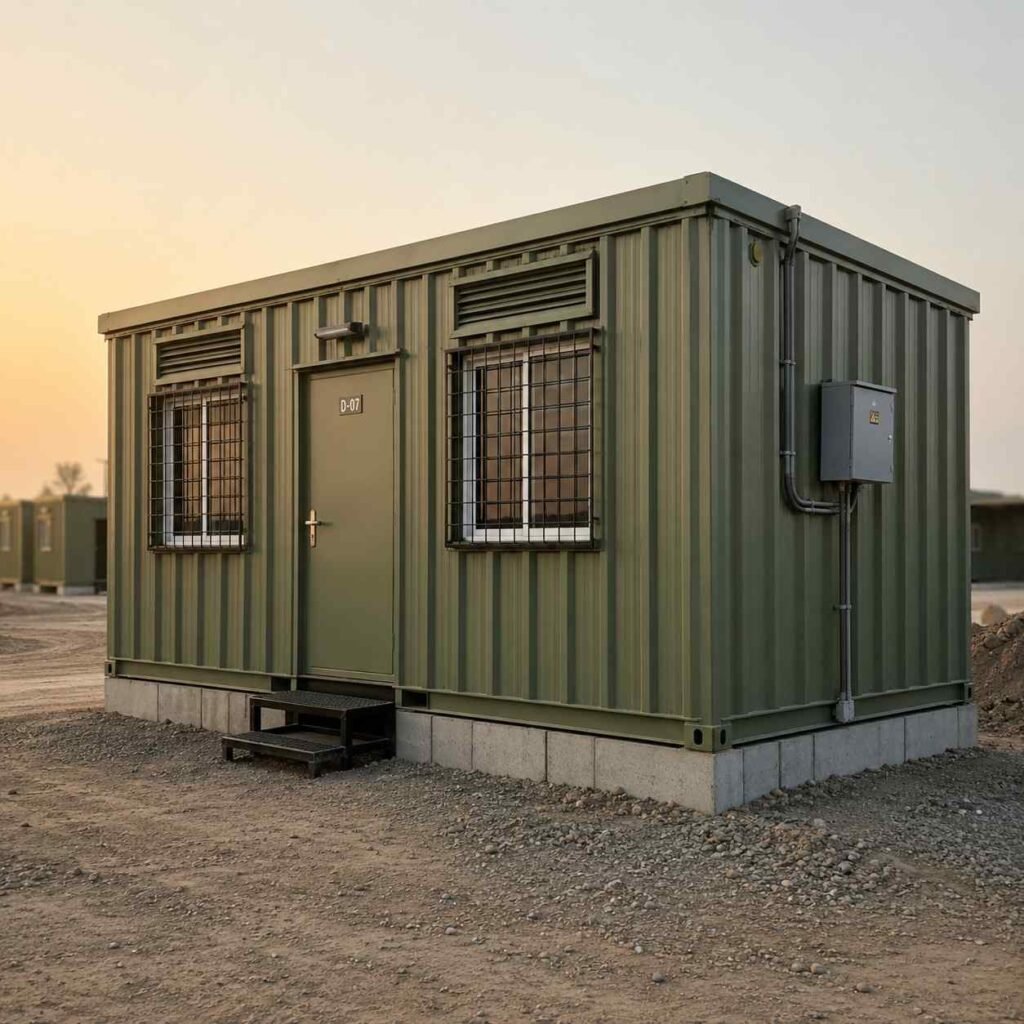
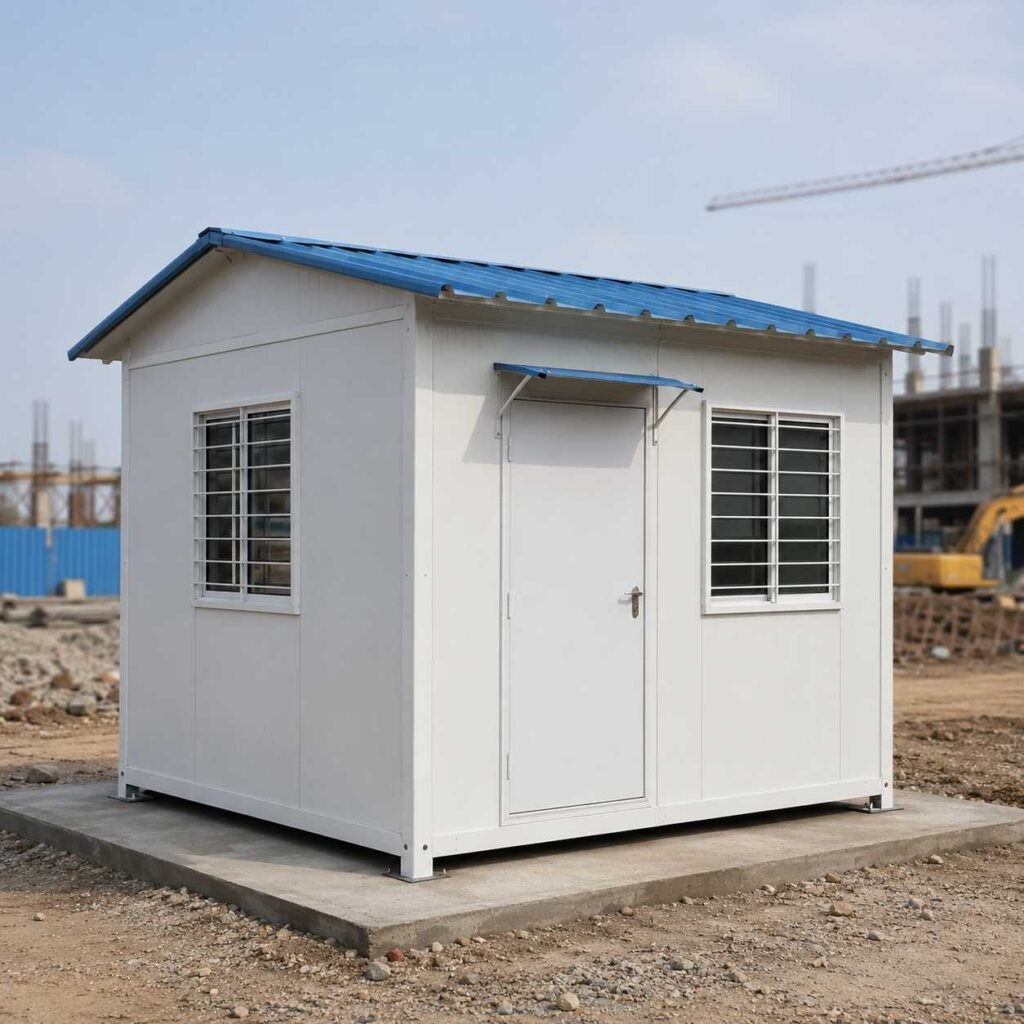
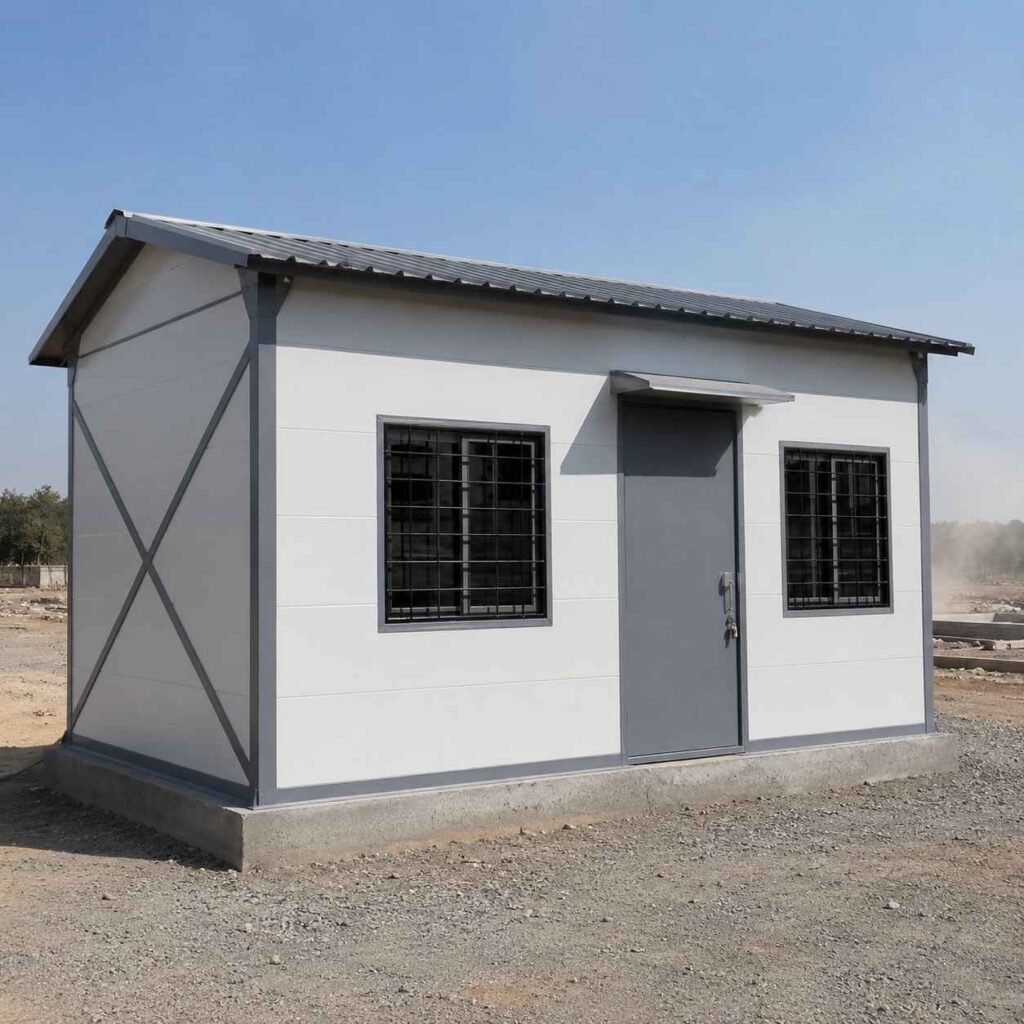
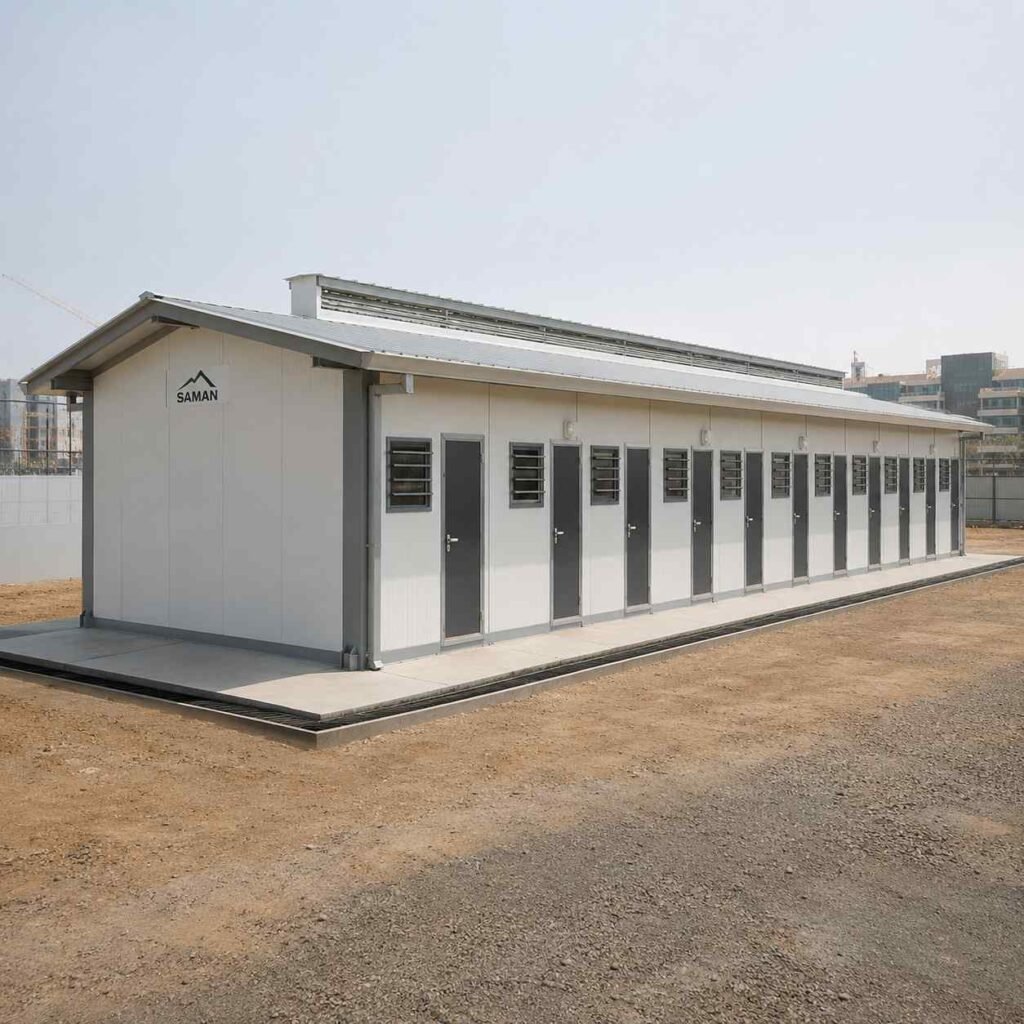
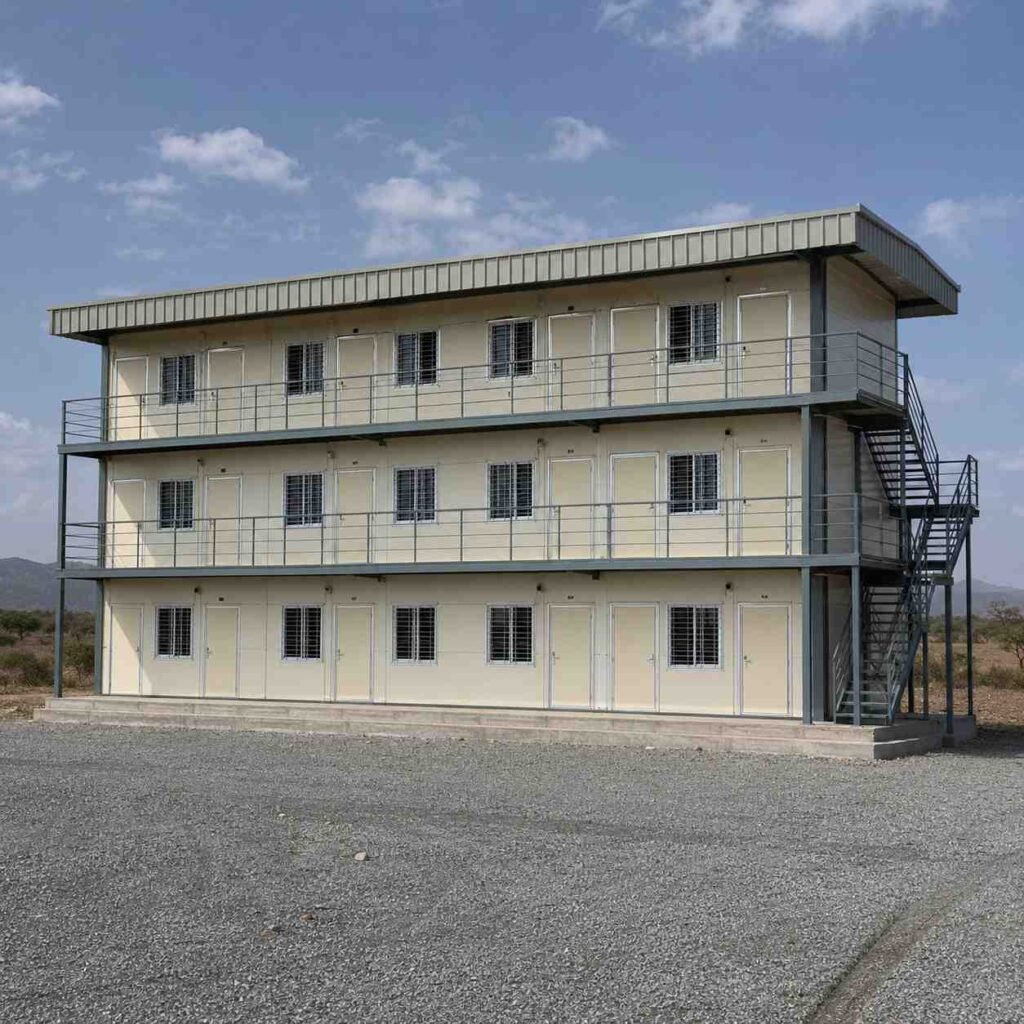
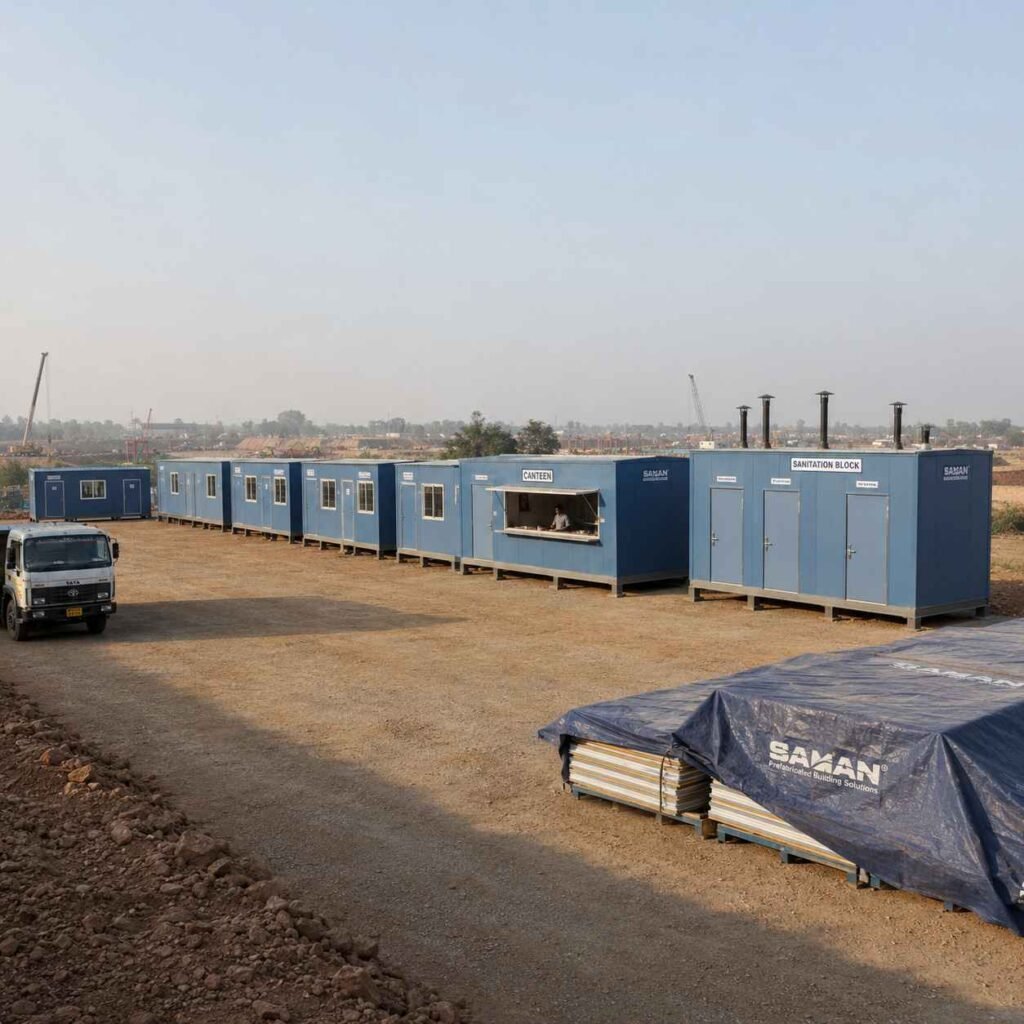
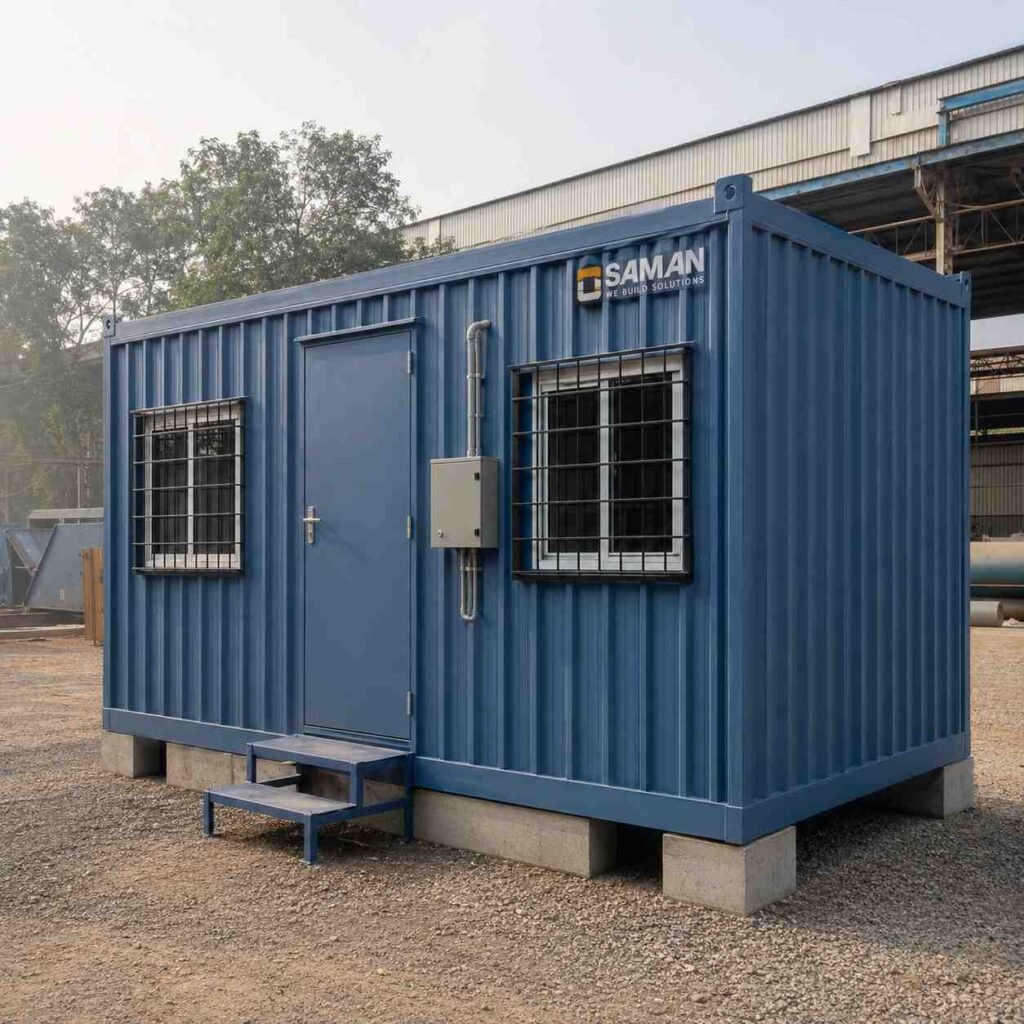
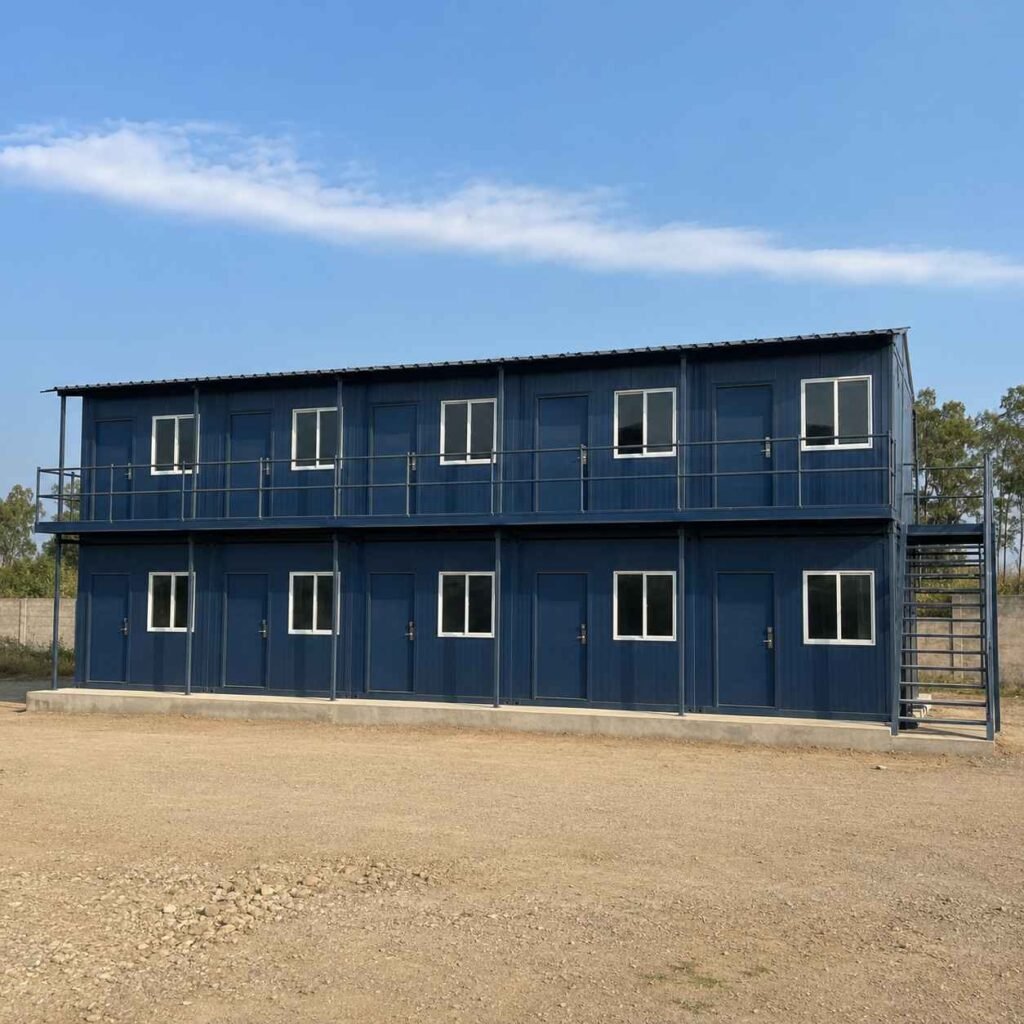
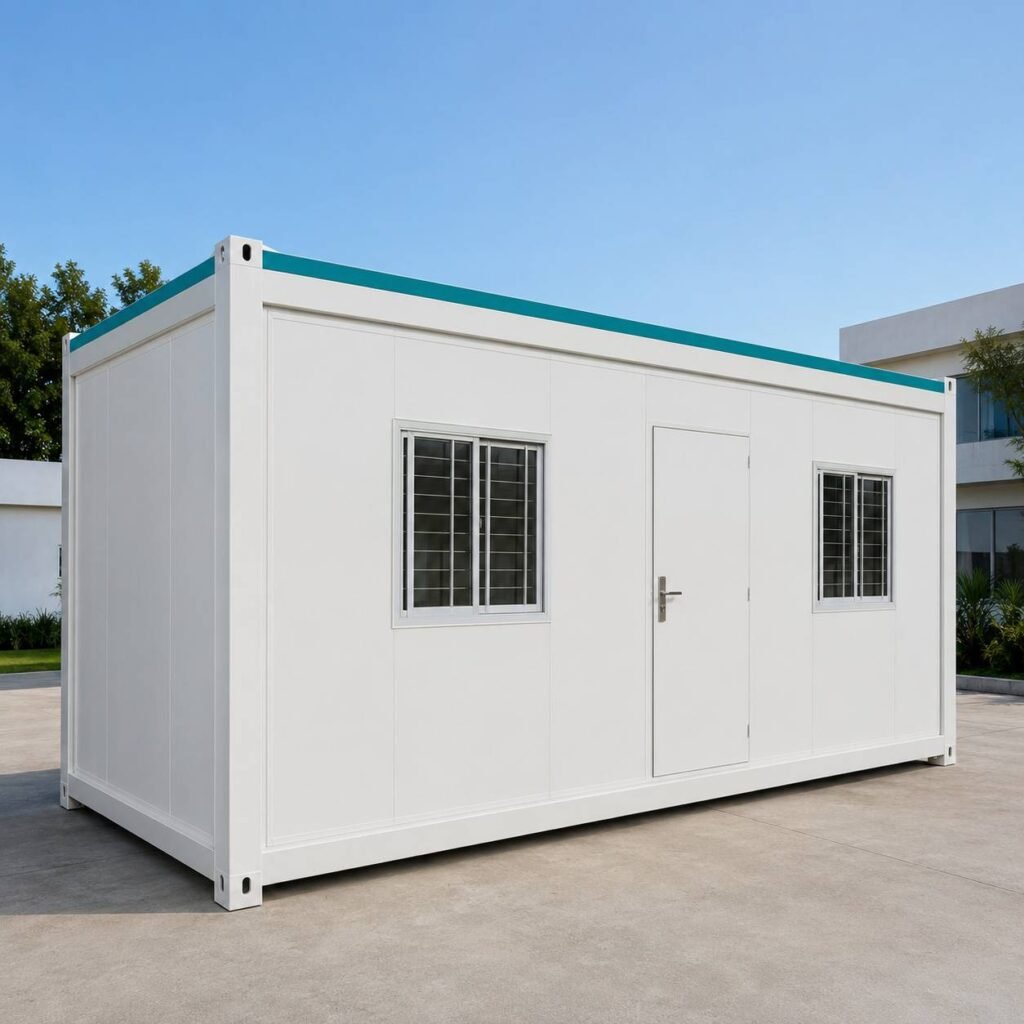
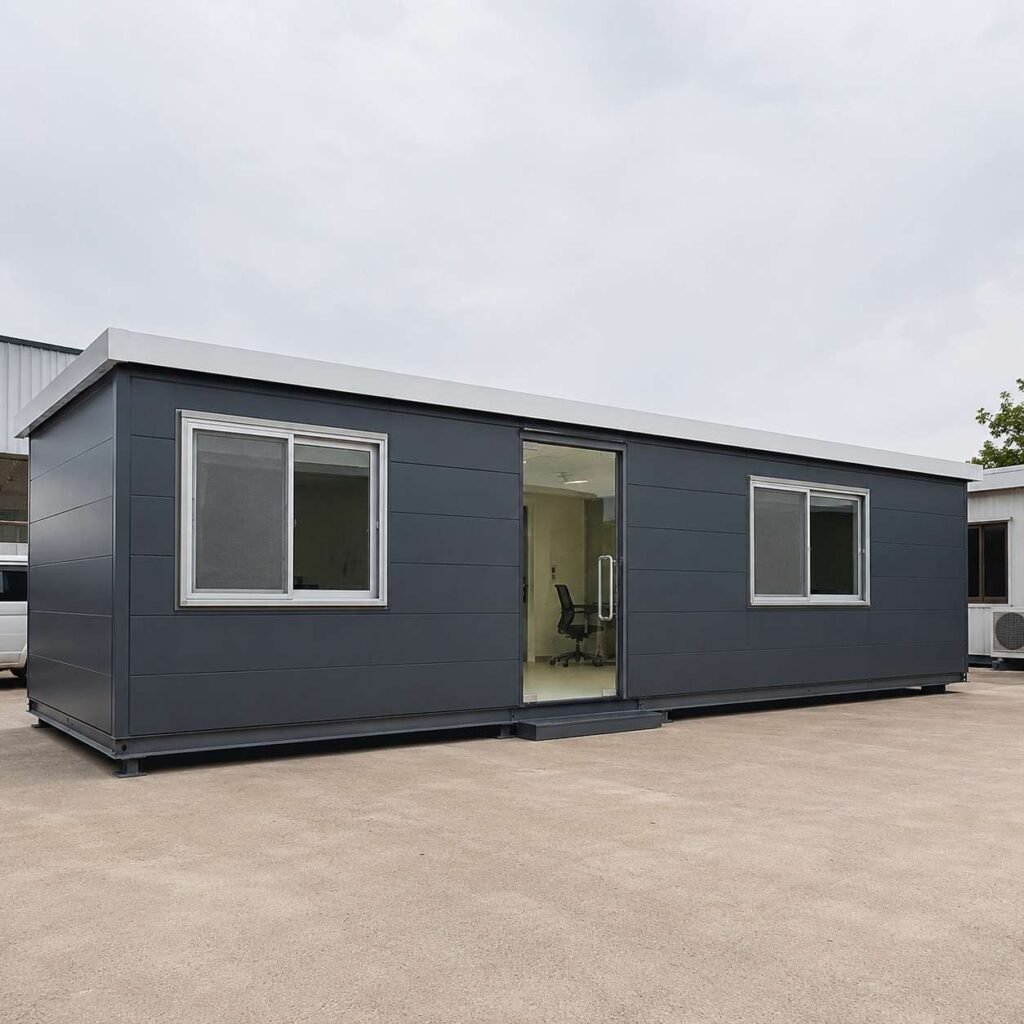
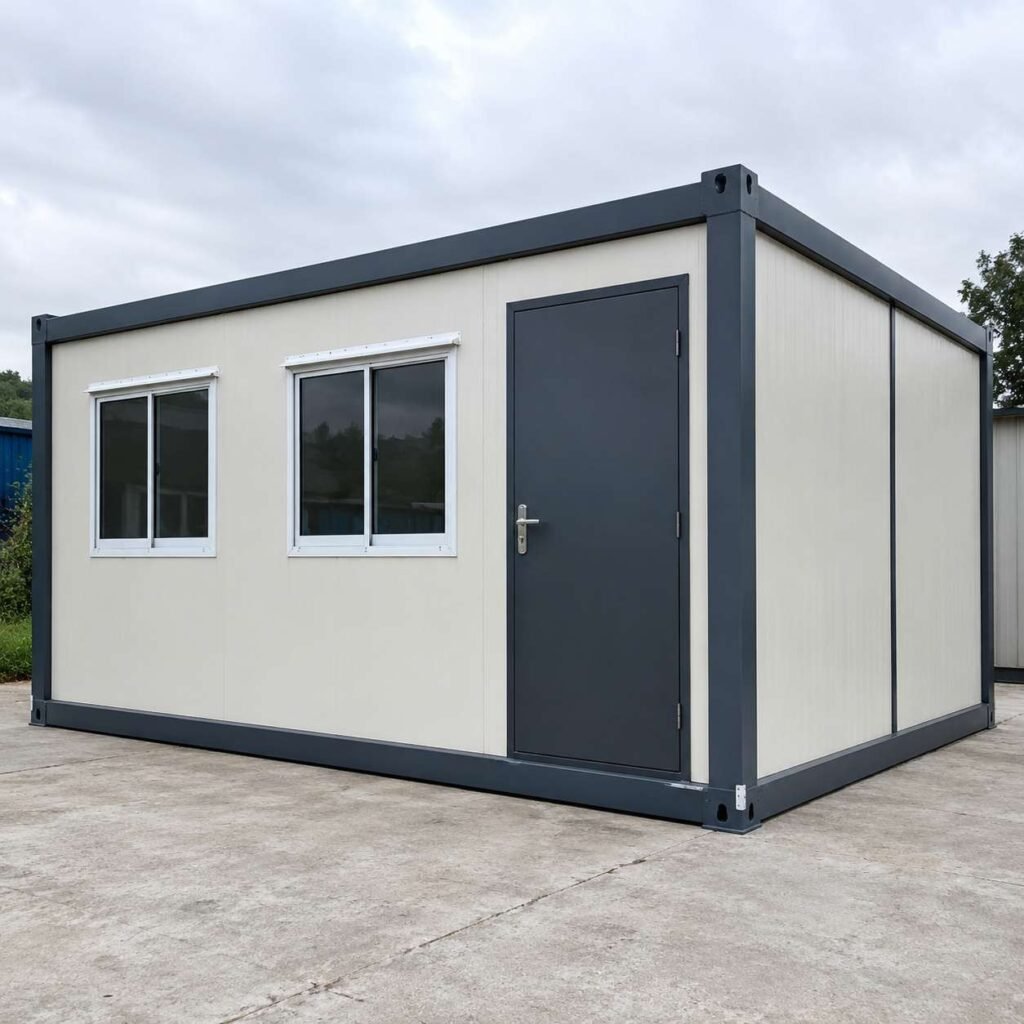
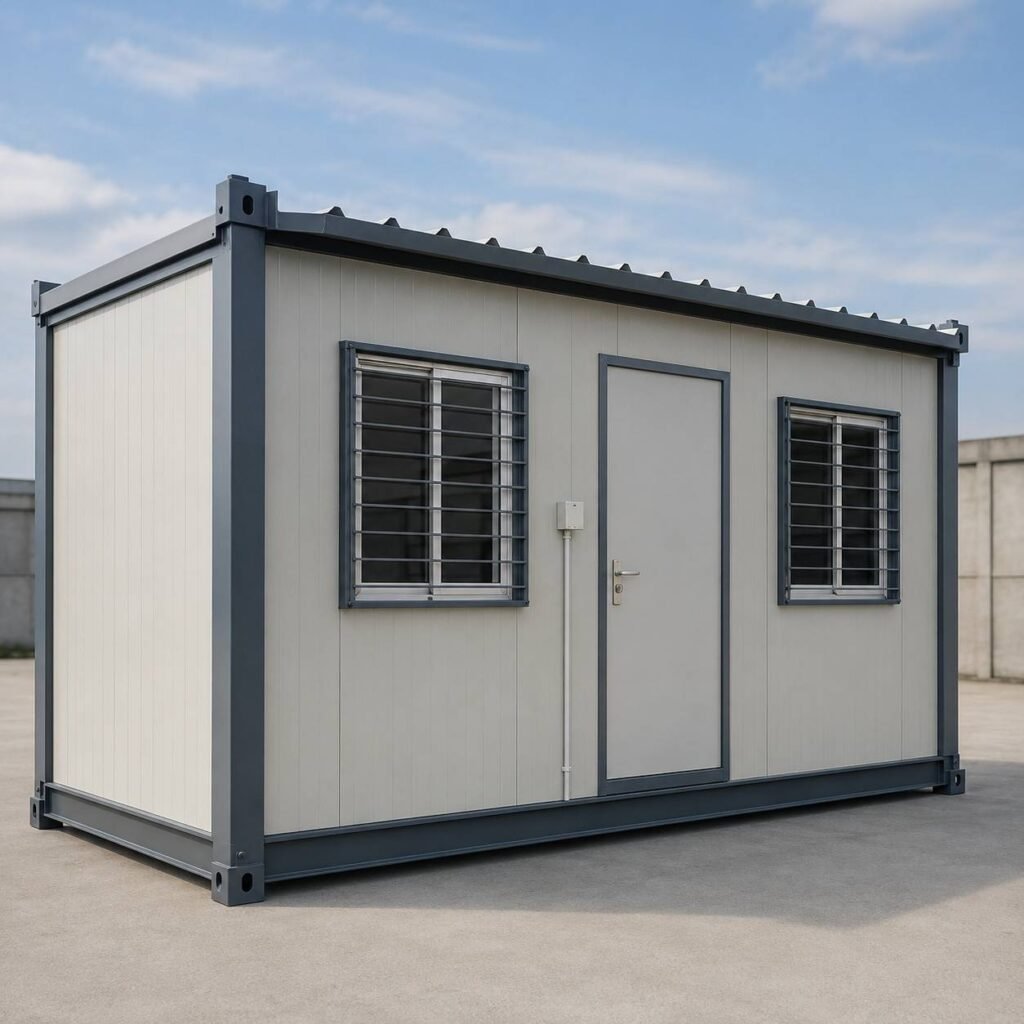
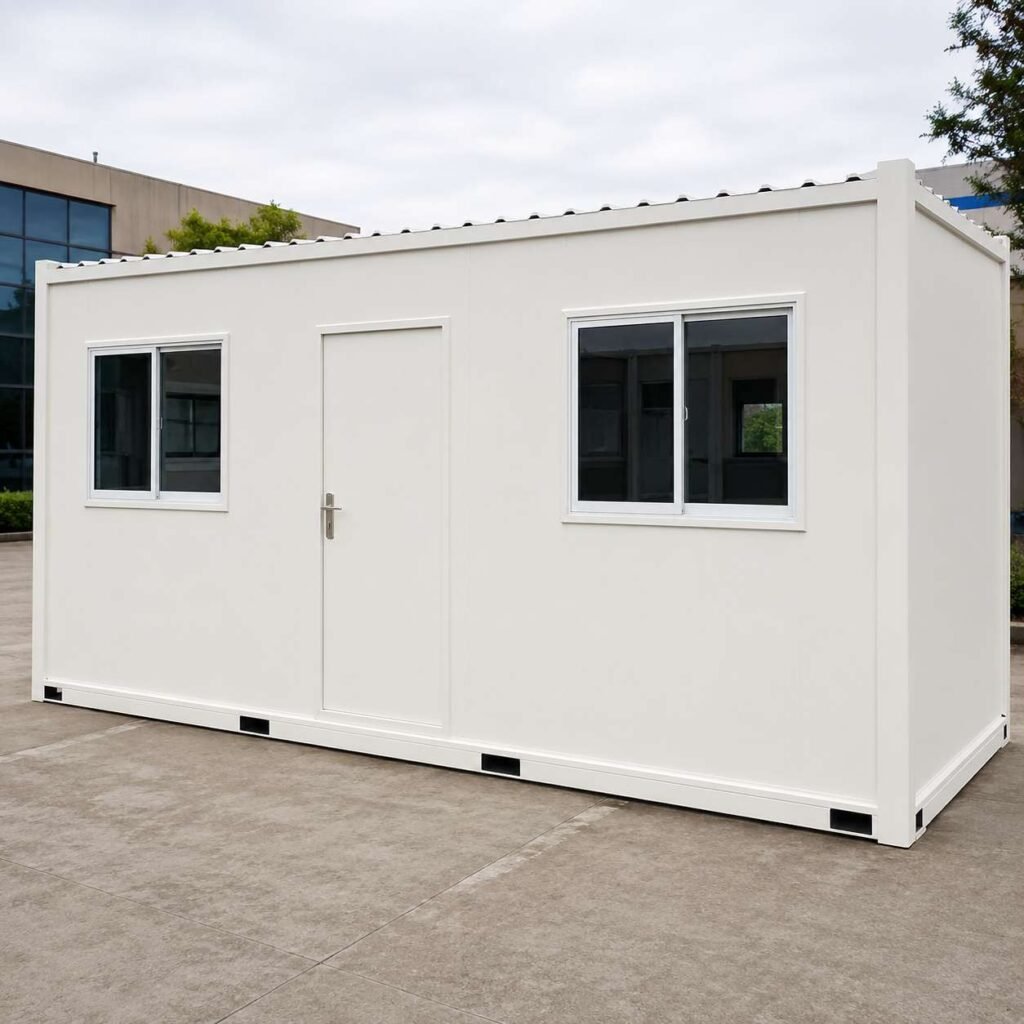
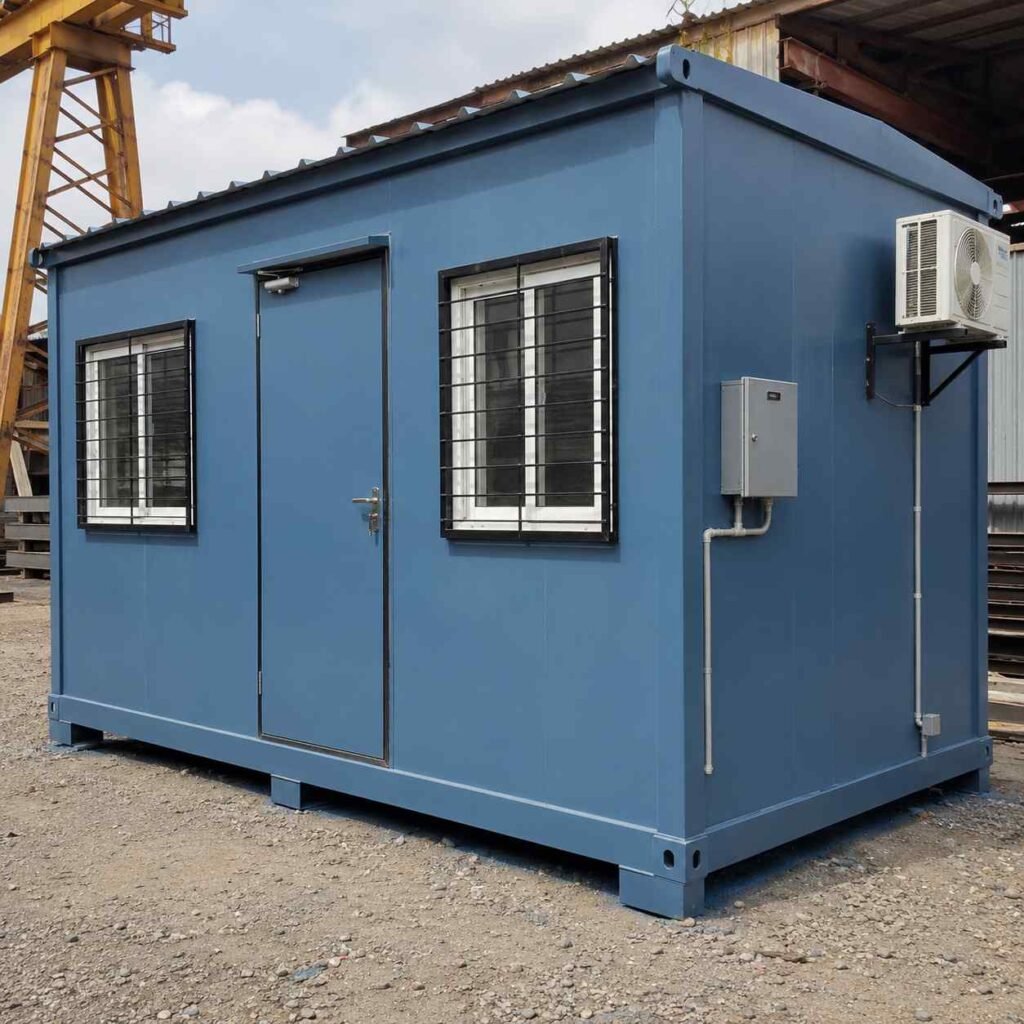
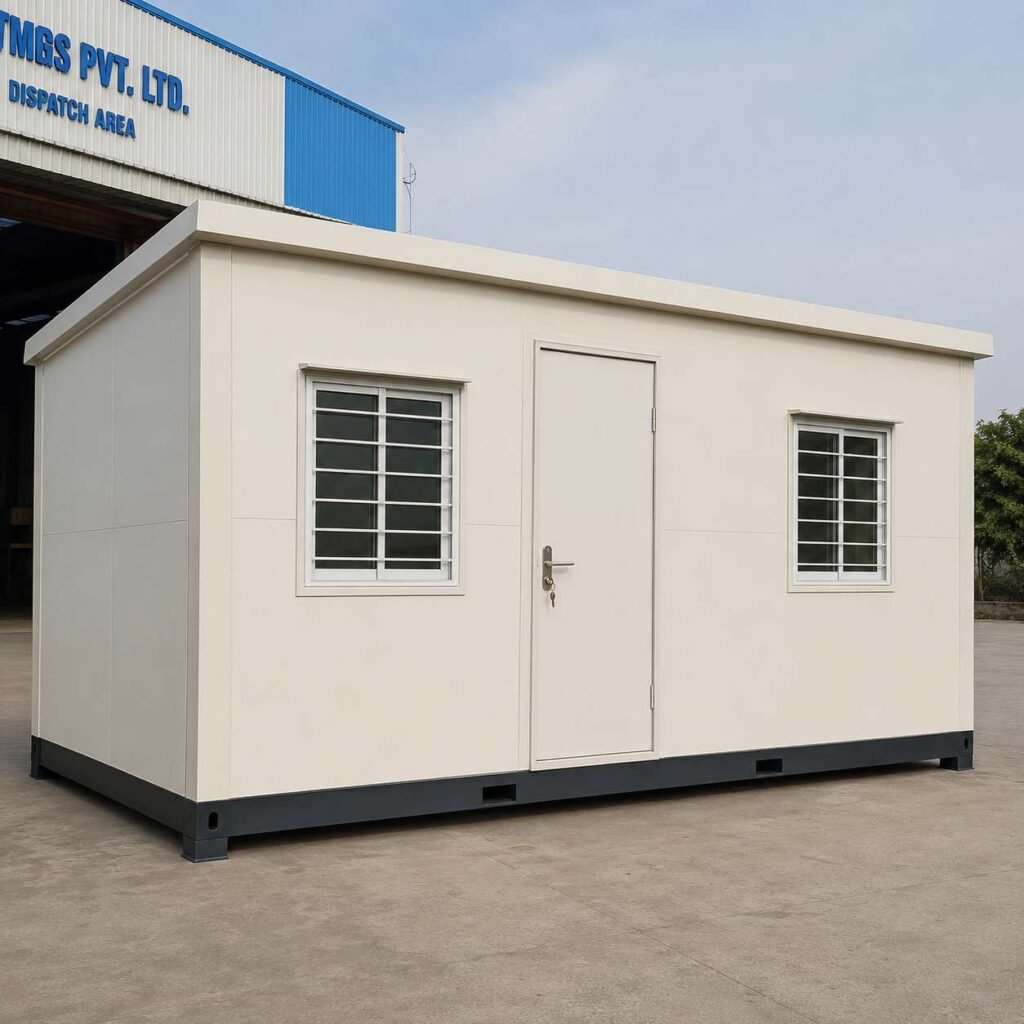
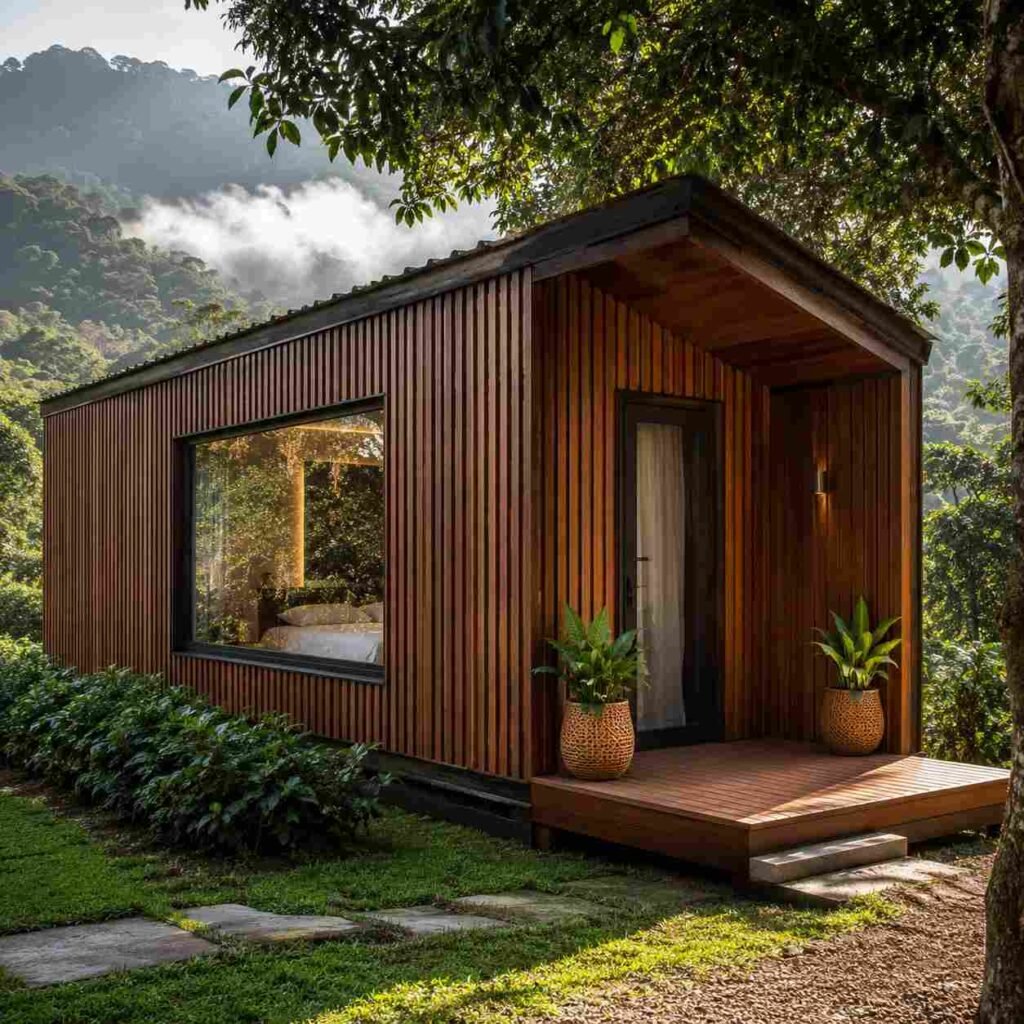
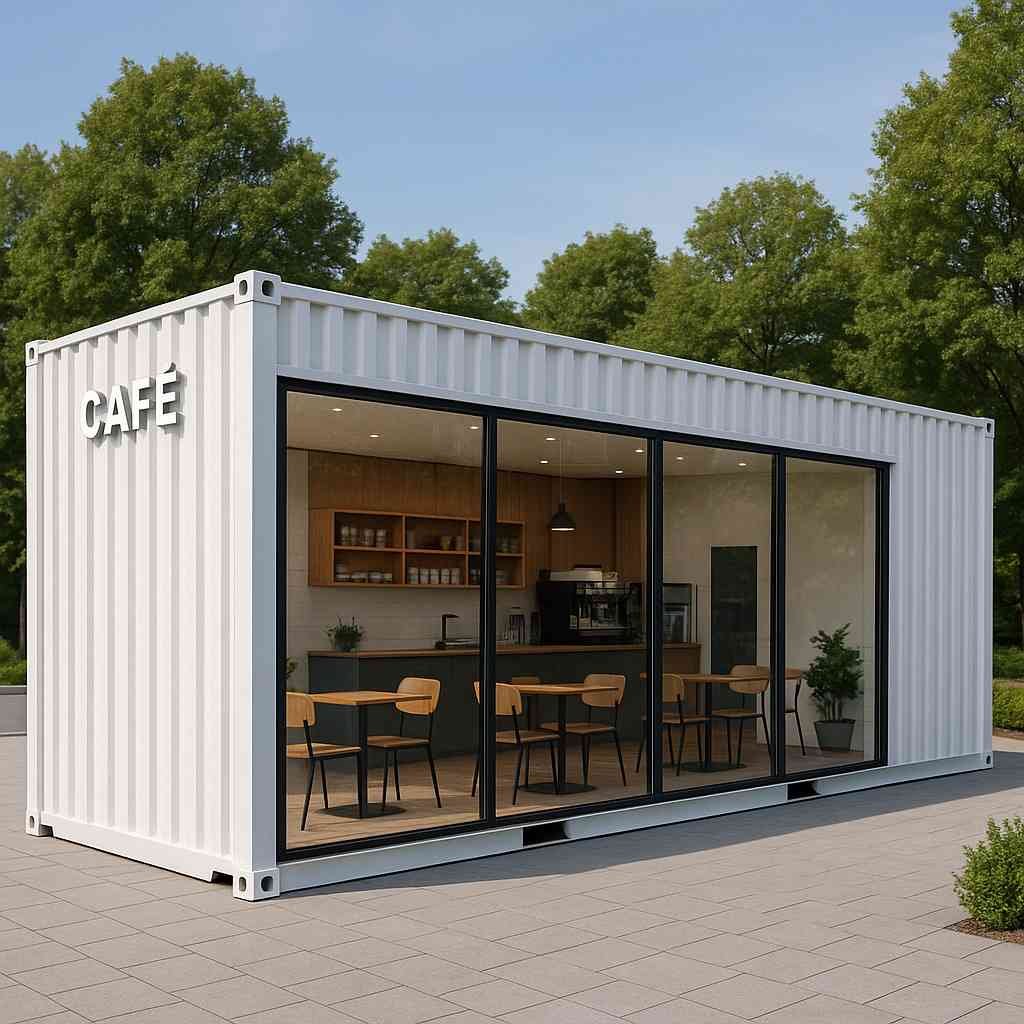
Small Portable Cabin with manager office setup
Small Portable Cabin Original price was: ₹165,000.00.Current price is: ₹145,000.00.
Back to products
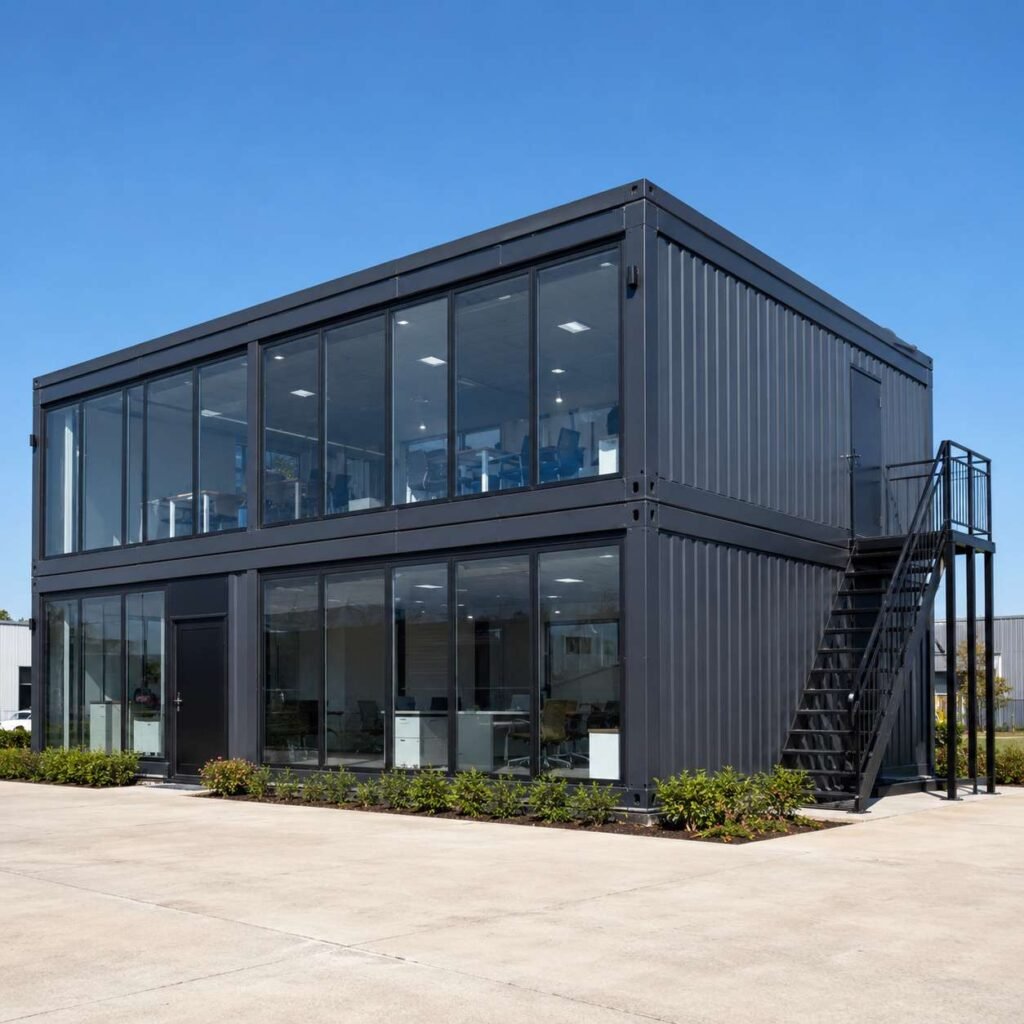
Container Offices
Container Offices Original price was: ₹295,000.00.Current price is: ₹285,000.00.
Description

Introduction: Why Portable Cabins with Toilets Are the Smartest Worksite Upgrade (2025 Edition)

A portable cabin with toilet combines workspace convenience and sanitation in a single prefabricated unit. Designed for project offices, industrial zones, and remote locations, these cabins eliminate the need for separate restrooms—saving both space and setup time.

Modern units arrive fully equipped with plumbing, ventilation, and electrical systems. Unlike traditional sheds, they are factory-built under controlled quality checks, ensuring long life, hygienic interiors, and fast deployment.

According to market data, demand for portable toilet cabins in India grew nearly 30 % in 2024 as developers, government agencies, and construction firms sought integrated workspace solutions that comply with sanitation norms.

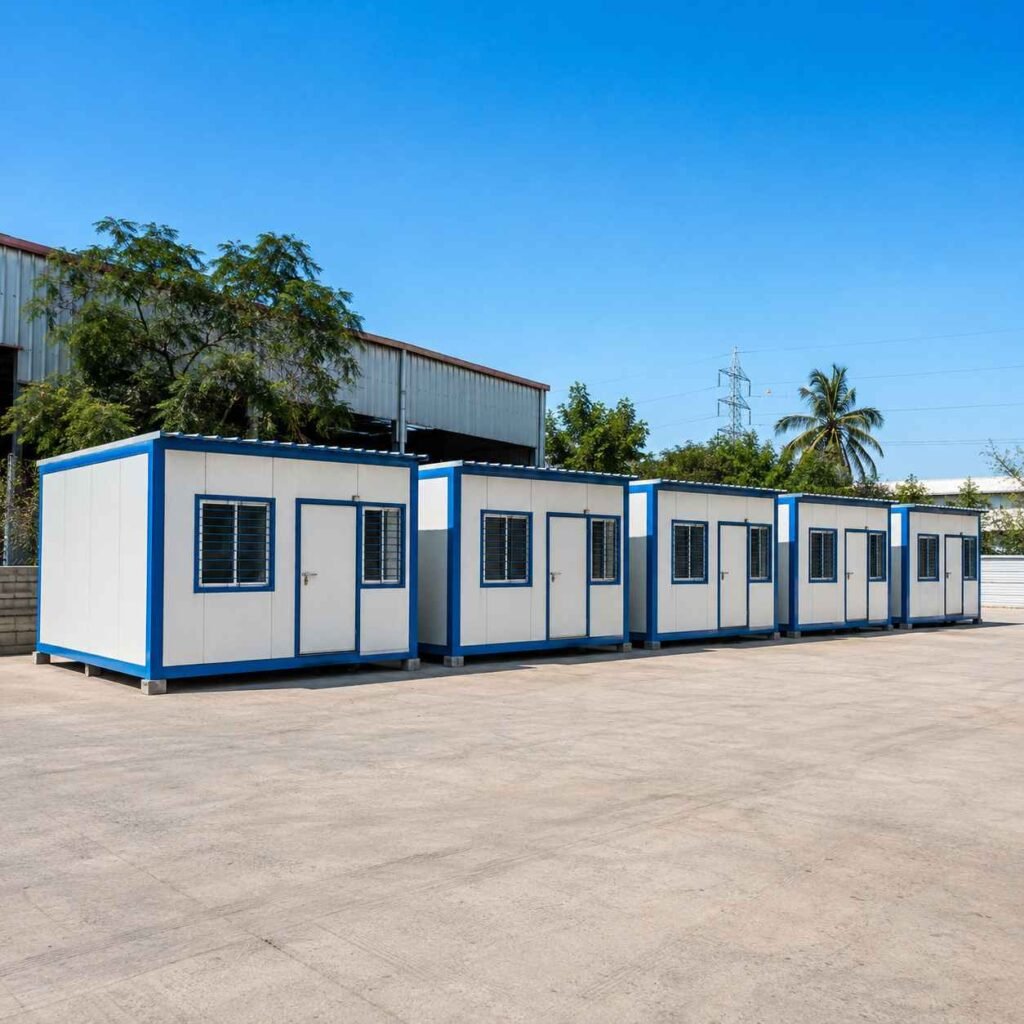
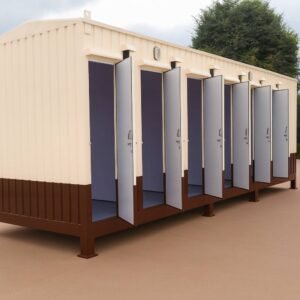
Portable Cabin with Toilet

1.1 Evolution of Integrated Portable Cabins

Early site offices relied on two separate cabins—one for staff and another for restrooms. Integration changed that.
Now, a single cabin can include:

  • One to two executive work zones

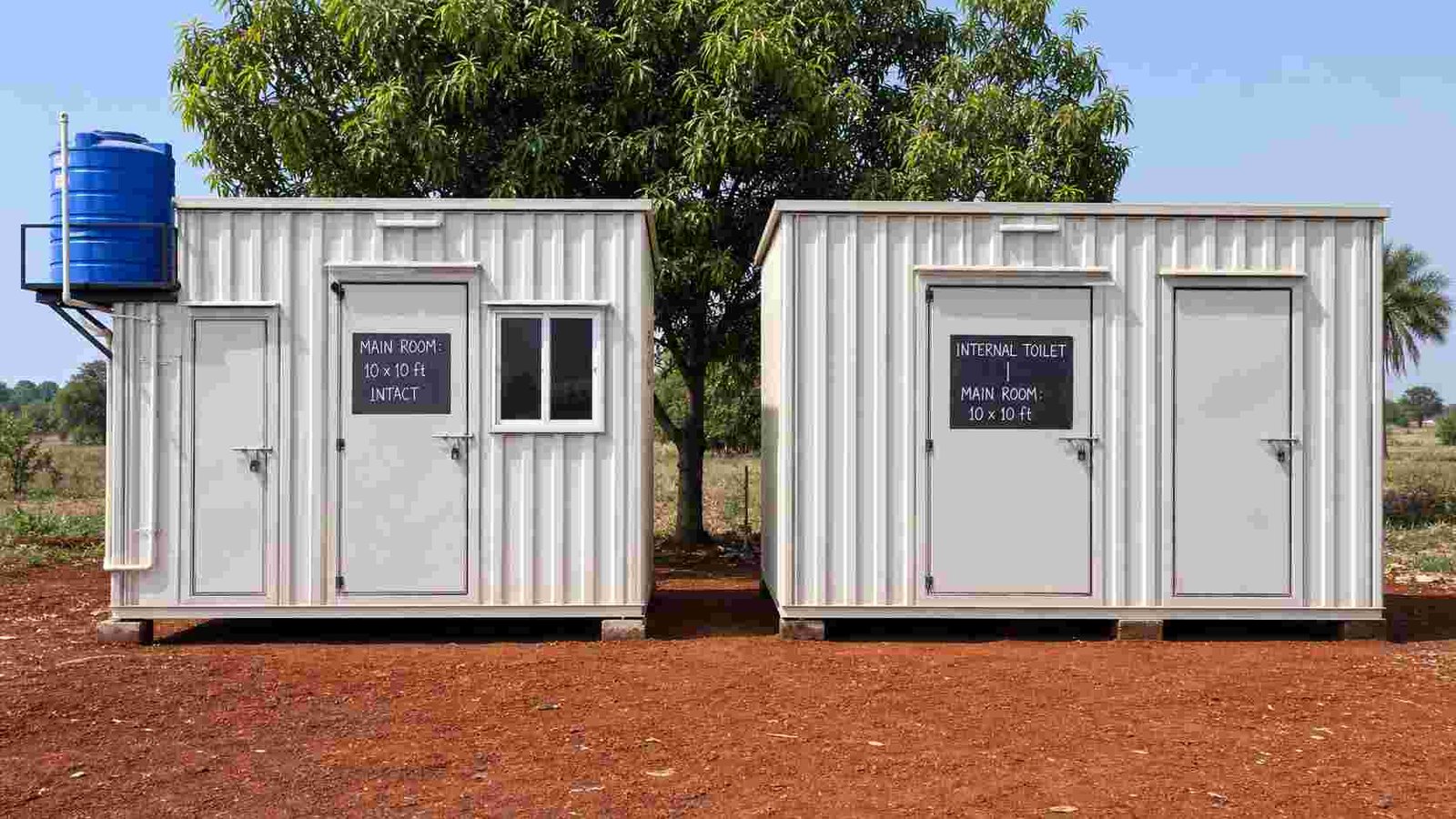
  • Partitioned washroom or toilet area

  • Sink + handwash + fresh-water storage

  • Exhaust fan and proper drainage outlet

This design ensures privacy, hygiene, and cost-effectiveness—vital for fast-moving projects and temporary facilities.

1.2 Benefits Over Separate Toilet Cabins

AspectSeparate Toilet UnitPortable Cabin with ToiletPractical Outcome
Space RequiredTwo structuresOne compact unitSaves up to 30 % area
Installation Time3–4 days1–2 days50 % faster setup
Maintenance CostDual serviceShared plumbingLower recurring cost
Comfort & PrivacyBasic utilityOffice-grade finishesBetter user experience
MobilityTwo transport loadsSingle loadHalf the logistics cost

These metrics prove that combining workspace and sanitation inside one prefab structure improves efficiency without compromising hygiene.

1.3 Connection to Broader Prefab Solutions

A portable cabin with a toilet is part of the growing family of Porta Cabins—versatile steel or PUF structures used across India for offices, canteens, classrooms, and worker facilities.
For buyers seeking dedicated sanitation units, our Toilet Porta Cabins page explains options ranging from single-seater FRP cabins to multi-user luxury restrooms.

Those looking for managerial setups with conference areas can also explore the Porta Cabin Office with Toilet guide—an advanced variant with full workspace ergonomics.

1.4 A Global Perspective

Globally, portable sanitation remains a crucial part of health compliance.
The Wikipedia entry on Portable Toilets traces its evolution from fiberglass booths to modular, eco-friendly cabins, proving how innovation now blends hygiene with architecture.

By adapting these global best practices, Indian manufacturers like SAMAN Portable deliver high-quality cabins that meet both aesthetic and functional expectations for 2025 and beyond.

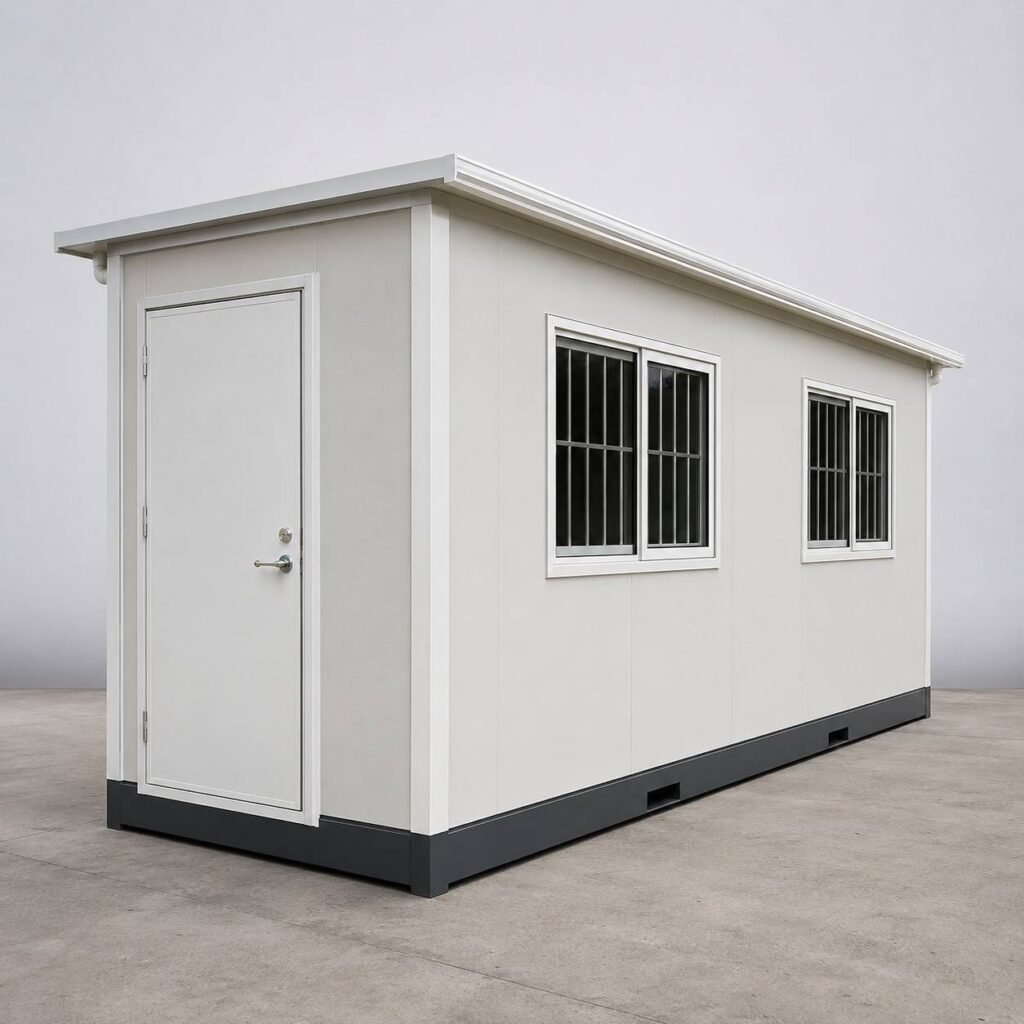
Portable Toilet Cabin

Design & Technical Specifications of Portable Cabin with Toilet

The success of any portable cabin with toilet lies in how smartly the layout uses limited space. Each inch is engineered for comfort, ventilation, and compliance—without sacrificing mobility or strength.

Modern cabins follow ergonomic principles found in premium prefab offices while integrating concealed plumbing and waterproofing systems designed for long-term use.

2.1 Standard Layouts and Sizes

Portable cabins come in multiple layouts depending on team strength, purpose, and available land area. A typical layout includes one working zone, a washroom partition, and basic utilities.

Cabin TypeExternal Size (ft)Built-up Area (sq ft)Toilet SectionIdeal Use
Compact10×8×8.5801 SeaterSecurity / field office
Standard20×10×92001–2 SeaterSite offices / consulting rooms
Executive30×10×9.53001–2 Seater + sinkProject management
Premium40×10×9.5400Toilet + shower + basinCorporate field HQ

Key takeaway: A 20×10×9 ft configuration offers the best balance between mobility and comfort for small to mid-sized teams.

2.2 Structural & Material Composition

ComponentCommon MaterialTechnical DetailsMaintenance Frequency
FrameMild Steel IS-grade2 mm thick square hollow sectionsAnnual paint coat
Wall PanelsPUF (40 mm) / ACPThermal insulation + weather protection3-year lifespan before repaint
RoofPPGI two-way slopedLeak-proof, thermally coatedInspect every 12 months
FloorMarine ply + VinylAnti-skid, moisture-proofReplace vinyl every 3 years
Door & WindowsuPVC frame + MS grillToughened glass (5 mm)Clean monthly
Toilet FixturesCeramic / FRPIS 2556 standardAs per use intensity

This combination ensures all-season comfort, energy efficiency, and long-term savings.

2.3 Smart Plumbing and Electrical Design

  • Separate pipelines for clean and waste water.

  • Overhead fresh-water tank (200–500 L).

  • Concealed electrical wiring in PVC conduits.

  • Energy-efficient LED lighting and 15A sockets.

  • Exhaust fan and optional mini water heater.

  • Power inlet: 32A industrial socket for direct connection to site generator.

These design elements keep cabins self-sufficient even in off-grid or rural areas.

2.4 Key Design Benefits

  1. Zero Leakage Assurance – Seamless panel joints prevent seepage.

  2. All-Weather Build – Roof insulation reduces inside heat by up to 8°C.

  3. Hygienic Interiors – Smooth vinyl flooring resists stains and odor.

  4. Compact Plumbing Access – Maintenance door for quick inspection.

  5. Privacy – Full-height partition between toilet and workspace.

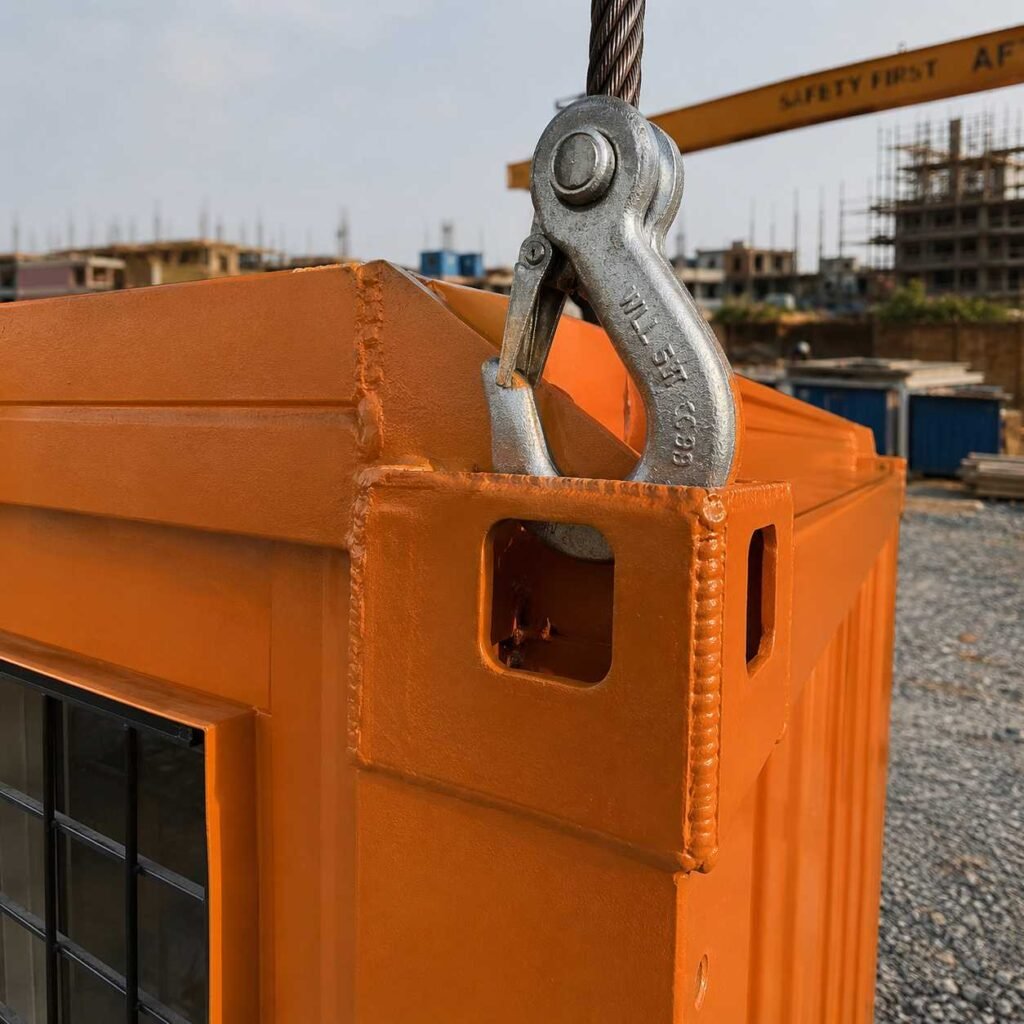
  6. Quick Relocation – Crane hooks and forklift slots pre-integrated.

  7. Future Upgrade Ready – Provision for adding shower or urinal unit later.

2.5 Technical Insight Table — Power, Water & Drainage

ParameterStandard SpecUpgradable SpecNotes
Power Load2 kW3.5 kWAC / Geyser use
Tank Capacity300 L500 LNon-metallic tanks preferred
Drain TypePVC 110 mmBio-treatment outletOptional green upgrade
Voltage230 V / 50 HzSolar hybrid systemOptional off-grid setup
Floor Load250 kg/m²350 kg/m²Suits heavy furniture or file racks

Cabins sharing these design standards are part of our broader Porta Cabins range, which includes industrial, residential, and sanitation models.

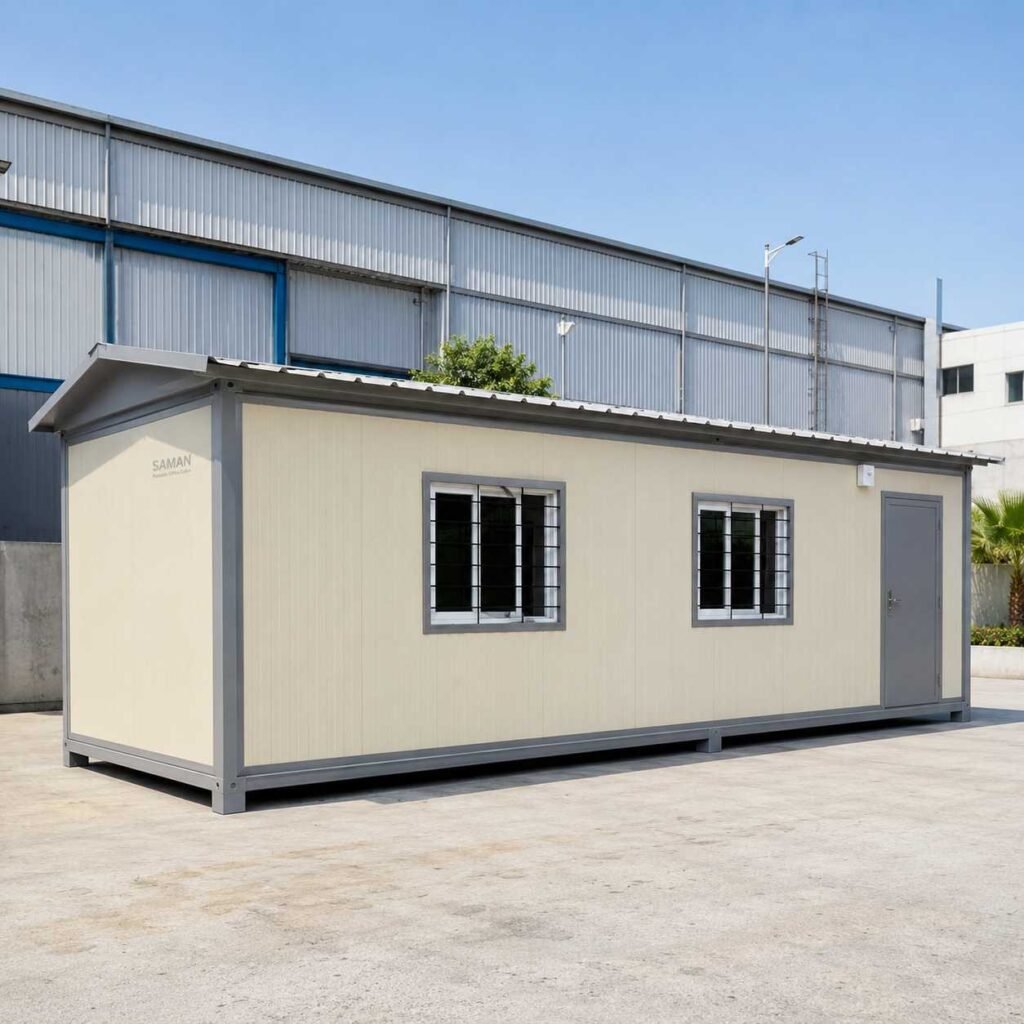
Portable Toilet in Bangalore

Manufacturing Process & Quality Control

Behind every reliable portable cabin with toilet lies a precise manufacturing cycle.
Each stage — from cutting steel to final inspection — ensures the cabin is watertight, weatherproof, and built to last for years of on-site service.

3.1 Step-by-Step Manufacturing Workflow

StageProcessTools / EquipmentQuality Checkpoint
1Frame FabricationMIG welding machineDimensional accuracy ±3 mm
2Surface TreatmentAnti-rust primer, zinc coatingSalt spray test (72 hrs)
3Panel AssemblyPUF / ACP panels bolted & sealedJoint leakage inspection
4Flooring InstallationMarine ply + vinyl matWater pond test
5Electrical FittingsConduits, sockets, lightsVoltage & insulation check
6Plumbing IntegrationPVC piping, tanks, fixturesLeak test (2 bar pressure)
7Painting & FinishingPPGI / PU coatingScratch & adhesion test
8Final InspectionCross-verificationQC report certification

Every cabin undergoes a 21-point final inspection before dispatch — including door alignment, tank integrity, and insulation thickness verification.

3.2 Precision Welding and Structural Reinforcement

Each base frame is crafted using 2 mm IS 2062-grade steel sections welded under jigs to ensure geometric uniformity.
Corners are double-welded to handle lifting stress during relocation.
Non-destructive tests (NDT) are performed to detect any surface cracks before priming.

Quick Stats

  • Frame lifespan: 15+ years

  • Max stacking height (for transport): Two units

  • Load-bearing strength: 350 kg/m² (certified)

3.3 Quality Assurance & Testing Protocols

Inspection TypeConducted ByFrequencyCriteria
Material VerificationProcurement teamPer batchIS & ASTM compliance
Welding TestInternal QAPer frameVisual + ultrasonic
Paint ThicknessCoating inspectorPer cabin≥ 80 microns
Electrical LoadFinal QCPer orderNo voltage drop ±5 %
Plumbing & Tank LeakQC engineerEvery cabinZero seepage tolerance

These checks ensure that cabins are ready for field conditions across coastal, dry, and industrial regions.

3.4 Hygiene & Safety Standards

Each toilet cabin is factory-fitted with a sealed septic system or bio-digester, preventing contamination or odor leaks.
All water lines use food-grade PVC, while the interior paint is anti-fungal and non-toxic.

Safety Features

  • Fire-retardant insulated panels

  • Anti-slip vinyl flooring

  • Ventilated skylight for natural airflow

  • Earthing and circuit protection system (MCB + ELCB)

3.5 Integration with National Standards

All production follows BIS 875 Part 2 (Structural Loads) and NBC 2016 guidelines for temporary structures.
Environmental compliance aligns with the Swachh Bharat Mission and FSSM framework for waste management.

SAMAN Portable also references ISO 9001:2015 for its in-house manufacturing process, ensuring every portable cabin with toilet meets measurable quality benchmarks.

3.6 Continuous Improvement

Each customer order is digitally logged for lifecycle tracking.
Feedback from field performance—like leakage data or corrosion rates—feeds back into new designs, leading to 8–12 % improvement per iteration cycle.

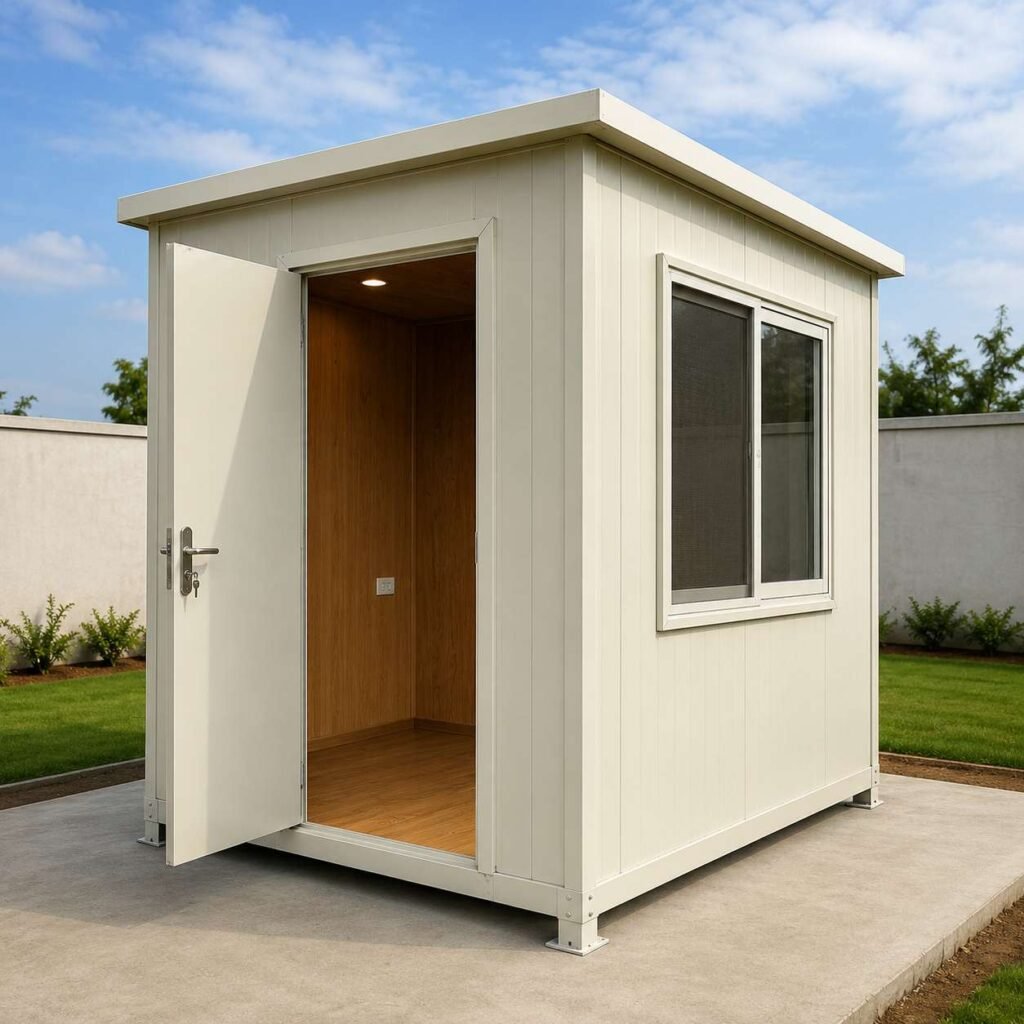
Toilet in Container

Installation Process & Site Preparation

Installing a portable cabin with toilet is a fast, low-disruption operation—usually completed within a day or two.
Still, precision in foundation, plumbing, and electrical setup ensures the cabin functions safely for years.

4.1 Site Preparation Essentials

A stable, level base is critical. Before delivery, ensure the location meets basic installation parameters.

ParameterMinimum RequirementIdeal ConditionImpact
Ground LevelEven ±10 mmCompacted soil or RCC padPrevents frame twist
Foundation TypeRCC / blockReinforced RCC pad 6” thickLong-term durability
Drain Slope1:40 minimumPVC 110 mm gradient pipeSmooth wastewater flow
Power Supply230 VGenerator / mainsNeeded for instant use
Access Path10 ft clear widthCrane/forklift entrySafe unloading

Tip: For multi-site projects, keep two fixed foundation pads and rotate cabins as projects move.

4.2 Step-by-Step Installation Procedure

  1. Unloading: Crane or forklift positions the cabin on pre-cast RCC pads.

  2. Base Alignment: Spirit level used to check tilt (<5 mm).

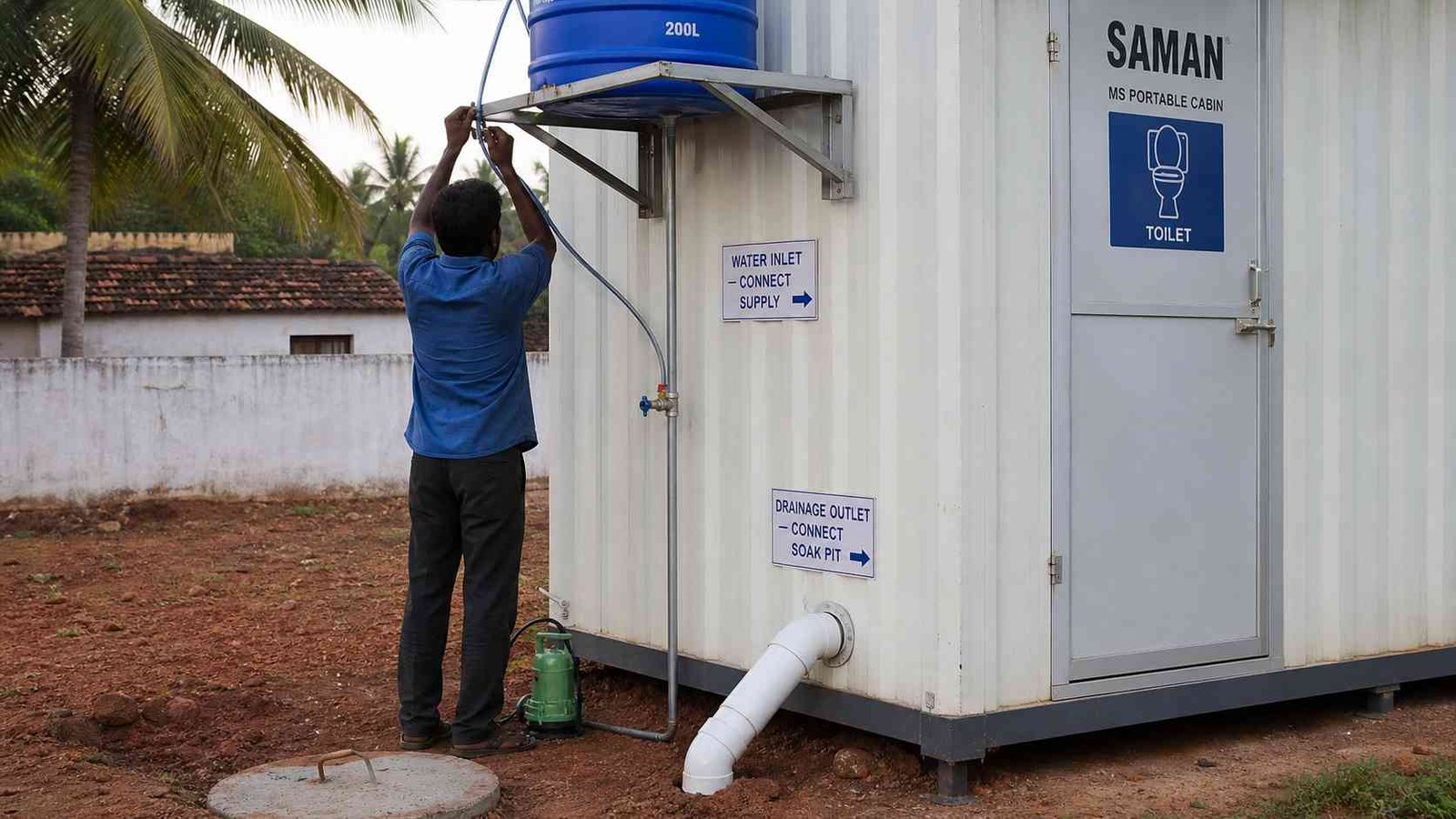
  3. Plumbing Connection: Water inlet from tank; outlet to soak pit or septic.

  4. Power Setup: External 32A industrial socket connects to MCB inside cabin.

  5. Inspection: Verify all seals, switches, and drainage flow before commissioning.

4.3 Utility Connections

UtilityConnection MethodNotes
Water SupplyOverhead / external tank (200–500 L)Use 3/4″ PVC flexible hose
DrainagePVC 110 mm pipeAvoid sharp bends
Power Supply230 V AC, 2–3 kWUse proper earthing
LightingLED tubes + exhaust fanControlled by single switch
Waste DisposalSeptic / bio-digesterAs per local sanitation code

Pro Insight: Many clients now connect bio-digester tanks to reduce servicing cost—these break waste into reusable water and gas.

4.4 Safety Measures During Installation

  • Use only trained riggers for lifting operations.

  • Maintain 5 m safety clearance from active equipment.

  • Always switch off power during plumbing adjustments.

  • Keep inspection hatch accessible for maintenance.

  • Verify MCB and earthing resistance (<2 ohms).

4.5 Installation Time & Labor Table

Cabin SizeCrew NeededEquipmentInstallation TimePower ConnectionPlumbing Setup
10×8 ft2 personsForklift4–5 hrs1 hr1 hr
20×10 ft3 personsCrane + plumber8 hrs1.5 hrs2 hrs
30×10 ft4 personsCrane + electrician12 hrs2 hrs3 hrs
40×10 ft5 personsCrane + helper team14 hrs2.5 hrs3 hrs

Total turnaround: A 20 ft cabin can be operational within one working day, provided the RCC pad is ready.

4.6 Connection to Product Family

Once installed, these units align perfectly with our modular lineup under Porta Cabins.

Portable toilet in Porta Cabin

Pricing & Cost Analysis (Purchase, Rental, and ROI)

The value of a portable cabin with toilet comes from both its upfront affordability and its ability to recover costs quickly through multi-site reuse.
Unlike permanent construction, these units deliver savings from the first deployment — and every relocation multiplies that return.

5.1 Purchase Price Breakdown (By Size & Material)

Cabin Size (ft)Structure MaterialToilet TypePrice Range (₹)Best For
10×8×8.5FRP / MSSingle-seat55,000–75,000Guard room / small site
20×10×9MS + PUF1–2 seat95,000–1,80,000Standard office setup
30×10×9.5PUF / ACPToilet + sink2,25,000–3,50,000Project manager cabin
40×10×9.5ACP / PPGIToilet + shower3,50,000–5,50,000Corporate / site HQ

Note: Custom interiors (false ceiling, tiles, water heater) may increase cost by 10–15 %.

Value Point:
A 20 ft cabin with integrated toilet typically costs less than installing a masonry office and separate restroom — by nearly 40 %.

5.2 Rental Cost Analysis (Short-Term & Long-Term)

DurationBasic FRP Unit (₹/month)PUF / MS Cabin (₹/month)Luxury ACP Unit (₹/month)
1 month9,000–12,00015,000–18,00025,000–30,000
3–6 months8,000–10,00013,000–15,00022,000–26,000
1 year+7,000–9,00012,000–14,00020,000–22,000

Inclusions: Basic cleaning, transport (within 50 km), and installation.
Exclusions: Water, power, and septic servicing (charged per site).

Rental Insight:
Long-term rentals (6+ months) cost 20 % less per month and allow flexible relocation between projects.

5.3 ROI Comparison — Portable vs Permanent Construction

FactorPortable Cabin with ToiletBrick & Mortar Office + ToiletDifference
Construction Time2 days30–45 days90–95 % faster
Capital Outlay₹1.5–3.5 L₹4–8 L40–60 % cheaper
Relocation OptionYesNoPortable advantage
Maintenance CostModerate (₹1–2k/month)Variable (₹3–4k/month)Lower recurring cost
ROI Period6–10 months3–5 yearsImmediate payback

Example ROI:
A contractor purchasing two 20 ft cabins for ₹3.6 lakh can recover the cost within 8–9 months by using them across multiple sites.

5.4 Operating Cost Components

  • Servicing: ₹800–₹2,500/month depending on location.

  • Transport: ₹5,000–₹8,000 within 100 km radius.

  • Insurance: Optional, about 1 % of invoice value yearly.

  • Utility Setup: ₹2,000–₹3,000 for plumbing and wiring.

  • Depreciation: 10 % annually for accounting (cabins can last 12–15 years).

5.5 Market Cost Insight

According to verified 2025 industry data, the Indian portable toilet and prefab cabin market has crossed ₹7,900 crore, growing annually by 9.8 %.
Integrated cabins are driving this trend due to reduced land use and sustainability requirements.

For context, see the Wikipedia – Portable Toilet entry on global pricing patterns and hygiene standards influencing demand in developing economies.

5.6 Quick Cost Summary

  • Setup time: 1–2 days

  • Avg service life: 12–15 years

  • Payback: 6–10 months (multi-site use)

  • Annual maintenance: 4–6 % of unit cost

Portable cabins with toilets are not just temporary structures—they’re strategic cost assets that pay for themselves faster than almost any other site infrastructure. For sanitation-first units, check our Toilet Porta Cabins.

Materials, Durability & Maintenance

A well-built portable cabin with toilet stands strong through monsoon, heat, and relocation stress.
Material choice decides its life span, comfort level, and maintenance frequency. Every SAMAN Portable cabin is engineered for weatherproof endurance and minimal upkeep.

6.1 Common Materials Used in Portable Cabins

ComponentStandard MaterialPremium OptionDurability (Years)Remarks
FrameIS 2062 MS SteelGalvanized Steel12–15Rust-resistant, load-bearing
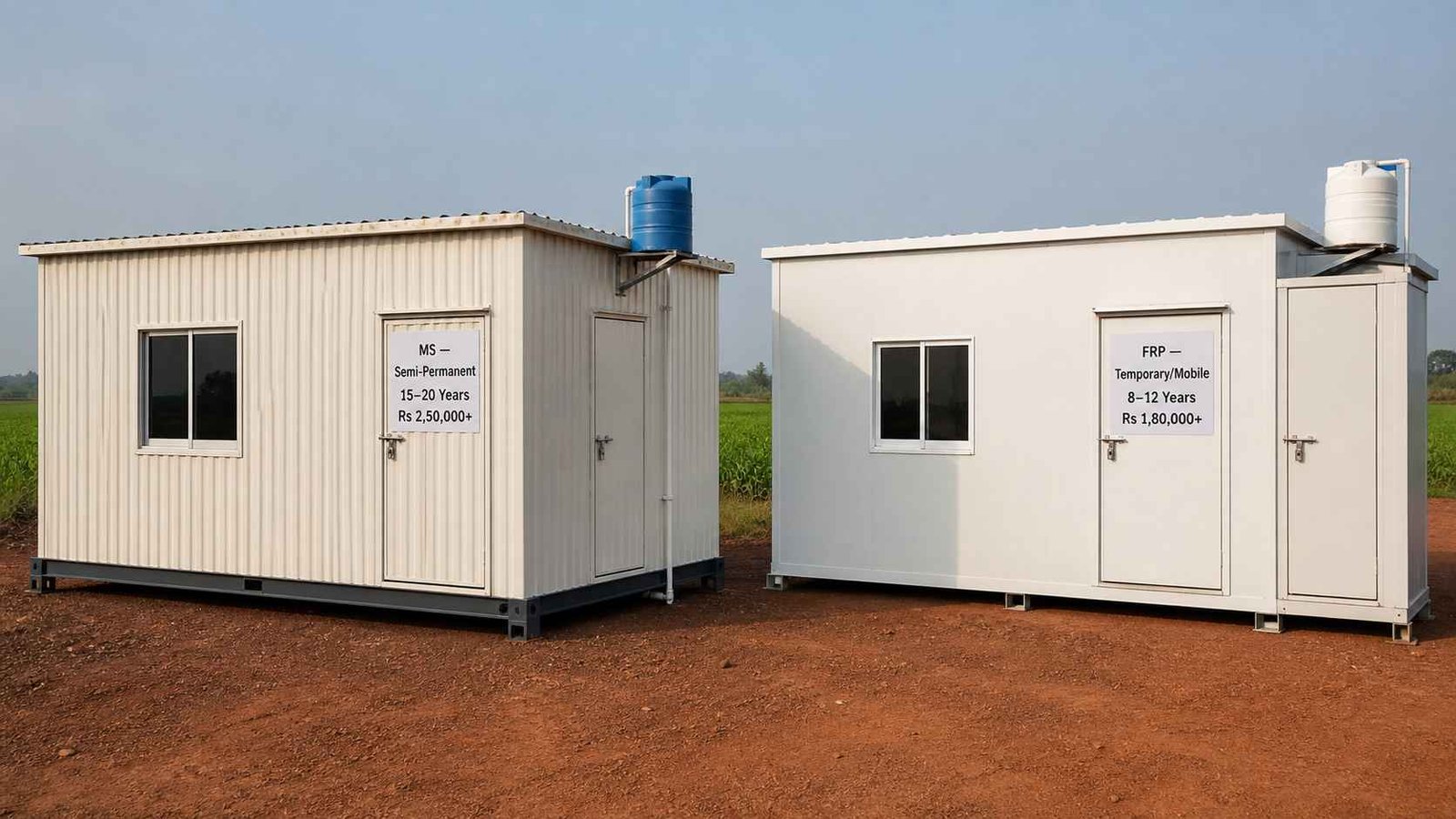
Wall PanelsFRP (Fiber Reinforced Plastic)PUF / ACP8–15Thermal & sound insulation
RoofPPGI Sheet (2-way sloped)PUF Insulated Roof10–12Leak-proof with reflective coat
FloorMarine Ply + VinylCement Board + Vinyl8–10Anti-skid & waterproof
WindowsuPVC + MS GrillToughened Glass10–12Reduces dust ingress
Toilet FixturesFRP / CeramicCeramic (Jaguar / Hindware)5–10Easy to clean, long-lasting

Insight: PUF and ACP panels deliver 20–30 % higher insulation than FRP walls, maintaining indoor comfort even in 45°C heat.

6.2 Durability Comparison by Climate Zone

Climate TypeIdeal Material ComboExpected Life (Years)Recommended Coating
Coastal (humid)Galvanized MS + FRP10–12Anti-corrosive epoxy
Dry / DesertPPGI + PUF Panels12–15Heat-reflective PU coat
Hill RegionACP + PUF15+Moisture-resistant PU paint
Urban / IndustrialMS + ACP10–14Dust-proof enamel paint

Durability improves significantly when cabins are cleaned quarterly and repainted every 3–4 years.

6.3 Maintenance Schedule

TaskFrequencyTime RequiredCost Estimate (₹/year)
Cleaning & sanitationWeekly30–60 mins1,200–1,500
Electrical inspectionQuarterly1 hr500–700
Paint touch-upYearly3–4 hrs2,000
Panel re-sealantBiennial2 hrs1,000
Plumbing & tank checkMonthly1 hr800

Total Annual Cost: ≈ ₹5,000–₹7,000 for standard-size cabin.
Downtime: Less than 2 days per year when serviced regularly.

6.4 10 Maintenance Tips for Longer Cabin Life

  1. Inspect the roof after every heavy rain.

  2. Keep drain outlets unclogged to prevent floor seepage.

  3. Clean the water tank every 2 months.

  4. Apply anti-termite spray beneath the base annually.

  5. Tighten bolts on lifting hooks before relocation.

  6. Avoid sharp impacts on FRP or ACP walls.

  7. Use mild detergents — harsh acids corrode vinyl.

  8. Check earthing before reconnecting power.

  9. Rotate cabins between sites to balance wear.

  10. Schedule annual service by OEM technician.

6.5 Longevity Insights

A properly serviced portable cabin with toilet lasts 12–15 years; premium PUF and ACP versions can exceed 18 years.
Corrosion-resistant paint and routine seal checks add at least 20 % to total life expectancy.

6.6 Connection to Related Solutions

All SAMAN models share a unified maintenance pattern with Porta Cabins and Toilet Porta Cabins.
The extended corporate version — Porta Cabin Office with Toilet — includes superior coatings and anti-static flooring for longer performance.

Installation, Servicing & Operating Costs

Even the best-built portable cabin with toilet needs correct setup and steady upkeep to reach its full lifespan.
Installation costs are one-time, but servicing and cleaning decide whether it feels new after one year—or worn out after three.

7.1 Typical Installation Cost Breakdown

ComponentDescriptionEstimated Cost (₹)Frequency
RCC Foundation Pads4–6 blocks or continuous base3,000–7,000One-time
Water & Drain ConnectionPVC piping, fittings, traps2,000–4,000One-time
Electrical SetupPower inlet, MCB, switches1,500–3,000One-time
Transport & CraneUnloading and placement5,000–8,000 (100 km radius)Per move
Testing & CommissioningPressure, leak, insulation testIncludedOne-time

Total Approximation: ₹12,000–20,000 for a standard 20×10 ft unit.
If base pads are reused across sites, only lifting and transport costs apply in subsequent moves.

7.2 Servicing & Cleaning Frequency

TaskFrequencyService DurationAvg. Cost (₹/visit)Responsible Party
Interior CleaningDaily / Weekly30 – 45 min300–400Site cleaner
Tank Emptying (non-bio)Weekly / Biweekly1 hr600–1,000Vendor
Bio-digester CheckMonthly45 min400OEM
Plumbing Leak CheckMonthly30 min200Site maintenance
Paint & Panel InspectionYearly2–3 hr2,000OEM service
Electrical Load TestHalf-yearly1 hr500Electrician

Tip: For clusters of 5+ cabins, negotiate an annual comprehensive service contract—saves ~20 % on total recurring cost.

7.3 Annual Operating Budget Snapshot

Cost HeadCompact (10 ft)Standard (20 ft)Executive (30 ft)Premium (40 ft)
Cleaning & Consumables8 k12 k18 k25 k
Servicing & Maintenance5 k7 k9 k12 k
Transport (1 relocation/yr)6 k8 k10 k12 k
Power & Water3 k5 k6 k8 k
Total Annual Cost22 k32 k43 k57 k

Over five years, this is typically just 12 – 15 % of total ownership cost—far below permanent-site overheads.

7.4 Key Cost-Saving Practices

  • Schedule weekly waste collection to avoid emergency pump-outs.

  • Use solar lights or low-watt LED fittings.

  • Reuse foundation pads and transport equipment.

  • Bundle service contracts with bulk cabin purchases.

  • Apply reflective roof coating yearly to cut AC load.

  • Share tanks between adjacent cabins when site permits.

7.5 ROI Perspective

Every properly serviced cabin keeps its resale value between 60–70 % even after 5 years.
Owners who follow planned maintenance recover their investment in under 9 months through continuous redeployment.

Compliance & Regulatory Standards

Installing or operating a portable cabin with toilet requires more than just good engineering—it must align with India’s sanitation, safety, and accessibility laws.
Compliance protects both workers and project owners from penalties while ensuring clean, sustainable operations.

9.1 Key Indian Standards and Norms

RegulationIssuing BodyCore RequirementImpact
BIS IS 875 (Part 2)Bureau of Indian StandardsStructural load and safetyDefines wind, live, and dead load for cabins
NBC 2016National Building CodeTemporary structure designGoverns layout and plumbing alignment
FSSM 2017MoHUA, IndiaFaecal sludge & septage managementEnsures safe waste treatment
SBM-G / SBM-U 2.0Swachh Bharat MissionSanitation coverage and hygiene goalsDrives use of mobile toilets at worksites
ISO 9001:2015QMS CertificationFactory quality consistencyValidates manufacturing process

Interpretation: Cabins certified under BIS and NBC automatically meet structural and safety norms for most public and private tenders.

9.2 Waste Management and Water Use

All portable cabins must ensure safe disposal of wastewater, usually through one of three methods:

  • Septic Tank System: Traditional setup for fixed sites.

  • Bio-Digester Tank: Converts waste to water and biogas, eco-friendly and maintenance-light.

  • Sewer Connection: For urban areas where municipal lines exist.

Each plumbing setup includes vent pipes and anti-siphon traps to prevent odor and backflow.

9.3 Accessibility and User Safety

  • Door width: Minimum 900 mm for wheelchair access.

  • Interior turning radius: 1.5 m clearance.

  • Grab bars: Mandatory in public-access cabins.

  • Non-slip flooring and adequate ventilation required.

  • Signage for male/female or universal access zones recommended.

These features make the cabin inclusive, not just compliant.

9.4 Inspection and Documentation

DocumentIssued ByFrequencyPurpose
Factory QC CertificateManufacturerEvery dispatchStructural & finish verification
Plumbing Test ReportOEM / VendorOnce per projectLeakage & flow rate validation
Electrical Test CertificateLicensed electricianEach siteEarthing, insulation, load proof
Hygiene LogbookSite facility teamWeeklyServicing record for audits

Maintaining these records ensures readiness for audits under Swachh Bharat and industrial safety schemes.

9.5 Global Perspective

India’s policies now align closely with global sanitation codes found in the Wikipedia – Portable Toilet reference.
Like Europe’s EN 16194, India’s SBM framework emphasizes hygiene, accessibility, and eco-waste treatment—bridging the gap between local affordability and international standards.

9.6 Quick Compliance Checklist

✅ BIS-compliant steel and panel construction
✅ Swachh Bharat or FSSM-approved waste treatment
✅ ADA-style accessibility (for public cabins)
✅ Valid factory QC and installation report
✅ Regular hygiene log verified by site supervisor

When these points are met, a portable cabin with toilet qualifies for use in both private and government projects without additional certification hurdles.

Future Trends & Innovations (2025–2030)

Prefab construction in India is shifting from quick fixes to smart, sustainable design — and the portable cabin with toilet is at the front of that evolution.
The next five years will see these cabins become cleaner, smarter, and even more energy-efficient.

10.1 Smart Monitoring & IoT Integration

Cabins are now being equipped with sensors that track fill levels, temperature, and humidity.
IoT dashboards send alerts before maintenance issues arise, improving hygiene and reducing servicing costs by nearly 40 %.

FeatureFunctionPractical Benefit
Fill-Level SensorMonitors waste tank capacityPrevents overflow
Odor DetectorDetects methane and ammoniaTriggers auto-ventilation
Smart LightingMotion-based LEDSaves up to 20 % energy
GSM ModuleRemote alert to service teamEnables predictive cleaning

These systems are being piloted in Smart City programs and are likely to become standard in new public contracts by 2026.

10.2 Green Building Materials

Manufacturers are replacing petroleum-based foams with bio-polyol PUF and using recycled steel for frames.
Each innovation reduces carbon emissions without affecting strength or insulation.

MaterialEco BenefitStatus in India
Recycled Steel25 % less embodied carbon60 % adoption
Bamboo-Composite PanelsRenewable, lightweightUnder trials
Low-VOC PaintBetter indoor air qualityWidely used
Solar Roof ModulesOff-grid operationExpanding in Tier-1 cities

10.3 Automation in Manufacturing

Robotic welding and CNC-cutting ensure consistency in every joint and panel.
AI-based quality control systems can now detect coating flaws invisible to the human eye, raising production accuracy by 15 %.

10.4 User Comfort & Design Shift

Future cabins will feature:

  • Larger window-to-wall ratios for better ventilation.

  • Modular restrooms that can attach or detach depending on project type.

  • Optional grey-water reuse systems for low-water zones.

Compact doesn’t mean cramped anymore — cabins are being designed to feel like professional interiors, not temporary boxes.

10.5 Policy & Market Outlook

Indicator2025 Estimate2030 ProjectionCAGR %
Portable Sanitation Market₹ 7,900 Cr₹ 15,600 Cr9.8
Smart Toilets Adoption20 %55 %
Solar-Ready Units12 %40 %
Bio-Digester Usage45 %70 %

By 2030, most industrial tenders will demand energy-efficient cabins with lifecycle documentation and recyclable components.

10.6 Design Inspiration & Global Context

Global prefab architecture is setting higher design expectations for mobility and sustainability.
As Architectural Digest notes in its overview of modular and prefab homes, the next generation of portable structures focuses on elegance and environmental logic — not just speed.
That same philosophy is redefining India’s portable toilet and office markets today.

10.7 The Road Ahead

  • Smarter sanitation: real-time waste analytics and predictive service cycles.

  • Greener operations: solar power, grey-water reuse, and zero-VOC interiors.

  • Better design: blending comfort, compliance, and corporate aesthetics.

The portable cabin with toilet is no longer a temporary convenience; it’s a blueprint for sustainable workspaces — adaptable, compliant, and future-ready.

FAQs on portable cabin with toilet

1. What is a portable cabin with toilet?

It’s a prefabricated modular cabin that combines an office or workspace with an attached restroom. These units include plumbing, lighting, and ventilation, offering quick installation and hygienic facilities for worksites, remote areas, and temporary offices.

2. How much does a portable cabin with toilet cost in India?

Prices range from ₹90,000 to ₹3,50,000 depending on size, material, and features. Basic FRP units are budget-friendly, while PUF or ACP cabins with fittings like sinks or showers cost more. Transport and installation may add 5–10% extra.

3. Can portable cabins with toilets be customized?

Yes. You can choose layout, size, toilet type, flooring, insulation, and fittings. Custom options include solar lighting, bio-digester tanks, or AC-ready walls for comfort and compliance across industrial or corporate use.

4. How long does installation take?

Most units are ready within one day once the RCC base and utility lines are prepared. Larger executive models may need two days. No wet construction is required, so there’s minimal site disruption.

5. What materials are used to build these cabins?

Frames are made from mild steel or galvanized steel, while walls use PUF, ACP, or FRP panels for insulation and durability. Interiors have marine-ply flooring, vinyl finish, and ceramic sanitary fixtures for easy cleaning.

6. Are portable cabins with toilets suitable for long-term use?

Absolutely. With proper maintenance, these cabins last 12–15 years. Premium versions with insulated panels, anti-rust coating, and bio-digester systems can last even longer in all weather conditions.

7. Do portable cabins need plumbing connections?

They come with pre-fitted internal plumbing. External connection to a water tank and drainage outlet is required. Bio-digester models can operate independently, making them ideal for remote locations.

8. Can they be relocated easily?

Yes. Each unit has lifting hooks and forklift slots, allowing relocation within hours. Cabins can be reused across multiple projects without affecting structure or waterproofing.

9. Are these cabins compliant with Indian standards?

Yes. They follow BIS and NBC codes for structure and plumbing, and Swachh Bharat Mission norms for sanitation. Many manufacturers also maintain ISO 9001 certification for consistent quality.

10. Where can portable cabins with toilets be used?

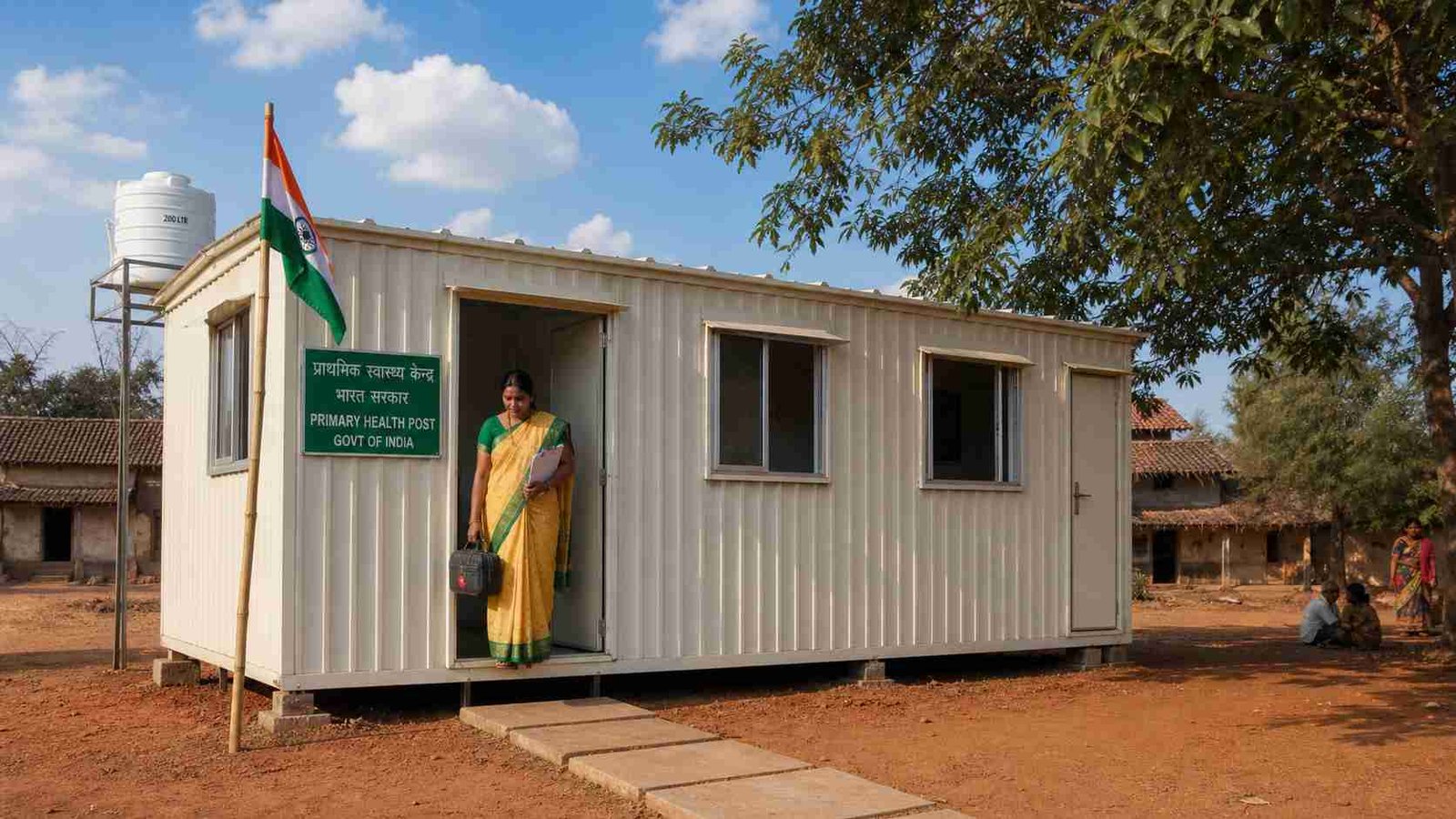
They’re ideal for construction sites, factories, events, schools, offices, and rural projects. Anywhere that needs fast, hygienic, and movable restroom facilities can benefit from these all-in-one prefab solutions.

Reviews (0)
0 reviews
0
0
0
0
0

There are no reviews yet.

Be the first to review “Portable Cabin with Toilet”

Your email address will not be published. Required fields are marked *

Shipping & Delivery

Shipping and Delivery Information

At SAMAN Portable Office Solutions, we are committed to ensuring a seamless shipping experience for our customers. Our shipping and delivery policy has been crafted to provide you with clear details and expectations when you place an order for our portable cabins or container offices.

Delivery Timeline

Once your order is confirmed, we will process and dispatch your product within 15 to 21 working days. This timeline is calculated from the date we receive your order and ensures that your product is fabricated, inspected, and packed securely for transportation. We strive to adhere strictly to this delivery window, guaranteeing that your order reaches you in a timely manner.

Shipping Costs

Our shipping charges are structured based on the size and type of the trailer used for delivery. Below are the detailed rates:

  • For a 40 Feet Open Trailer: The cost is ₹80 per kilometer, excluding Over Dimensional Cargo (ODC) and Regional Transport Office (RTO) charges.
  • For a 20 Feet Open Trailer: The cost is ₹60 per kilometer, also excluding ODC and RTO fees.

Note: ODC and RTO charges may vary depending on your location and state regulations. We ensure transparency in our billing and will provide you with an accurate estimate before shipment.

Within Bangalore Shipping Rates

For customers within the Bangalore region, we offer competitive fixed shipping rates for hassle-free delivery:

  • 40 Feet Open Trailer: ₹15,000
  • 20 Feet Open Trailer: ₹10,000

These rates are designed to be cost-effective while ensuring your product reaches its destination safely and securely. We work with reliable transport partners to provide efficient and on-time delivery services within Bangalore.

At SAMAN Portable Office Solutions, customer satisfaction is our priority. For any queries related to shipping or delivery, please feel free to contact our customer support team. We are here to assist you every step of the way.
Frequently Asked Questions

Quick Answers to Common Portable Cabin Inquiries