


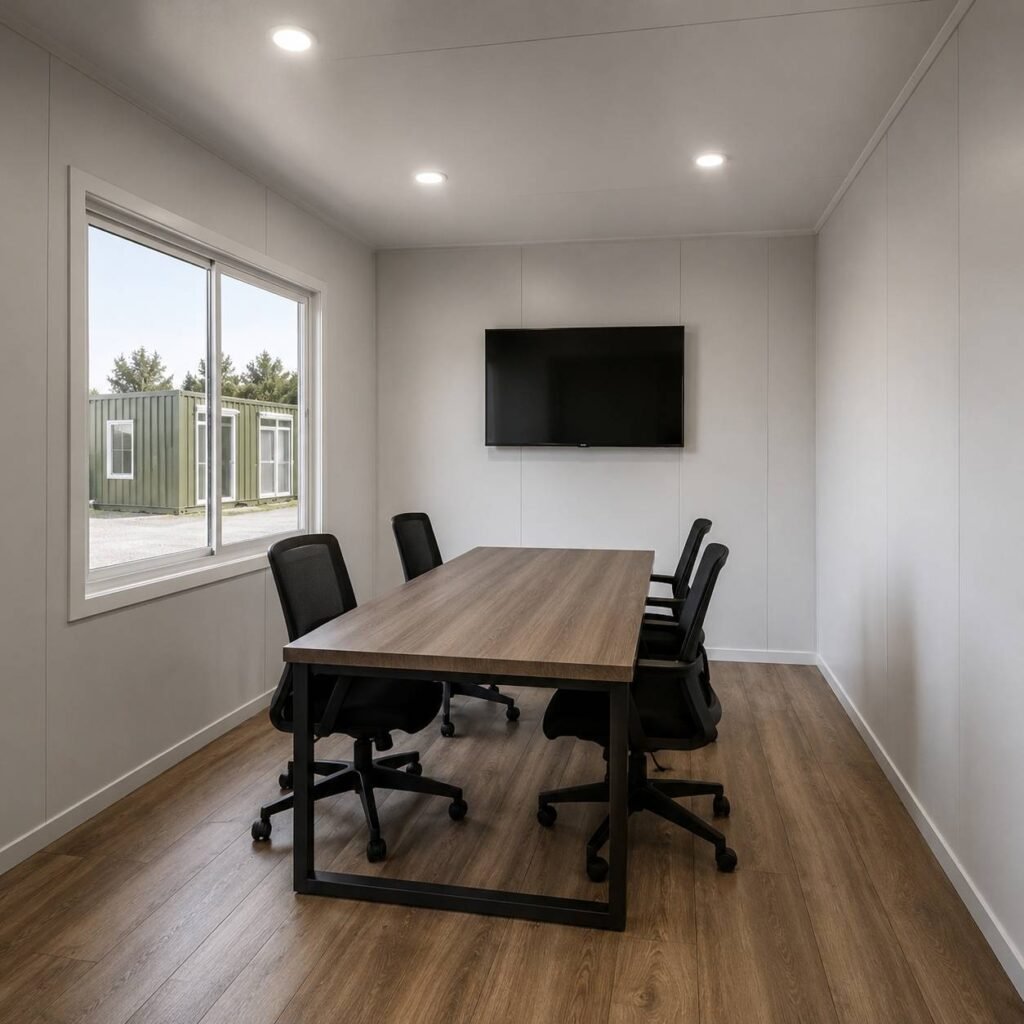
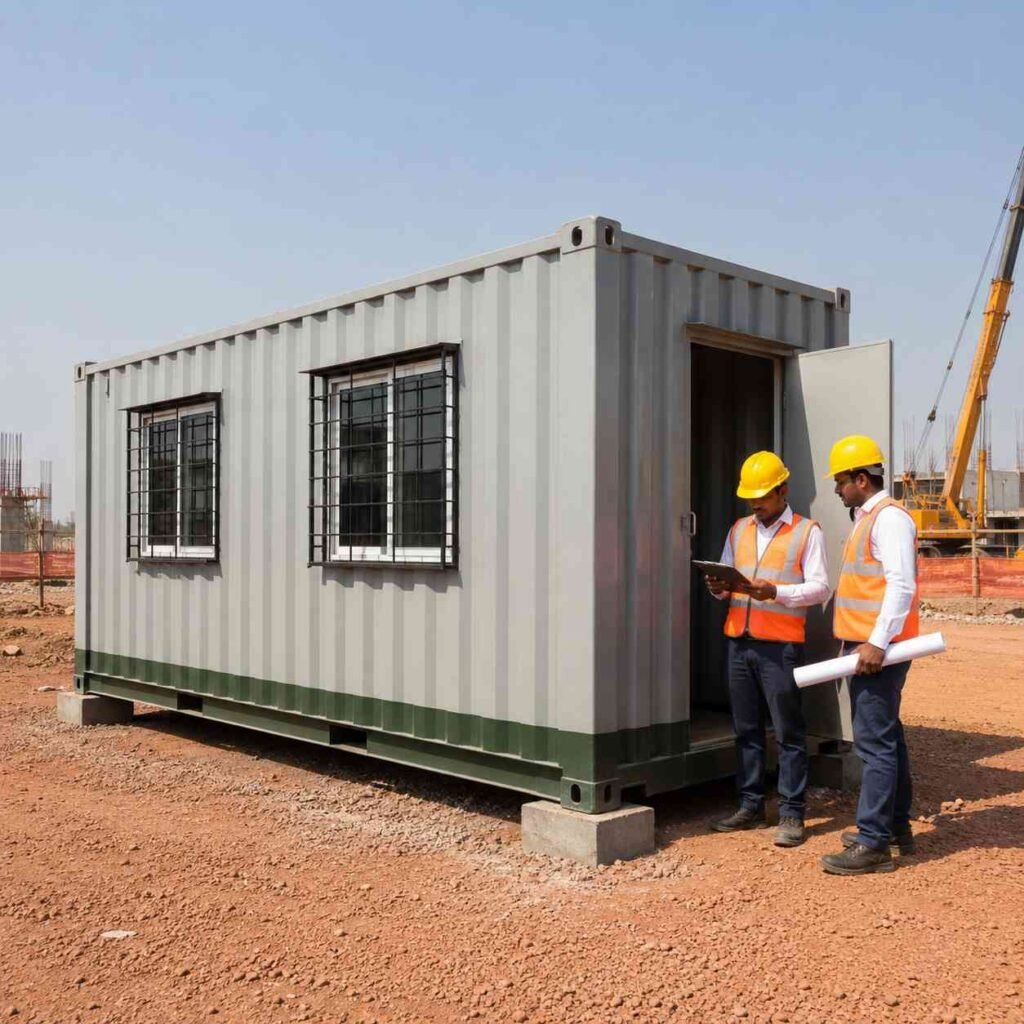
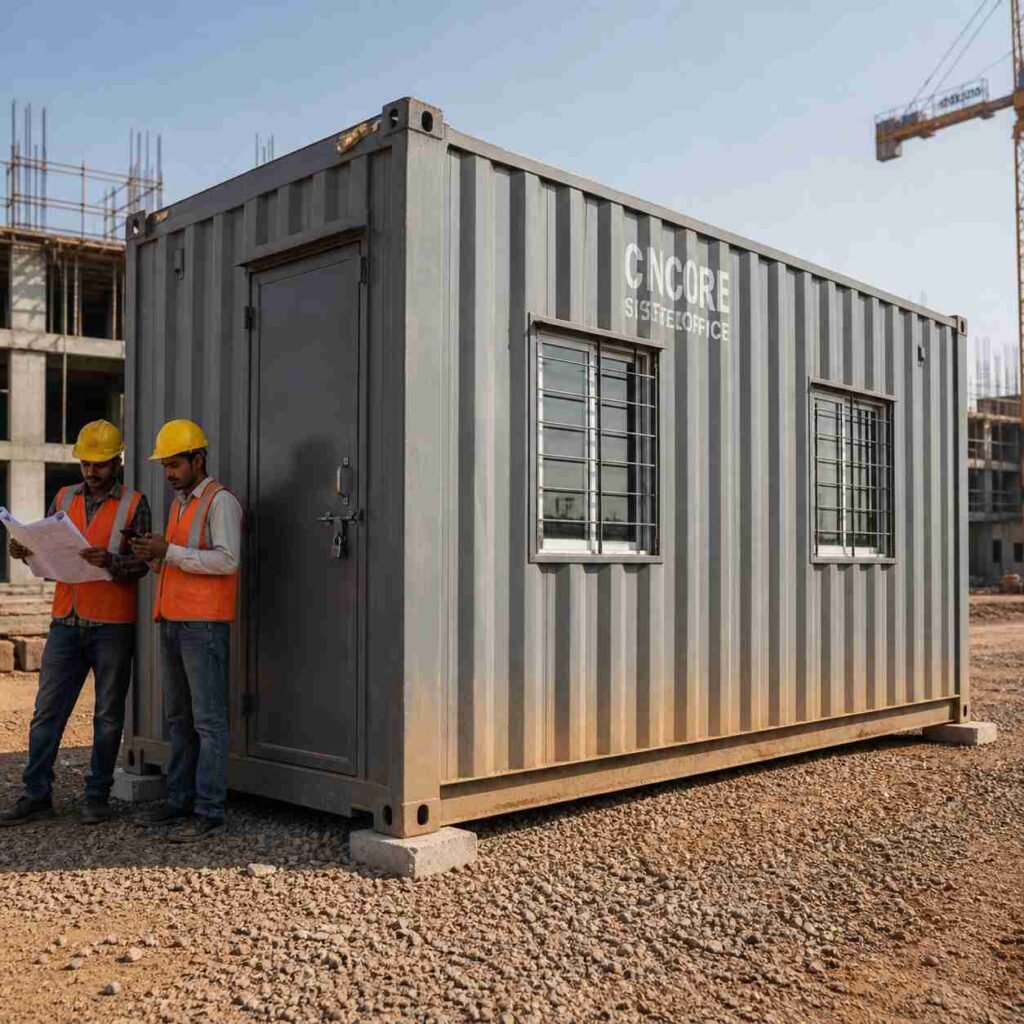
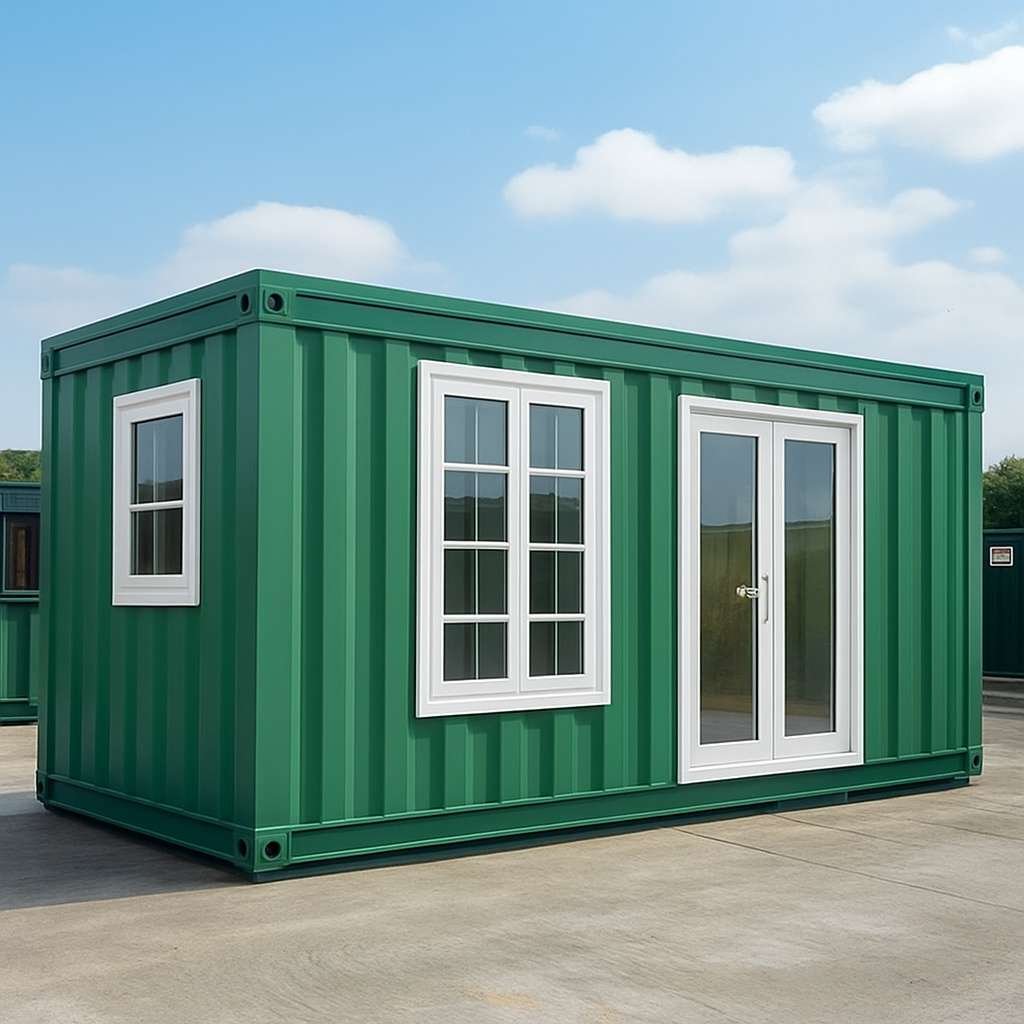

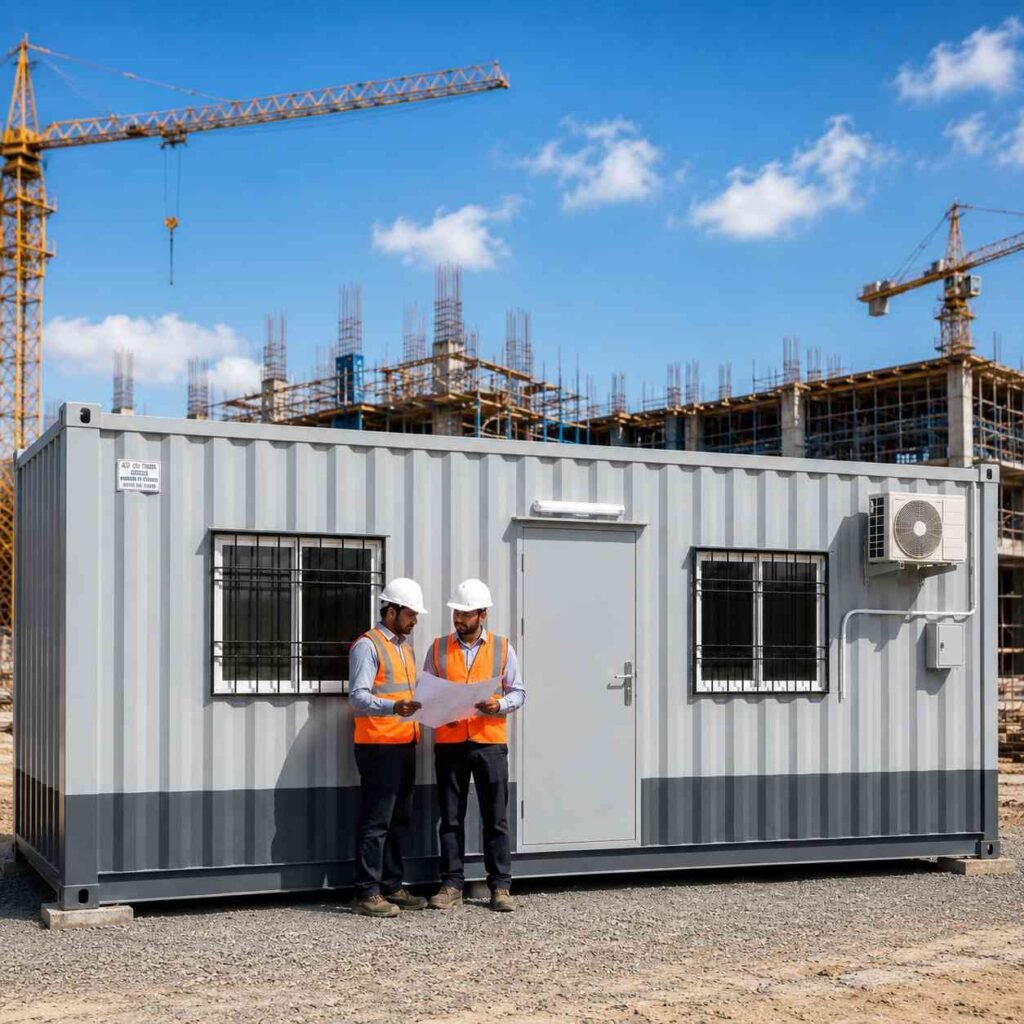
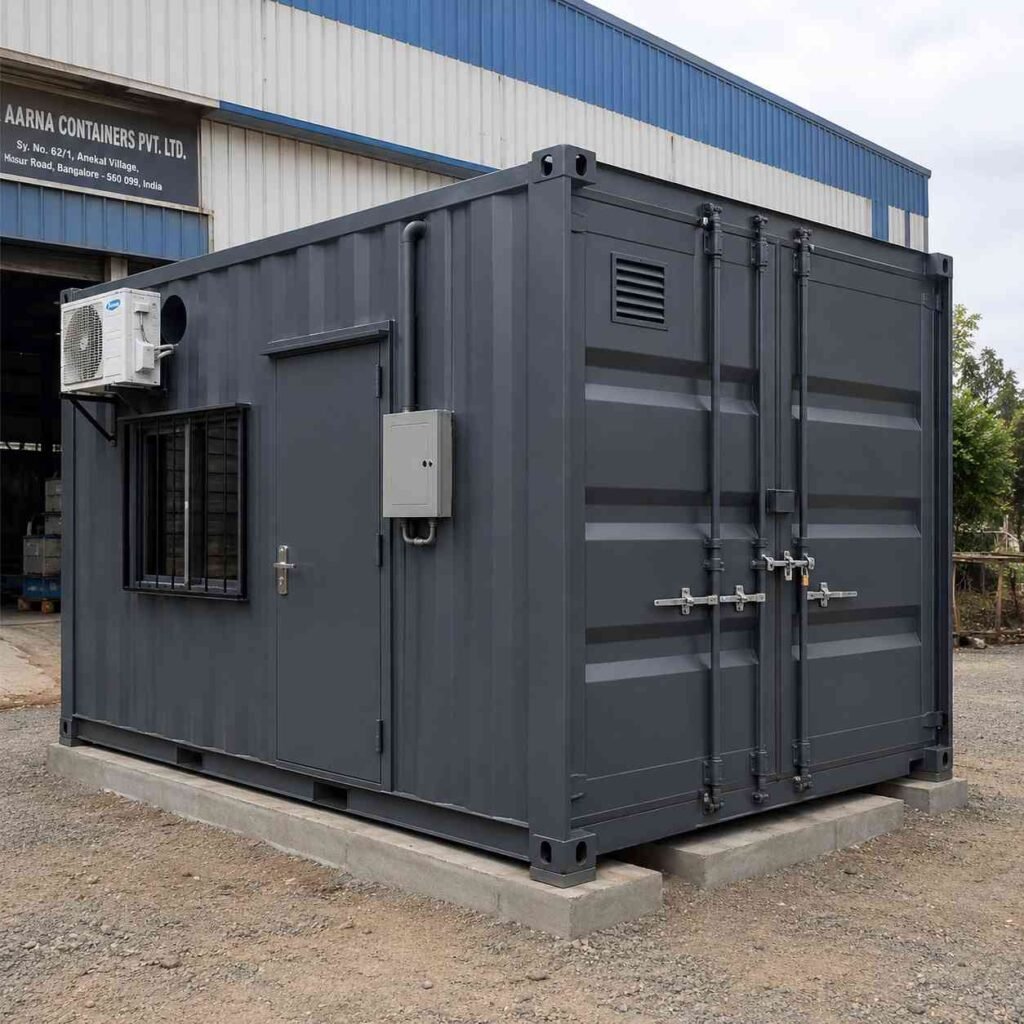


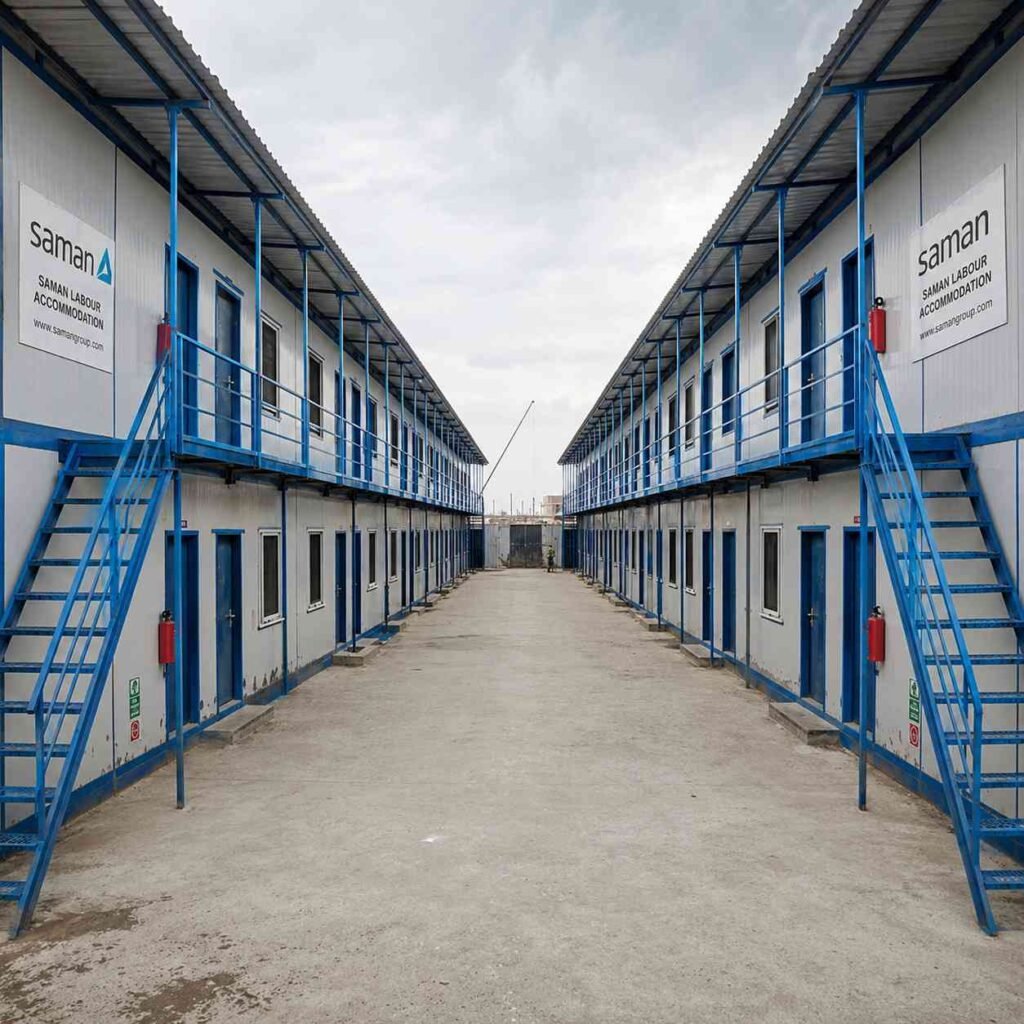
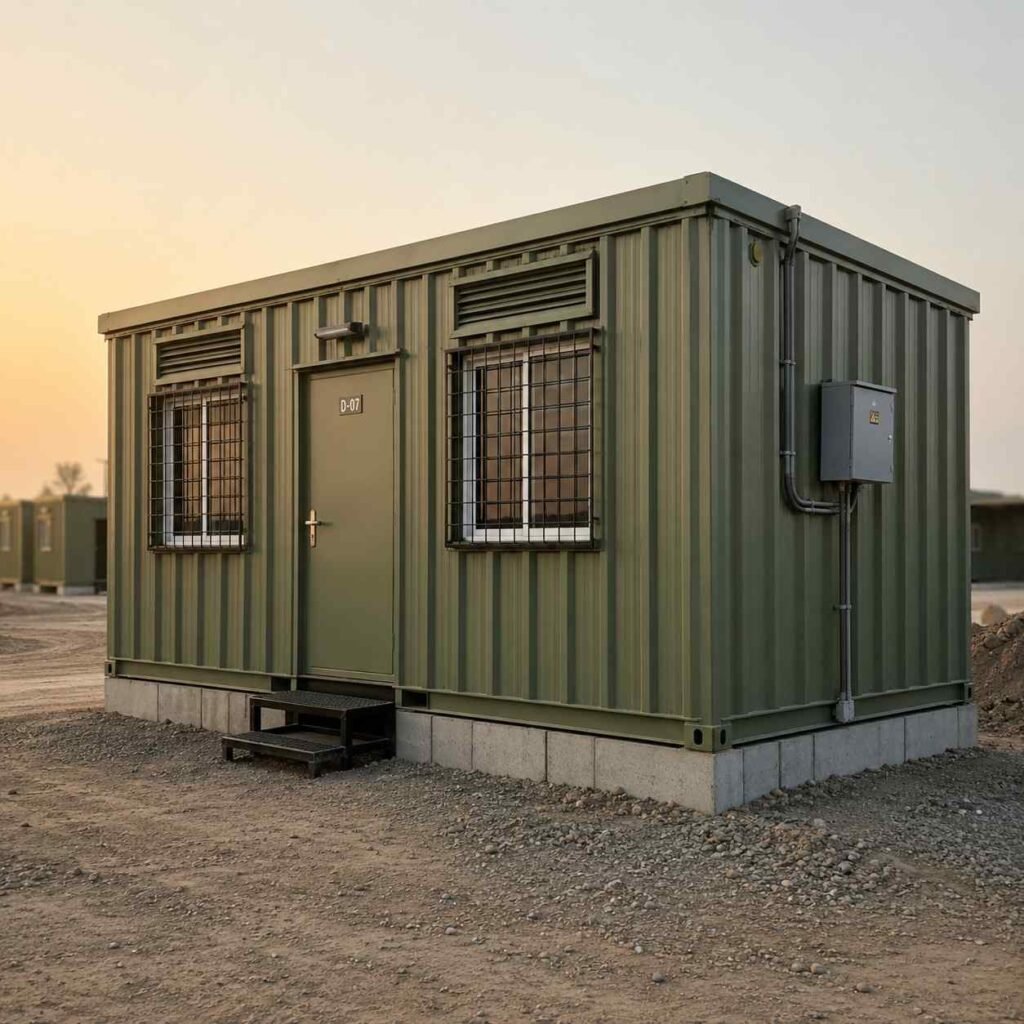

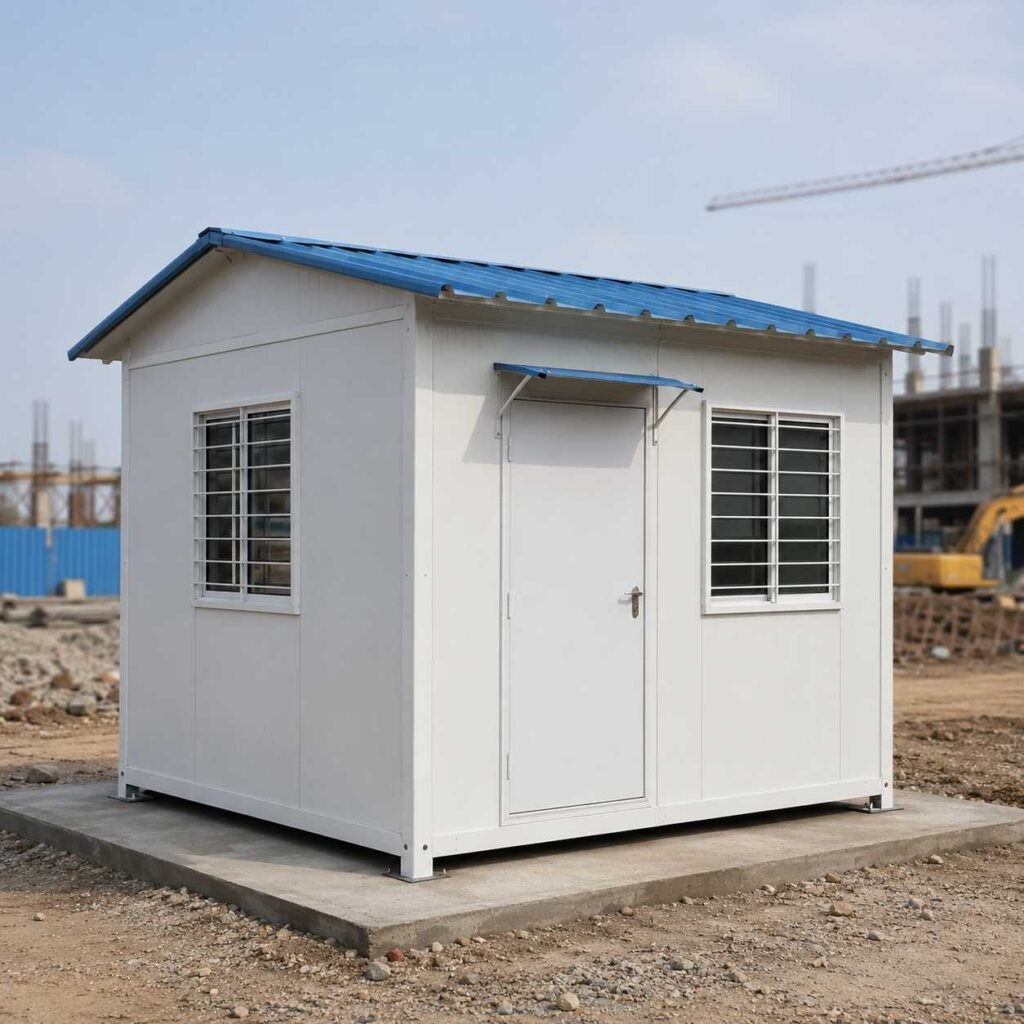
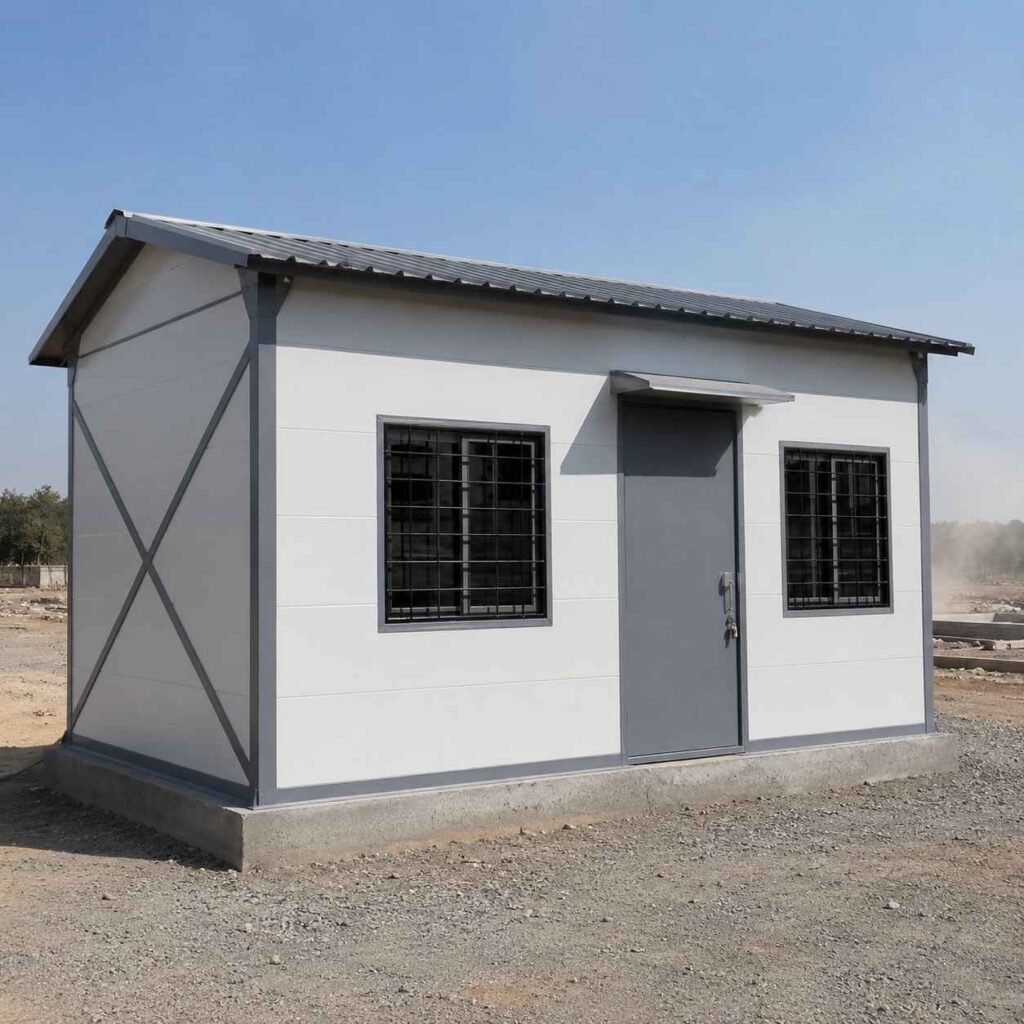
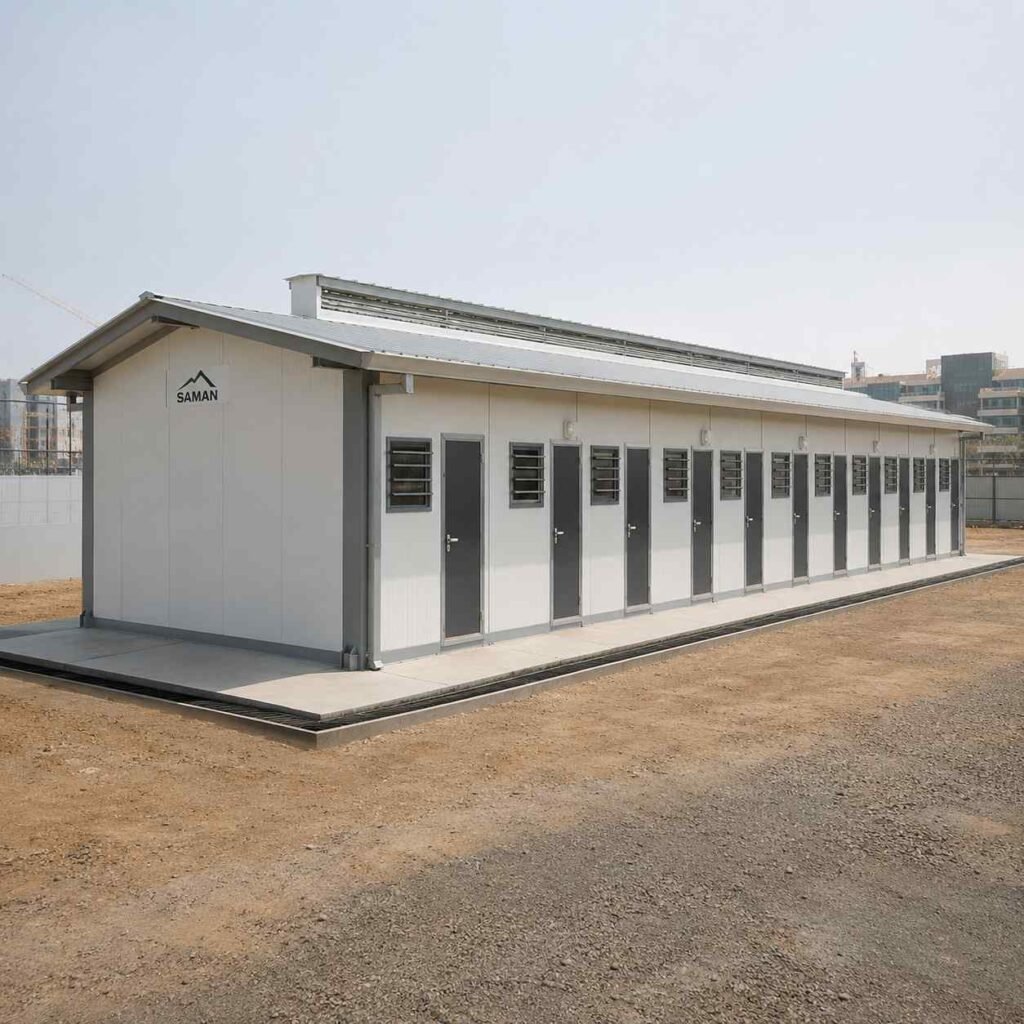
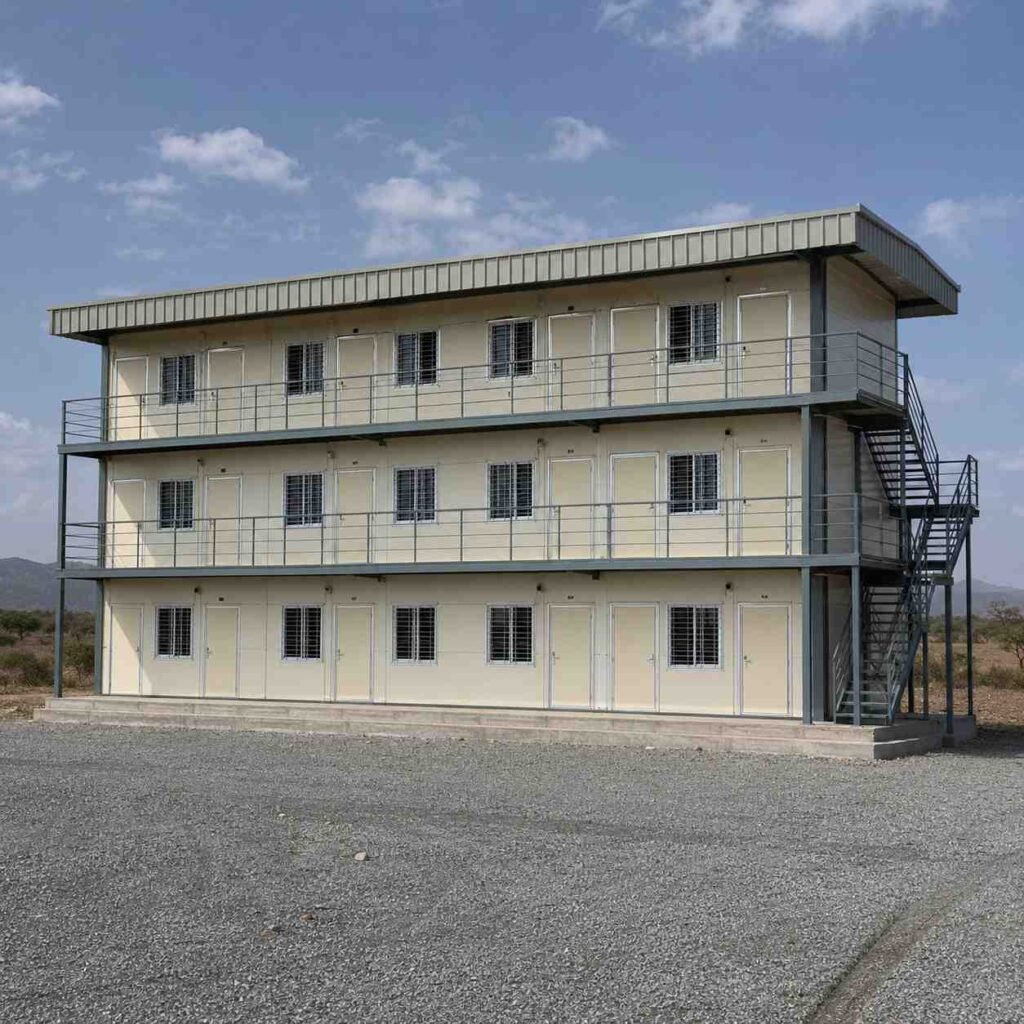







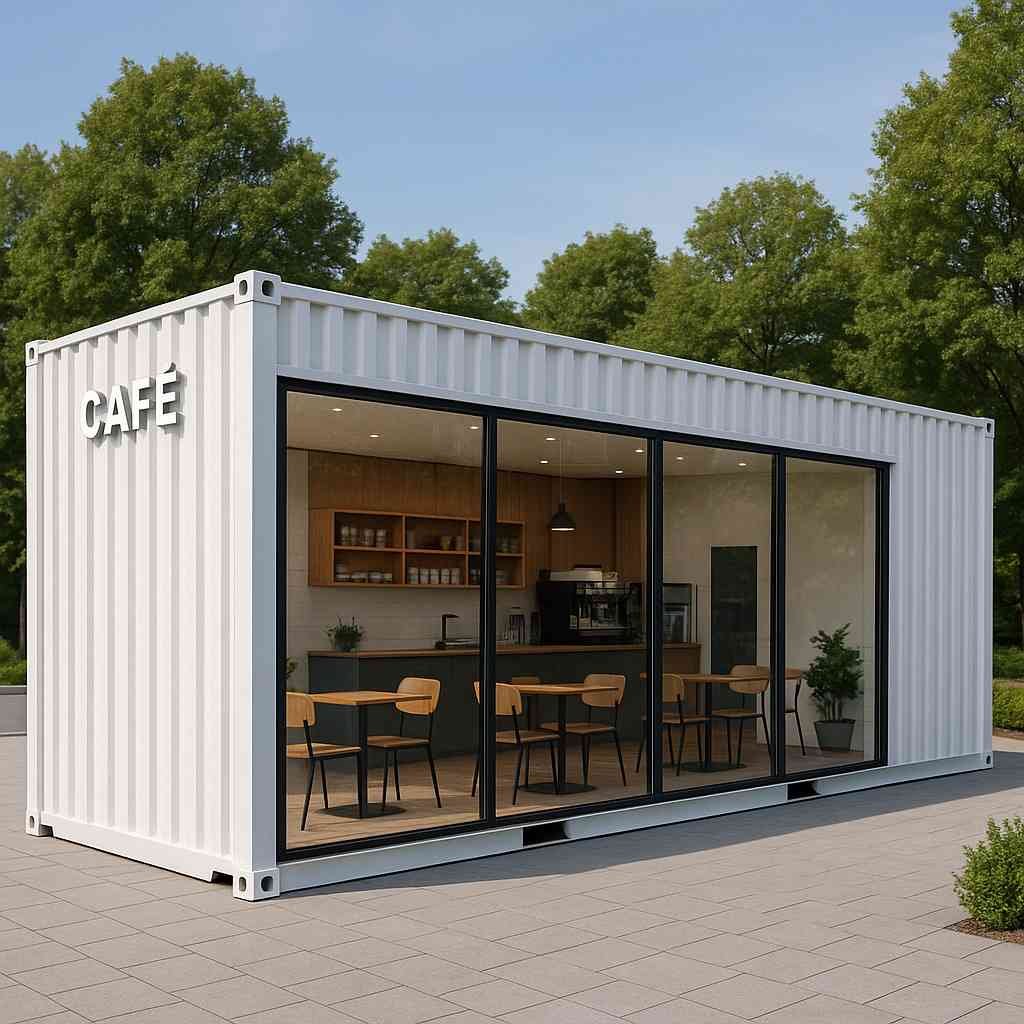





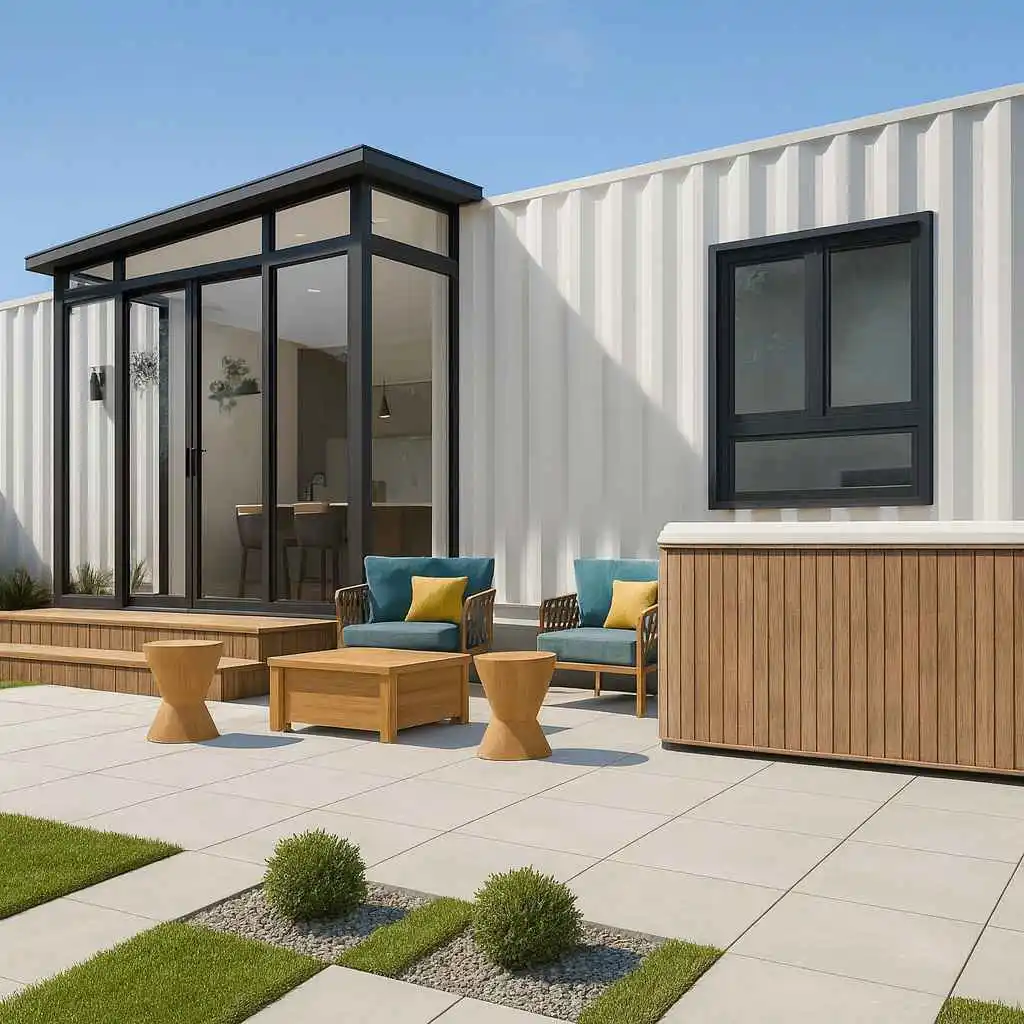





A storage container house from SAMAN turns a standard storage-grade container shell into a finished residence in roughly 30 working days at our factory. The configured unit measures 30 ft × 20 ft × 9 ft (~600 sq ft built-up) and is delivered fitted with insulation, electricals, plumbing, interior finish, and exterior paint — ready to occupy once your site utilities are tied in. Pricing is locked at ₹13,25,000 for the base configuration and ₹13,85,000 at the upper customisation band — a narrow ~4.5% spread because this is one configured product, not a finish-ladder. This page explains what the conversion involves, what’s included in the price, and where the storage-grade build sits among our other container house options.
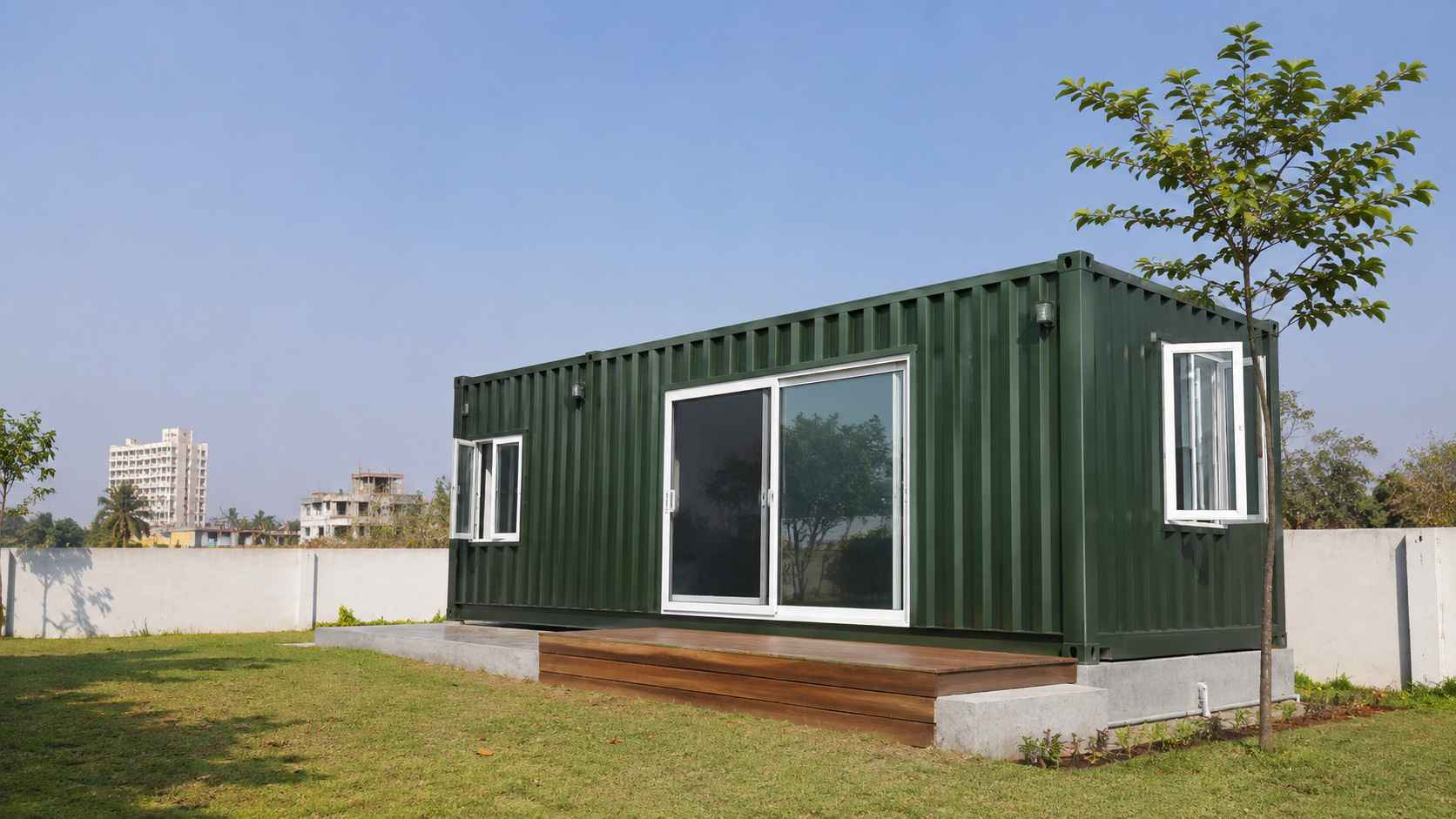
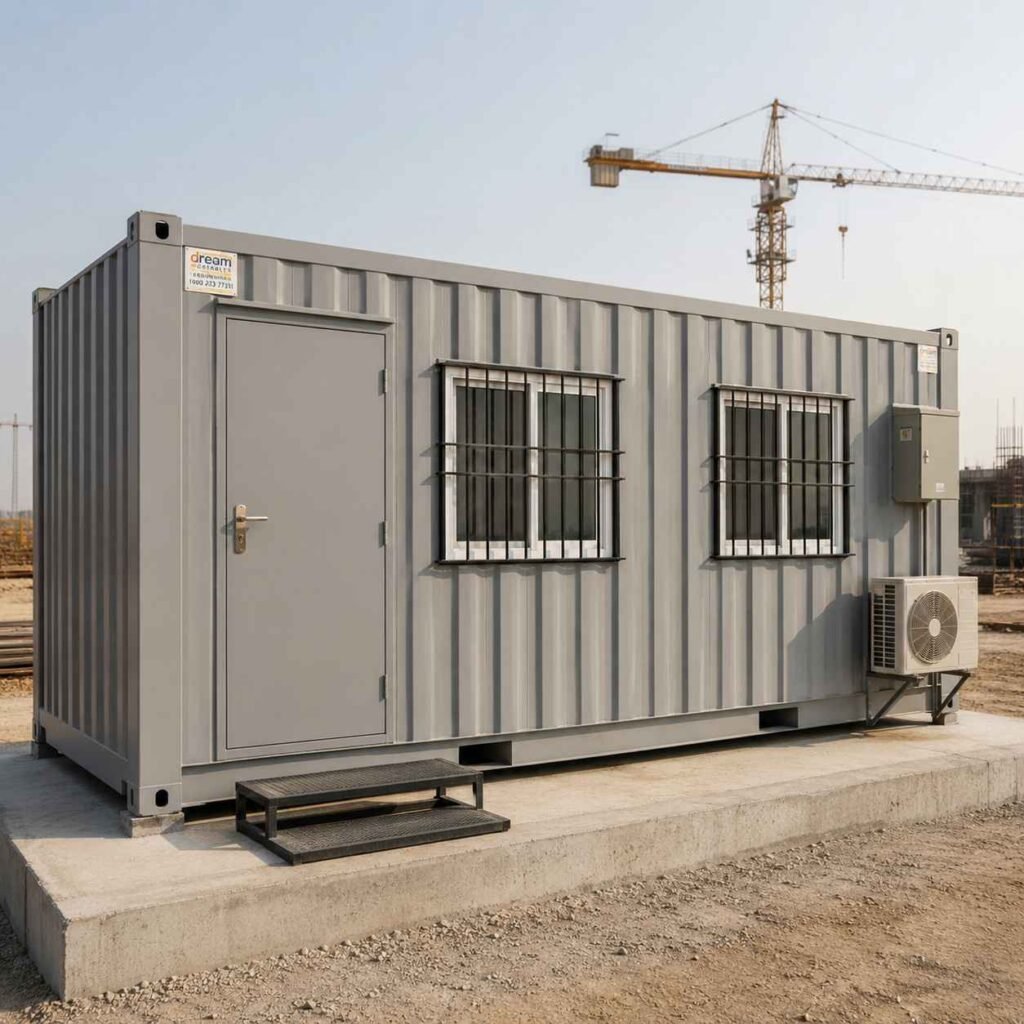
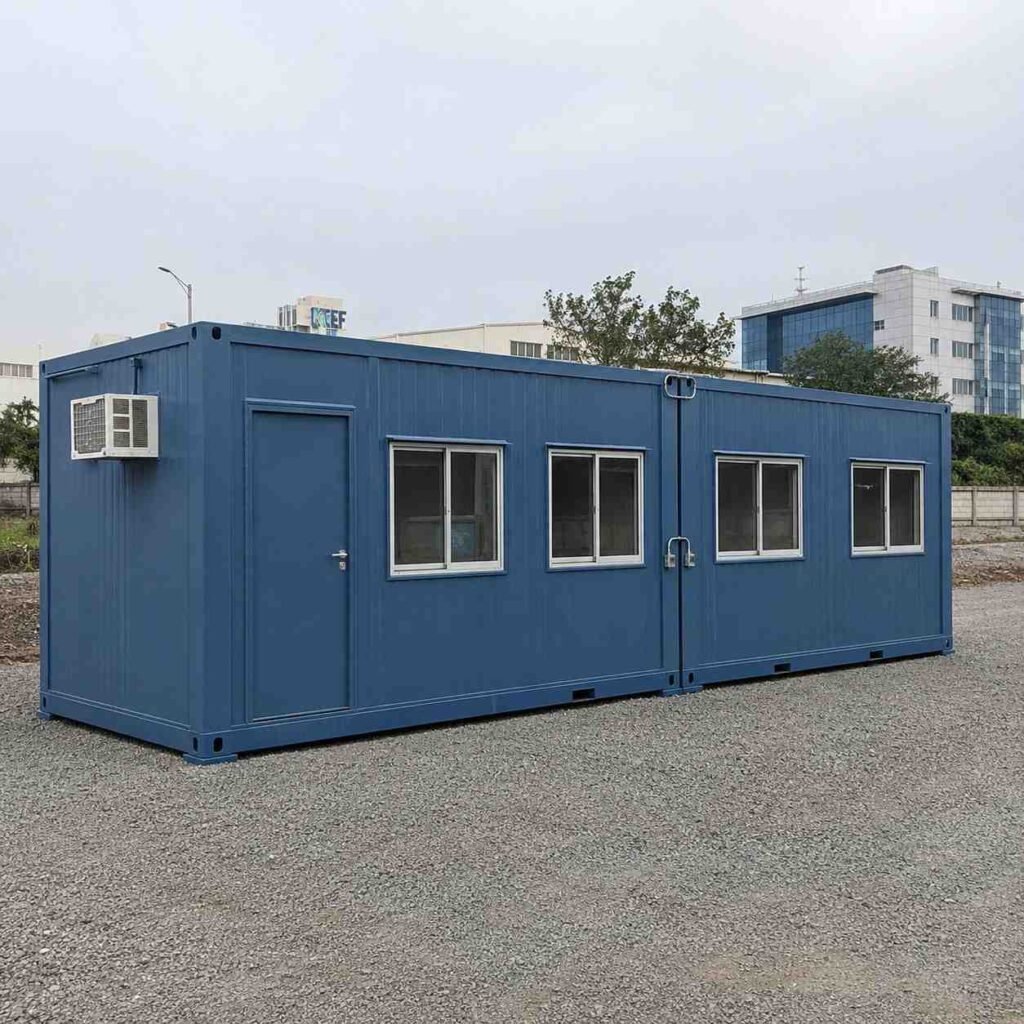
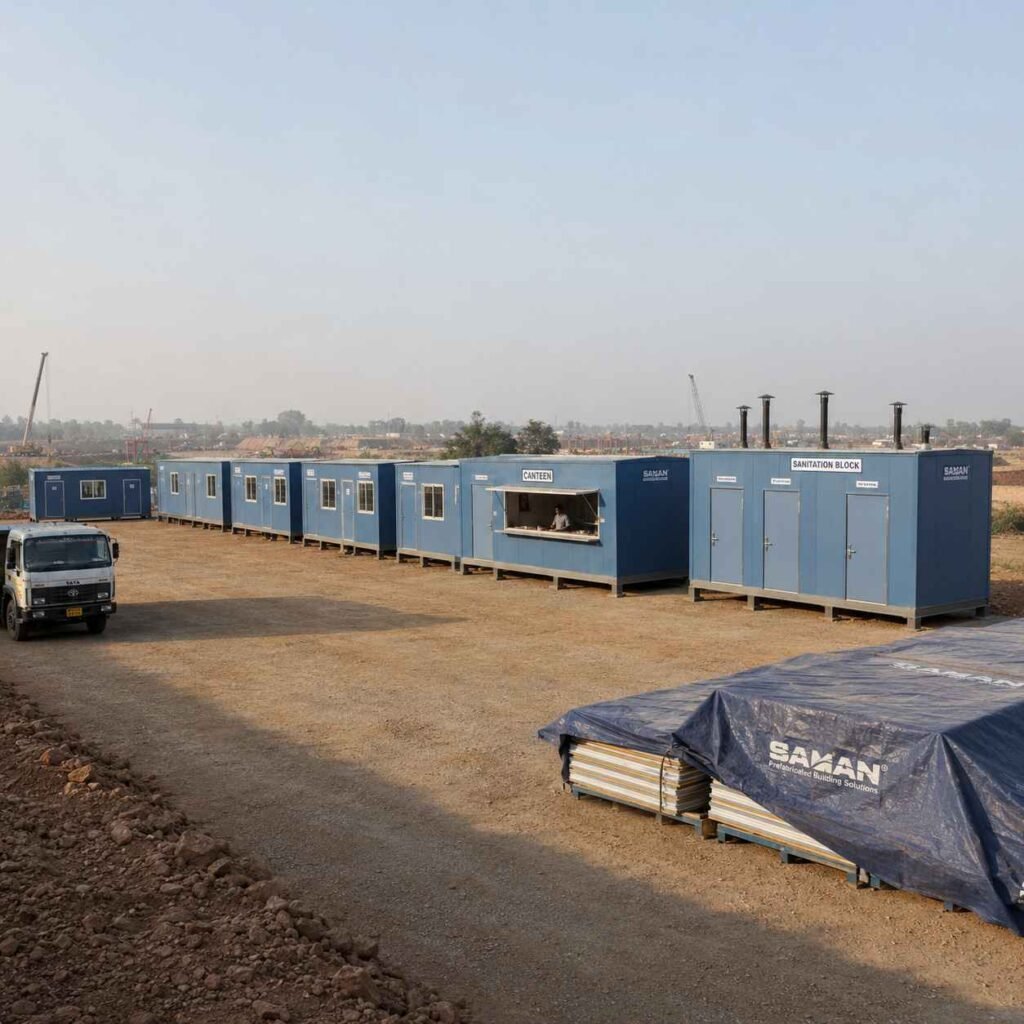
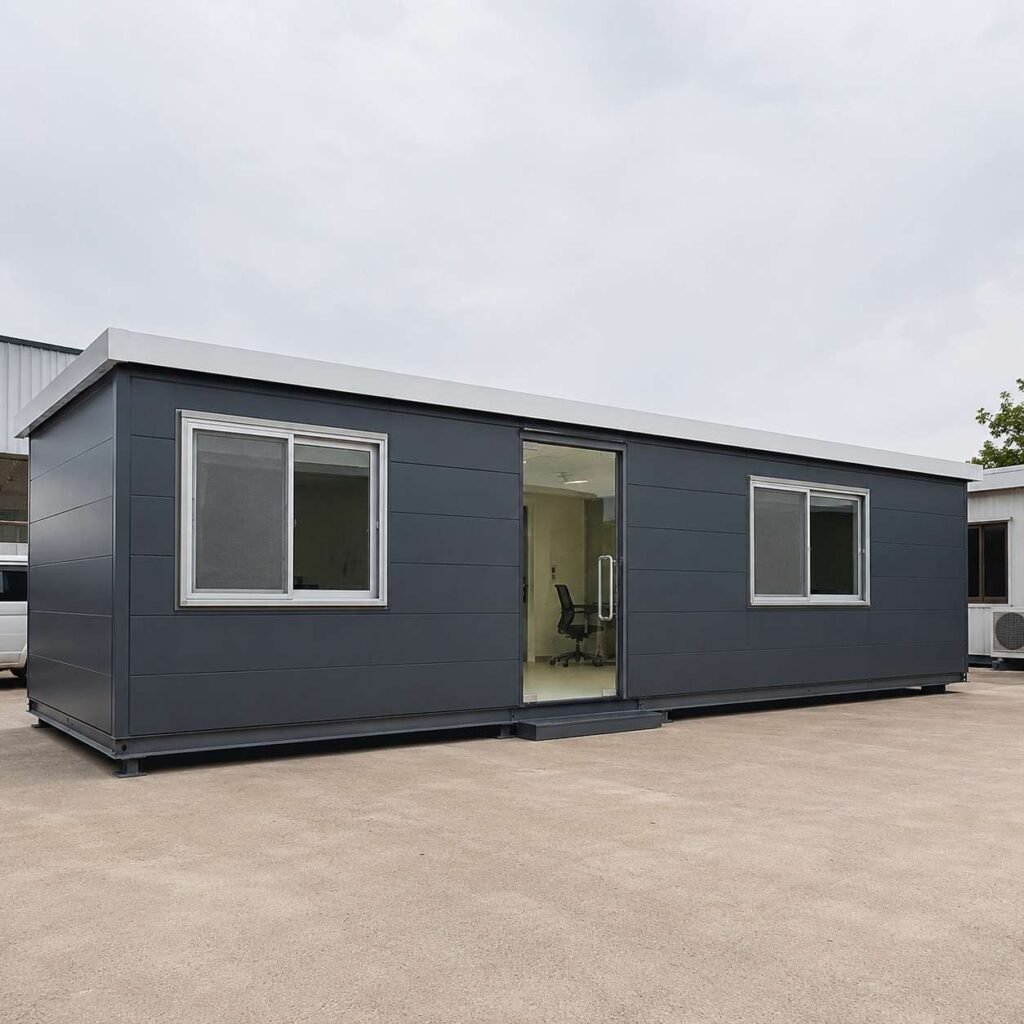
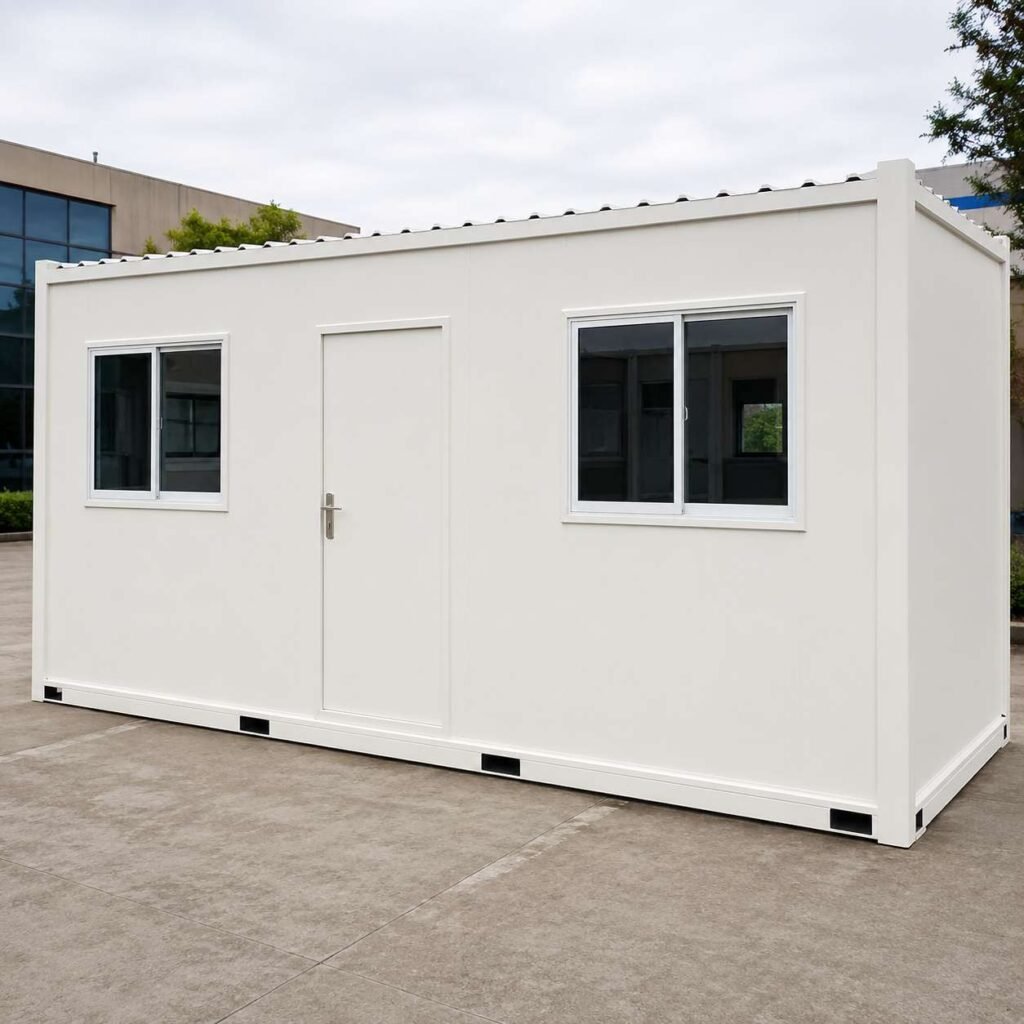
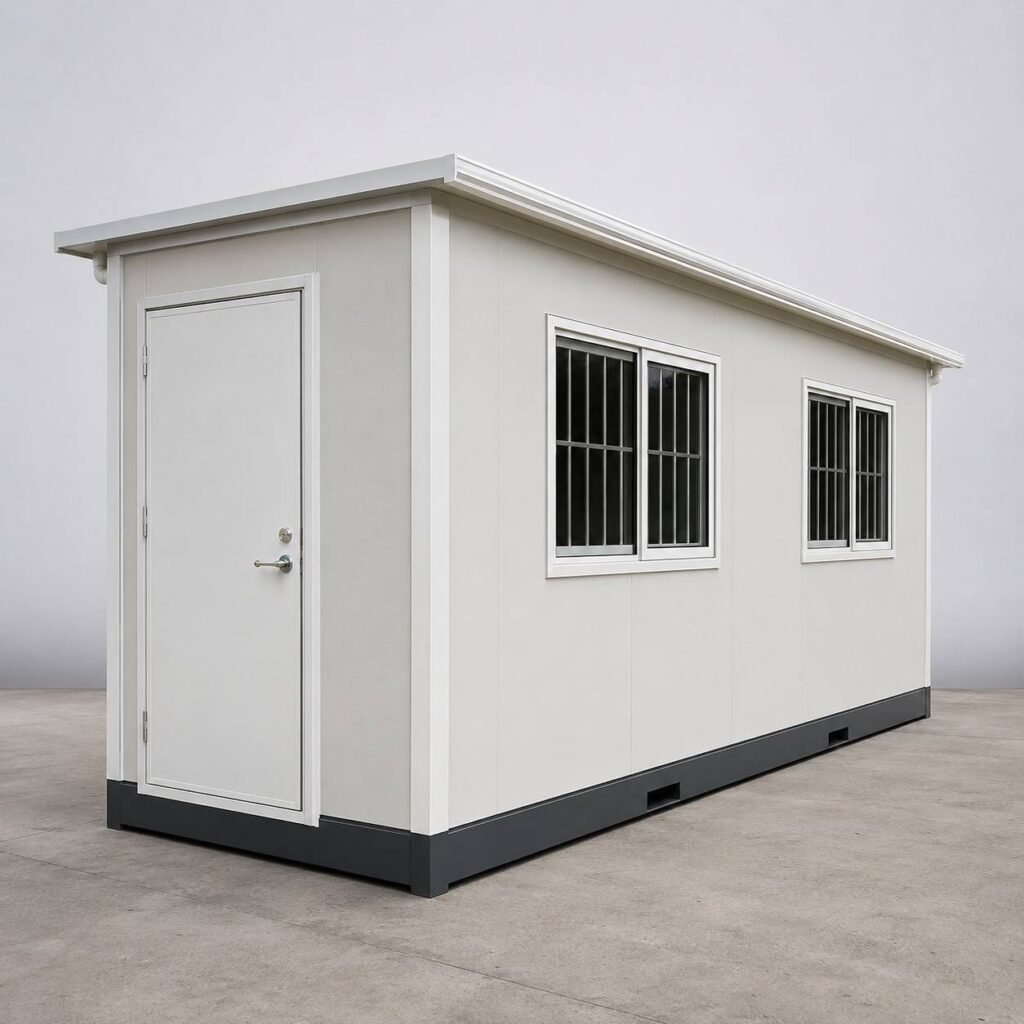
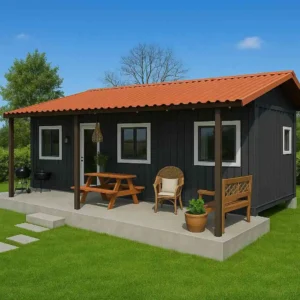
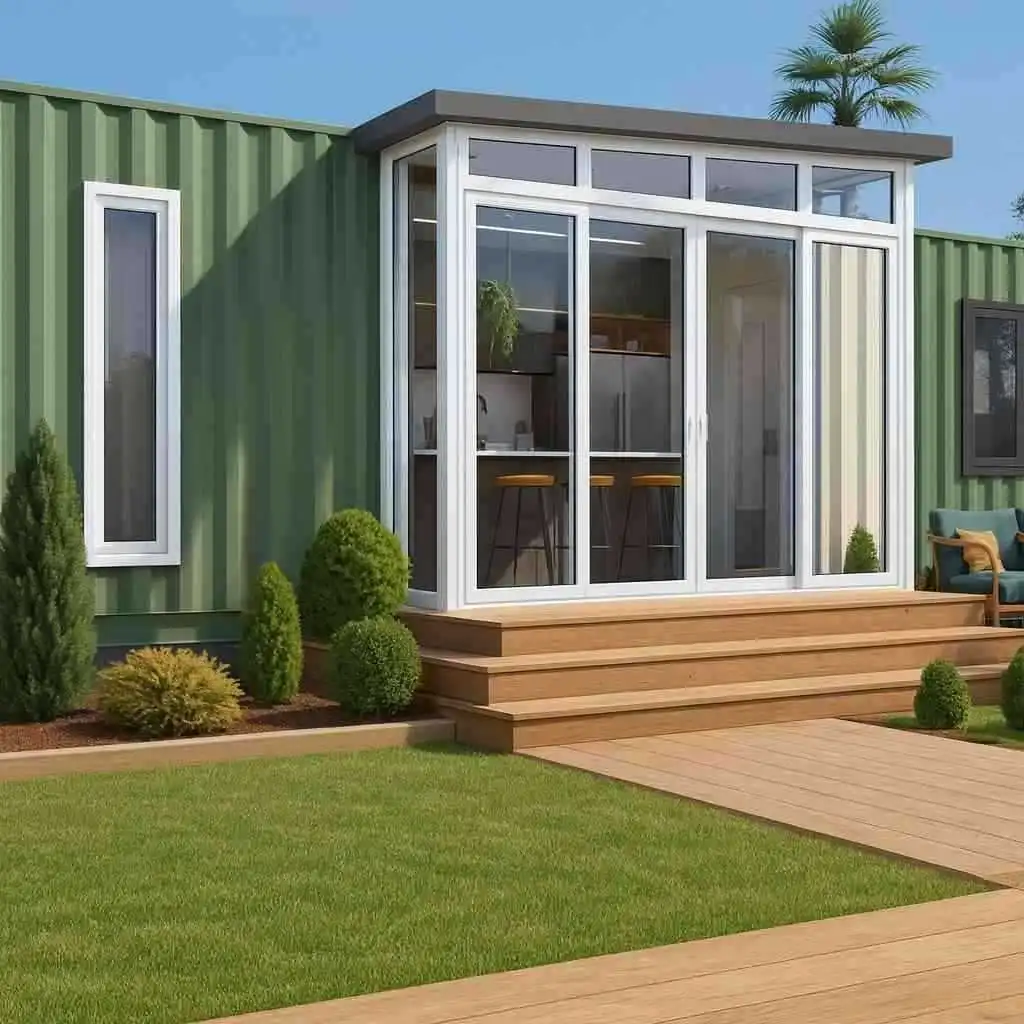
The 30×20×9 ft storage container house from SAMAN on a prepared residential plot — delivered ready to occupy.
What is a storage container house?
A storage container house is a residential home built by converting a standard storage-grade steel container — typically a 20 ft or 30 ft land-use shell — into a fitted dwelling with insulation, openings, electricals, plumbing, and interior finish. It differs from a cargo container house by using a simpler storage-format input.
Three terms get used almost interchangeably in the Indian container-home market — storage container, cargo container, shipping container — and the distinction matters before you commit to a build. A storage container is a steel container used for static, land-based storage: godowns, site material stores, warehouse overflow. It is built to ISO dimensions but is not certified for international sea-freight; some are decommissioned shipping containers retired from cargo service, others are manufactured fresh for the land-use market without the dynamic-load certifications. A cargo container is the certified counterpart — built to ISO 1496-1 freight standards, CSC-plated for global shipping. A shipping container is the umbrella term that covers both, which is why buyers searching either phrase often arrive at the same product family.
Why this matters: the storage-grade input is a fit for residential conversion in the vast majority of single-family use cases — the structural envelope handles a properly engineered residential load without the sea-freight certifications. Buyers who specifically need certified-grade documentation for stacked-unit projects, coastal placement near saltwater, or future relocation usually move to a cargo-grade build instead. Everyone else — and that’s most home buyers — gets the same residential outcome at the storage-grade entry point.
A SAMAN storage container house is built around a 30 ft × 20 ft × 9 ft storage-grade shell. The shell becomes the structural envelope; the conversion turns it into a home.
The conversion at a glance — what changes from a raw storage shell to a SAMAN home
The conversion is the page’s whole point. A raw storage container, even a brand-new one, is not a home. The shell is sealed against weather, but it has no insulation, no openings beyond cargo doors, no electrical, no plumbing, no interior surfaces, and no climate engineering. Building a storage container house means taking that shell through a defined sequence of factory operations that add every layer a residence needs. Here is the actual sequence SAMAN runs at our Bangalore or Greater Noida facility.
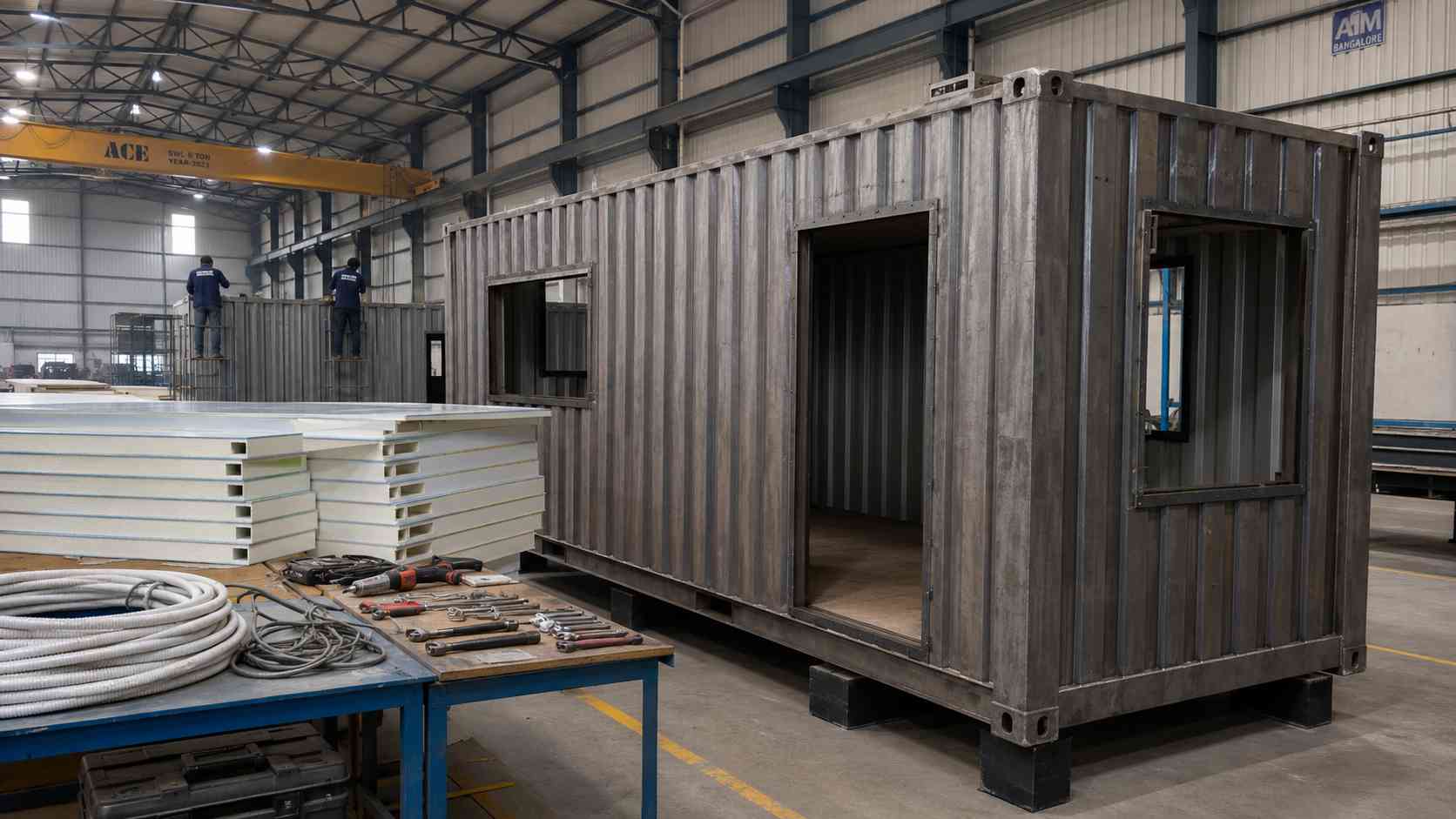
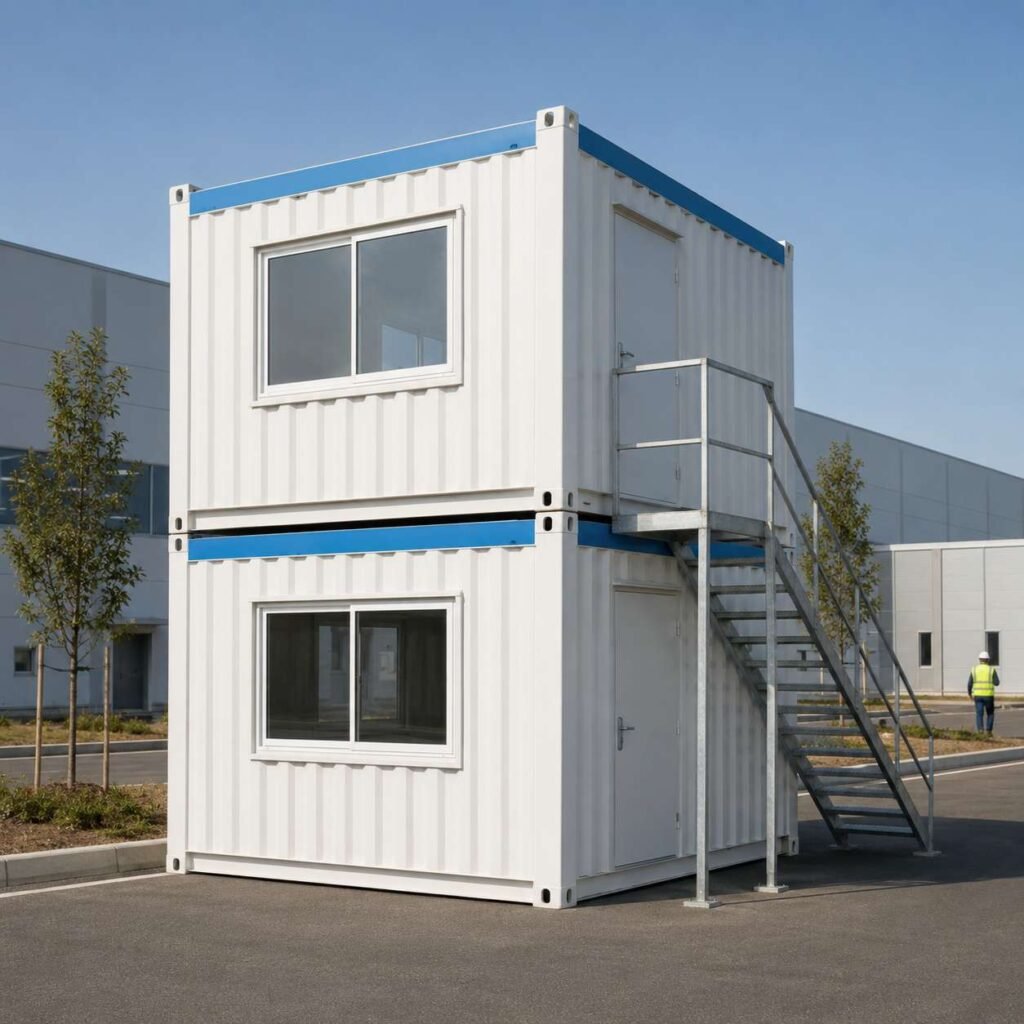
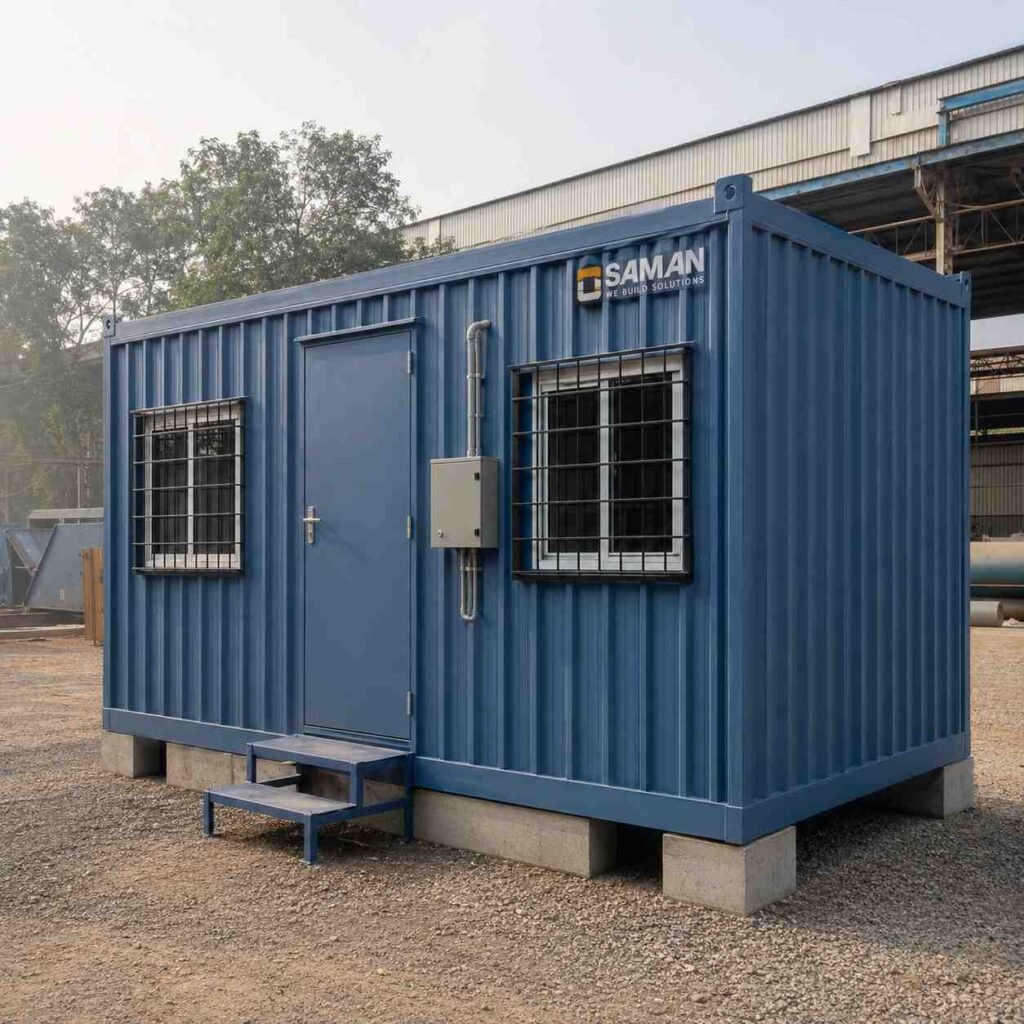
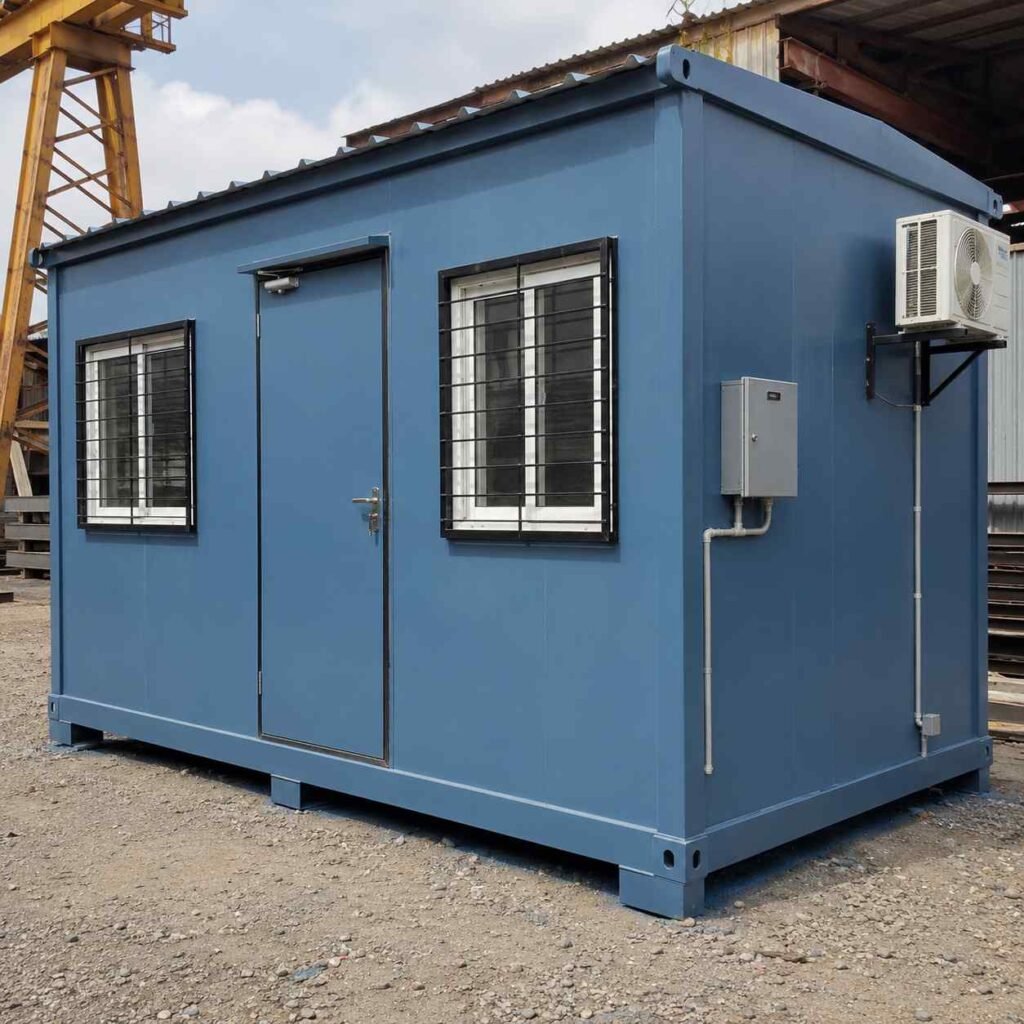
Mid-conversion at SAMAN’s factory — opening cuts framed in MS angle, PUF insulation panels staged for wall install.
Design alignment, week 1. Before any cutting starts, we lock the door position, window count and placement on each face, interior partition layout if any, electrical point map, and kitchen orientation against your site. This is the one phase where buyer decisions move freely — once fabrication begins, the layout is locked. Storage container house designs at this 30 ft × 20 ft footprint typically settle into a 1 BHK or compact 2 BHK configuration, with the layout decided around plot orientation, light direction, and view.
Shell intake and anti-rust treatment. The container arrives at the factory and goes through a structured inspection — corner casting integrity, floor channel condition, side-wall seam check. Storage containers accumulate moisture in transit and at storage yards, and untreated floor channels become the first rust point on the unit over a residential life. We strip, treat, and seal the original floor channels and structural seams before the plywood substrate goes down. Anti-corrosion priming on the interior face of the shell follows.
Opening cuts. Doors and windows do not exist on a storage container shell. Every opening is cut through the corrugated steel skin to your design-alignment specification — front door, side and rear windows, kitchen and bathroom vents. Cut edges are framed in MS angle and welded to maintain structural continuity. This step is where the storage container house build start to finish diverges most from a brick build — openings are factory-cut on a controlled surface, not site-cut in monsoon dust.
Insulation install. Storage container house insulation is the single decision that determines whether the finished home is liveable in Indian summers. SAMAN’s standard build uses 50 mm PUF (polyurethane foam) sandwich panel on all four walls, the roof, and the floor — the same insulated panel specification that runs across every SAMAN container house build. The panel has a thermal conductivity around 0.022 W/m·K and is installed against the inner shell face, not site-applied. Roof insulation gets the same panel specification as the walls because the roof takes more solar load than any other surface.
Electrical rough-in. Pre-wired lighting points, fan points, switches, and AC provision are routed through purpose-built conduits behind the wall panel before the panel goes up. The base specification at this footprint covers 8 to 12 lighting points, three fan points, four switch boards, two 1.5-ton AC provisions (split-unit ready), and a 5 kW total load capacity. Buyers requesting additional points for a home office corner or entertainment setup add them at design alignment.
Plumbing rough-in. Storage container house plumbing means a water inlet stub at the wet-area corner (typically 25 mm), a waste outlet stub for the WC and washbasin (typically 110 mm), and an exhaust point at the wet-area roof. The wet-area wall and floor are waterproofed before tile finish. Geyser provision is included as a wall-mounted point in the wet-area corner. Kitchen plumbing — sink inlet and outlet, chimney exhaust provision — is roughed in at the same stage.
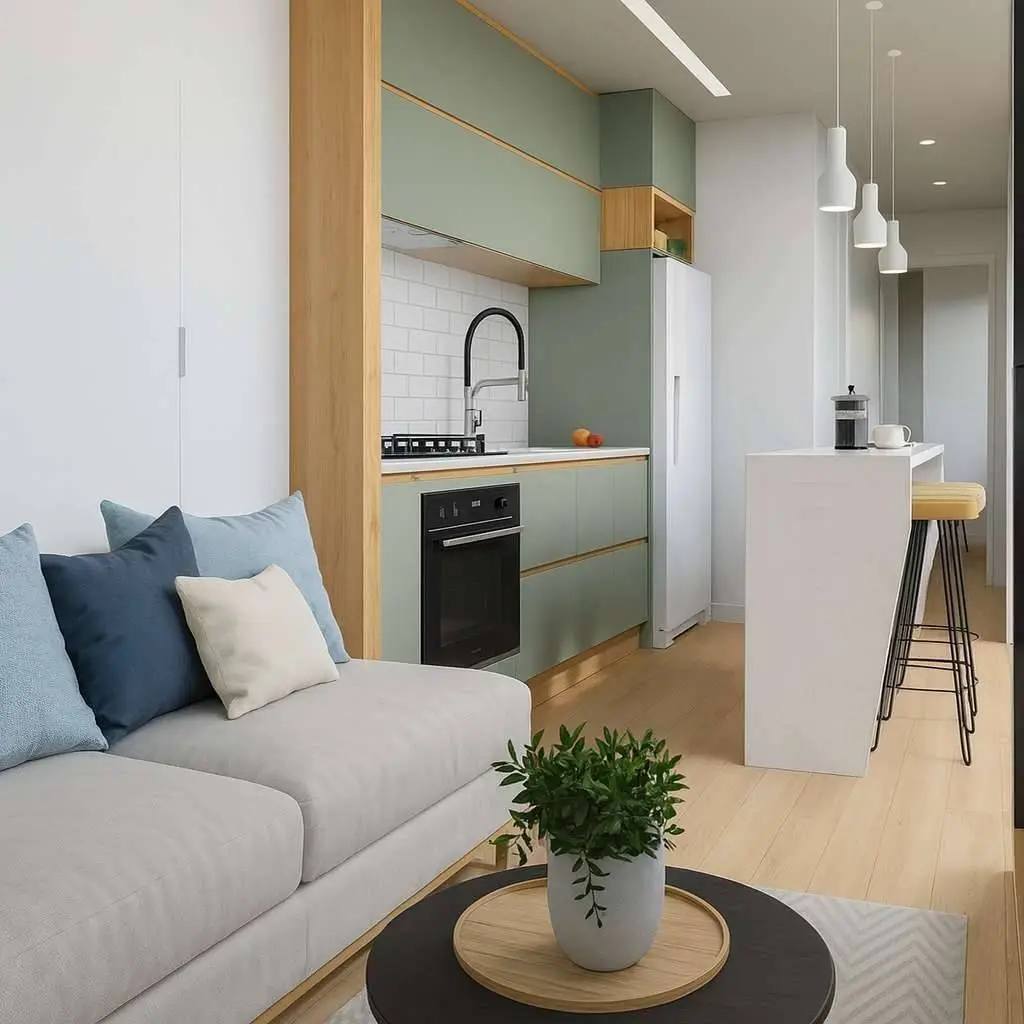
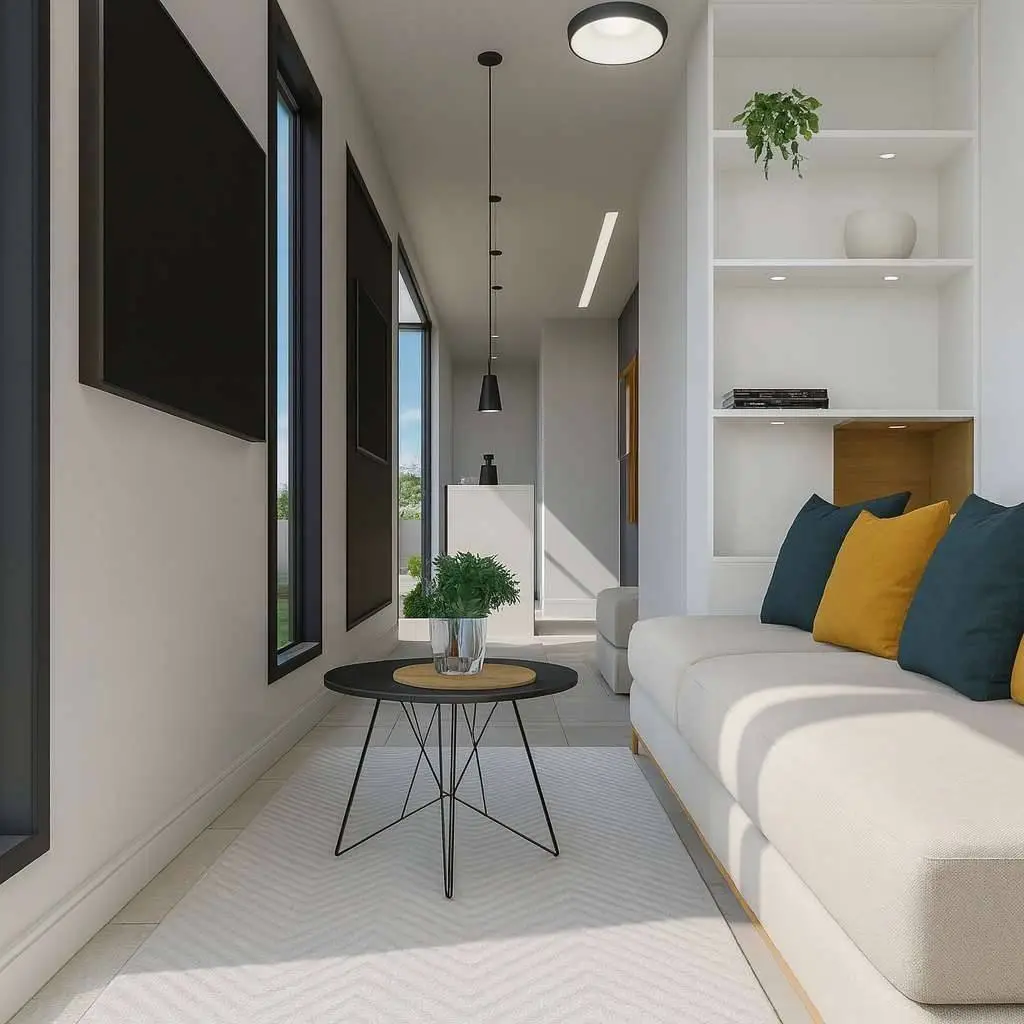
Interior fit-out. Inside storage container house body work happens once electrical and plumbing rough-ins are complete. Plywood substrate goes down on the treated floor channels; vinyl plank flooring is installed over the plywood. Walls and ceiling get finished panel surfaces with factory paint. The wet area receives tile finish on the wet wall and floor plus a tiled shower zone. The kitchen receives a steel platform with single sink and chimney provision.
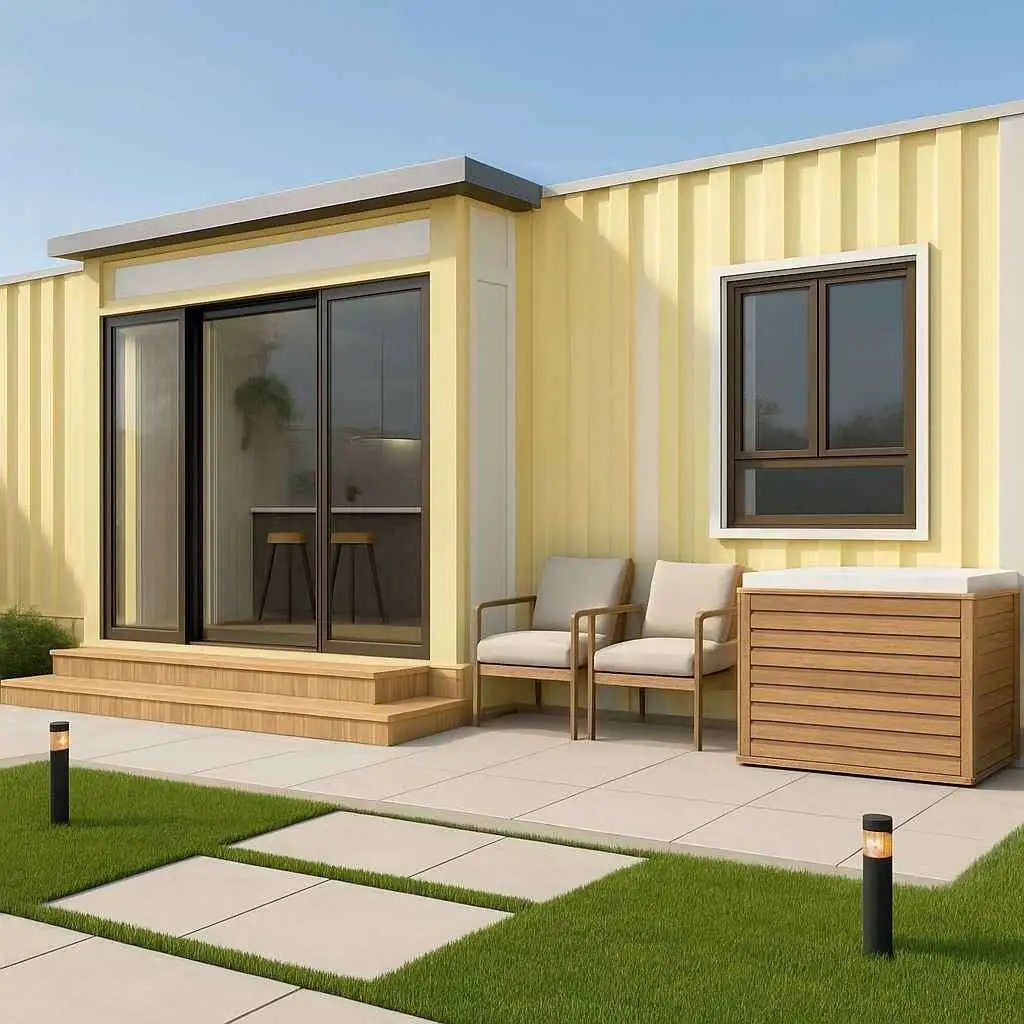
Exterior finish. The exterior skin is treated for the outdoor face — PPGI sheet or factory-painted finish, depending on the shell origin — with a powder-coated MS steel external door, two openable windows with mosquito mesh at minimum, and exterior paint in your design-alignment colour. Window glazing is 4 mm float glass standard; upgraded glazing is an upper-band option.
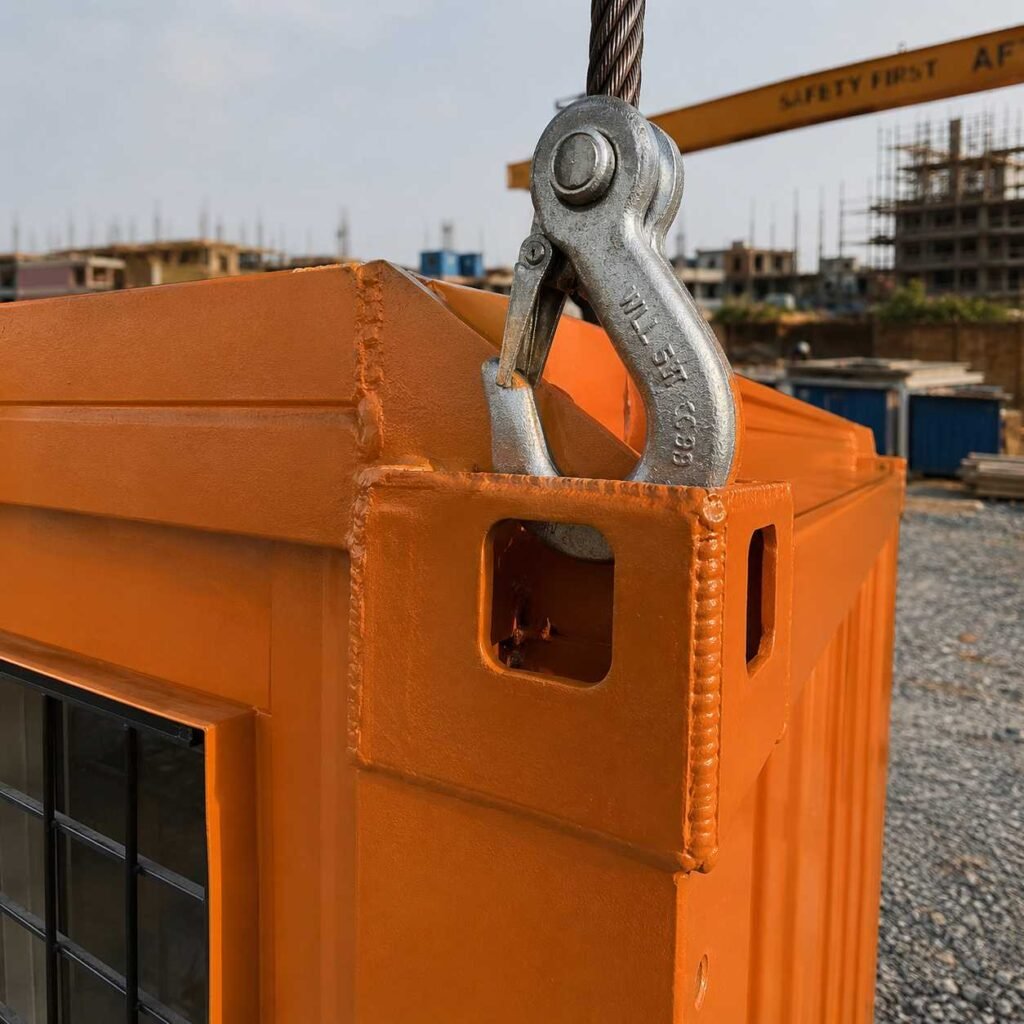
Pre-dispatch QC, transport, and site placement. Every conversion goes through a documented QC walk-through at the factory — electrical continuity, plumbing pressure, opening seals, interior finish quality. The unit then ships by road trailer to your site within the standard delivery zone. Crane placement onto your prepared plinth is included; utility tie-in to your site-prepared stubs happens at the placement walk-through.
The conversion at this footprint typically completes in 22 to 28 working days at the factory plus 2 to 5 days for transport and placement — call it 30 working days for a buyer in our Bangalore service zone with a prepared site.
What ₹13,25,000 to ₹13,85,000 includes — and what’s scoped separately
The pricing band on a storage container house is narrow on purpose. A ~4.5% spread between the base and upper price signals this is one configured product with a small set of buyer-decision variables — not a finish ladder where every tier upgrades framing or floor plate. Frame, panel specification, footprint, and core interior fit-out are fixed across the band. What moves between ₹13,25,000 and ₹13,85,000 is configuration detail buyers choose at design alignment.
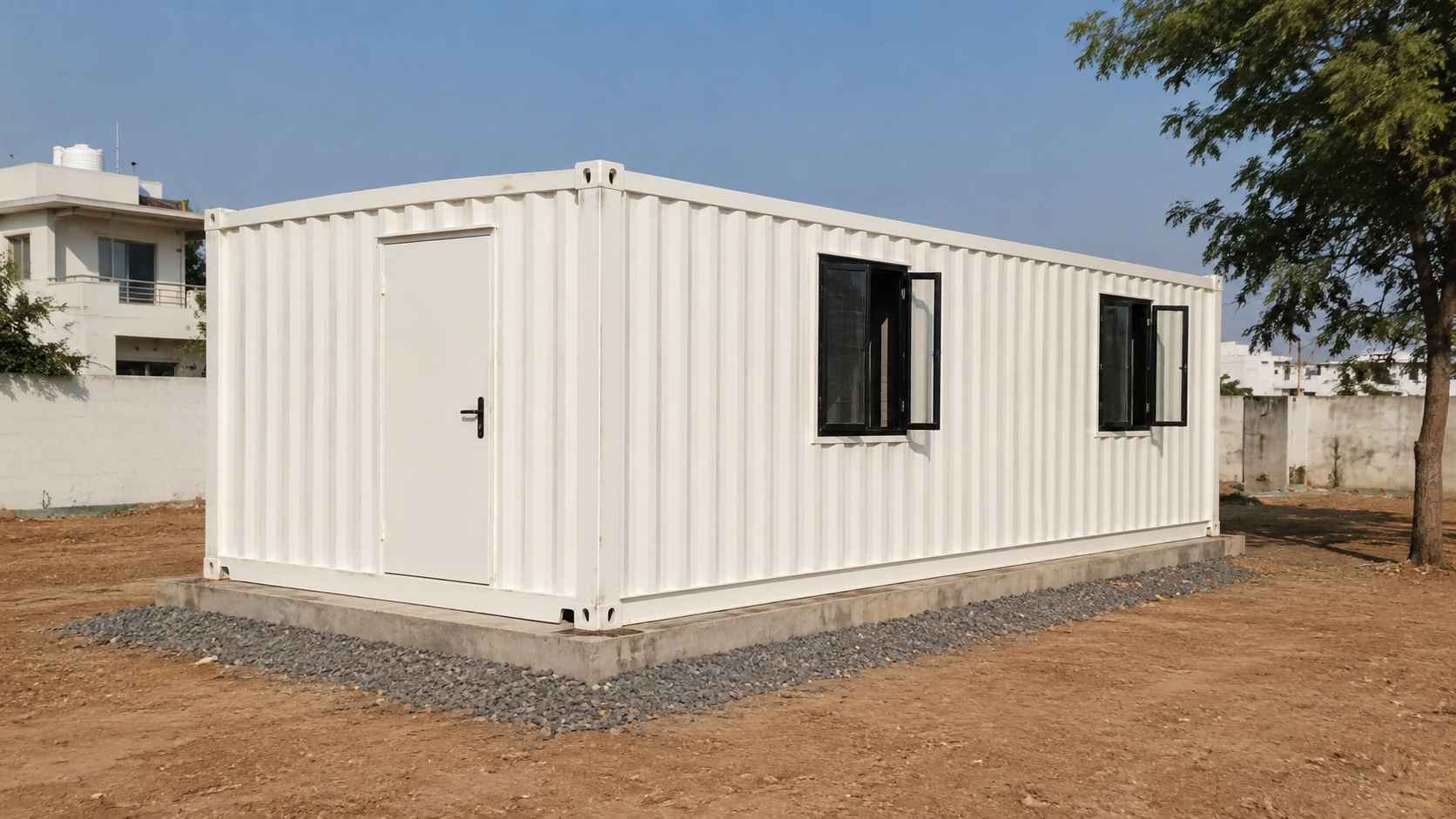
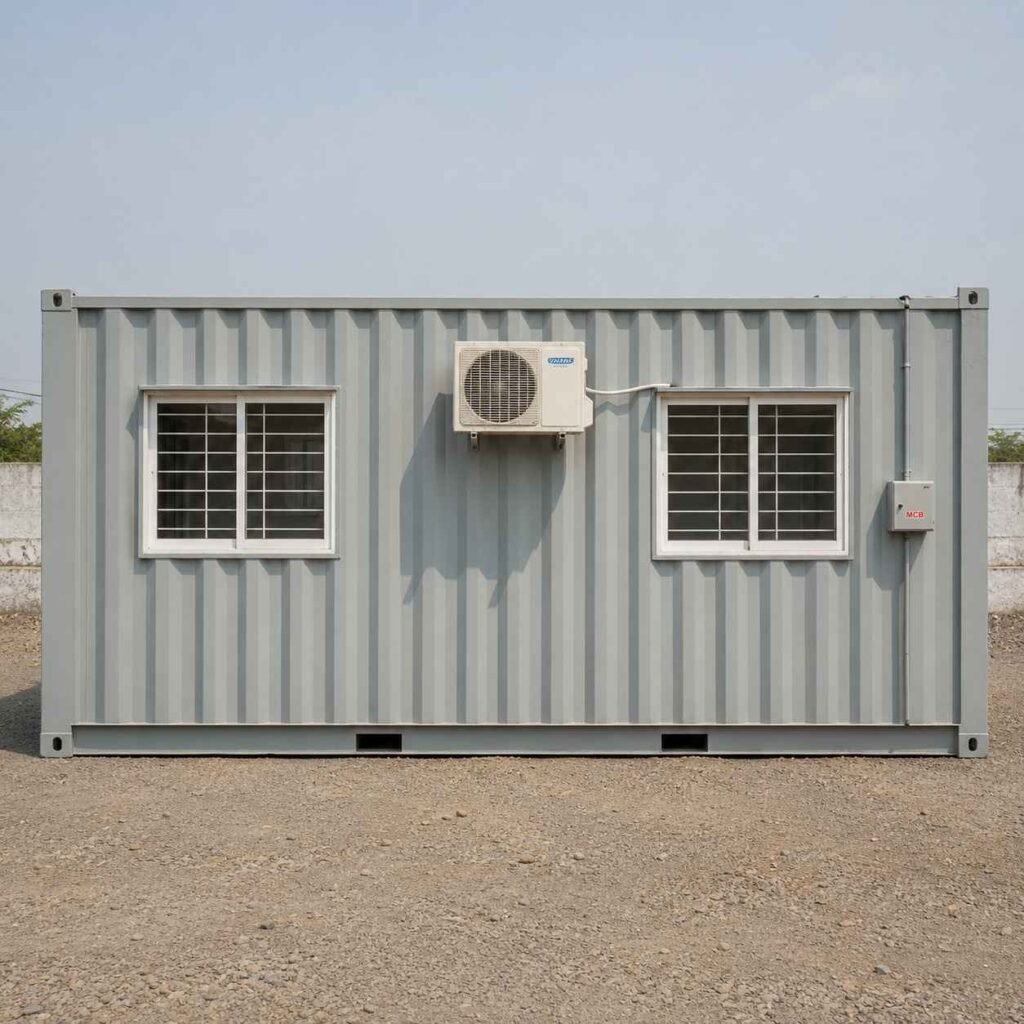
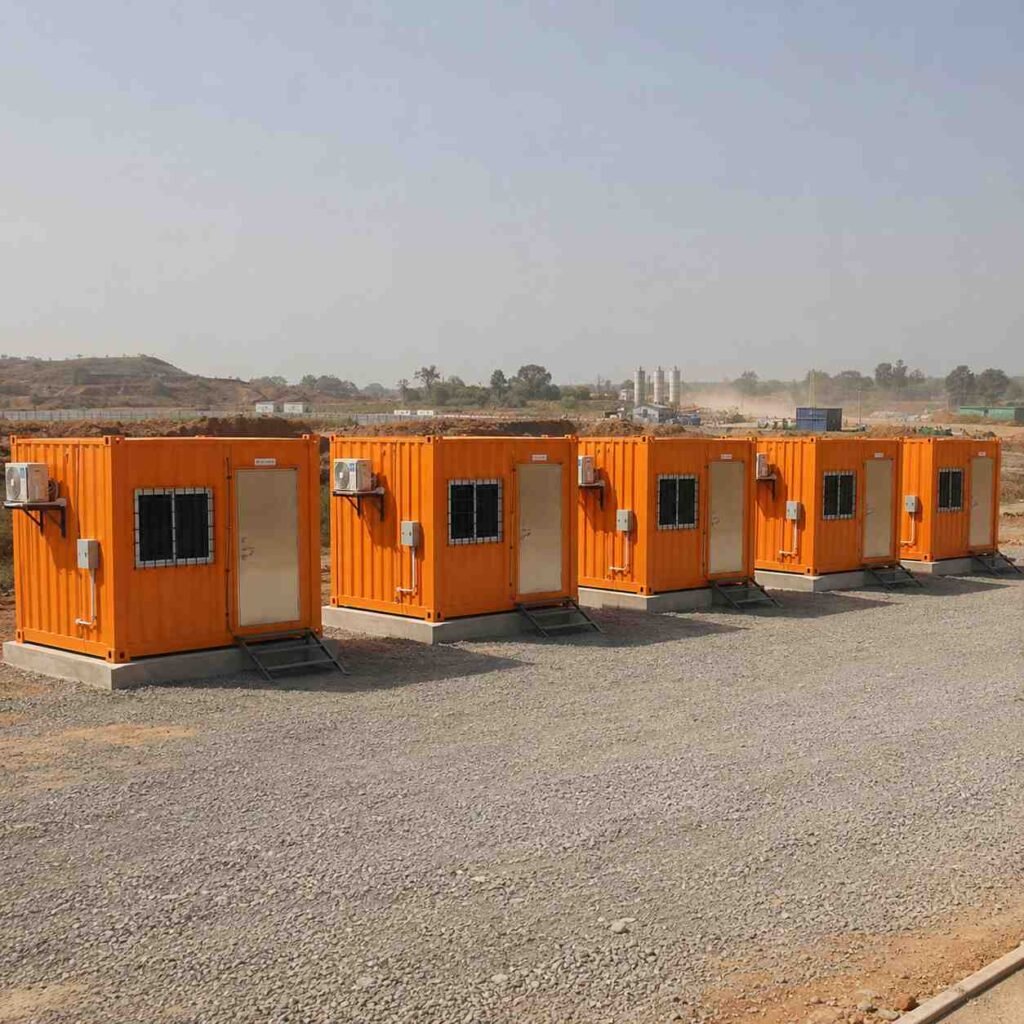
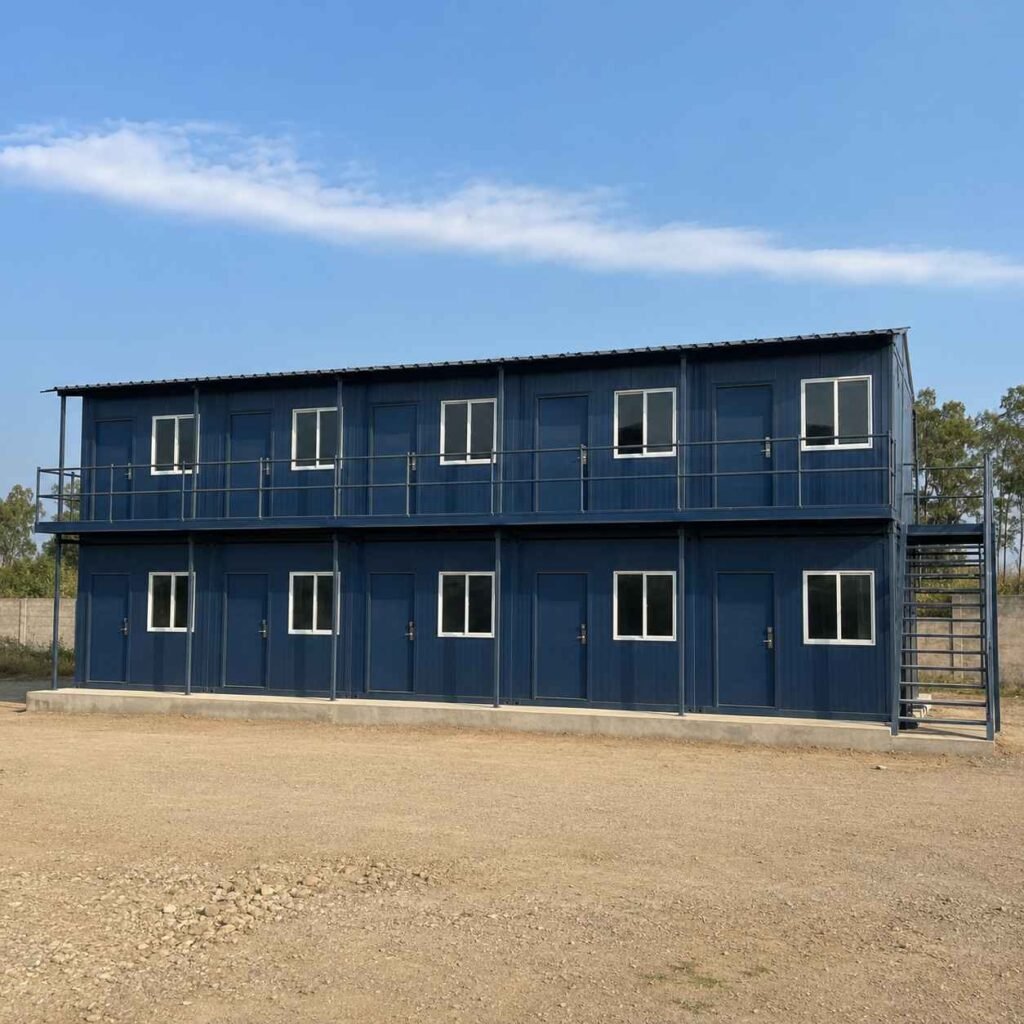
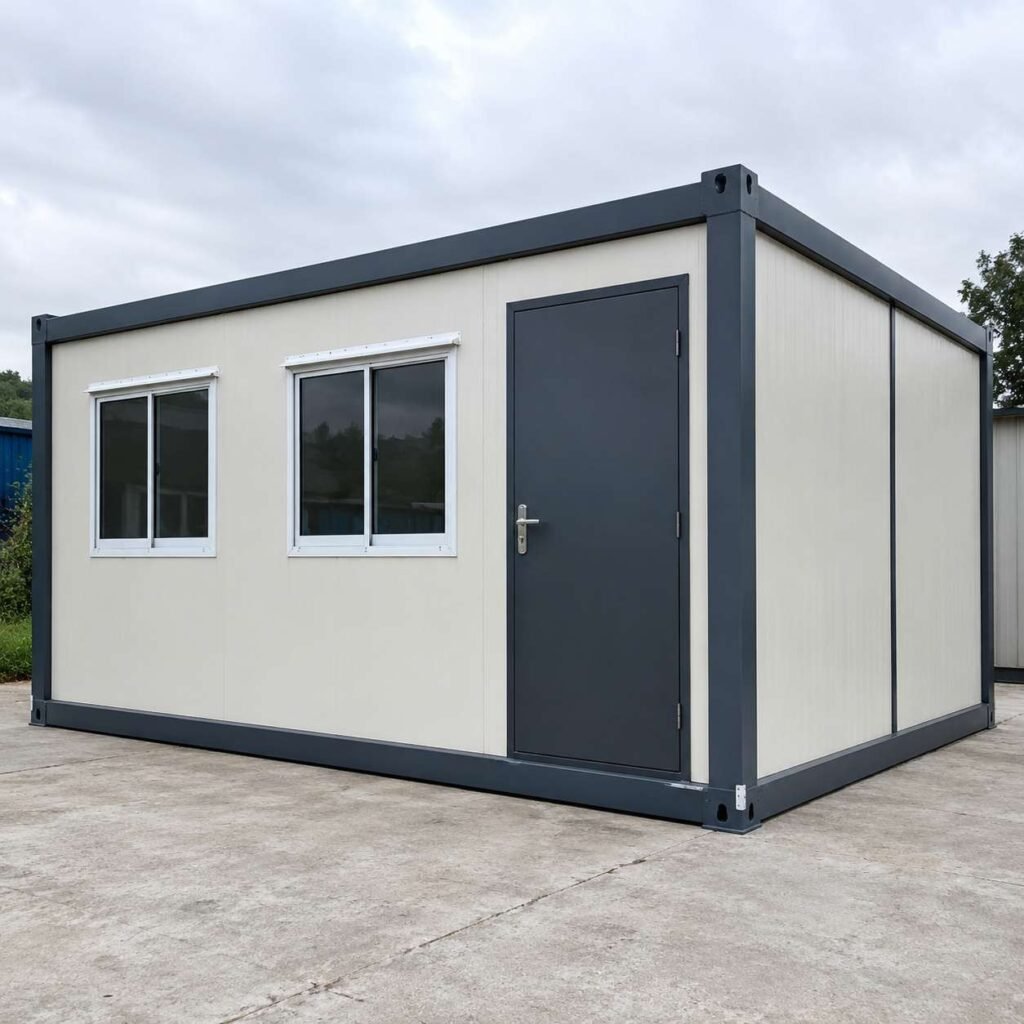
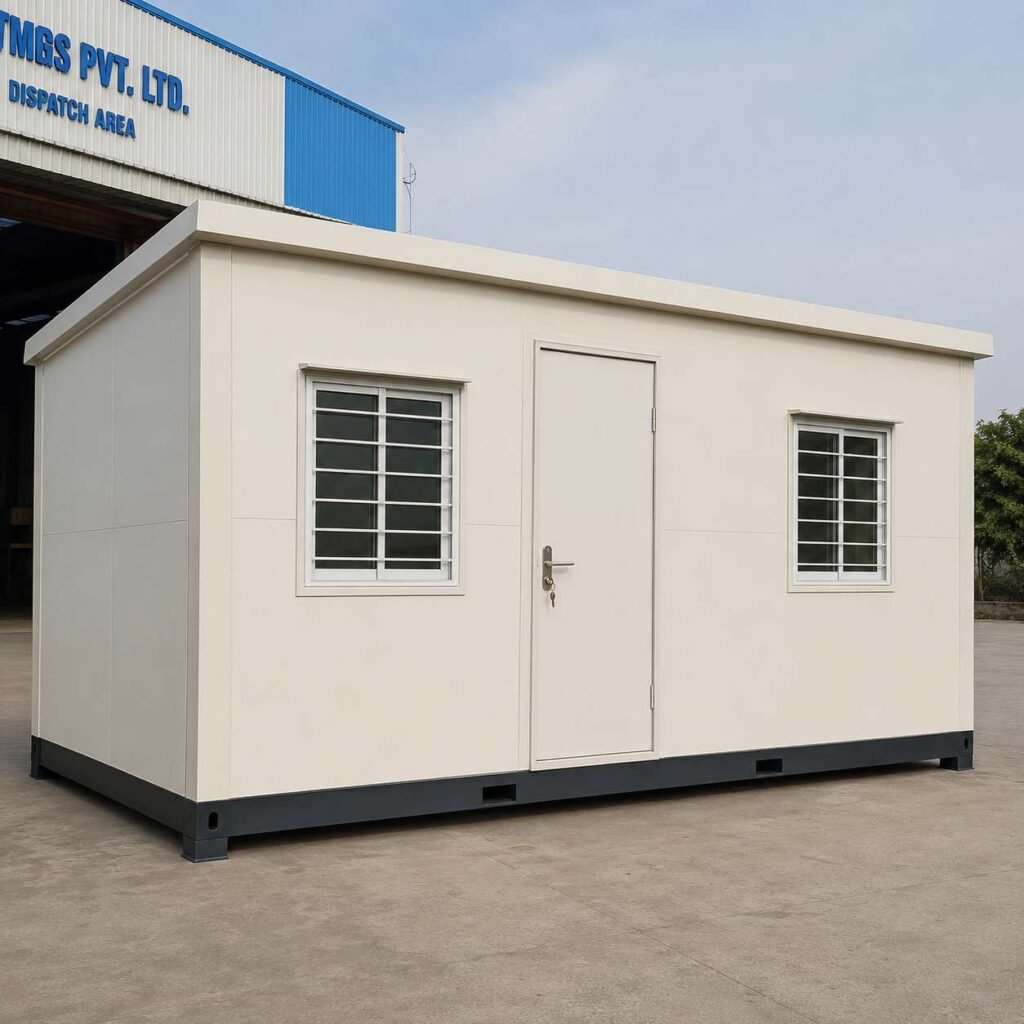
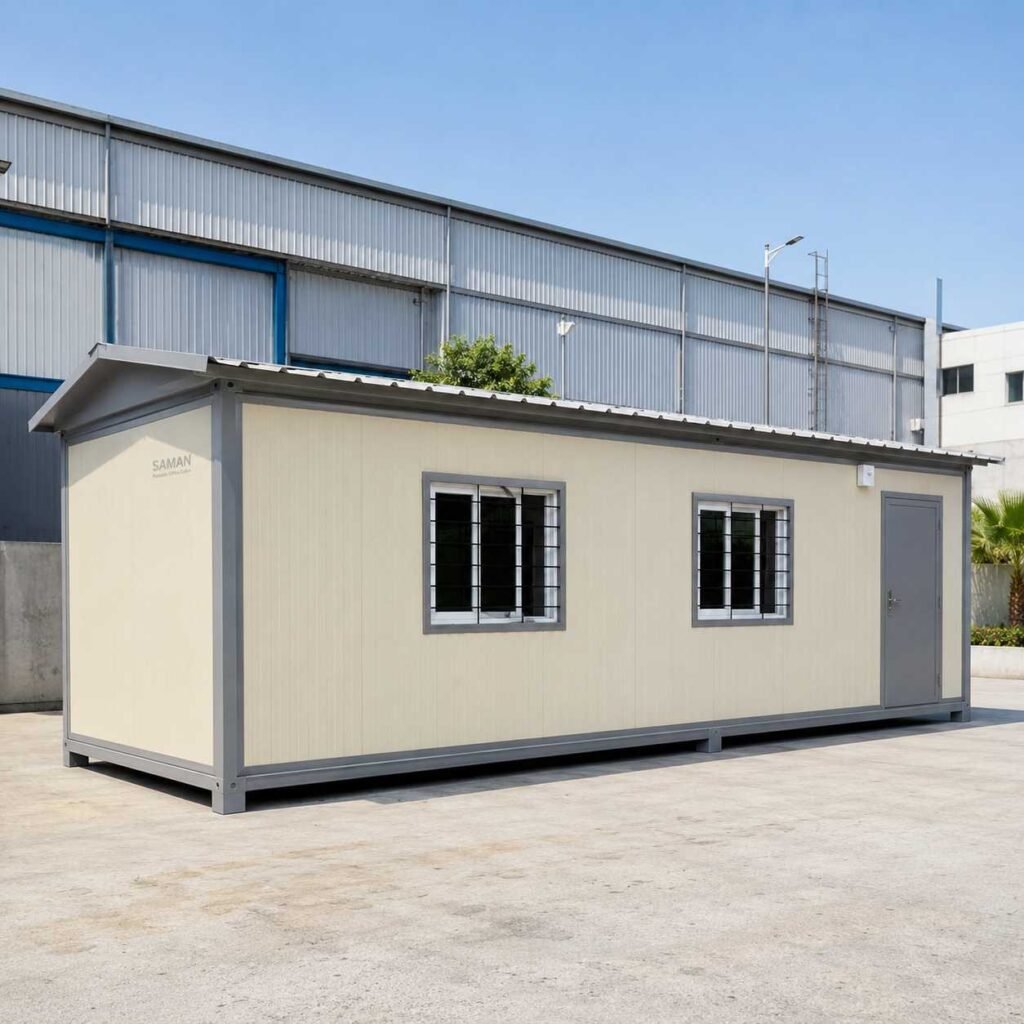
The base-configuration storage container house at ₹13,25,000 — delivered onto a buyer-prepared RCC plinth.
At ₹13,25,000 (base configuration): the 30 ft × 20 ft × 9 ft storage-grade shell, anti-rust treatment on floor channels and structural seams, 50 mm PUF insulated sandwich panel on all walls, the roof, and the floor; plywood substrate flooring with vinyl plank finish; pre-wired electrical with the point density above (8 to 12 lights, three fan points, four switches, two AC provisions, 5 kW); a compact wet area with WC, washbasin, tiled shower zone, exhaust, and geyser provision; a steel kitchen platform with sink and chimney provision; one powder-coated MS steel external door; two openable windows with mosquito mesh and 4 mm float glazing; exterior PPGI sheet or factory-painted finish; road transport from our Bangalore or Greater Noida facility within the standard delivery zone; crane placement on your prepared plinth and utility tie-in.
Up to ₹13,85,000 (upper configuration band): exterior cladding upgrade — wood-grain effect or two-tone — accounts for the largest single move within the band; additional windows or larger glazing on the view-facing side; granite-topped kitchen platform replacing the steel platform; higher electrical-point density for a home-office corner; door hardware upgrade to a premium handle set. These are buyer-decided combinations that lift the configuration within the ~₹60,000 spread without changing the structural specification.
What’s scoped separately (drawings supplied with the order): a level RCC plinth or concrete pier-block footing at the load-bearing corners — your civil contractor builds this against our drawing; water inlet (25 mm) and waste outlet (110 mm) stubs at the wet-area corner; an electrical service connection within 6 metres of the unit, sized for the 5 kW load; trailer-access route from the public road with no overhead obstructions under 14 ft; municipal building plan sanction where applicable for your plot.
Storage container house cost beyond these scopes — transport surcharges for sites outside our standard zone, plinth construction itself, municipal approval support — is quoted separately based on your site and location. There is no separate transport invoice within the standard zone and no surprise hardware billing at handover. The configuration you confirm at order is the configuration that arrives on the trailer.
DIY or factory-built — when each route works for a storage container house
A clear share of buyers who land on this page are weighing a DIY route — buying a used storage container and converting it themselves, or hiring local labour for the conversion. Pre-purchase research queries on storage container houses are frequently framed as “how to DIY”, “how to build”, “how to make”. The interest is real and the question deserves an honest answer rather than a sales push.
Both routes can land a buyer in a liveable home. They land there with different timelines, different cost outcomes, and different downstream maintenance pictures. Here is how the routes compare on the criteria that actually decide the outcome.
| Criterion | DIY / local-labour conversion | SAMAN factory conversion |
|---|---|---|
| Skill mix needed | Welding, electrical, plumbing, carpentry, waterproofing — you coordinate 4–5 trades over weeks | Single point of accountability; the factory holds every trade |
| Timeline | 4–9 months typical, monsoon-dependent | 22–28 working days factory + 2–5 days transport |
| Conversion-cost predictability | Shell ₹1.5–3 lakh + labour ₹3–6 lakh + materials ₹3–5 lakh + rework ₹0.5–2 lakh — range too wide to budget cleanly | Fixed ₹13,25,000 to ₹13,85,000 with the configuration locked at order |
| Insulation and waterproofing | Site-applied insulation introduces seam gaps; waterproofing depends on labour skill | Factory-installed 50 mm PUF panel under controlled conditions; wet-area waterproofing inspected pre-dispatch |
| Code-compliance documentation | Buyer self-certifies; no structural drawings produced | Structural drawings supplied for municipal approval; QC walk-through documented |
| Recourse if something fails | Trade-by-trade chase | SAMAN handles defects under warranty terms |
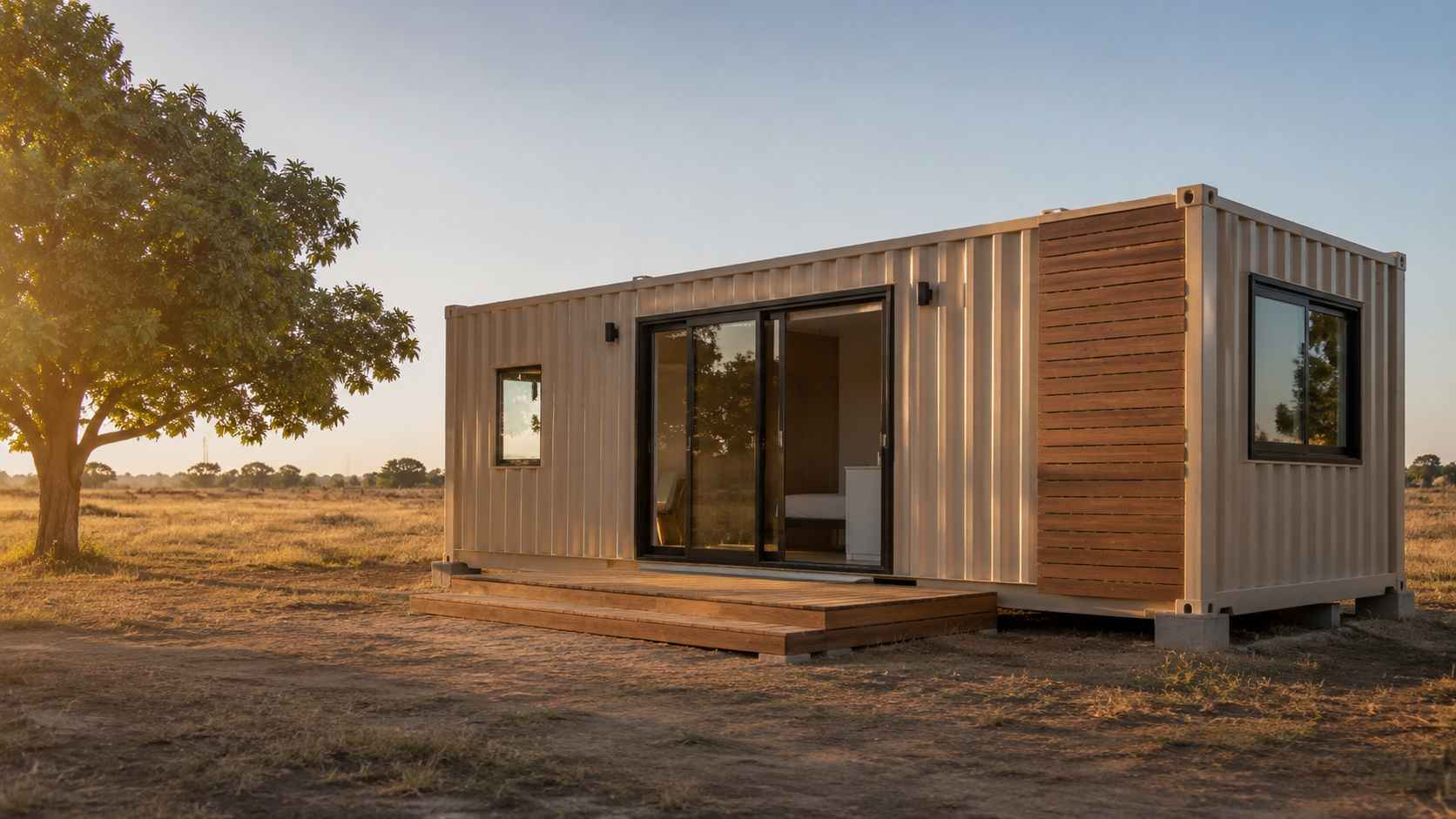
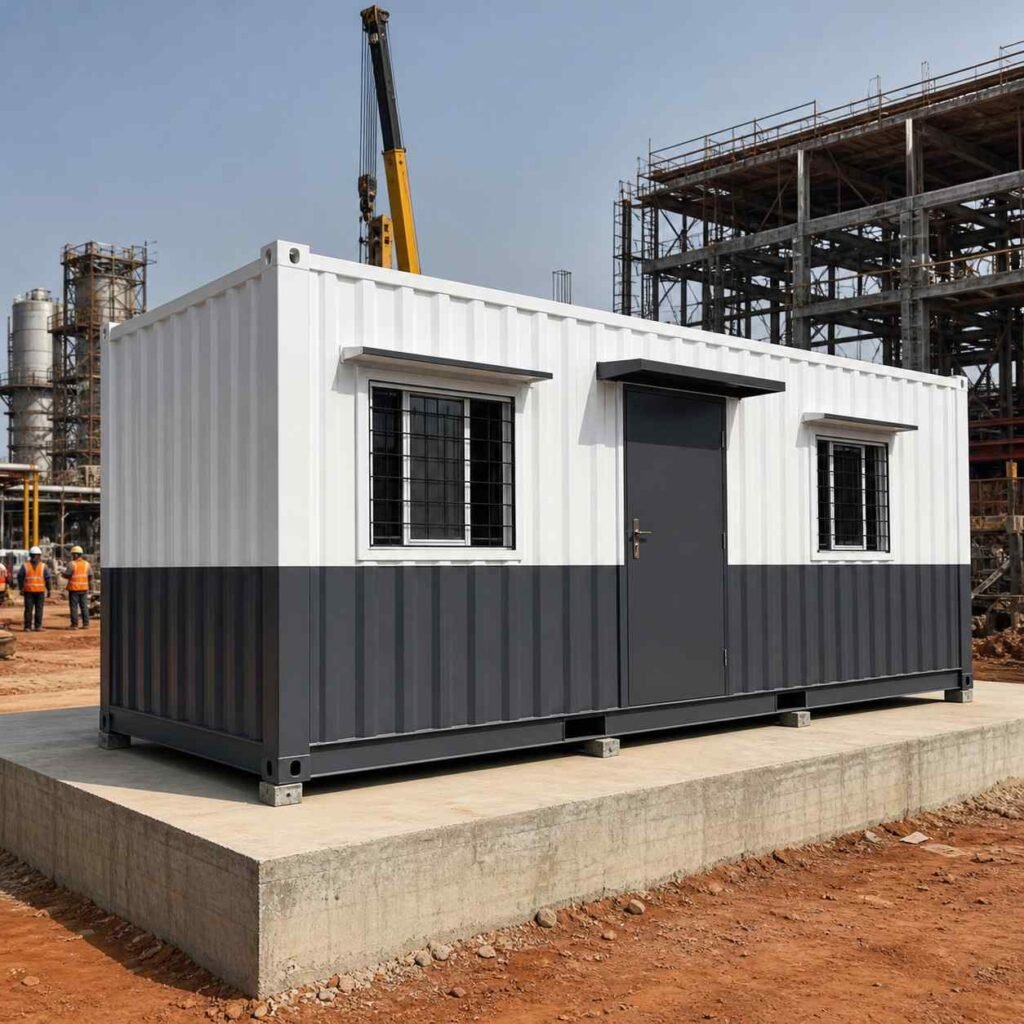
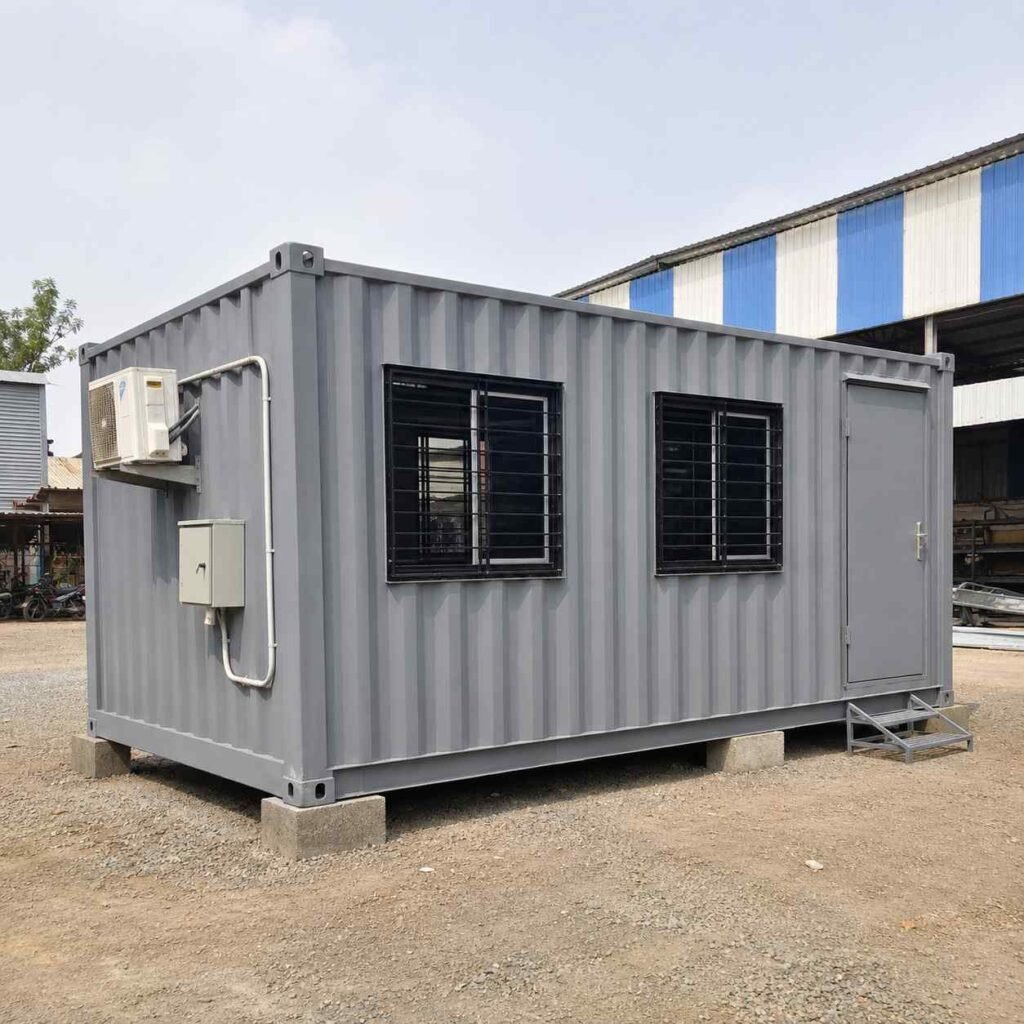
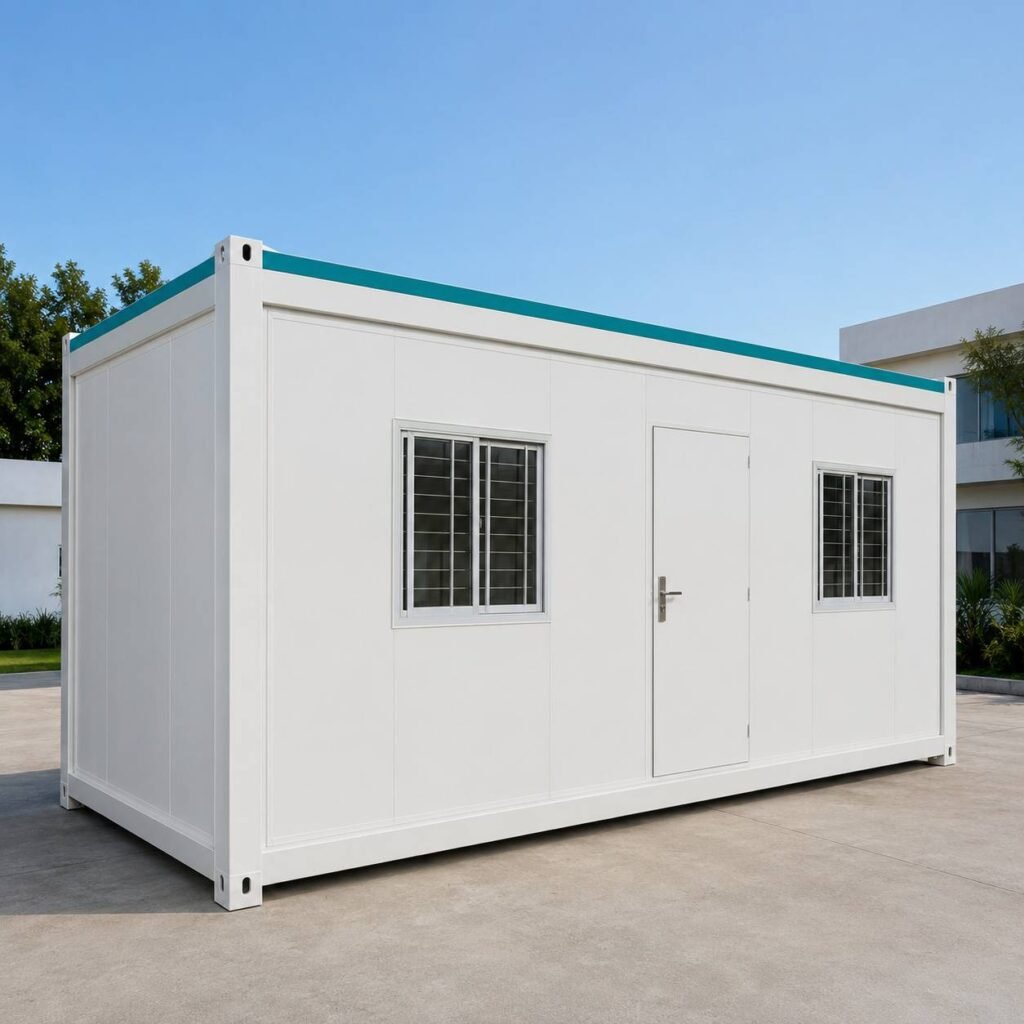
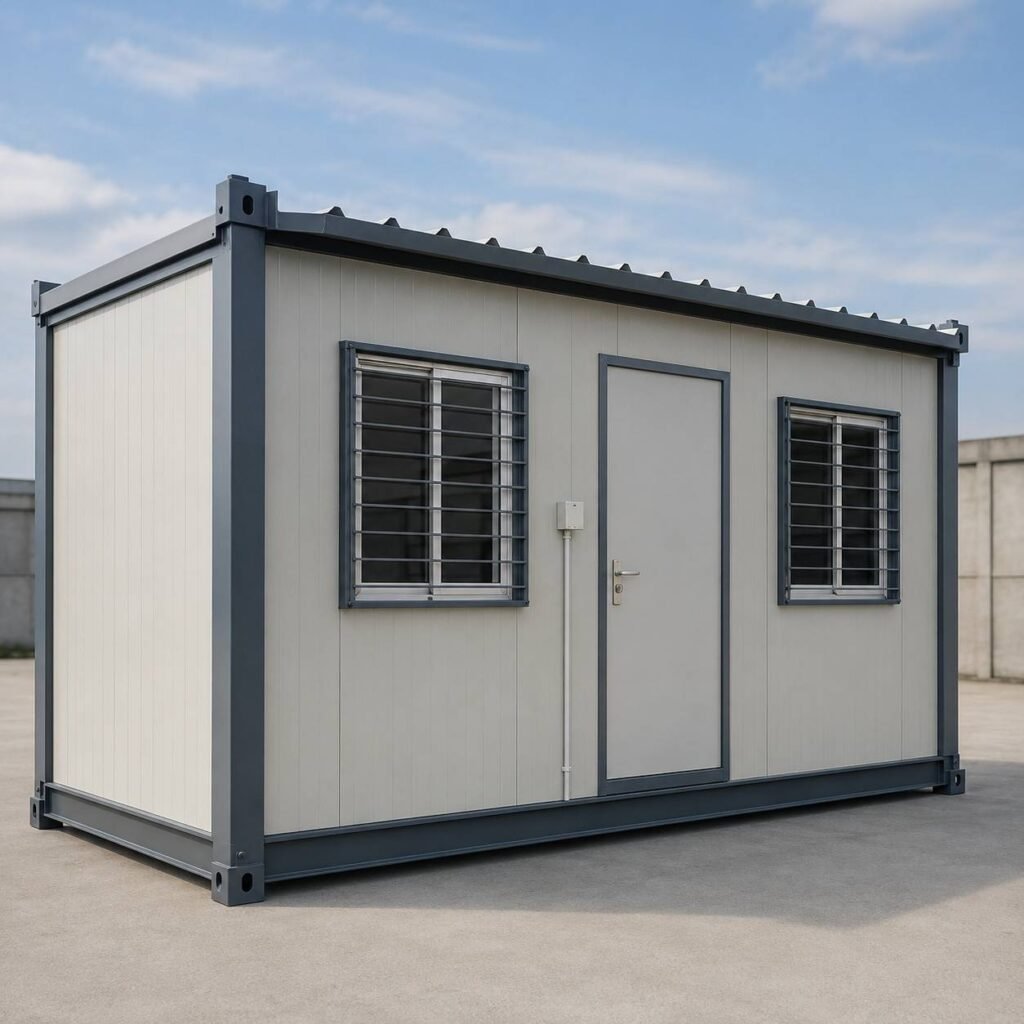
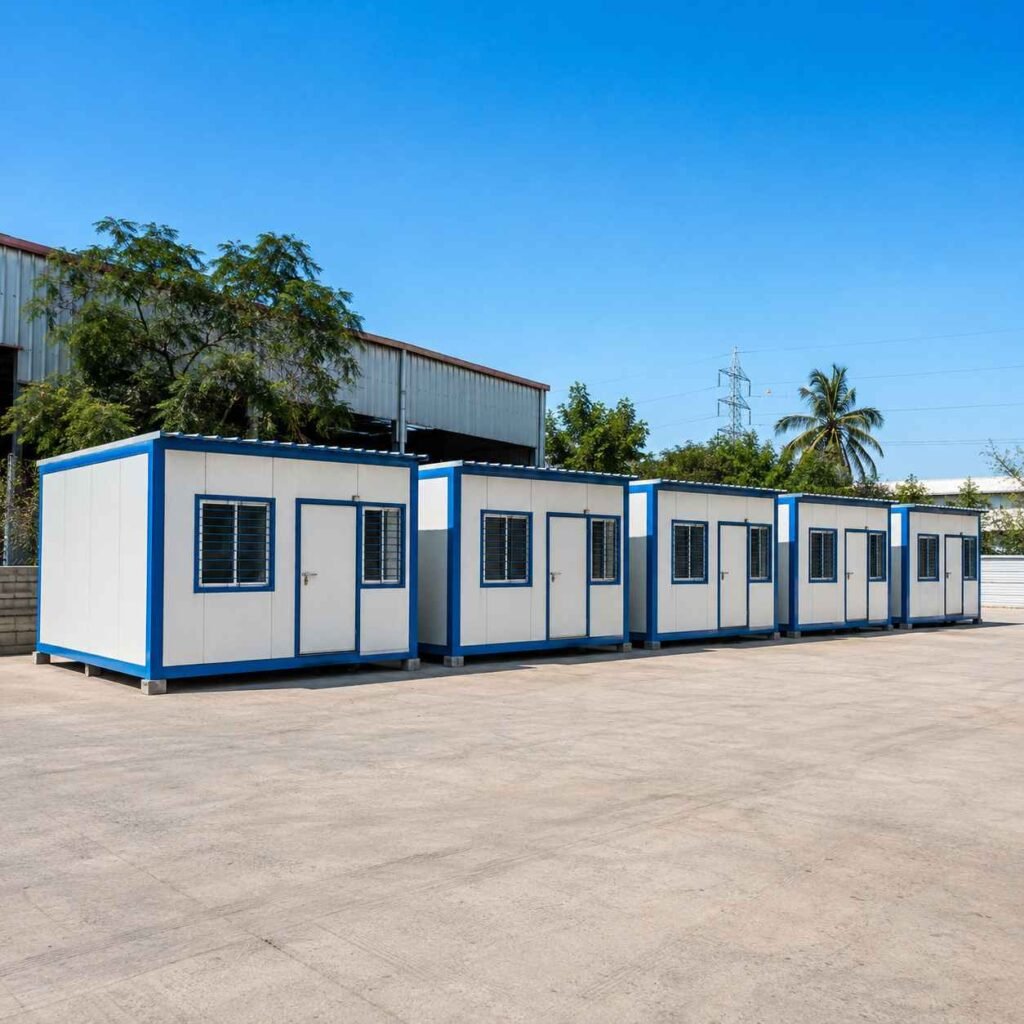
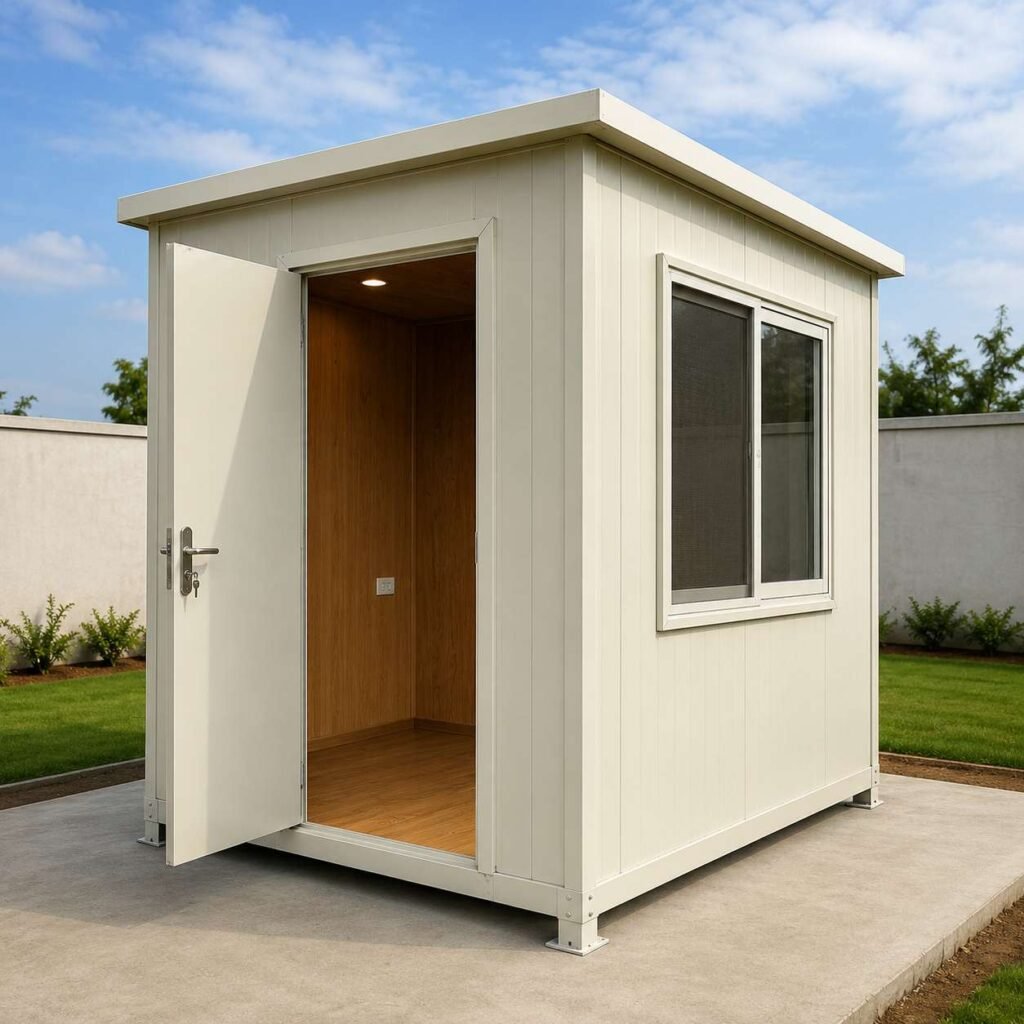
The factory-built storage container house on a rural farmhouse plot — completed in roughly 30 working days.
The DIY route works for buyers with construction-trade access, project-management time, and a site where a longer build calendar doesn’t block occupancy. The factory route works for everyone else — and especially for buyers who want code-compliant documentation for their municipal approval and a single accountability line for the finished home.
Most of the buyers we receive at SAMAN start as DIY-curious and arrive at the factory route once they price out the actual coordination cost. The decision point is rarely the materials cost — it’s the time-and-recourse cost that the DIY budget tends to under-count.
How this storage container house compares to SAMAN’s other container house options
The storage container house at ₹13.25 to ₹13.85 lakh sits in the middle of SAMAN’s container house range. Four other configured products serve neighbouring buyer briefs, and the right choice depends on which decision lens you are looking through.
If your brief leads with certified material origin — sea-rated shell, CSC plate, documented certifications for coastal placement or future relocation — our cargo-grade certification chain build is the page for you. Different starting material, documented certifications, and a heavier-duty service-life baseline at a slightly lower price point. Most residential buyers do not actually need the cargo certifications; if you do, the cargo page covers the entire documentation chain.
If your brief is shaped by procurement scale — one family residence versus 5 to 20 units for project staff or site accommodation — our single-unit or 5-to-20 unit colony procurement page handles that decision. Same product family at a smaller 30 × 20 footprint, mainstream finish tier, and procurement logic that scales from a single trailer to a colony build over weeks.
If your brief asks the inverse of our page’s question — not “how is it converted?” but “what’s already fitted inside when the trailer arrives?” — our fitted-interior decision lens at the same ₹13.25 lakh tier is the right page. Same price band, same product family; what changes is whether the buyer wants the conversion-process narrative (this page) or the interior-inventory narrative. The product family is shared; the decision lens is different.
If your brief reaches above the mainstream tier — designer kitchens, gypsum ceilings with cove lighting, branded sanitaryware, premium cladding — our villa-grade finish ladder at premium tier starts at a smaller 20 ft base unit and climbs the finish ladder from there. Different decision territory.
Earlier in research and weighing options across the full container house range? The heat, loan, and approval basics that frame every container house decision sit on our hub overview — start there and come back to this page when you’re ready to specify a storage-grade conversion.
Common questions about storage container house conversion
These questions reflect the most common pre-order queries we receive on storage container house enquiries; answers are structured around the ₹13,25,000 to ₹13,85,000 configured conversion.
Q1: How much does a storage container house cost?
A SAMAN storage container house starts at ₹13,25,000 for the configured 30 ft × 20 ft × 9 ft (~600 sq ft) base unit — inclusive of factory conversion of the storage-grade shell, anti-rust treatment, 50 mm PUF insulation on all six faces, plywood-and-vinyl flooring, pre-wired electrical with all listed points, a compact wet area with WC, washbasin, tiled shower zone, and geyser provision, a steel kitchen platform with sink and chimney provision, exterior paint, road transport within our standard delivery zone, and crane placement on your prepared plinth. The upper bound at ₹13,85,000 covers configuration upgrades like exterior cladding, additional windows, or a granite-topped kitchen platform. Site work (plinth, plumbing inlet/outlet, electrical service) and municipal approval are scoped separately.
Q2: How is a storage container house built?
A storage container house is built by converting a standard storage-grade shipping container through a defined factory sequence. SAMAN runs the conversion at our Bangalore or Greater Noida facility across roughly 22 to 28 working days: design alignment in week 1 (door and window positions, interior layout, electrical map), then shell intake and anti-rust treatment, opening cuts for doors and windows with MS-angle framing, 50 mm PUF insulation install on walls, roof, and floor, electrical and plumbing rough-in, interior fit-out with vinyl plank flooring and finished panel surfaces, wet-area tiling, kitchen platform install, and exterior finish. The unit is QC-walked at the factory before road transport and crane placement on your prepared plinth.
Q3: What’s the difference between SAMAN’s storage container house and your prefabricated container house at the same ₹13.25 lakh?
The product family is the same; the decision lens differs. The storage container house, on this page, frames the conversion-process narrative — what changes from a raw storage-grade shell to a finished home at the 30 ft × 20 ft footprint. The prefabricated container house frames the fitted-interior narrative — what is already fitted in the unit when the trailer arrives at the 40 ft × 12 ft footprint. Same price tier (₹13,25,000 base), different footprint, different framing. Buyers who want to understand what the factory does to the shell belong on this page; buyers who want the interior inventory before deciding belong on the prefabricated-container-house page.
Q4: Can I have my own storage container converted by SAMAN, or do you supply the container too?
Both routes are workable but the standard order includes the shell. SAMAN sources storage-grade containers from vetted suppliers near each of our manufacturing facilities; the shell condition, weld integrity, and floor-channel state are inspected before conversion begins. Buyers with their own container — typically an existing site-storage unit or a recently-decommissioned shipping container — can be accommodated case by case after a structural inspection at the start of design alignment. Older shells with significant rust on floor channels or corner-casting damage are not viable conversion candidates regardless of how the price looks; we’ll tell you that upfront after the inspection rather than discovering it mid-build.
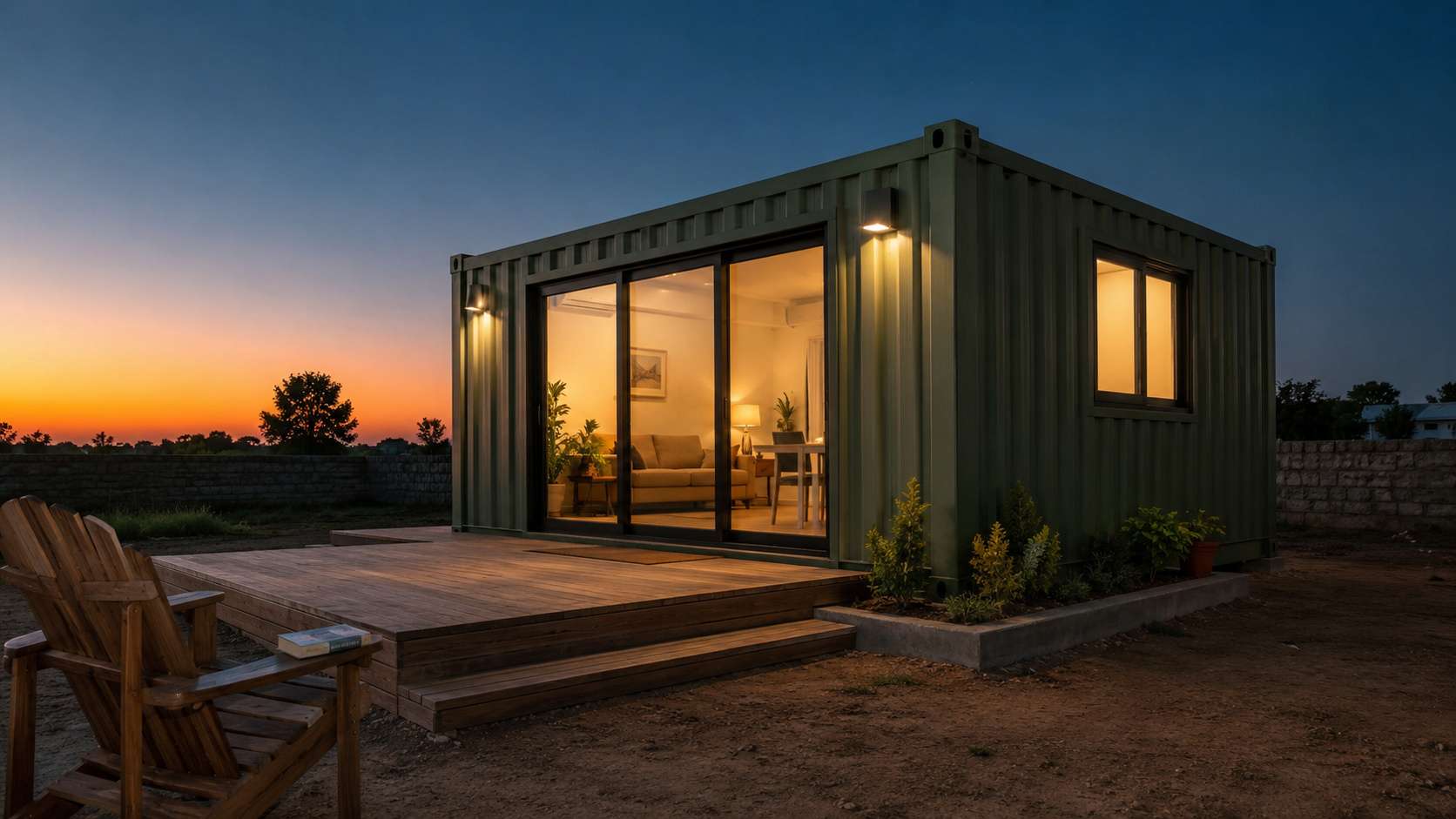
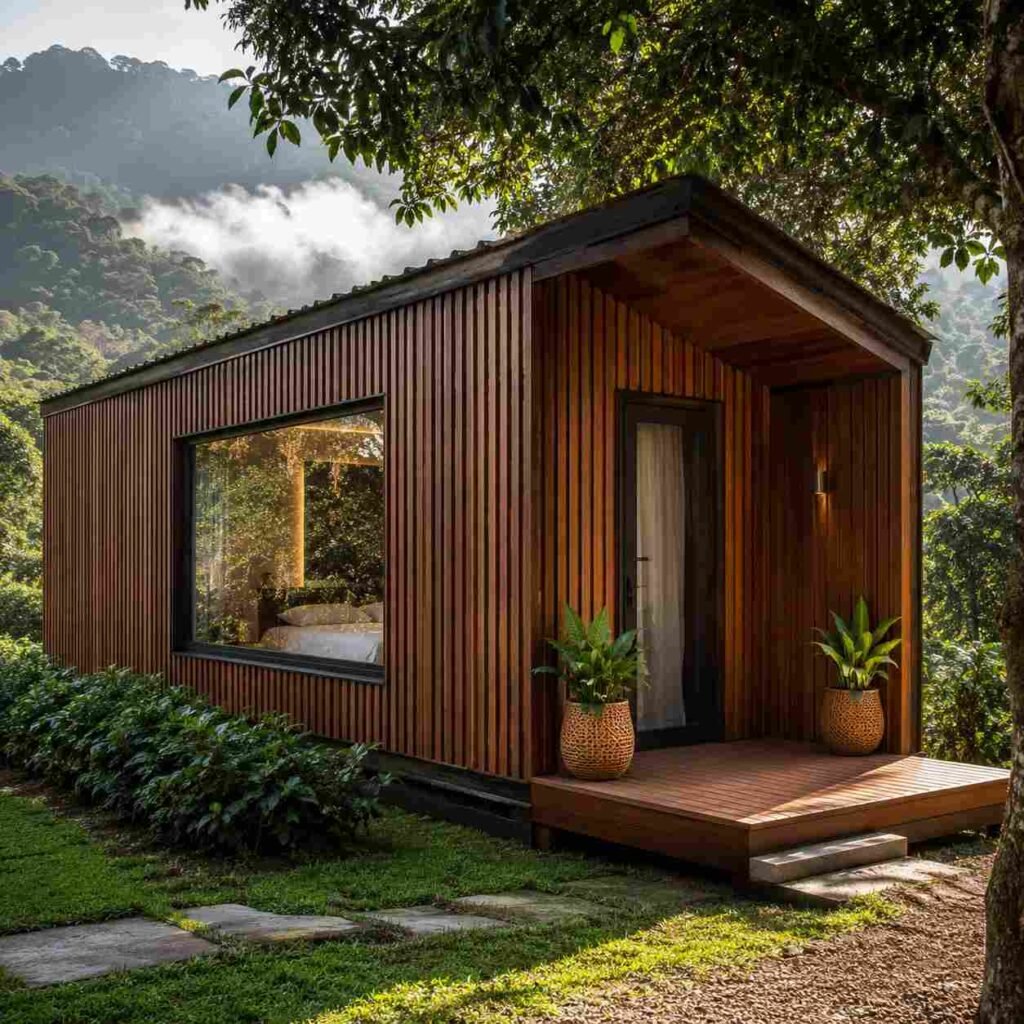
The storage container house at dusk — warm interior light through the glazing, ready-to-occupy on the buyer’s prepared plot.
Configure your storage container house
Share your site location, plinth-ready status, and configuration preferences within the ₹13,25,000 to ₹13,85,000 band — our design team will share a layout drawing and a buildable quote within 48 hours. Call 09708989937, WhatsApp 09708989937, or email sales@samanportable.com.
Shipping and Delivery Information
At SAMAN Portable Office Solutions, we are committed to ensuring a seamless shipping experience for our customers. Our shipping and delivery policy has been crafted to provide you with clear details and expectations when you place an order for our portable cabins or container offices.
Delivery Timeline
Once your order is confirmed, we will process and dispatch your product within 15 to 21 working days. This timeline is calculated from the date we receive your order and ensures that your product is fabricated, inspected, and packed securely for transportation. We strive to adhere strictly to this delivery window, guaranteeing that your order reaches you in a timely manner.
Shipping Costs
Our shipping charges are structured based on the size and type of the trailer used for delivery. Below are the detailed rates:
- For a 40 Feet Open Trailer: The cost is ₹80 per kilometer, excluding Over Dimensional Cargo (ODC) and Regional Transport Office (RTO) charges.
- For a 20 Feet Open Trailer: The cost is ₹60 per kilometer, also excluding ODC and RTO fees.
Note: ODC and RTO charges may vary depending on your location and state regulations. We ensure transparency in our billing and will provide you with an accurate estimate before shipment.
Within Bangalore Shipping Rates
For customers within the Bangalore region, we offer competitive fixed shipping rates for hassle-free delivery:
- 40 Feet Open Trailer: ₹15,000
- 20 Feet Open Trailer: ₹10,000
These rates are designed to be cost-effective while ensuring your product reaches its destination safely and securely. We work with reliable transport partners to provide efficient and on-time delivery services within Bangalore.
At SAMAN Portable Office Solutions, customer satisfaction is our priority. For any queries related to shipping or delivery, please feel free to contact our customer support team. We are here to assist you every step of the way.

Reviews
Clear filtersThere are no reviews yet.