

















Portable Cabin in Delhi: A 2026 Manufacturer’s Buyer Guide

A portable cabin in Delhi typically costs Rs 75,000 to Rs 5,00,000 per unit depending on size and specification — and that price range hides every decision that actually matters for a Delhi buyer: which sub-region you’re installing in, whether GRAP construction-ban windows affect your project, what panel and frame spec your site needs for 48°C summers and 4°C winters, and what procurement documents a serious manufacturer should hand over. This guide walks through each.
What Buying a Portable Cabin in Delhi Actually Involves in 2026
The Delhi-NCR portable cabin market in 2026 looks different from the rest of India. Most units delivered into Delhi are factory-built in the manufacturing belt that stretches from Greater Noida to Faridabad — roughly 30 to 80 km from central Delhi. That short delivery radius keeps logistics cost predictable and makes 7-21 day site delivery realistic for any Delhi pincode.
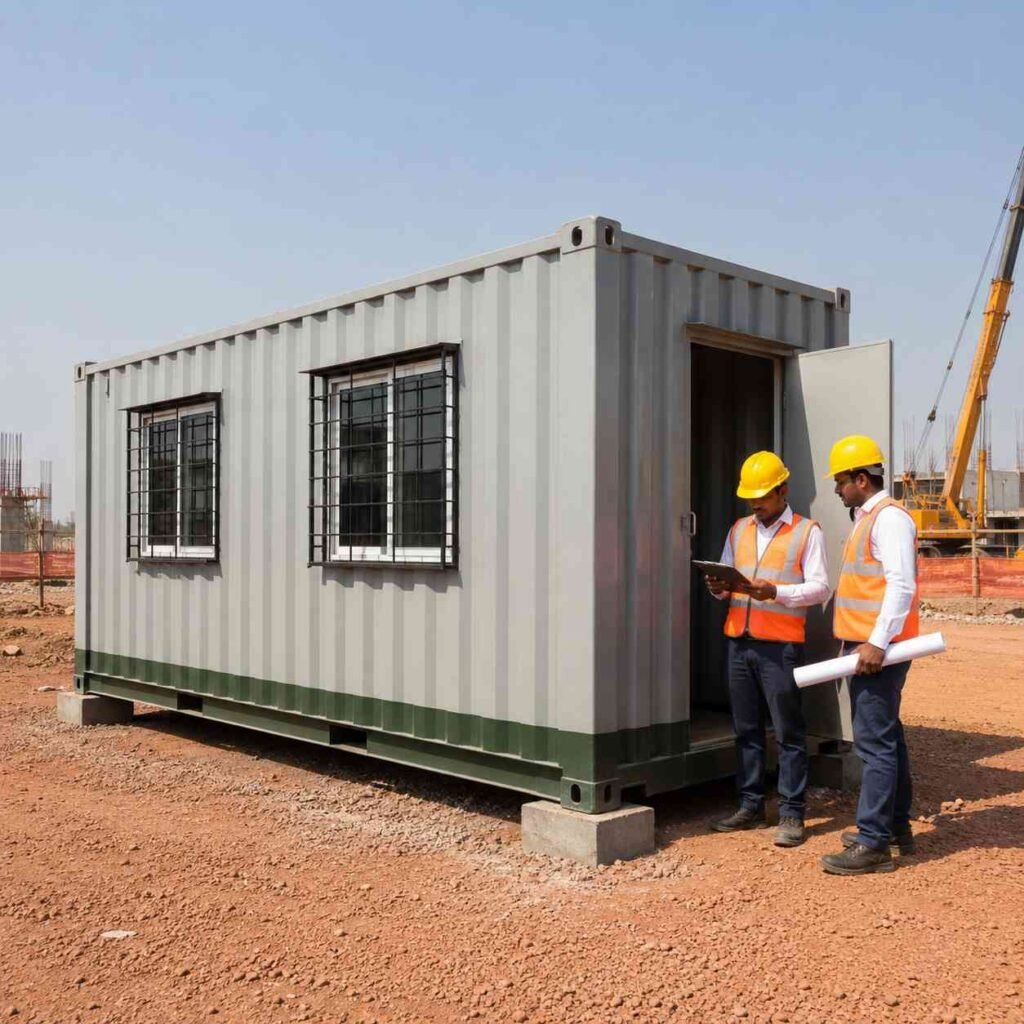
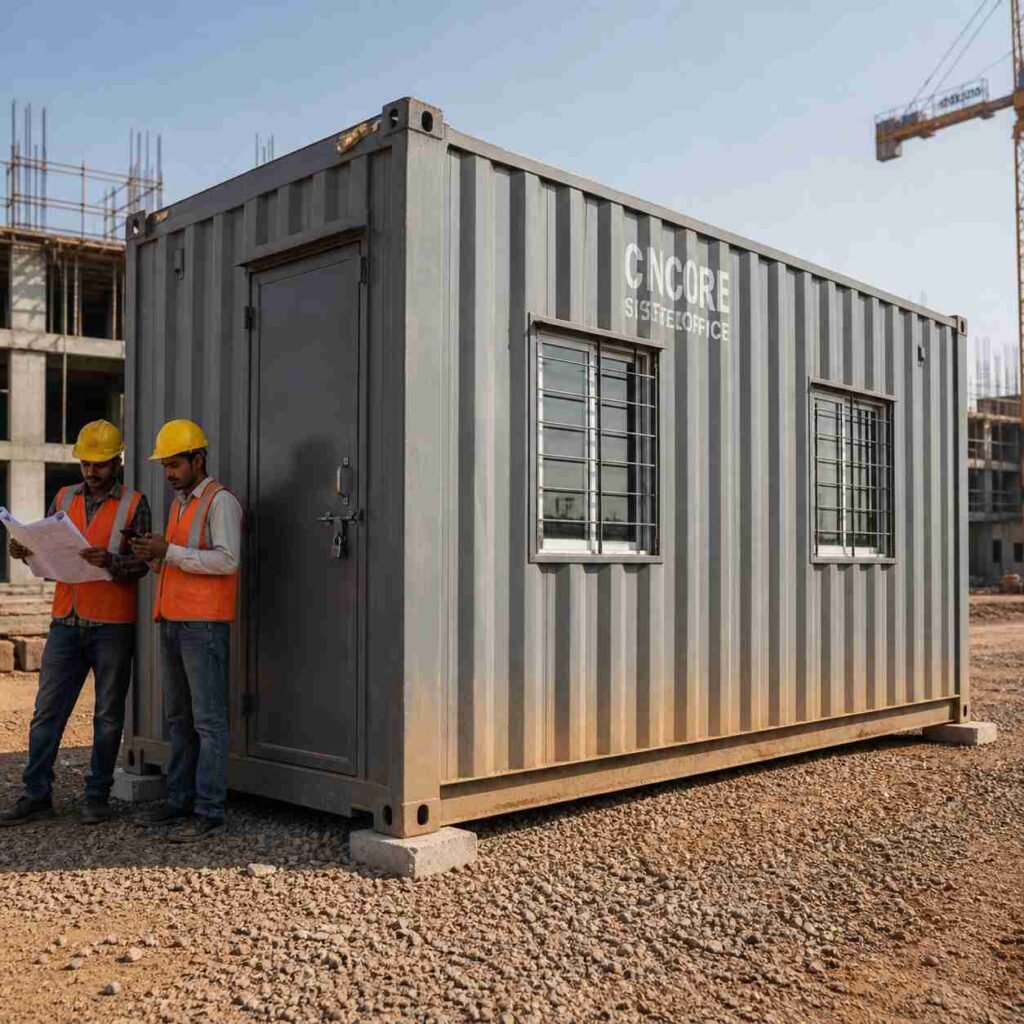
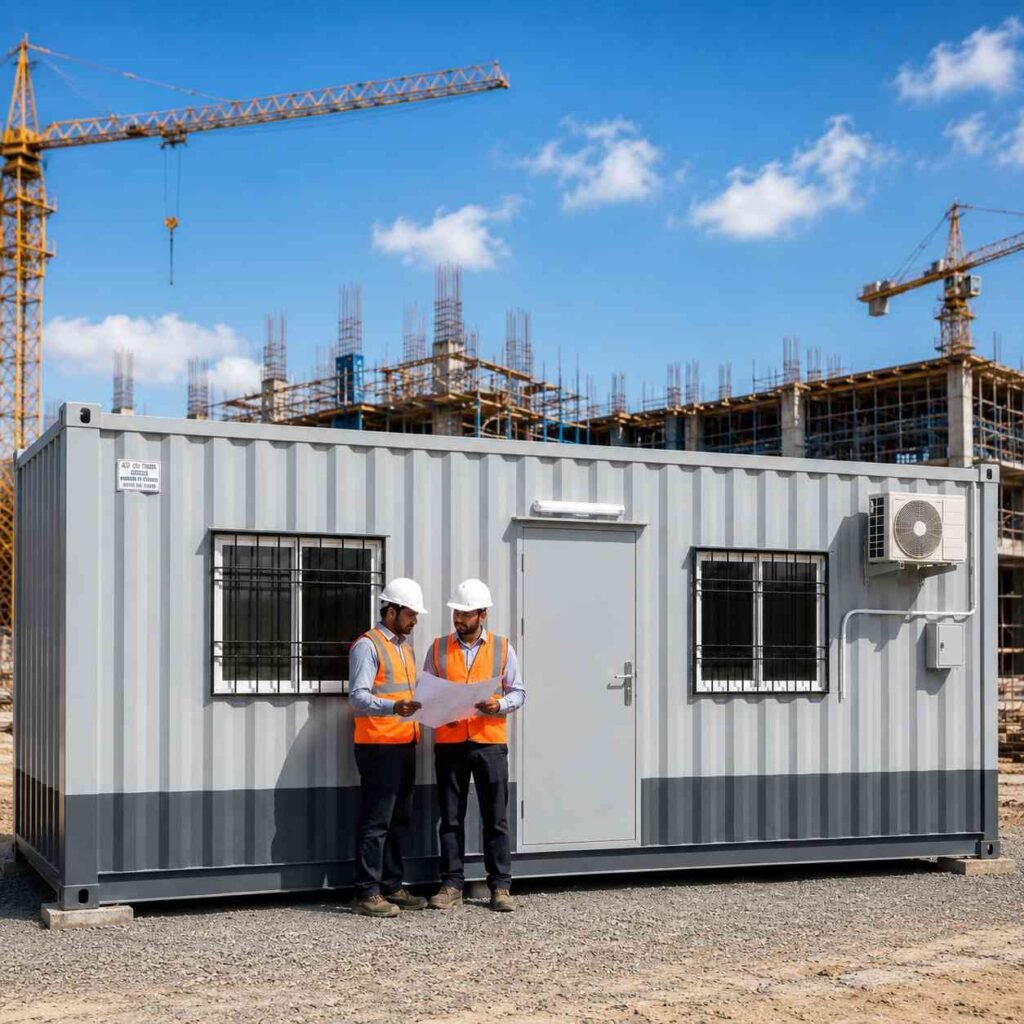
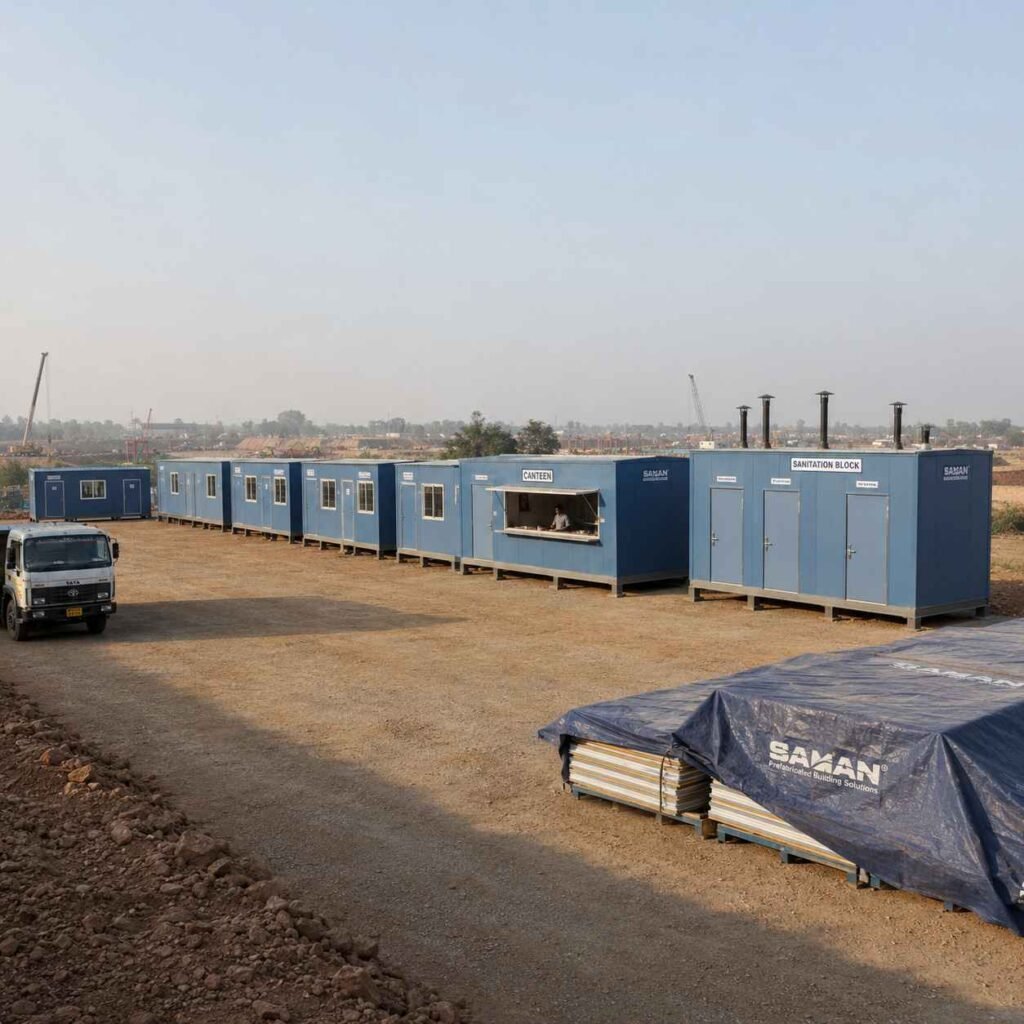
The buyer mix at our Greater Noida (Dadri) unit splits roughly four ways: SME offices needing a 15×10 ft setup behind a Karol Bagh or Patel Nagar shop; site managers needing a 20×10 ft cabin for projects in Dwarka, Rohini, or Mehrauli; school and institutional buyers needing classrooms or admin cabins; and EPC contractors needing 30×10 ft bunk-house arrays for labour accommodation on major project sites.
What complicates a Delhi purchase, compared to the same unit in Bangalore or Pune, is three things: GRAP construction-ban windows (Delhi-specific, October to February), sub-region permit logic (DDA, MCD, NDMC, Cantonment, society NOCs — each different), and inter-state GST handling because most factories sit just outside Delhi’s boundary. The next sections work through each, and end with what a verified manufacturer should hand over before purchase order release.
A note on terminology: “porta cabin” and “portable cabin” are used interchangeably in the market. This guide uses portable cabin throughout — same product, standard naming.
How Much Does a Portable Cabin Cost in Delhi in 2026?
A portable cabin in Delhi costs between Rs 75,000 and Rs 5,00,000 per unit depending on size and specification — roughly Rs 850 to Rs 1,100 per square foot for new factory-built units. Smaller security cabins (4×6 ft) start near Rs 75,000; larger 30×10 ft labour bunk-houses reach Rs 4,50,000 to 5,00,000.
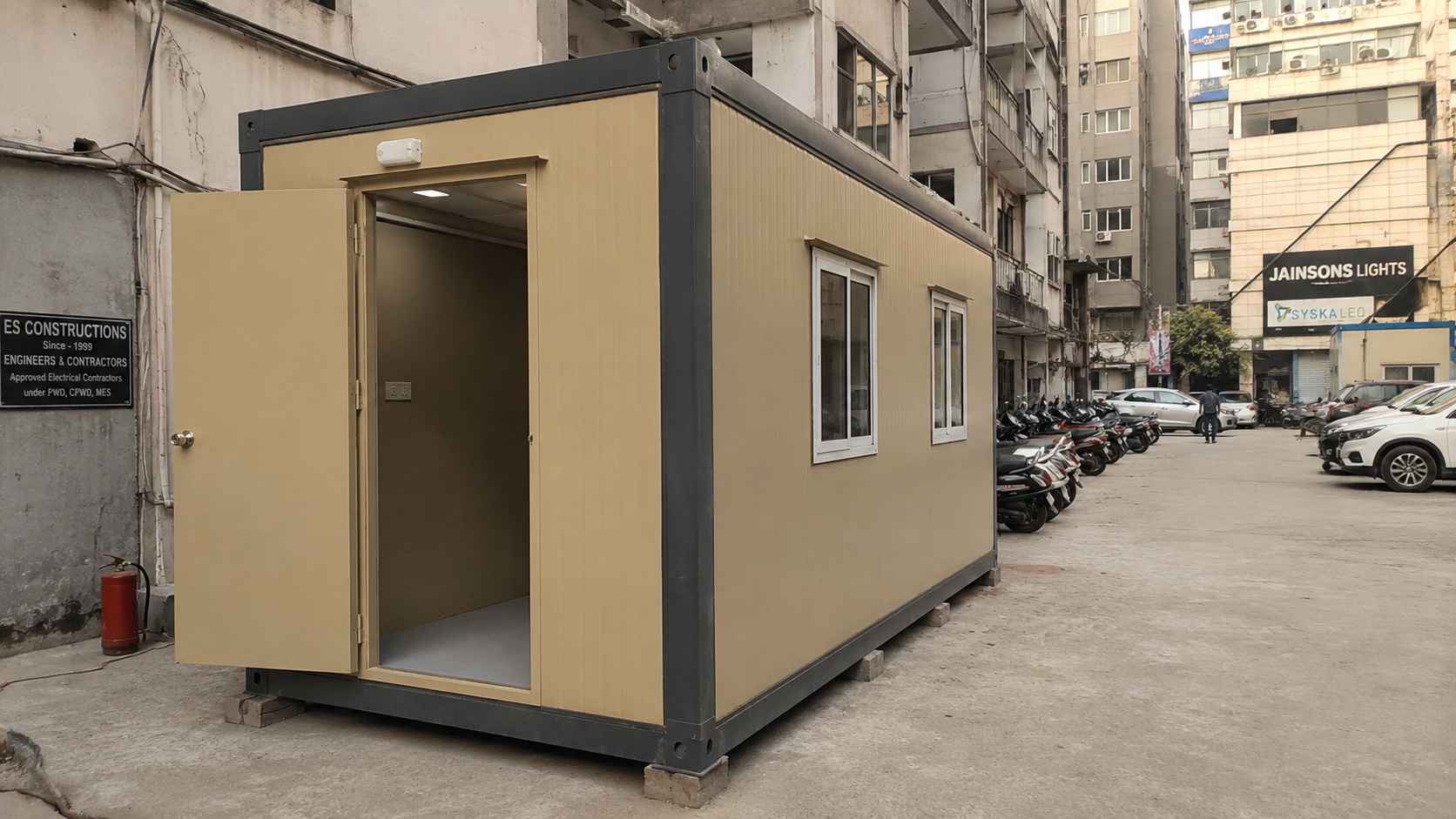
Within that band, four variables move the number:
Size. A 4×6 ft security cabin runs Rs 75,000 to Rs 1,20,000. A 10×8 ft basic unit lands at Rs 1,20,000 to Rs 1,60,000. A 15×10 ft single-room office — the most common Delhi SME order — is typically Rs 1,57,500 to Rs 1,95,000. A 20×10 ft site office sits between Rs 1,80,000 and Rs 2,30,000. A 30×10 ft bunk-house with multiple compartments hits Rs 3,60,000 to Rs 5,00,000.
Material specification. MS frame with insulated PUF sandwich panels is the Delhi standard at Rs 850-1,100 per square foot. FRP-only and Aerocon-panel units run cheaper (Rs 300-700 per sq ft) but don’t hold up across Delhi’s summer-monsoon swing (see the materials section below).
Customisation. Toilet fitting, partition walls, A/C wiring, false ceiling, anti-glare film — each adds Rs 15,000 to Rs 60,000.
Delivery distance. Inside Delhi from a Greater Noida or Faridabad factory, transport adds Rs 8,000 to Rs 25,000. Congested-zone sites (Old Delhi, Chandni Chowk) cost more because of crane and labour overhead.
For a nationwide reference that compares the portable cabin price in Delhi against other Indian cities, see the portable cabin price ranges we publish for India.
Sizes and Configurations Delhi Buyers Actually Use
Delhi demand doesn’t spread evenly across sizes. Four configurations cover most of what gets ordered at our Greater Noida unit for Delhi destinations.
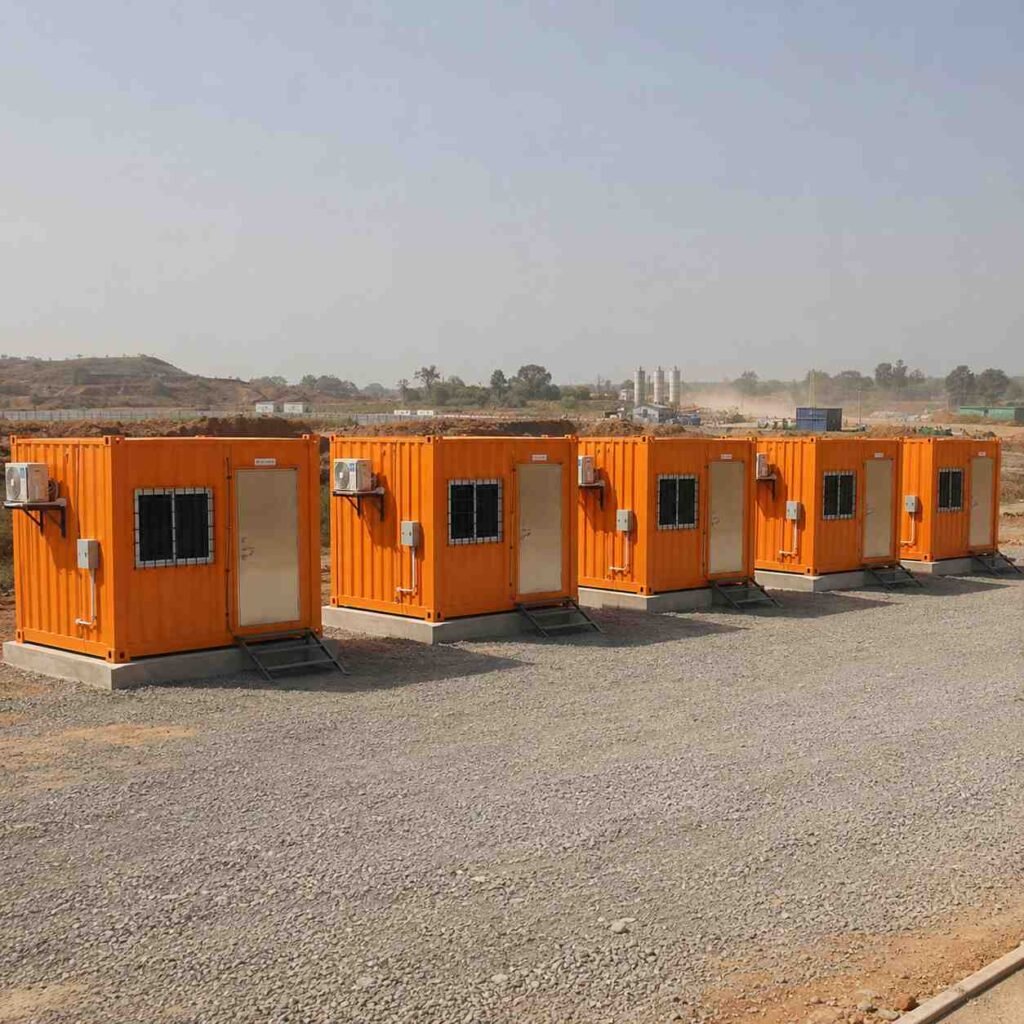
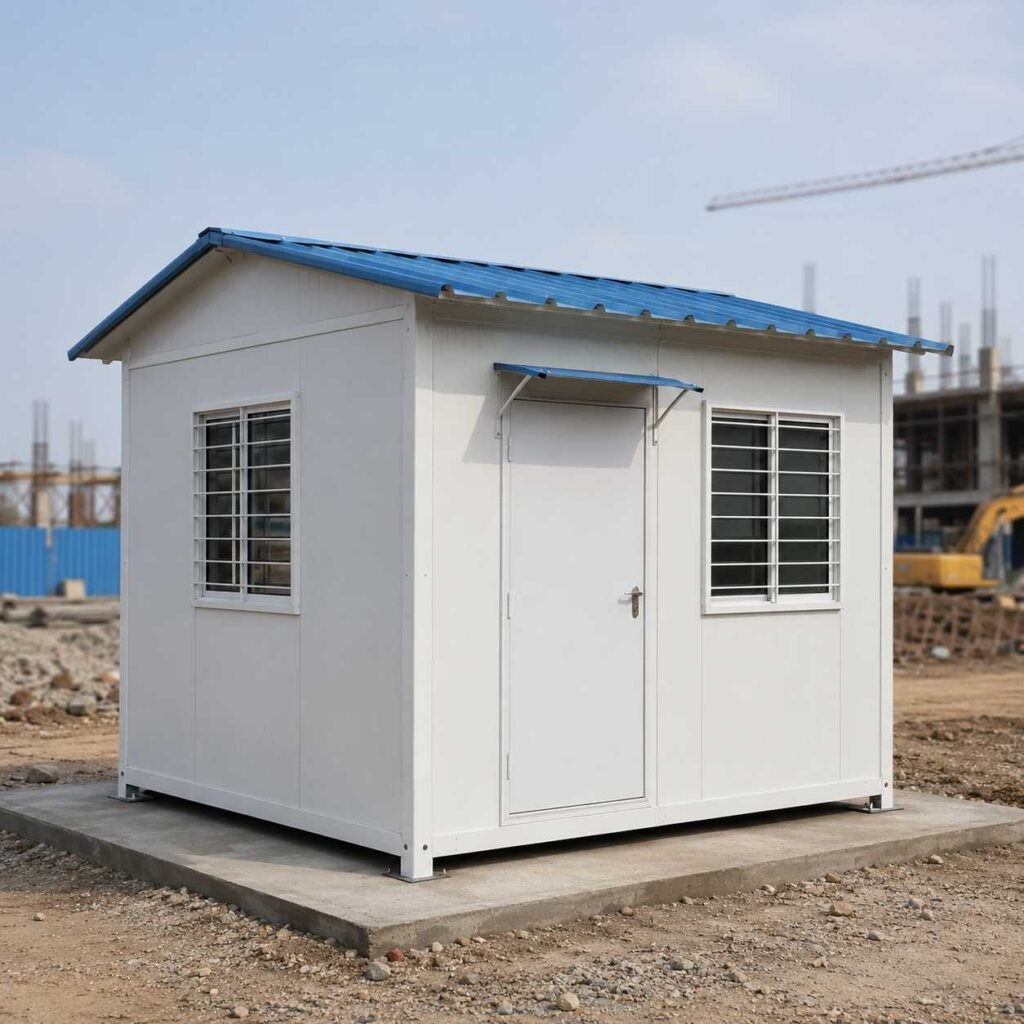
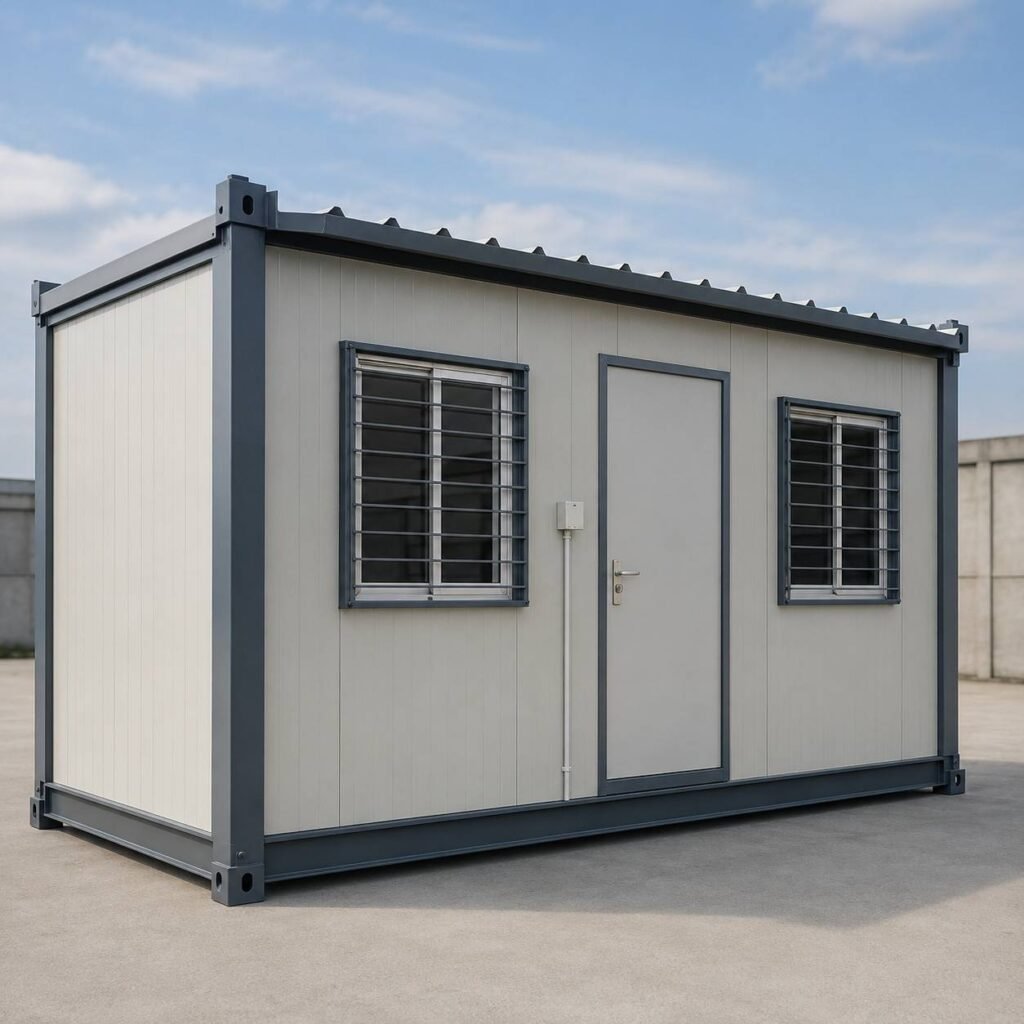
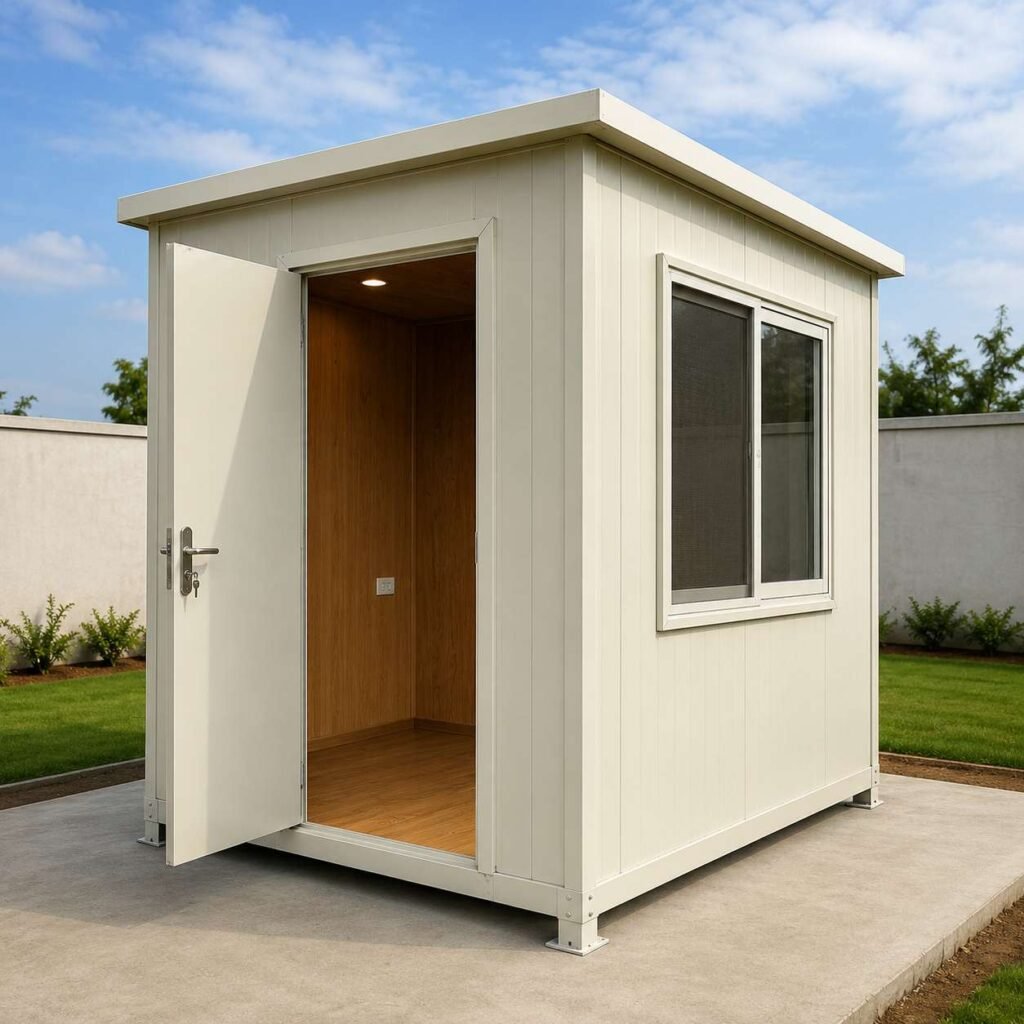
4×6 ft to 5×7 ft — security cabin. Standalone guard cabin at apartment gates, factory entrances, mall service entries. One stool, narrow window, single door. Rs 75,000-1,20,000. Highest-volume size in Delhi residential complexes.
10×8 ft to 12×8 ft — kiosk or single-staff office. Mobile kiosks at exhibitions, single-occupant site checkpoints, small retail outlets at metro-station forecourts. Most are MS-frame with single PUF-panel walls.
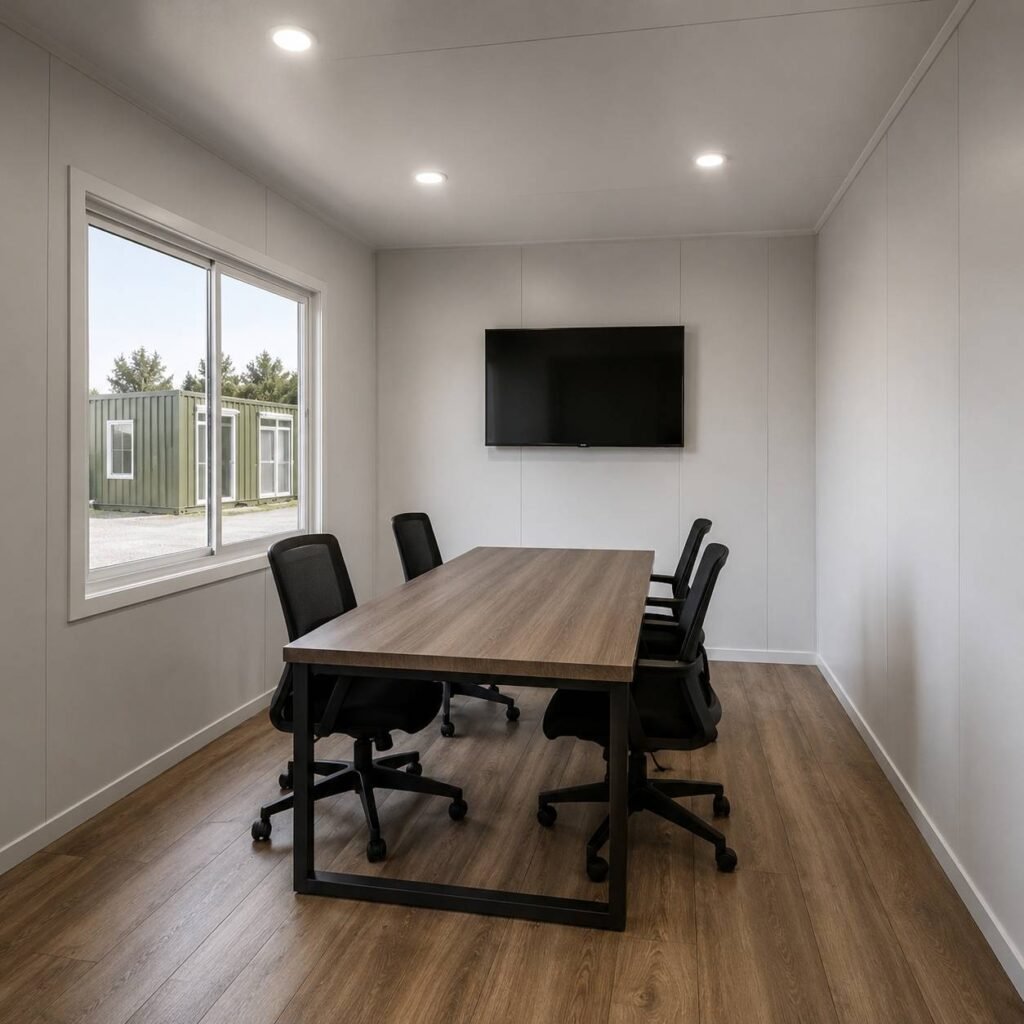
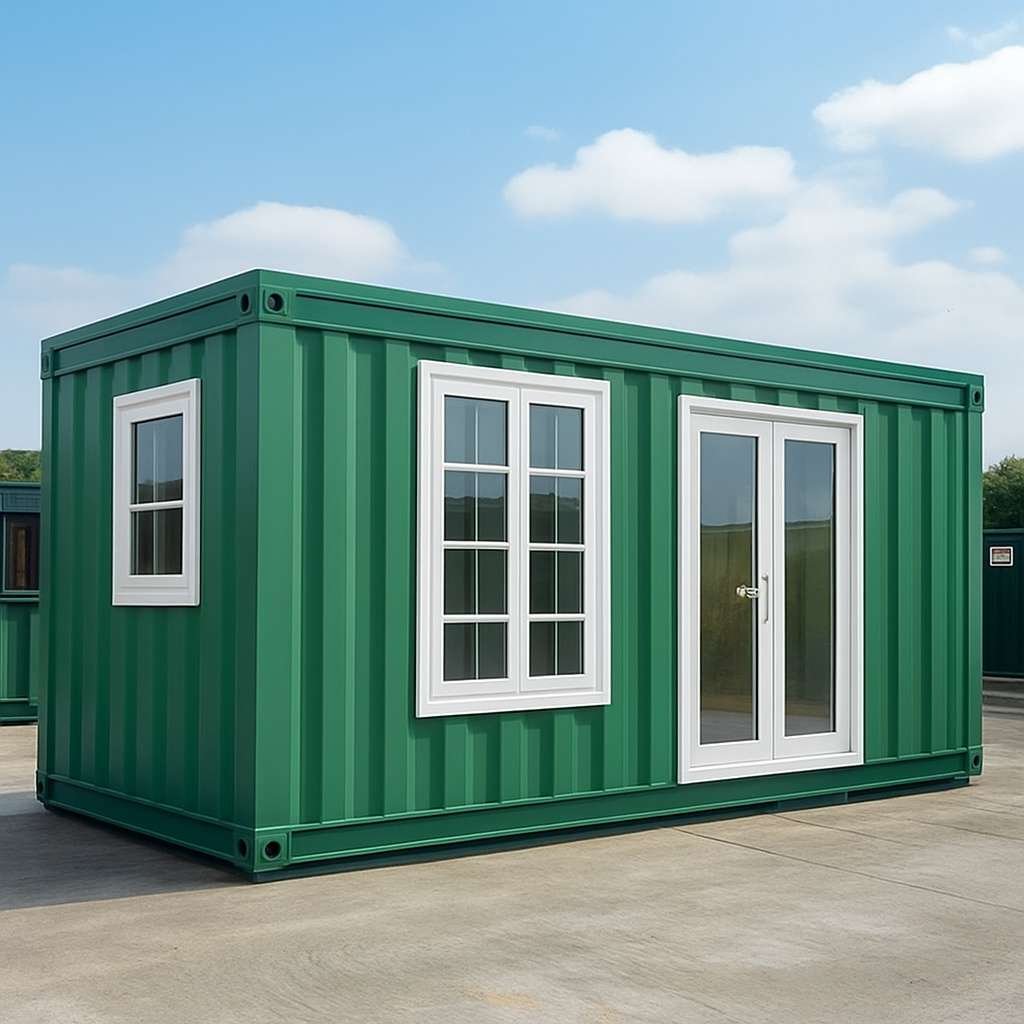
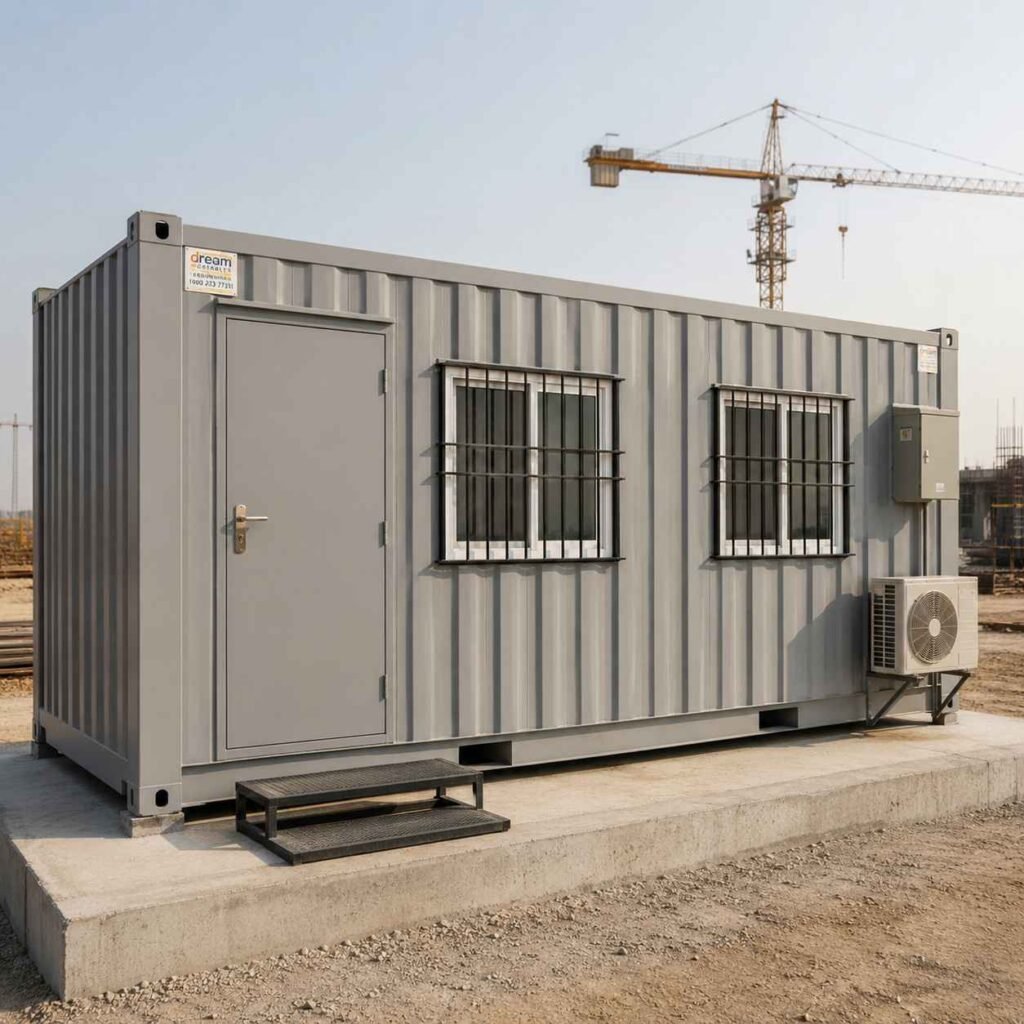
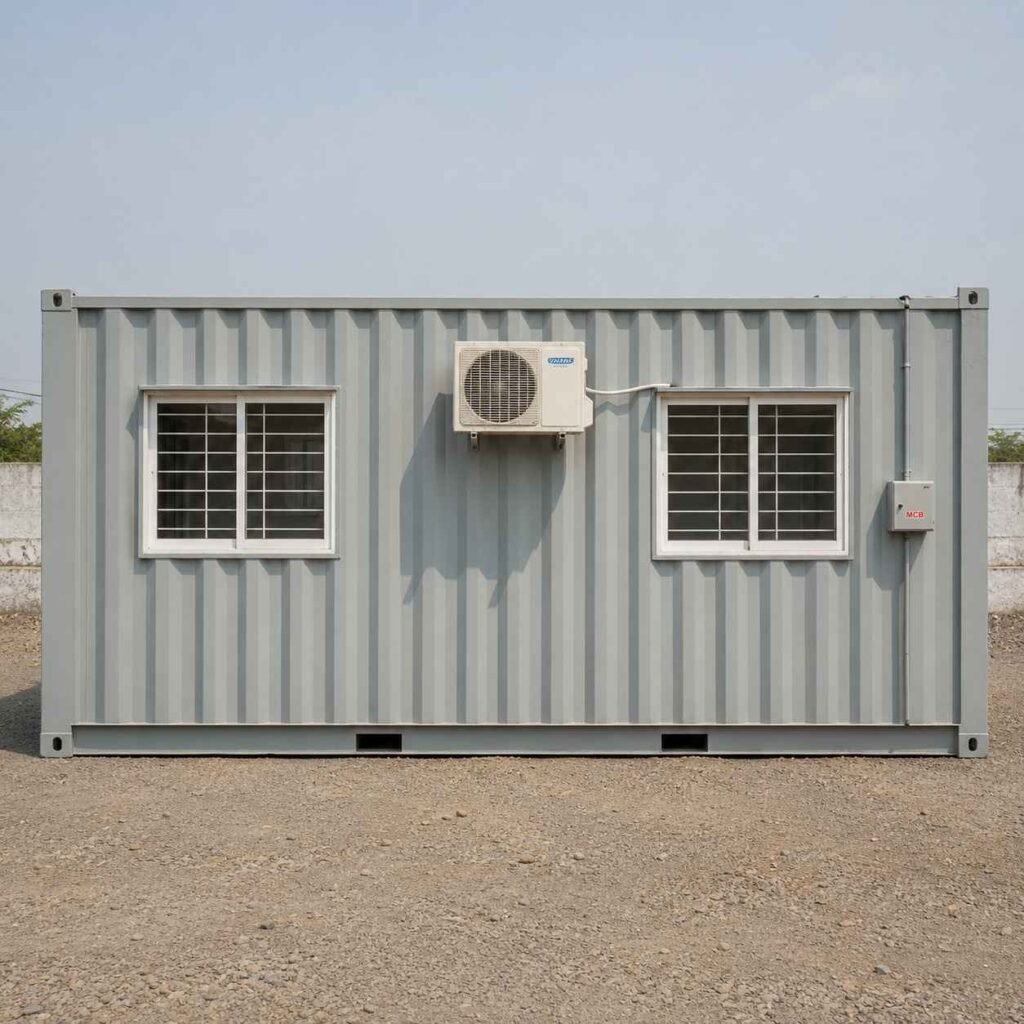
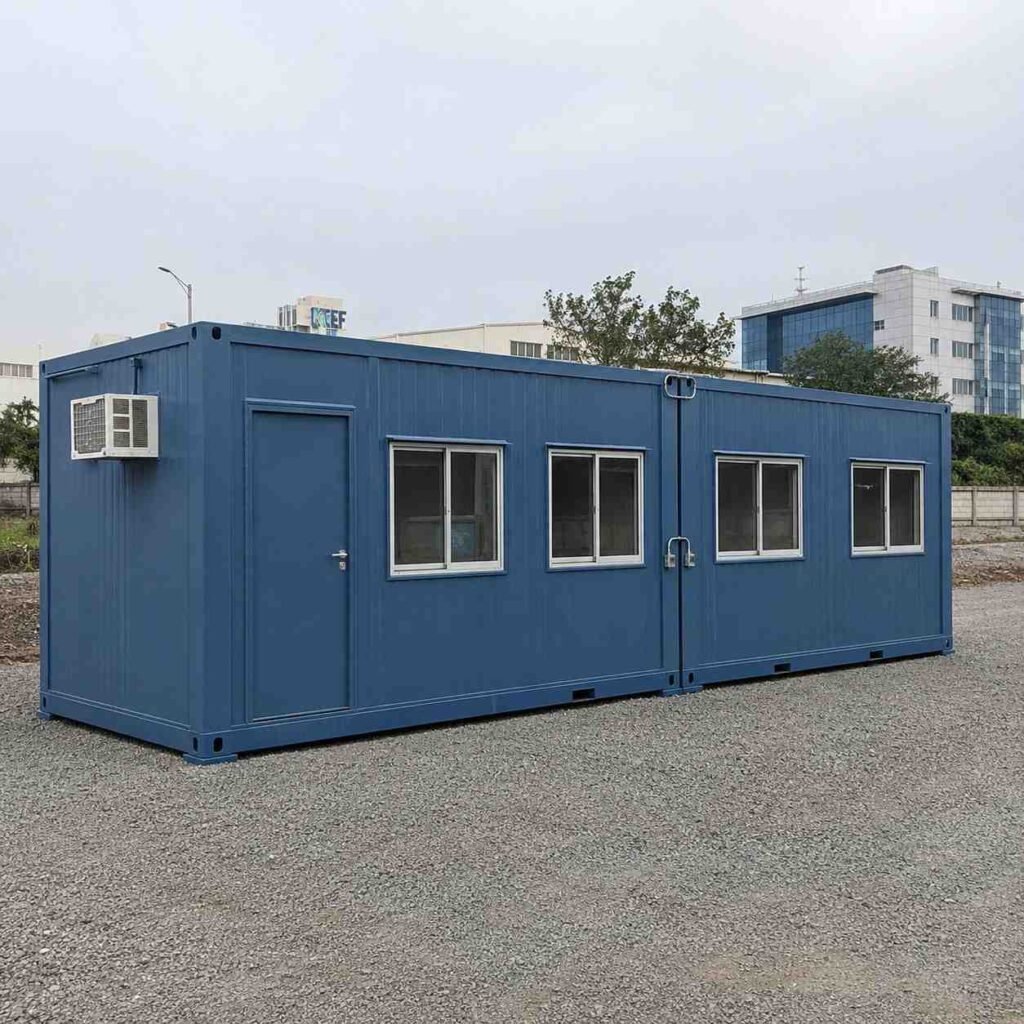
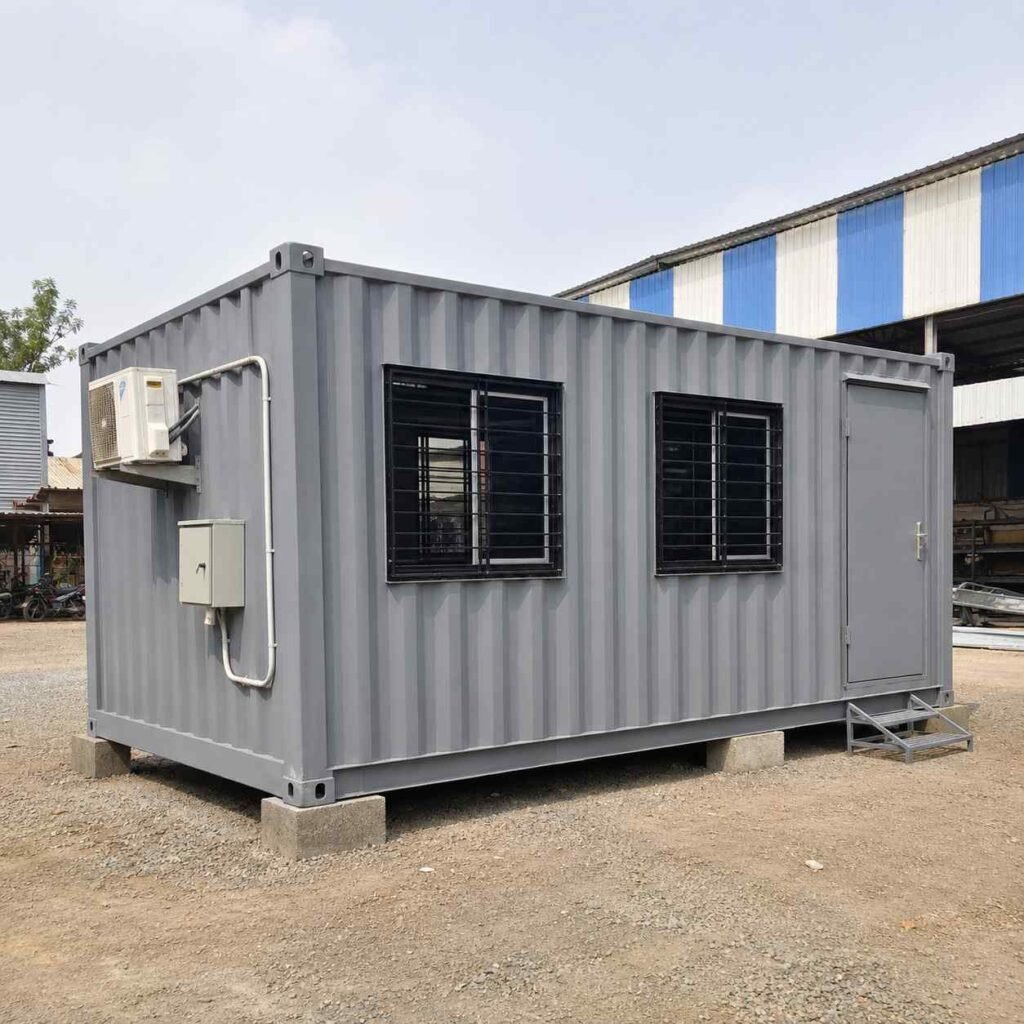
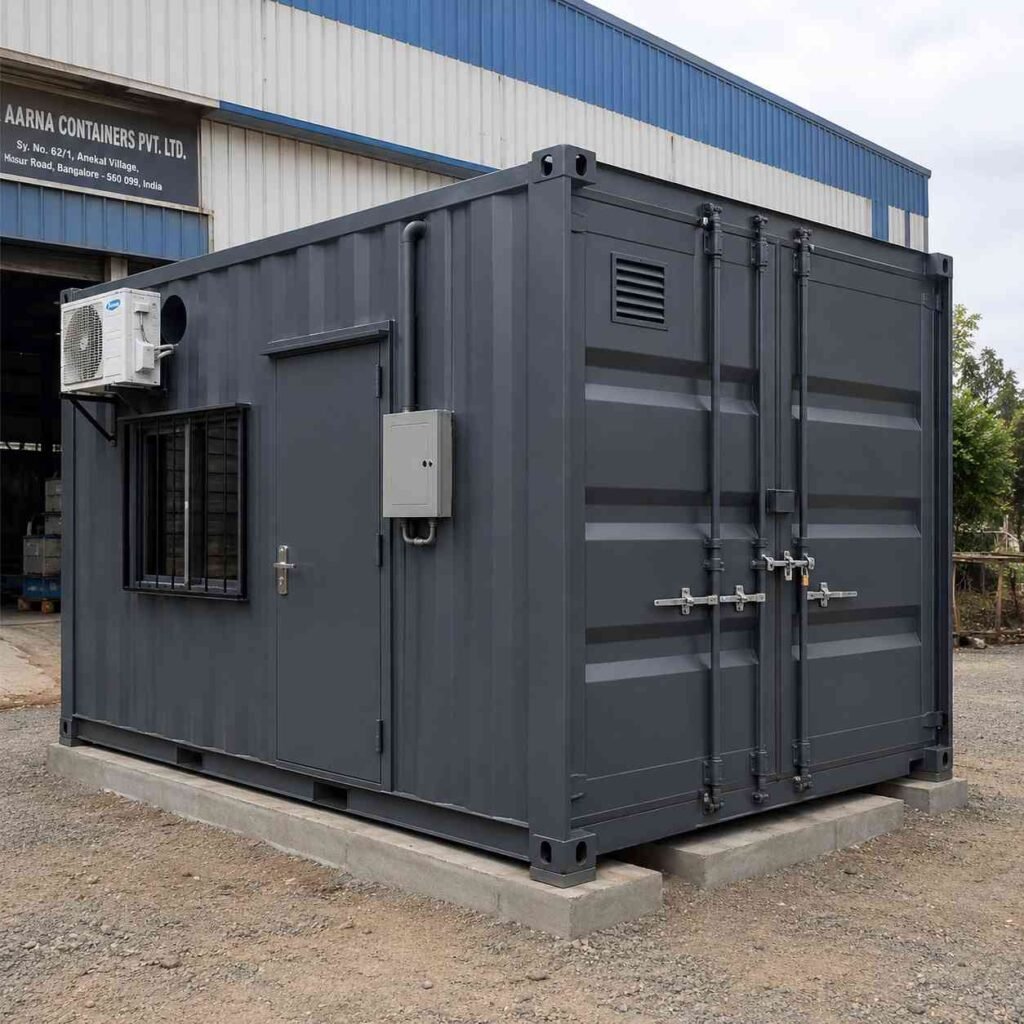
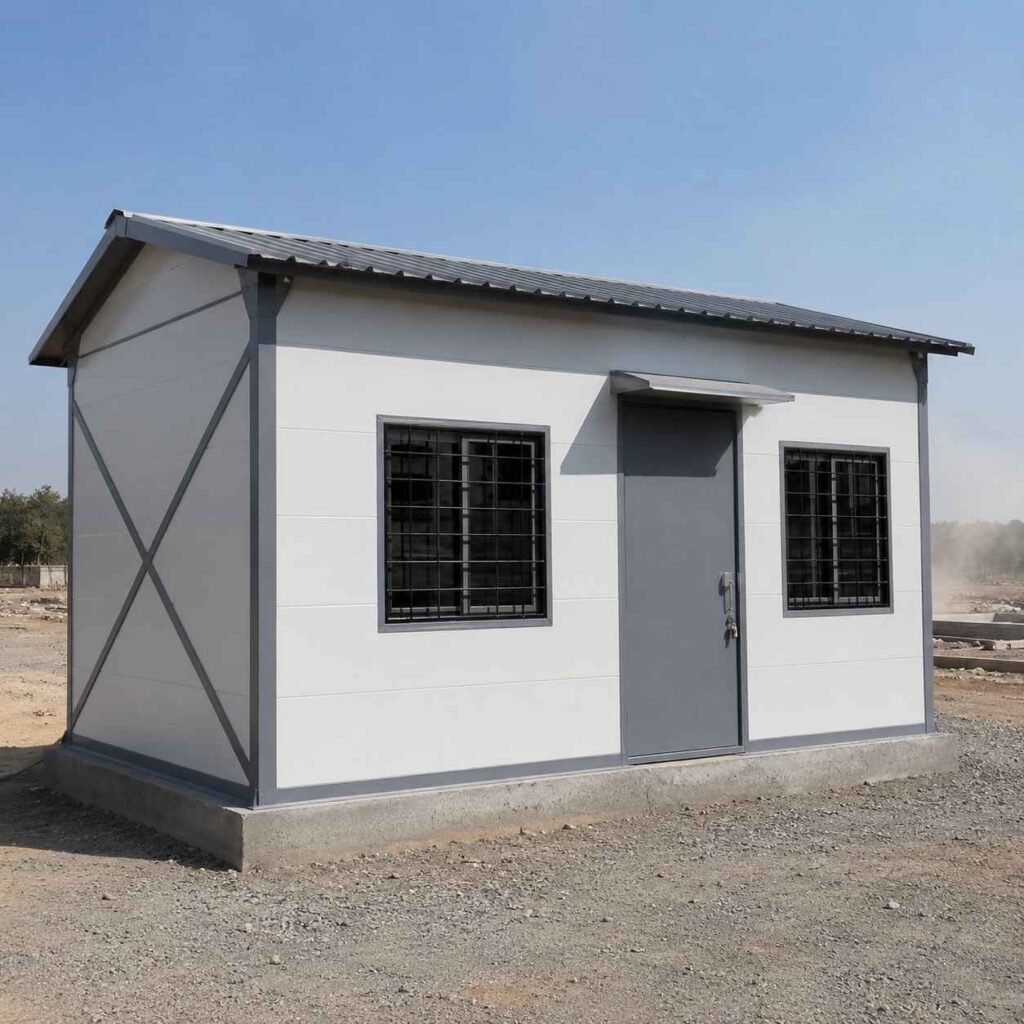
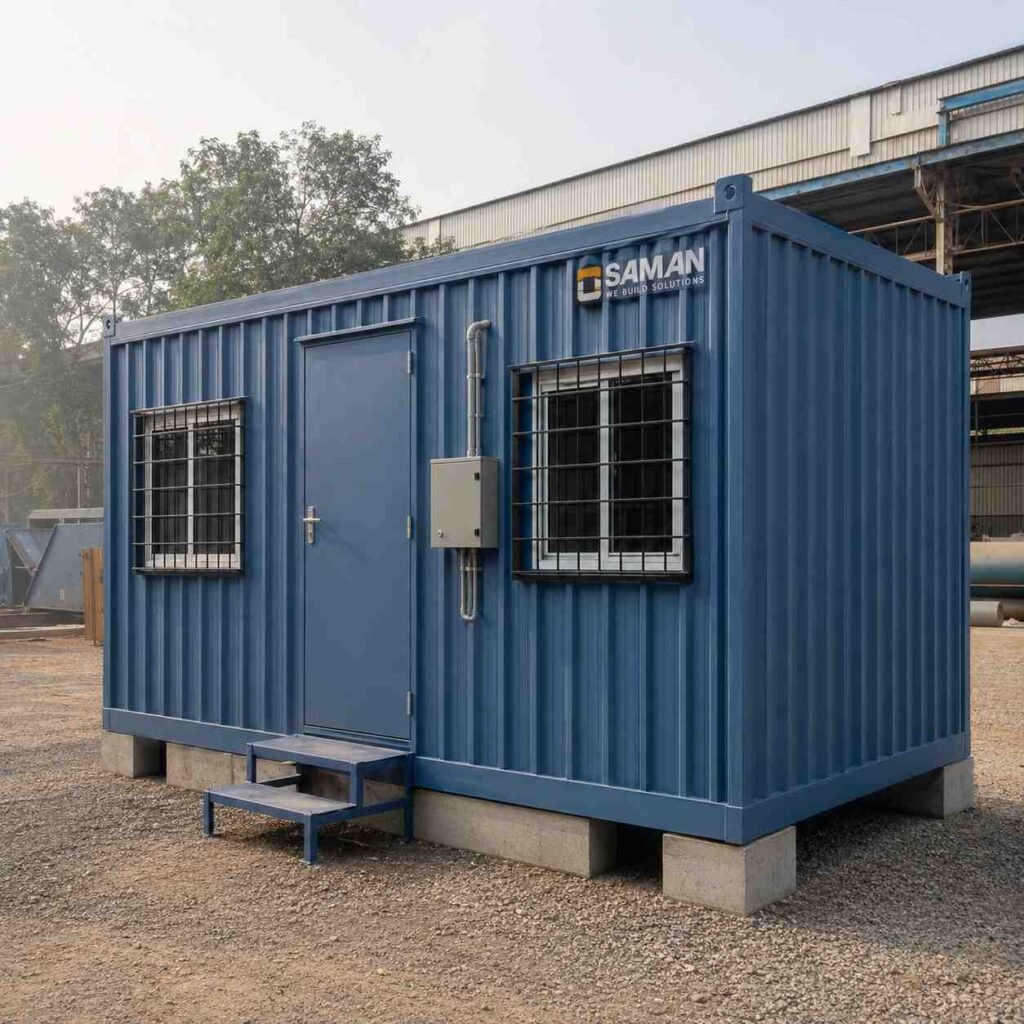
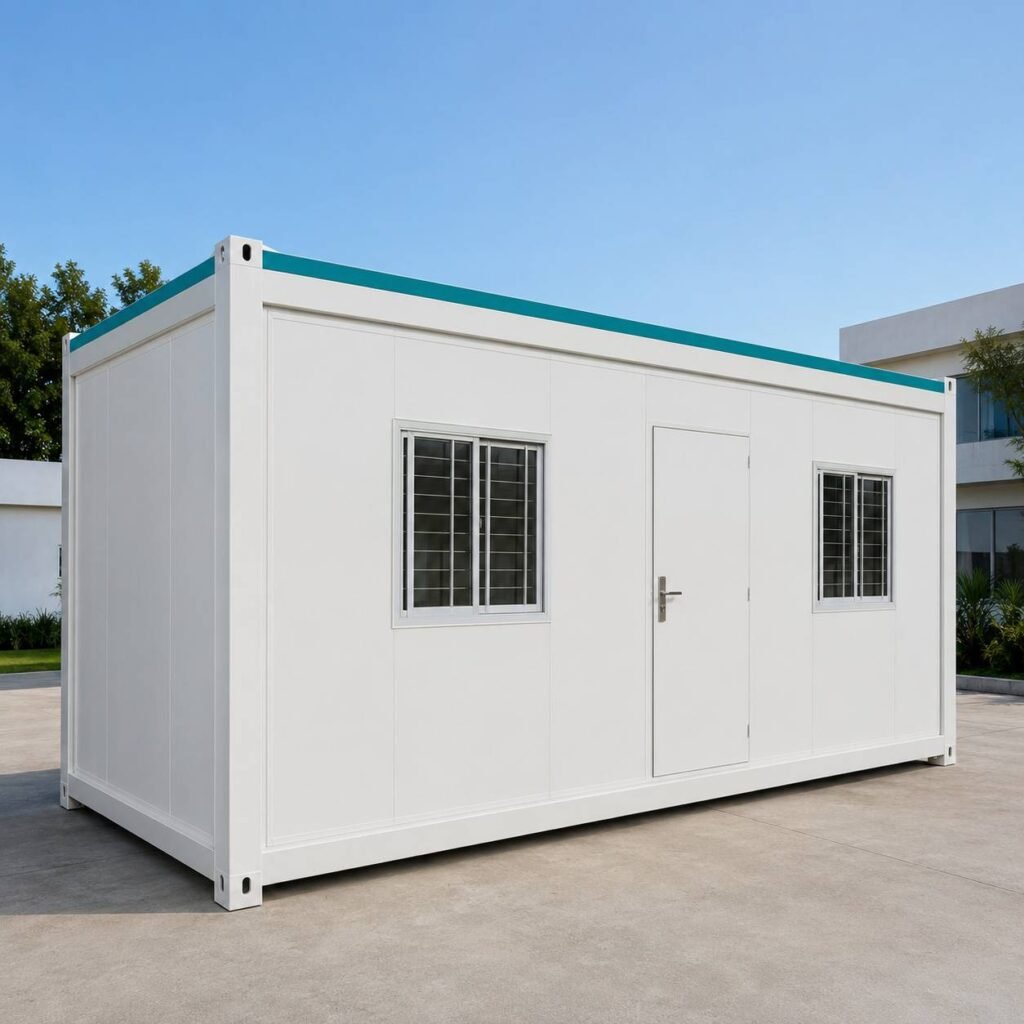
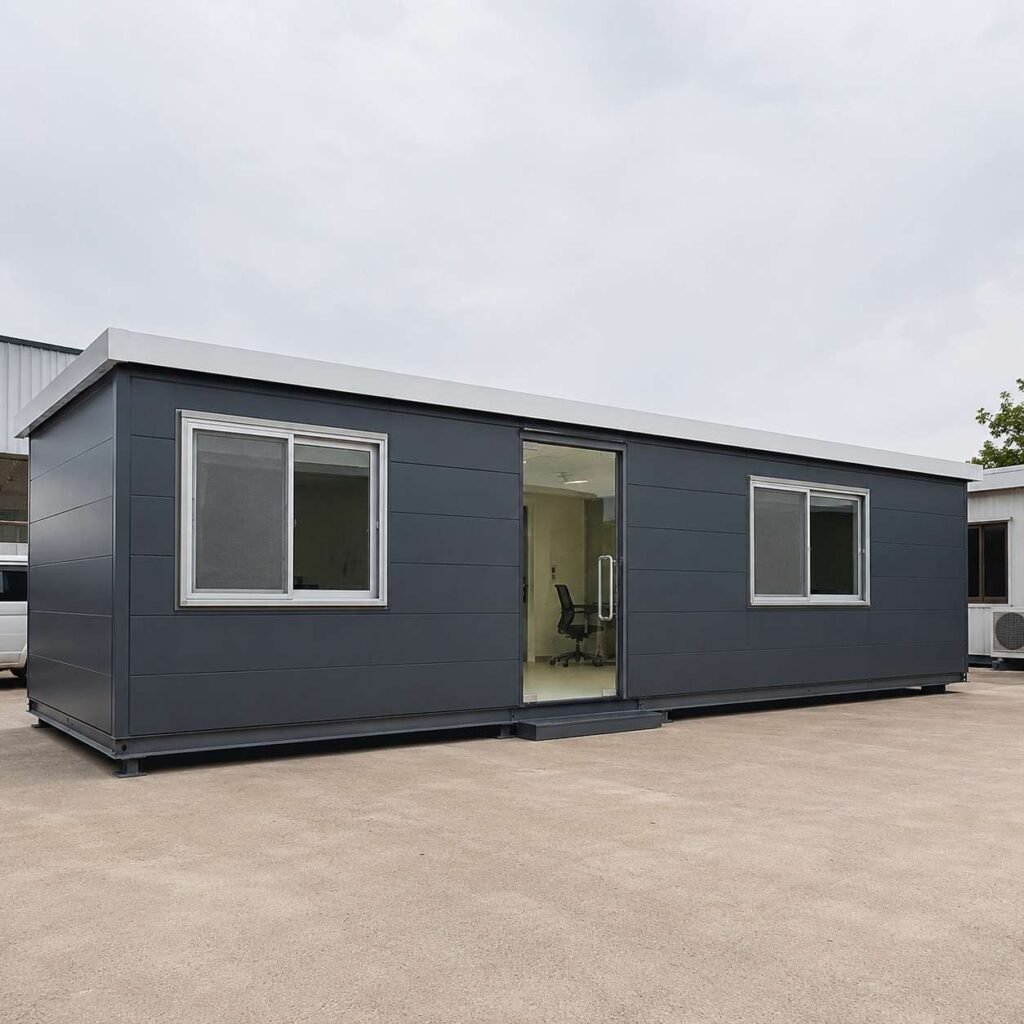
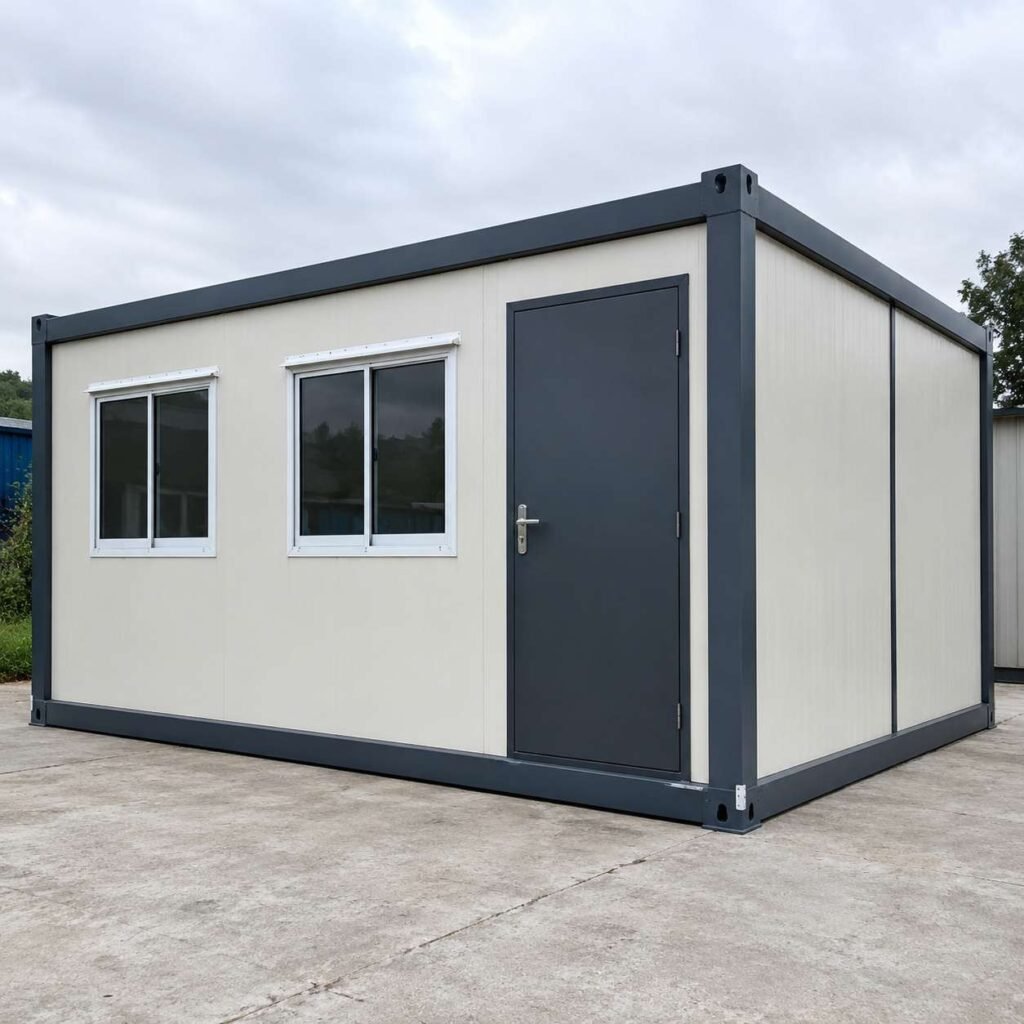
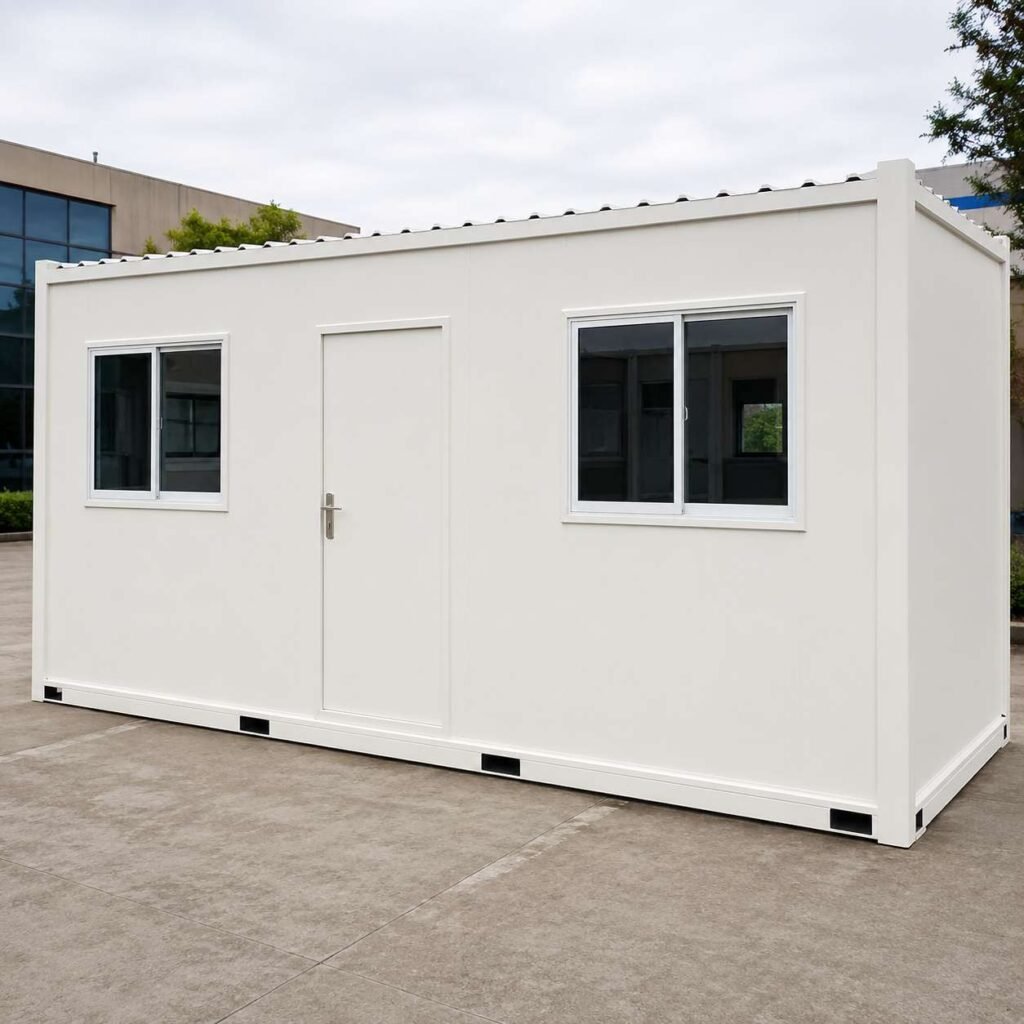
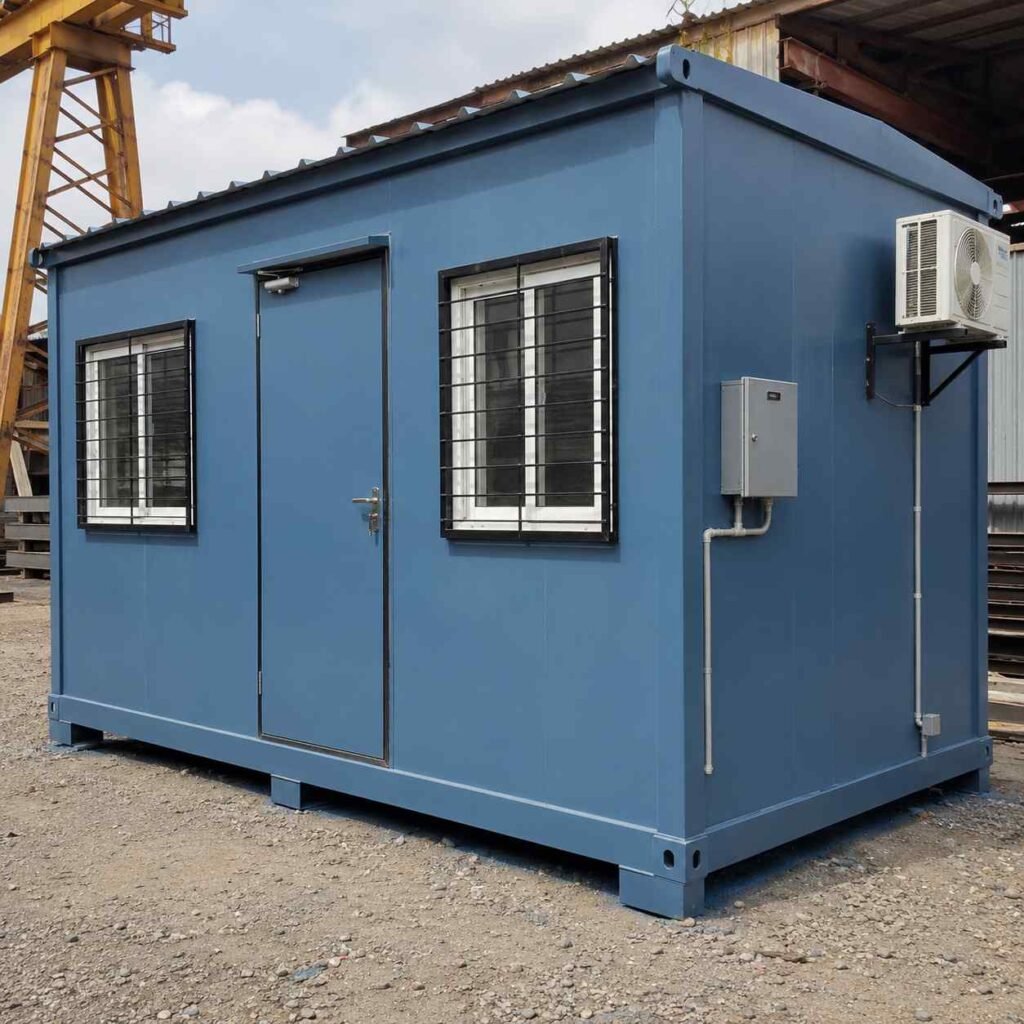
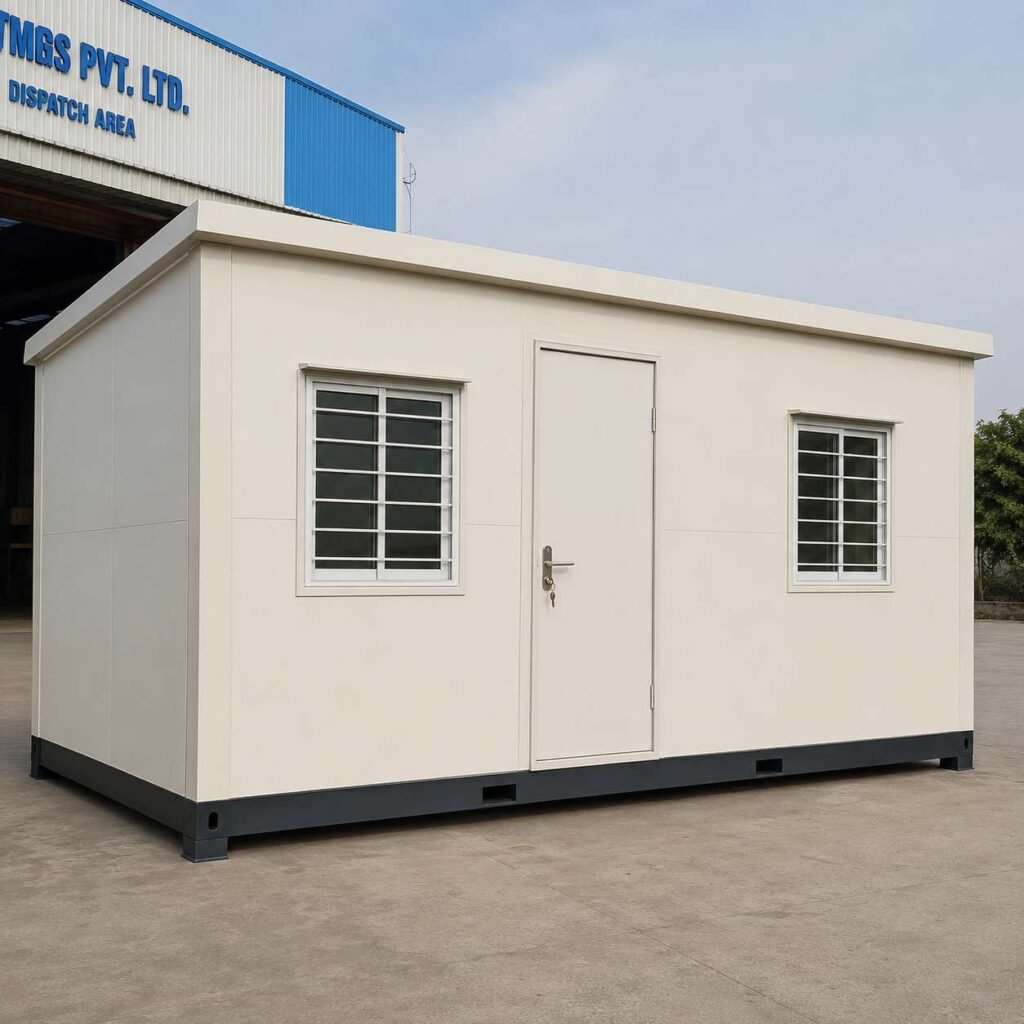
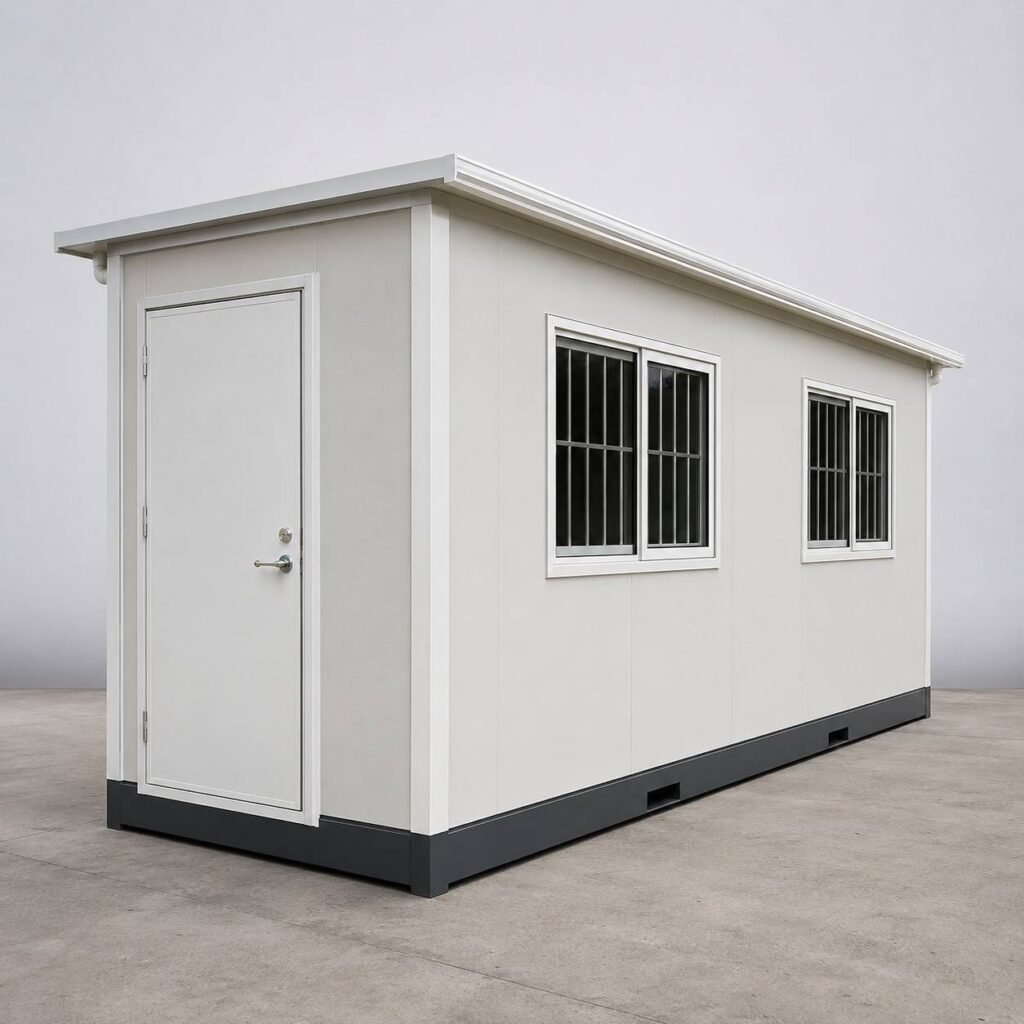
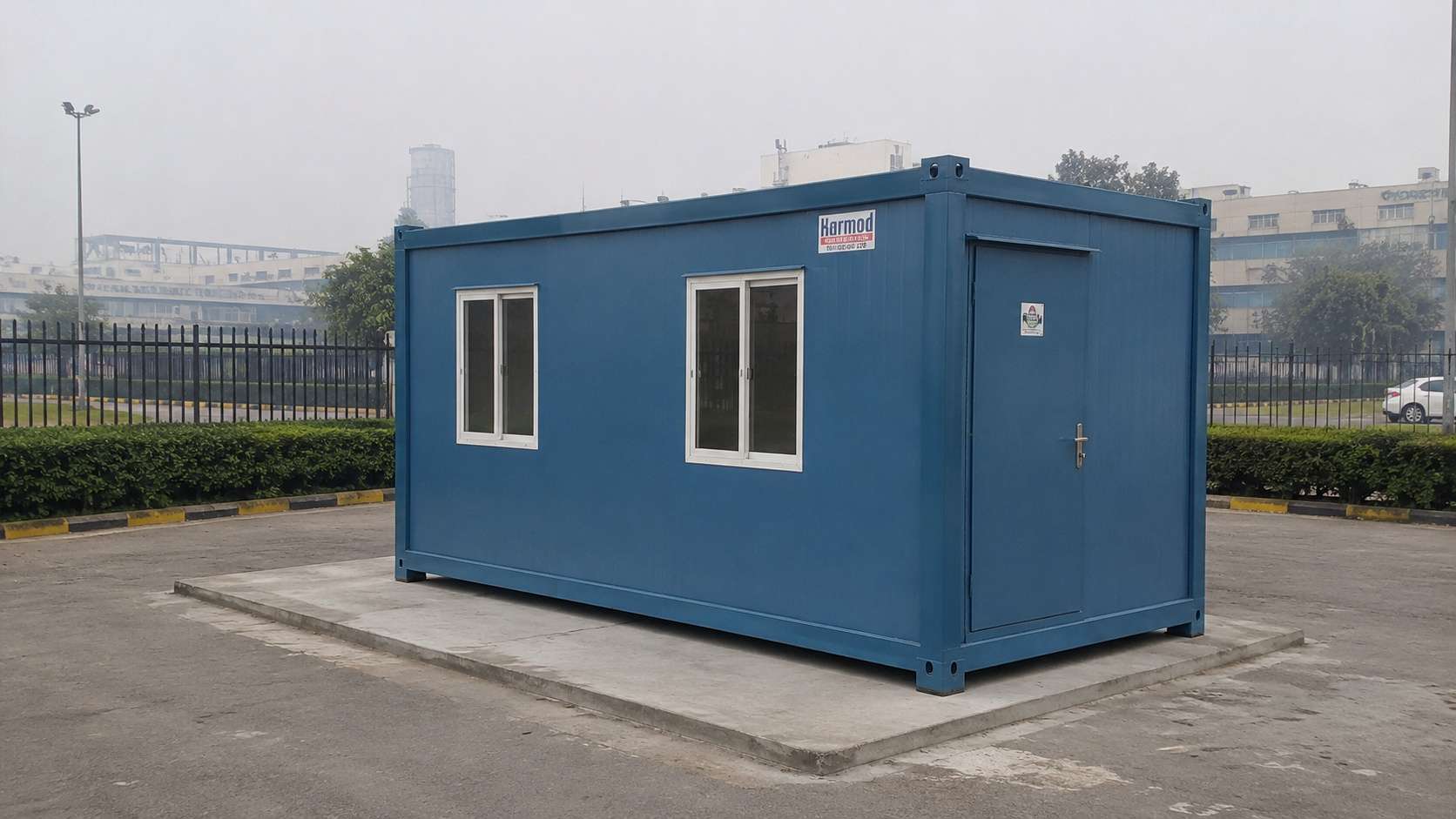
15×10 ft — SME office or small site office. The dominant Delhi office order. Seats 4-6 people, fits one A/C, full electricals, optional toilet partition. Used at construction sites, factory annexes, NGO offices. The modular portable cabin specs we factory-build at our Greater Noida unit cover this band with insulated walls and 7-21 day delivery into Delhi NCR.
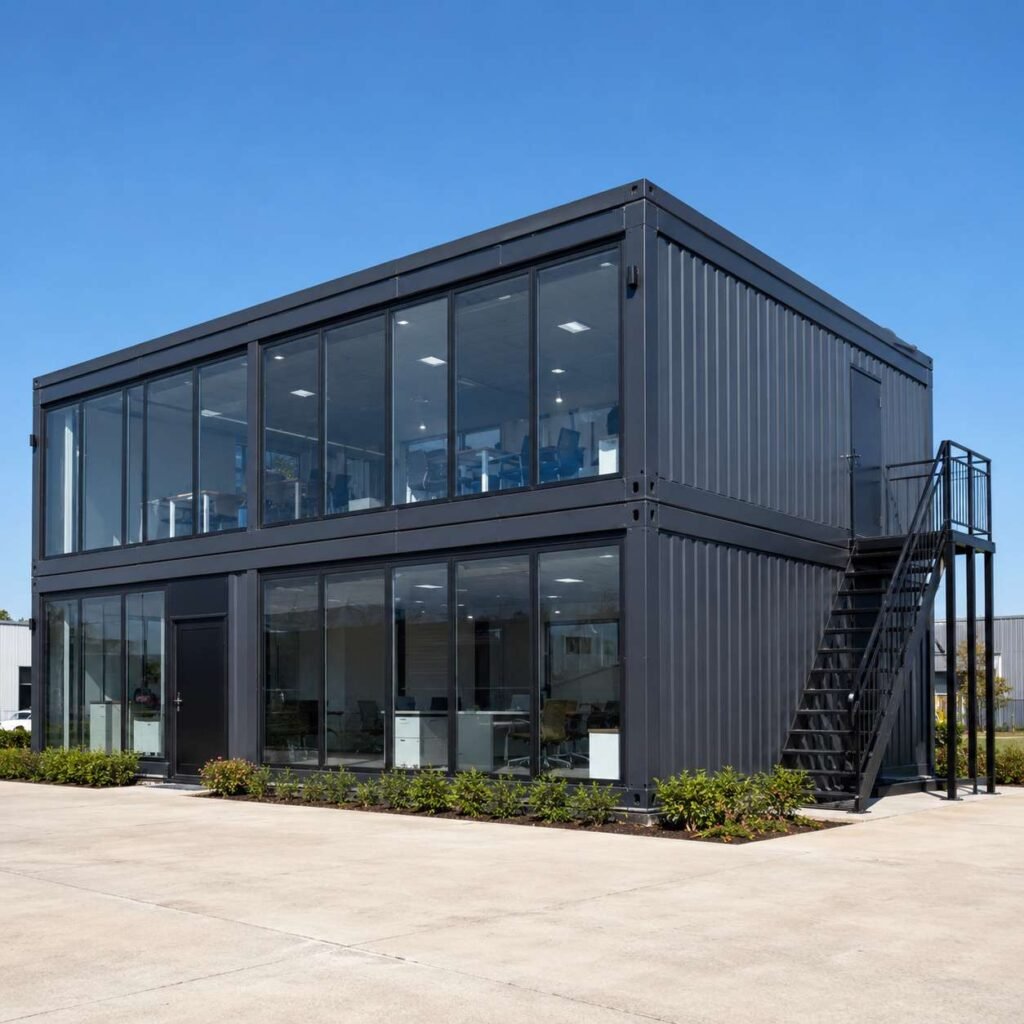
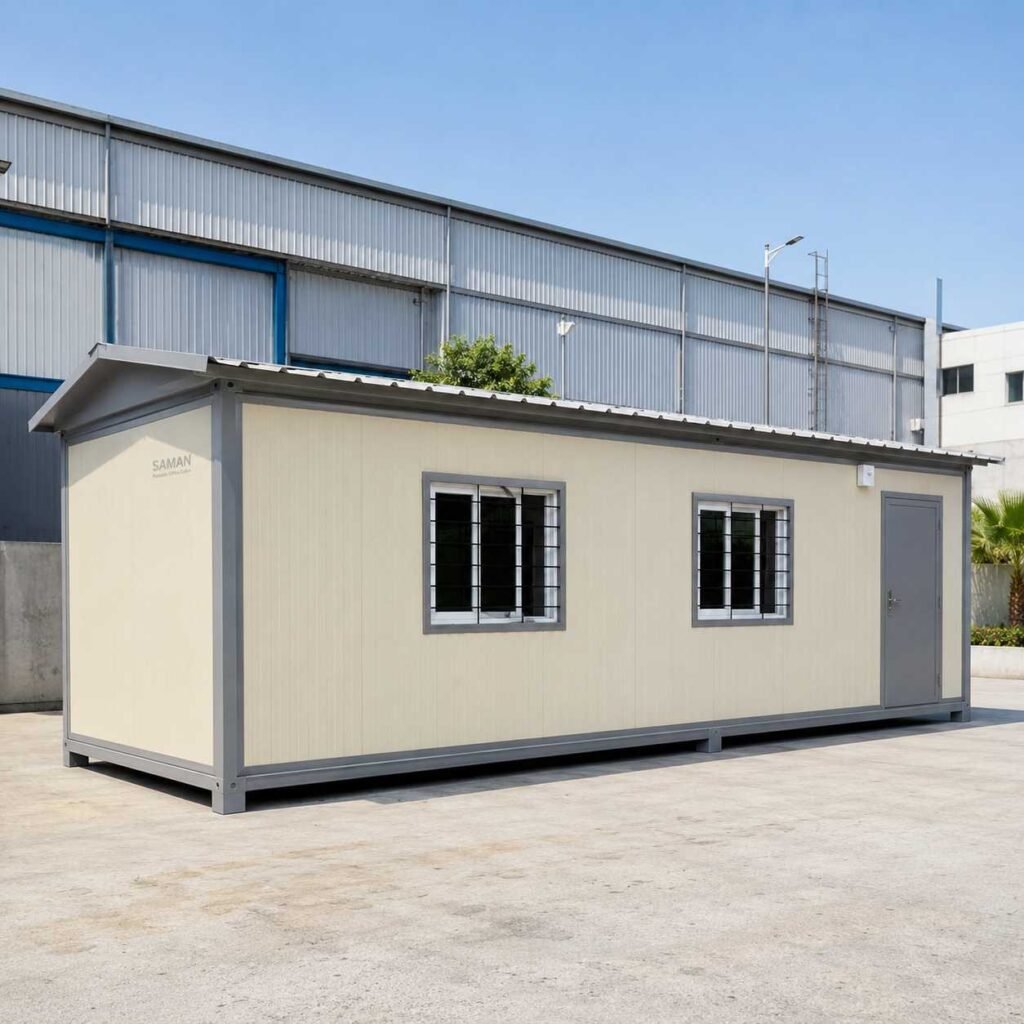
20×10 ft to 25×11 ft — full site office. Standard EPC site office across Dwarka, Rohini, Greater Kailash extensions, and the NCR ring. Seats 8-10 people, separate reception zone, often with a separate toilet block. Many Delhi office orders specify the toilet-fitted portable cabin configuration most Delhi offices order — a built-in WC compartment saves both the second unit and the plumbing run.
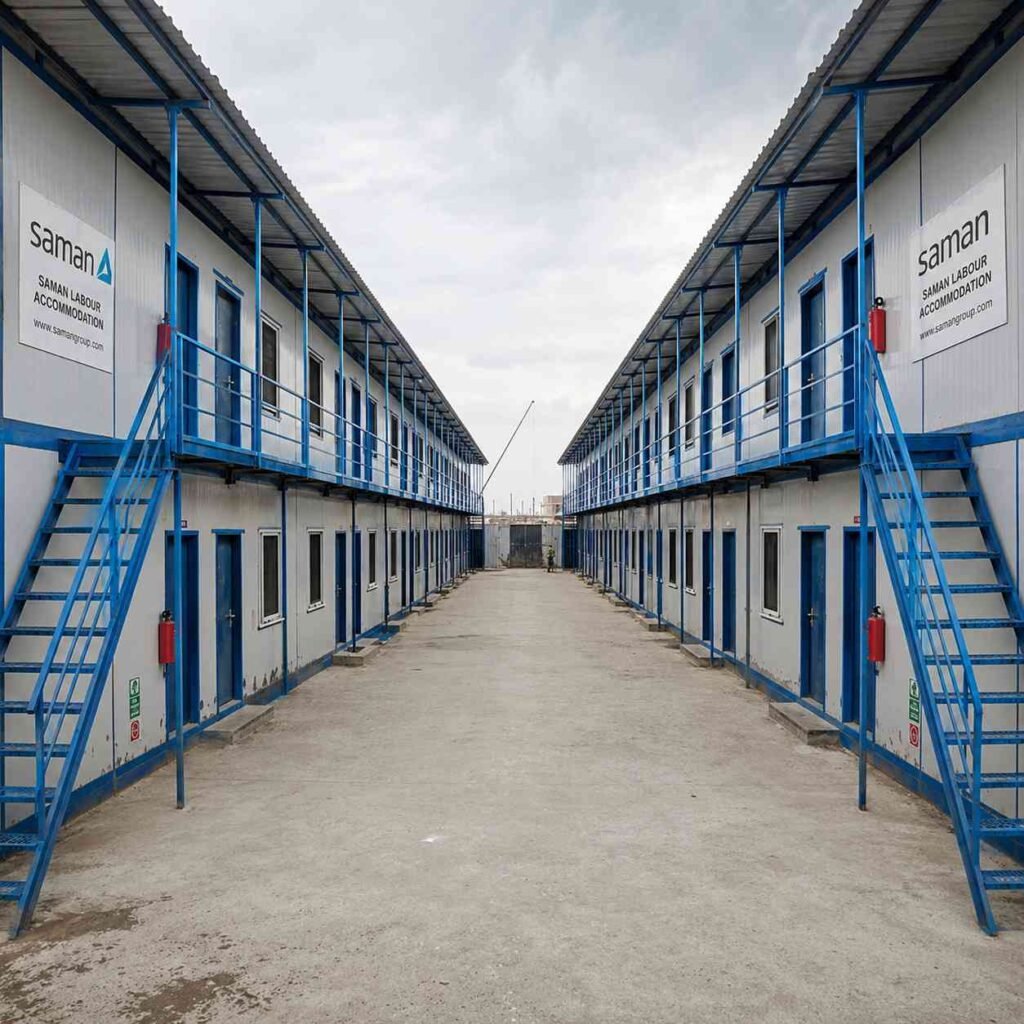
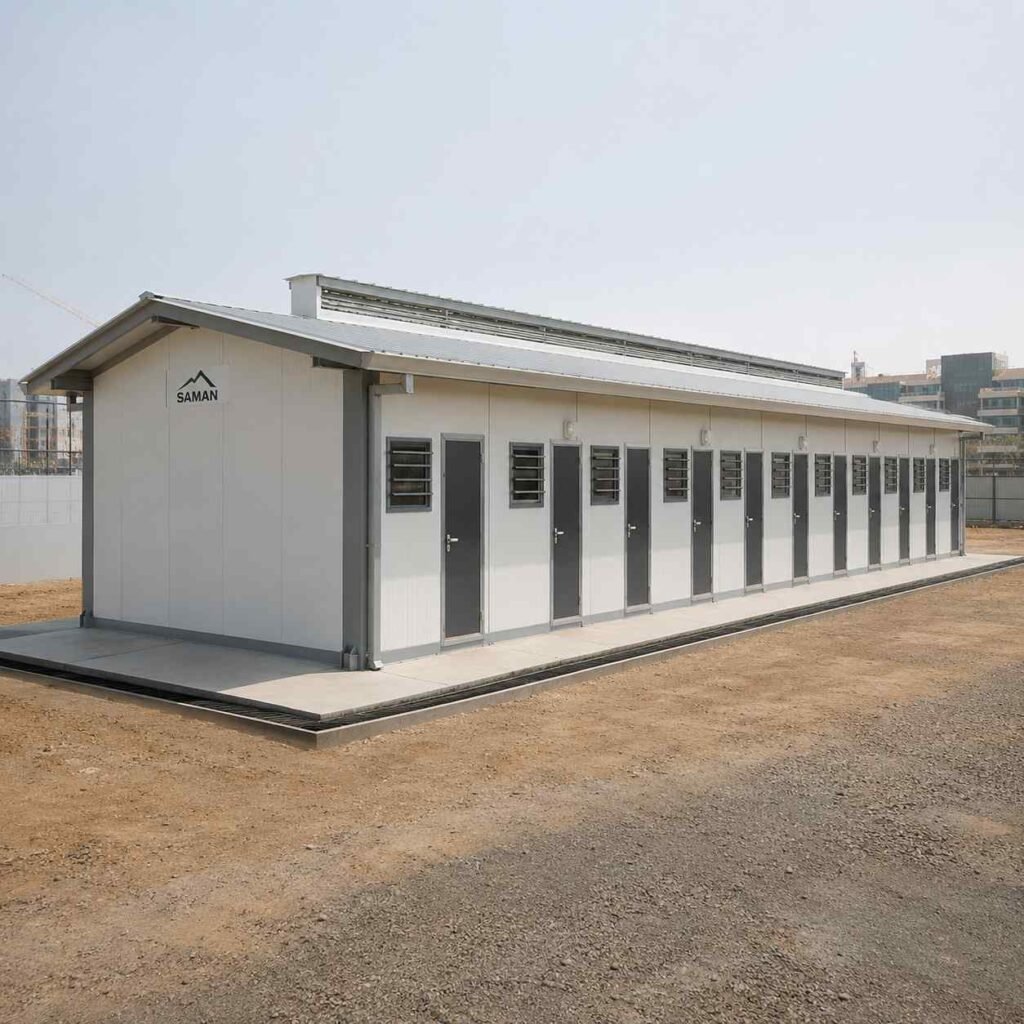
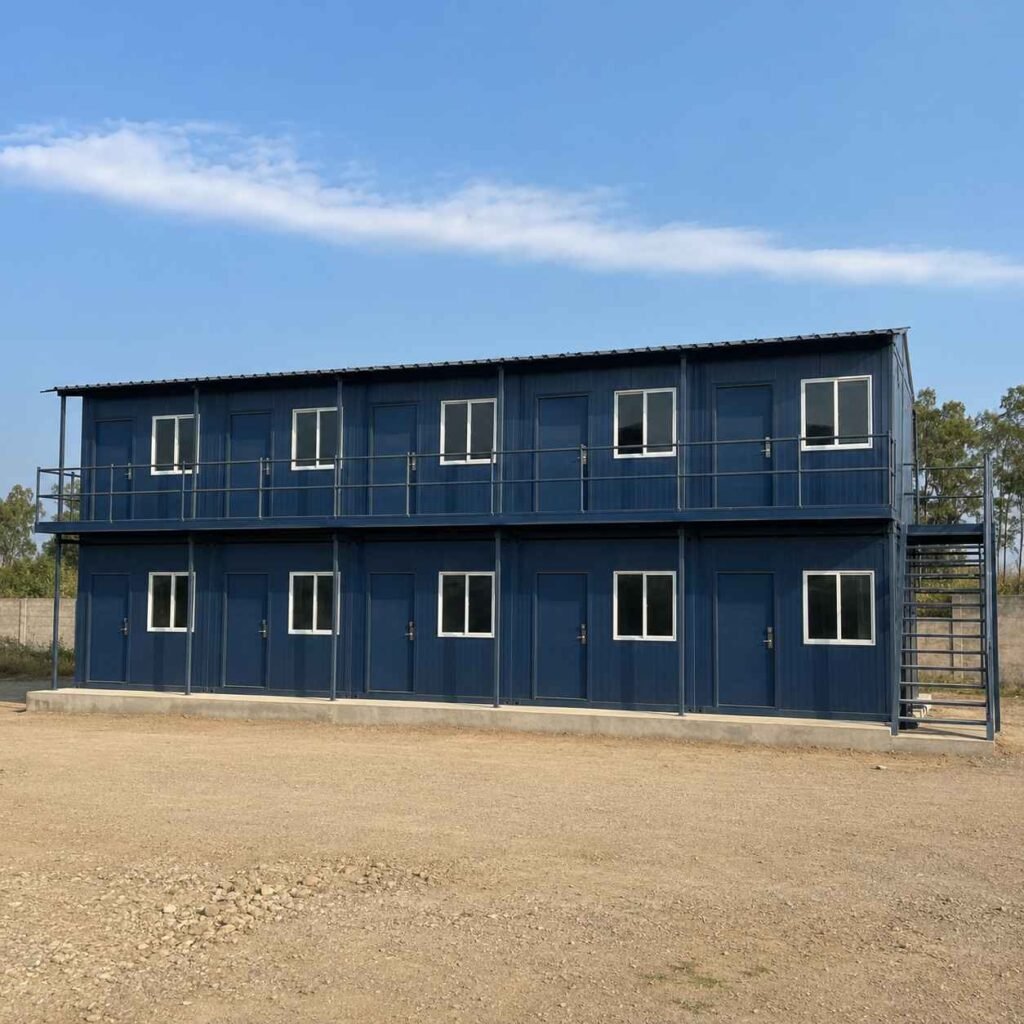
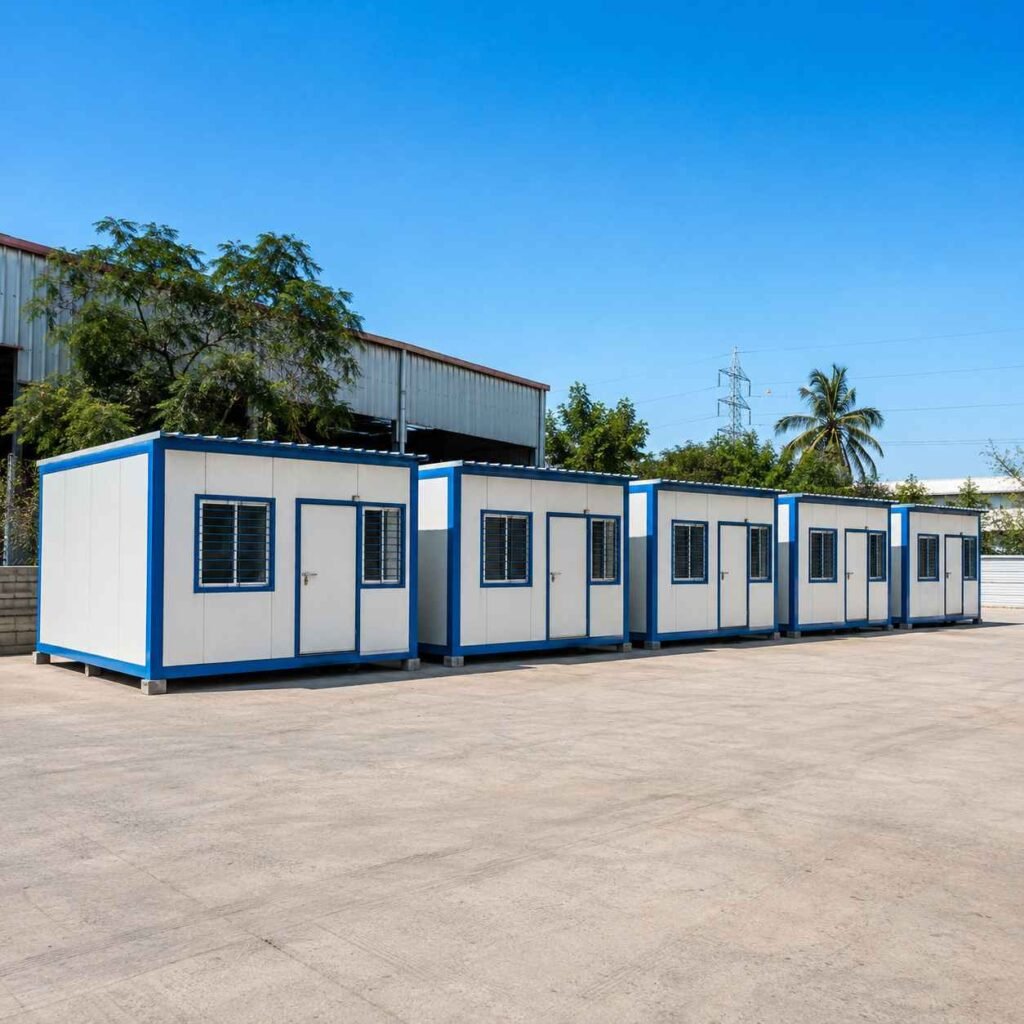
30×10 ft to 40×10 ft — labour bunk-house. Multi-compartment, 8-12 occupants. Used at large infrastructure projects (Metro Phase IV, expressway sites, mid-scale housing). Most have shared toilet block and ventilation cutouts on both long walls. Rs 3,60,000-5,00,000.
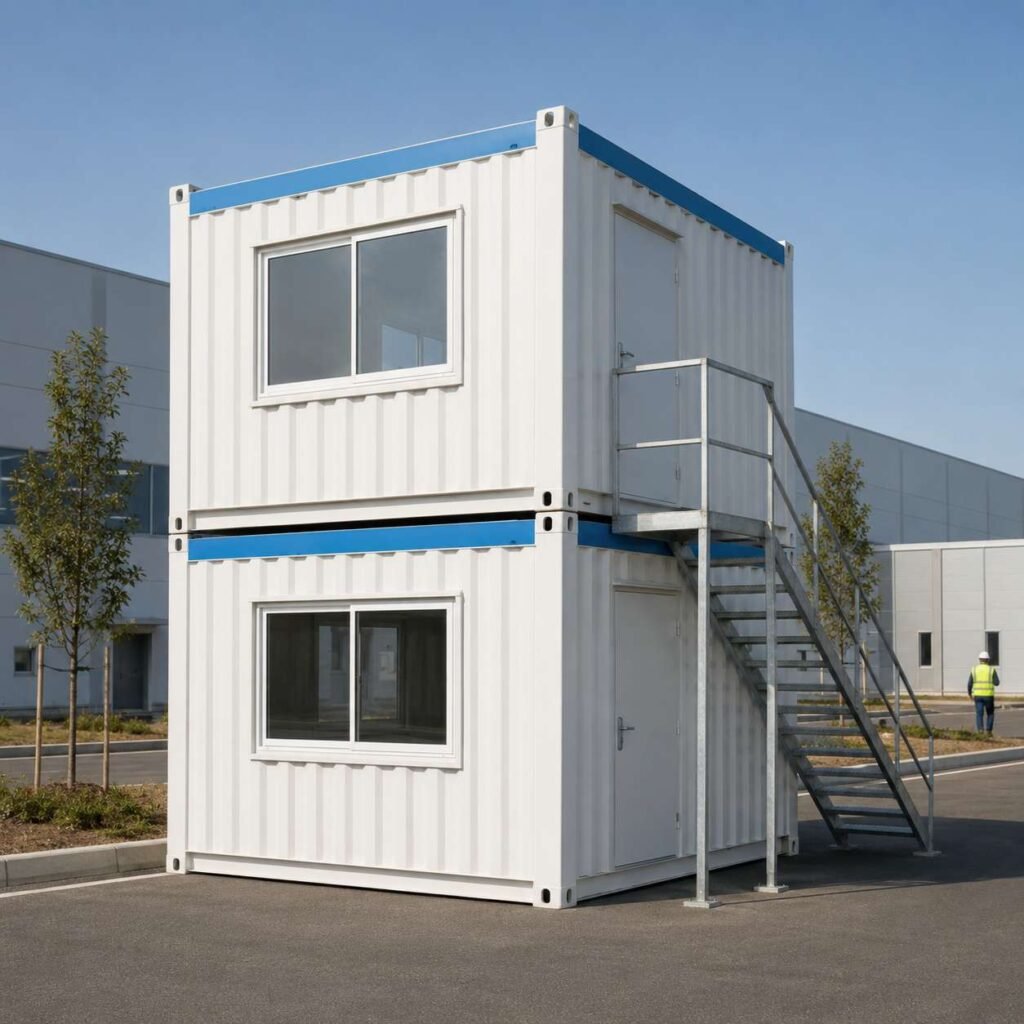
A typical portable office cabin order in Delhi specifies size, toilet scope, and electrical scope upfront; partitions and finishes are configured at the factory before dispatch — site work is install-only, never fabrication.
Delhi Climate Spec: What PUF Density, Panel Thickness, and Frame Grade You Actually Need
Delhi runs the most extreme climate swing in mainland India — 48°C summer peaks, 4°C winter lows, post-monsoon humidity above 80%, and year-round particulates that corrode uncoated steel. Choosing materials for a Delhi installation comes down to four spec numbers.
Frame — IS 2062 Grade A mild steel. The Indian Standard for structural mild steel; Grade A handles Delhi’s 8-12 kN/m² wind load and the dead-load of a fully-fitted cabin. Lower grades sold by the cheap end of the market cut structural life from a 20-25 year service expectation to 8-10 years. Demand the mill test certificate with every dispatch — the document proves the steel batch used was IS 2062 Grade A and not a re-rolled substitute.
PUF panel density — 40 kg/m³ minimum, 50-60 kg/m³ for Delhi summer. Polyurethane foam (PUF) is the insulation core in the sandwich panels that form the walls and roof. Density determines thermal load. The 40 kg/m³ floor handles ordinary Indian conditions; for Delhi’s 48°C summer, 50-60 kg/m³ holds interior temperatures 10-12°C below ambient with modest A/C tonnage. Below 40 kg/m³, panels compress over time and let summer heat soak through faster than ducted cooling can handle.
Panel thickness — 50 mm minimum. A 30-40 mm panel is cheaper but doesn’t dampen Delhi’s swing. 50 mm is the practical floor; 75 mm is what labour-housing and longer-duration buyers should specify.
Cladding — pre-galvanised steel skin, not bare CR sheet. Pre-galvanised steel (0.5 mm thickness, 120 GSM zinc coating minimum) on the panel exterior. Bare cold-rolled sheet corrodes within two monsoon cycles in Delhi’s air; pre-galvanised holds 15+ years with basic touch-up paint at year 7-8.
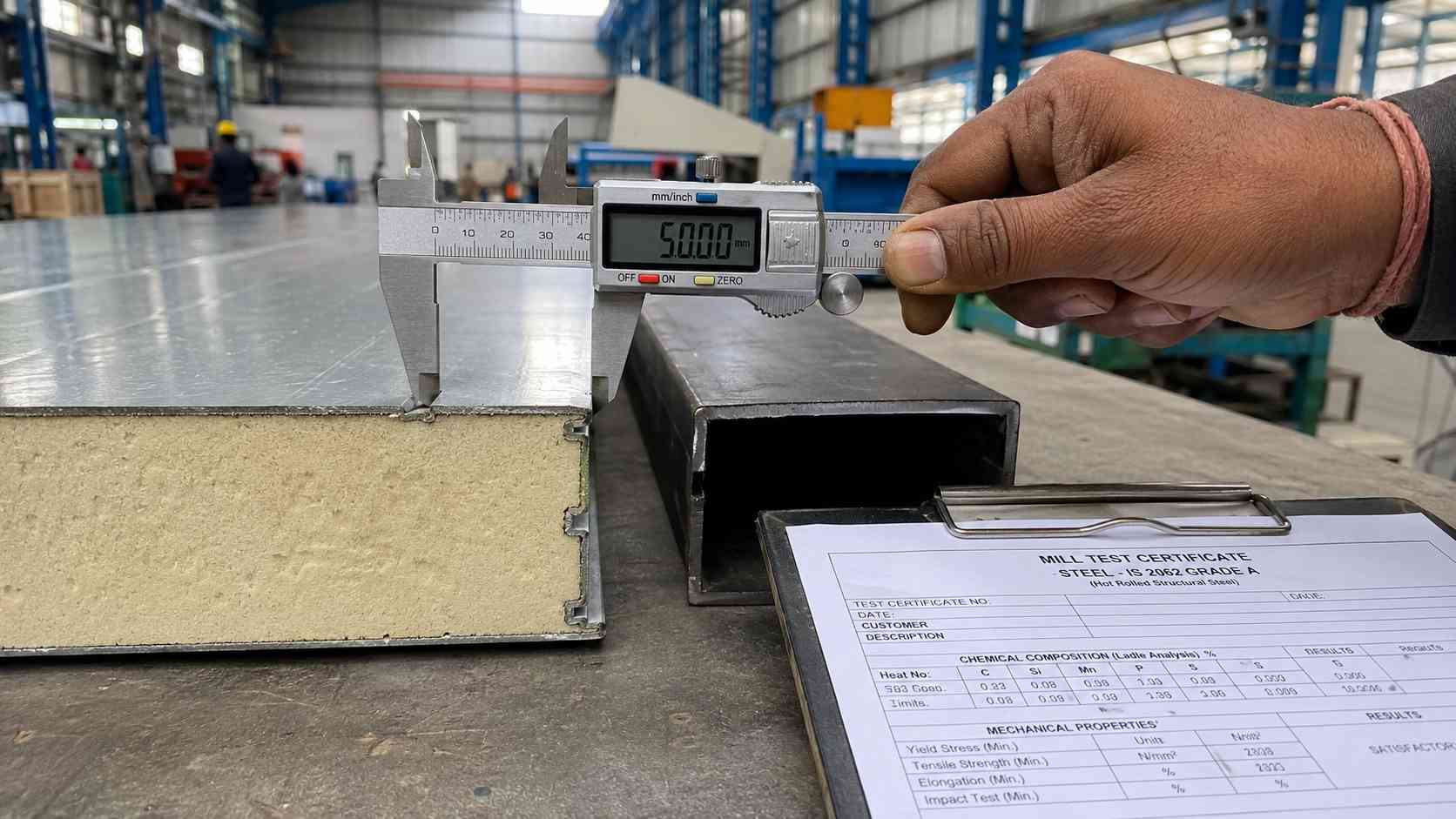
FRP-only construction works for standalone security cabins but not for office occupancy — it doesn’t insulate adequately against Delhi summer and doesn’t carry long-span loads on a 20×10 ft cabin.
Delhi Sub-Region Logic: How Where You Install Changes What You Buy
Delhi isn’t one buying market. Five sub-regions have meaningfully different permit logic, buyer profile, and what a sensible spec looks like.
Central Delhi (Connaught Place, Karol Bagh, Lutyens area, Old Delhi). MCD jurisdiction with heritage and listed-building proximity. Setback rules tighter; expect verification visits. Smaller footprint (4×6 to 10×8 ft) and clean exteriors fit best. Heavy machinery access inside Chandni Chowk and Daryaganj is a real constraint — confirm the truck and crane route before delivery.
South Delhi (Hauz Khas, Greater Kailash, Defence Colony, Vasant Vihar, Saket). DDA and society jurisdiction. Residential installations need society NOC and DDA setback compliance. PUF panel choice matters more — neighbours notice noise transmission. Tilted-roof styling and lighter exterior colours pass society aesthetic clauses more easily.
East Delhi (Mayur Vihar, Laxmi Nagar, Shahdara, Anand Vihar). Mixed residential-industrial. Industrial-cluster permits are routine near Jhilmil and Karkardooma. 15×10 to 20×10 ft site offices dominate.
West Delhi (Janakpuri, Tilak Nagar, Najafgarh, Punjabi Bagh). Logistics, warehousing, transport-yard heavy. 20×10 to 30×10 ft units, often in bulk orders of 4-8 cabins. Industrial-belt permits (Tikri, Mundka) are the most straightforward in Delhi.
North Delhi (Model Town, Civil Lines, Ashok Vihar, Burari, Rohini). Watch for sealing-drive history — verify commercial-use clearance before installing on a property with mixed-use zoning history. 12×8 to 15×10 ft single-room offices are the typical order here.
| Sub-Region | Typical Buyer | Recommended Size | Permit / Use-Case Note |
|---|---|---|---|
| Central Delhi | Heritage-area SME, kiosk operator | 4×6 to 10×8 ft | MCD heritage zone — confirm setback rule before install |
| South Delhi | Residential office, school, society admin | 15×10 ft | DDA / society NOC required; quieter PUF panel choice |
| East Delhi | Industrial cluster, factory site office | 15×10 to 20×10 ft | Easier permits in MSME industrial pockets |
| West Delhi | Logistics yard, warehouse, transport | 20×10 to 30×10 ft | Industrial-cluster permits routine; bulk orders common |
| North Delhi | Mixed commercial; verify clearance | 12×8 to 15×10 ft | Verify commercial-use clearance — sealing history |
NDMC areas (Lutyens belt, parts of New Delhi south of CP) and the Delhi Cantonment have their own approval boards and don’t permit temporary structures without case-by-case clearance.
GRAP, GST, and Delhi Procurement Realities Most Buyers Miss
Two Delhi-specific procurement gotchas every first-time buyer trips over.
The GRAP exemption window. The Graded Response Action Plan (GRAP) is Delhi-NCR’s pollution-control regime. GRAP Stage III (AQI 401-450) bans non-essential construction including demolition, excavation, and on-site concrete pours. GRAP Stage IV (AQI 450+) tightens further. These stages activate most years from late October to early February — sometimes for 8-10 cumulative weeks.
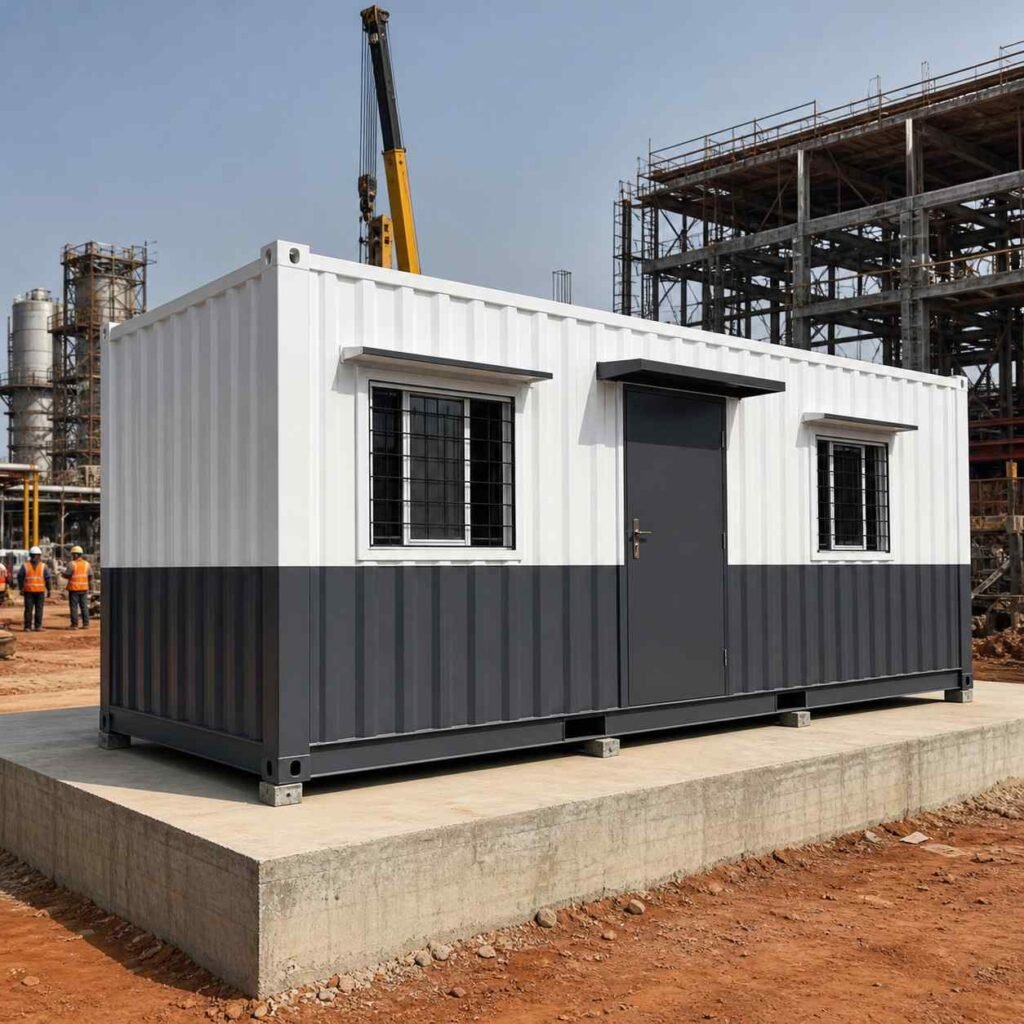
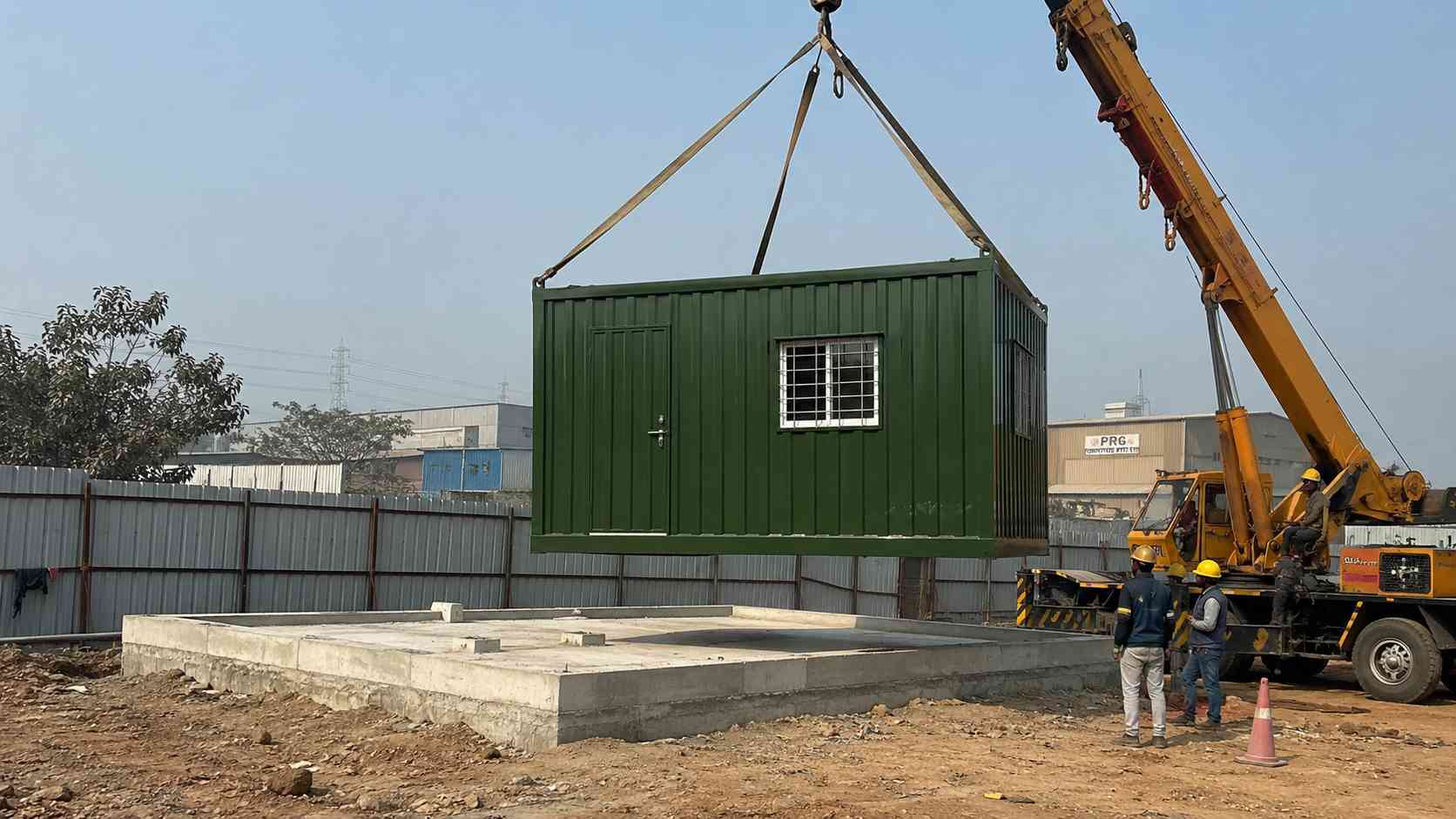
Here’s the critical part: GRAP does not prohibit installation of factory-built dry-assembly structures. A portable cabin manufactured at an off-site facility, transported on a truck, and lowered onto a prepared foundation involves no on-site concrete, no demolition, no significant excavation, and minimal dust generation. This is why Delhi sees a spike in portable cabin orders October through February — projects that can’t pour new walls can still take a portable cabin delivery. Confirm with your contractor that no on-site cement pour is planned and that the install can be classified as dry-assembly.
GST routing and the inter-state E-way bill. Most Delhi buyers source from manufacturers within 50-100 km of the city — but most of those factories sit just outside Delhi’s state boundary, in Greater Noida (UP), Faridabad (Haryana), or Sonipat (Haryana). That makes the supply an inter-state movement under GST: 18% IGST, not 9% CGST + 9% SGST.
For a B2B buyer registered for GST, the distinction is administrative — IGST is fully creditable under input tax credit, so there’s no cash difference. The classification matters for paperwork: the manufacturer issues an inter-state invoice, an E-way bill is generated for the truck movement (mandatory for consignments above Rs 50,000), and HSN 94060099 (prefabricated buildings, other) is used.
A Delhi-located vendor offering CGST+SGST is either a re-seller or a fabricator with very limited scale. Confirm where the cabin is actually manufactured before assuming the GST treatment.
Procurement-Grade Documentation a Delhi Portable Cabin Manufacturer Must Provide
The right portable cabin manufacturers in Delhi don’t sell you a product — they hand over a procurement-ready evidence file. Six documents to demand before signing the purchase order.
1. Mill test certificate (MTC) for the MS frame. Confirms the steel batch used is IS 2062 Grade A. Should reference the batch number, dimensions, and rolling date. Without this, you have no proof the frame meets the structural grade you paid for.
2. Manufacturer GST invoice with HSN 94060099. Not a “delivery challan” or a “performa invoice.” A proper tax invoice that matches your purchase order, with the correct HSN, IGST rate, and an E-way bill reference (mandatory above Rs 50,000 consignment value).
3. Factory address proof and Udyam / MSME registration. Confirms the manufacturer actually operates a fabrication unit and is not a brokerage. For our Delhi deliveries, dispatch originates from our Greater Noida (Dadri) unit on Bisrakh Road; the address shows on every invoice and E-way bill.
4. ISO 9001 reference or equivalent quality documentation. Doesn’t have to be ISO 9001 specifically, but should show a documented QC process — inspection log, panel-density test record, weld inspection sheets.
5. Warranty terms in writing. SAMAN’s locked warranty: 5 years on the structural frame and base; 1 to 2 years on finishing components (wiring, plumbing, painting, panels, doors, windows, locks, fixtures, roof). The structural frame is engineered for a 20-25 year service life with regular maintenance — that lifespan is separate from warranty.
6. After-sales radius commitment. Service response within 48 hours, named contact for the Delhi NCR coverage zone. Across our modular portable cabin solutions, the standard is a one-day site visit for any defect raised inside the warranty window.
Frequently Asked Questions About Portable Cabins in Delhi
Do I need a permit to install a portable cabin in Delhi?
It depends on where. DDA, MCD, NDMC, and Cantonment areas each have different rules. In industrial cluster zones (East/West Delhi), portable cabins on the same plot as an approved use rarely need an additional permit. In residential areas under DDA jurisdiction, you may need a society NOC and DDA setback approval. In Lutyens / NDMC areas, case-by-case approval is required. The safest path: confirm with your local sub-divisional office before site delivery.
Can I install a portable cabin in Delhi during GRAP Stage III or IV?
Yes, provided the install is dry-assembly only — no on-site concrete pour, no demolition, no significant dust generation. A pre-built portable cabin lowered onto a prepared foundation generally qualifies. If your installation requires breaking a slab or pouring new footings, those activities are restricted during active GRAP stages.
What’s the difference between MS frame and sandwich-panel cabins for Delhi’s summer?
The MS frame is the structural skeleton — every quality cabin has one (IS 2062 Grade A or higher). “Sandwich panel” refers to the wall and roof composition: outer galvanised skin, PUF foam core, inner skin. Both are used together in any serious build. The decision factors are PUF density (40 kg/m³ minimum, 50-60 for summer comfort) and panel thickness (50 mm minimum).
How long does delivery and installation take in Delhi from a Greater Noida factory?
7 to 21 working days from purchase order confirmation, depending on customisation and stock. Standard 15×10 ft and 20×10 ft sizes dispatch within a week. Custom toilet-fitted and partitioned units take 14-21 days.
Is rental a better option than buying for short Delhi projects?
For projects under 12 months, rental usually wins on total cost. Beyond 18 months, ownership of a new factory-built unit is typically cheaper than rental — and the cabin still has 15-20 years of residual life. Break-even depends on cabin size and rental rate; typical Delhi rental is Rs 8,000-15,000 per month for a 15×10 ft office.
Talk to Our Delhi NCR Team
Planning a portable cabin order for a Delhi site? Talk to our Delhi NCR team. We dispatch from our Greater Noida (Dadri) factory on Bisrakh Road and cover Delhi NCR with 7-21 day delivery and on-site installation.
Delhi NCR: Call +91 87960 39938 | WhatsApp +91 97089 89937
Bangalore / South India: Call +91 80886 85440 | WhatsApp +91 88616 22859
