






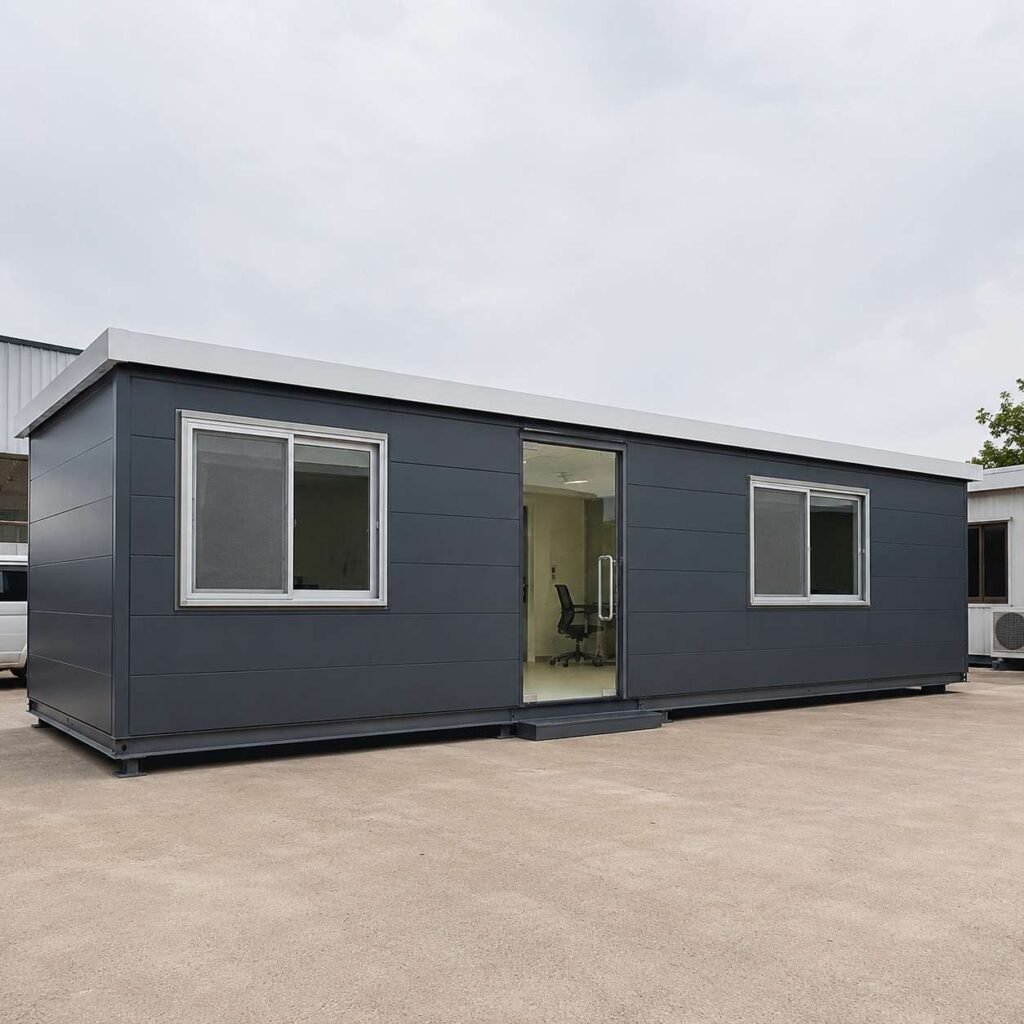

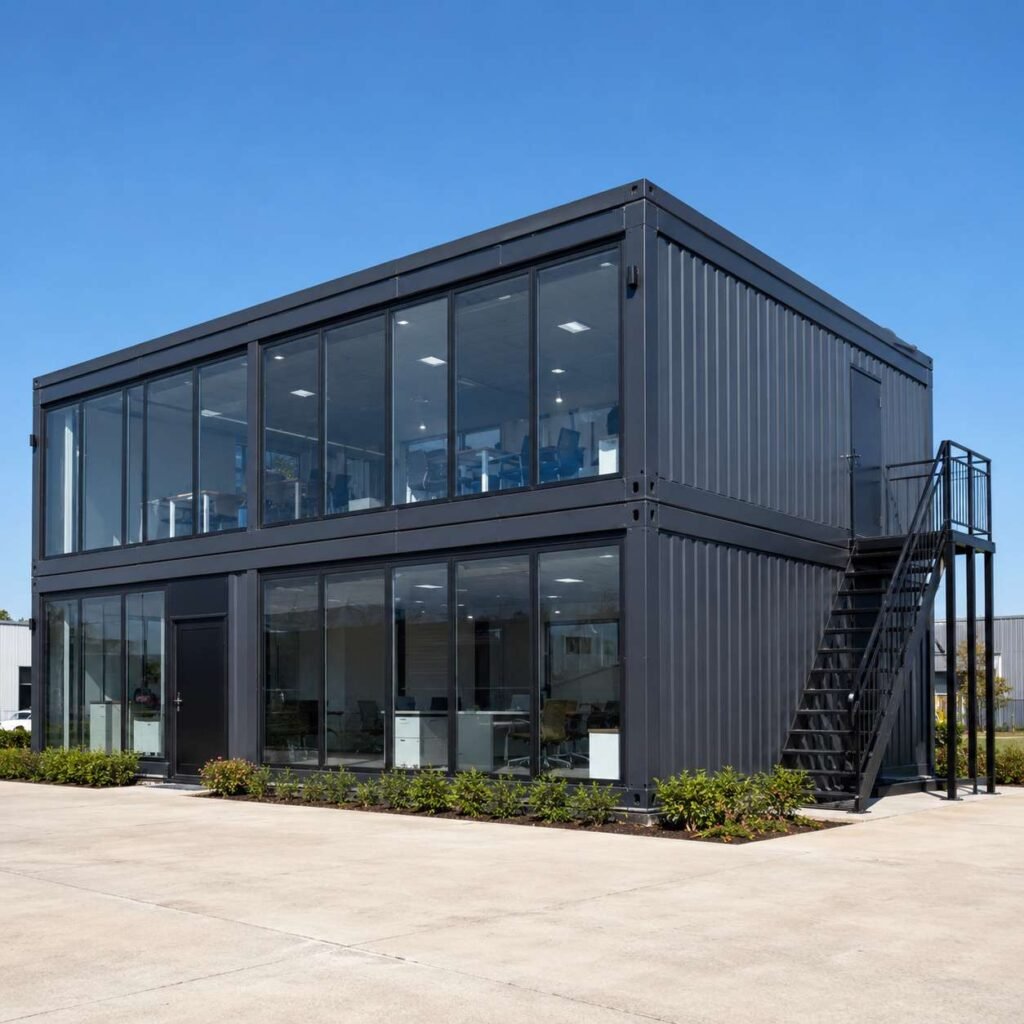
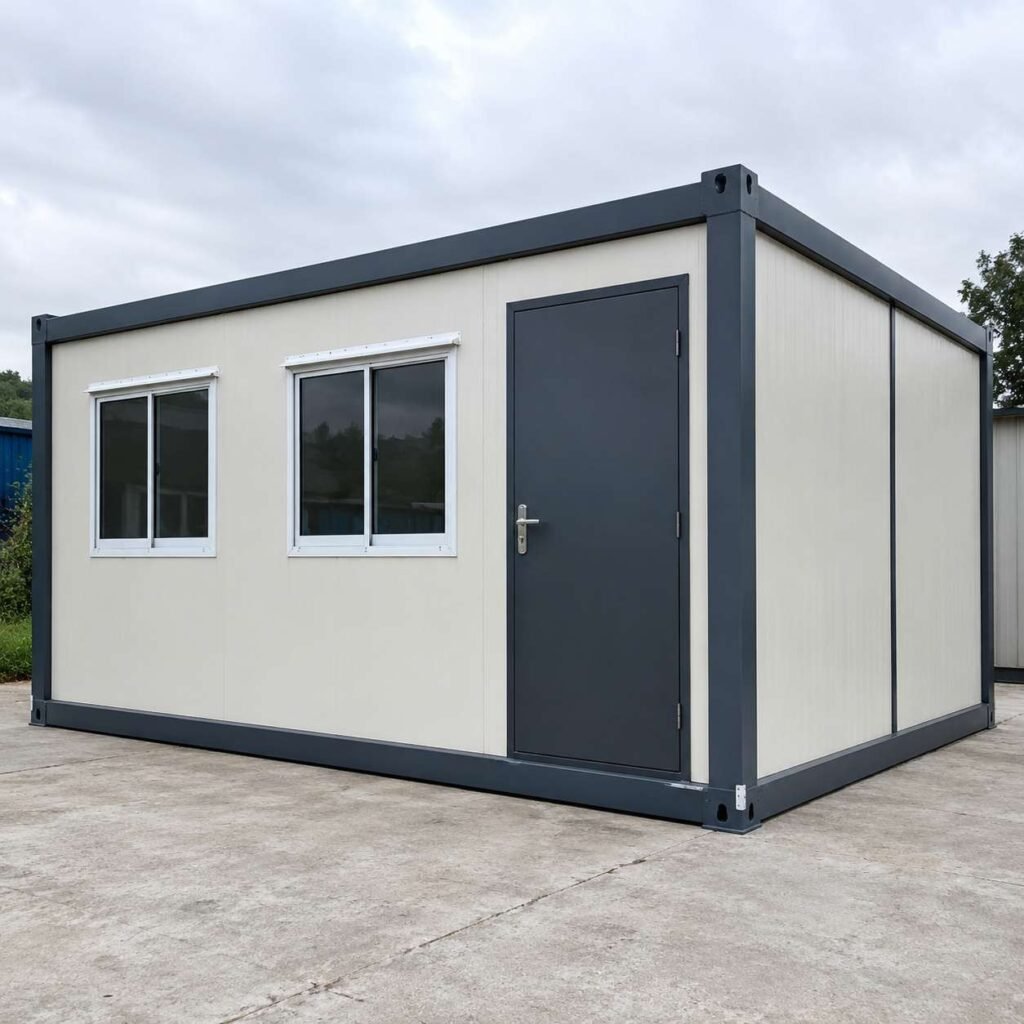
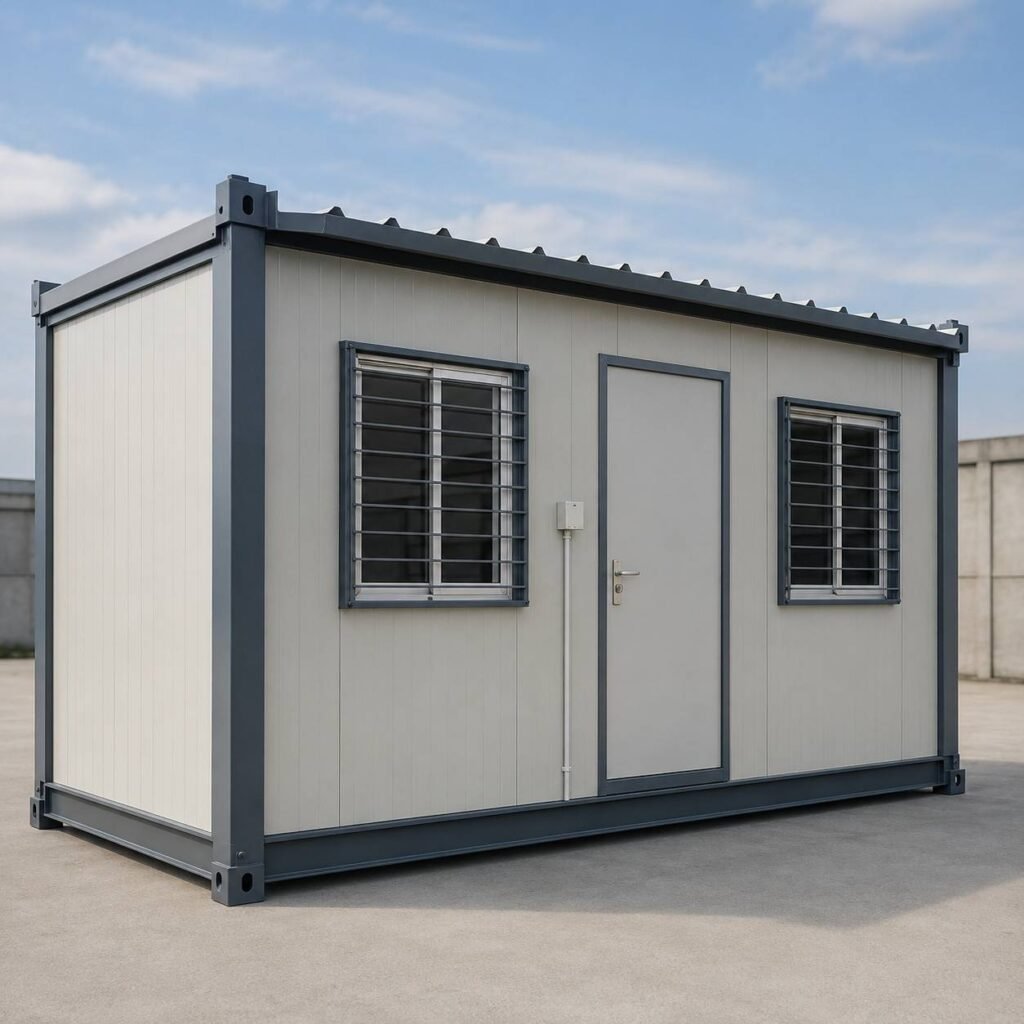

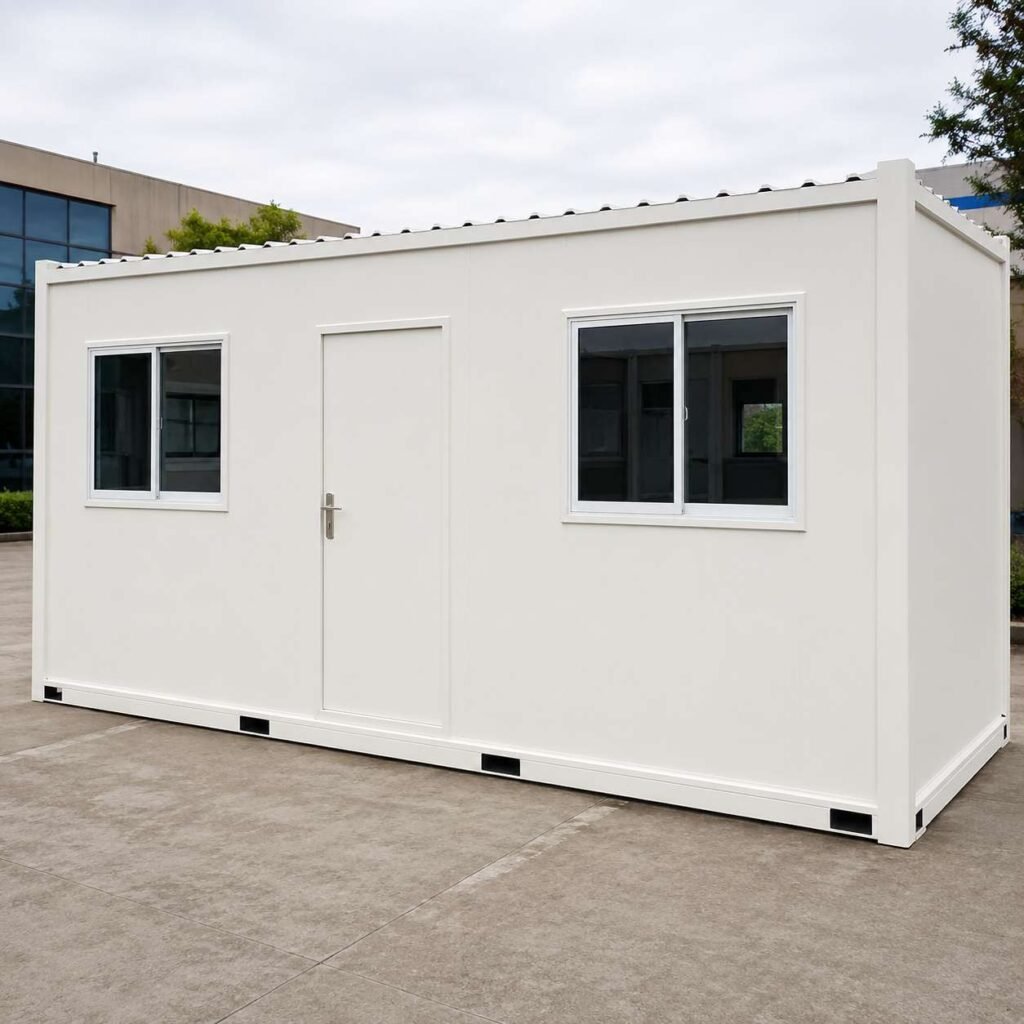

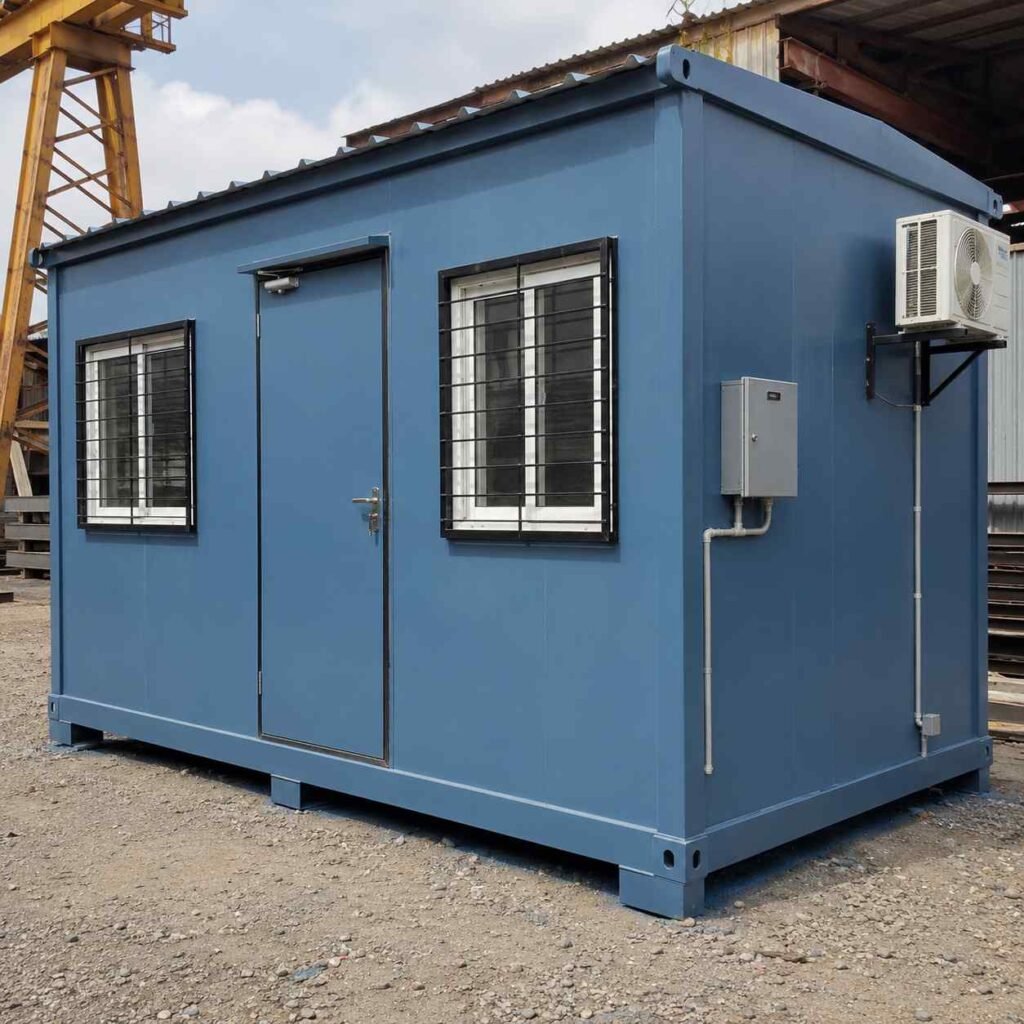
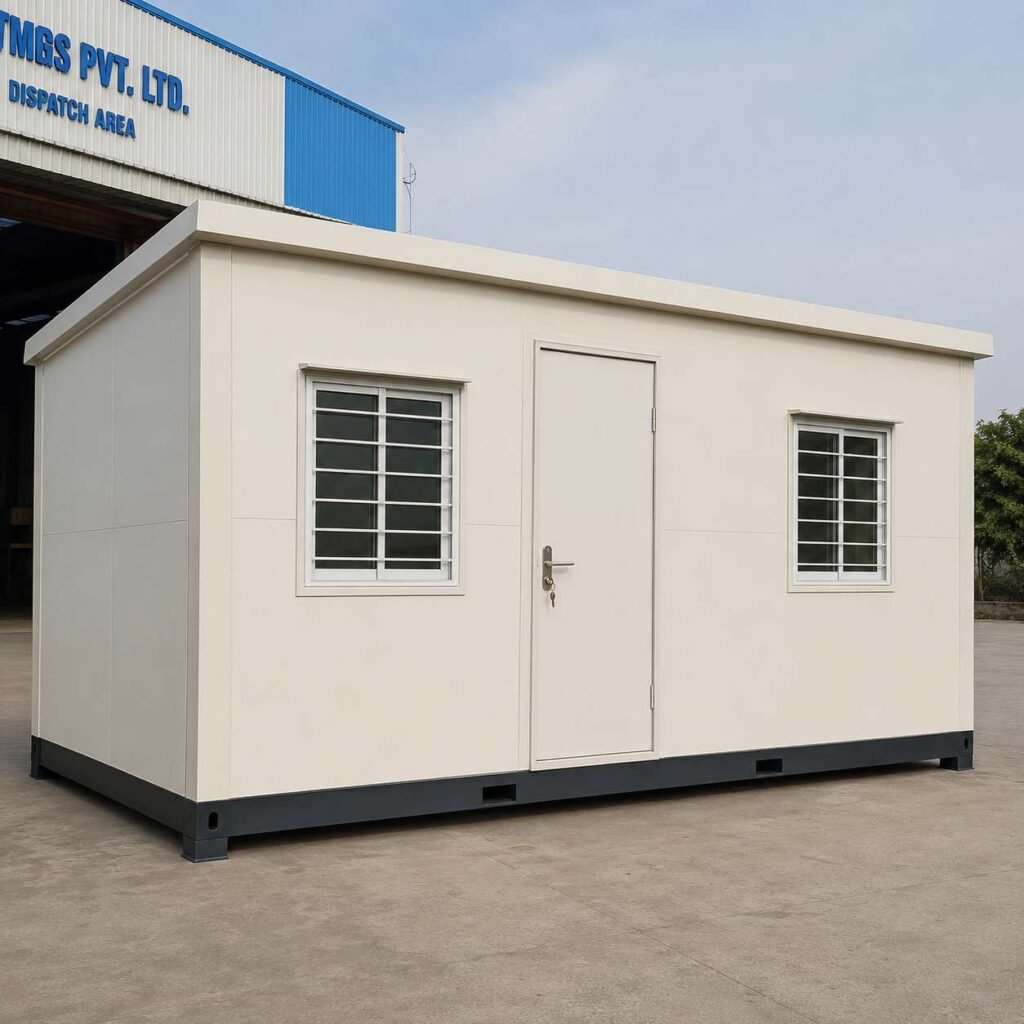
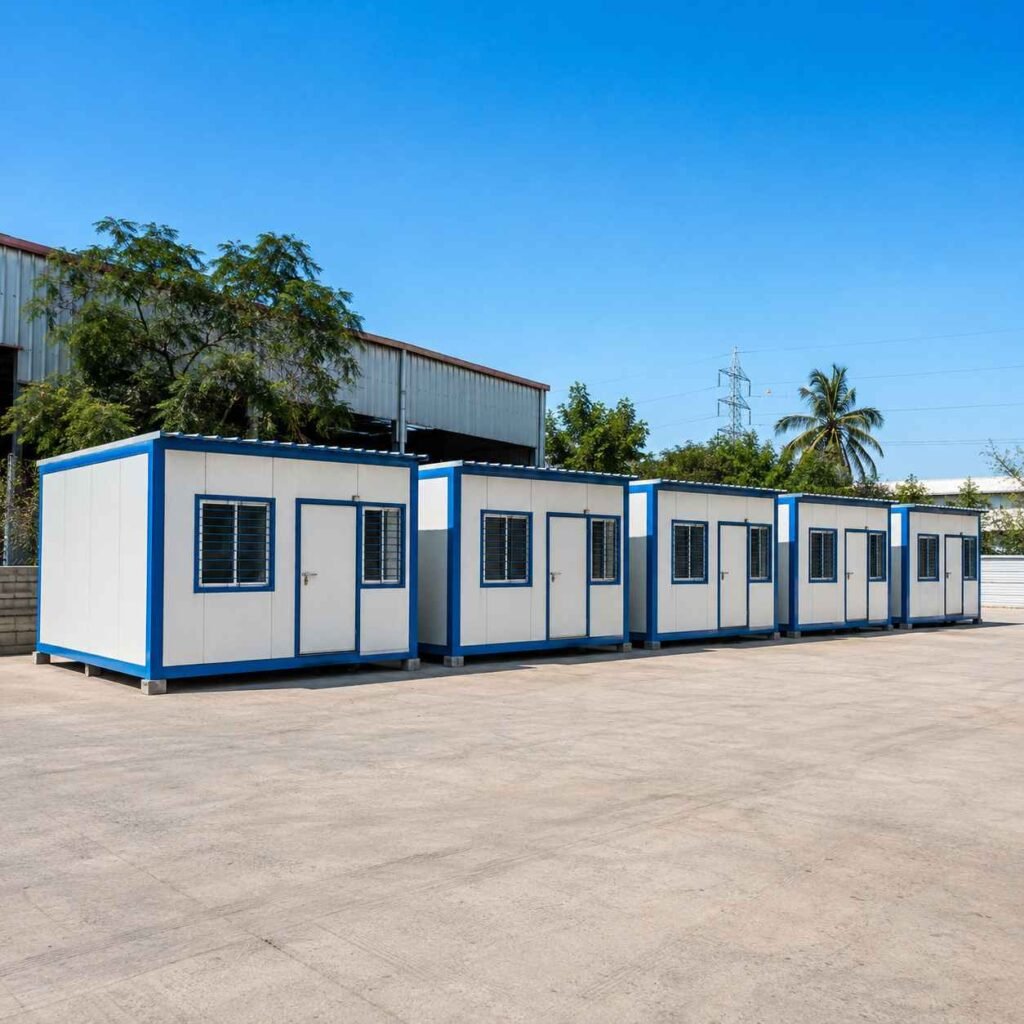
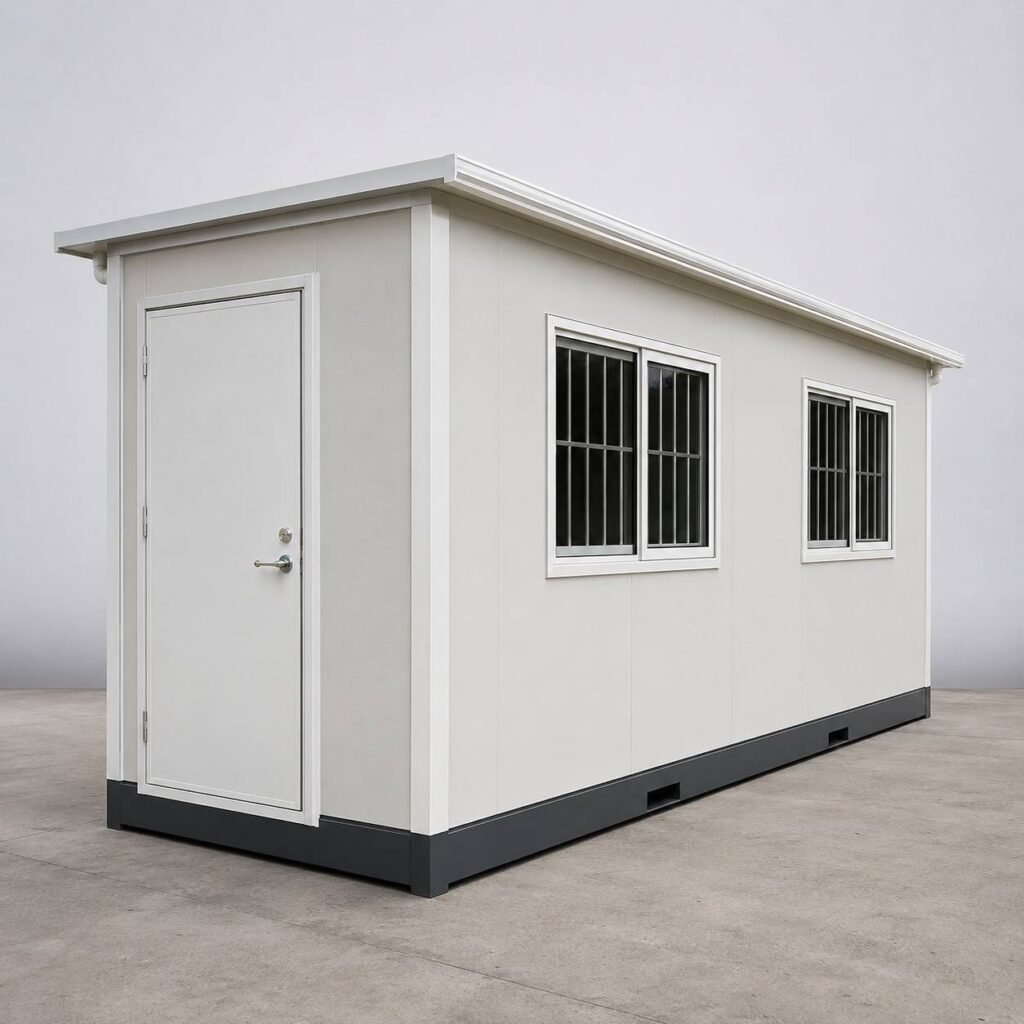
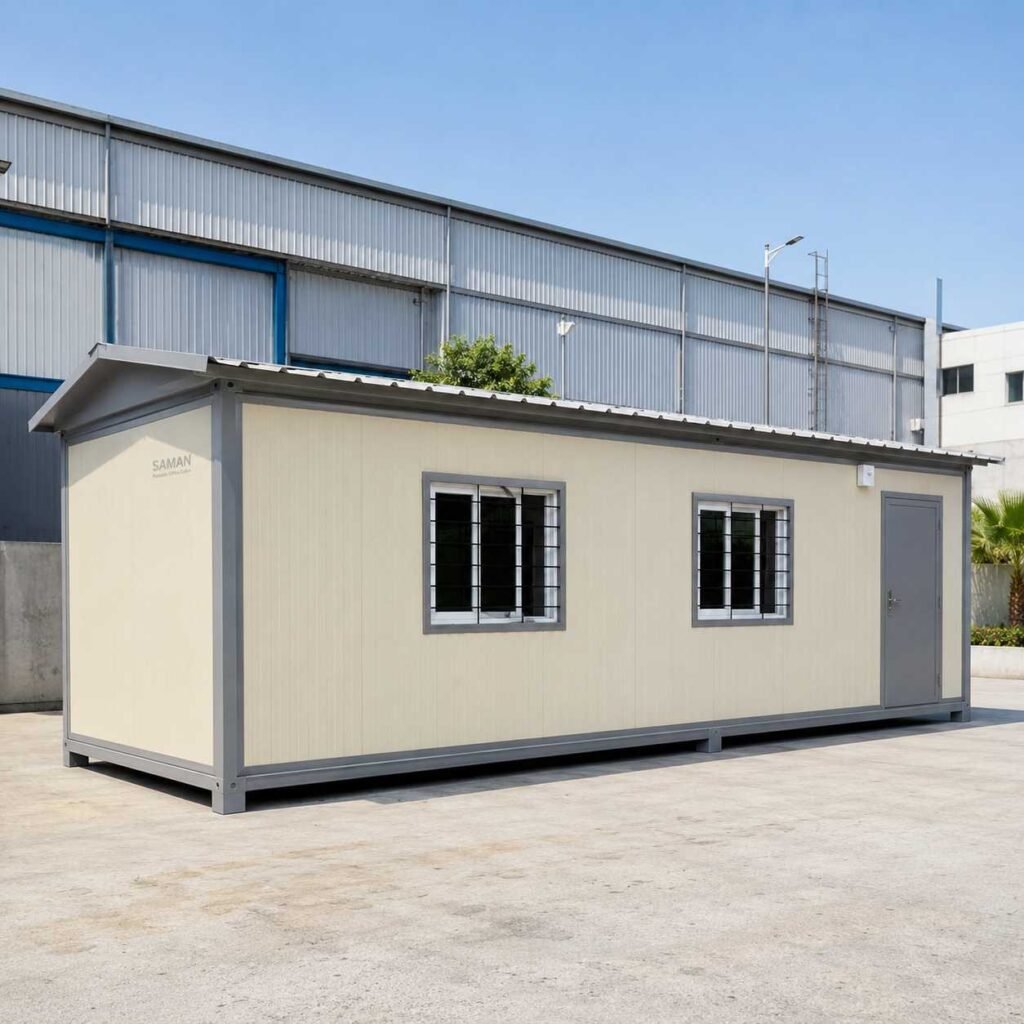
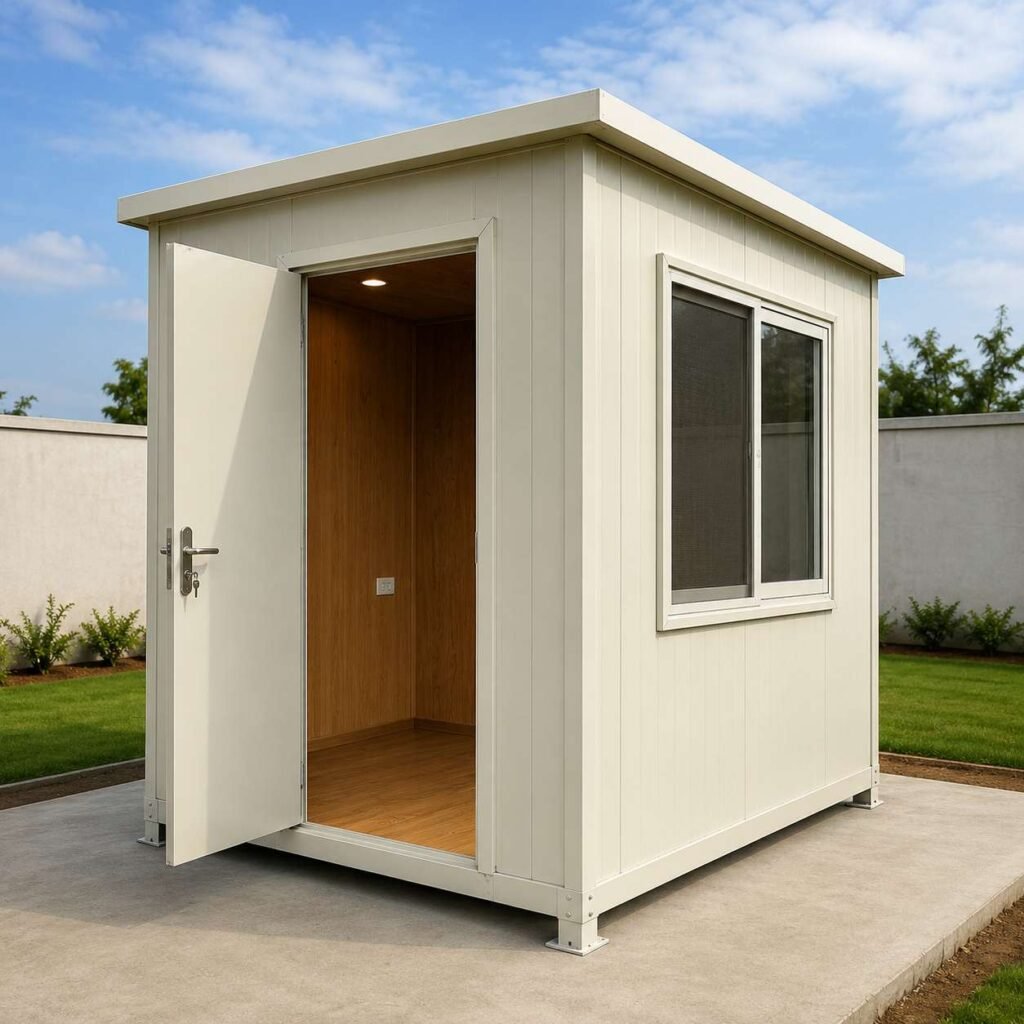


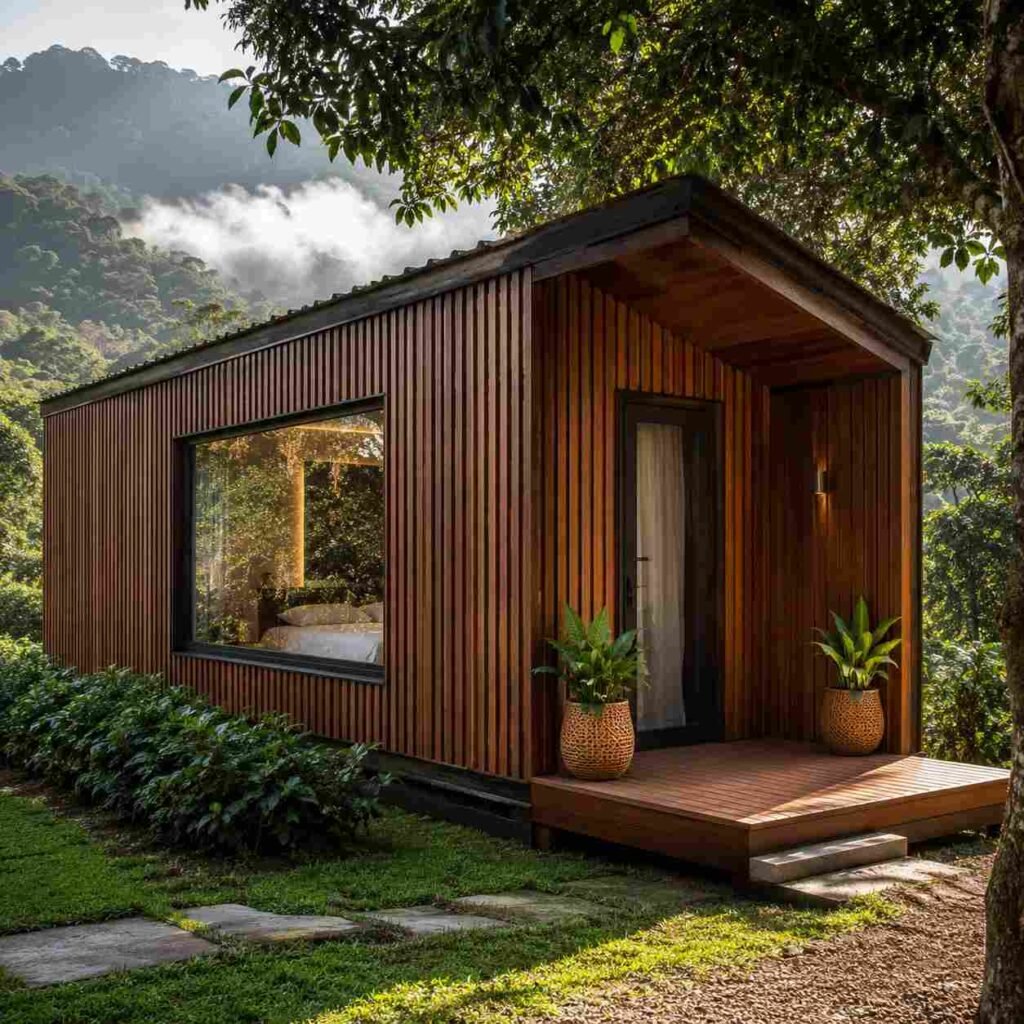






Containerized Offices: Cost, Design, ROI & Real-World Applications in India and Beyond


Introduction: Why Containerized Offices Are Redefining Workspaces
The workplace is in flux. For decades, companies tied themselves to glass towers and long leases. Then open-plan layouts promised collaboration but often fueled distraction. Remote work shattered those walls, yet it left leaders grappling with productivity and culture gaps. Out of this mix, one solution has gained real momentum worldwide — containerized offices.
To explore high-quality, ready-to-use options, check our complete range of Container Offices designed for businesses across India.
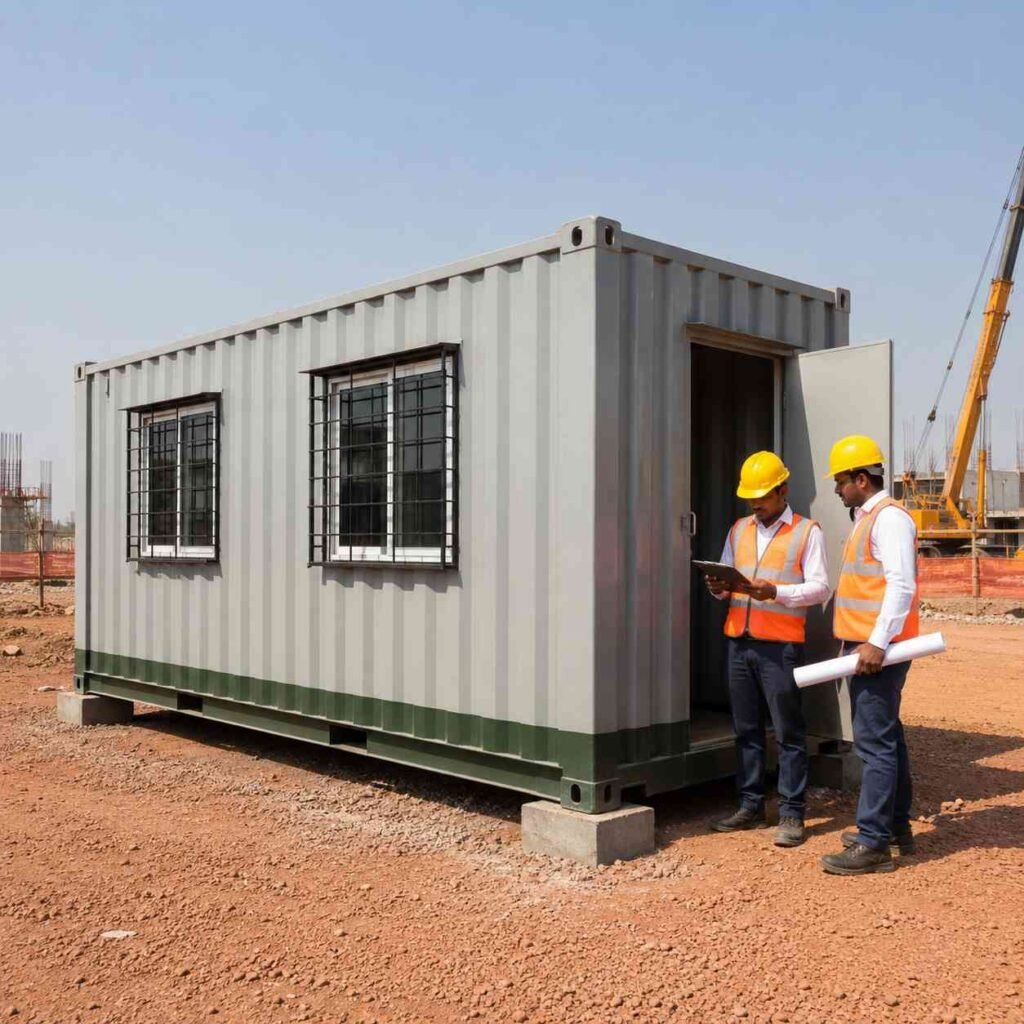
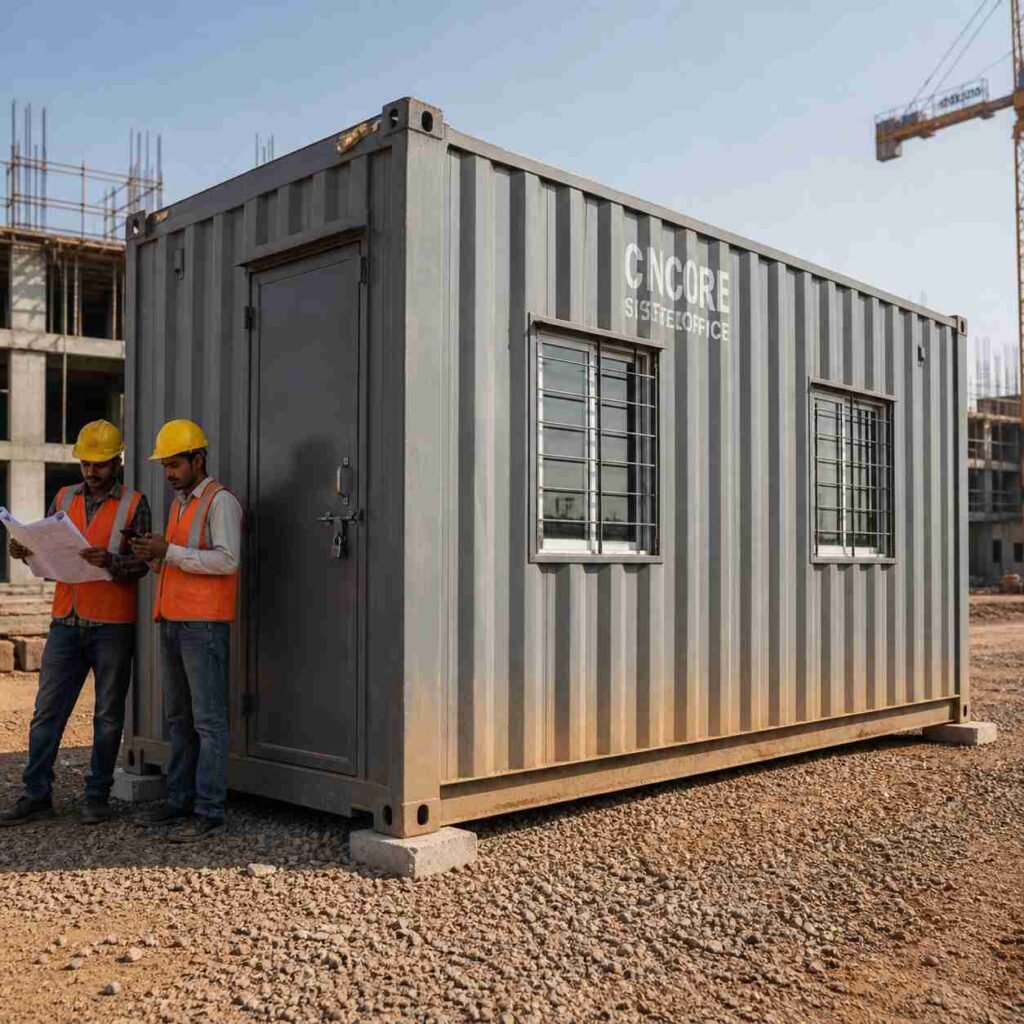
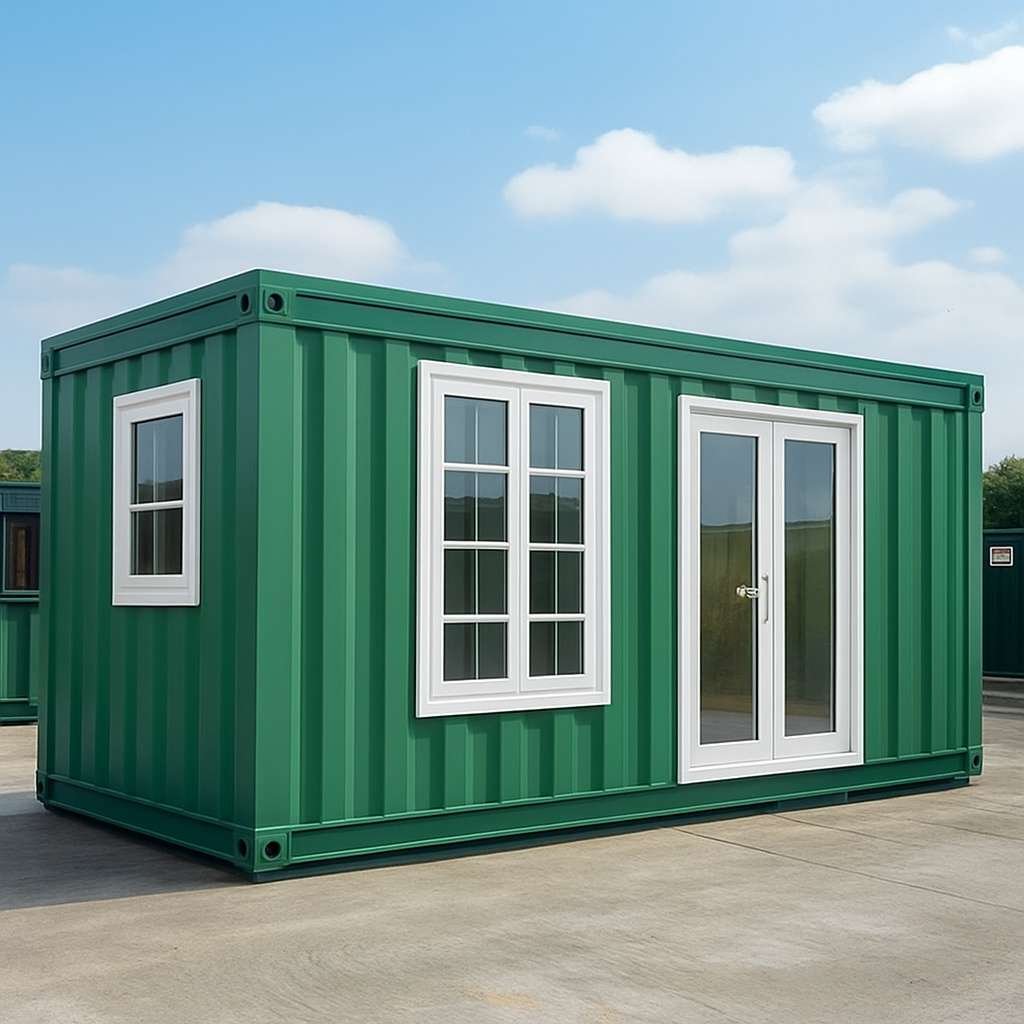
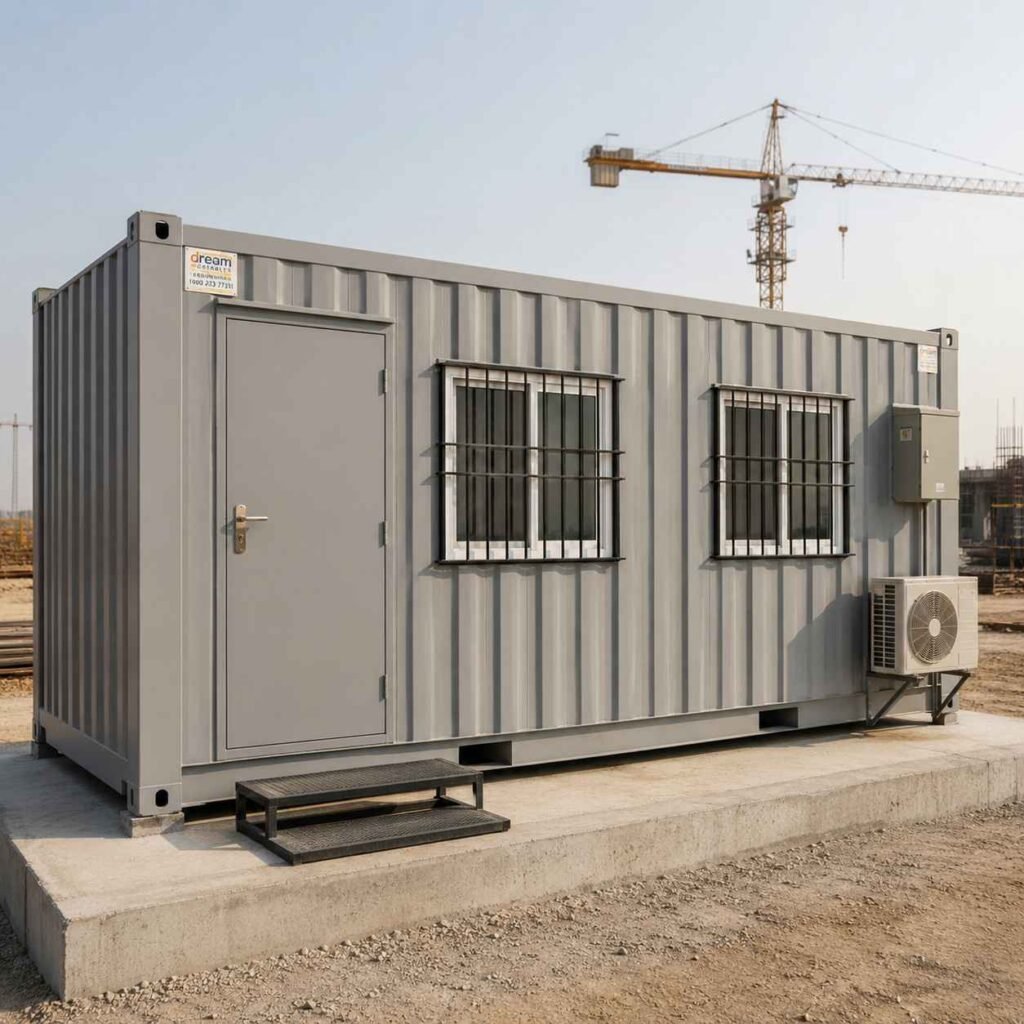
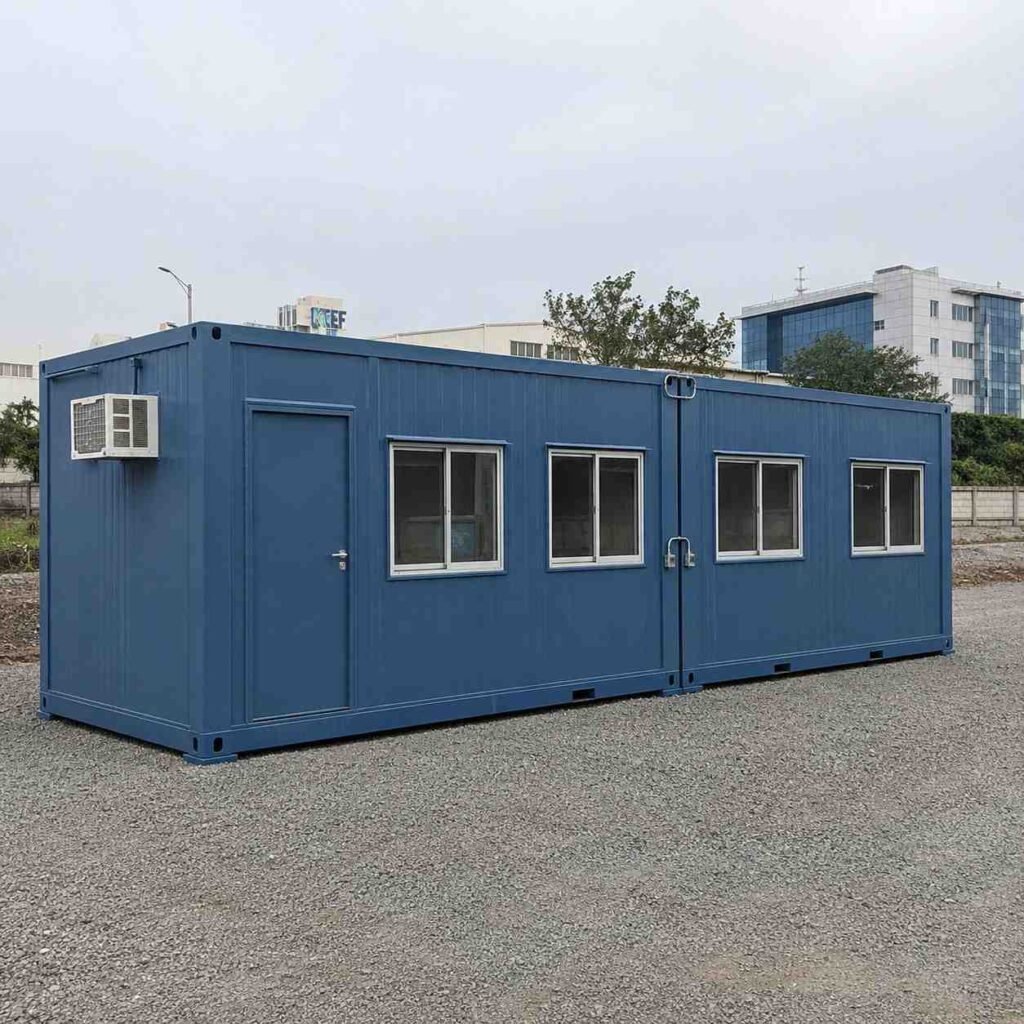
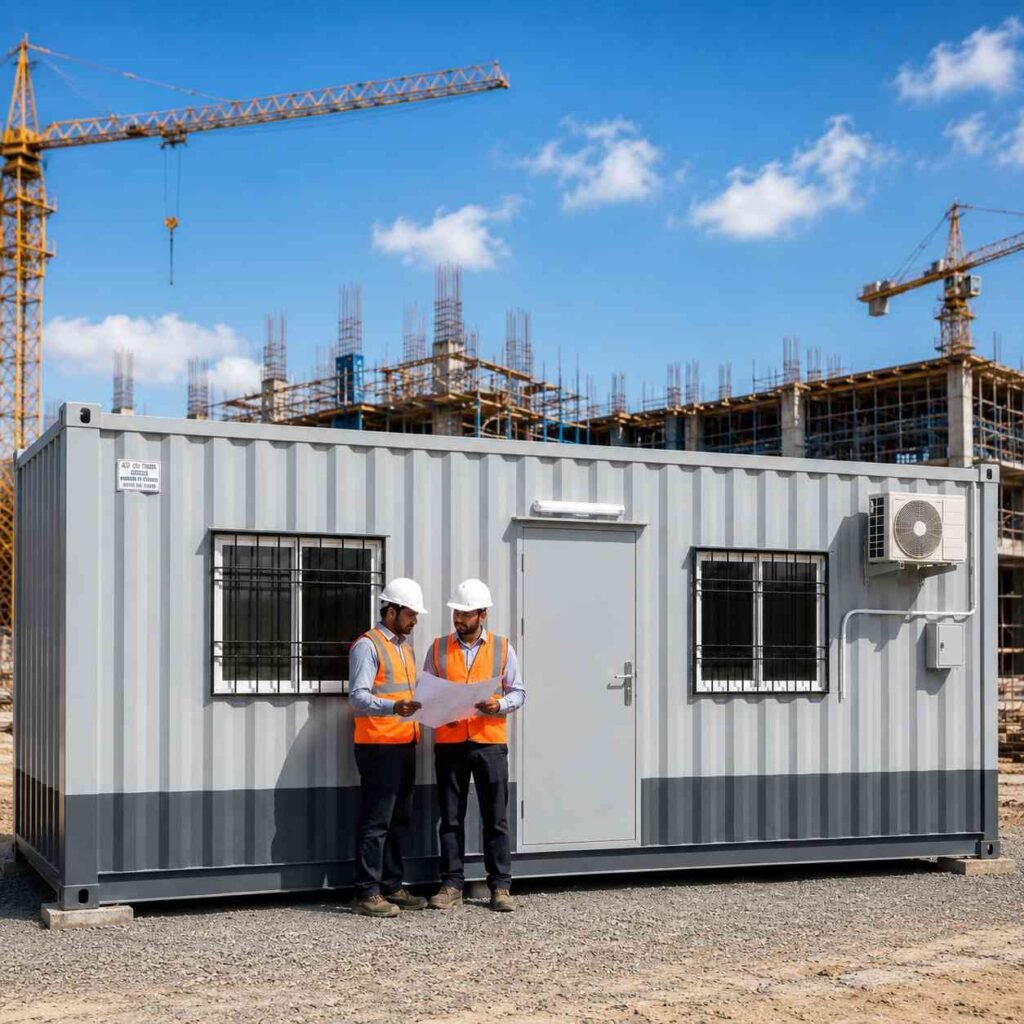
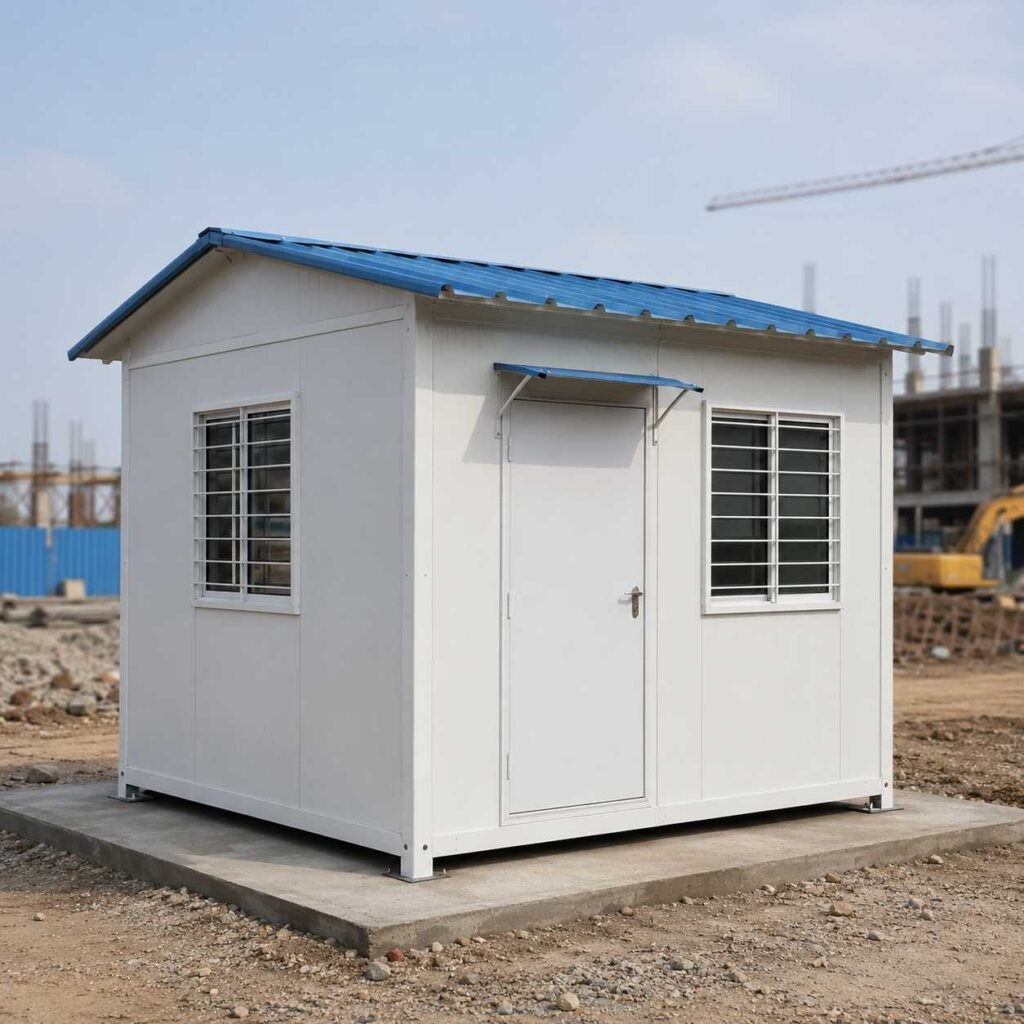
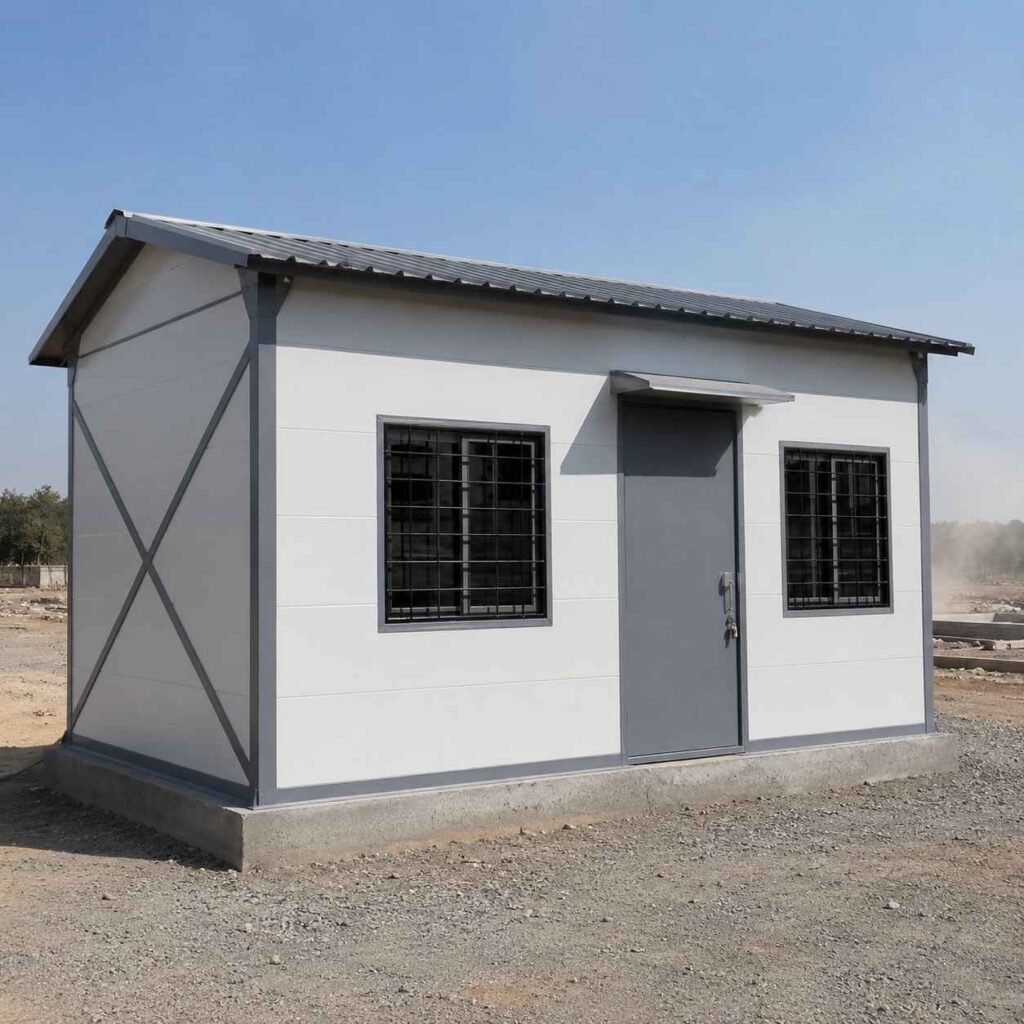
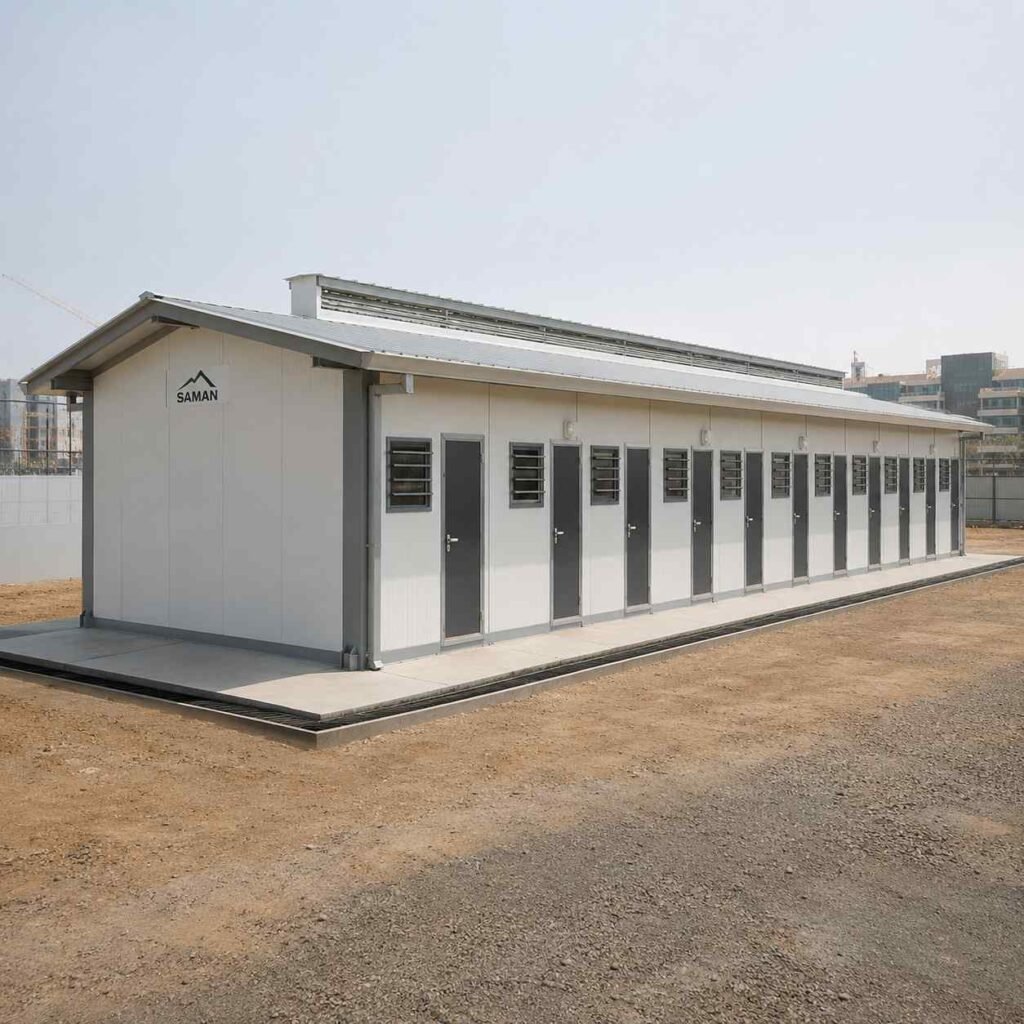
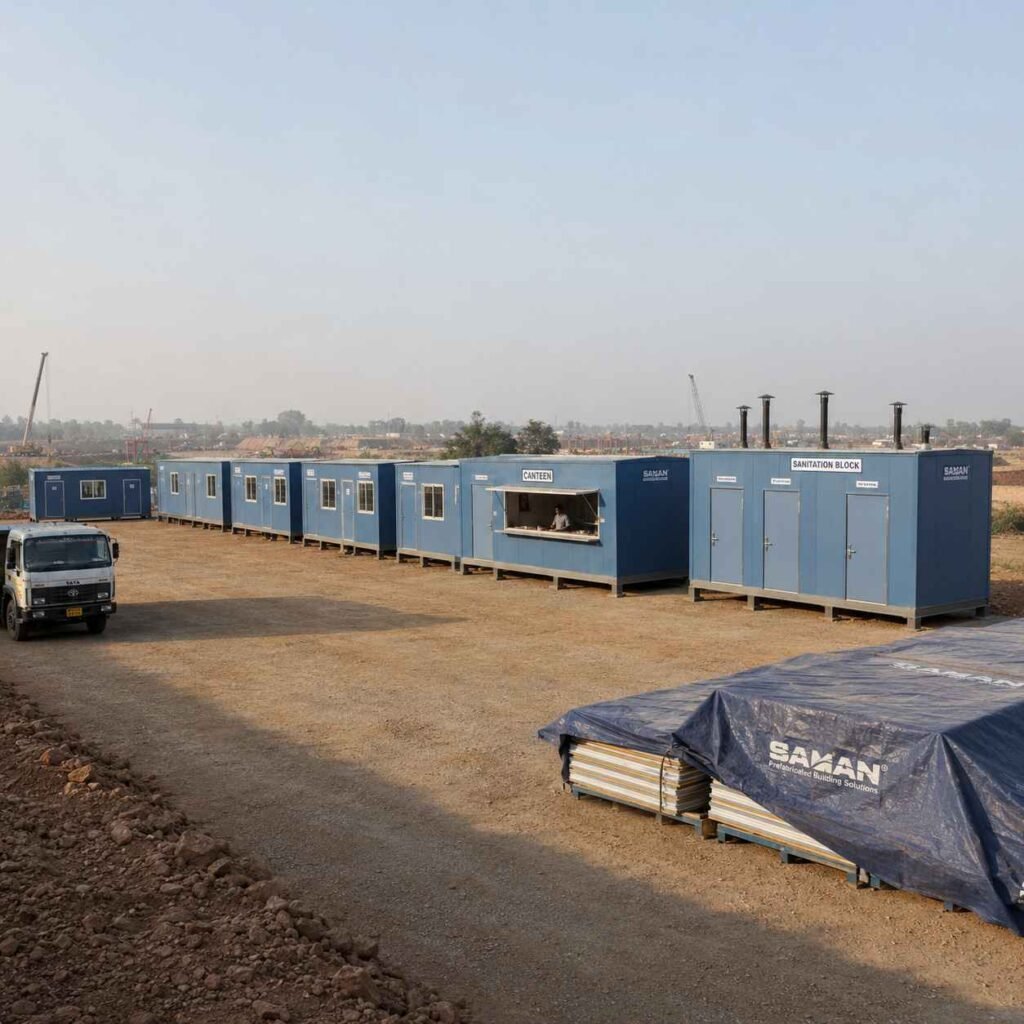
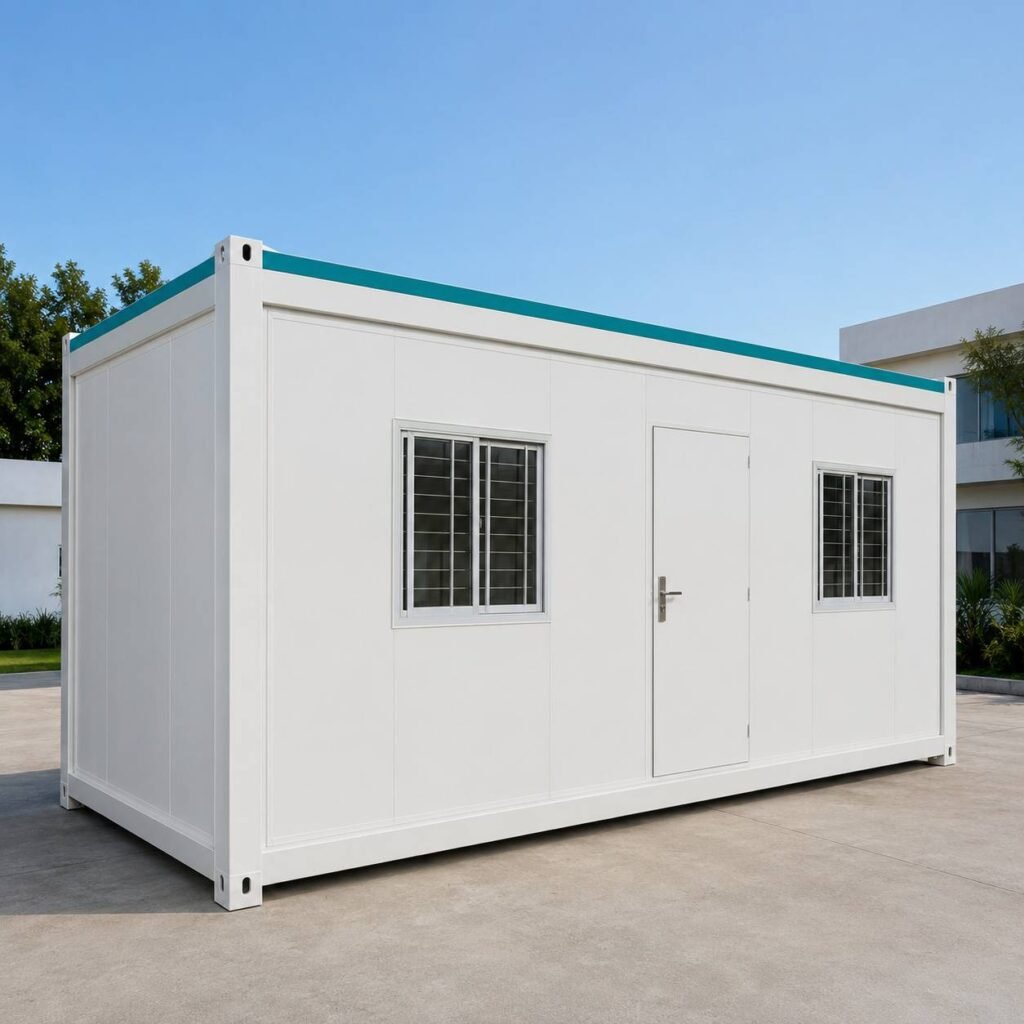
Born from steel shipping containers, these modular units are not just stopgap solutions. Whether used as a container for site office at an active construction project, or scaled into multi-unit hubs for corporate campuses, they provide exactly what modern businesses demand: speed, savings, and sustainability. Unlike rigid buildings, using a container as office creates workspaces that move with market needs rather than resisting them.
For companies exploring flexible cabins, our complete range of Porta Cabins offers additional options worth considering.
The Shift from Static to Agile Workspaces
Traditional leases lock companies into fixed costs and long timelines. Even coworking centers, while flexible, charge recurring rents without adding long-term value. Today’s challenge is clear: how do you balance agility with professionalism?

A container office with restroom or container office with storage bridges that gap. Enterprises can scale up or down, relocate with projects, and integrate ESG goals — all while keeping staff in secure, climate-controlled environments. For decision makers, this means lower stranded assets. For employees, it translates into a focused, comfortable place to work.
Beyond temporary cabins, modern firms now adopt container houses in India as permanent hubs, combining speed with long-term value.
Why Businesses Are Choosing Containerized Offices
The rise of modular steel offices isn’t accidental. Companies across industries are shifting to containerized offices because they solve today’s most pressing workspace demands:
- Fast deployment – functional in weeks, not months.
- Cost efficiency – typically 20–30% cheaper than brick builds.
- Sustainability – repurposed containers cut construction waste by up to 85%.
- Portability – units relocate with projects or expansions.
A McKinsey Global Institute study confirms that modular construction can be delivered 30–50% faster and up to 20% cheaper than conventional projects — an edge that matters in competitive markets like real estate, IT services, and infrastructure.
At a Glance: Workspace Evolution
| Workspace Model | Pros | Cons | Fit for Modern Needs |
|---|---|---|---|
| Traditional Office | Permanent, established, professional | Expensive, long leases, inflexible | Limited |
| Open-Plan Layout | Collaboration, shared energy | Noisy, reduced privacy | Moderate |
| Containerized Offices | Portable, sustainable, fast to deploy | Requires permits, customization | Excellent |
Businesses now assess multiple modular formats — from mobile command centers to portable cabin — to achieve the right balance of speed, cost, and resilience.
Authority Backing and Global Perspective
The global recognition of container-based workplaces is no longer theoretical. As The New York Times reported, shipping containers are being transformed into modern homes and professional hubs across continents. This confirms that containerized offices are not an experiment, but a proven, scalable solution embraced across industries.
The Takeaway: Workspaces Built for the Future
Agility no longer means sacrificing quality. Containerized offices combine mobility, lower costs, and sustainability with professional interiors that rival permanent builds. For executives, they are strategic assets that reduce financial risk while aligning with ESG mandates. For employees, they deliver brighter, more inspiring, and customizable work environments.
Whether installed as a container for site office on a fast-moving project, expanded into a mobile command center for logistics, or designed as a permanent modular hub, these workspaces embody the future of office design — adaptive, sustainable, and ready for what’s next.
The Strategic Edge: Portability, Speed, and Security
The value of containerized offices extends far beyond their steel frames. Their real strength lies in three areas where conventional buildings fall short: portability, speed, and security. Together, these qualities make a container for site office or a permanent modular hub the most practical option for modern enterprises.

Portability: Workspaces That Move with Projects
A major advantage of using a container as office is mobility. Traditional offices stay tied to one address, but containerized units travel with operations.
- Construction firms shift them between rotating project sites.
- Corporates relocate them to regional branches with changing demands.
- Institutions deploy them as temporary campuses or exam centers.
Containers can be moved via truck, rail, or ship. They can be reinstalled without structural loss, allowing quick scaling. Even specialized formats like a container office with storage simplify relocation by combining workspace with secure asset housing.
Speed: From Order to Operation in Weeks
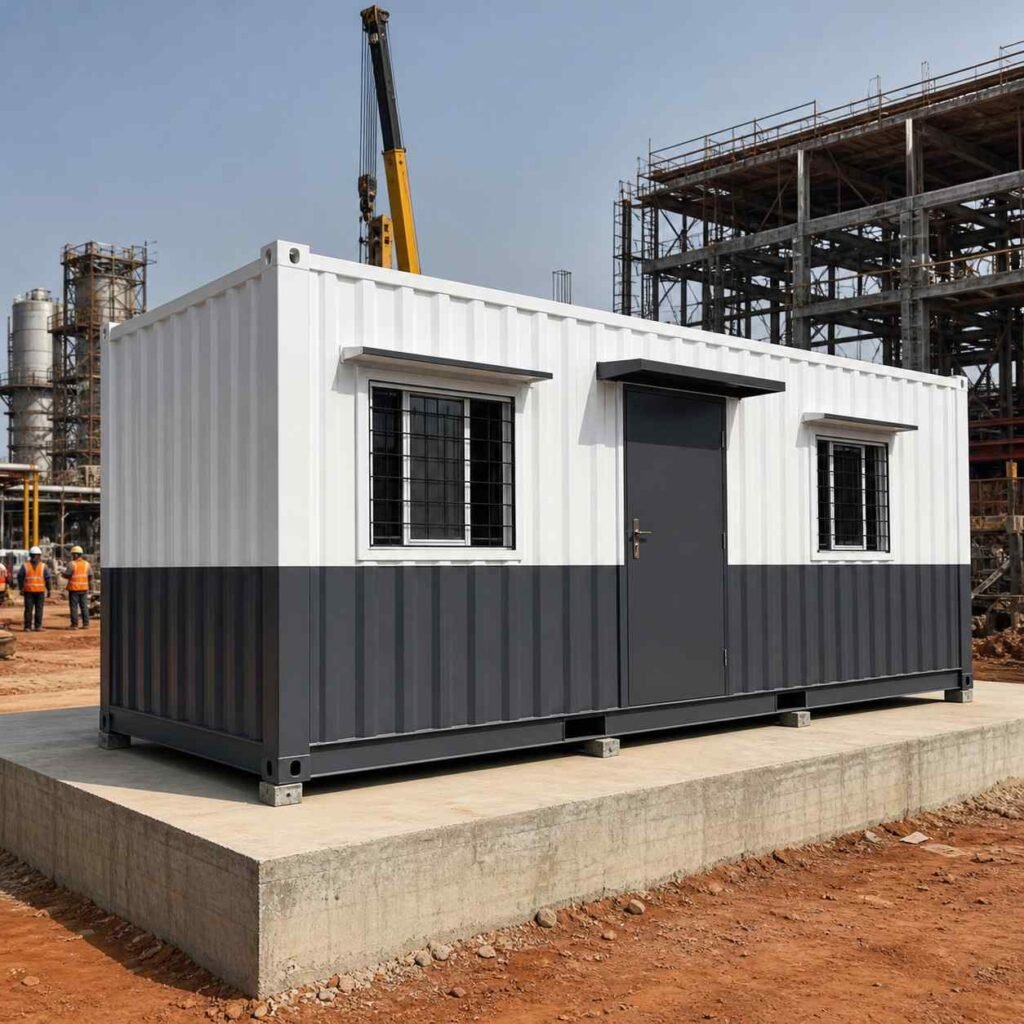
Time equals money, and containerized solutions save both. Conventional offices often take six months or more to deliver. In contrast, containerized offices arrive prefabricated, with wiring, insulation, and finishes ready. Site preparation is minimal, often just an RCC plinth and utility hookups.
This makes them ideal for industries where delays carry steep costs:
- Healthcare: pop-up vaccination hubs.
- Infrastructure: project control rooms.
- Education: rapid classroom expansions.
A McKinsey study confirms modular builds deliver 30–50% faster and 20% cheaper than traditional methods, underscoring their financial edge.
Security: Built From Steel, Built to Last
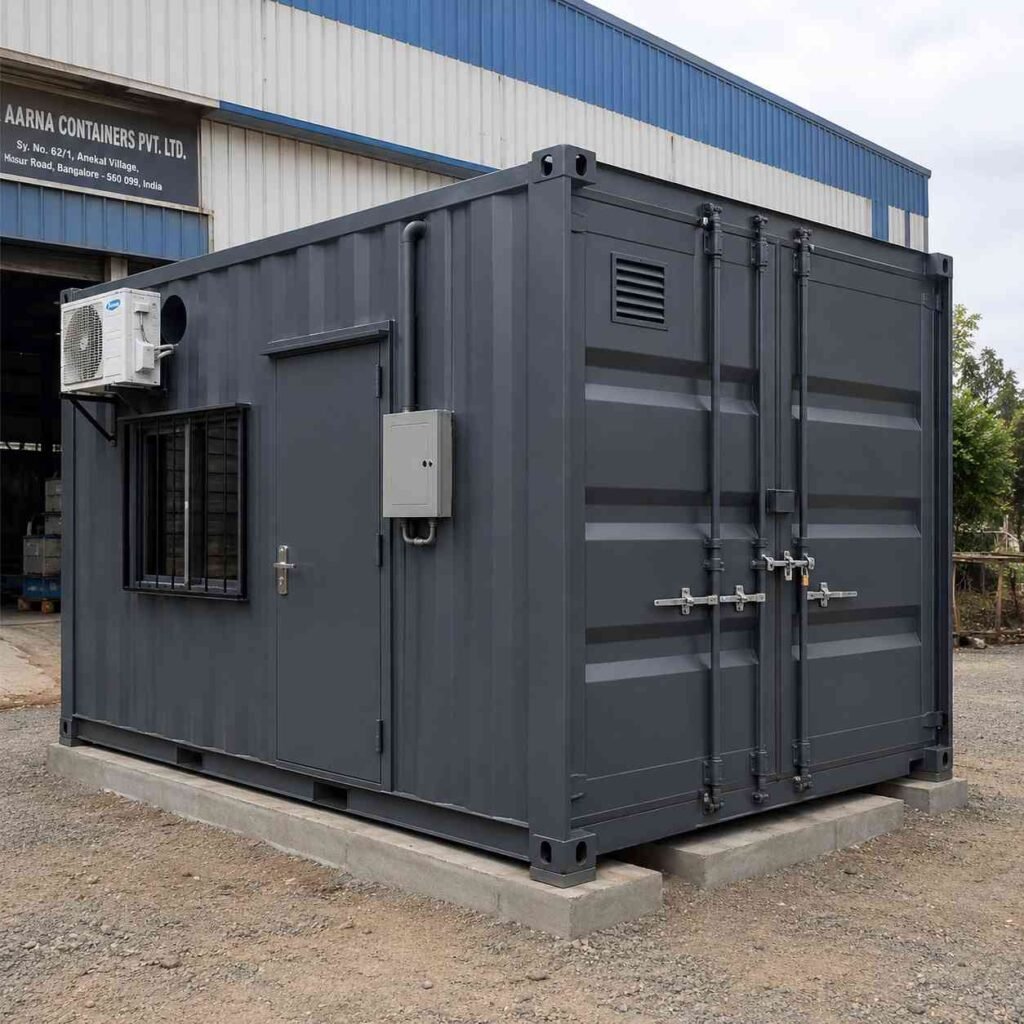
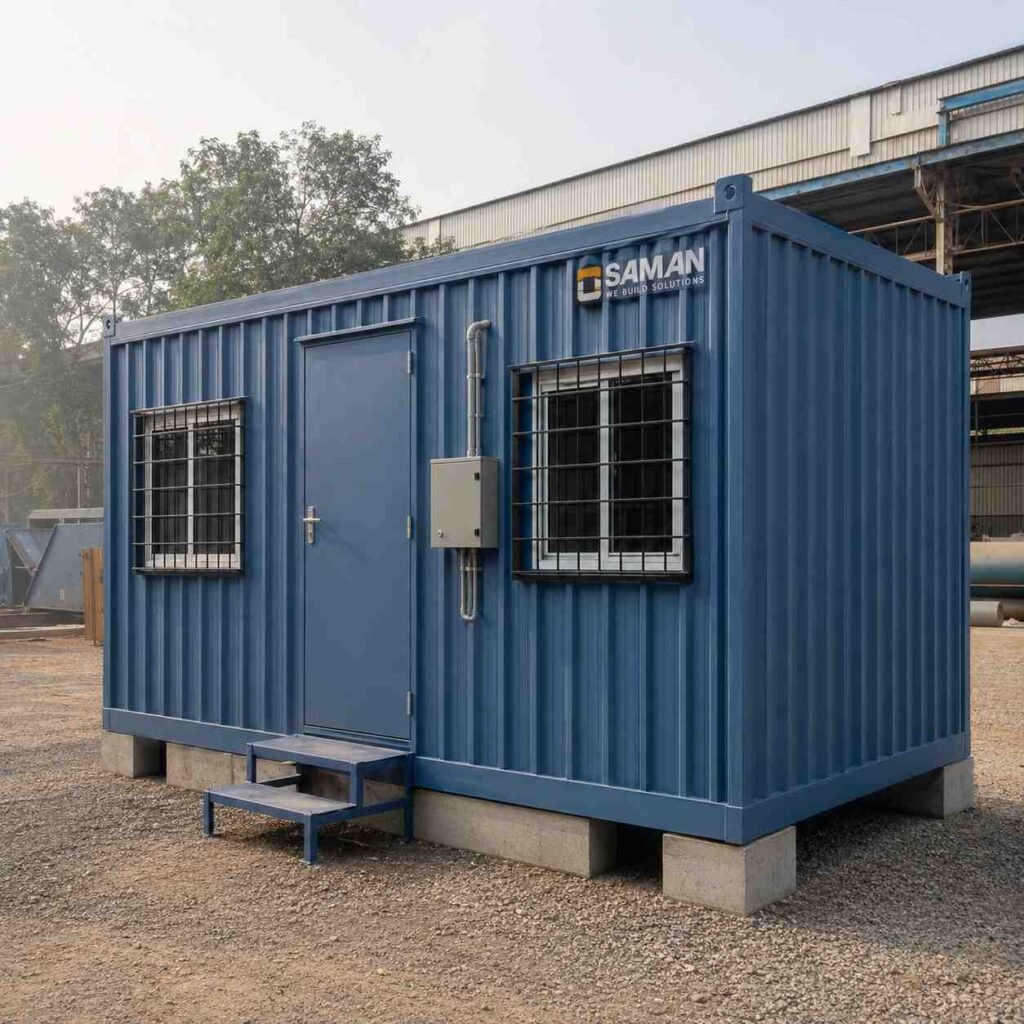
Containers were designed to endure oceans, storms, and heavy cargo. When repurposed as offices, that same durability translates into safety. A container office with restroom or an IT hub built inside a container resists both harsh climates and unauthorized entry.
Security upgrades commonly include:
- Reinforced doors and high-grade locks.
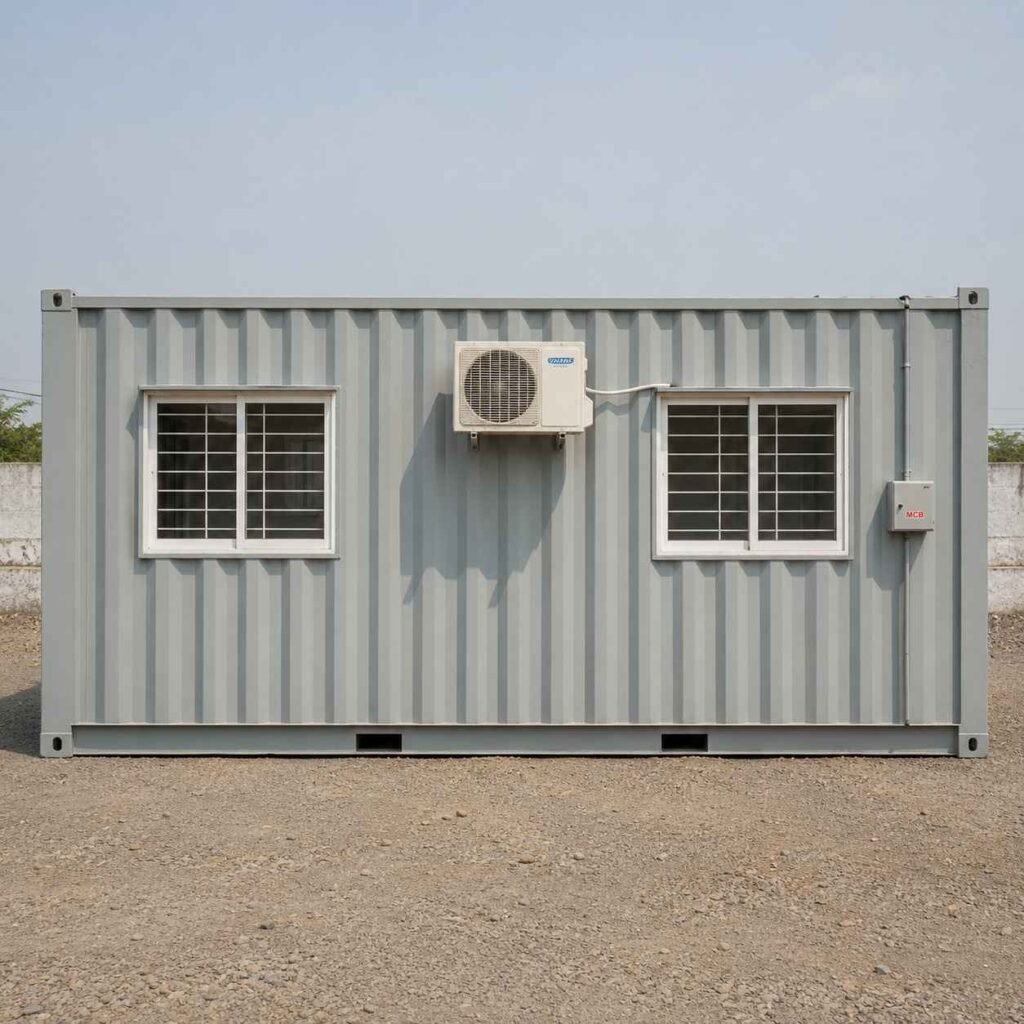
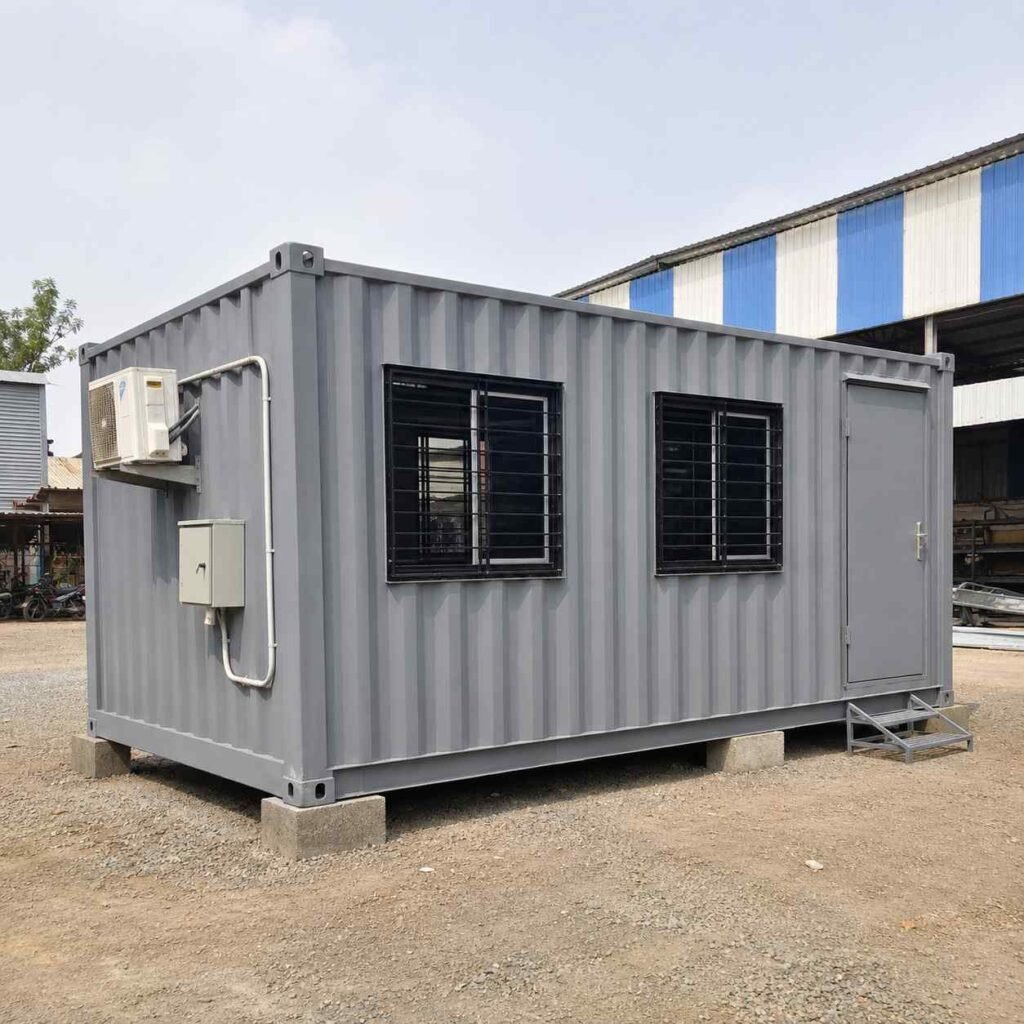
- MS grill windows for safety and ventilation.
- Fire-resistant insulation and secure electrical wiring.
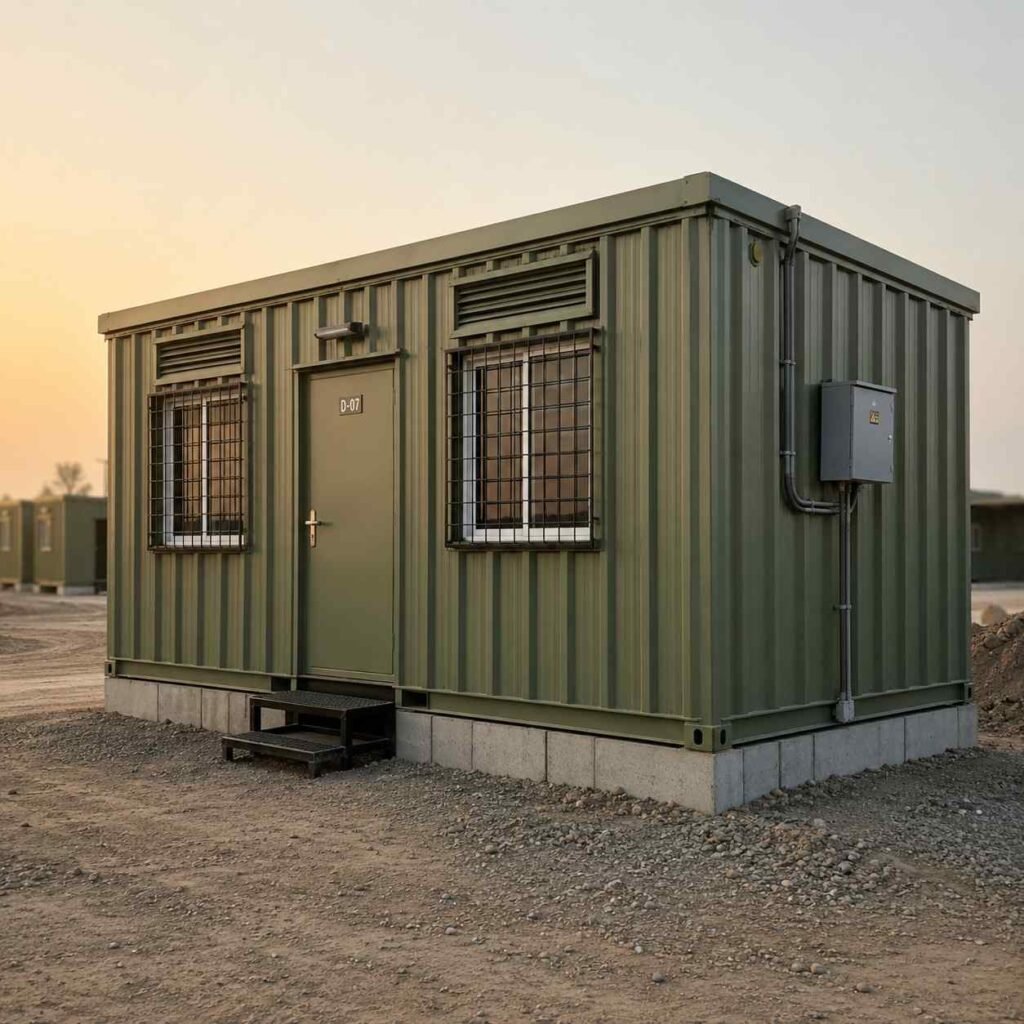
For sensitive industries like banking, defense, or IT, containerized designs provide vault-like security while remaining mobile. NGOs and governments also use mobile command centers for field coordination, where safety and reliability are paramount.

Table: Deployment & ROI Comparison
| Workspace Type | Typical Setup Time | Site Prep Needed | Business Downtime | ROI Potential |
|---|---|---|---|---|
| Traditional Office | 6–18 months | Full foundation, utilities | High | Moderate |
| Prefab Trailer Units | 2–4 months | Leveling + hookups | Medium | Moderate |
| Containerized Offices | 2–6 weeks | Simple leveling, RCC plinth | Low | High (50–70% resale) |
Why It Matters to Leaders and Teams
For executives, the portability, speed, and security of containerized offices translate into lower risk, faster project launches, and asset flexibility. For employees, it means safer workspaces closer to project sites, less downtime, and reliable infrastructure.
In today’s fast-moving economy, where projects relocate and companies must pivot quickly, containerized offices deliver resilience and adaptability that brick-and-mortar models simply cannot match.
Industry Applications Beyond the Site Office
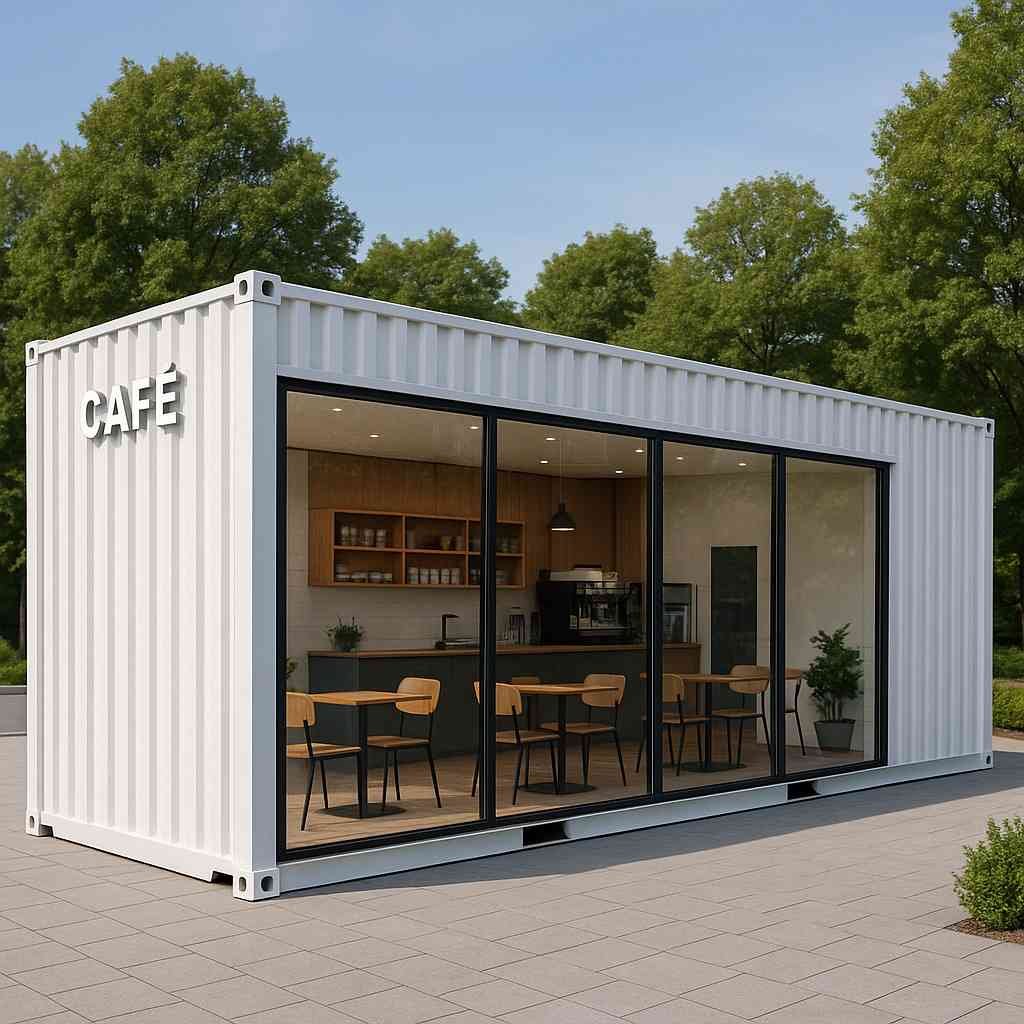
When most people think of a container as office, they imagine a temporary cabin on a dusty construction site. That’s only the beginning. Today, containerized offices are being reimagined across industries — from healthcare and education to retail and IT. A container for site office remains core, but its applications now span social impact, corporate strategy, and global innovation.

Different industries demand unique solutions. From healthcare hubs to retail kiosks, our overview of types of container offices details which formats fit best.
Construction and Infrastructure
Construction remains the largest adopter of containerized offices. Site managers, engineers, and supervisors require secure, immediate spaces for daily coordination.
- Rapid deployment: Units are installed in weeks, ensuring project teams move in quickly.
- Mobility: Offices shift with project phases, reducing sunk costs.
- Security: A container office with storage protects equipment, blueprints, and IT hardware.
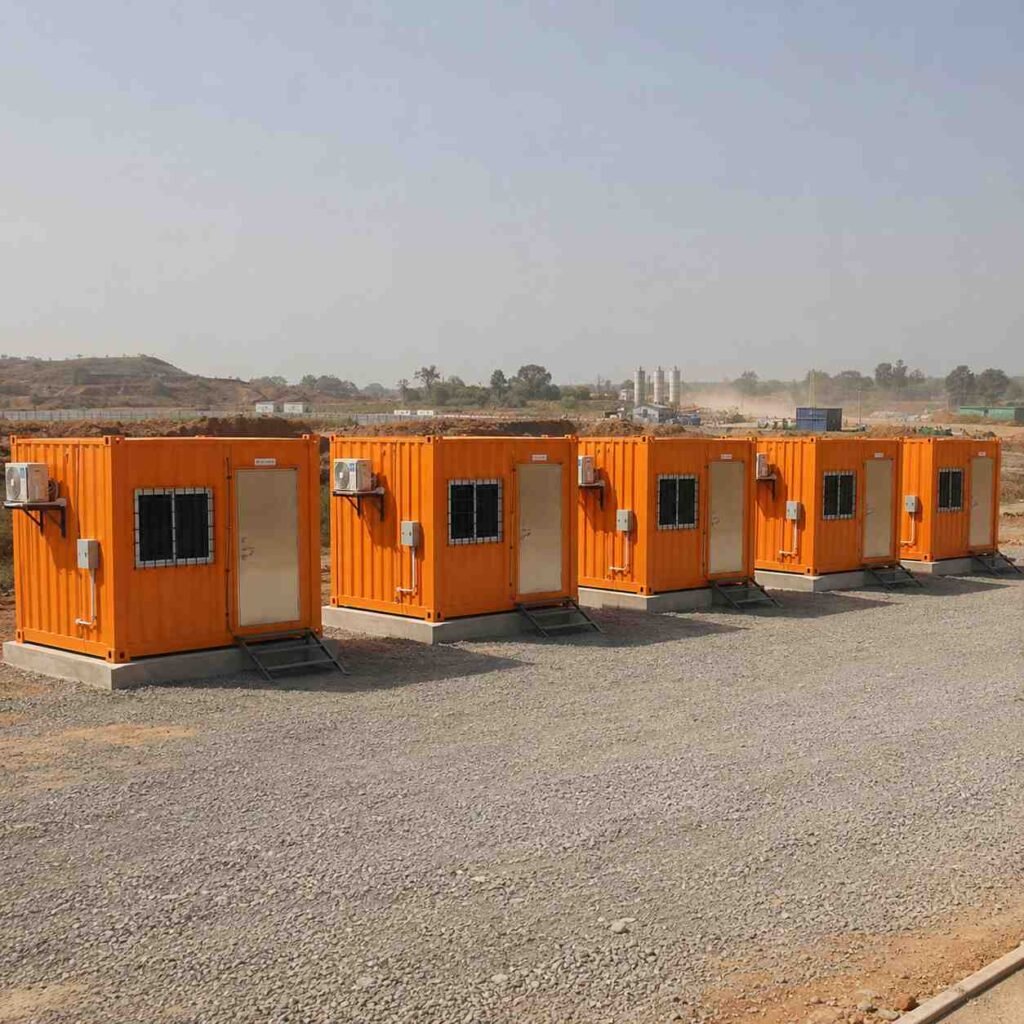
India case study: During Delhi Metro expansions, contractors deployed multiple container for site office installations at stations. This proximity to the field reduced delays, improved oversight, and kept administration in sync with project execution.
Healthcare and Education
Public services increasingly leverage containerized offices for quick, resilient setups.
- Healthcare: During COVID-19, NGOs and government bodies used mobile command centers and container-based clinics for vaccination drives, reducing build times while meeting hygiene standards.
- Education: Rural and urban schools use container as office or classroom units to expand capacity without waiting for permanent structures.
- Community services: NGOs deploy container office with restroom designs in flood-hit areas, giving staff safe work and living quarters.
This adaptability proves containerized formats are not just commercial assets, but also tools for community resilience.
Corporate, IT, and Retail Adoption
Large corporations are rethinking real estate. Instead of costly long-term leases, many now turn to containerized offices as satellite hubs, R&D labs, and even branded sales centers.
- IT & Startups: Bangalore startups scale fast with modular hubs, avoiding high rentals.
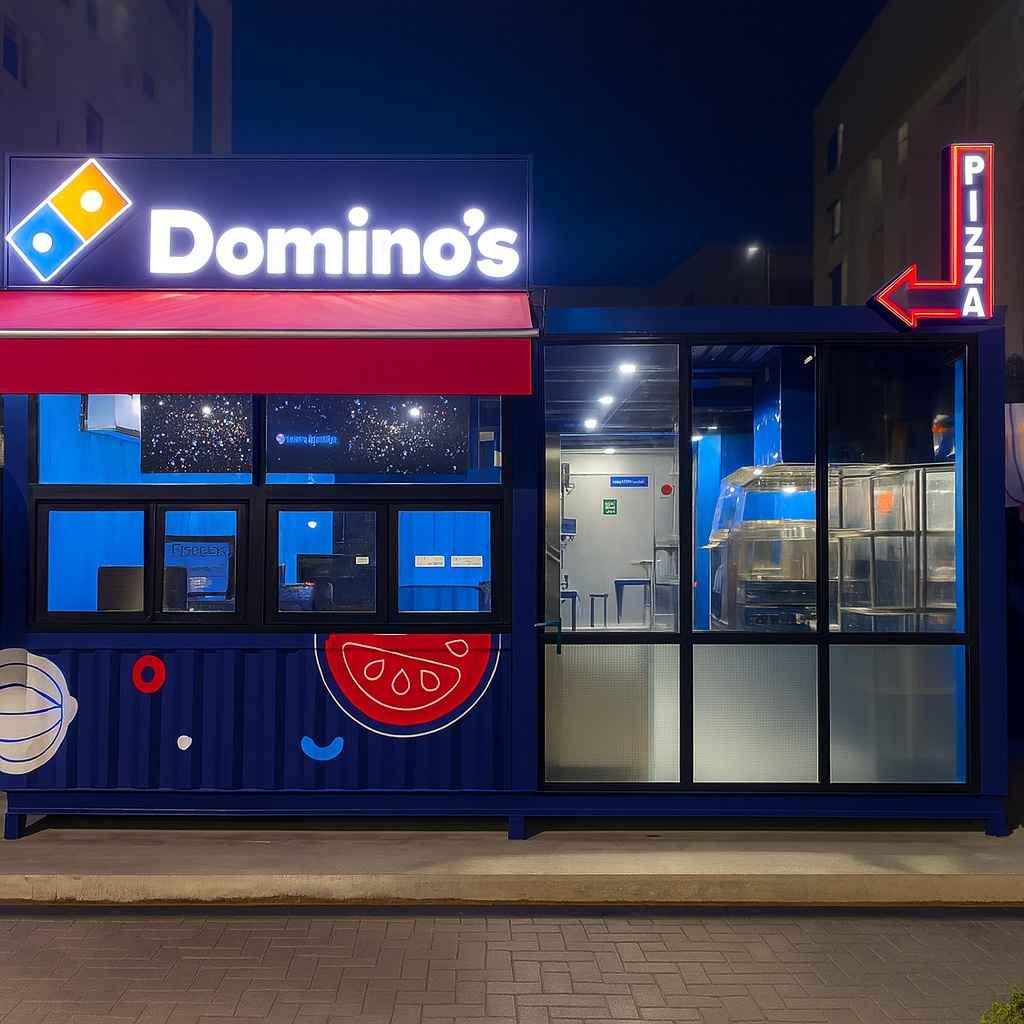
- Retail: Auto brands and developers use container office with restroom showrooms on project sites.
- Logistics: Mobile command centers serve as dispatch hubs and weigh stations, cutting downtime.
Global case study: Google’s Zurich campus experimented with containerized offices, designed by BWC Architects, proving that even tech giants value modular flexibility paired with sustainability.
Luxury projects are now mainstream. Forbes highlights how high-end container conversions are reshaping retail, hospitality, and office use.
Industry Applications at a Glance
| Industry | Primary Use Cases | Key Benefits | Example Case |
|---|---|---|---|
| Construction | Container for site office, storage | Mobility, secure equipment | Delhi Metro, India |
| Healthcare | Clinics, labs, mobile command centers | Hygiene, rapid deployment | COVID-19 vaccination hubs |
| Education | Classrooms, admin blocks | Low-cost, fast expansion | Rural schools, Maharashtra |
| Corporate / IT | R&D labs, container as office hubs | Scalability, cost savings | Google, Zurich |
| Retail / Logistics | Sales kiosks, container office with restroom showrooms | Branding, flexibility | Auto project site showrooms |
The Takeaway
A container as office is no longer just a construction-site solution. From NGOs building resilience to global tech leaders driving innovation, containerized offices are shaping industries with speed, sustainability, and adaptability. Their role has expanded far beyond temporary fixes — they are now permanent players in the evolution of workspace design.
Sustainability & ESG: The Green Advantage
Sustainability has shifted from buzzword to boardroom priority. Companies are no longer judged only by profit but also by environmental and social responsibility. In this context, containerized offices stand out as practical, measurable steps toward ESG compliance. They turn industrial waste into assets, reduce carbon footprints, and extend usability across decades.

Turning Waste into Workspaces
Every shipping container reused as an office prevents nearly 2.5 tons of steel from becoming scrap and reduces the need for carbon-heavy cement and brick. By transforming surplus containers into workplaces, businesses join the circular economy.
- Reduced waste: Less debris compared to brick construction.
- Material efficiency: Lower demand for virgin steel and cement.
- Longer lifecycle: Container as office units last 25–30 years with upkeep.
Even specialized designs, like a container office with storage, save on separate warehousing needs, doubling utility without additional construction impact.
The eco-impact extends beyond offices. Repurposed steel units also power housing markets, including container houses and prefabricated homes that reduce carbon footprints.
Energy Efficiency by Design
Compact, insulated units are easier to power efficiently than sprawling concrete blocks. Well-planned containerized offices integrate energy-conscious features from day one:
- High-grade insulation to reduce cooling loads.
- Solar panels and LED lighting to cut electricity bills.
- Rainwater harvesting for on-site conservation.
Compared to conventional setups, energy use falls by 20–30%. A container office with restroom designed with low-flow fixtures and greywater systems further reduces water waste, proving sustainability can be integrated into daily operations.
India and Global Case Studies
- Maharashtra schools: NGOs deployed container as office classrooms under the Green School Initiative, avoiding months of cement use.
- COVID-19 response: Healthcare providers installed mobile command centers for vaccination drives, bypassing brick builds and reducing carbon emissions.
- London’s Container City: A multi-story complex of 70+ units showcases how containerized offices combine urban density with reuse.
These examples confirm modular design isn’t just theory — it’s working at scale.
Table: Carbon & Material Savings
| Workspace Type | Materials Used | Avg. CO₂ Emissions (Build Phase) | End-of-Life Impact | ESG Alignment |
|---|---|---|---|---|
| Traditional Office | Cement, brick, steel | High (cement = 8% global CO₂) | Demolition waste | Moderate |
| Prefab Trailer Units | Light steel, aluminum | Medium | Low reuse potential | Moderate |
| Containerized Offices | Repurposed steel | Low (up to 70% reduction) | Fully reusable, resalable | Strong |
Aligning With ESG and Certifications
For leaders under pressure to demonstrate ESG compliance, containerized offices tick multiple boxes:
- Environmental: Reduced emissions and material reuse.
- Social: Rapid deployment for classrooms, clinics, and relief camps.
- Governance: Easier alignment with LEED, ISO 14001, and India’s IGBC ratings.
Reports that track reduced carbon and waste from container for site office deployments can even be included in sustainability disclosures — strengthening both brand image and compliance.
The Takeaway
Containerized offices are more than cost savers — they’re climate-smart assets. By reusing steel, lowering emissions, and supporting ESG frameworks, they help companies meet sustainability goals while enhancing reputation. For employees, it’s pride in working in eco-friendly environments. For decision makers, it’s tangible proof that sustainability can align with profitability.
A New Era of Work: How Containerized Offices Empower Hybrid and Remote Teams
Hybrid and remote work are here to stay, but both models reveal gaps in productivity and infrastructure. Home offices blur personal boundaries, while long-term leases tie companies to inflexible costs. Containerized offices bridge this divide, providing scalable, professional, and sustainable workspaces tailored for modern teams.

Why Hybrid Work Demands Containerized Offices
The pandemic proved remote work possible, but sustaining it long-term requires structure. A container as office ensures professionalism without sacrificing flexibility:
- Dedicated workspace separate from home distractions.
- Scalable layouts that grow or shrink with team size.
- Mobility: units move with project locations or business expansions.
For short-duration projects, a container for site office keeps employees close to field operations while reducing travel fatigue.
Containerized Offices as Remote Work Hubs
For individuals and teams, containerized designs function as neighborhood hubs or backyard extensions. Businesses use them to give staff dedicated, ergonomic environments without heavy investment.
- Privacy: climate-controlled, soundproofed spaces.
- Productivity: natural light and layouts designed for focus.
- Professionalism: branded interiors for client calls and meetings.
Startups in cities like Bangalore often adopt compact container office with restroom designs, avoiding monthly coworking rentals while offering staff long-term comfort.
Workspace Options for Hybrid Teams Compared
| Workspace Type | Strengths | Weaknesses | Best Fit For |
|---|---|---|---|
| Home Office | Cost-free, convenient | Noisy, poor separation | Freelancers |
| Co-Working Spaces | Networking, shared services | Monthly fees, limited privacy | Small startups |
| Traditional Office | Professional, established | High rent, inflexible leases | Large corporates |
| Containerized Offices | Portable, scalable, sustainable | Permits, site prep required | Hybrid & project-based firms |
Collaboration Without Compromise
Hybrid doesn’t mean isolation. Containerized offices can be tailored for teamwork:
- Team pods with modular partitions for brainstorming.
- Satellite hubs near client clusters.
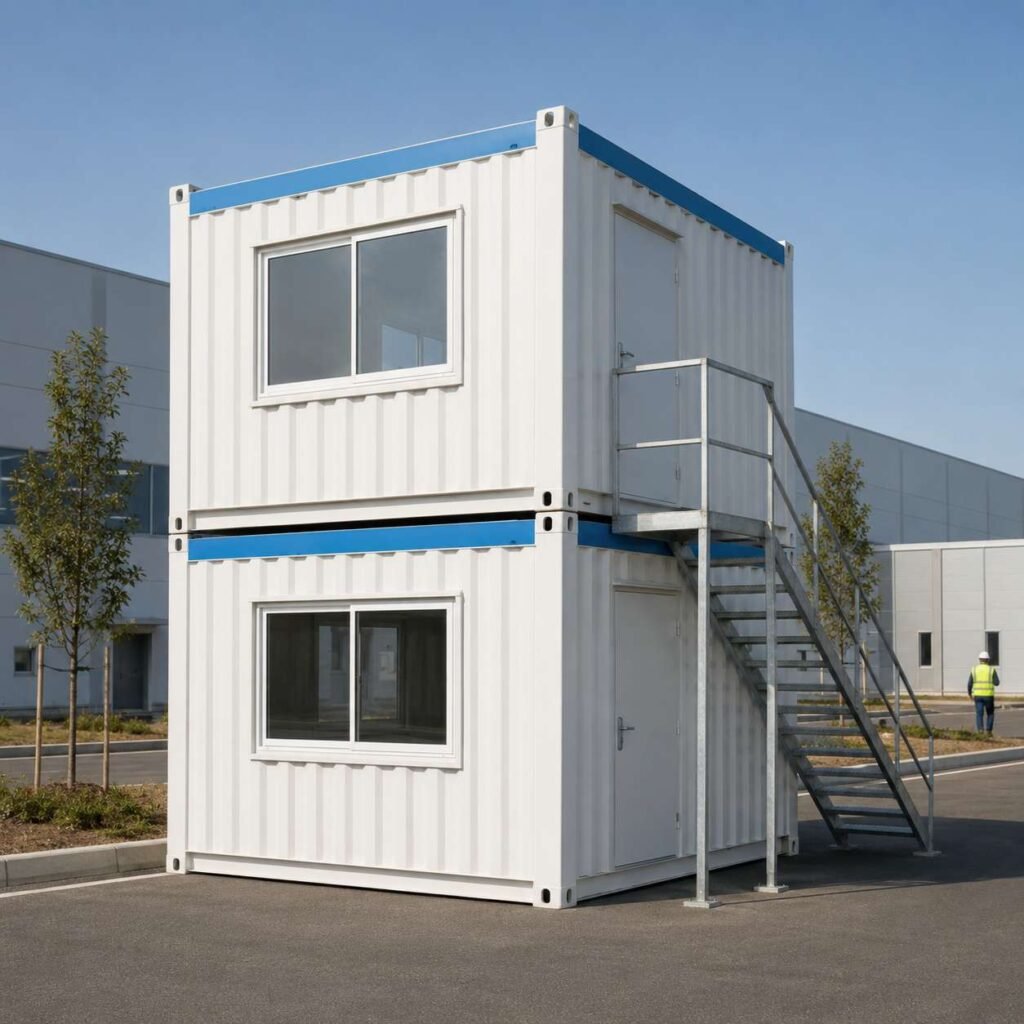
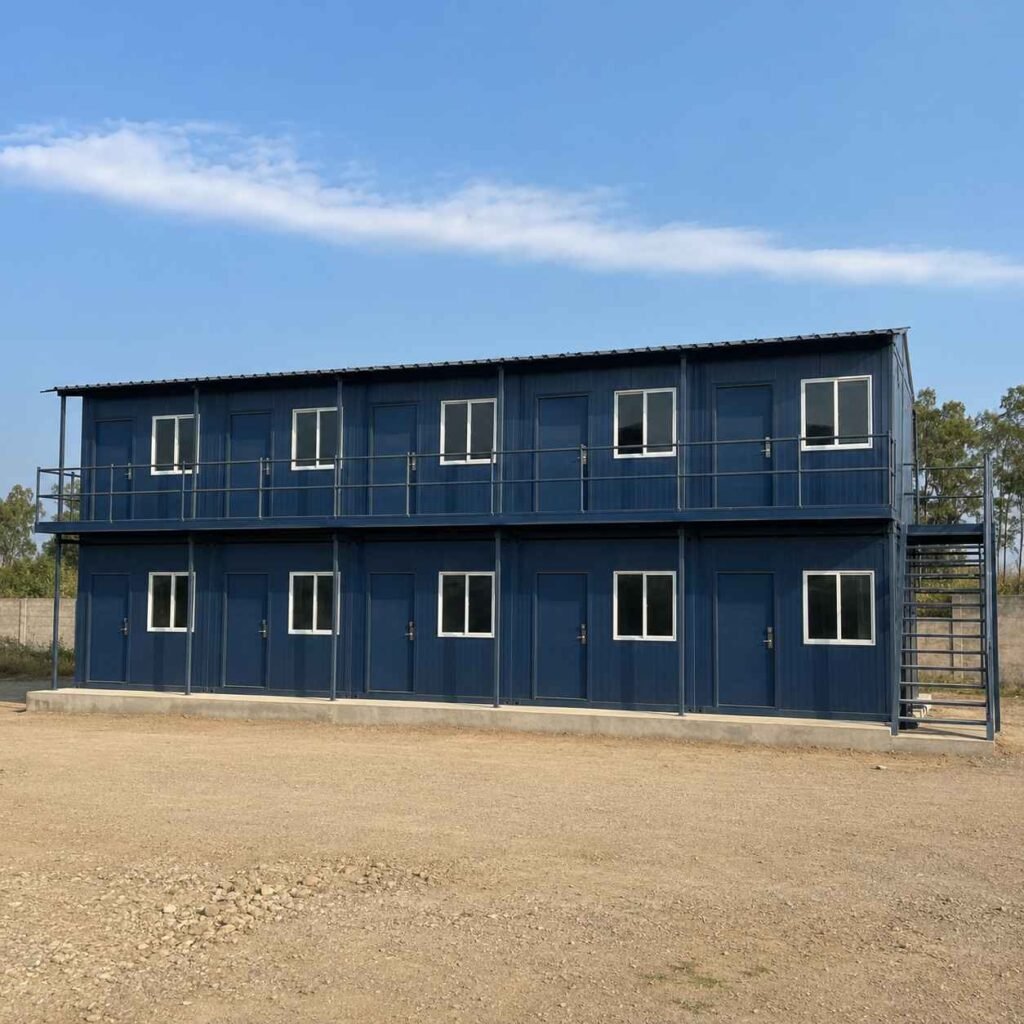
- Innovation labs built from stacked modules.
Even specialized setups like container office with storage streamline collaboration by combining workspace with secure on-site equipment. In disaster-response or NGO contexts, mobile command centers become temporary bases for staff coordination.
Why Containerized Offices Win in Hybrid Work
Flexibility defines the hybrid model, and no solution embodies flexibility better than containerized offices. For leaders, they reduce financial risk, shorten deployment times, and align with ESG goals. For employees, they provide comfort, focus, and a professional environment close to home.
Whether deployed as a container for site office on rotating projects or adapted as long-term modular hubs, these designs prove that the future of hybrid work is mobile, adaptive, and sustainable.
As FastCompany explains, businesses are rethinking work environments; containerized offices extend this logic into full, movable buildings
The Customization Edge: Tailoring Containerized Offices to Every Business Need
Every company operates differently. A law firm prioritizes privacy, while a tech startup thrives in open, collaborative spaces. Construction firms need rugged mobility, and NGOs value adaptability in crisis zones. The advantage of containerized offices is that they are not one-size-fits-all. Each unit can be tailored to match workflow, culture, and comfort.

Flexible Layouts for Diverse Operations
A basic container shell becomes a blank canvas. From there, businesses design layouts to reflect specific use cases:
- Private cabins for managers and client meetings.
- Open-plan pods for brainstorming and creative teams.
- Hybrid divisions with workstations, kitchens, and meeting areas.
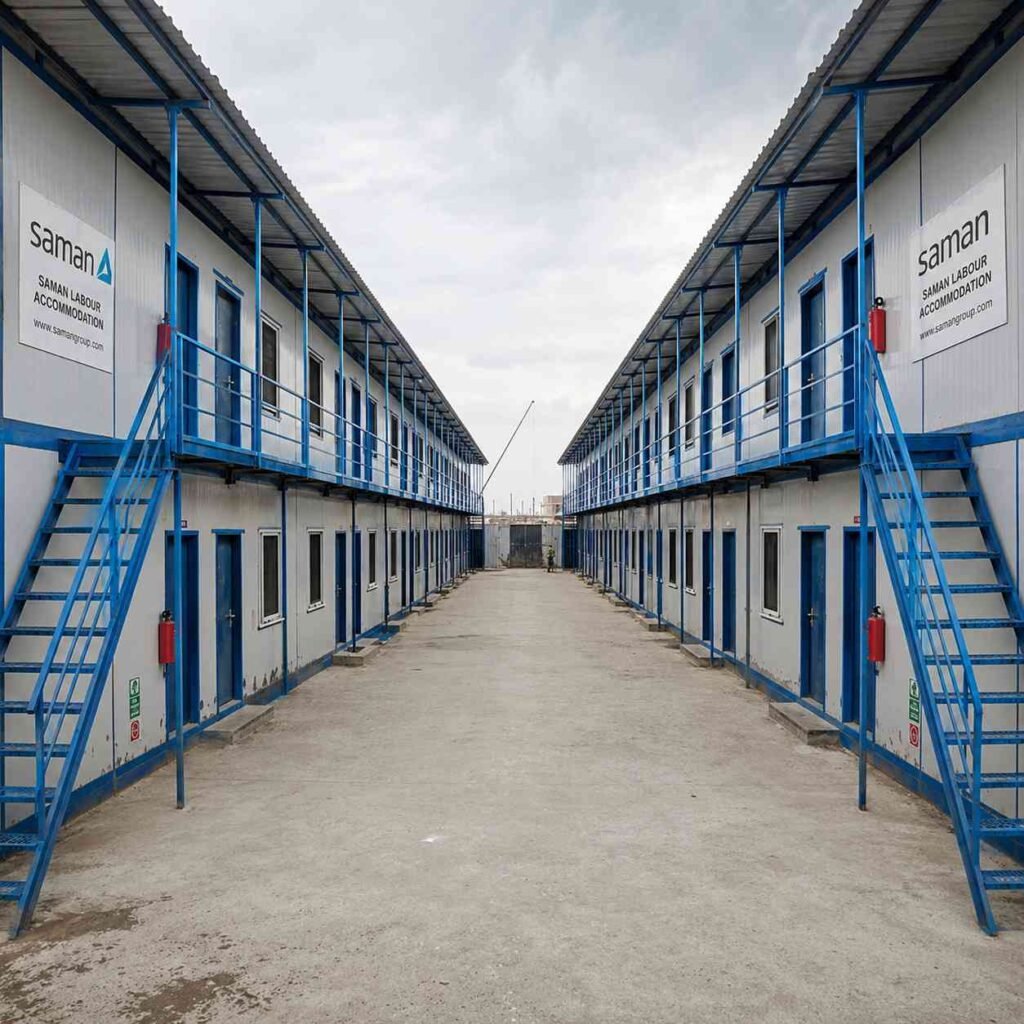
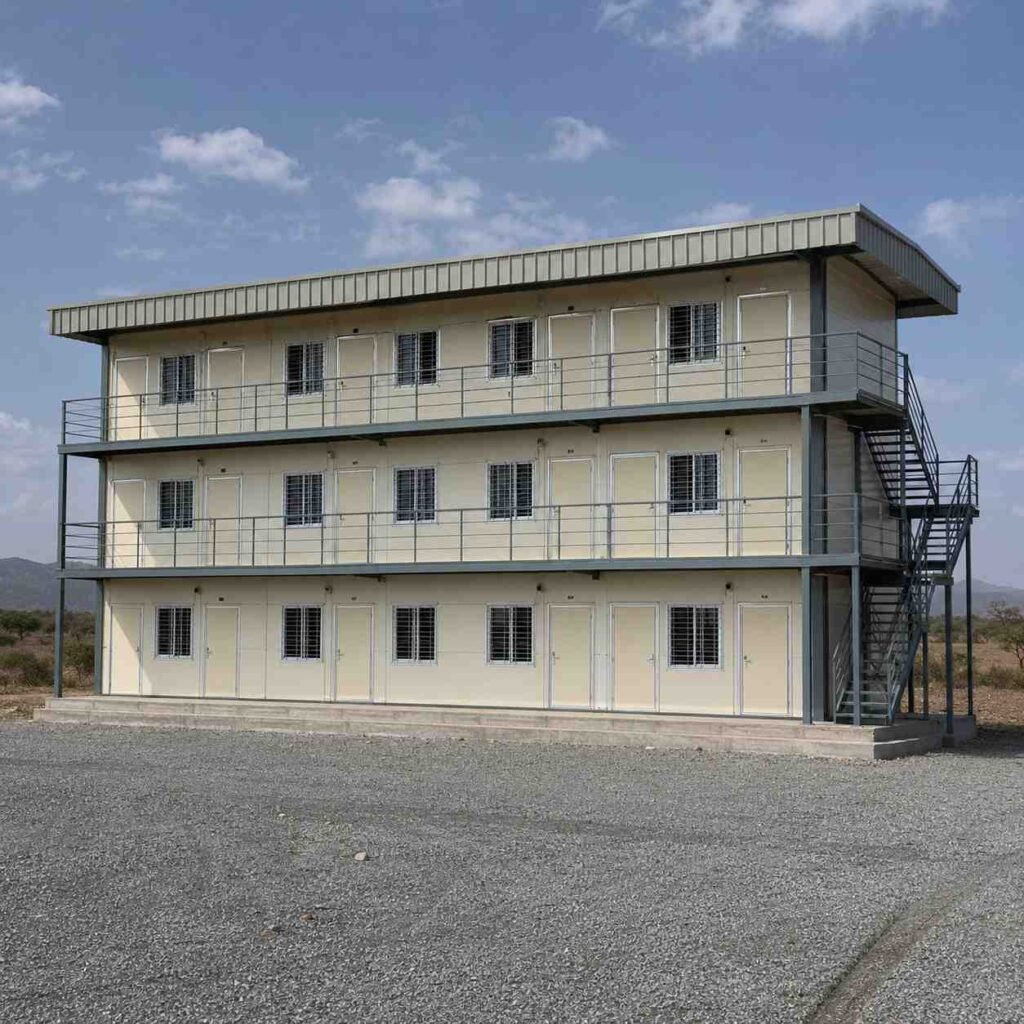
- Stacked complexes that scale into multi-story hubs.
A container for site office may focus on rugged durability, while an urban container as office emphasizes collaborative layouts.
Interiors That Reflect Corporate Identity
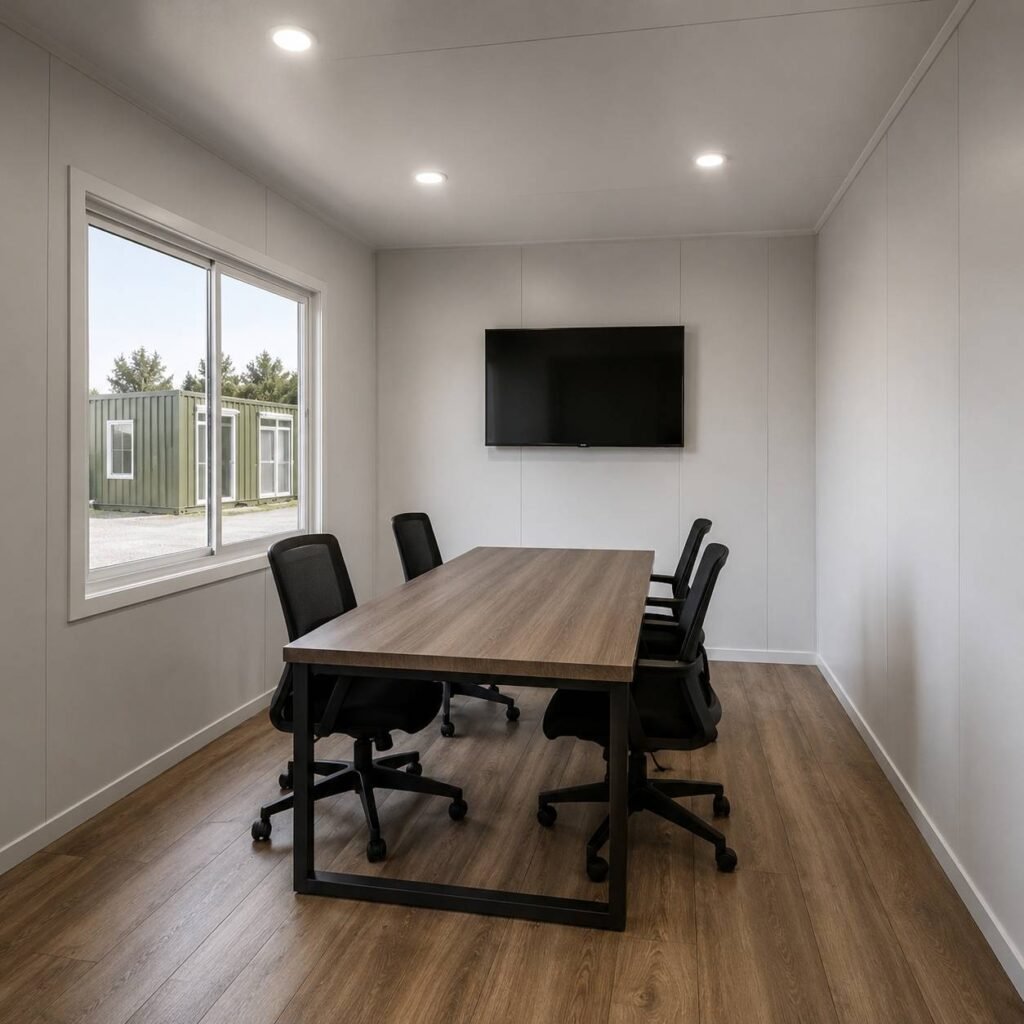
Inside, containerized offices can rival high-end corporate setups. Custom finishes reinforce both comfort and brand identity.
- Premium insulation ensures year-round climate control.
- False ceilings and flooring boost aesthetics.
- Interiors use brand colors and signage to build culture.
- Furniture adapts to specific industries, from law firms to logistics.
Some corporates even choose a container office with restroom for employee comfort during long shifts, or a container office with storage to integrate warehousing within the same footprint.
Businesses often start with a single unit and later scale into complexes. Our curated container office design guide showcases layouts tailored for corporate, construction, and startup needs.
Smart Technology Integration
Modern work relies on technology, and containerized designs accommodate this seamlessly.
- Automated lighting and HVAC reduce energy bills.
- IoT sensors monitor usage, enhancing efficiency.
- Biometric access ensures security.
- Video conferencing setups support hybrid operations.
For NGOs or government agencies, mobile command centers with secure connectivity make on-the-ground operations faster and safer.
Table: Customization Options in Containerized Offices
| Customization Area | Possible Features | Benefits |
|---|---|---|
| Layouts | Open-plan, partitions, stacked modules | Scales with team size and function |
| Interiors | Insulation, flooring, branded finishes | Comfort, aesthetics, corporate image |
| Technology | IoT, smart lighting, biometric access | Productivity, energy efficiency |
| Add-ons | Container office with restroom, storage units, meeting pods | Convenience, all-in-one solutions |
Why Customization Matters to Leaders and Teams
For executives, customization means adaptability and risk reduction. Workspaces expand or contract without disruption. For employees, personalized interiors boost productivity, comfort, and creativity.
The key takeaway: containerized offices are not just modular shells. They are adaptable ecosystems — from a rugged container for site office to high-tech mobile command centers. Customization ensures that businesses pay only for what they need, while future-proofing their work environments.
Navigating the Logistics: From Procurement to Placement of Containerized Offices
Turning the idea of containerized offices into functioning workspaces requires more than buying a steel unit. Success depends on selecting the right vendor, preparing the site, managing compliance, and ensuring utilities are in place. Businesses that plan each step carefully save costs, avoid delays, and maximize return on investment.

Step 1: Vendor Selection and Procurement
Choosing the right supplier is critical. A reliable partner provides more than a steel shell — they bring regulatory expertise, customization options, and after-sales support.
- Check certifications such as ISO or IGBC compliance.
- Review portfolios of container for site office and corporate installations.
- Compare purchase, lease, or rental models.
Project-based companies often start with rentals, while corporates prefer ownership for long-term value.
Step 2: Site Preparation and Foundations
Even modular solutions require stable bases. Proper preparation prevents long-term structural issues.
- RCC plinths or concrete blocks are standard for durability.
- Drainage systems prevent water accumulation during monsoons.
- Leveling ensures units like a container office with restroom or container office with storage sit securely.
This foundation step extends lifespan and reduces maintenance costs.
Step 3: Permits and Compliance
Although faster than traditional builds, containerized offices must meet the same safety and zoning codes.
- Local laws define where temporary or permanent offices can be placed.
- Fire safety codes cover exits, wiring, and ventilation.
- Environmental clearances may be needed for sensitive zones.
Even luxury projects and mobile command centers follow the same approvals, proving compliance is universal.
Step 4: Utility Connections and Services
Once delivered, offices must be fitted with essential utilities:
- Electrical wiring for lighting, AC, and equipment.
- Plumbing for washrooms and kitchens in a container office with restroom.
- Internet and telecom for hybrid-ready setups.
Pre-installed wiring and insulation in container as office modules make connections faster and reduce downtime.
Step 5: Final Placement and Inspection
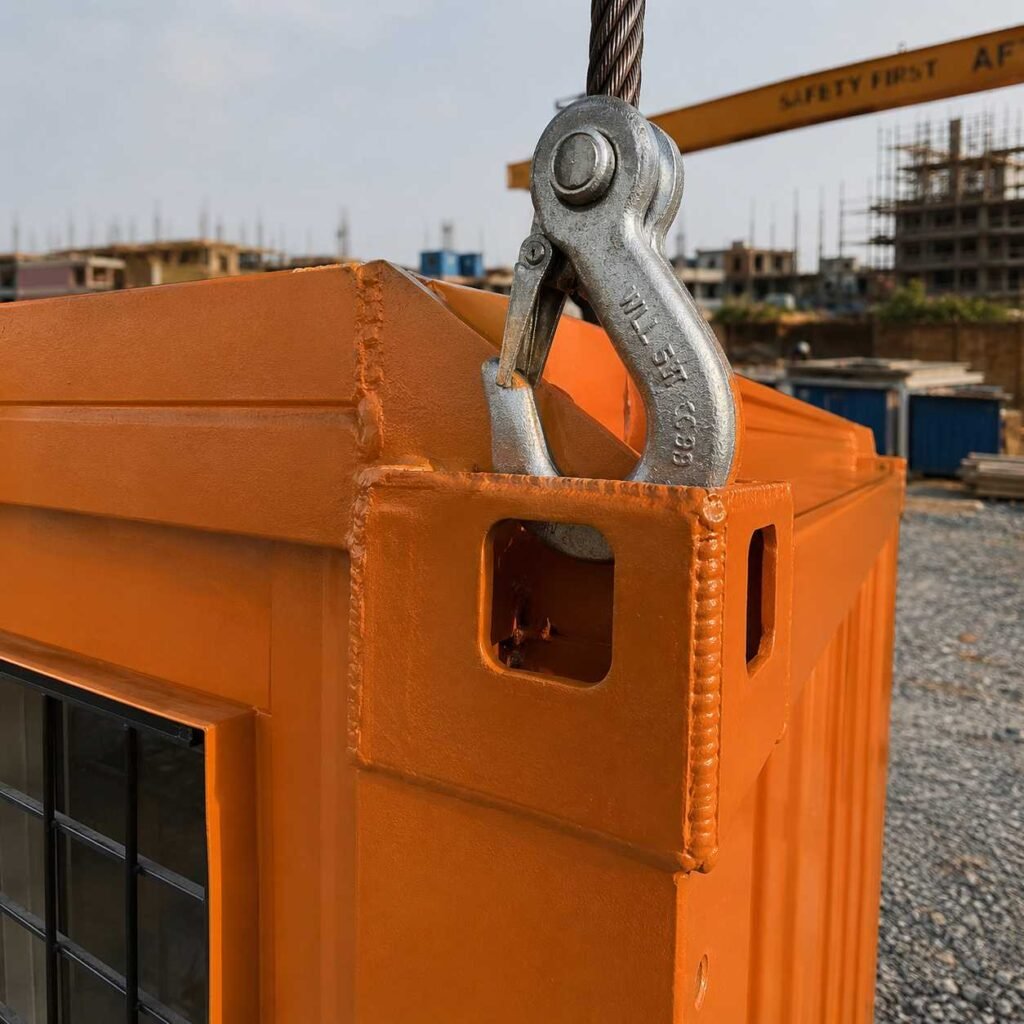
Delivery usually involves cranes or trailers. After placement, businesses should inspect:
- Locks, doors, and windows for security.
- Insulation for energy efficiency.
- Utility connections for safety compliance.
Authorities may require sign-off before occupation, particularly for larger containerized offices or multi-unit hubs.
Table: Logistics Checklist for Containerized Offices
| Step | Key Actions | Why It Matters |
|---|---|---|
| Vendor Selection | Verify certifications, past projects | Ensures reliability and quality |
| Site Preparation | RCC plinth, drainage, leveling | Prevents long-term structural issues |
| Compliance | Secure zoning, fire, environmental approvals | Avoids legal penalties or shutdowns |
| Utility Setup | Install power, water, internet | Ensures ready-to-use functionality |
| Final Inspection | Check locks, wiring, insulation | Guarantees safety and performance |
The Takeaway
Navigating logistics is what transforms a container as office from concept to reality. With the right partner, solid foundations, and proper compliance, businesses can go from procurement to placement in weeks — creating mobile, durable, and future-ready workspaces.
From a rugged container for site office to a high-tech mobile command center, success always rests on planning, permits, and precision.
Financial Deep Dive: Long-Term Value & ROI of Containerized Offices
Every workspace decision has financial implications. Traditional buildings require large capital investments in land, materials, and labor. Leasing commercial space demands recurring rent without asset value. Containerized offices provide a third path — one that lowers upfront costs, reduces ongoing expenses, and retains value through resale or reuse.

Lower Upfront Costs
Traditional structures often cost ₹1,500–2,000 per sq. ft. because of cement, steel, and labor. In contrast, container as office solutions reuse existing steel units, cutting foundation and material needs.
- 30–50% lower capital costs than brick buildings.
- Minimal downtime since setup takes weeks, not months.
- Predictable budgets with prefabricated modules.
For startups and NGOs, these savings make a container for site office the most practical entry point.
Operating Efficiency and Energy Savings
The financial benefits continue after installation. Containerized offices are compact, well-insulated, and easier to manage.
- Energy consumption is 20–30% lower with insulation and solar panels.
- Steel durability reduces repair and repainting costs.
- Relocation prevents new construction costs when projects shift.
Businesses using a container office with restroom or container office with storage can save further by combining facilities into one modular unit instead of renting multiple structures.
ROI and Resale Value
Unlike traditional builds that depreciate, containerized offices retain strong resale value.
- Well-maintained units resell for 50–70% of original value after 3–5 years.
- Many are repurposed as warehouses, storage, or even mobile command centers.
- Modular flexibility ensures strong demand in the secondary market.
This transforms container solutions from a sunk cost into liquid assets.
Lease vs. Purchase: Strategic Choices
Companies must balance short-term project needs with long-term growth.
- Leasing: Ideal for 1–3 year projects; predictable monthly cost without upfront burden.
- Purchasing: Best for permanent use; creates a tangible asset on the balance sheet.
Many firms start by leasing a container for site office and later transition to ownership once their operations stabilize.
To compare upfront and lifecycle savings, explore the full container offices price breakdown for Indian and global markets.
Table: 10-Year Cost and ROI Comparison
| Expense Category | Traditional Office (10 yrs) | Prefab Units (10 yrs) | Containerized Offices (10 yrs) |
|---|---|---|---|
| Initial Setup | High (₹1,500–2,000/sq. ft.) | Medium (₹1,200–1,500/sq. ft.) | Low (₹800–1,200/sq. ft.) |
| Energy Costs | High (inefficient) | Moderate | Low (20–30% less) |
| Maintenance | Frequent, costly | Moderate | Minimal (steel durability) |
| Relocation/Resale | None | Limited resale | High (50–70% resale value) |
| ROI Over 10 Years | Moderate | Moderate | High, with resale + savings |
The Takeaway
For decision-makers, the ROI of containerized offices is clear: lower setup costs, reduced monthly expenses, and strong resale value. For employees, the benefits are equally important — energy-efficient, climate-controlled, and comfortable environments that improve daily productivity.
Whether it’s a container office with restroom, a container office with storage, or a full-scale mobile command center, these workspaces represent one of the smartest financial decisions available today.
Conclusion and Next Steps: Why Containerized Offices Are the Future
The workplace is undergoing a fundamental transformation. For decades, companies invested in either permanent buildings or rented commercial space, locking themselves into high costs and inflexible terms. Containerized offices break this pattern. They combine speed, adaptability, and sustainability in ways that traditional real estate simply cannot match.

Why Containerized Offices Outperform Traditional Models
The advantages of modular steel-based workspaces go far beyond cost savings. They also address long-term corporate priorities like sustainability, mobility, and workforce satisfaction.
- Speed: Deployment in weeks, not months or years.
- Cost Savings: 20–30% cheaper upfront, plus ongoing operational efficiency.
- Sustainability: Adaptive reuse of steel containers reduces waste and carbon output.
- Flexibility: Offices scale, move, or reconfigure with minimal disruption.
- Resale Value: Units maintain 50–70% of value, creating liquid assets.
Whether configured as a container for site office, a container office with restroom, or a container office with storage, the principle remains the same — modular design provides smarter workspaces.
What Decision Makers Should Focus On
Executives evaluating containerized offices need a framework that looks beyond immediate price. Strategic planning ensures that these workspaces deliver both operational and financial performance.
- Define the use case: Is it a temporary hub, a permanent headquarters, or even a mobile command center?
- Choose the right model: Renting works for short-term projects; purchasing offers long-term ROI.
- Plan logistics early: Site prep, foundations, and permits should not be afterthoughts.
- Invest in customization: Interiors, layouts, and smart systems can transform a container as office into a fully branded environment.
- Track ESG metrics: From reduced emissions to waste savings, sustainability reporting adds measurable value.
Why Employees Benefit Too
The business case is compelling, but the human case is equally important. Employees spend most of their working hours in these environments, and containerized offices deliver tangible improvements:
- Comfort: Well-insulated interiors and climate control.
- Security: Steel bodies and reinforced fittings that withstand extreme conditions.
- Productivity: Natural light, ergonomic layouts, and distraction-free design.
- Pride: Working in a sustainable office reinforces alignment with ESG goals.
This blend of corporate efficiency and employee satisfaction explains why so many industries are adopting modular solutions.
The Takeaway: Practical, Scalable, and Visionary
From India’s infrastructure projects to global innovations like London’s Container City, the rise of containerized offices is not a passing trend but a structural shift. These workspaces are redefining how companies think about agility, cost, and sustainability.
The future belongs to workspaces that can move, scale, and adapt as quickly as the businesses they support. By investing in containerized offices — whether as a container for site office, a container as office, or specialized solutions like mobile command centers — leaders position their organizations for resilience, innovation, and long-term success.
For more details or to explore tailored solutions, you can connect directly with our team through the Contact Page.
FAQs on Containerized Offices

How much do containerized offices cost in India?
Entry-grade containerized offices typically start at ₹10–15 lakh. Premium builds with insulation, branding, and tech range ₹18–30 lakh. Short-term rentals for a container for site office usually fall between ₹15,000–₹50,000 per month, depending on size, fit-out, and location.
Is it cheaper to rent or buy containerized offices?
For projects under two years, renting containerized offices keeps cash flow light and avoids depreciation. Beyond 18–24 months, purchasing a container as office is usually more economical, with additional upside from resale value and reuse across future sites.
Do containerized offices require permits?
Yes. Most municipalities require zoning and fire-safety approvals, even for temporary installs. A container for site office with RCC plinth, proper egress, and certified wiring aligns faster with local codes. Always confirm state and city rules before procurement.
How long do containerized offices take to deploy?
Standard prefabricated units are site-ready in 3–6 weeks. Custom layouts or stacked modules can take 8–16 weeks. On-site placement and hookups for a container as office typically finish within 1–2 days when foundations and utilities are prepped.
Are containerized offices durable and weatherproof?
Yes. Built from Corten steel, containerized offices withstand monsoons, heat, and coastal air with proper coatings and upkeep. Lifespans of 25–30 years are common. Adding insulation and ventilation maintains interior comfort across Indian climates.
What sizes work best for teams?
A 20-ft unit (≈160 sq ft) suits 2–3 users; a 40-ft unit (≈320 sq ft) fits 4–6. High-cube options add headroom. Multiple modules can be combined or stacked for larger hubs, including a container office with storage or meeting pods.
Can containerized offices be relocated easily?
Yes. Units move by truck or crane with minimal disruption. Typical relocation costs range from ₹40,000–₹1.2 lakh based on distance and site conditions. A container for site office designed with quick-disconnect utilities accelerates redeployment.
What utilities can be integrated?
Containerized offices support full electrical wiring, AC, networking, and plumbing. A container office with restroom includes water inlet, waste lines, and ventilation. Solar, UPS, and IoT sensors are common add-ons for power resilience and monitoring.
Are containerized offices energy efficient?
With insulation, LED lighting, and right-sized HVAC, containerized offices can cut energy use by 20–30% versus conventional builds. Cross-ventilation and solar integration improve performance further, reducing OPEX over multi-year deployments.
What foundations are recommended?
Temporary setups use level blocks or steel skids; permanent installs favor RCC plinths or concrete slabs for longevity and code compliance. Proper grading and drainage protect a container as office from water ingress during heavy rains.
What are the top advantages for buyers?
Speed to deploy, lower capex, strong portability, and measurable ESG gains. A container office with storage consolidates workspace and inventory, while a container office with restroom boosts comfort on long-duration sites. Many units retain 50–70% resale value.
What specialized options exist beyond offices?
Organizations use mobile command centers for disaster response, healthcare outreach, and logistics control. These containerized offices bundle power, comms, and secure interiors, enabling fast, reliable operations where permanent buildings aren’t feasible.


