














Container Office Buying Guide for India: How to Choose the Right Unit in 2026

A practical container office buying guide for India has to start with the question that quietly costs buyers the most money: what you are actually being quoted. A 20ft “container office” from one supplier and a 20ft “container office” from another can sit at the same price band on paper, look almost identical in product photos, and yet have completely different structural lifespans once they reach your site.
This guide walks through the decisions that separate a good container office buy from a regrettable one — the structural distinction every supplier glosses over, the four buyer profiles each with a different right answer, the spec sheet you should fix in writing before a single quote arrives, and the realistic procurement workflow from enquiry to handover. Where another sibling guide on this site already covers depth on cost line items or on the used-container path, this page routes you to it rather than repeating the work.
First Decision: Is It Actually a Container Office, or a Cabin in a Container Shape?
The single most common Indian buyer regret on a container office order is not paying too much. It is paying a fair price for something that turns out to be a different product from what the brochure suggested. Two structurally different products are sold under almost identical language in India, and the words “container office” are used for both. Knowing which one is on your quotation is the first decision in any honest buying process.
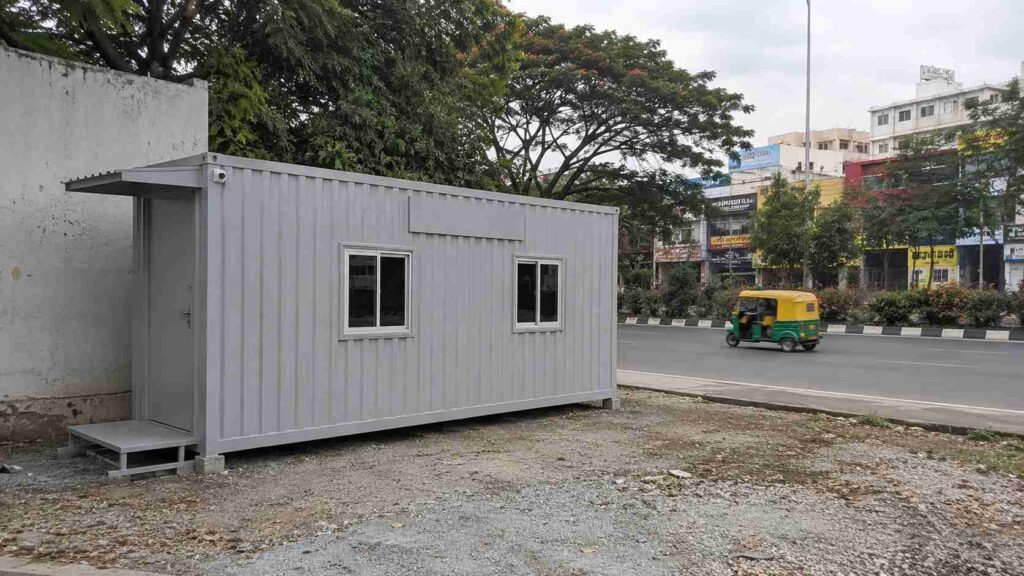
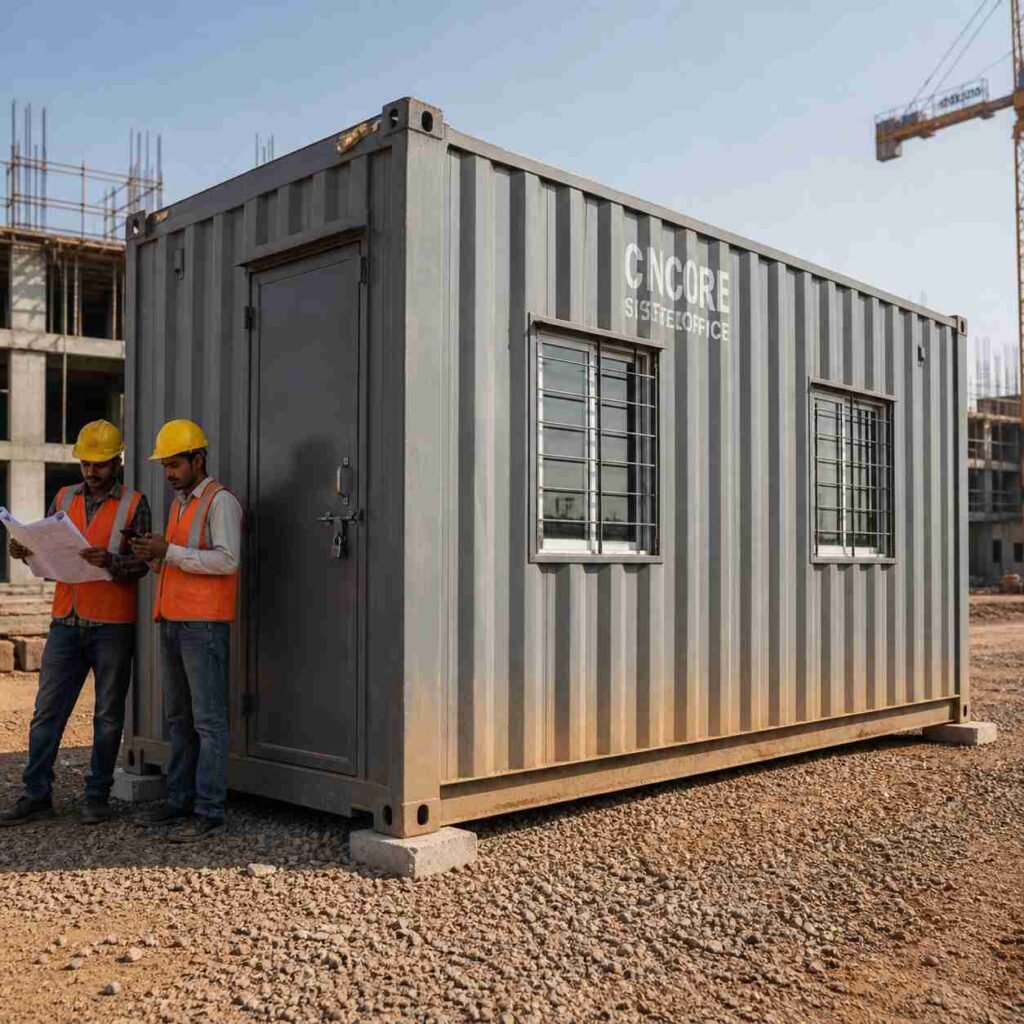
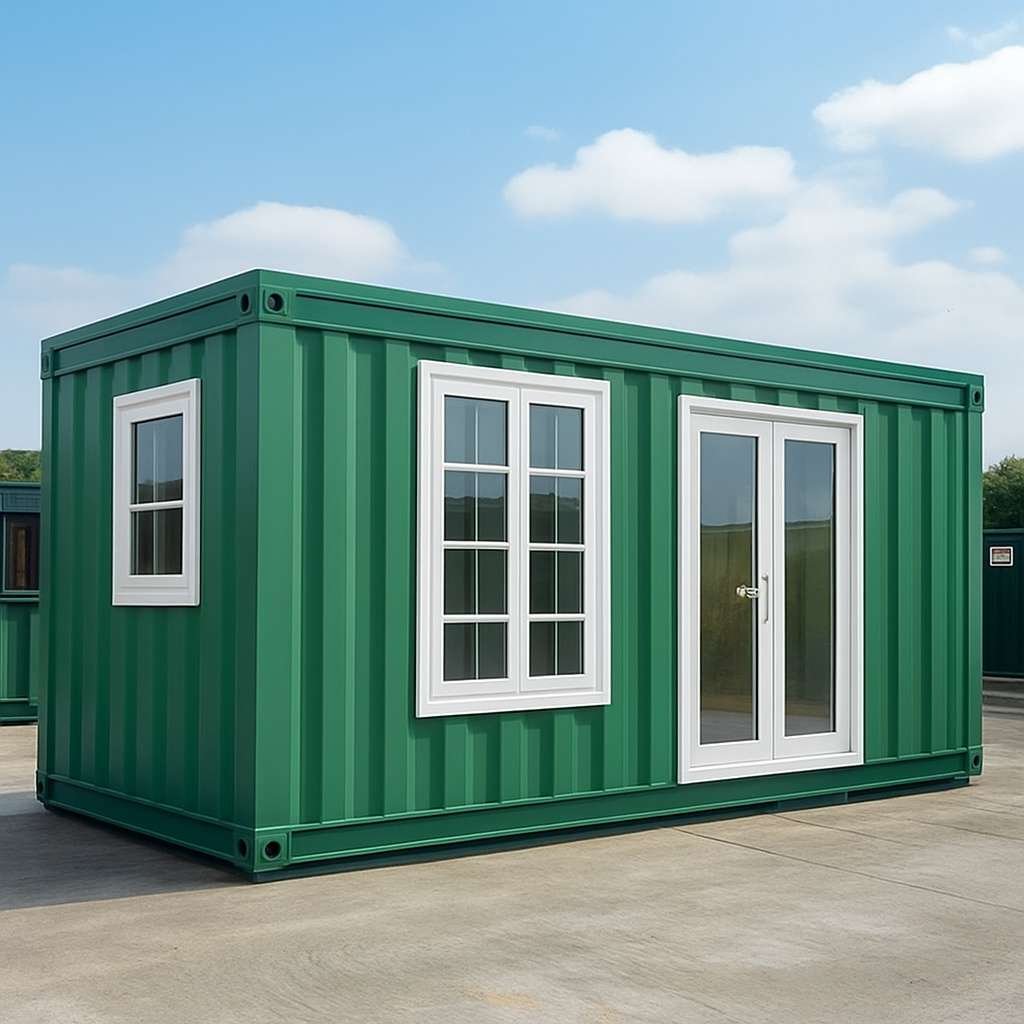
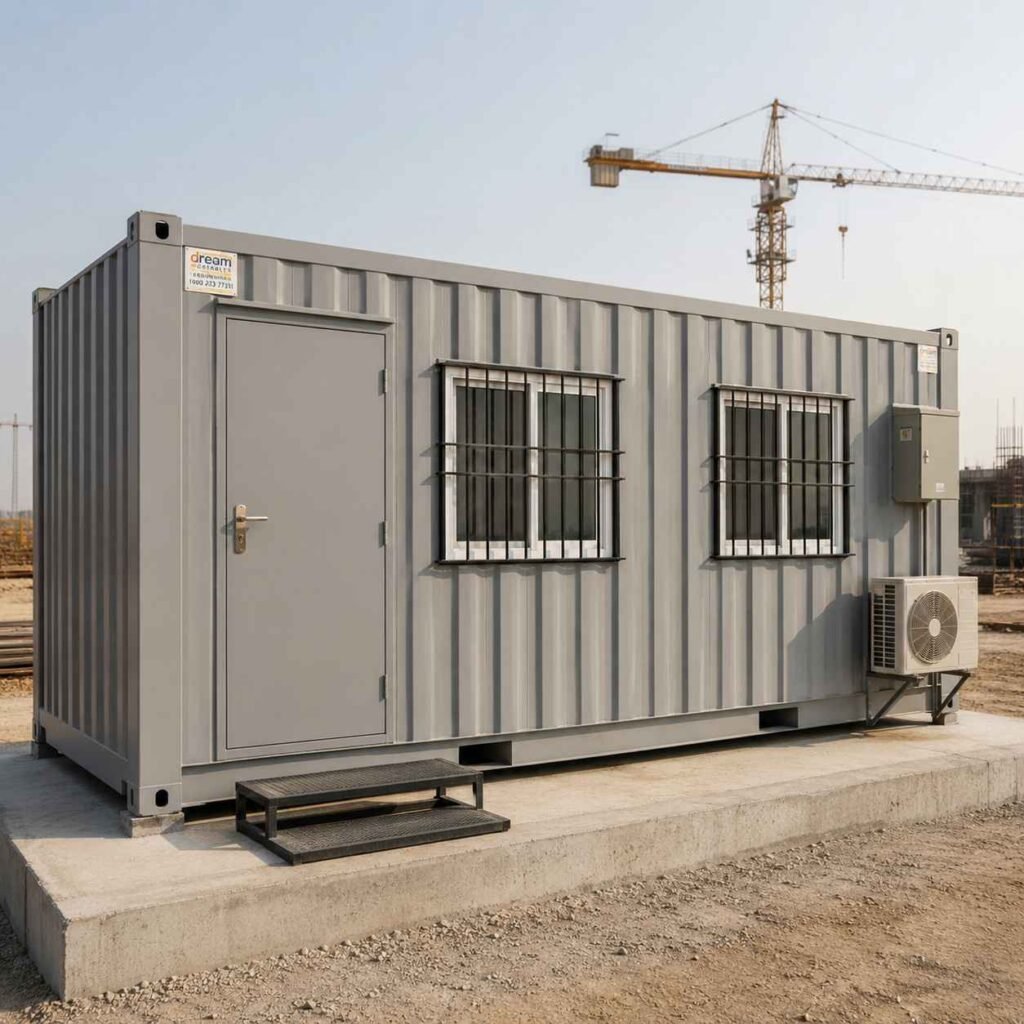
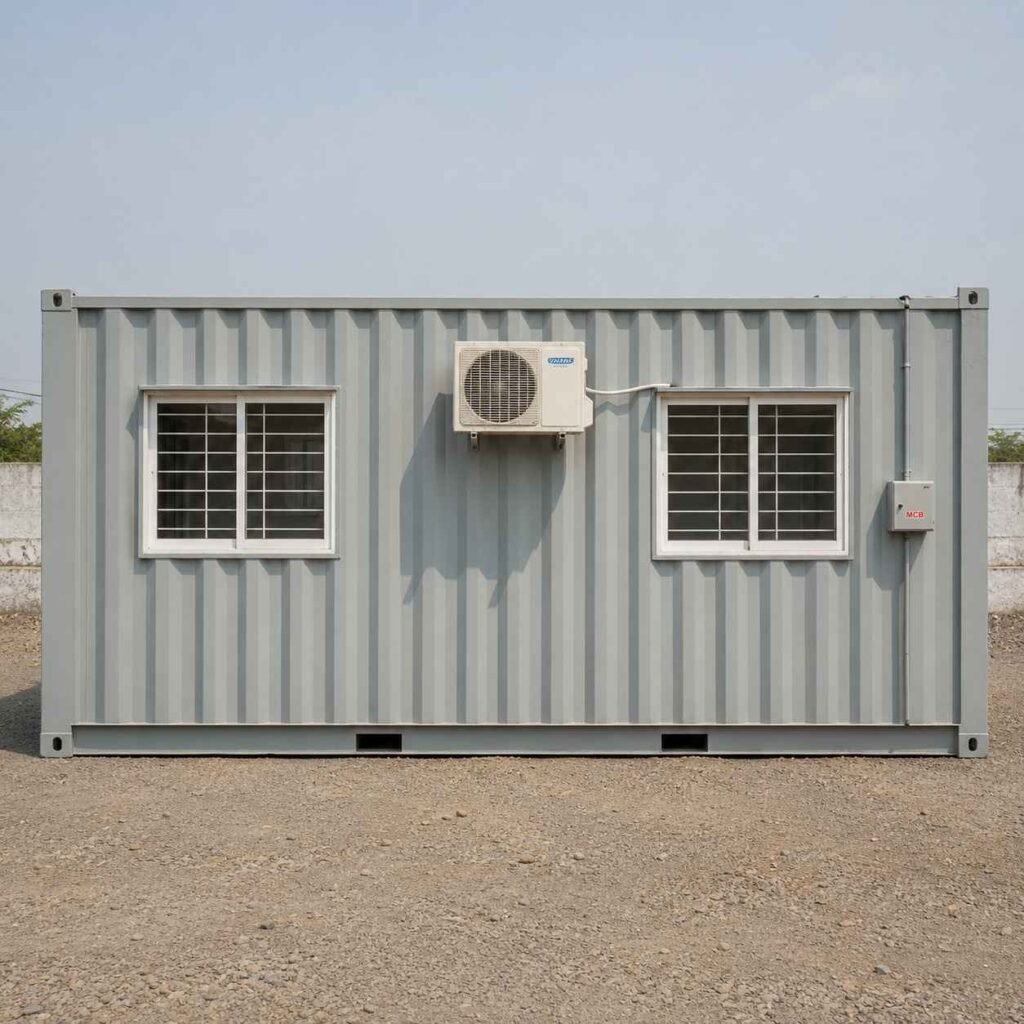
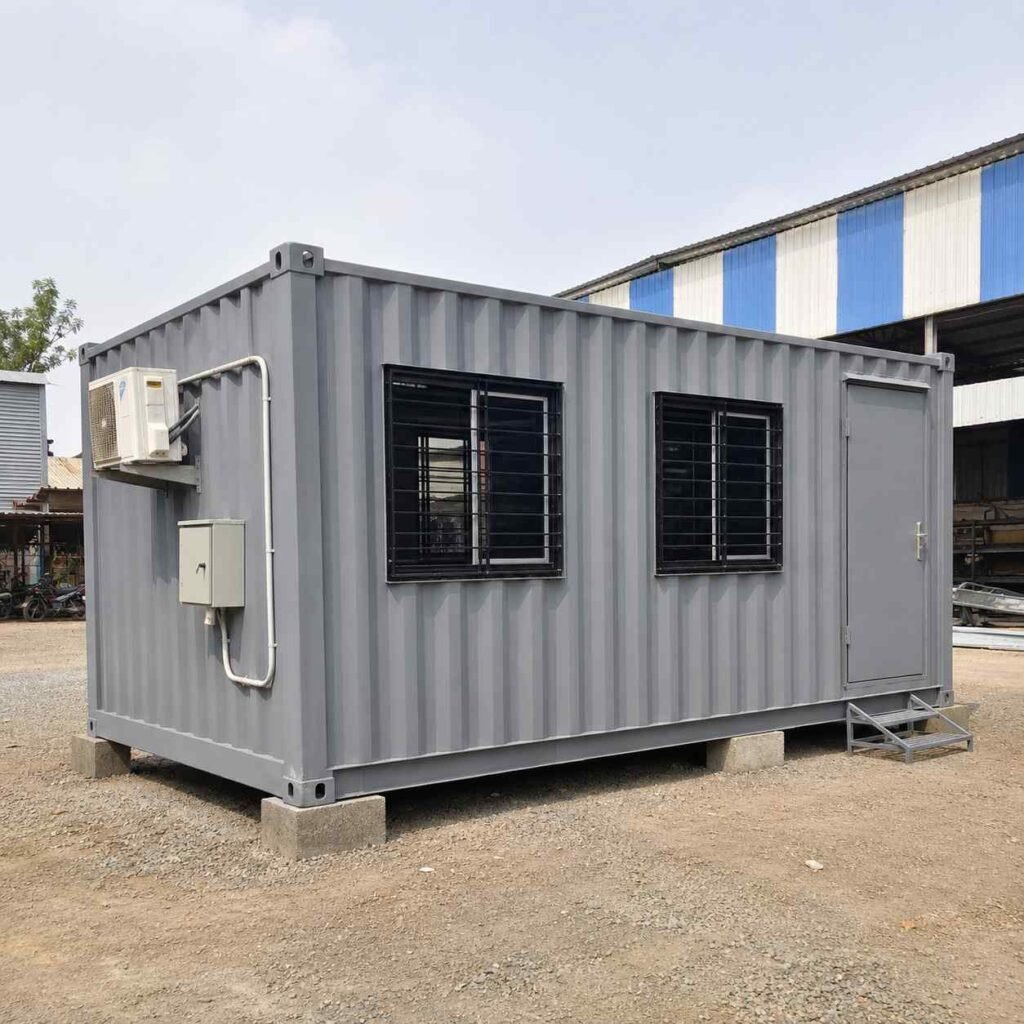
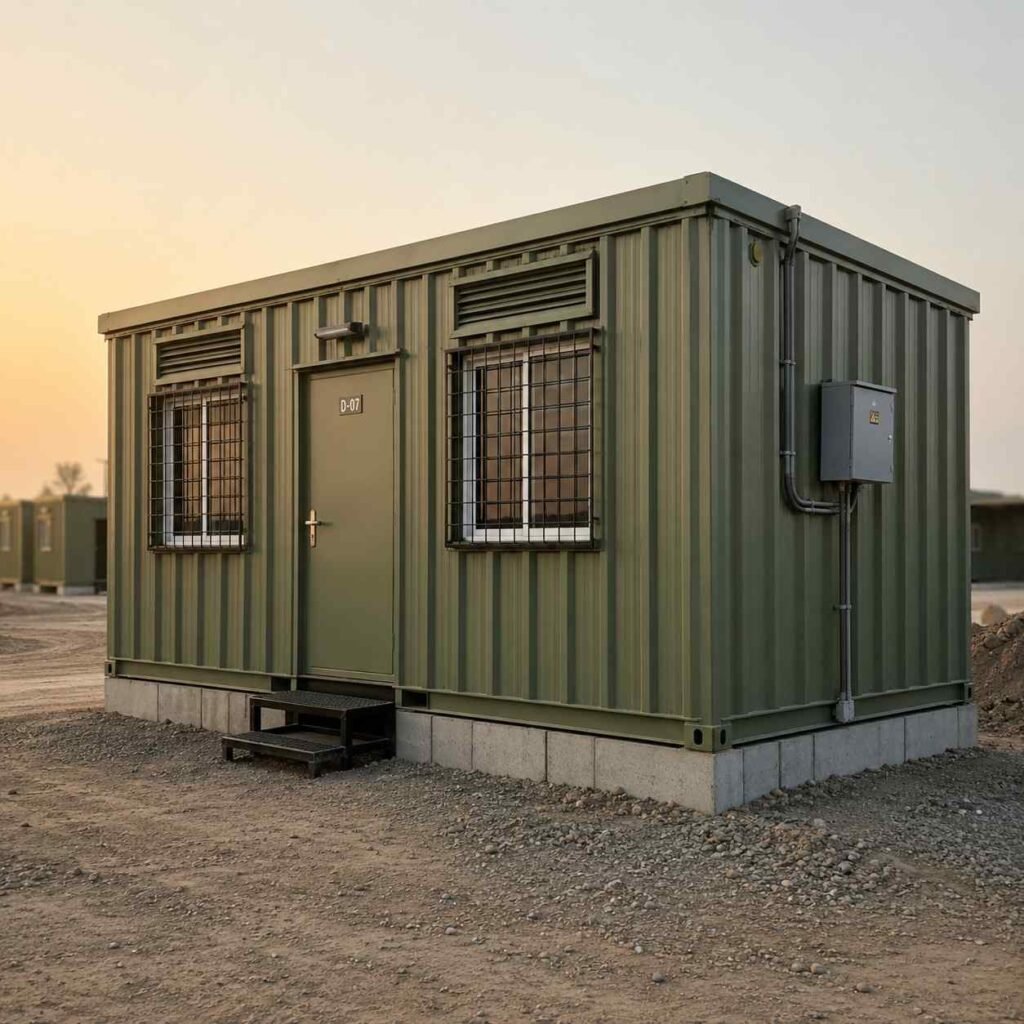
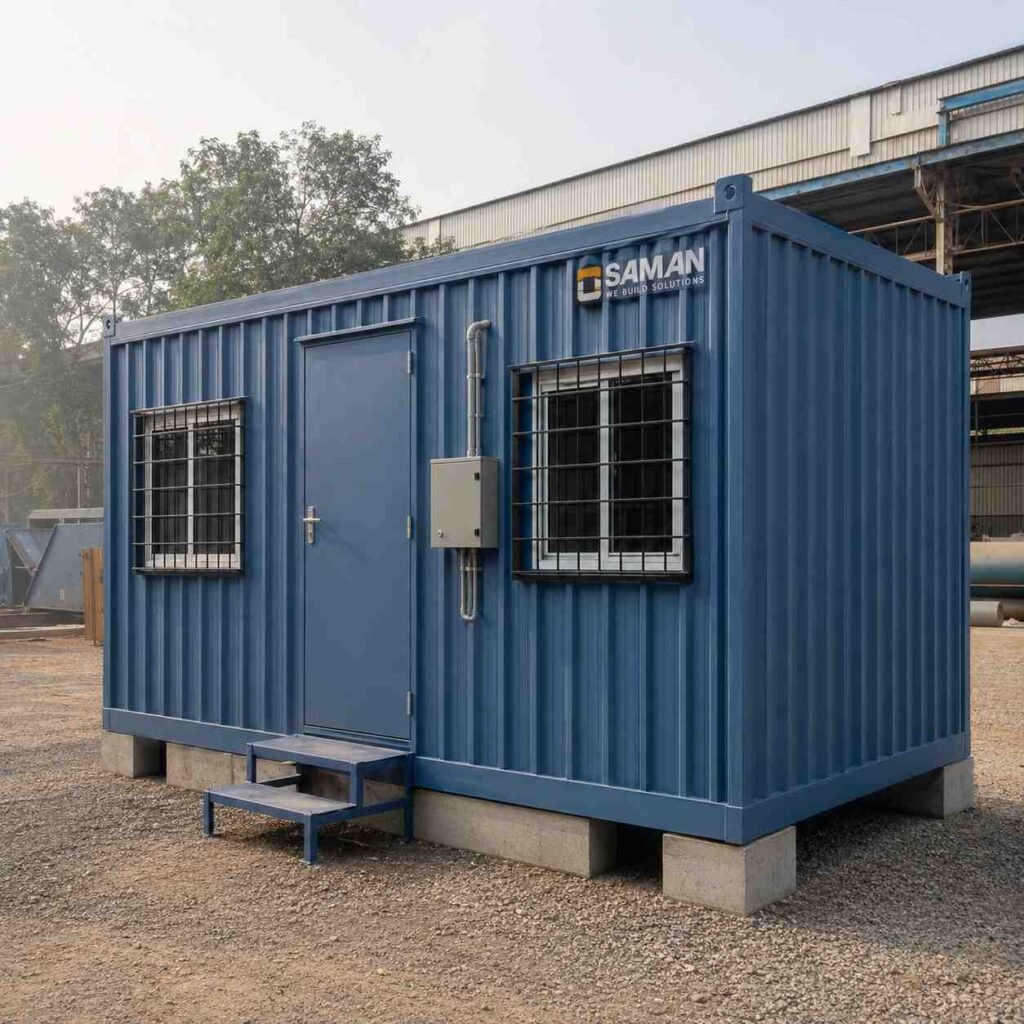
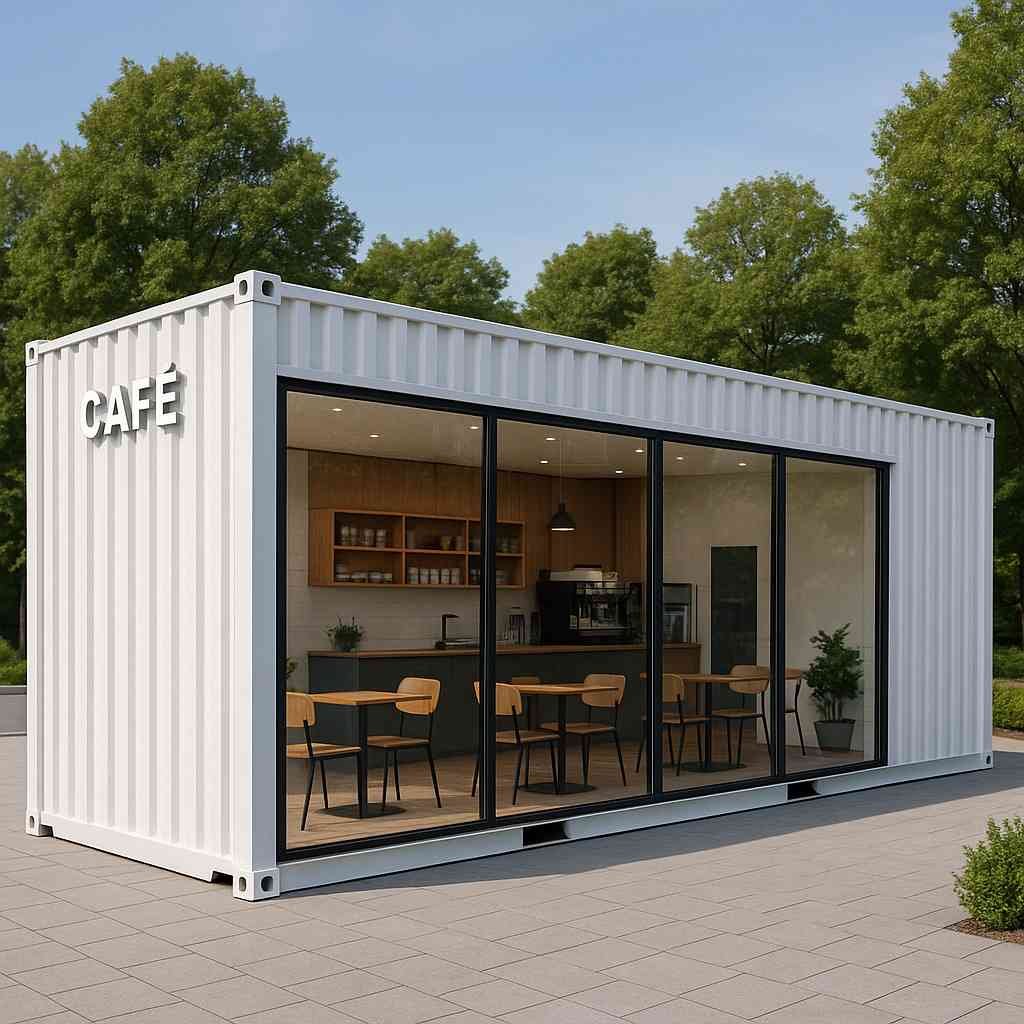
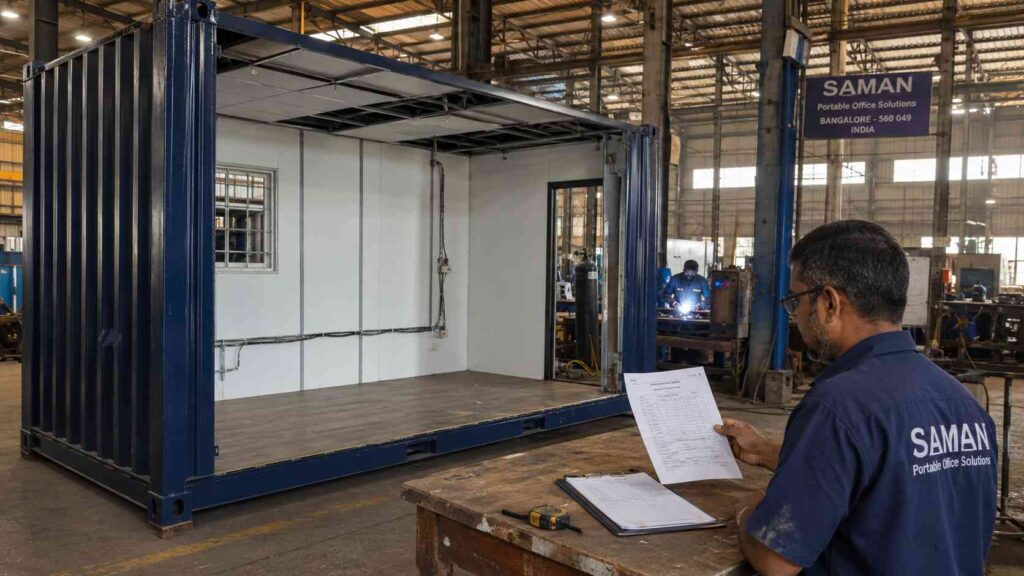
A true container office is a corrugated ISO Corten-steel shell built or converted to shipping-container form factor (20ft or 40ft), cut, insulated and fitted out internally. An MS-sheet panel build container-style office uses a mild-steel frame with thin GI or MS sheet wall panels in the same rectangular form factor — visually similar from outside, structurally different inside, and usually priced 25–40% lower.
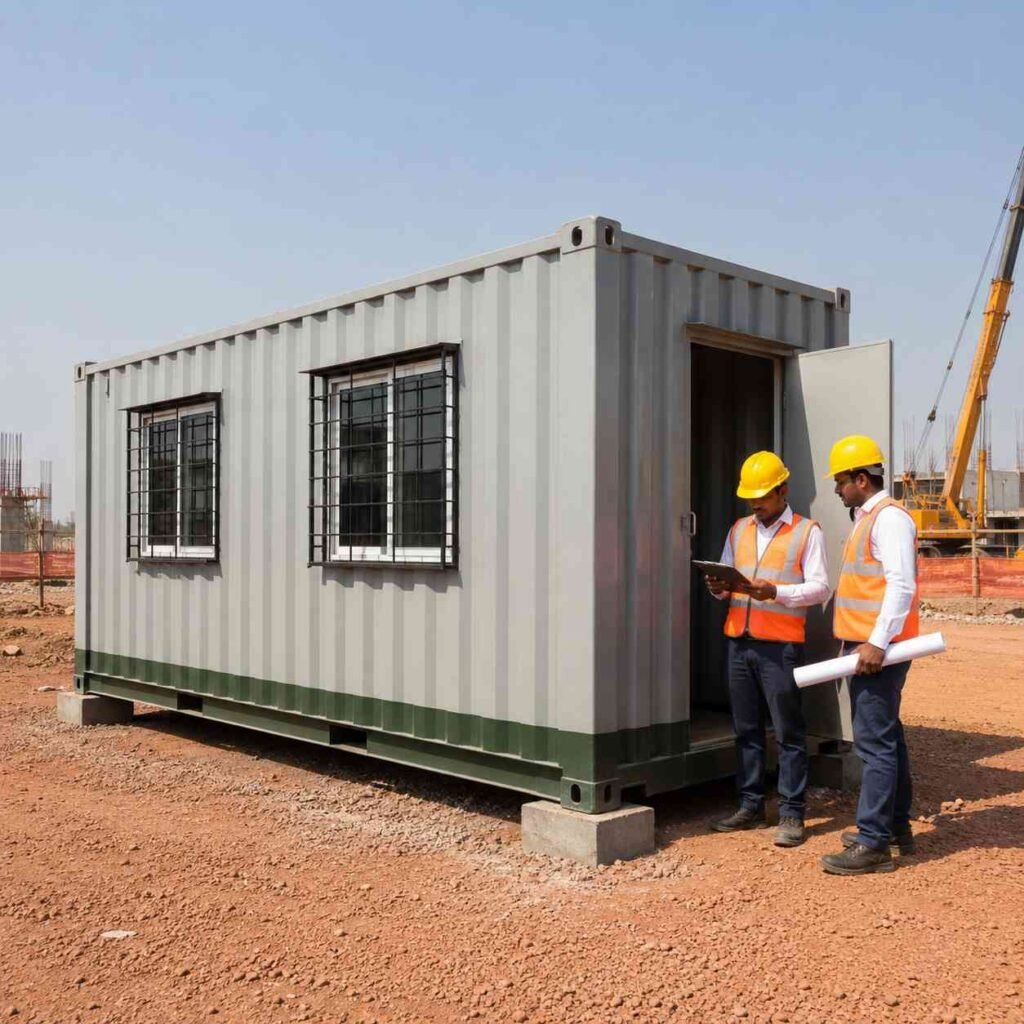
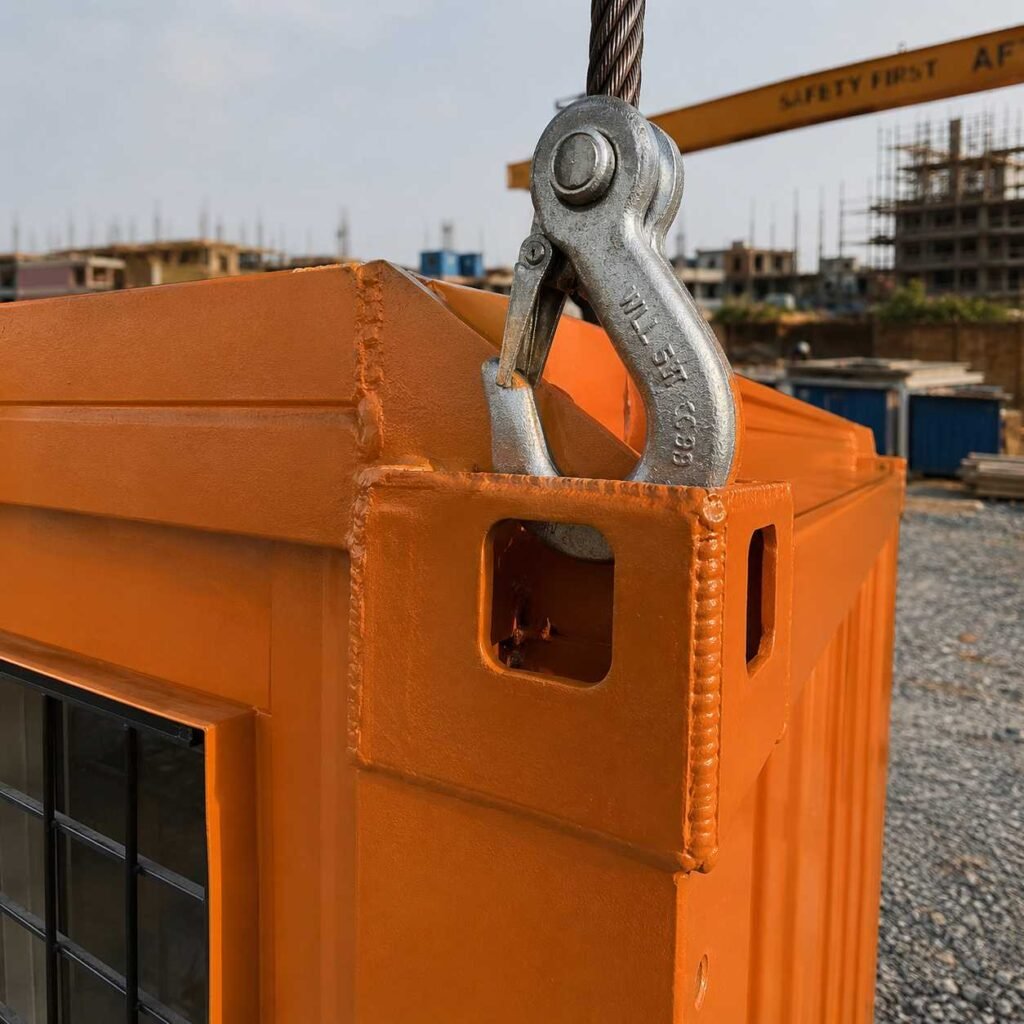
The container form factor came from international shipping, where steel boxes had to take ocean voyages, stack nine-high on a vessel, and survive corner-casting lifts by gantry cranes. That heritage is the reason a true container office can sit on a construction site for fifteen years, stack two or three units high, and carry a forklift on its roof without flexing. It is also the reason it costs more.
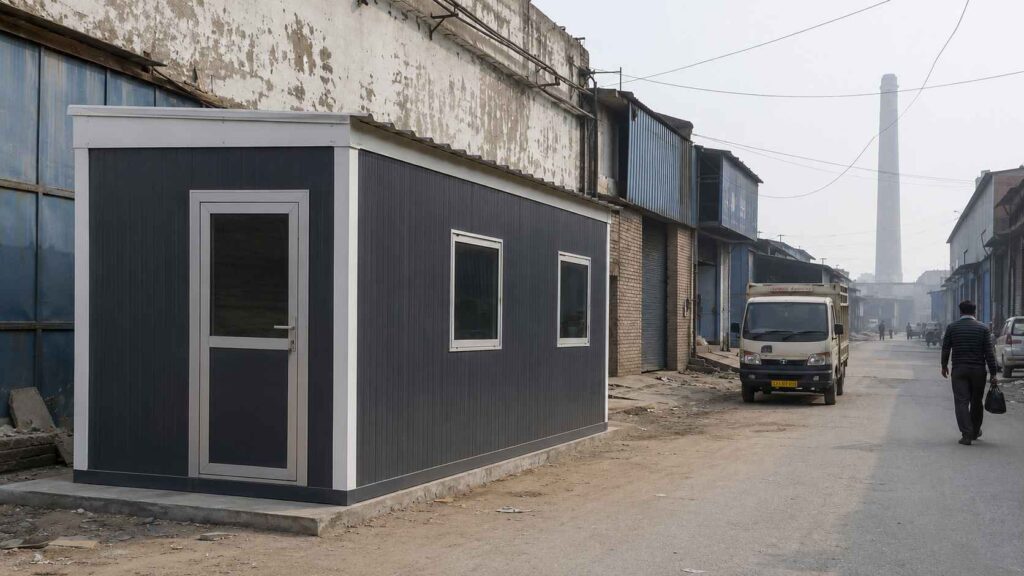
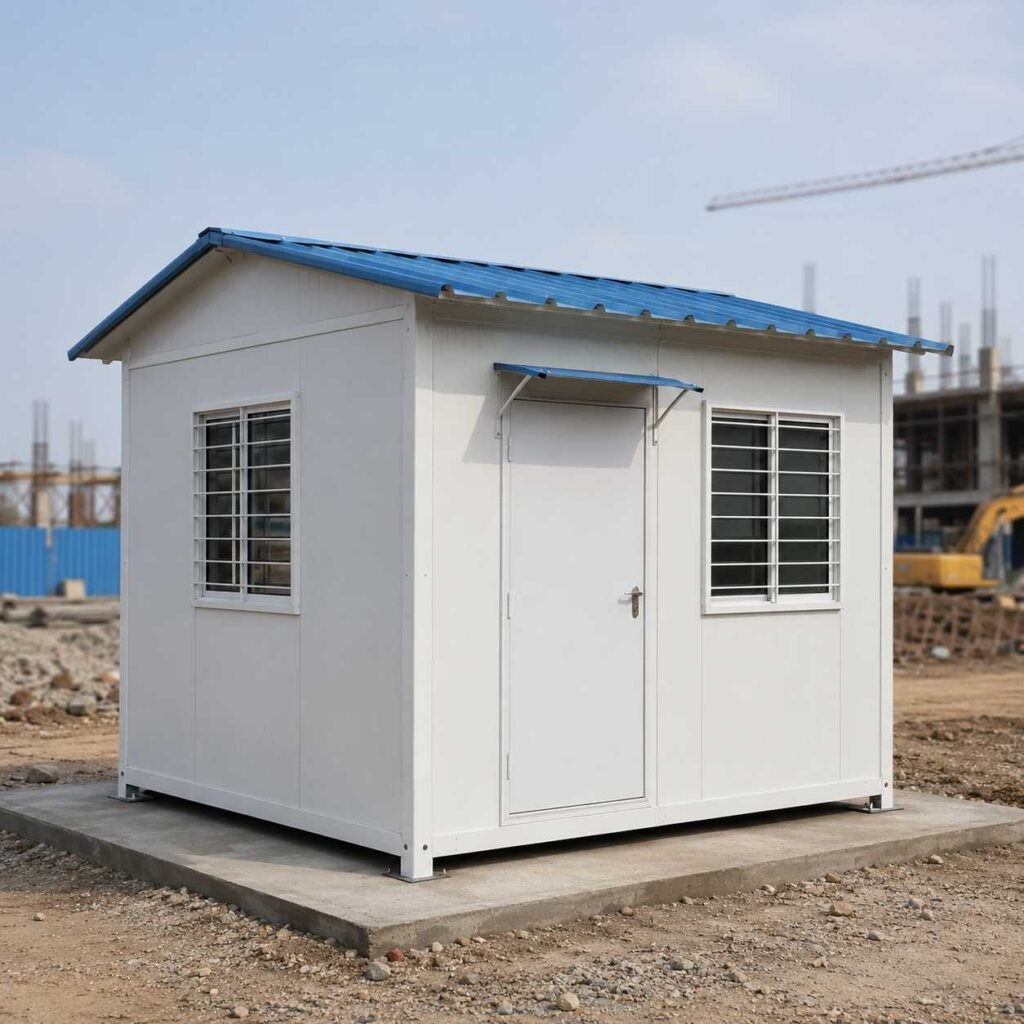
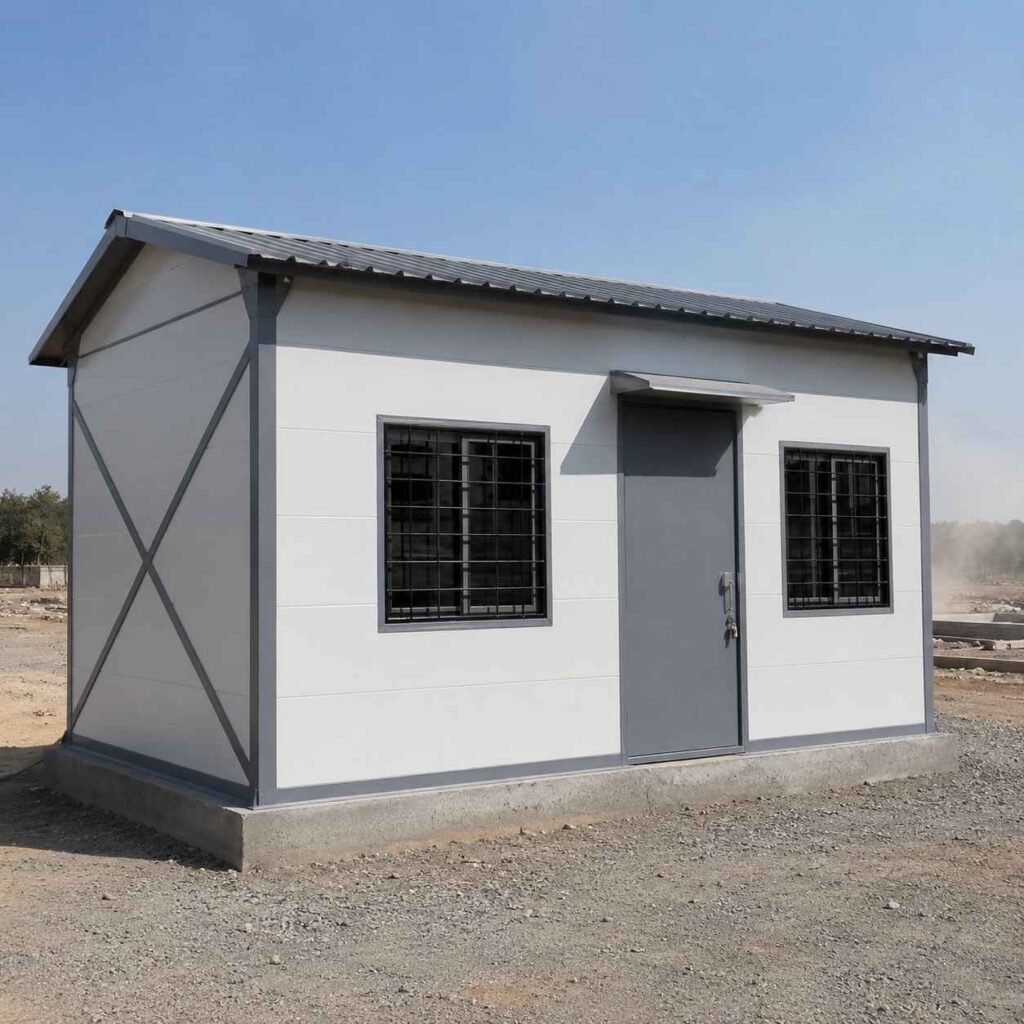
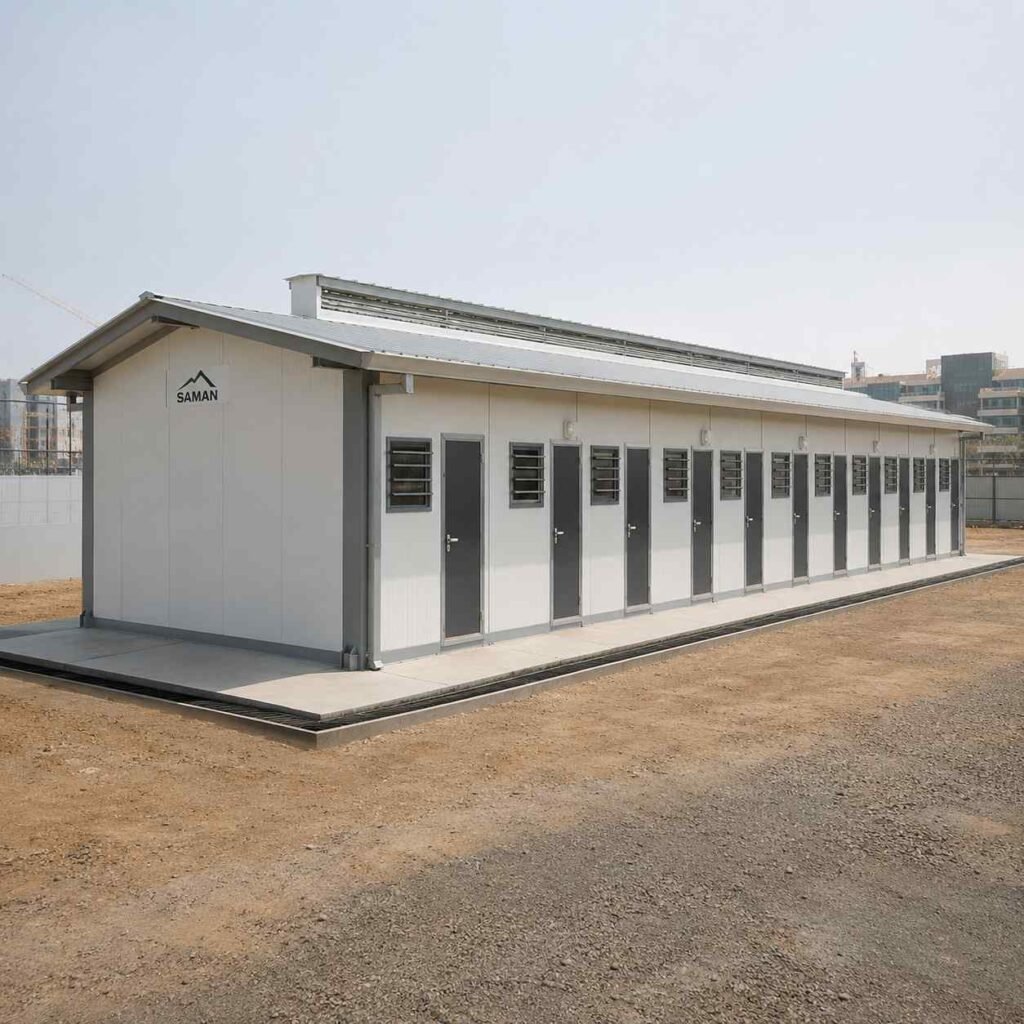
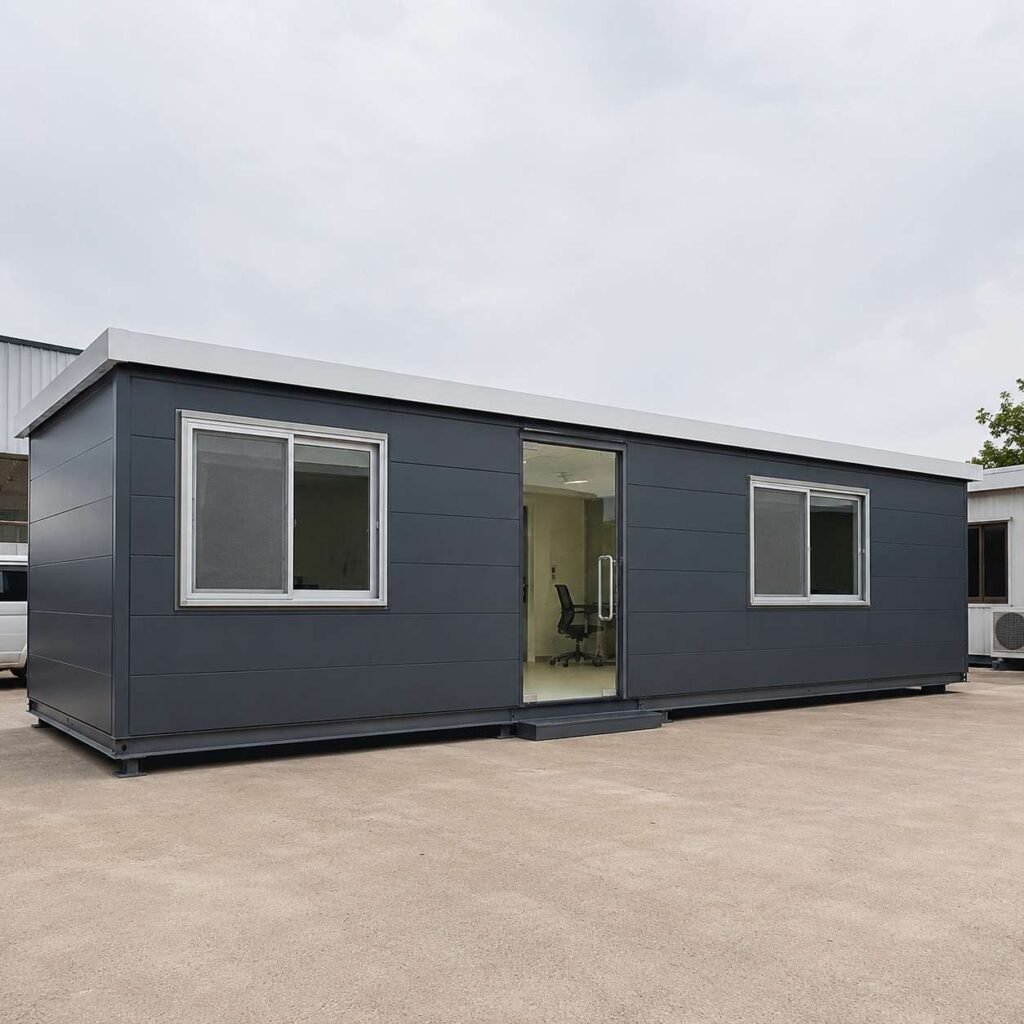
A panel-build “container-style” office borrows the shape — same width, same height, same flat roof — but the walls are mild-steel sheets riveted or welded to a lighter frame. It is faster to fabricate, cheaper to ship, and perfectly adequate for short-duration projects on flat ground. What it cannot do is stack, take a crane lift by its corners, or shrug off the impact of a forklift backing into it. Both products have a legitimate use case. The problem is that quote language rarely distinguishes between them.
Before you compare prices, ask each supplier the same three questions in writing: Is the unit fabricated to ISO container form factor with corner castings rated for stacking? What is the wall structure — Corten steel, MS sheet, or framed panel? And is the warranty issued separately on the structural frame and on the fit-out, or as a single number on the whole unit? The answers will tell you whether you are comparing two of the same product or two different products at similar prices.
Four Indian Container Office Buyers — Which One Are You?
Most online office container buying guide content treats the buyer as a single archetype: “the business owner looking for flexible office space.” Indian B2B procurement does not work that way. Four distinct buyer profiles place container office orders in India, and each one has a different idea of what “good” looks like. Identifying yourself in this table will tell you which sections of the rest of this guide matter most for your decision.
| Buyer profile | Typical budget band | Spec priority | Decision timeline |
|---|---|---|---|
| SME owner / startup founder | ₹2L – ₹4L (single unit) | Corporate-feeling interior, low monthly running cost, brand-friendly exterior | 2–4 weeks: research, quote, order |
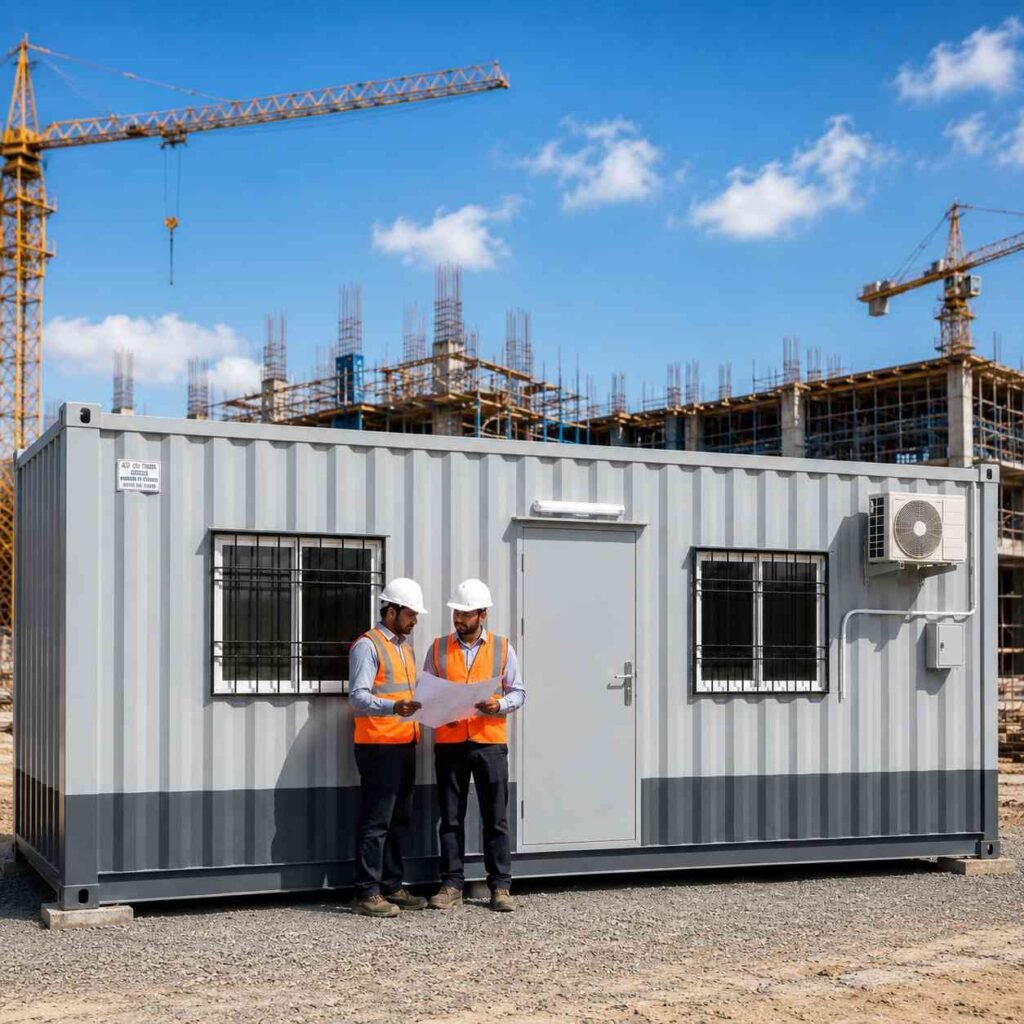
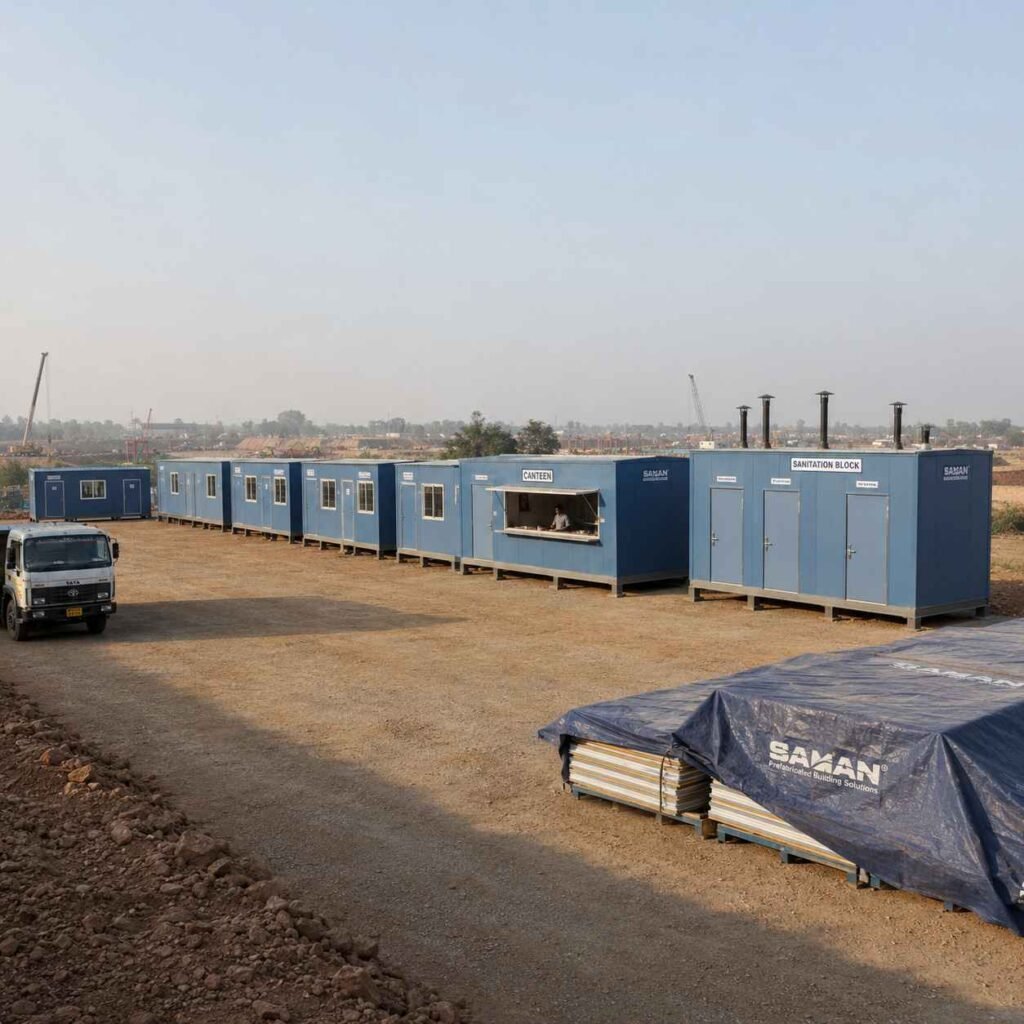
| Project manager (construction / EPC) | ₹3L – ₹8L (1–3 units) | Stackability, multi-room layout, heavy-duty flooring, lockable storage | 1–3 weeks: site mobilisation can’t wait |
| EHS / safety lead | ₹2.5L – ₹5L (single unit) | Fire-rated cladding, separate first-aid zone, electrical compliance documentation | 3–6 weeks: paperwork before order |
| Facilities head (corporate / industrial park) | ₹4L – ₹12L (multi-unit) | Aesthetic finish, identical-spec repeat orders, GST-compliant single invoice | 4–8 weeks: procurement process |
If you sit somewhere between two profiles — for instance, an SME founder commissioning a containerised office that the team will live in for three years — your spec sheet will borrow priorities from both columns. The point of the matrix is not to lock you into one row but to surface the trade-offs you should be solving for before the quote stage, not after.
Sizing Before You Sign — How Many People, How Many Rooms, How Much Site Footprint?
Sizing is where buyers most often over-order or under-order. Over-order and the office sits half-empty while you pay GST and freight on space you do not use. Under-order and the office is uncomfortable from day one, with no easy way to expand without buying a second unit. The Indian market sells container offices at three standard footprints — 10ft, 20ft and 40ft — and from those three sizes you can build almost any team configuration.
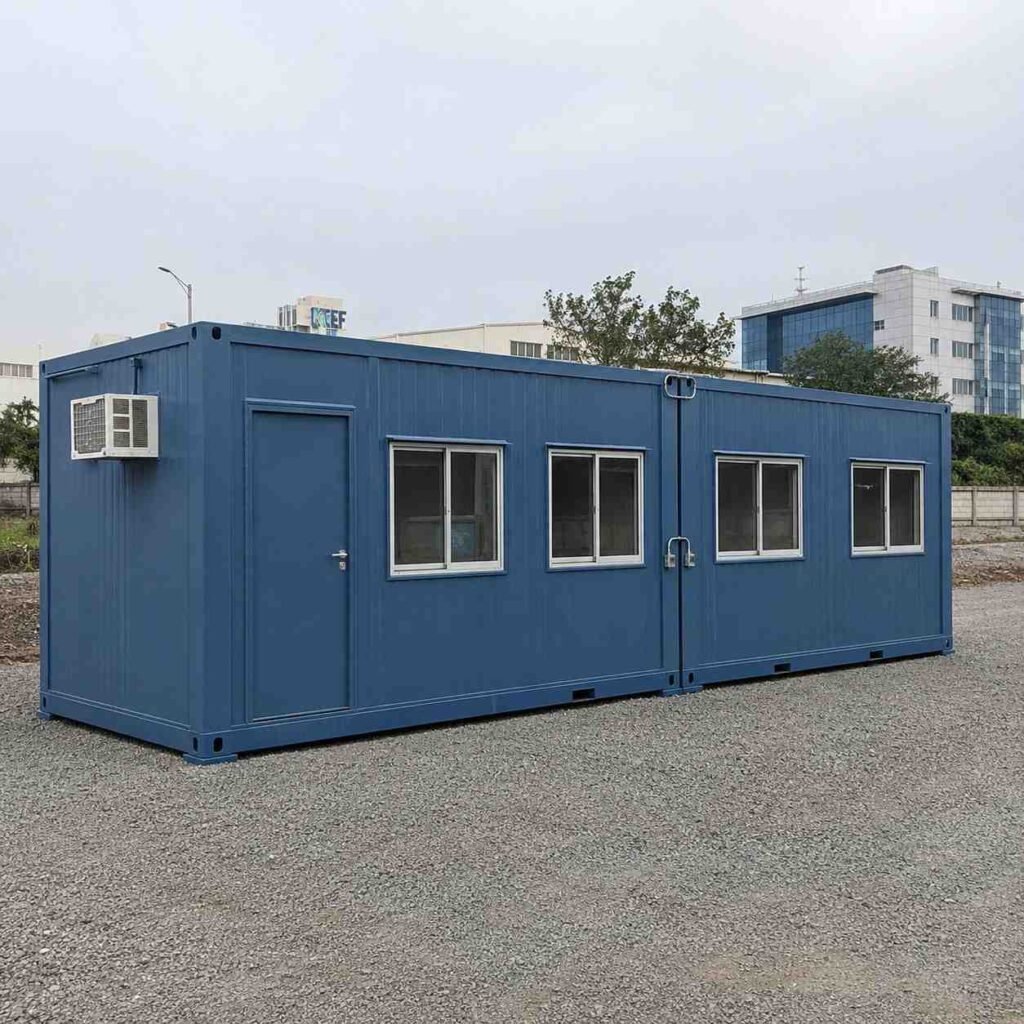
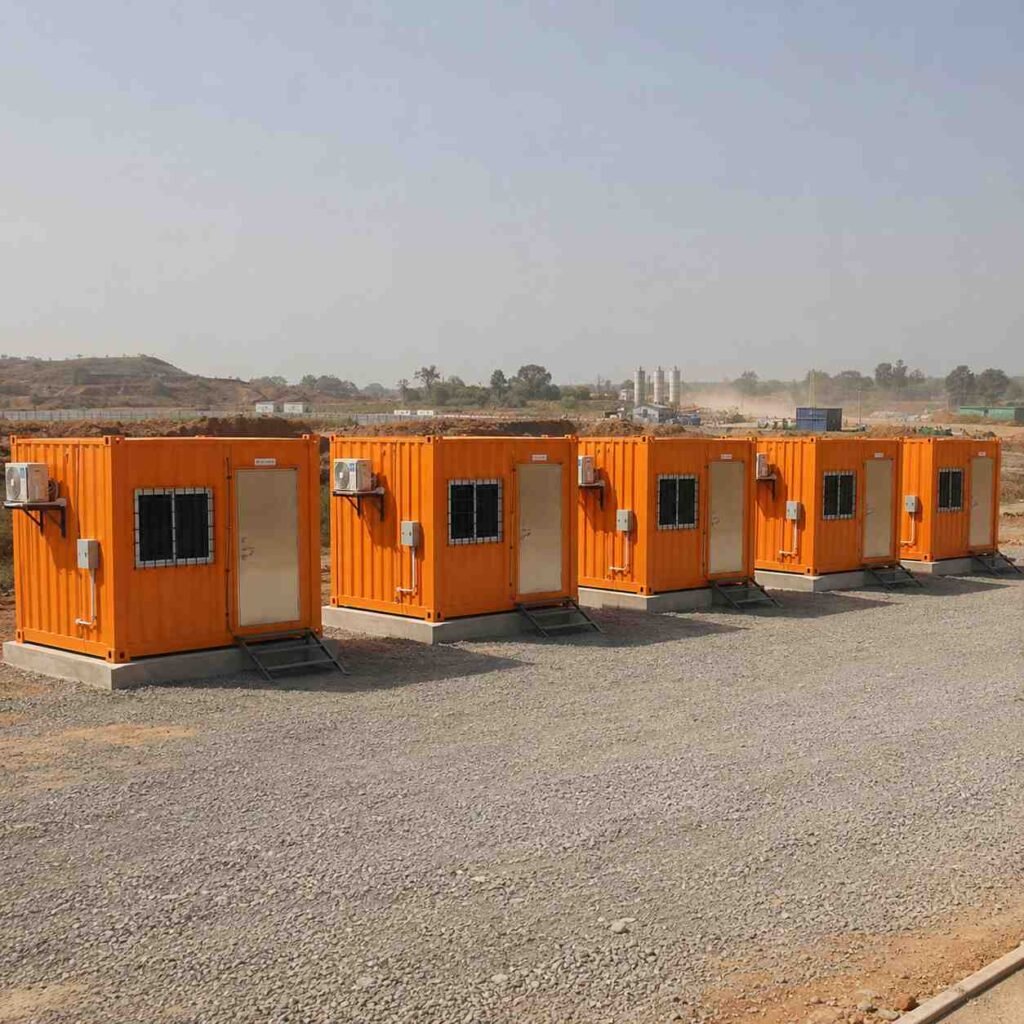
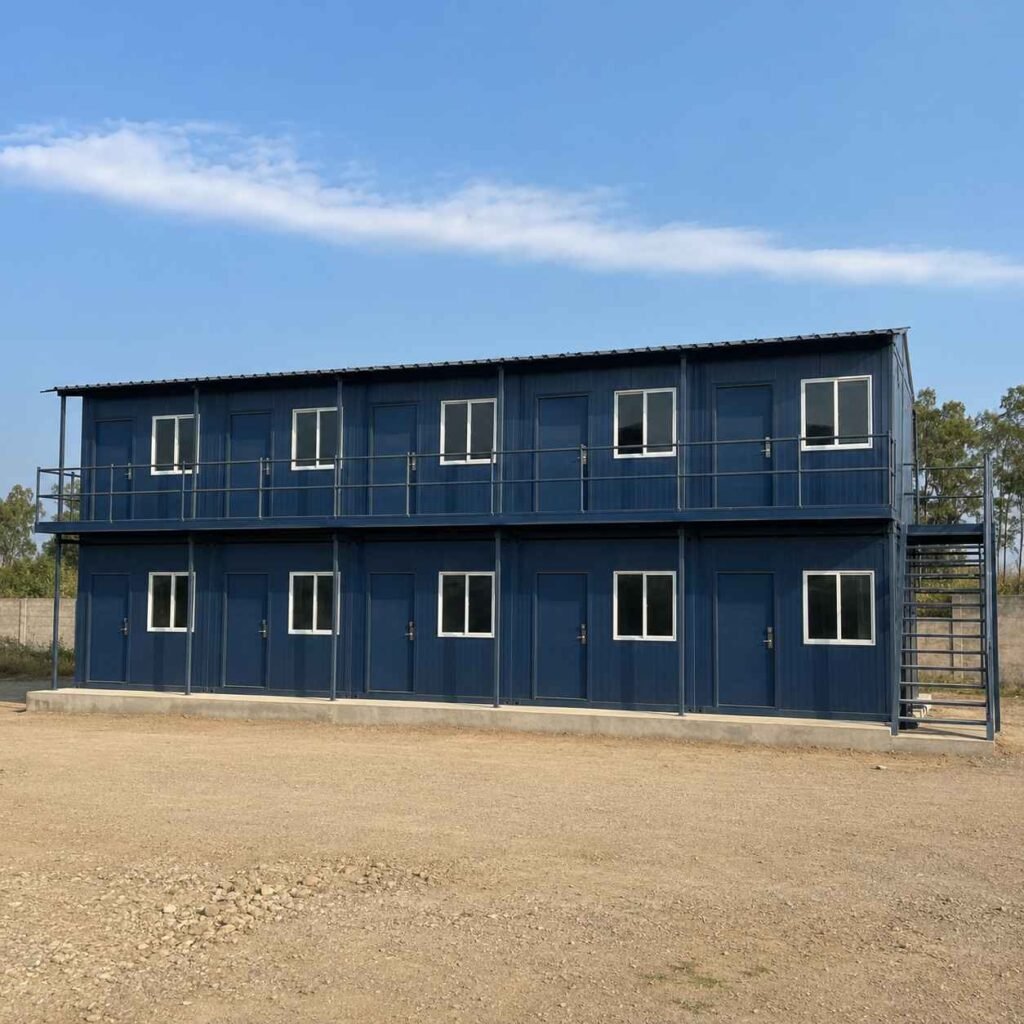
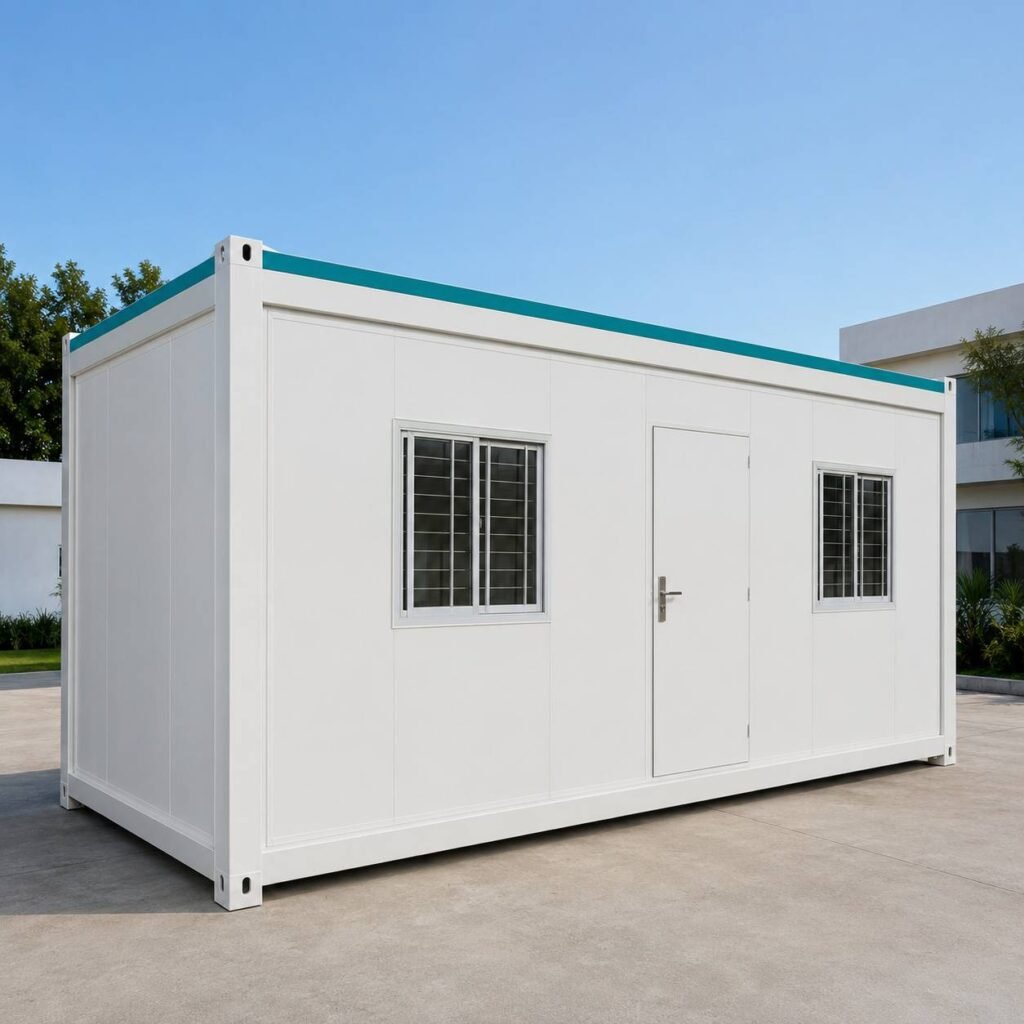
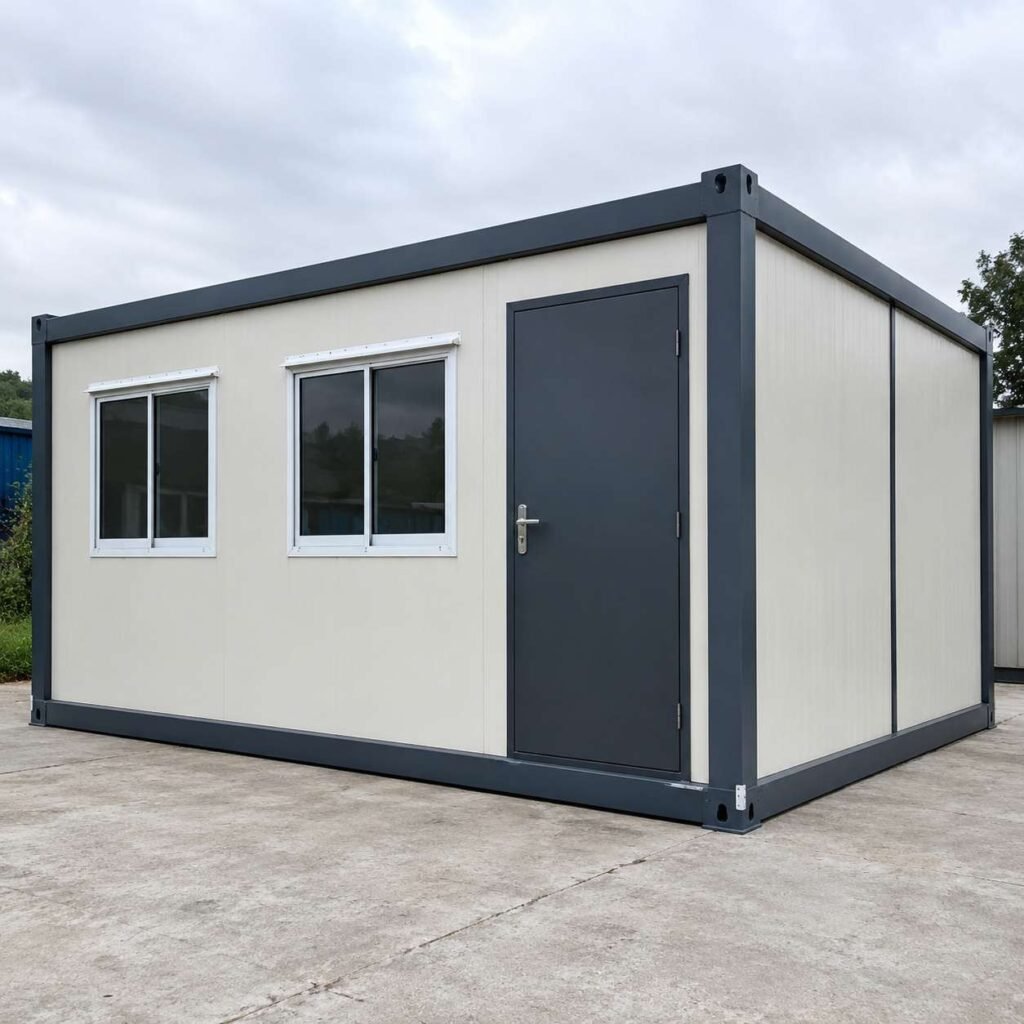
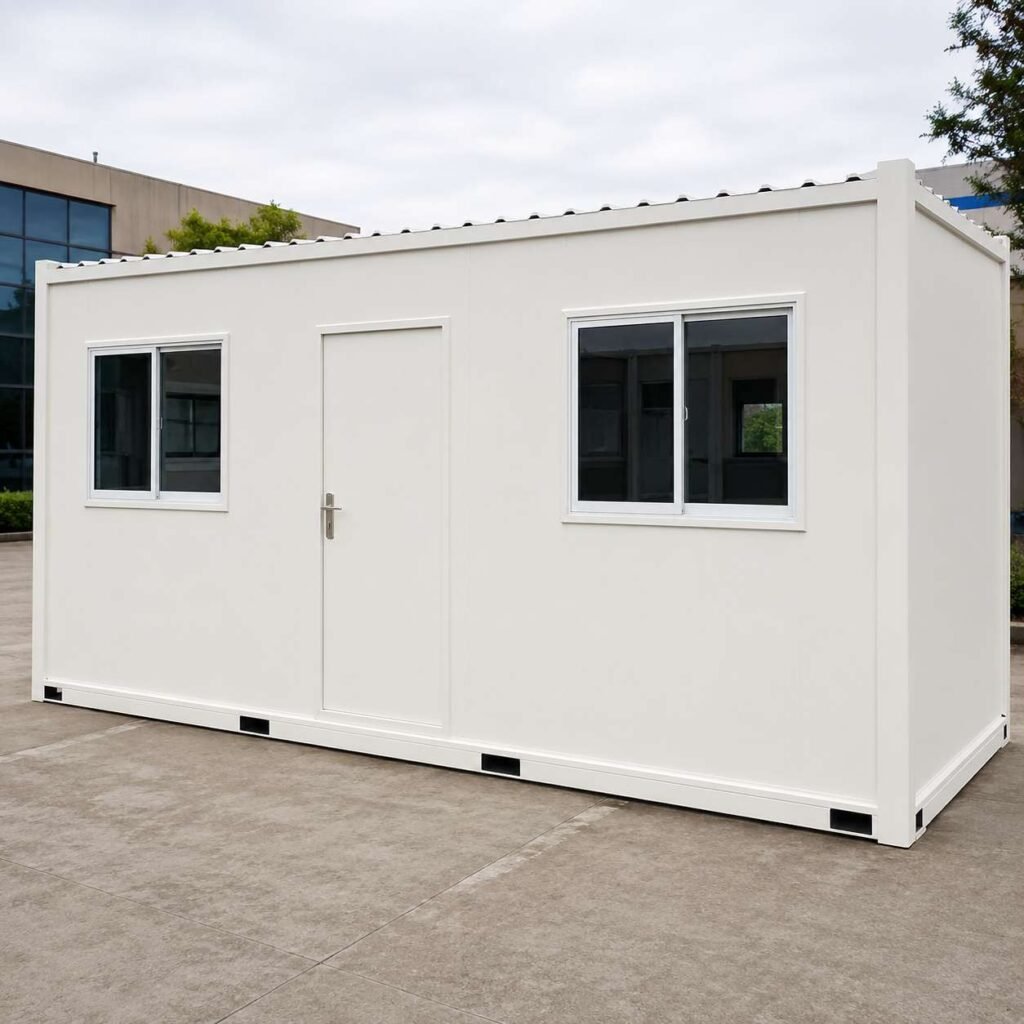
A 10ft unit, roughly 9.5 m² of usable space, comfortably seats one person at a desk with a small filing cabinet and a corner for a printer. It is the right call for a single-occupant site office, a security checkpoint with admin overflow, or a satellite project office on a remote stretch. A 20ft unit, roughly 14 m² of usable space, holds two to four people in a single open room or one private cabin plus a small reception area. A 20ft shipping container office configuration at ₹2,15,000 is the default starting price point for a single-unit Indian buyer.
A 40ft unit, roughly 28 m² of usable space, opens the door to multi-room layouts: one private cabin, an open desk area, a small meeting room and a corner for a pantry — or any two of those four in a more generous footprint. For teams of six to eight people working in the unit full-time, a 40ft is almost always the right call. For two-to-three-person occasional use, the same 40ft is wasteful.
Site footprint is the other half of the sizing decision and the one most buyers forget until delivery day. A 20ft unit needs roughly 7 m × 4 m of level ground including a 1 m maintenance margin on each side, plus crane or forklift access for the lift. A 40ft unit doubles the length. If your site has a 6 m gate width or a corner with a 90-degree turn from the access road, a 40ft container will not reach the placement spot — the truck will, but the offload will not. Send a photograph of the delivery approach with your enquiry; any supplier who does not ask for one is not planning the dispatch carefully.
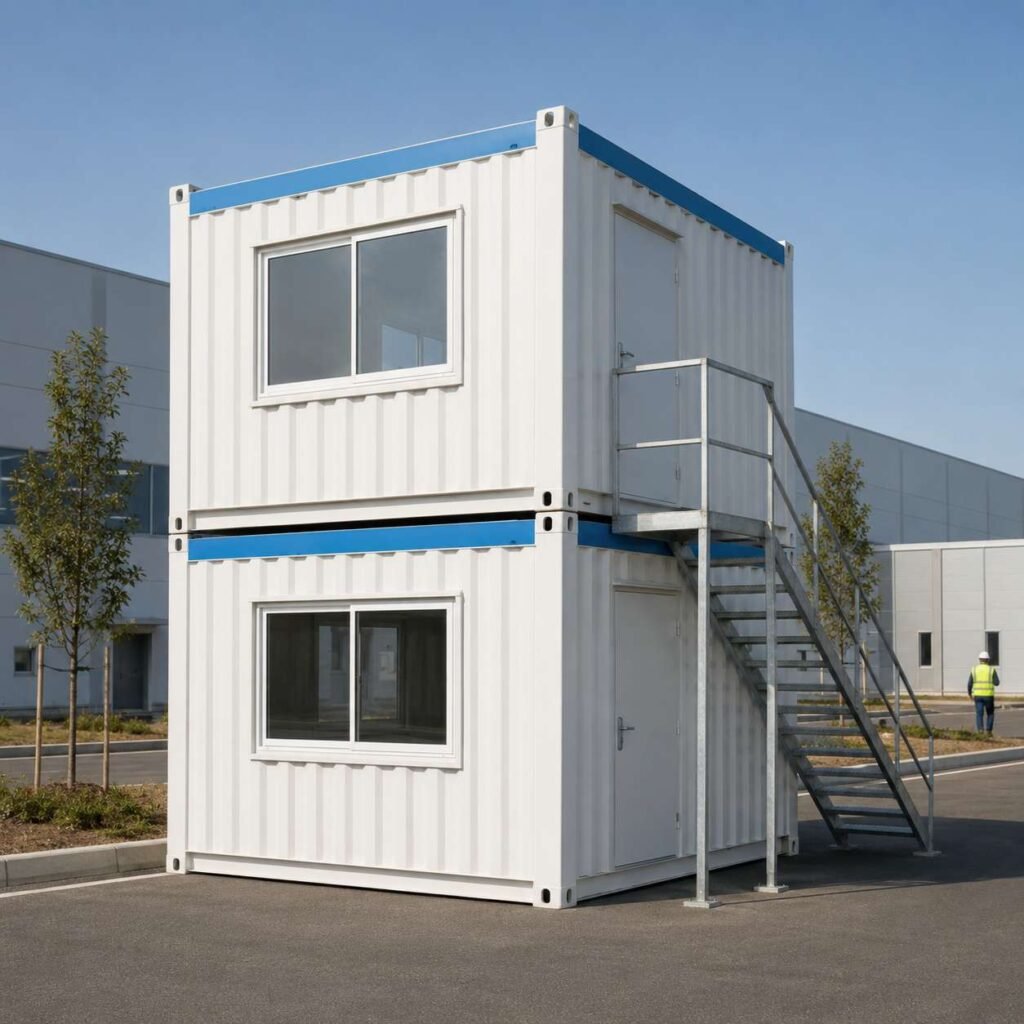
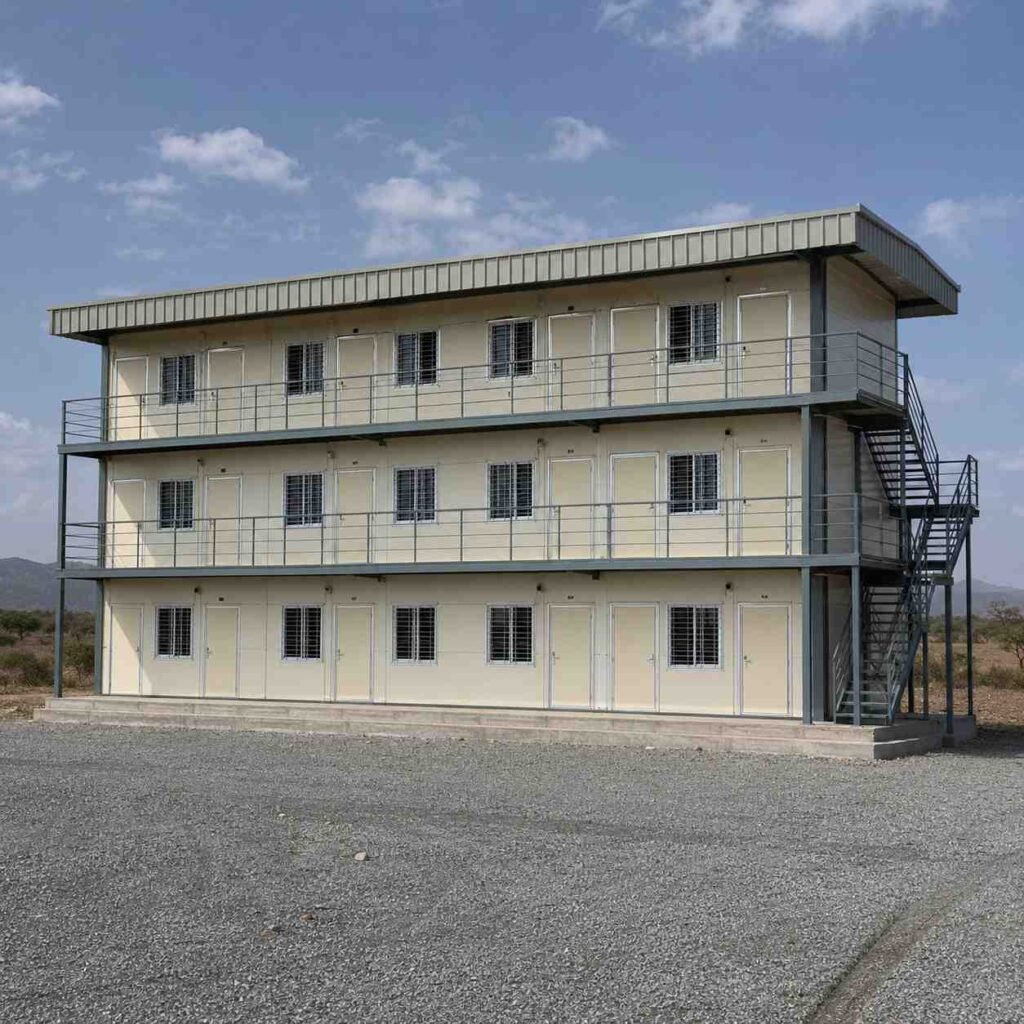
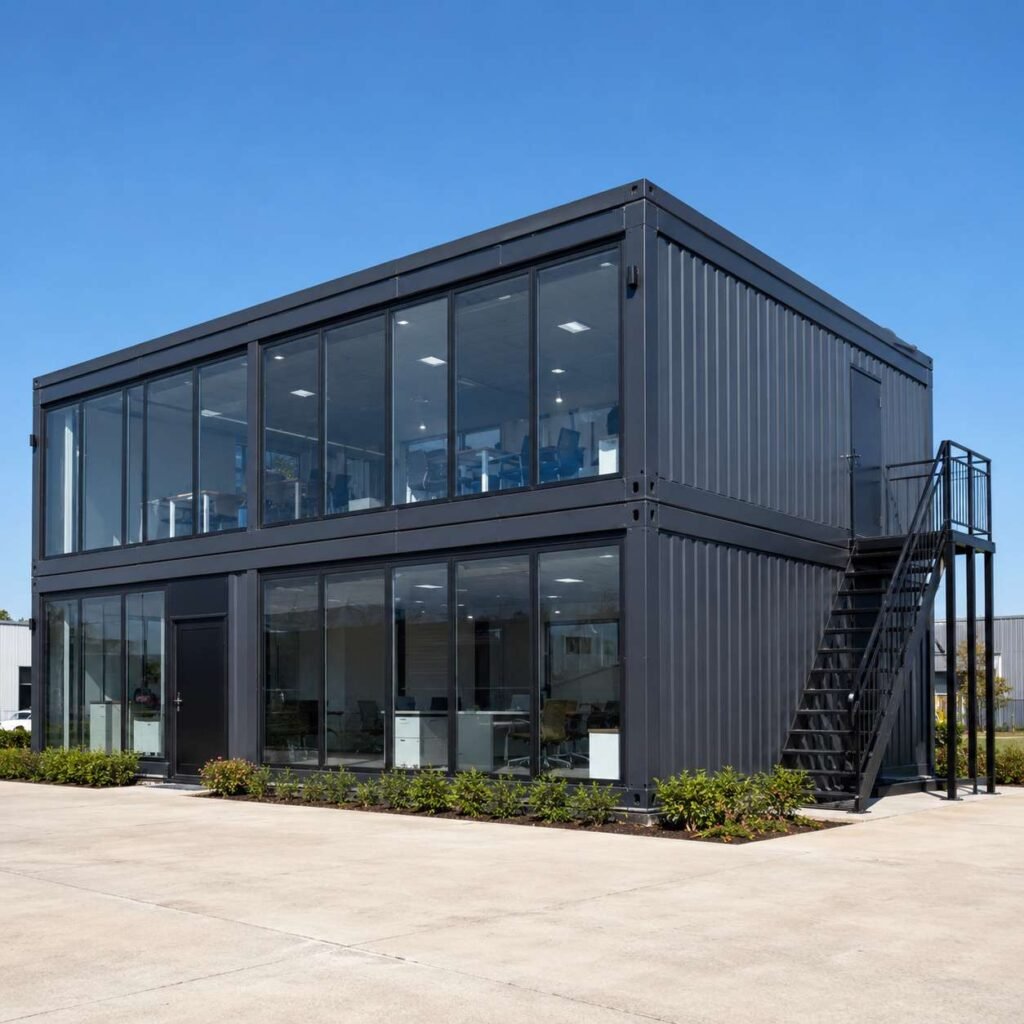
If your team is likely to scale within the next two years, factor that into the first order. Modular container offices designed to stack two or three high, or join side-by-side along a common corner-casting line, let you add capacity without redesigning the original placement. Buying a non-stackable unit because it costs ₹40,000 less today is a saving that disappears the day you need a second unit.
The Spec Sheet You Should Lock Before Asking for a Single Quote
Working out how to buy a container office in India turns surprisingly straightforward once you stop asking suppliers for prices and start asking them to quote against a spec sheet that you have already written. Every quote you receive after that is comparable. Every quote you receive before it is impossible to compare. Treat this section as a container office buyer checklist to fix internally before opening the supplier conversation.
Lock these ten line items in writing before the first call:
- Shell type: ISO Corten-steel (new-build or converted), or MS-sheet panel-build. Pick one.
- External dimensions: 10ft × 8ft, 20ft × 8ft, 20ft × 10ft, 30ft × 10ft, or 40ft × 8ft / × 10ft. Pick one.
- Wall panel and insulation: 50 mm rockwool / 50 mm PUF / 75 mm PUF — for an Indian summer site, anything thinner than 50 mm will become uncomfortable by mid-April.
- Flooring: 18 mm marine ply with vinyl, or 4 mm chequered MS plate for heavy-duty industrial.
- Roof: Insulated double-skin or single-skin with internal false ceiling.
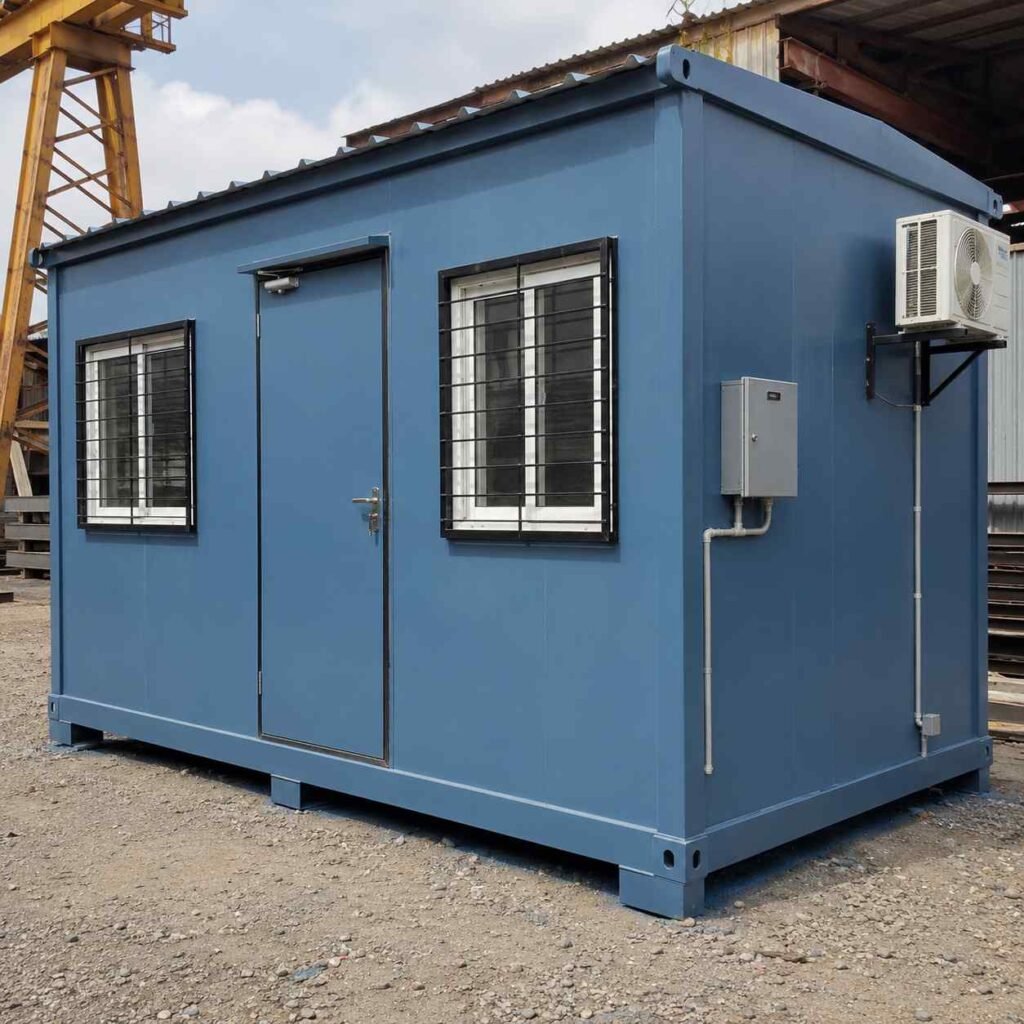
- Electrical load: Single-phase 5 kVA (lights, fans, two ACs, a printer, a few laptops) or three-phase for higher load.
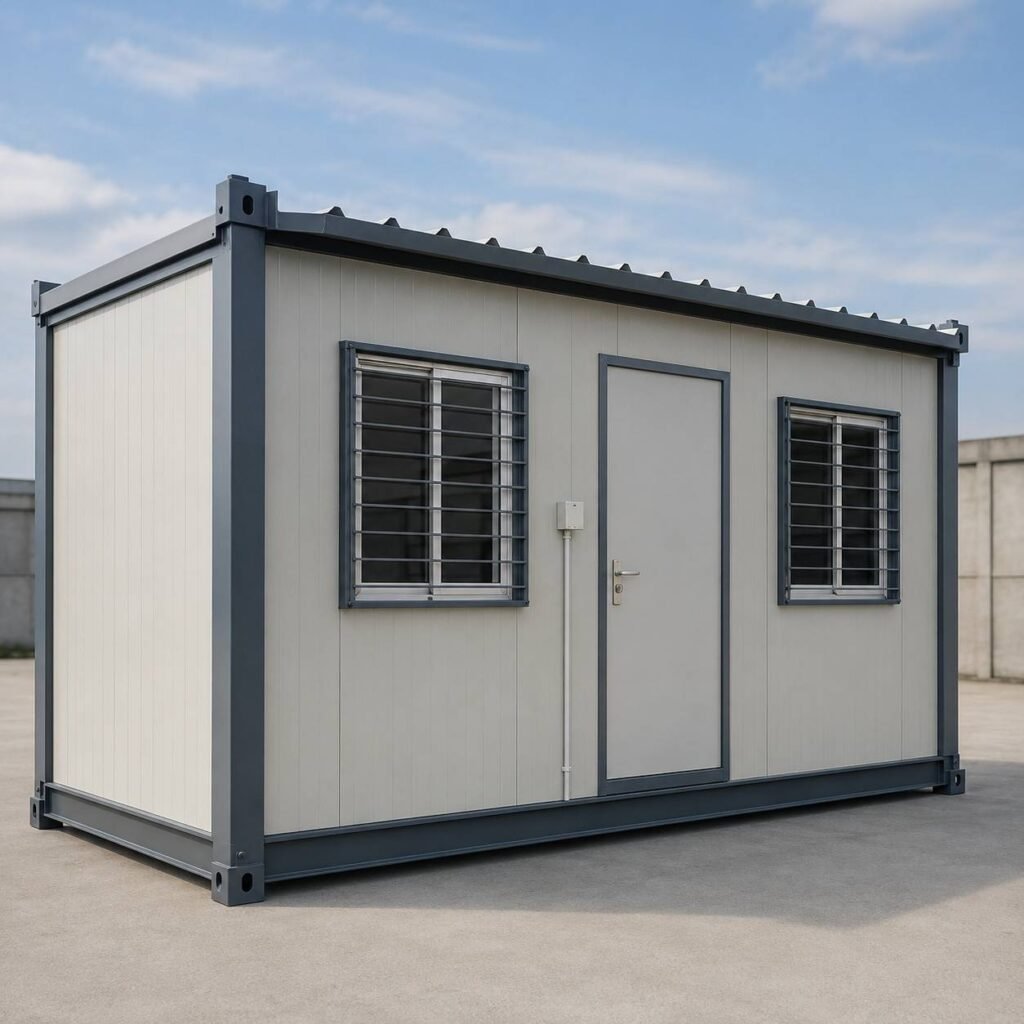
- Window count and type: Standard fixed glass, sliding aluminium, or rolling-shutter for site security.
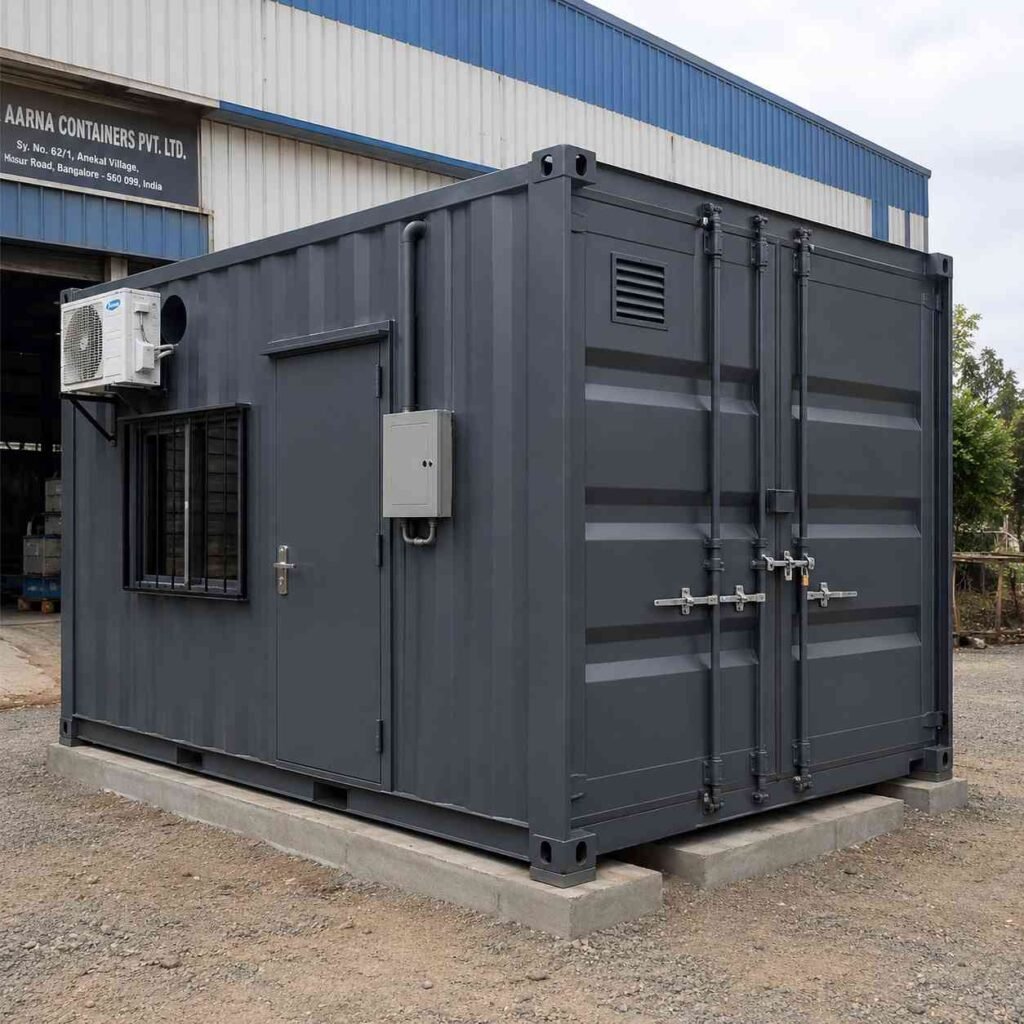
- Door type: Single MS door, double-leaf entry, or container double-cargo doors retained.
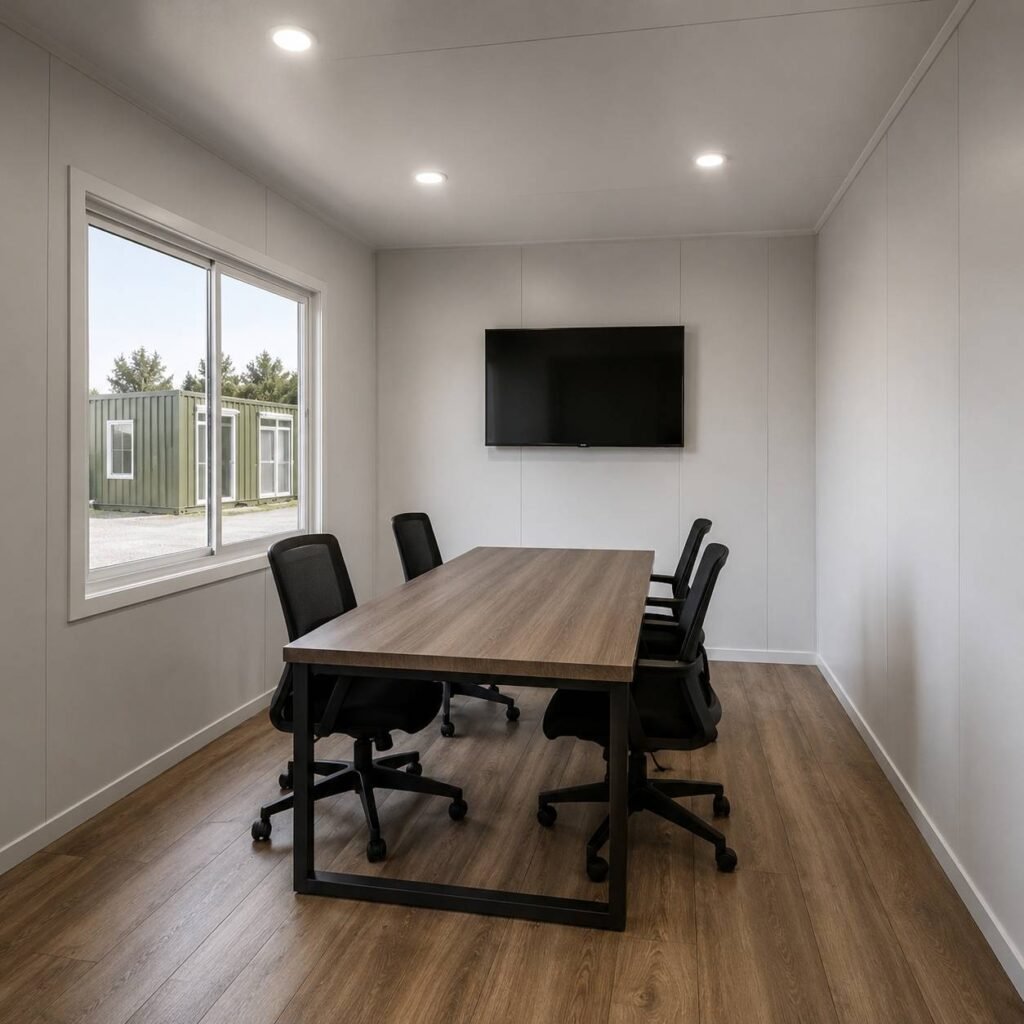
- Interior finish: Industrial bare interior, painted MS interior, or false-ceiling-and-paint corporate finish.
- Warranty terms: Separate numbers for structural frame, panel + cladding, and fit-out items (electrical, plumbing, fixtures).
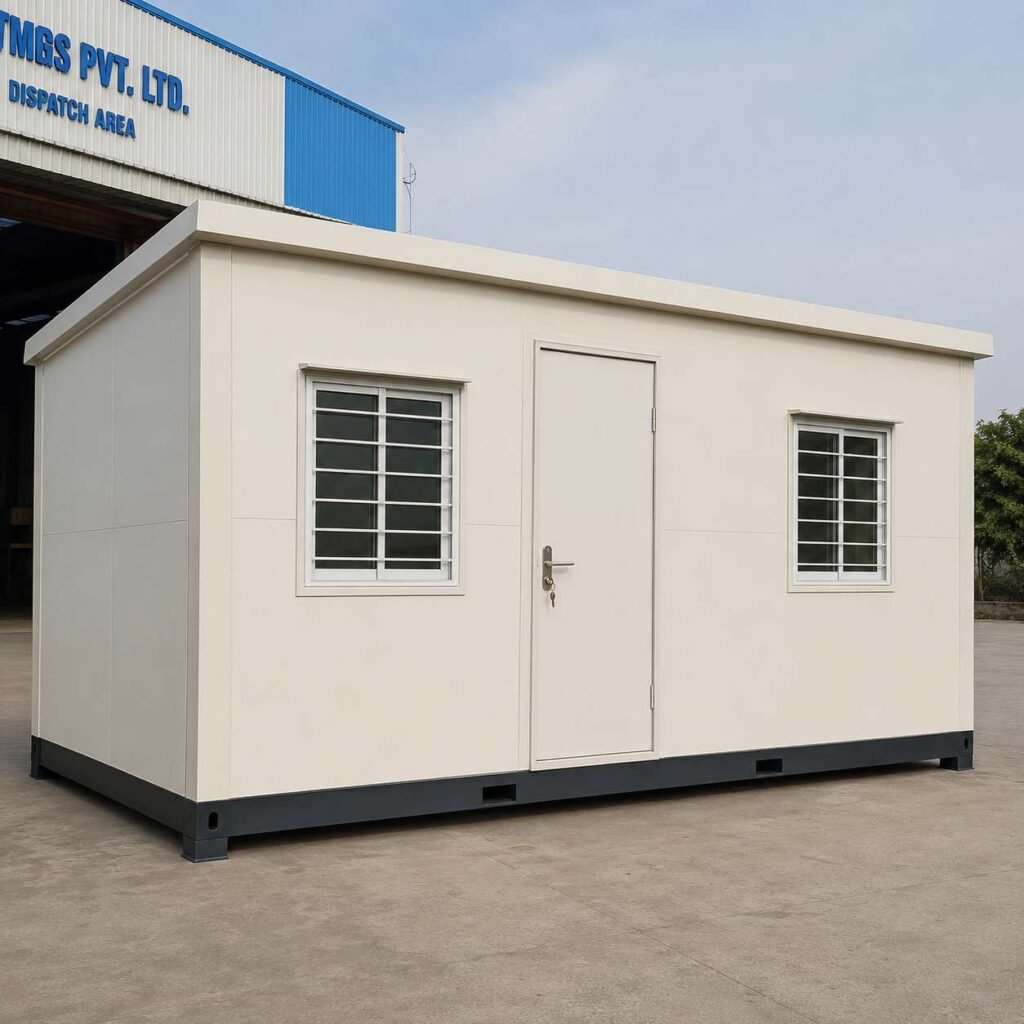
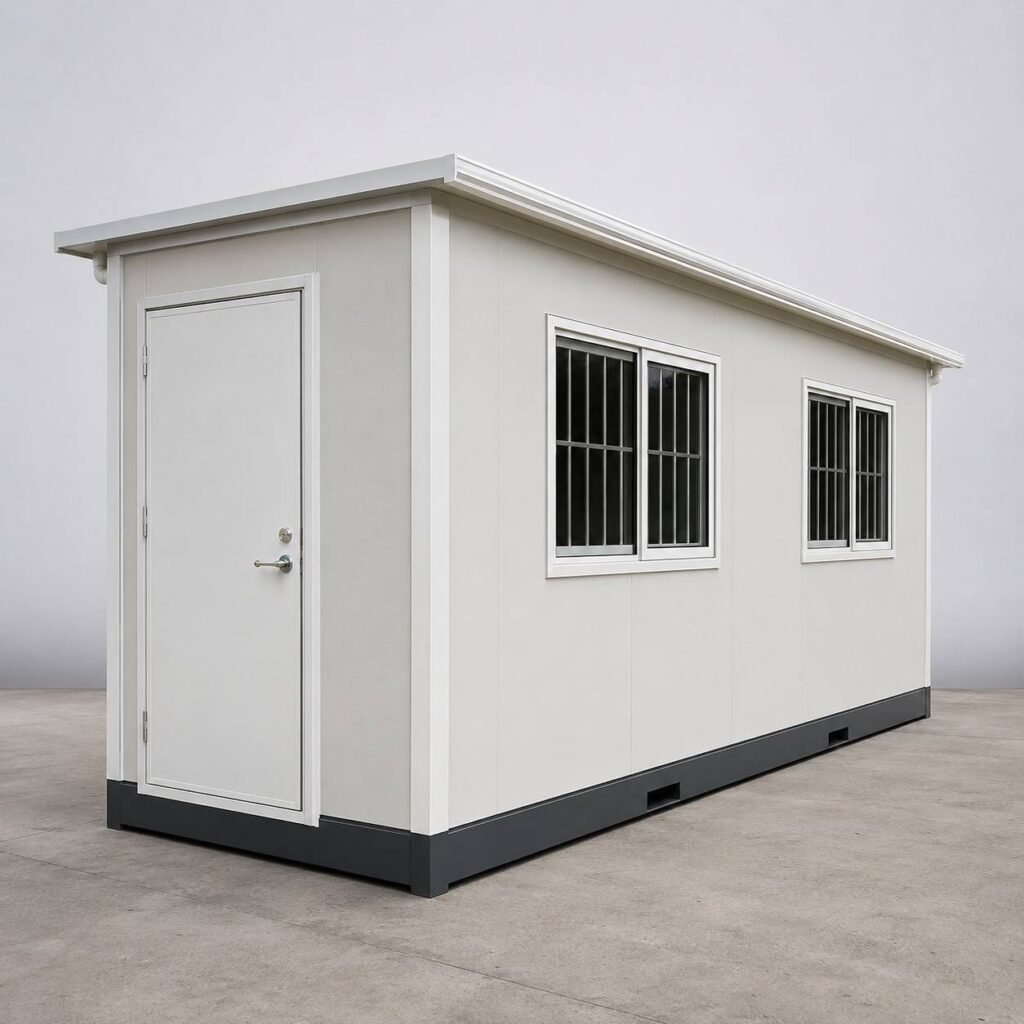
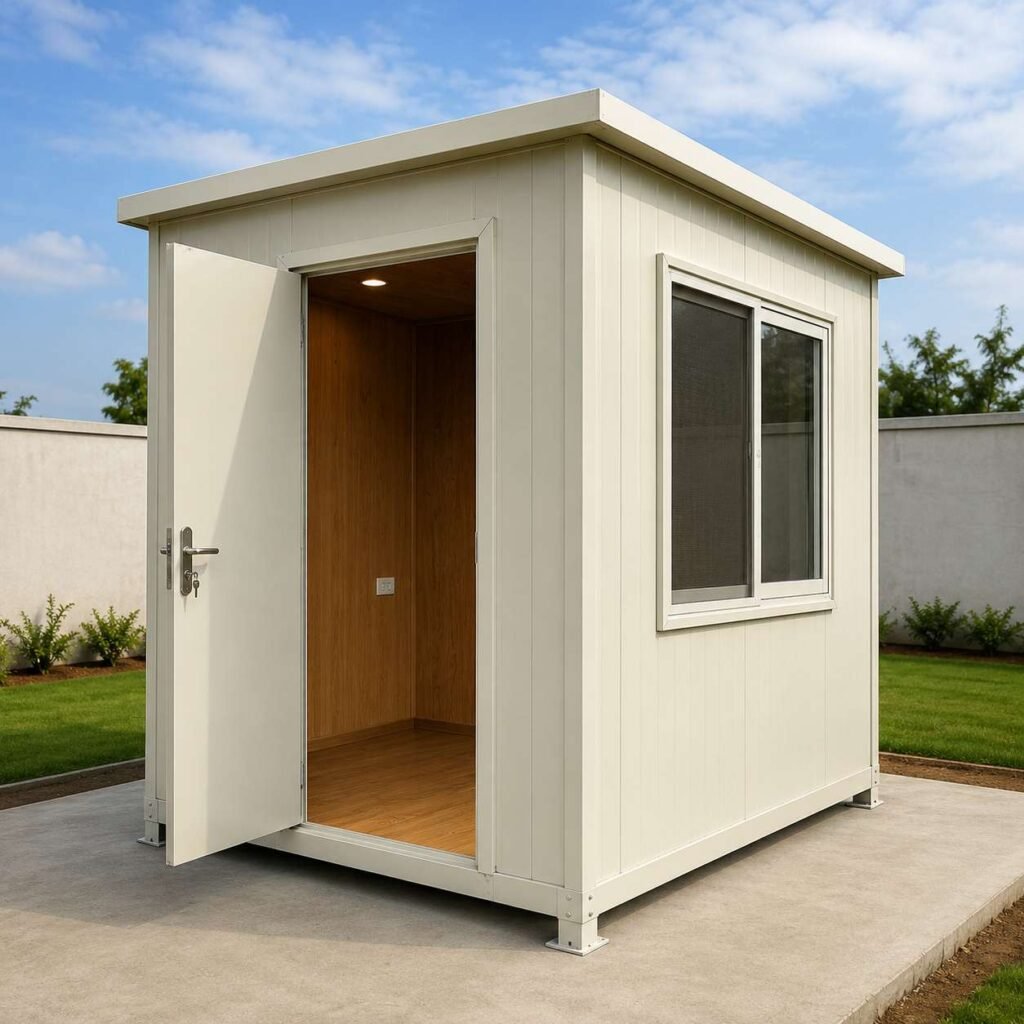
Once these ten are written down, comparing two suppliers becomes a matter of matching like-for-like and reading the gap on one line, not arguing about the whole quote. If you want to see how the spec sheet maps onto a real unit, the factory-fitted container office cabin page shows a standard 20ft configuration with each of these ten items spelled out.
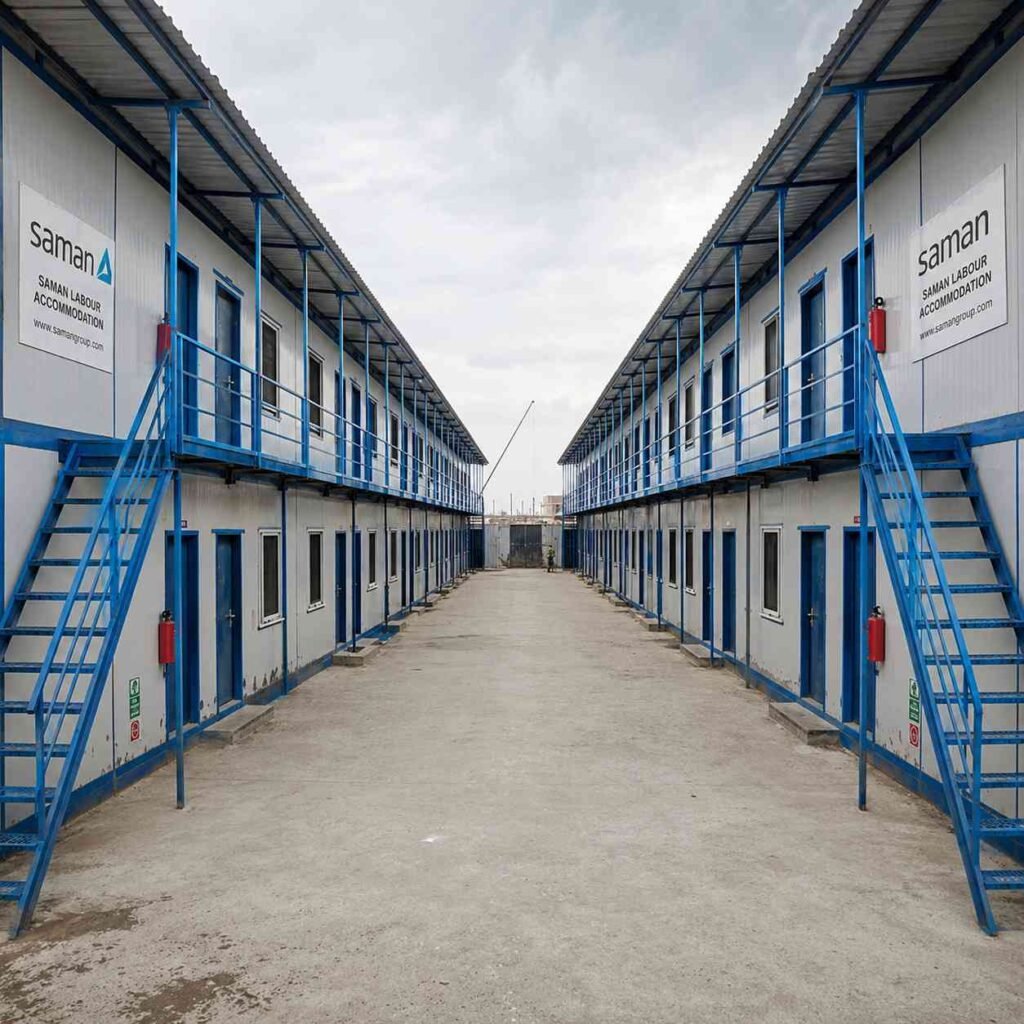
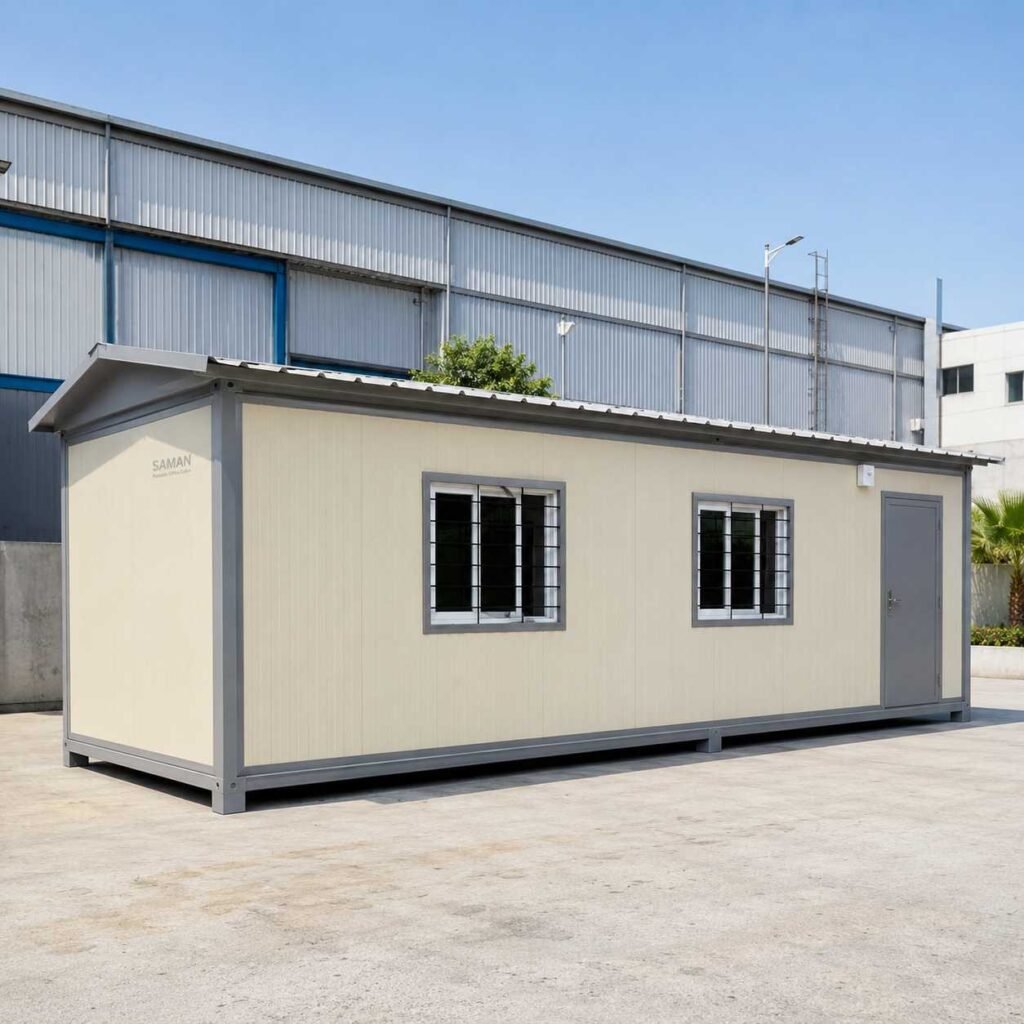
If the supplier struggles to give you separate warranty numbers for the structural frame versus the fit-out, that is a tell. It usually means the unit is sold as a bundled product without internal accountability for the components, which means a fit-out fault in year two will become someone else’s problem. Compare this against ready-built site office containers in SAMAN’s range, where the structural warranty (5 years) and the fit-out warranty (1–2 years on wiring, plumbing, fixtures and finishes) are stated separately on every quote.
New, Used, or Rental — Three Procurement Paths in 60 Seconds
Once the spec is locked, the next decision is how you pay for the unit. There are three real paths and each has a different buyer profile that suits it.
New unit, full purchase. The default for most Indian B2B buyers. You get a fresh shell, a fresh fit-out, predictable warranty terms, and an asset on your books. This is the right path when the office is expected to be in use for more than 24 months, when GST input credit matters to your accounting, and when the unit may need to be relocated or stacked later. Single-unit new purchase prices sit between ₹2.15L for a base 20ft and ₹4.45L for a fully fitted 40ft from SAMAN, with most buyers landing between ₹2.5L and ₹3.5L for a fitted 20ft. For the full breakdown of where the money goes on a new unit, the line-by-line container office cost breakdown covers the cost depth this overview deliberately skips.
Used unit, full purchase. A used Corten-steel shipping container retrofitted into an office is roughly 30–45% cheaper than a new fitted unit, depending on the shell grade and the retrofit depth. The savings are real, but so are the complications — yard inspection, GST on a used shell vs a retrofit invoice, HSN classification on the paperwork, and the structural condition you inherit. We cover the used-market path separately in our used container office buying guide on this site, including yard-grade decoding, the six-point structural inspection, and the new-vs-used two-year crossover. If you are sure you want a new unit, skip ahead. If “used” is on the table, that page is the next stop.
Monthly rental. The right call when the project is short — under 12 months — or when capex is tied up elsewhere. Rental rates sit between ₹6,000 and ₹18,000 per month per 20ft unit depending on the spec and the contract length, with mobilisation and demobilisation usually charged separately. Rental is rarely the right answer beyond 18–24 months because total outflow crosses the purchase price of a new unit, but for project offices on a defined contract end-date it is often the cleanest path.
From Enquiry to Site-Ready — The 6-Week Indian Procurement Workflow
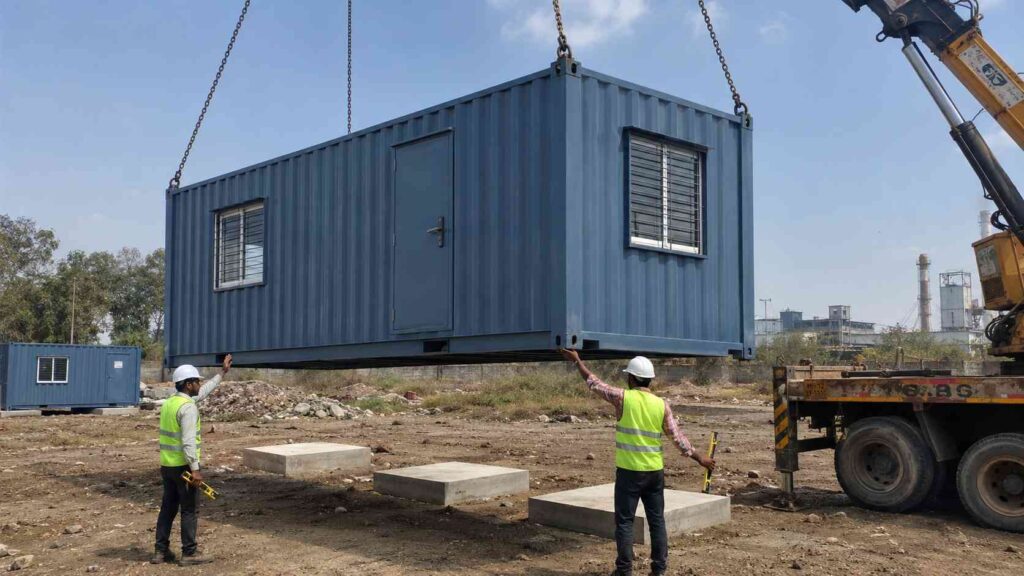
The end-to-end procurement workflow for a new container office in India runs four to six weeks from first enquiry to handover, occasionally longer for multi-unit or custom orders. Knowing the timeline lets you plan your project gantt without surprises.
The standard sequence:
- Days 0–3 — Enquiry and quote. Spec sheet shared, site photograph sent, supplier returns a written quote with line items, GST treatment, and lead time. Two or three quotes is normal; more than five is diminishing returns.
- Days 3–7 — Site visit (where applicable) and PO. For larger units or multi-unit orders, the supplier inspects the site for access, level ground, and crane requirements. PO is raised, advance is paid (typically 40–60% on order, balance on dispatch).
- Days 7–28 — Fabrication. Most Indian container office manufacturers, including SAMAN’s Bangalore facility, dispatch within 7–21 working days for standard configurations. Custom sizes, multi-room interiors, or unusual finishes push this to 21–35 days.
- Days 28–35 — Dispatch and transit. Pan-India delivery on a flatbed truck. Inter-state transit adds 2–6 days depending on distance. State border permits — especially for Kerala, West Bengal and the Northeast — should be confirmed by the supplier before dispatch, not on the road.
- Days 35–42 — Site delivery and install. Crane or hydra at the placement spot, levelling on RCC blocks or a concrete pad, electrical hook-up, and internal handover. A 20ft unit lands and is occupied in a single working day; a 40ft or stacked unit takes one or two.
If a supplier promises four weeks from enquiry to handover for a custom-fitted multi-room 40ft, treat the timeline as marketing rather than a commitment. If they quote eight or ten weeks for a standard 20ft, ask what is on the critical path — sometimes it is a real fit-out detail, sometimes it is a queue at their facility that they are not flagging.
Site Placement, Permits, and the Warranty That Actually Holds Up
The operational layer most buyers underestimate has three components: where the unit sits, what permission you need to put it there, and what the warranty actually protects against.
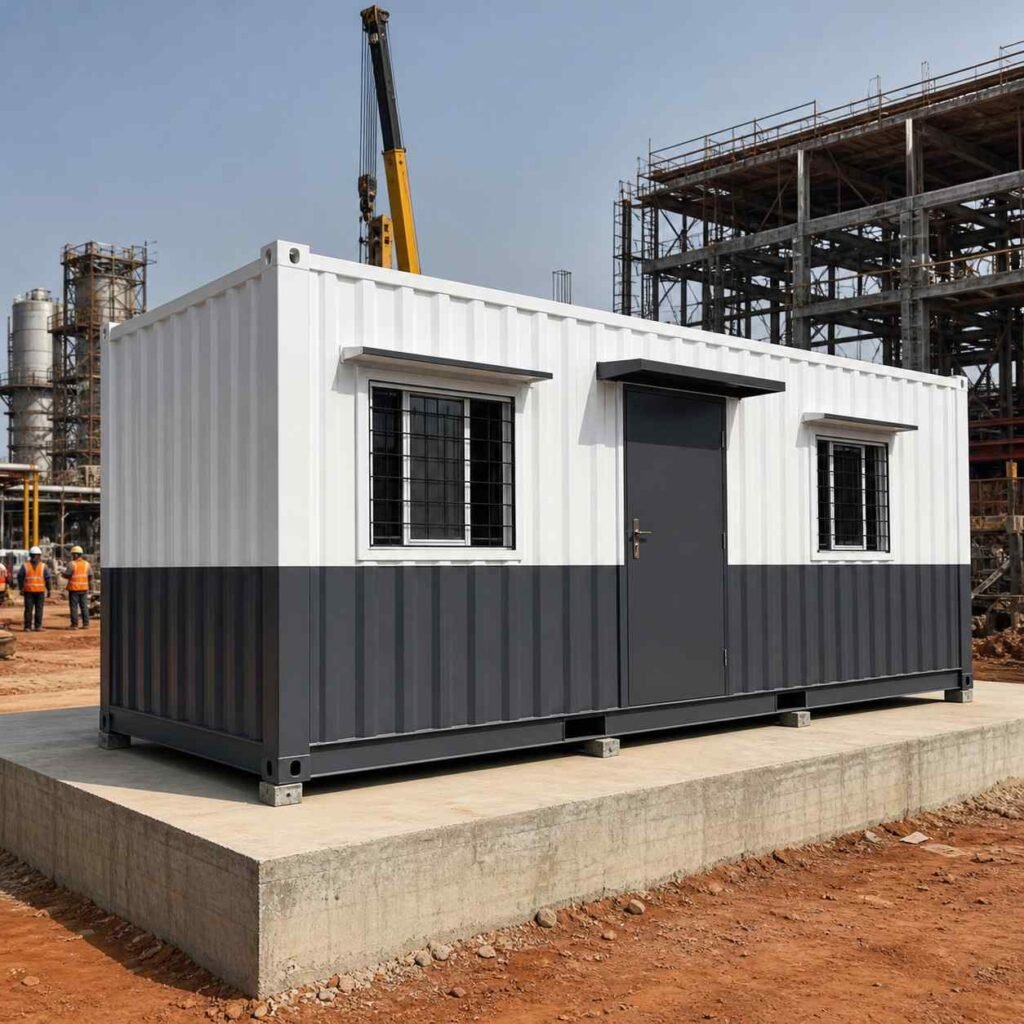
Site placement. A container office needs level ground rated to take the point load on each corner — roughly 2.5 tonnes per corner for a 20ft fitted unit, double for a 40ft. RCC blocks at the four corners are the minimum; a full concrete pad is preferred for installations beyond two years. Drainage matters: if monsoon runoff pools under the unit, the underside steel corrodes faster than the panels above. Plan a gentle slope away from the placement footprint.
Permits. India does not have a single national permit framework for container offices — placement rules are state and zone-specific. The realistic compliance picture, in rough order of frequency: a panchayat or municipal NOC for rural and semi-urban industrial land; a fire NOC where the unit will hold more than five people; a state pollution control board NOC for industrial-zone placement; and a labour department clearance where the unit will be used as a labour or workforce shelter. For corporate-park installations, the park’s own facilities team usually issues a placement approval letter that satisfies most local requirements. GST and HSN handling on a new container office is well-established (one invoice, GST applicable on the full value); for used shells the paperwork is different — covered on the used buying guide.
Warranty in India: what “5-year warranty” actually covers. The honest Indian-market norm is two separate numbers, not one. The structural frame and base — the steel chassis, the corner castings, the load-bearing welds — typically carry a 5-year warranty. The fit-out — wiring, plumbing, panels, doors, windows, locks, fixtures, roof finishing — typically carries a 1 to 2-year warranty, sometimes extended to 2 years where the buyer pushes back on the 1-year default. Engineered service life (the usable life under normal maintenance) is a separate, much longer number — 20–25 years with periodic painting and minor repair — and should not be confused with the warranty window.
The trap is a quote that says “5-year warranty” as a single line. Ask which components that covers. If the answer is “everything,” the warranty is either unusually generous or unusually unenforceable.
Frequently Asked Questions
How much does a container office cost in India in 2026?
A new fitted 20ft container office in India costs roughly ₹2.15L to ₹3.5L depending on shell type, insulation grade and interior finish. A fitted 40ft sits between ₹3.4L and ₹4.5L. Per-square-foot pricing in the marketplace ranges ₹720 to ₹1,300/sq ft, but per-piece pricing is the more reliable comparison metric because square-foot quotes sometimes exclude the fit-out.
Can I customise a container office to my own layout?
Yes, every Indian container office manufacturer offers some level of customisation — internal partitions, window positions, electrical points, finish level. Custom layouts add 7–21 days to the standard lead time. Stretch customisations like full bathroom installations, three-phase electrical, or unusual external finishes can push lead time to 6 weeks.
Do I need a permit to place a container office on my site?
It depends on where the site is. Industrial-zoned and corporate-park placements usually need only a facilities-team approval. Rural and semi-urban placements often need a panchayat or municipal NOC plus a fire NOC if the unit holds more than five people. Confirm with the local building department before placement, not after.
What warranty should I expect on a new container office in India, and what does “5-year warranty” actually cover?
Indian-market norm is two separate warranty bands, not one. The structural frame and base — chassis, corner castings, load-bearing welds — typically carry a 5-year warranty. The fit-out — wiring, plumbing, panels, doors, locks, fixtures, roof finishing — carries a 1-to-2-year warranty. Engineered service life under normal maintenance is 20–25 years, but that is a longevity number, not a warranty number. Always ask for the two warranty numbers separately on the quote.
Is a “container office” the same as a steel cabin built in a container shape?
No. A true container office is an ISO Corten-steel shell built or converted to shipping-container form factor with rated corner castings — it can stack, take crane lifts, and handle industrial sites for 15+ years. A “container-style” steel cabin uses an MS-sheet panel frame in the same rectangular shape and is usually priced 25–40% lower; it cannot stack and is suited to short-duration projects on flat ground. Confirm the shell type in writing before comparing prices.
Get a quote on your container office
Bangalore — Call +91 80886 85440 or WhatsApp +91 88616 22859.
Delhi NCR — Call +91 87960 39938 or WhatsApp +91 97089 89937.
Share the ten-line spec sheet from this guide with the enquiry and we will match the unit to your requirement in writing, including separate structural and fit-out warranty numbers and a written Pan-India delivery timeline.