














Used Porta Cabin Buying Guide: What to Inspect Before You Pay

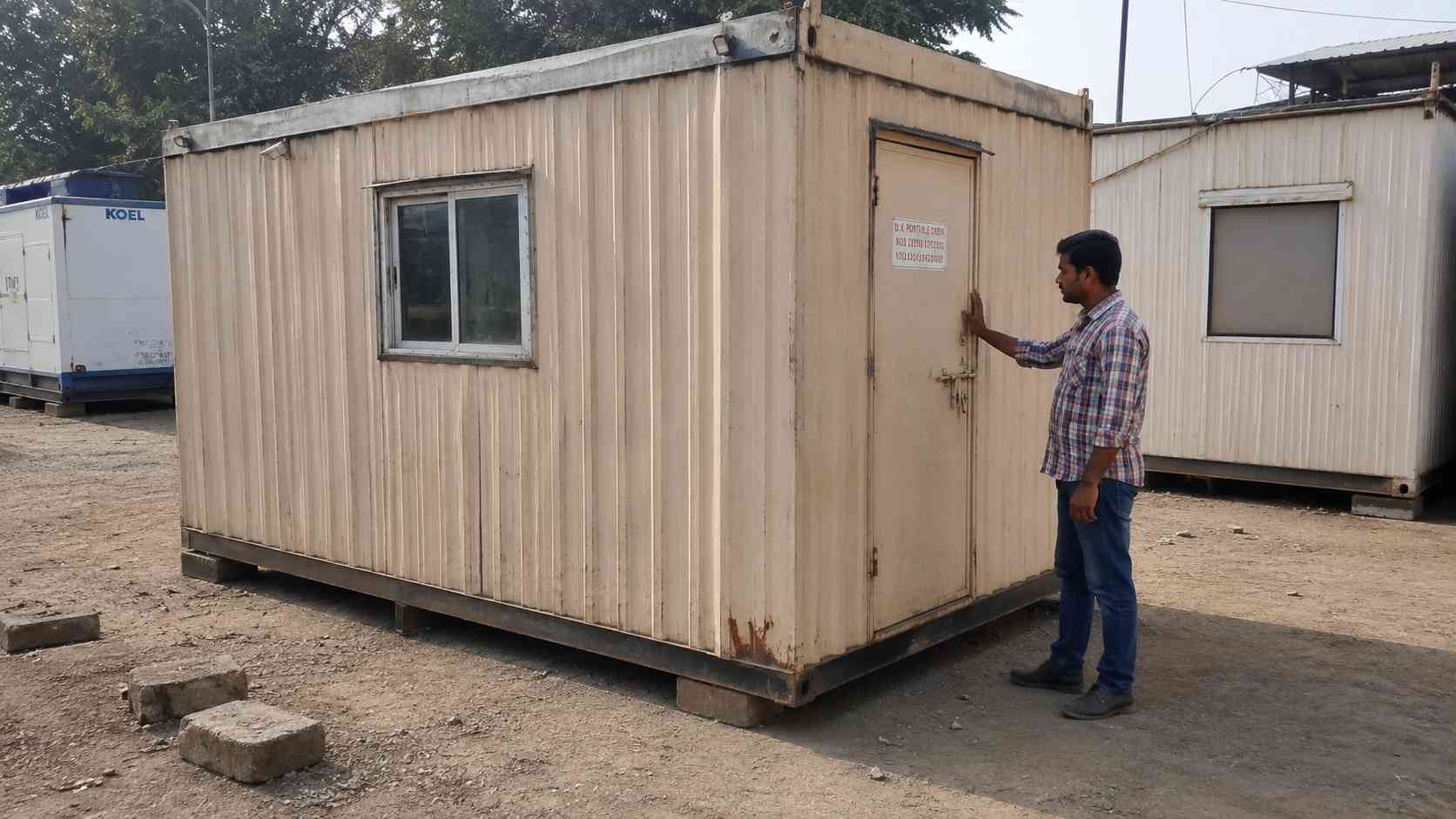
A used porta cabin buying guide is what most buyers reach for after a quote from a new manufacturer makes them pause. Pre-owned units promise 40 to 60 percent savings on the sticker — and at first read, that sounds like the right answer for a project on a tight site office budget. Whether that saving holds over the actual ownership period depends on three things the seller usually won’t volunteer: what shape the steel frame is in, what the unit is realistically worth at its current age, and whether a new low-cost unit would actually cost less over ten years. This guide answers all three from the manufacturing side, with the inspection method, age-band price benchmarks, and the cross-over math.
What to Inspect Before Buying a Used Porta Cabin
Before buying a used porta cabin, inspect six points: (1) the base-frame welds for hairline cracks or thinning; (2) any rust at the frame-to-floor joint, the most expensive failure to repair; (3) wall panel attachment screws — pulled or stripped fixings indicate stress; (4) roof seam silicone; (5) floor flex under load; (6) door-jamb squareness. Manufacturer name and refurbishment records confirm origin.
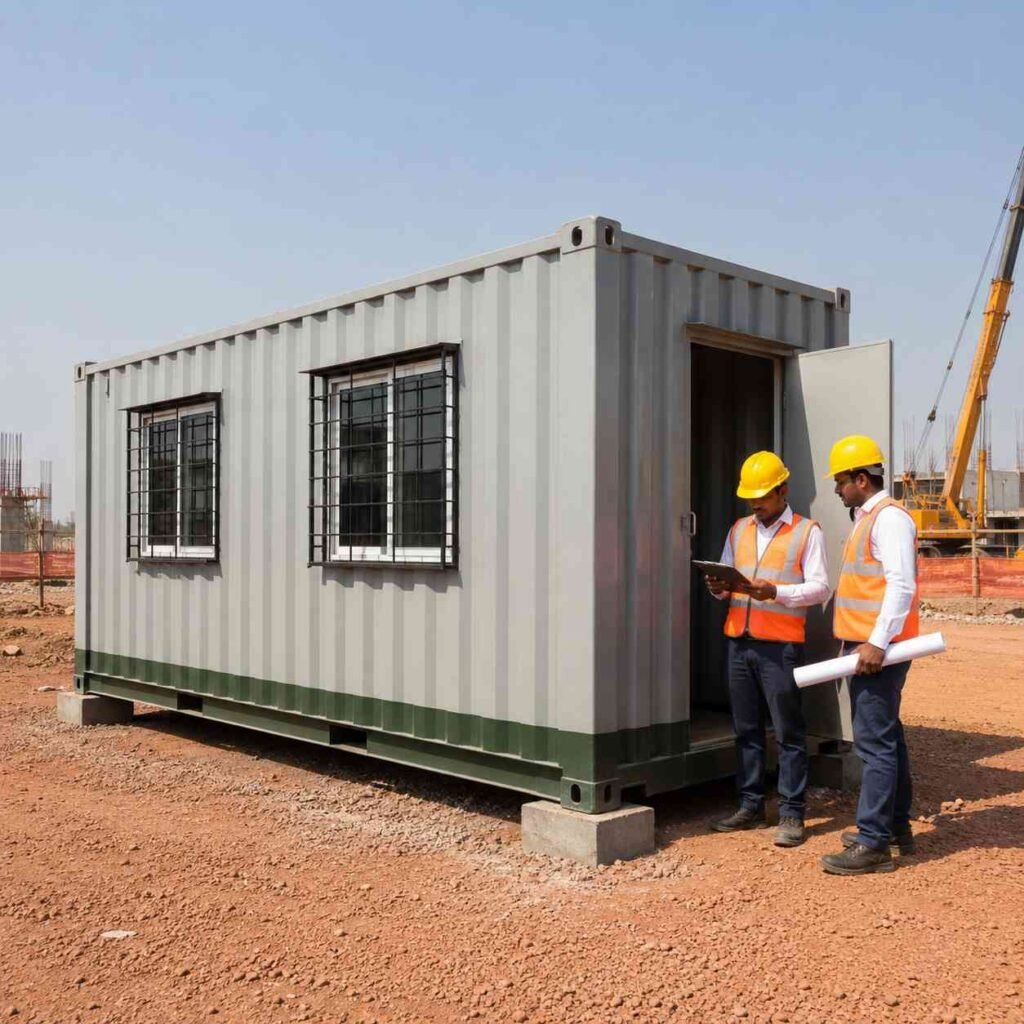
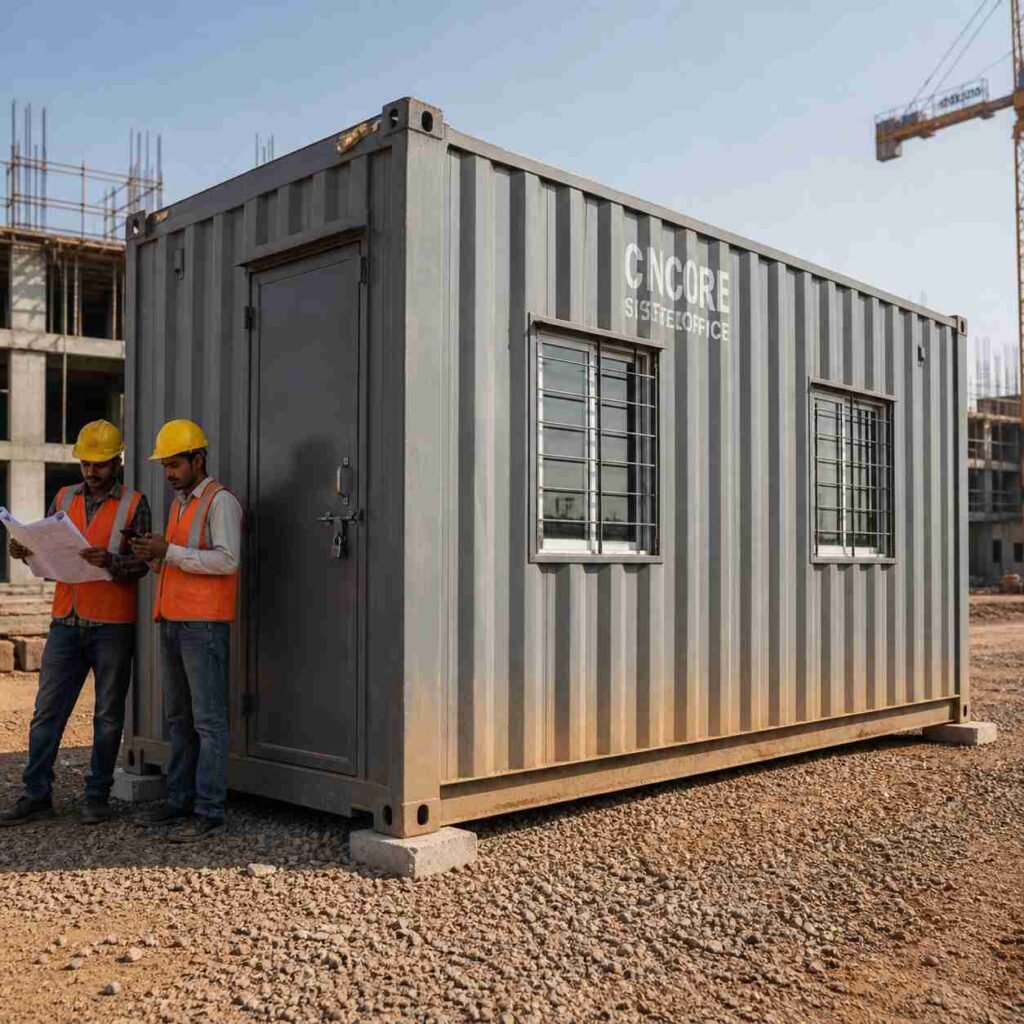
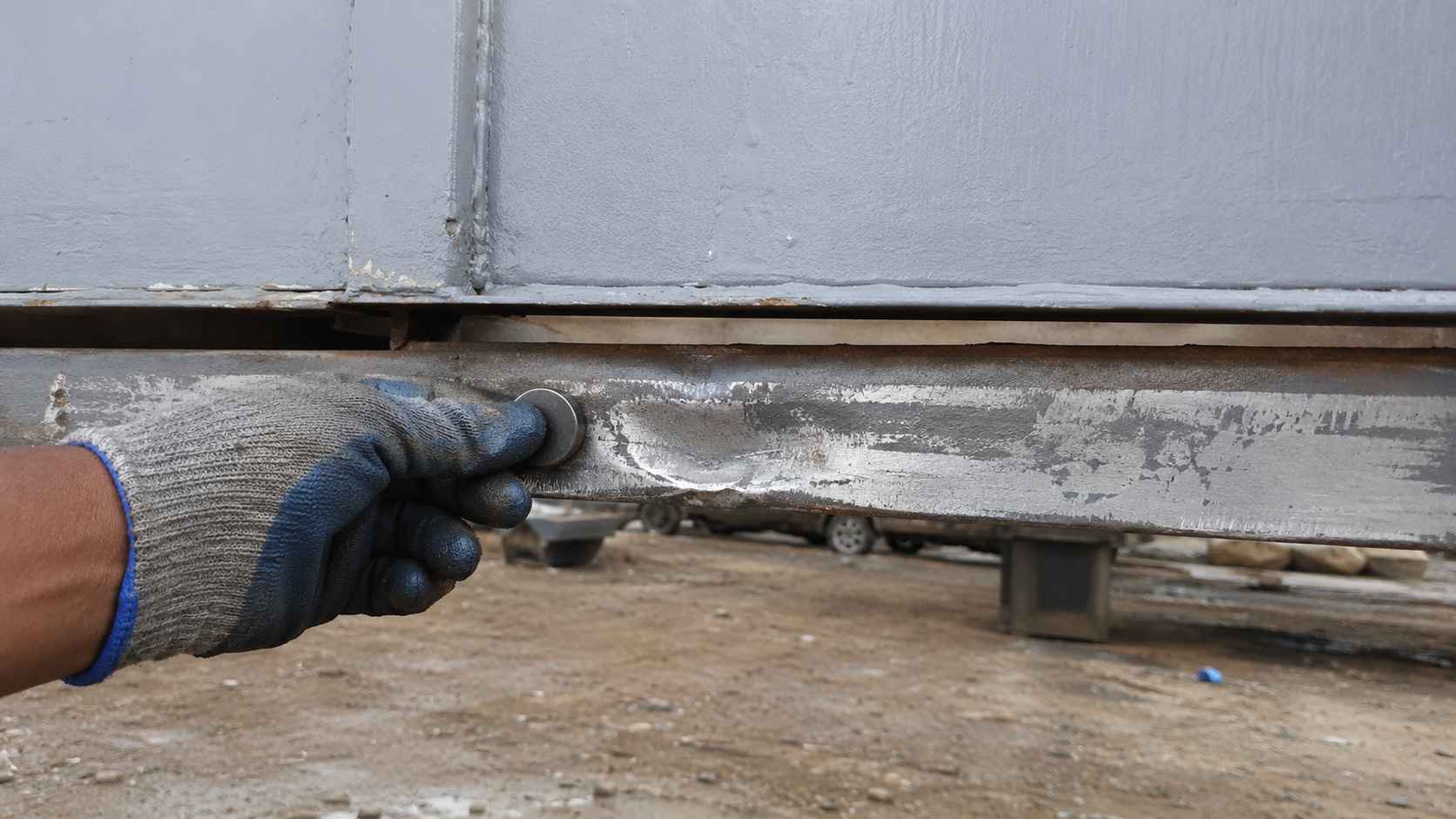
The base frame is the part of the cabin that all loads transfer through — every relocation, every worker step, every monsoon. Look at the perimeter welds where the floor channel meets the vertical posts. Hairline cracks at the weld toe are a sign of frame fatigue. Mild thinning of the steel where rust has been ground back during refurbishment shows up as a concavity — run a magnet along the channel and feel for variation.
Rust at the frame-to-floor joint is the failure that turns a second hand porta cabin from a good deal into an expensive write-off. The joint is shielded by the floor sheet inside and the panel cladding outside, which means rust here advances unseen and is impossible to repair cleanly without cutting and re-welding the frame. If you can lift a corner of internal flooring and see the joint, do.
The other four points are quicker to read. Pulled wall fixings tell you panels have been wrestled with during relocation. Roof seam silicone that has yellowed or lifted means the next monsoon finds the leak. Floor flex under a 70 kg load means joist spacing has degraded. Door-jamb squareness — open and close the door slowly — confirms the frame has not racked out of true in storage.
What Fails First — MS Frame Failure Modes at Year 5, 10, and 15
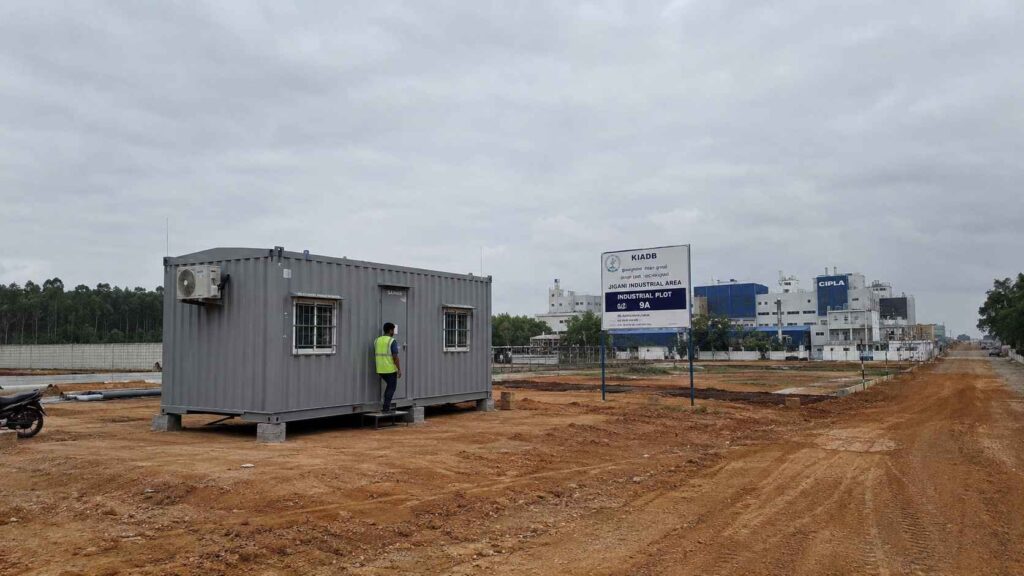
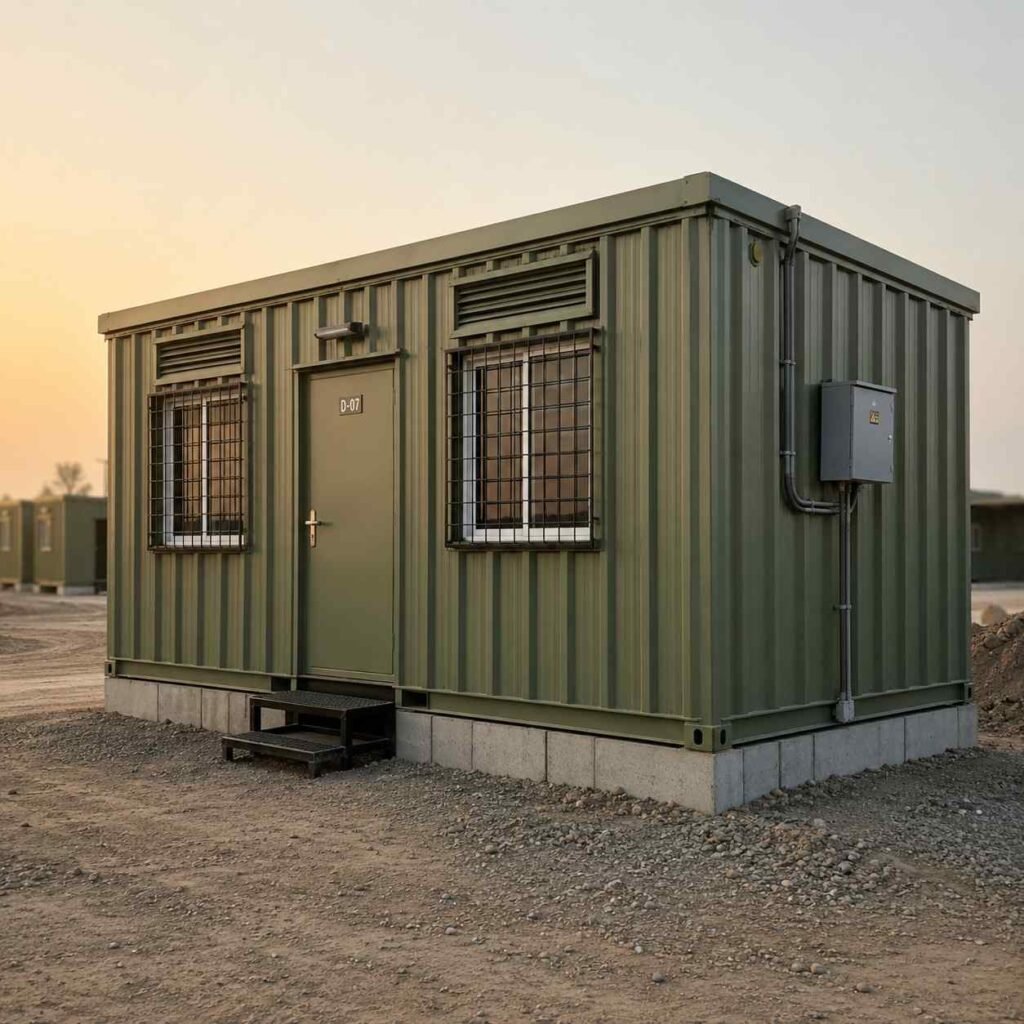
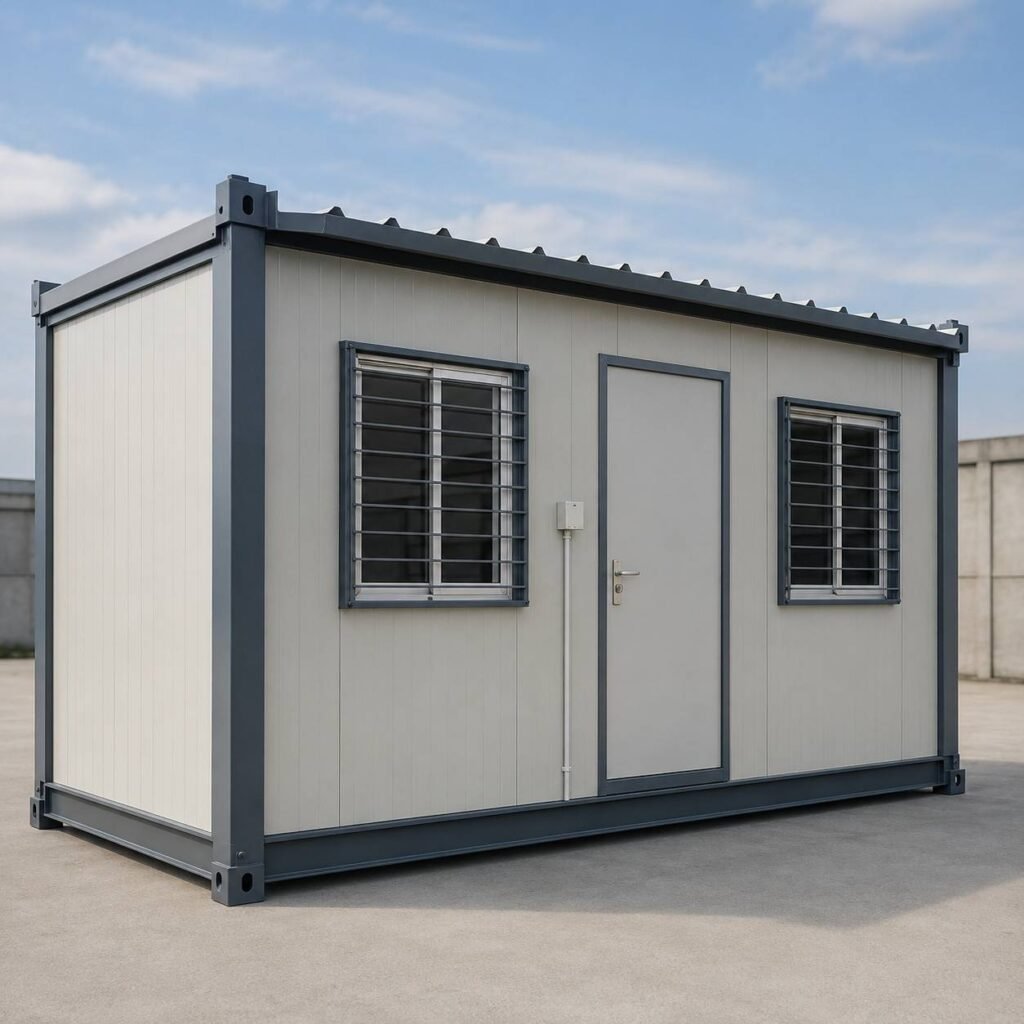
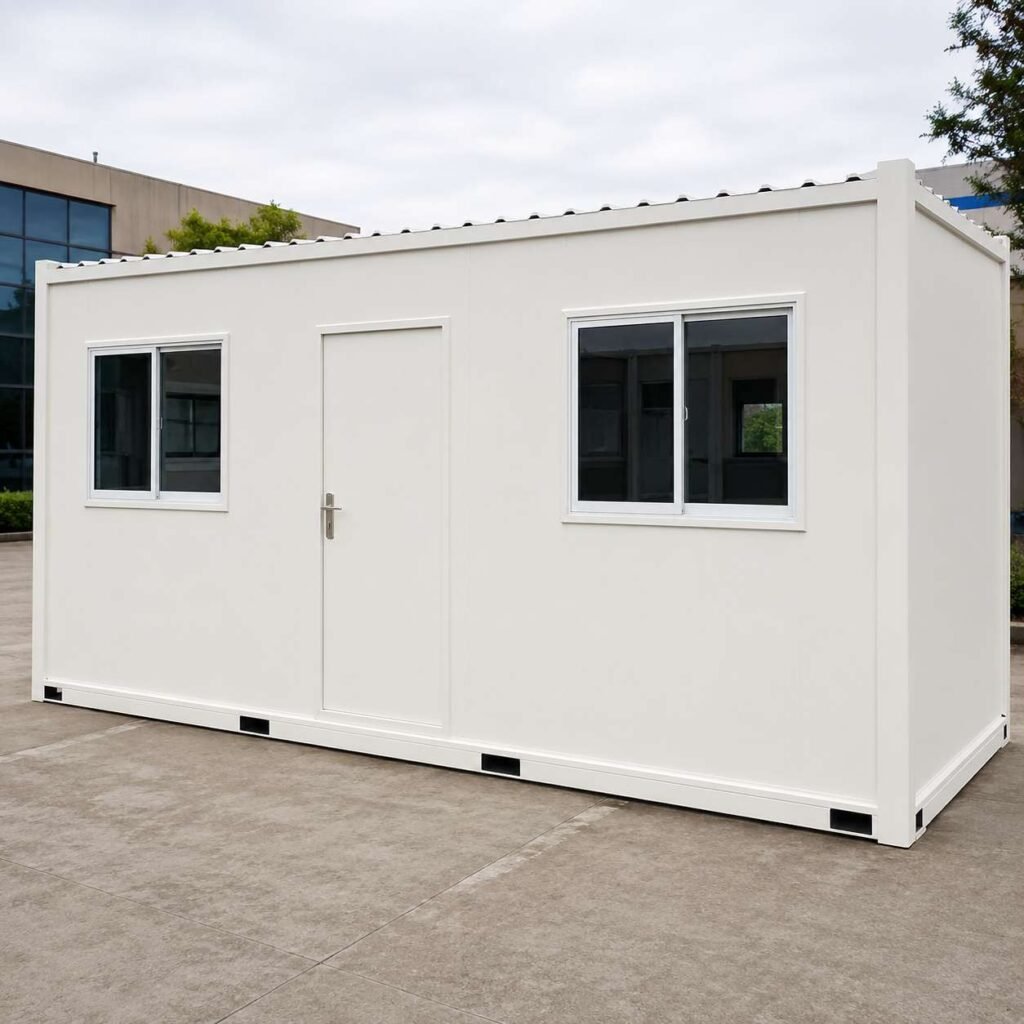
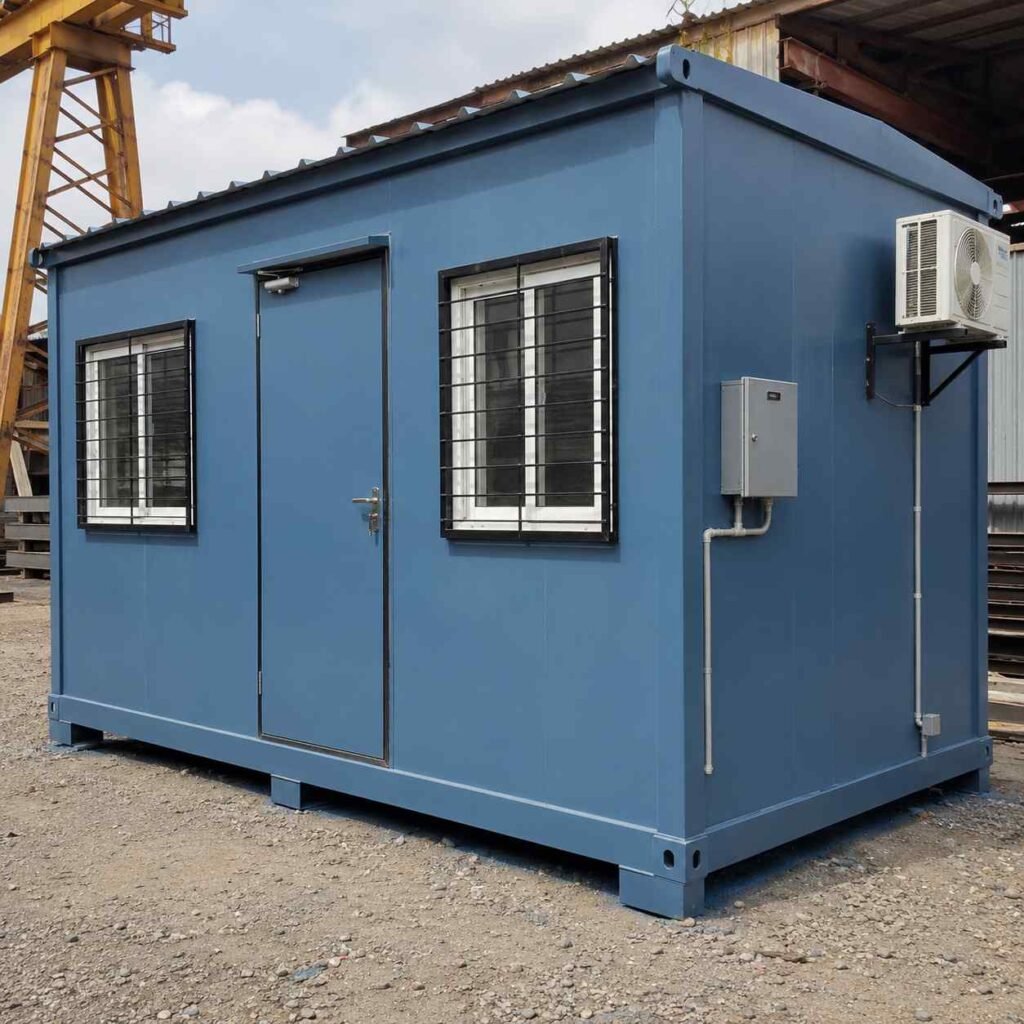
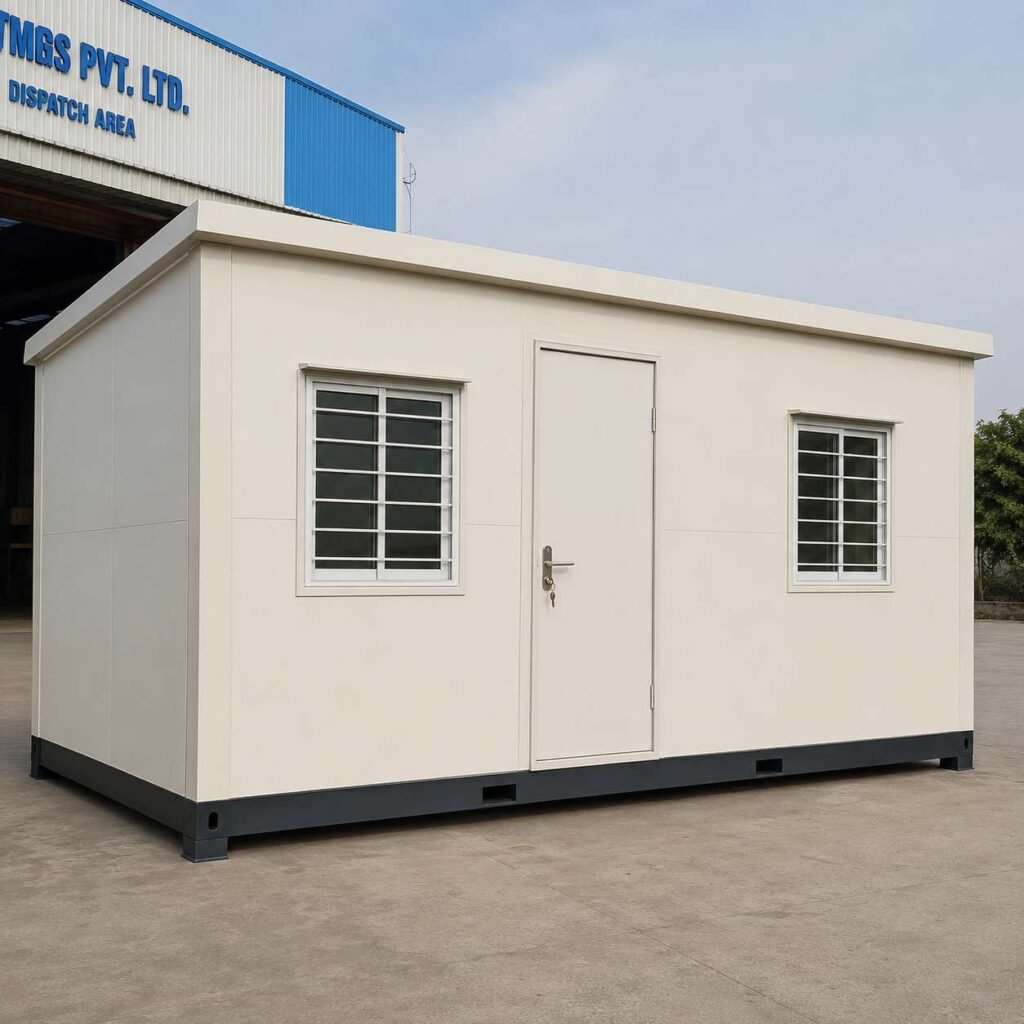
A refurbished porta cabin sitting on a yard floor looks much like a new one to an untrained eye. The difference is what has happened to the steel between fabrication and resale — and that difference shows up in a predictable order across the porta cabin lifespan. Knowing what typically fails by year 5, year 10, and year 15 lets you read the unit you are buying against its actual remaining life.
Year 5 — Surface degradation, fully repairable. An MS porta cabin in normal site use shows panel rust at exposed edges, silicone yellowing at roof seams, scuffed paint on door surrounds, and possibly a small leak at one corner. None of this affects structure. A competent refurbisher grinds back surface rust, re-coats, re-silicones, and the unit is good for another five years. Pay the year-5 price and you are buying a sound cabin with cosmetic wear.
Year 10 — MS frame corrosion starts, mostly repairable but expensive. First signs of base-frame corrosion appear at the floor-channel weld, particularly on units that lived through multiple monsoons on poorly drained sites. Floor sheet may show 5-8 mm flex under load between joists. Wall panel fixings may need full replacement. Most of this is repairable, but the labour to do it properly is now a meaningful share of the unit’s residual value. A buyer at year 10 is paying for steel mass, not finish.
Year 15 — Structural write-off territory for serious deployment. Frame thinning at contact points becomes visible. Door-jamb racking will not return to true. The base channel shows pitting from cyclic moisture even with good paint. Repair is possible but rarely economic — the unit is sold for storage use, low-traffic guard duty, or scrap. It is not a structure to put four people in for an 18-month project.
Used Porta Cabin Price in India — What’s Fair at 5, 10, and 15 Years
What fair pricing looks like for a second hand porta cabin in India tracks the depreciation curve from the new manufactured price, adjusted for refurbishment grade and regional supply. New SAMAN MS porta cabins start at around ₹2,15,000 for a 10×10 ft entry-level unit, and prices for larger sizes scale roughly with footprint. The table below shows fair range benchmarks by age band and size — these are the prices a knowledgeable buyer should be looking at, not the asking prices a yard reseller will open with.
| Age band | 10×10 ft (₹) | 10×15 ft (₹) | 20×10 ft (₹) |
|---|---|---|---|
| 0-2 years | 1,50,000 – 1,70,000 | 2,30,000 – 2,65,000 | 3,00,000 – 3,50,000 |
| 3-5 years | 1,05,000 – 1,30,000 | 1,65,000 – 2,00,000 | 2,20,000 – 2,65,000 |
| 6-10 years | 75,000 – 95,000 | 1,15,000 – 1,50,000 | 1,55,000 – 2,00,000 |
| 11-15 years | 45,000 – 65,000 | 70,000 – 1,00,000 | 90,000 – 1,30,000 |
Two qualifiers to read alongside the numbers. Refurbishment grade moves the price by 15 to 20 percent in either direction — a unit that has been re-coated, re-floored, and re-silicone-sealed at a structured refurbisher commands the upper end. A unit pulled from a closing site and put straight on a yard with a basic wash sits at the lower end. Regional supply is the second variable: in Bangalore, Delhi NCR, and the surrounding industrial zones where construction project turnover is heaviest, used inventory is deeper and prices are softer. Smaller markets see thinner stock and firmer asking prices.
If the asking price for an 8-year-old 10×10 ft unit lands meaningfully outside the ₹75,000 to ₹95,000 range — either far below or above — something else is going on. Far below usually means undisclosed structural damage; far above means the seller is testing the market against a buyer who hasn’t priced new alongside. For new pricing context, the complete porta cabin price guide gives the per-square-foot and per-size breakdown used to derive these depreciation bands.
New or Used — When the 10-Year Cost Math Tips Toward New
The single most useful comparison a buyer can run is total ownership cost over the deployment period, not purchase price. A used unit’s lower upfront price is real, but it carries higher annual maintenance and a shorter remaining lifespan — and those two costs are what determine whether the new alternative was actually the cheaper deal.
Take a working example. A 5-year-old used 10×10 ft MS porta cabin at the ₹1,15,000 mark sits against a new SAMAN entry-level unit at ₹2,15,000. The upfront gap is ₹1,00,000 in favour of used. Now run the next ten years on each.
The used unit needs surface refurbishment at year 2-3 (₹15,000-25,000), enters the year-10 corrosion phase by year 5 of your ownership (₹30,000-50,000 of repair to keep it sound), and reaches structural write-off territory around year 8 of your ownership. To complete ten years you will likely either replace it or accept storage-grade use only — and its resale value at that point is scrap weight, nothing more.
The new unit needs minor sealant and paint at year 5 (₹8,000-15,000), reaches the same year-10 condition by your tenth year of ownership, and has another 5-10 years of useful life past that point — with meaningful resale value if you choose to sell.
The cross-over point — where the new unit becomes the cheaper deal in total — sits around 4 to 5 years of ownership. If your project will run that long or you will redeploy the unit to a second project, the low-cost entry-level MS unit is the better-priced option even though it costs more on day one. If your deployment is a short 18-month or 24-month project after which the cabin will be sold on, used is still the right call.
The decision flows from there. For projects beyond 4-5 years, our range of porta cabin units is the route to consider. For a structured purchase with documentation and warranty, buying a new porta cabin direct from factory removes the inspection and origin-verification work this guide is built around.
Transport, Refurbishment, and What India-Specific Logistics Add to a Used Unit’s Price
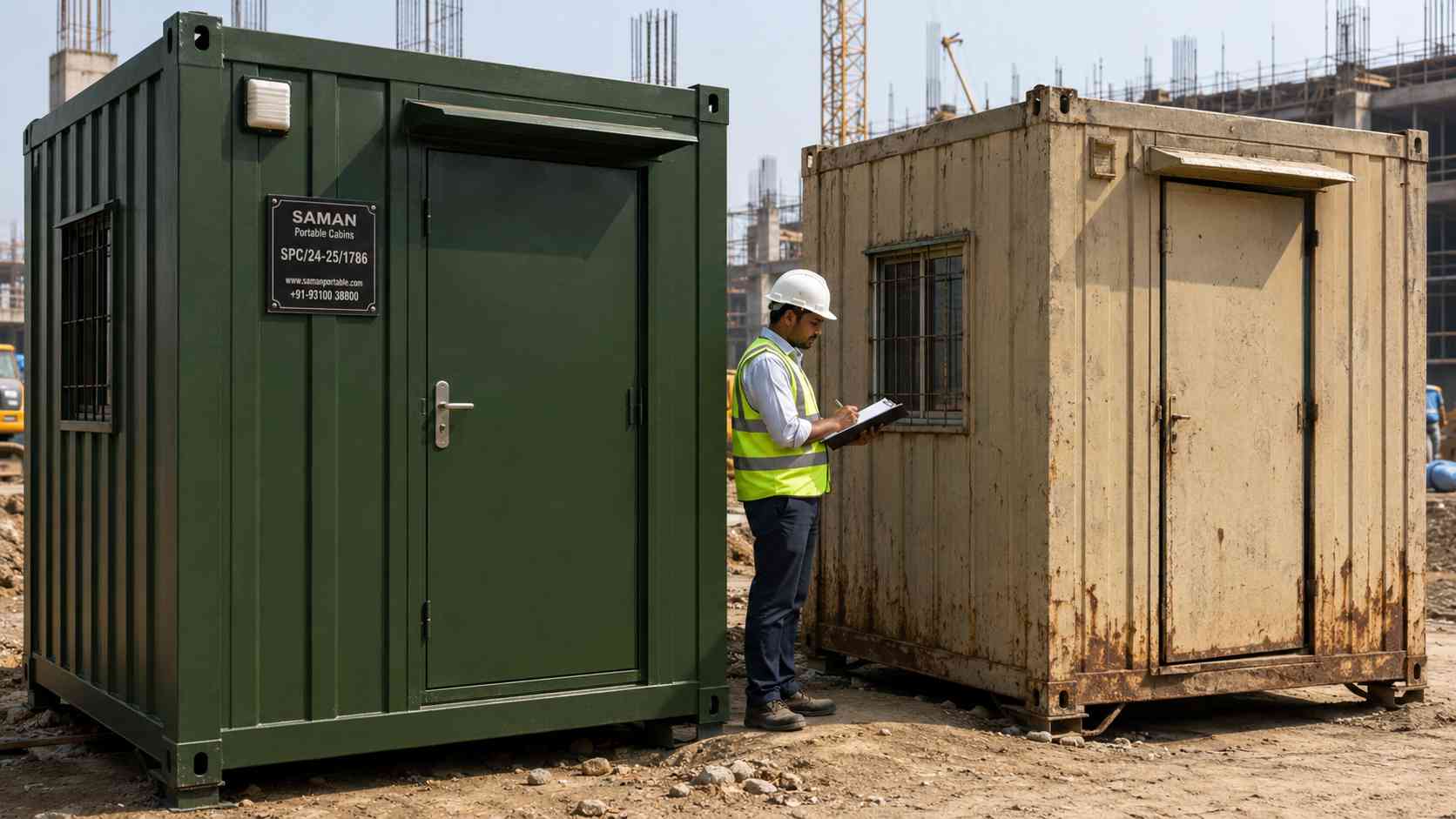
Three India-specific costs sit on top of the headline used price, and they are routinely under-priced by yard sellers.
Transport. A used unit travels from wherever the previous site was — not from a manufacturing facility you can verify on a map. Distance and access conditions can add ₹15,000 to ₹60,000 to the delivered cost depending on whether single-axle truck access is available or whether a hi-ab lorry and lifting team are needed. Always confirm the all-in delivered cost in writing, with the offload point named.
Refurbishment grade. A refurbished porta cabin labelled as such can have had anywhere from a basic exterior wash to a full strip-down, re-treat-the-steel, re-floor, re-seal, re-paint cycle. Ask the seller for the specific work done and the date — if the answer is vague or “we cleaned it up,” assume only the cosmetic minimum was done and discount accordingly. A structured Indian refurbisher will provide a one-page work record; a yard reseller usually will not.
GST and origin documentation. Used-unit GST treatment differs from new — if you are running this through company books, confirm with your accountant before the unit is dispatched. Origin documentation matters for any site that requires structure approval: a unit with no original manufacturer paperwork is harder to clear with site safety officers, and harder to insure. If the seller cannot produce origin records, treat that gap as part of the unit’s risk profile, not a side issue.
Frequently Asked Questions
How long does a used porta cabin last after purchase?
A used MS porta cabin’s remaining lifespan depends on its age at purchase, refurbishment quality, and site load. A well-refurbished 3-5 year old unit on a normal site office deployment typically gives 8-10 more years. A 10-year-old unit, fully refurbished including frame inspection, gives 4-6 more years. A 15-year-old unit should be assumed to have storage-grade life only — 2-3 years before serious deployment becomes a risk.
How much should a 10-year-old used porta cabin cost in India?
For a 10×10 ft MS unit in fair condition with documented refurbishment, the working benchmark sits at ₹75,000 to ₹95,000. Below that range, expect undisclosed structural issues or an exterior-only clean. Above it, you are paying near the year-5 price — at which point the year-5 unit is the better buy. Larger sizes scale with floor area; the table earlier in this guide shows the bands.
What are warning signs of a poor-quality refurbishment?
Fresh paint over visible rust pitting, silicone bead applied without surface cleaning (dirt visible under the silicone), mismatched panel colours, floor sheet sections with welds visible from below, and reluctance from the seller to lift internal flooring for inspection. A clean refurbishment is one the seller walks you through with a torch.
Can a used porta cabin be customized after purchase?
Yes, within limits. Non-structural changes — interior partition, window addition, electrical re-routing, exterior paint — work cleanly. Structural changes — cutting the frame to add a doorway, joining two units side by side, adding a second floor — should not be done on a unit past year 5. The frame’s load reserve is what gets consumed first, and customisation that depends on frame reserve is unsafe on aged steel.
Get an Honest Used-vs-New Comparison for Your Project
Comparing a used unit against new SAMAN options? Send us the used unit’s age and inspection findings and we will give you the equivalent new-spec quote and the 10-year cost comparison for your project.
Bangalore: Call +91 80886 85440 · WhatsApp +91 88616 22859
Delhi NCR: Call +91 87960 39938 · WhatsApp +91 97089 89937