


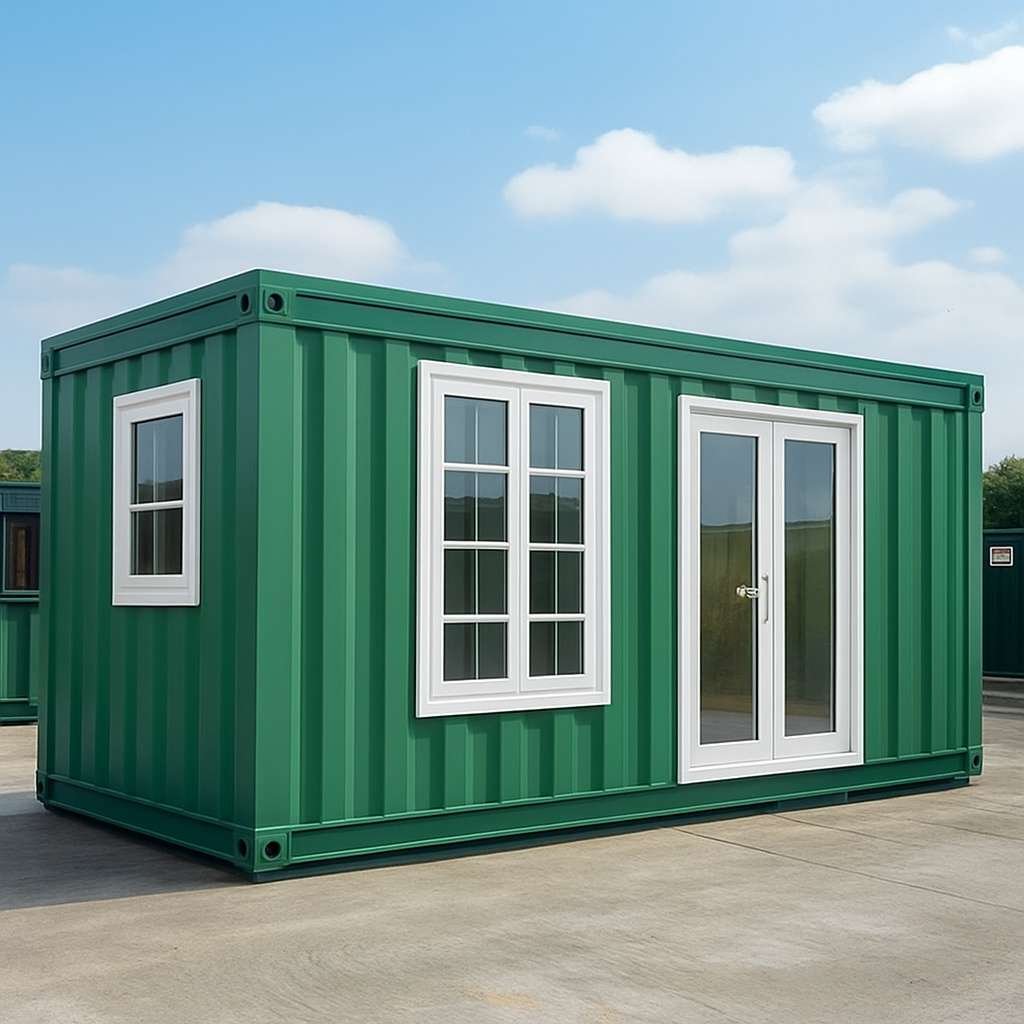



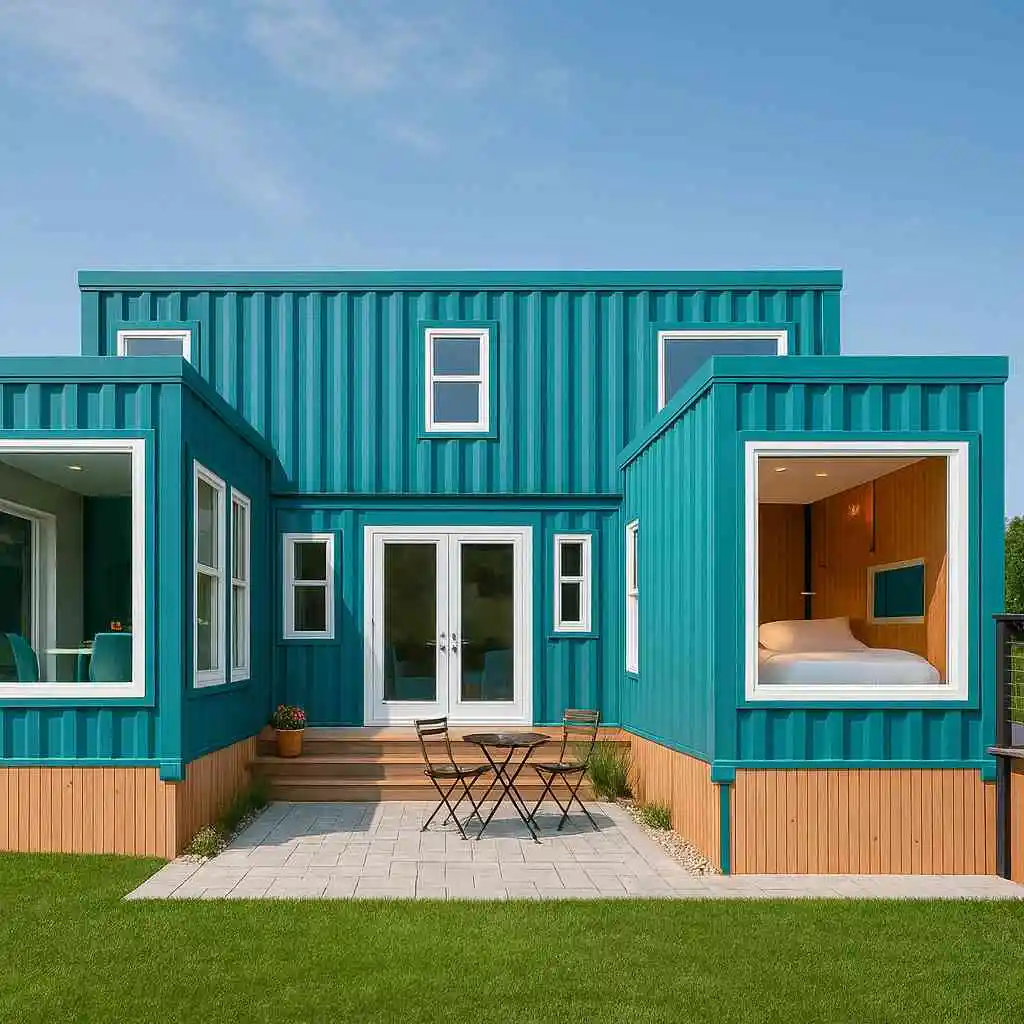
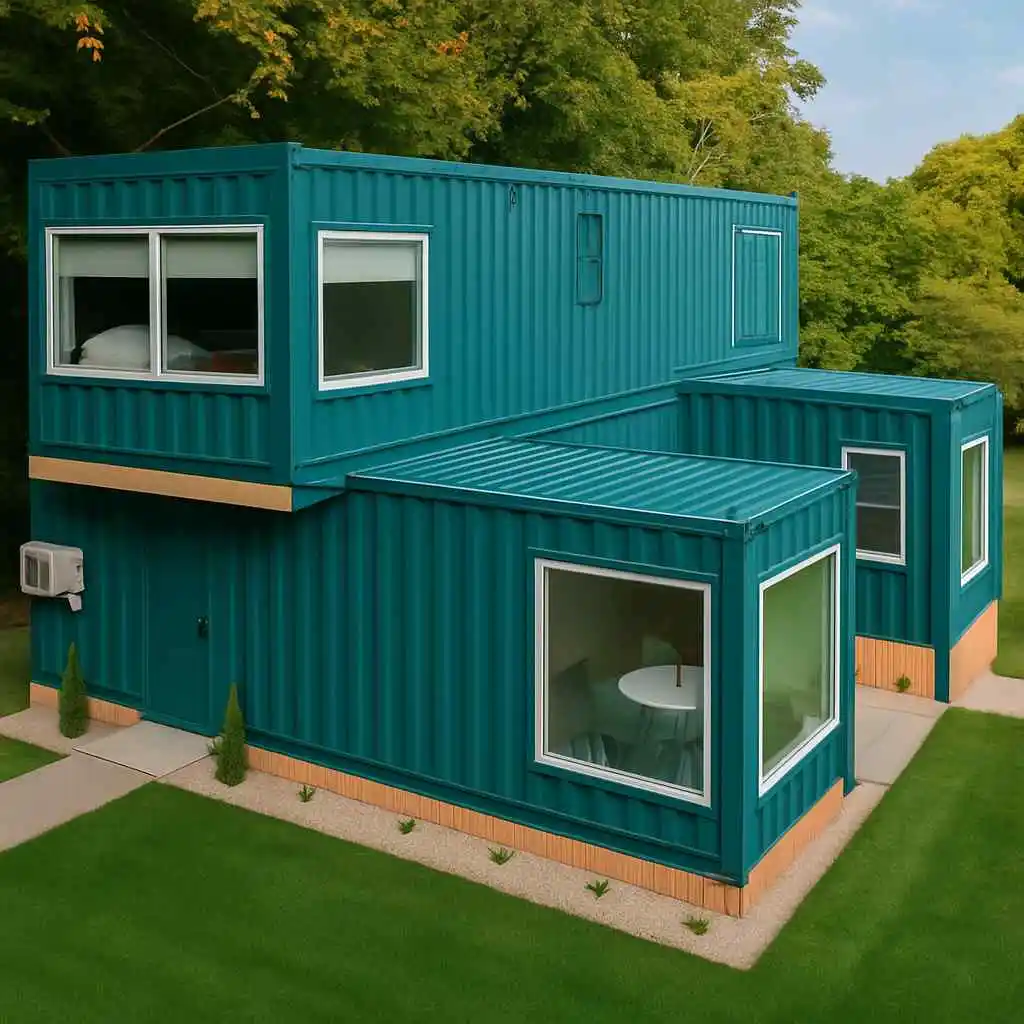
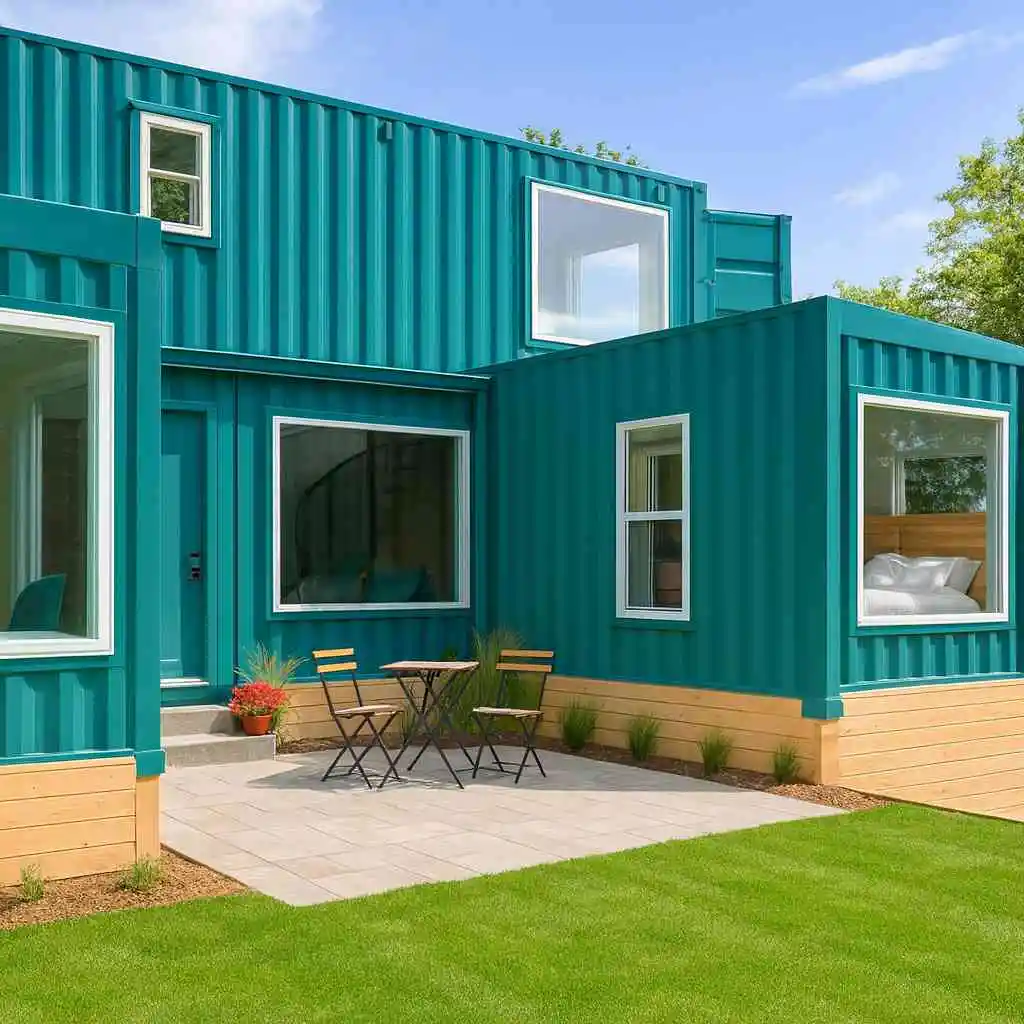



Speed, Savings & Sustainability: Why Container Houses Win
Escalating housing prices and year‑long construction delays discourage many. A Container Houses transform this reality. Built off‑site from recycled steel, each unit becomes a sustainable home delivered in weeks. Families or developers save on costs while reducing waste. This section explains why choosing a container makes sense and invites you to explore.
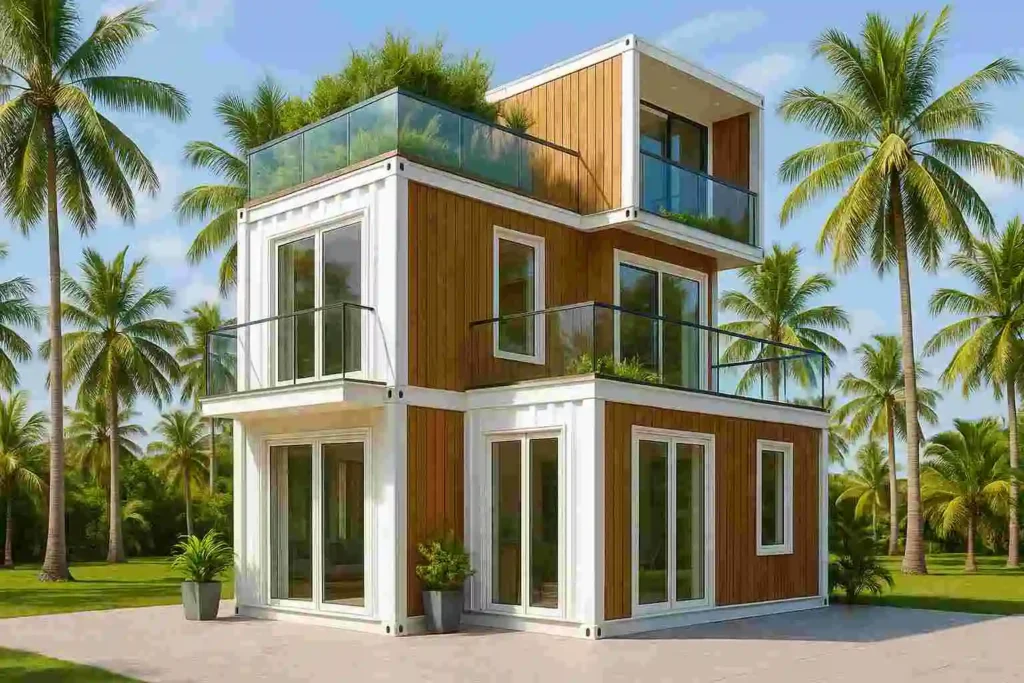
Stylish three-floor container houses with glass balconies, wood finish panels, and surrounded by palm trees.
Rapid Construction & Cost Savings for Container Houses
A Container House slashes build times. Finished units are delivered in weeks, not months. Because the structure is pre‑made, site work is minimal. Owners avoid long delays and labor hassles. Quick assembly means you move in sooner and start enjoying your shipping container home without stress or cost overruns. The difference is dramatic.
These homes cost 30–50 % less than brick‑and‑mortar options. Because the shell already exists, materials and labor costs drop. Even a finished two‑container setup is cheaper than building a small flat. Choosing a prefab house means more budget for finishes, landscaping or renewable energy, making affordable dreams real for families today.
- Finished modules arrive in four to six weeks, saving months of construction time.
- Pre‑fitted interiors cut labor costs and reduce costly contractor delays.
- Compact footprints require less land, making a modular house accessible in crowded cities.
- Lower upfront investment frees funds for solar panels, insulation or custom finishes.
- Tax benefits for eco‑friendly Container House projects can further reduce long‑term costs.
To see how complete units are designed and delivered, you can explore our shipping container homes for examples. These ready‑made houses illustrate the rapid build times described here and show the range of finishes available.
Eco‑Friendly & Flexible Living with Container Houses
Container Houses supports a cleaner planet. It recycles thousands of kilos of steel and reduces construction waste. With proper insulation and solar panels, energy consumption drops. Combining renewable energy and water recycling makes your home comfortable yet kind to the environment. Choosing this kind of sustainable home shrinks your carbon footprint.
Containers are modular. You can join units side‑by‑side or stack them to create bigger spaces. Need an extra bedroom or office? Simply add another module. If you move to another plot, your home moves with you. A well‑designed modular house grows with your life. This adaptability sets container living apart.
- Steel shells reused from ships reduce demand for virgin materials and shrink your carbon footprint.
- Well‑insulated walls save 20–40 % on energy bills and keep interiors comfortable.
- Rainwater harvesting, compost toilets and solar PV systems support off‑grid living.
- Modular design lets you expand or relocate your home easily whenever life changes.
- Every Container House can include solar PV systems and water recycling for sustainable independence.
For instance, our portable cabin models are designed to be sustainable and flexible; they incorporate insulation, rainwater harvesting and solar options so you can live lightly and move easily.
Durability & Safety in Container Houses Design
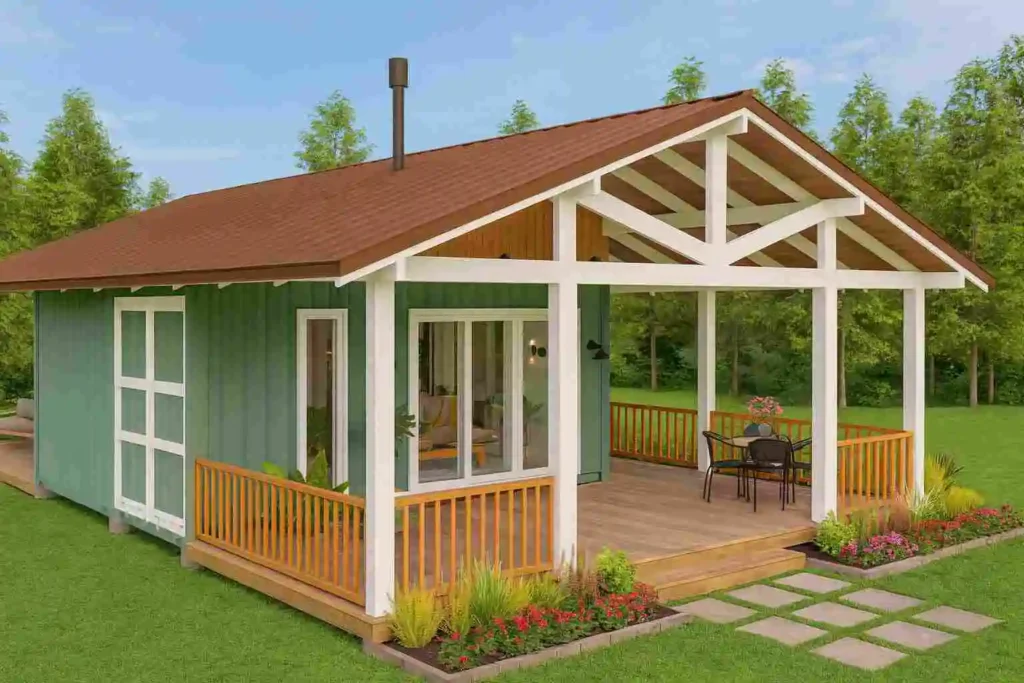
Green prefab container houses with sloped roof, wooden porch, and landscaped garden design in modern style.
A properly constructed Container House is incredibly strong. Shipping containers are made of corten steel, built to survive harsh seas and can withstand heavy wind and rain. With reinforcement and insulation, they become pest‑proof and fire‑resistant, lasting over 25 years. Doors and windows include secure locks, ensuring safety for families.
- Corten steel shells resist rust and corrosion for decades.
- Homes are engineered to be earthquake‑resistant with reinforced openings and secure fixings.
- Standard designs include fire‑safe insulation and lockable steel doors and windows.
- Pest‑proof construction keeps your interior clean and healthy.
For heavy‑duty sites or remote offices, porta cabins offer enhanced durability and security features similar to those described here; they show how container structures can meet industrial safety standards.
| Parameter | Container House | Traditional House | Impact | Note |
| Build time | 4–6 weeks | 6–12 months | Quick occupancy | Minimises labour cost |
| Cost | 30–50 % lower | Higher | Affordable living | Leaves funds for extras |
| Material use | Recycled steel | New materials | Lower carbon | Waste reduction |
| Flexibility | Portable & expandable | Fixed | Adaptable living | Move or add modules |
| Durability | Corten steel | Brick & mortar | Long life | Fire & weather resistant |
This mix of speed, savings, sustainability and strength shows why container living is a smart choice for modern homeowners.
Why Container Houses Win: Speed, Savings & Sustainability
Property prices soar while construction drags on for months. A Container House changes the equation. This innovative shipping container home concept delivers a finished dwelling in weeks at a fraction of the cost. With recycled materials, flexible layouts and built‑in strength, container homes outperform traditional housing. Sustainability comes standard. It’s the modern solution.
Rapid Construction
Rapid construction defines the container advantage. Each module is fabricated off‑site, eliminating weather delays and months of on‑site labour. Completed units arrive in four to six weeks. That means you move in sooner and enjoy your Container House without the wait. It’s ideal for urgent housing needs.
Because the container arrives nearly complete, on‑site tasks are minimal. You skip curing cement and juggling multiple contractors. This prefab house solution reduces delays and gives you control over the schedule. Whether it’s a tiny studio or a multi‑unit complex, speed is on your side. Every day saved cuts cost.
Affordability
A Container House makes owning a home attainable. Because the steel shell exists, you save 30–50 % versus conventional builds. Basic studio units start around ₹10 lakhs—a price within reach for many. Even multi‑unit designs remain affordable. That’s game‑changing for young families. You get more home for less money. It’s a smart investment.
Your savings continue after move‑in. Labour costs and prefab house efficiency reduce maintenance expenses. Superior insulation lowers utility bills. Container House units often retain higher resale value because they’re portable and in demand. Your investment works harder for you. Over time, savings add up significantly. Less money is wasted on repairs.
Eco‑Friendly Design
Choosing a Container House means choosing a sustainable home. Each unit reuses tonnes of steel that would otherwise go to waste. This reduces demand for new materials and cuts emissions. By giving old containers new purpose, you shrink your environmental impact. It’s an easy way to live responsibly and helps the planet.
Container homes are well insulated, so they need less energy to heat or cool. Add solar panels and rainwater harvesting to support off-grid house living. Energy savings of 20–40 % are common, so you enjoy comfort while lowering bills. This creates a resilient lifestyle and reduces reliance on the grid dramatically.
Mobility & Expandability
A core advantage of container construction is mobility. A Container House sits on a simple foundation and can be moved if you relocate. Families who change jobs or travel seasonally take their home with them. This portability offers freedom that conventional buildings can’t match without leaving assets behind. It’s true flexibility.
Container architecture is modular by design. You can stack or join units to create larger spaces. Many owners start with a studio and later add bedrooms or offices as needs grow. One project even tripled in size without major structural changes. This modular house concept evolves with you over time.
Durability & Safety
Shipping containers are built to endure ocean storms, so a Container House is naturally robust. Made from corten steel and reinforced with interior framing, these homes resist high winds, rain and pests. Owners can expect a structural lifespan of at least 25 years with minimal maintenance required. Reliable and strong.
In addition to strength, container homes offer real safety. Metal walls and proper insulation make them fire resistant. Secure steel doors and windows deter intruders. Our designs meet building codes and carry 25‑year warranties. Your family rests easy, protected in a resilient space—through storms and stresses. It’s peace always.
| Aspect | Container House | Traditional Home | Advantage | Extra Info |
| Speed | 4–6 weeks | 6–12 months | Fast occupancy | Minimal on‑site work |
| Cost | 30–50 % lower | Higher | Affordable living | Units start around ₹10 lakhs |
| Waste reduction | Recycled steel | New materials | Lower carbon impact | Less debris during construction |
| Maintenance | Low; prefab efficiency | Variable | Lower upkeep costs | Superior insulation saves energy |
| Resale value | High; portable | Linked to land | Better asset value | Can be moved or expanded easily |
This benefits section highlights why container homes are leading the housing revolution. By combining rapid construction, affordability, eco-friendly design, adaptability and long‑term durability, these modern dwellings deliver unmatched value.
Discover Container Houses Models & Customization Options
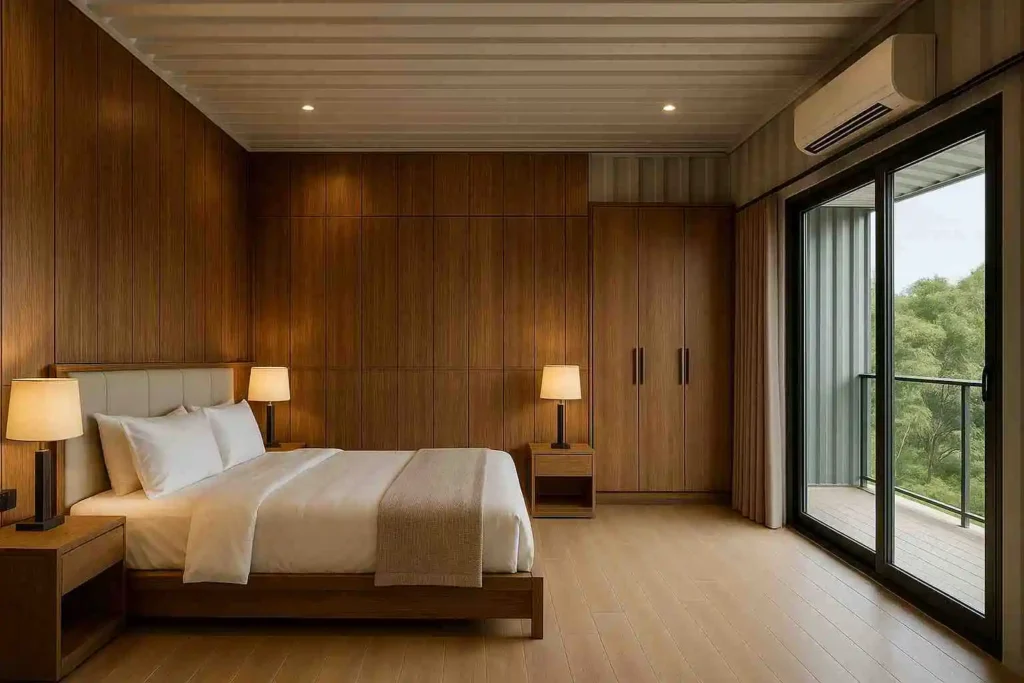
Container houses bedroom with wooden finish, large glass doors, modern bed, and wardrobe.
A Container House doesn’t come in just one shape or size. From compact studios to multi‑story villas, these sustainable shipping container homes can be configured to meet any lifestyle. You can choose a single unit, combine modules or build an off‑grid retreat. Each home is tailored with your choice of finishes, cladding and smart technology.
Single & Multi‑Container Houses: Compact to Spacious
A single‑container home is built from one 20‑ft or 40‑ft shipping container, giving 160–320 sq ft of living space. Its ultra‑compact layout can be a studio or clever 1‑BHK with basic amenities. These portable units suit singles, couples, farm stays or sites with limited space. Finished versions cost roughly ₹10–15 lakhs for a finished prefab house. It’s a true starter Container Houses.
Multi‑container homes combine two to ten modules to create 640 sq ft and beyond. These modular layouts support multi‑room or multi‑story living, with up to three floors for growing families. You can join units side by side or stack them for more space. Prices range from ₹20–50 lakhs, depending on size and finishes. This Container Houses modular design grows with you.
In commercial settings, container offices demonstrate how modules can be combined and finished for productive work environments; they provide real‑life examples of customization and layout options.
- Compact single homes: 20 ft or 40 ft containers, 160–320 sq ft; basic amenities and portable—ideal for singles, couples or farm stays.
- Multi‑unit homes: 2–10 containers; 640+ sq ft; multi‑room, multi‑story layouts for families and expansion—a true modular house that can stack up to three floors.
Off‑Grid & Luxury Container Houses: Green to Glam
Off‑grid eco homes combine one to four containers with renewable systems like solar panels, batteries, rainwater harvesting and compost toilets. High‑efficiency insulation keeps interiors comfortable in any climate. These models suit remote farms, eco‑conscious buyers and nature resorts. They provide self‑sufficient living and cut energy costs by 20–40 %, making perfect off‑grid Container Houses.
Luxury container villas combine two to six modules to create spacious homes with premium finishes. They feature designer floors, high‑end fittings, premium cladding to hide the industrial look, large glass walls and rooftop gardens or decks. Smart home tech adds convenience. These villas attract luxury buyers, boutique resorts and stylish holiday homes, delivering comfort and status.
- Eco homes: 1–4 containers; solar, batteries, rainwater and compost toilets; ideal for farms, resorts and eco‑conscious families; support off‑grid house lifestyles and sustainable home living.
- Luxury villas: 2–6 modules; premium interiors, cladding, glass walls and rooftop decks; perfect for luxury buyers and boutique resorts; a glamorous shipping container home.
Shell, Finished & Luxury Container Houses Options
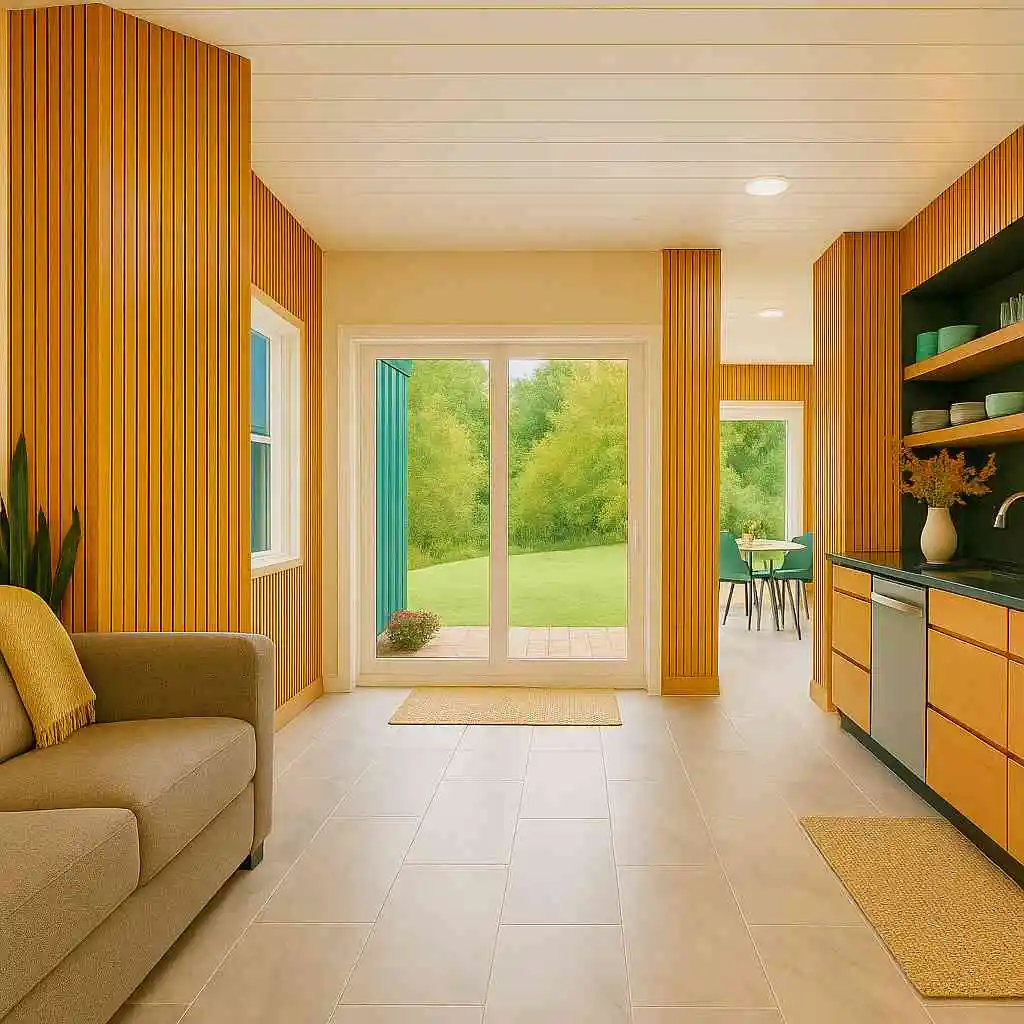
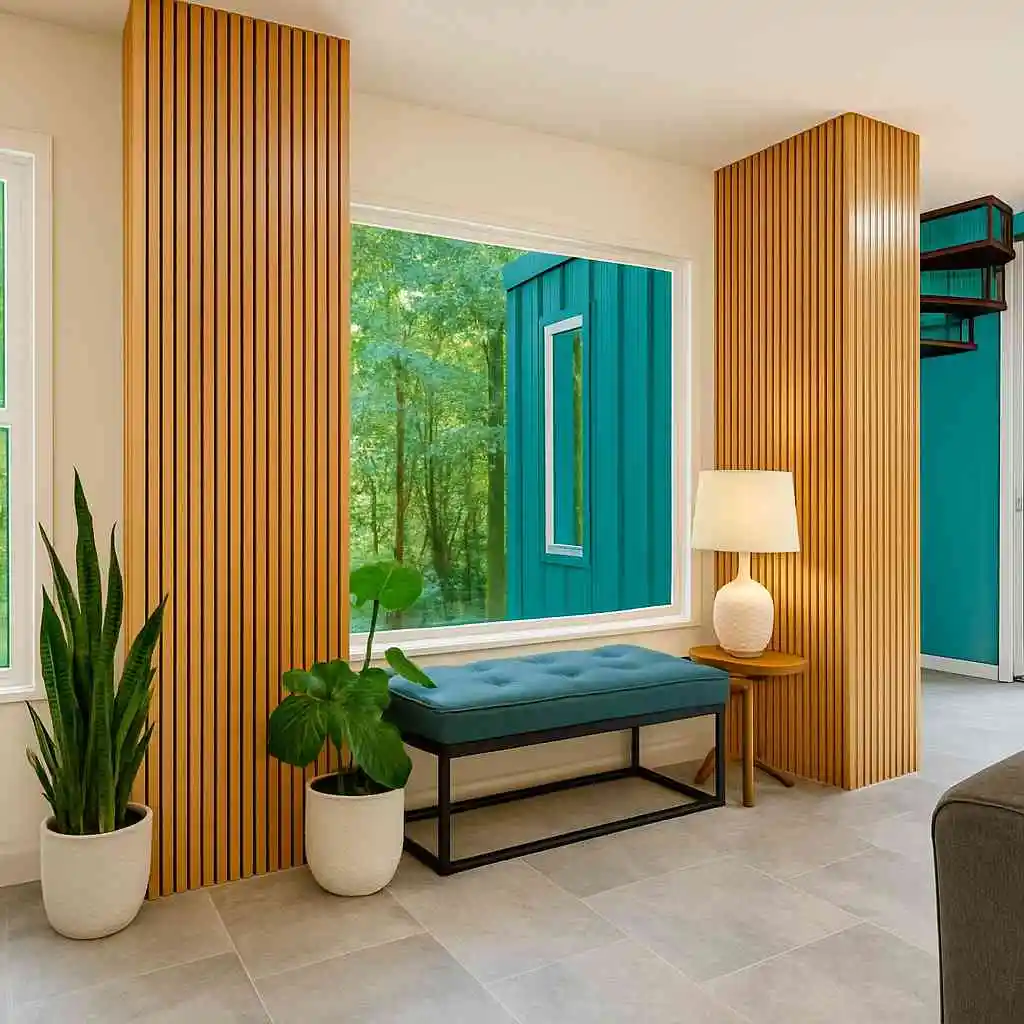
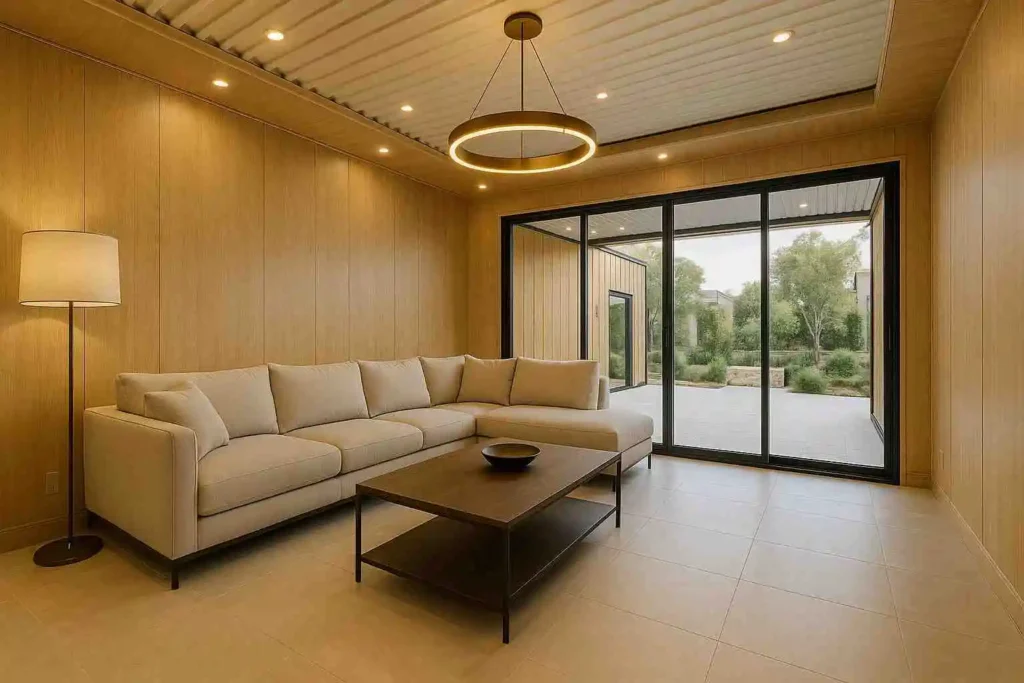
Modern container houses living room with wooden interiors, sectional sofa, and glass sliding doors.
When selecting Container Houses, you choose between shell, finished and luxury models. A shell is a bare‑bones container with cut‑outs—low upfront cost but no insulation, flooring or systems. A finished model arrives ready to use with insulation, flooring, plumbing, kitchen and bathroom. Luxury builds add premium materials, smart tech and designer details.
Customization is where container living shines. You can design open studios or multi‑room layouts, choose wood laminate or ceramic floors, pick colours or wallpapers and install wardrobes, modular kitchens and fixtures. On the outside, cladding options include wood, fibre cement or ACP; you can add pergolas, decks or sloping roofs. Smart tech, solar panels and rooftop gardens complete the package.
- Shell models: lowest cost; no insulation, flooring or systems; maximum DIY customization—ideal for budget‑conscious buyers, creative projects and lots of personalization options.
- Finished Container Houses & luxury: ready‑to‑use with insulation, flooring, plumbing and kitchen; luxury adds premium finishes and smart tech—perfect for busy owners or resorts.
| Configuration | Size Range | Key Features | Typical Price Range | Ideal Users |
| Single | 160–320 sq ft | 1×20 ft or 40 ft container; basic amenities, portable | ₹10–15 lakh | Singles, couples, farm stays |
| Multi | 640+ sq ft | 2–10 containers; multi‑room/multi‑story, expandable | ₹20–50 lakh | Families, villas, co‑living spaces |
| Off‑Grid Eco | 320–640 sq ft | 1–4 containers; solar, rainwater, compost toilets | ₹15–25 lakh | Farms, eco buyers, remote resorts |
| Luxury Villa | 640–1 000+ sq ft | 2–6 containers; premium finishes, cladding, rooftop deck | ₹40–50 lakh | Luxury buyers, boutique resorts |
| Model | Upfront Cost | Amenities Included | Customization Level | Best For |
| Shell | Lowest | Structure only; no insulation, flooring or systems | Maximum DIY customization | Budget buyers, DIY enthusiasts |
| Finished | Moderate | Insulation, flooring, plumbing, kitchen, bath | Moderate; choose finishes | Busy owners, quick move‑in |
| Luxury | Highest | Premium finishes, smart tech, designer fittings | High | Luxury buyers, resorts, showpiece homes |
This section shows how flexible and customizable container architecture can be. Whether you want tiny starter Container Houses, a modular family home, an off‑grid retreat or a high‑end villa, you can design the perfect space to match your lifestyle, budget and taste.
Engineering & Compliance: Code‑Ready Container Houses
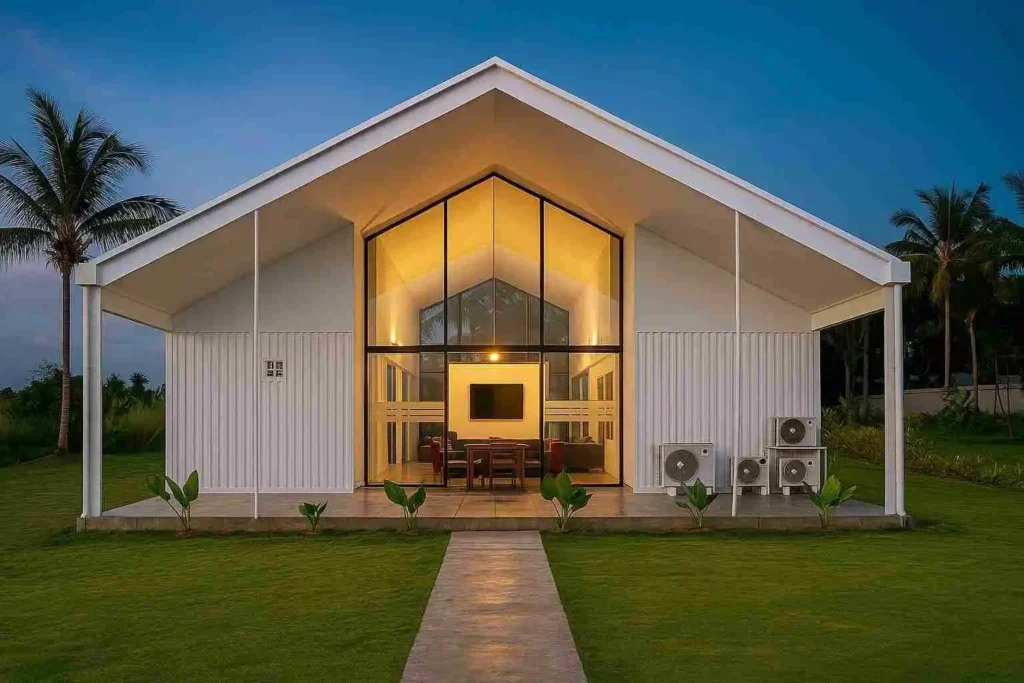
Villa container houses with pitched roof, large glass entrance, and stylish landscaped outdoor design.
Engineering excellence ensures that a Container Houses are more than a trend. Built from marine‑grade steel and designed to meet stringent building codes, these shipping container homes stand up to extreme weather, seismic activity and daily wear. Every element—from foundation to insulation, wiring and permits—is crafted to deliver lasting performance and peace of mind.
Structure & Foundation Specs for Container Houses
Container Houses begin with maritime‑grade Corten steel containers. Standard modules use 6 mm thick Grade A/B steel, while premium units upgrade to 8 mm for enhanced strength. Openings for windows and doors are reinforced with steel frames to maintain load‑bearing capacity. Simple RCC pad foundations provide 200 kg/m² bearing capacity; multi‑storey configurations use engineered strip foundations with waterproofing. Structural calculations adhere to IS 2062, IS 875 and IS 1893 guidelines to handle live loads, wind and seismic forces. This ensures your prefab house is built on solid ground.
Foundations are site‑specific. A soil test determines pad thickness and placement. Standard single‑storey homes sit on reinforced pads, while two‑ or three‑storey modular houses require continuous strips anchored to stable soil. Builders include anchor bolts to secure the container against high winds. Together, these measures protect your investment and provide structural integrity for decades.
- Premium steel: 8 mm Corten steel for enhanced strength
- Reinforced cut‑outs: Steel frames around windows and doors
- Foundation bearing capacity: 200 kg/m² for standard units
- Code compliance: IS 2062, IS 875 and IS 1893 structural standards
Insulation & Climate Control in Container Houses
India’s varied climate demands effective insulation. Standard container homes use 50 mm polyurethane foam (PUF) panels with an R‑value of 16, giving wall thermal transmission of 0.46 W/m²K. Premium models upgrade to 75 mm rock wool (R‑21) for greater comfort. Roofs are insulated with 125 mm foam at 16 kg/m³ density, achieving a roof transmission of 0.26 W/m²K. This keeps interiors cool in summer and warm in winter, reducing energy use by 20–40 %. Climate control systems include 1.5–2 ton split ACs for standard homes and VRF multi‑zone HVAC for larger configurations.
Ventilation is integrated to ensure fresh air flow. Proper insulation and climate control make these sustainable homes comfortable year‑round and allow for off‑grid living with solar power. Owners can install rooftop solar panels to generate electricity and add rainwater harvesting or grey‑water recycling systems. This flexibility supports off‑grid houses for farms, resorts and remote locations.
Electrical, Plumbing & Safety in Container Houses
Electrical systems in Container Houses follow high safety standards. TSE‑certified 3×2.5 cables handle power outlets, and 2×1.5 cables serve lighting circuits. Distribution panels feature 32 A MCBs with RCCB protection for comprehensive safety. Plumbing uses TRPC and PVC materials; premium versions include PPR pipes for hot and cold water. All wiring and pipes are concealed within walls and ceilings for a clean, modern look.
Safety is a top priority. Containers are inherently fire‑resistant due to steel construction. Homes comply with NBC Part IV fire safety requirements, including smoke detectors, fire extinguishers and emergency exits. Structural compliance follows IS 800 standards and is verified by third‑party engineers. Earthquake‑ and cyclone‑resistant designs meet IS 1893 and IS 875 load standards. Together, these measures ensure safe, durable Container Houses.
- TSE‑certified cables (3×2.5 for power; 2×1.5 for lighting)
- RCCB‑protected distribution panels
- TRPC/PVC plumbing; PPR pipes in premium models
- NBC Part IV fire safety compliance
Many of these engineering standards are shared by our portable office units, which are designed to meet building codes while providing comfortable workspaces at construction sites and remote locations.
Regulatory & Permit Guidance for Container Houses
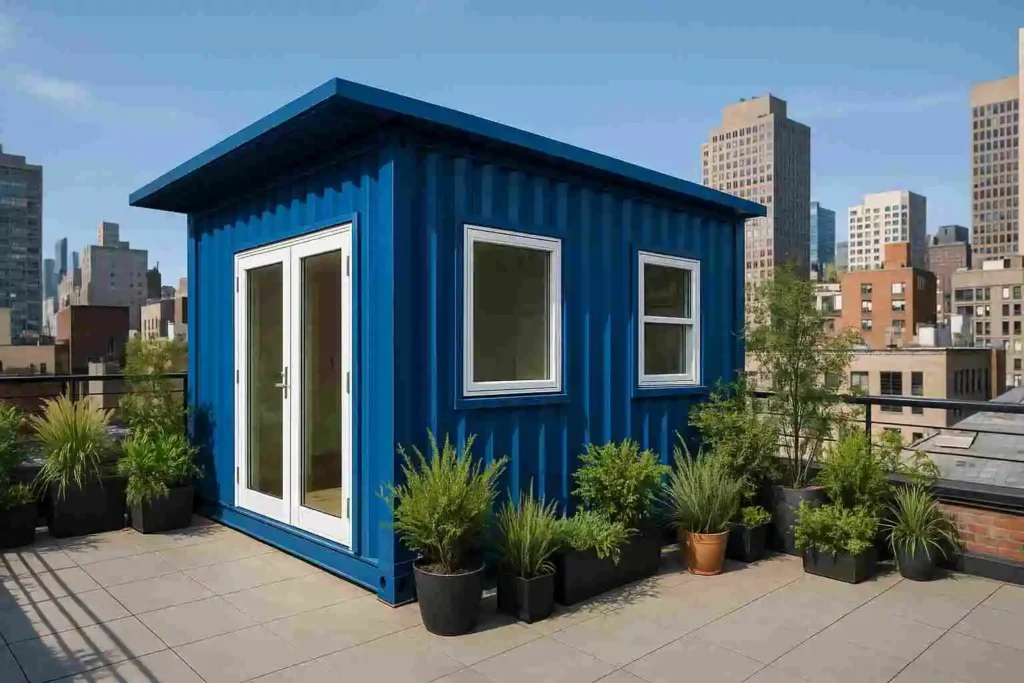
Blue container houses installed on rooftop with glass door and small windows surrounded by plants.
Navigating permits is crucial. Container Houses must follow the National Building Code of India (NBC) for fire safety, structural design and environmental compliance. Land‑use permissions vary by state; residential zoning generally permits container homes, but commercial or mixed‑use projects may require special approvals. States such as Maharashtra and Karnataka require municipal permits and structural certification, with timelines ranging from 30 to 60 days. Coastal zones demand additional clearances due to CRZ regulations.
It’s wise to consult local authorities early. Our team provides architectural drawings, structural calculations and compliance documents to streamline approval. Quality assurance comes from ISO 9001 Quality Management Certification, ZED Certification – Sustainable Manufacturing by SAMAN Portable and NSIC Registered Manufacturer. We also hold CSC (Container Safety Convention) certificates and support LEED/IGBC green building certifications. This commitment ensures your prefab house meets legal standards and earns trust. Download our technical brochure to see complete specifications and permit guidelines.
| Specification Area | Key Details | Standards & Certifications |
| Structure | Corten steel Grade A/B (6 mm); premium 8 mm | IS 2062, IS 875, IS 1893 |
| Foundation | RCC pads (200 kg/m²); strip foundations for multi‑storey | Soil tests, engineered design |
| Insulation | 50 mm PUF (R‑16); 75 mm rock wool (R‑21); roof 125 mm foam | Thermal transmission: walls 0.46 W/m²K, roof 0.26 W/m²K |
| Electrical | TSE‑certified 3×2.5 cables for power; 2×1.5 cables for lights | Distribution panels with 32 A MCB & RCCB |
| Plumbing | TRPC & PVC pipes; PPR in premium homes | Concealed installation |
| Safety & Compliance | Fire safety per NBC Part IV; ISO 9001 & CSC certified | IGBC/LEED ready, ZED & NSIC badges |
| Aspect | RCC Construction | Prefab Container House | Benefit |
| Build time | 6–12 months | 6–12 weeks | 80 % faster completion |
| Cost per sq ft | ₹2,500–₹4,000 (avg) | ₹1,500–₹3,000 (avg) | 40 % cost savings |
| On‑site work | Heavy labour, weather delays | Minimal; modules built off‑site | Less disruption, consistent quality |
| Flexibility | Fixed structure | Modular, portable & expandable | Adaptable to future needs |
| Structural safety | Dependent on contractor | Engineered Corten steel & certified design | Reliable & code compliant |
Engineered for resilience and backed by certifications, a Container House offers secure and sustainable living. Download our technical brochure to view detailed drawings and discover how we ensure your shipping container home meets and exceeds industry standards.
Investment & ROI of Container Houses: Pricing & Lifecycle
A Container House isn’t merely an expense—it’s a smart investment. Because you pay for recycled steel modules manufactured off‑site, you avoid many hidden costs and delays of traditional construction. From day one, your shipping container home saves money on build time and materials. Over the years, lower energy bills, reduced maintenance and solid resale value make this housing solution a wise financial choice.
Container Houses Pricing & Cost Breakdown
Building a Container House costs roughly ₹1,500–₹3,000 per square foot, compared with ₹2,500–₹4,000 for a typical RCC structure. Savings stem from reusing containers and cutting labor costs; our Bangalore case study showed a 40 % cost reduction compared to RCC. A basic 20‑ft unit ranges from ₹8–15 lakhs, while luxury multi‑container homes exceed ₹50 lakhs. Metro areas command premium prices due to land and finish requirements, whereas tier‑2 cities offer 25–30 % cost advantages.
Expenses fall into four major categories: container acquisition (30–40 % of the budget), modifications and insulation (25–35 %), electrical and plumbing (15–20 %), and interior finishing/furnishing (20–25 %). Knowing this breakdown lets you plan effectively and avoid surprises. Transparent pricing helps you compare options and negotiate better.
- Container acquisition: 30–40 % of total cost
- Modifications & insulation: 25–35 %
- Electrical & plumbing: 15–20 %
- Interior finishing & furnishing: 20–25 %
- Premium pricing in metros vs tier‑2 cities (up to 30 % difference)
| Region | Basic 20 ft Unit (₹) | Multi‑Container/Luxury (₹) | Notes |
| Metro cities | 12–18 lakhs | 40–55 lakhs | Higher land & finish costs |
| Tier‑2 cities | 8–12 lakhs | 30–40 lakhs | 25–30 % cost advantage |
| Rural areas | 6–10 lakhs | 25–35 lakhs | Lower logistics & simpler designs |
| Coastal zones | 10–15 lakhs | 35–50 lakhs | Requires corrosion‑resistant upgrades |
Container Houses ROI & Lifecycle Value
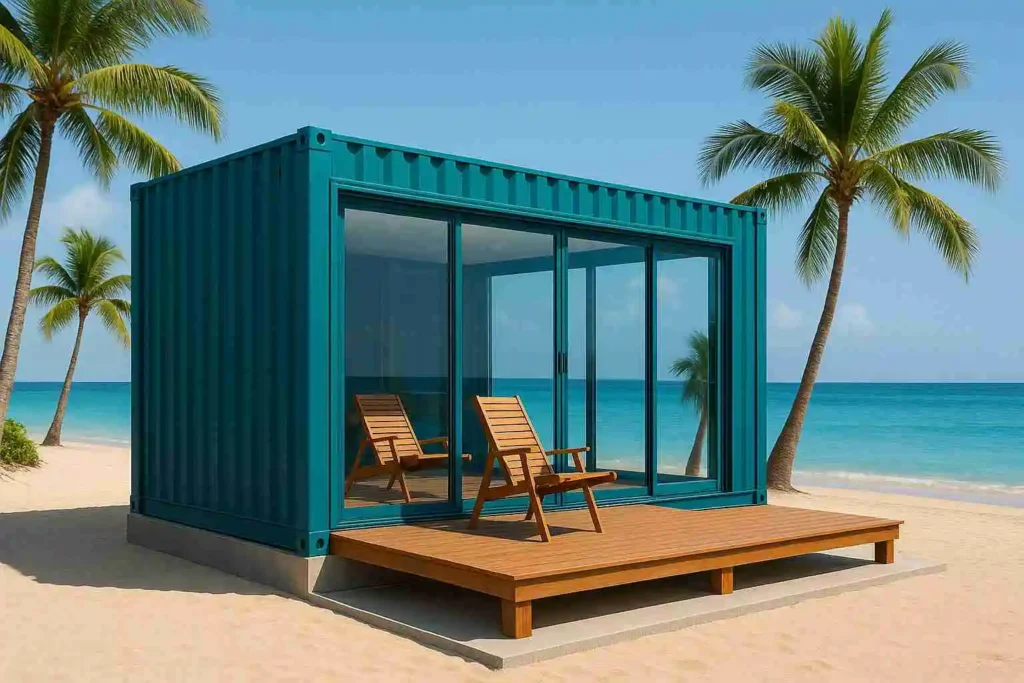
Compact beachfront container houses with glass walls, wooden deck, and seating overlooking the ocean.
The long‑term return on a Container Houses are compelling. Resale values remain strong, with units retaining 67–71 % of their price after five years. Energy efficiency adds value: superior insulation and efficient HVAC systems save ₹15,000–45,000 per year and reduce heating and cooling costs by 20–30 %. Owners also enjoy lower insurance premiums (20–30 % less) and favorable property taxes, as some states classify containers as temporary structures.
Maintenance expenses are minimal—periodic painting and occasional HVAC servicing are the main tasks. With proper care, maritime‑grade steel construction delivers a 25–30 year lifespan. Asset protection is reinforced by 25‑year structural warranties and documentation packages that enhance resale confidence. When compared to RCC homes, which depreciate faster and require costly upkeep, a prefab house made from containers clearly wins.
- Resale value: 67–71 % after five years
- Energy savings: ₹15,000–45,000 per year
- Insurance & taxes: 20–30 % lower
- Lifespan: 25–30 years with minimal maintenance
- Structural warranties & documentation boost resale confidence
| Factor | Container Houses | Traditional RCC Home | ROI Advantage |
| Initial cost per sq ft | ₹1,500–₹3,000 | ₹2,500–₹4,000 | 30–50 % lower |
| 5‑year resale value | 67–71 % | ~40–50 % | Higher asset retention |
| Annual energy savings | ₹15,000–45,000 | Minimal savings | Lower utility costs |
| Maintenance & insurance | Low; periodic painting & service | Higher; frequent repairs | Reduced ongoing expenses |
| Lifespan & warranty | 25–30 years; 25‑year warranty | 30+ years; no portable value | Comparable lifespan, but portable asset |
By understanding costs and long‑term benefits, you can make an informed decision. A modular house made from containers may cost less initially and continue saving you money through lower energy bills and maintenance. Ready to see how your investment could grow? Calculate your personalized ROI today and explore how a sustainable home can add value to your life while reducing environmental impact.
For a national perspective on pricing, regulation and typical costs, this article on container houses in India provides context and complements the ROI analysis here.
Applications & Buyer Guide: Container Houses in Reality
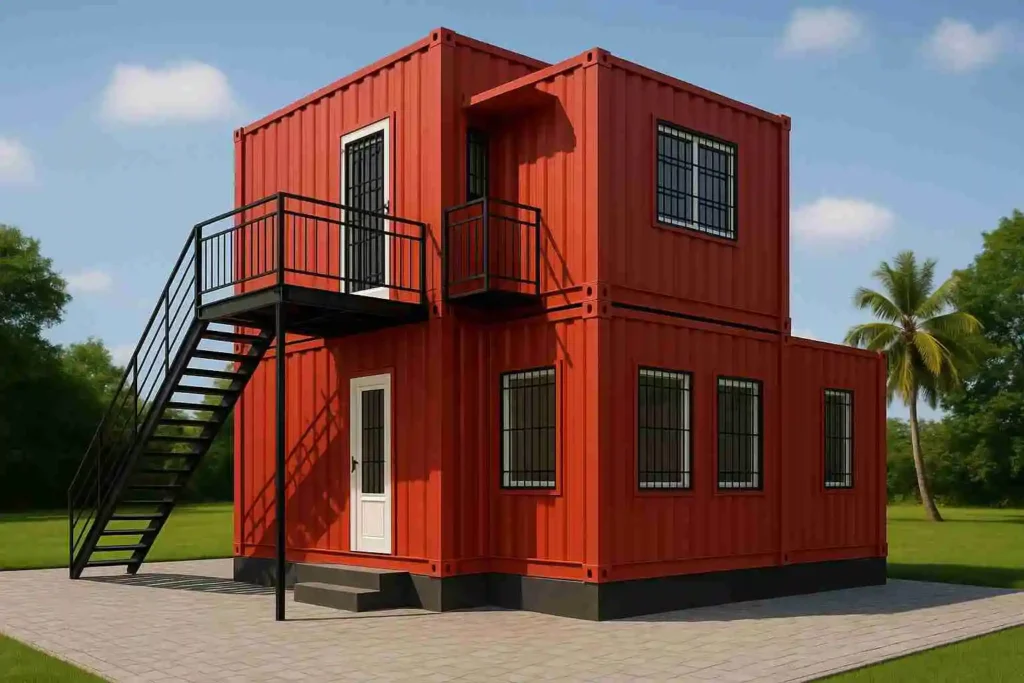
Two-floor red container houses with exterior staircase, grilled windows, and strong modular structure.
Container Houses are more than a clever concept—it’s a versatile solution for homes, offices and community spaces. Because shipping container homes are modular and portable, they adapt to urban rooftops, rural farms, resorts, classrooms and disaster relief sites. Whether you need a primary residence, a vacation retreat or a pop‑up clinic, container architecture makes it possible, sustainable and affordable.
Container Houses Applications & Use Cases
Container houses excel across diverse settings. In urban areas, single units become compact studios or modular houses stacked for small apartments. Families in tier‑2 cities prefer multi‑container configurations with dedicated living areas and up to three floors. On farms or remote plots, off‑grid houses with solar panels and rainwater harvesting provide self‑sufficient living. Hospitality businesses use container cabins for eco‑resorts, glamping sites and mobile accommodations that can relocate seasonally.
Commercial and community applications are equally broad. Container structures serve as site offices, retail pop‑ups, restaurants, clinics and emergency shelters. NGOs deploy portable schools and medical facilities in rural areas, while developers use container blocks for affordable housing and urban infill projects. Because a sustainable home made from containers is quick to install, it’s ideal for disaster relief or temporary housing when speed matters.
- Studios & family homes: single to multi‑container units for urban and rural living
- Hospitality: eco‑resorts, glamping sites, mobile cabins
- Commercial: site offices, retail pop‑ups, clinics, disaster shelters
- Community: portable schools, classrooms, affordable housing
Container Houses Real‑World Case Studies
Across India, container projects showcase innovation. In Pune, a couple designed a 320 sq ft Container Houses from two 20‑ft containers. They relocated this prefab house four times simply by loading it onto a trailer—a testament to container mobility. In Bengaluru, two entrepreneurs stacked three containers on a rooftop, creating a three‑level co‑living space with six studios in under three months. The project demonstrates vertical expansion in dense cities and provides affordable rental housing.
The hospitality sector has embraced containers too. A boutique resort in Goa built ten 40‑ft cottages with a bedroom, bath and porch. The cabins were ready in just two months, saving about 40 % versus concrete cottages. Guests enjoy solar‑powered suites, and the resort can relocate units during off‑season or expand for peak demand. Meanwhile, a government pilot in Delhi set up 50 container homes for low‑income families. Residents moved in within weeks, proving that container communities can be mass‑deployed quickly. Surveys reported high satisfaction, inspiring further projects.
These stories illustrate the strengths of modular houses: portability, urban adaptability, tourism appeal and rapid mass deployment. Your project could be the next success story—adaptable, eco‑friendly and cost‑effective.
Container Houses Buyer’s Guide & Checklist
Choosing the right Container Houses requires planning. Start with a needs assessment: determine the number of occupants, desired rooms and future expansion. A standard 20‑ft or 40‑ft unit might suffice for a single or couple, while families may need multi‑unit designs. Consider location and site conditions. Soil analysis dictates foundation type—clay soils need deeper footings and sandy soils need wider pads. Ensure there’s at least 12‑foot clearance for cranes and trucks. Budget for utilities like power, water and sewage connections.
Next, select a design and vendor. Compare shell vs finished vs luxury models based on cost and amenities. Examine vendor credentials: look for ISO certification, engineering credentials and structural warranties. Visit past projects and read customer testimonials. Make sure vendors offer installation services, maintenance programs and modification capabilities. Factor in permit timelines—approvals range from 30 to 90 days depending on your state—and plan accordingly.
- Assess needs: space requirements, family size, lifestyle
- Evaluate site: soil tests, utility access, crane clearance
- Choose design: single vs multi‑container, finish level, custom options
- Vet vendors: certifications, warranties, references
- Plan timeline & budget: account for permits, transport, foundation and customization
| Step | Key Considerations | Why It Matters | Resources |
| Needs assessment | Occupants, room count, future growth | Determines size & layout | Sketch layouts |
| Site preparation | Soil type, utilities, delivery access | Ensures proper foundation & logistics | Site survey, crane planning |
| Design selection | Single vs multi, shell vs finished | Balances cost, amenities & customization | Catalogues, design tools |
| Vendor evaluation | ISO/engineering credentials, references | Confirms quality & after‑sales support | Site visits, client feedback |
| Budget & timeline | Permits, transport, modifications | Avoids delays & hidden costs | Detailed quote, contract |
Ready to turn your dream into reality? Schedule a free site assessment through our contact page and explore our project portfolio. Our team will help you choose the perfect sustainable home—be it a compact studio, a luxury villa or a custom off‑grid house. Let’s build your future together.
FAQs & Conclusion: Container Houses Explained
How much does a 20‑ft container home cost?
A basic 20‑ft Container House costs about ₹10–12 lakhs for a finished studio. A more spacious 2×40‑ft unit starts around ₹20–25 lakhs. Overall, container homes cost ₹1,500–₹3,000 per sq ft, whereas traditional RCC houses run ₹2,500–₹4,000 per sq ft.
Are loans available for container homes?
Financing options are growing but still limited. Traditional home loans can be difficult to secure, so many buyers use personal loans, construction loans or green-building finance programs. Because these shipping container homes hold value well, lenders are gradually becoming more receptive, and some states offer incentives for sustainable housing.
Do I need approvals or permits to build a container house?
Yes. You’ll need municipal building permission, land‑use clearance, structural certification and fire‑safety compliance according to NBC Part IV. Permit timelines vary: 45–60 days in Maharashtra, 30–45 days in Karnataka and up to 90 days in Delhi NCR. Our team provides drawings and engineering documents to streamline approvals.
How long does a container house last?
Properly maintained, a Container House lasts 25–30 years. The corten steel structure resists corrosion, and periodic painting and seal inspections keep it in prime condition. Many manufacturers offer 25‑year structural warranties, and some owners extend longevity with simple upkeep.
What maintenance do container homes require?
Maintenance is minimal. Owners typically repaint every few years and service HVAC systems to preserve energy efficiency. Thanks to coated steel and sealed seams, container homes have fewer issues like termite treatments or roof repairs than traditional buildings. An annual maintenance contract further reduces hassle.
Can I customize the design?
Absolutely. You can configure layouts from open studios to multi‑level modular houses. Interior options include wood or tile flooring, painted or wallpapered walls, and modular kitchens. Exterior cladding can disguise the industrial look with wood, fibre cement or ACP panels. Add skylights, French doors, smart‑home tech, solar panels or rooftop gardens to create a truly bespoke space.
Are container houses eco‑friendly and energy‑efficient?
Yes. Each unit recycles ~2.5 tons of steel and uses 60 % fewer new materials than a typical home. Construction waste drops 30–40 %, and carbon emissions fall 30–40 %. Superior insulation reduces heating and cooling costs by 20–30 %, making these sustainable homes greener and cheaper to operate.
Can I live off‑grid in a container house?
Yes. Off‑grid models combine solar panels, battery storage, rainwater harvesting and composting toilets. Many owners cover 30–50 % of their electricity needs with solar. Such off‑grid houses are popular in farms, eco‑resorts and remote locations, delivering comfort and independence without sacrificing sustainability.
Are container houses safe in earthquakes, cyclones and fires?
Container homes meet IS 1893 seismic standards and IS 875 wind‑load requirements. Steel construction and reinforced openings make them sturdy against earthquakes and high winds. Fire‑resistant insulation, smoke detectors and emergency exits ensure compliance with NBC Part IV, offering a high level of safety.
Can I move or expand my container home later?
Yes. The modular nature of a Container House allows expansion by adding modules horizontally or vertically. You can even relocate the entire home—as demonstrated by a Pune couple who moved their 320 sq ft home four times by loading it onto a trailer. This flexibility sets container homes apart from conventional builds.
These FAQs highlight why container housing is a compelling choice—fast, flexible, cost‑effective and eco‑friendly. If you’re ready to explore further, our team can help you design and build the perfect container home for your needs.
| Weight | 800 kg |
|---|---|
| Dimensions | 609.6 × 304.8 × 274.32 cm |
2 reviews for Container Houses
Clear filtersShipping and Delivery Information
At SAMAN Portable Office Solutions, we are committed to ensuring a seamless shipping experience for our customers. Our shipping and delivery policy has been crafted to provide you with clear details and expectations when you place an order for our portable cabins or container offices.
Delivery Timeline
Once your order is confirmed, we will process and dispatch your product within 15 to 21 working days. This timeline is calculated from the date we receive your order and ensures that your product is fabricated, inspected, and packed securely for transportation. We strive to adhere strictly to this delivery window, guaranteeing that your order reaches you in a timely manner.
Shipping Costs
Our shipping charges are structured based on the size and type of the trailer used for delivery. Below are the detailed rates:
- For a 40 Feet Open Trailer: The cost is ₹80 per kilometer, excluding Over Dimensional Cargo (ODC) and Regional Transport Office (RTO) charges.
- For a 20 Feet Open Trailer: The cost is ₹60 per kilometer, also excluding ODC and RTO fees.
Note: ODC and RTO charges may vary depending on your location and state regulations. We ensure transparency in our billing and will provide you with an accurate estimate before shipment.
Within Bangalore Shipping Rates
For customers within the Bangalore region, we offer competitive fixed shipping rates for hassle-free delivery:
- 40 Feet Open Trailer: ₹15,000
- 20 Feet Open Trailer: ₹10,000
These rates are designed to be cost-effective while ensuring your product reaches its destination safely and securely. We work with reliable transport partners to provide efficient and on-time delivery services within Bangalore.
At SAMAN Portable Office Solutions, customer satisfaction is our priority. For any queries related to shipping or delivery, please feel free to contact our customer support team. We are here to assist you every step of the way.

Akram salon –
I never thought living in a container house could feel this comfortable! SAMAN Portable Office Solutions has truly exceeded my expectations.
🏡 Feels Like Home
From the moment I stepped inside, it felt cozy and welcoming. The layout is well-planned, making the most of the space while still feeling open and airy.
🌦️ Built to Last
The quality is incredible. It’s solid, weatherproof, and feels like it could handle anything. I don’t worry about maintenance at all.
🎨 Customizable Design
SAMAN helped me tailor the interiors exactly how I wanted—modern finishes, great lighting, and even the perfect spot for my plants.
⏱️ Quick Setup, Zero Stress
Moving in was so simple. The entire house was delivered and set up faster than I imagined—no construction mess, no delays.
This container house is proof that you don’t need bricks and mortar for a home that’s stylish, comfortable, and functional. SAMAN has nailed it with this one!
Karan Murshy –
I wasn’t sure about living in a container house, but SAMAN completely changed my mind!
📦 Modern and Functional
Every inch is designed with purpose. It’s compact, stylish, and suits my lifestyle perfectly.
🌿 Sustainable and Efficient
Knowing my home is eco-friendly and energy-efficient makes me feel great—and saves on bills!
🛠️ Quick and Hassle-Free
The setup was unbelievably fast. It arrived ready to go, and I moved in the same day.
It’s more than a house—it’s my cozy, modern retreat. SAMAN truly nailed it!