






The Ultimate Guide to Prefabricated Houses: From Cost to Customization
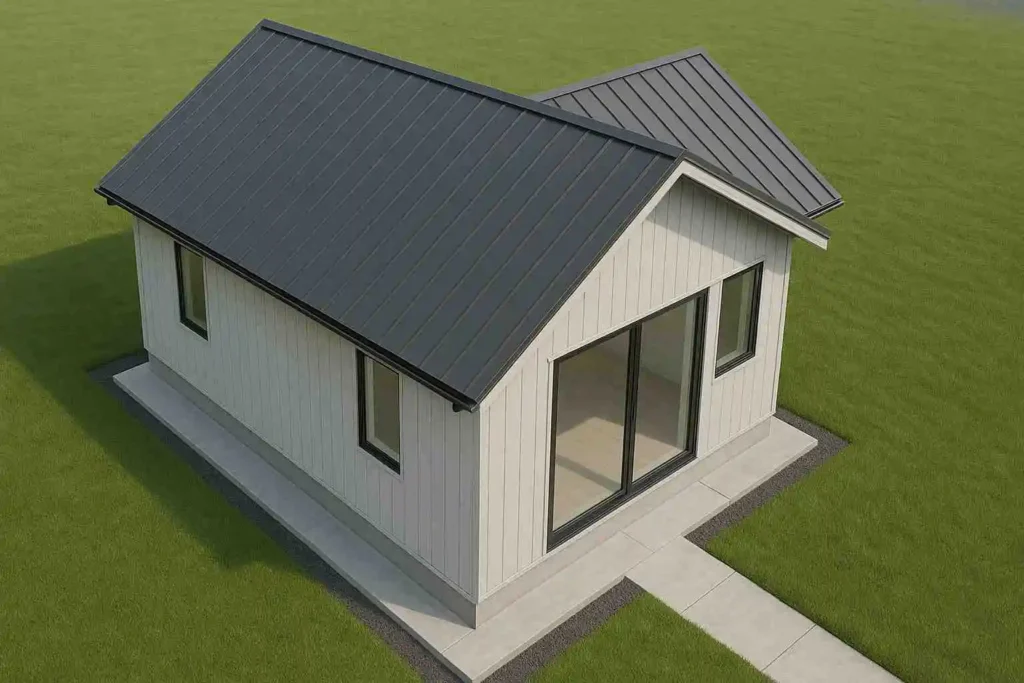
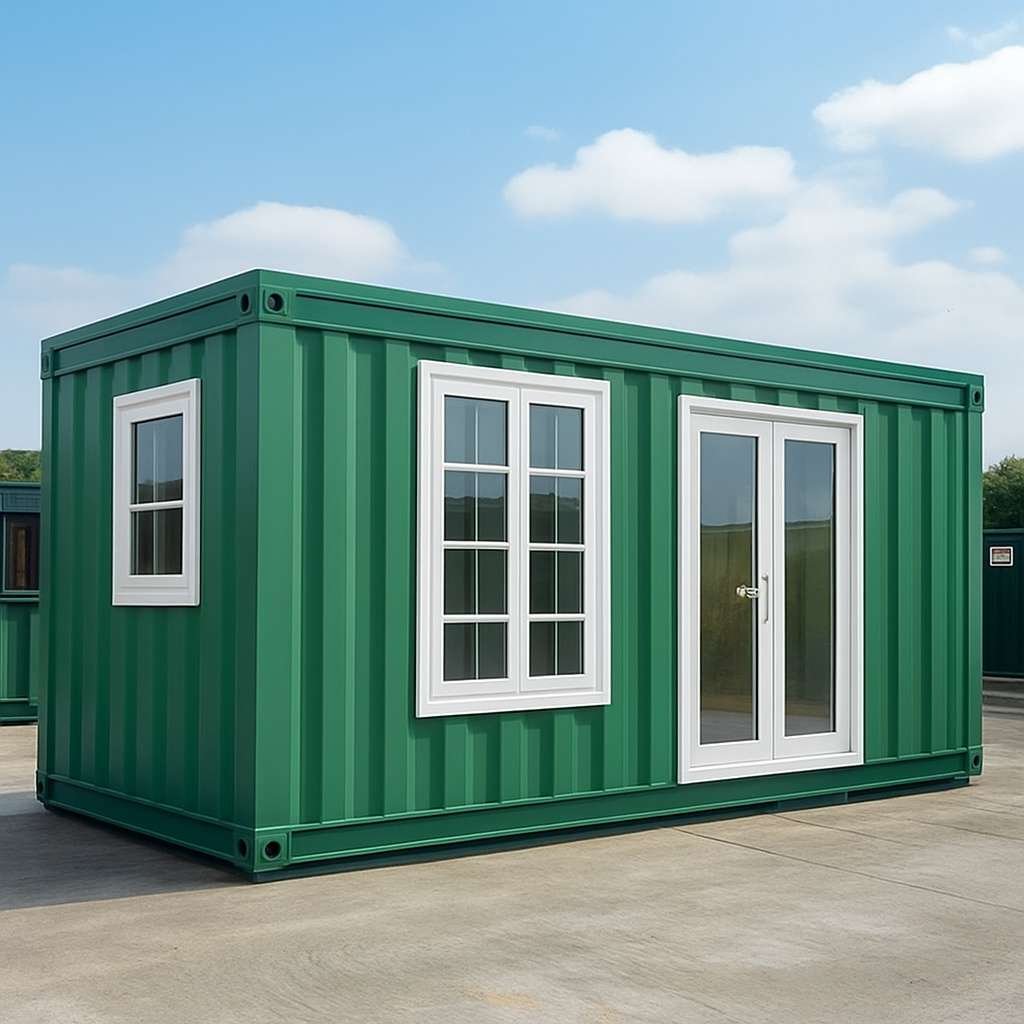
White modern prefab container home with glass doors.
Why Prefabricated Houses Solve Today’s Housing Needs
Today’s world faces two big challenges: affordable housing and climate change. Traditional construction struggles to keep up. Prefabricated houses step in as a smart solution. In this landscape, the conventional construction model, with its lengthy timelines, susceptibility to weather delays, and significant material waste, is increasingly proving inadequate. A new generation of prefabricated housing has emerged not merely as a modern alternative but as a direct, elegant solution to these problems. Prefabricated houses, also known as prefab homes, prefab structures, or readymade homes, represent a fundamental shift in how we build, prioritizing efficiency, sustainability, and quality control from the very first design sketch.
For buyers exploring modern alternatives, container houses are also a popular option, offering durability and flexibility at competitive prices.
This innovative approach is transforming the industry by moving the bulk of the construction process from a chaotic, weather-dependent building site to a controlled, state-of-the-art factory. This controlled environment ensures a level of precision and material efficiency that traditional brick-and-mortar methods simply cannot match. This guide delves into the full scope of this revolution, from the historical roots of fabricated homes to the cutting-edge technologies and financial advantages that are making this a smart choice for millions of people worldwide.
The modern prefabricated housing movement has its origins not in luxury but in practicality. Early readymade homes and premade houses were simple, functional structures designed for rapid deployment, serving as temporary housing for military barracks and worker communities in the early 20th century.1 The rapid growth of suburban America and the pressing need for post-war housing further accelerated the development of modular systems, transitioning these simple dwellings into more permanent, architecturally diverse homes.1 By the late 20th and early 21st centuries, global demand—spurred by urbanization in Asia, an emphasis on sustainability in Europe, and rising labor costs in the United States—has pushed the industry to its current, advanced stage. Today, premade houses and house modular homes are built to the same rigorous building codes as their traditional counterparts, fully dispelling the outdated notion that they are “temporary” or “cheap” solutions.1 The evolution has been remarkable, transforming a once-simple concept into a viable, luxurious, and permanent living solution.
Prefabricated Houses: Costs, Pricing, and Buyer Savings
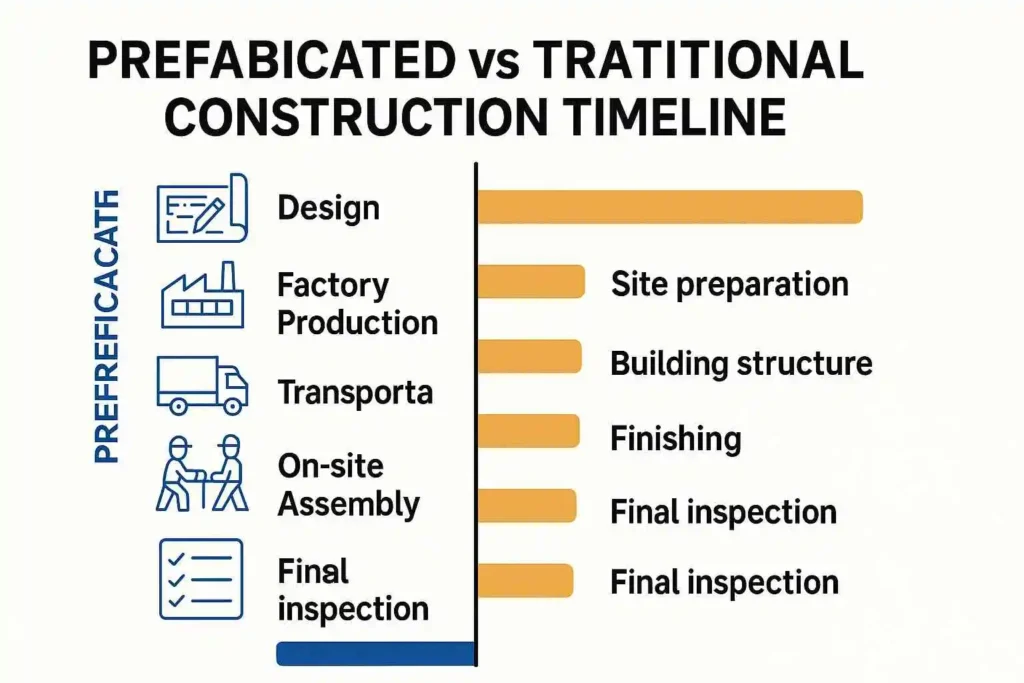
Construction timeline: prefab vs traditional homes.
Most buyers worry about cost and hidden fees when looking at prefabricated houses. Generic claims of “affordability” are often insufficient to instill confidence in such a high-stakes purchase. To address this, an analysis of top-performing content reveals that the most effective approach is to provide clear cost details and to reframe the purchase as a long-term investment rather than just an upfront cost. For instance, leading companies like Clayton Homes have successfully captured a broad market segment by anchoring their content in a tangible financial promise, such as saving “up to 50% on their annual energy bills” with their eBuilt® homes. This kind of data-backed, solution-oriented messaging addresses a core financial pain point for a vast audience.
This strategic approach is critical for outperformance. By transparently detailing the complex cost structure of prefabricated homes, an article can transform a source of buyer anxiety into a powerful trust signal. This guides the user through the consideration stage of their journey, providing the certainty they need to move toward a decision. The following breakdown provides a clear, regional overview of the costs associated with these homes, addressing high-volume search queries for terms like prefab house prices, low cost prefab homes, and cost of prefab homes.1
Regional Cost Breakdown of Prefabricated Houses
The cost of prefabricated houses varies significantly by region, reflecting differences in labor, materials, and regulatory standards. While a generalized “starting at” price can be useful, a comprehensive breakdown of key cost factors provides the clarity that buyers demand.
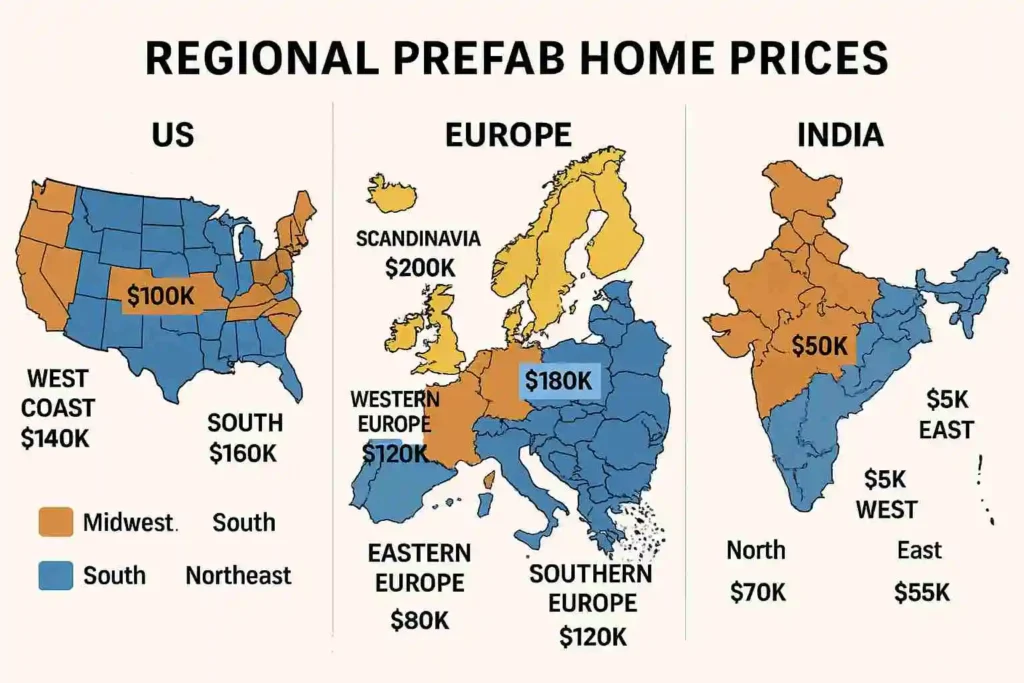
Global prefab and luxury container house price comparison.
| Region | Cost Per Square Foot (Range) | Average Total Cost | Key Cost Factors & Considerations |
| United States | $100–$300 per sq ft 1 | $270,000 1 | Land preparation, utility connections, and permits are extra hidden costs. Costs vary substantially based on location, builder, and customization level. |
| European Union | €1,200–€2,500 per sq meter 1 | €142,040 (Koshaus 78 model) 1 | The base price can be increased by upgrades and is subject to local VAT. Higher costs often reflect a greater focus on energy efficiency and premium materials. |
| India | ₹1,000–₹3,000 per sq ft 1 | ₹8–15 lakh turnkey 1 | Costs are generally lower than traditional construction. The turnkey cost includes all finishing and installation. Government incentives and subsidies can further reduce the final price. |
United States: The average prefabricated houses in the US ranges from $100 to $300 per square foot, with a national average project cost of approximately $270,000. It is crucial to understand that this price typically only covers the factory-built structure. Significant additional expenses, such as land acquisition, site preparation, foundation work, utility hookups (electricity, water, septic), and local permits, can add 15-30% to the total project budget. The perceived cost savings of a modular home stem primarily from reduced on-site labor and a streamlined, faster construction process.
European Union: In Europe, the cost per square meter for a new prefabricated home typically ranges from €1,200 to €2,500, with a notable increase in costs over the past year due to a rise in material prices. The price is heavily influenced by a country’s specific building codes, its VAT, and the chosen level of customization. An article that provides a specific example, such as the Koshaus 78 model costing €142,040, provides the tangible context that a general range cannot.
India: India’s prefabricated housing market is experiencing rapid growth, driven by a need for affordable and quick housing solutions. The cost in India is notably lower, ranging from ₹1,000 to ₹3,000 per square foot. This price point is often more cost-effective than traditional construction, which can run as high as ₹5,000 per square foot. The government’s “Housing for All” initiative, with its subsidies and tax benefits, further incentivizes the use of these structures, making them a strategic component of the nation’s urban and rural development plans.
Financing Options for Prefabricated Houses and Return on Investment (ROI)
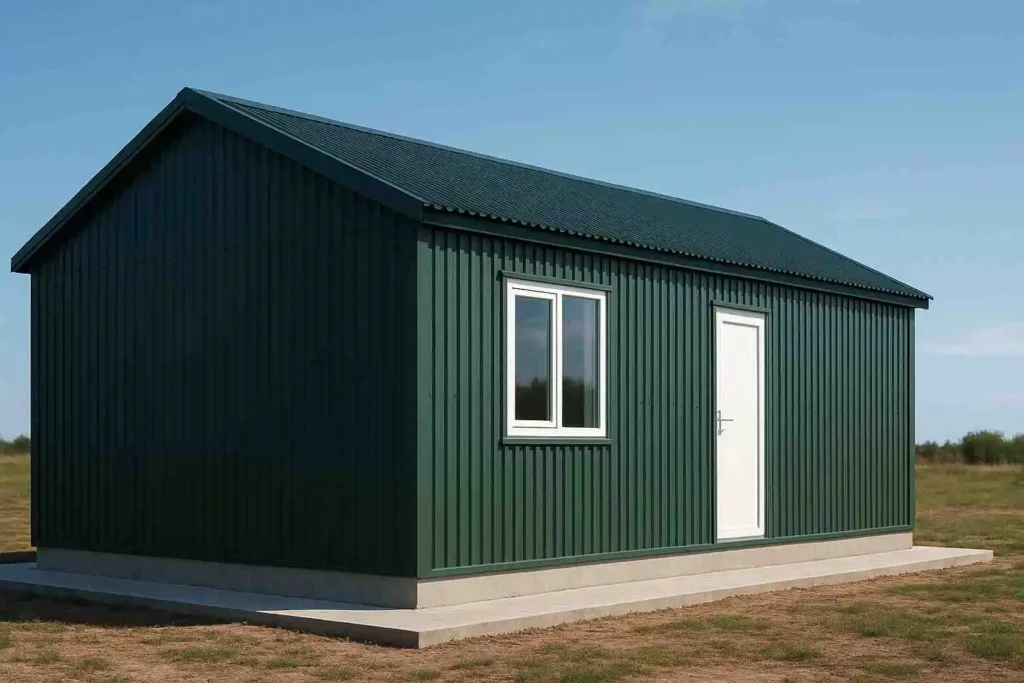
Green luxury prefab house with eco-friendly appeal.
One of the most frequent and crucial questions for new buyers is about financing. Modern fabricated homes are not “mobile homes” in the traditional sense; they are built to the same local building codes as site-built homes, which makes them eligible for conventional financing options, including traditional mortgages.
In the United States, for example, government-insured loans from the Federal Housing Administration (FHA), the Veterans Administration (VA), and the U.S. Department of Agriculture (USDA) can be used to finance prefabricated homes, providing a clear path to homeownership for millions of buyers. In India, many banks and financial institutions offer loans for these homes, with interest rates comparable to those for traditional construction. The Indian government also provides subsidies and tax benefits to promote their use.
Beyond the initial purchase price, a prefabricated home can offer a strong return on investment (ROI). The most powerful value proposition is tied to long-term energy savings. The precise, factory-sealed construction of a modular home, with its superior insulation and lack of air gaps, translates directly into reduced energy consumption and lower utility bills over the lifetime of the home. These quantifiable savings free up capital for other investments and directly address a core financial pain point. Finally, a major myth to dispel is that prefabricated homes depreciate in value. When built to current building codes on a permanent foundation, modern, high-quality prefabricated homes hold their value just like their site-built counterparts, making them a safe and sound investment.
Step-by-Step Prefabricated Houses Building Process
Building a home often feels stressful. Buyers worry about delays, permits, and surprise costs. Prefabricated houses simplify this process. To build credibility and establish an article as an authoritative resource, it is necessary to transparently address these “boring but critical” questions about the building process. By demystifying the journey from a factory floor to a finished home, the content can transform from a simple description into a trusted guide, directly alleviating buyer concerns and signaling a proven expertise to search engines.
The process for prefabricated houses construction and modular home construction fundamentally differs from traditional methods in that the two primary stages—off-site construction and on-site preparation—occur simultaneously, which is the secret to their speed and efficiency.
Why Prefabricated Houses Make Construction Easier
Prefabricated houses simplify construction by combining off-site production with on-site preparation. This dual process reduces unexpected delays, avoids weather disruptions, and keeps budgets on track. Buyers benefit from a predictable schedule and fewer hidden costs, making the entire building journey less stressful and more efficient.
Factory Production Workflow for Prefabricated Houses
The process begins in a climate-controlled factory environment, where the structural components or modules are built with precision and efficiency. This controlled setting is a significant advantage, as it eliminates weather-related delays and allows for the use of specialized machinery that guarantees a level of accuracy often difficult to achieve on a conventional job site. Top manufacturers, such as SAMAN Portable, have implemented stringent quality control measures, with up to 47 quality checkpoints throughout the production line to ensure that each component meets exact specifications before it is shipped.
This process is highly efficient, minimizing material waste by up to 90% compared to traditional construction. Excess materials can be recycled or repurposed, contributing to the overall sustainability of the build. Once completed, the components or modules are carefully wrapped and transported to the building site, their quality and integrity maintained throughout the journey.1
Site Preparation & Foundation Requirements for Prefabricated Houses
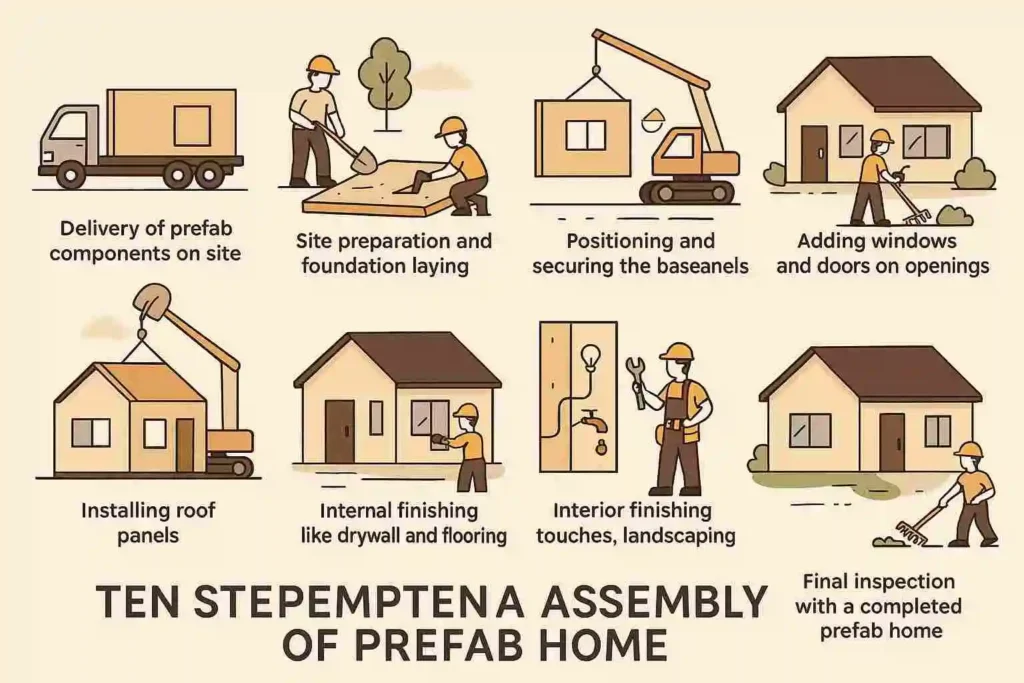
10 simple steps to assemble a prefab container house.
While the factory work is underway, the on-site team is simultaneously preparing the land and laying the foundation. This parallel workflow is what significantly reduces the overall project timeline.1 Unlike a traditional build, where all stages are sequential, a prefabricated project can cut months off the timeline by starting the foundation work while the home is being built off-site.
The type of foundation required for a prefabricated home is identical to that of a traditional home and is a frequent topic of inquiry among buyers.1 The choice depends on the specific design and site conditions, but common options include a slab-on-grade foundation, a crawl space, or a full basement. The cost of this work can vary widely depending on the site’s topography, soil type, and proximity to utility connections. A comprehensive understanding of these requirements is essential for accurate budgeting and project planning.
Permits, Regulations & Legalities for Prefabricated Houses
One of the most complex aspects of any home-building project is to handle permits and local rules. This is a critical knowledge gap that, when addressed, positions a resource as an invaluable source of expertise. A key legal distinction exists between modular homes and manufactured homes. Modular homes are built to the same state and local building codes as site-built homes, meaning they are subject to the same permitting and zoning regulations. In contrast, manufactured homes are built to a national standard set by the Department of Housing and Urban Development (HUD Code).
A reputable builder will assist the buyer in navigating the permitting process, which can vary from region to region. The process typically involves submitting detailed architectural plans to the local building department for review and approval. While seemingly a minor detail, providing clear information on this topic addresses a major source of buyer friction and establishes the brand as a credible partner, not just a product seller.1
Delivery, Assembly & Timeline of Prefabricate
The final on-site stage is the most dramatic. Once the foundation is ready and permits are secured, the prefabricated modules or panels are delivered to the site. The assembly process is remarkably quick, often taking just a few days to a couple of weeks, depending on the complexity of the design.1 The panels are lifted into place with a light crane truck and secured together to form the complete structure.1
A typical timeline for a complete project is often cited as 8-12 weeks for the factory build and an additional 1-2 weeks for on-site assembly. This streamlined approach significantly reduces the construction time compared to a traditional build, allowing for a much faster move-in date. This efficiency is a core advantage of the prefabricated model, providing not just speed but also a greater degree of predictable timelines.
How Quickly Can Prefabricated Houses Be Built
Prefabricated houses are designed for speed. Most factory builds finish in 8–12 weeks, and on-site assembly takes only a few days to a couple of weeks. This accelerated process helps families move in faster and allows businesses to start operations without long construction delays.
Types of Prefabricated Houses and Modern Designs
The versatility of prefabricated housing extends far beyond its core efficiency. The industry has evolved to offer a wide array of styles and functionalities, from elegant, minimalist designs to traditional family homes. A deep dive into the different types of prefabricated houses and the technologies that define them not only satisfies high-volume, long-tail keyword queries but also showcases the full breadth of the industry’s capabilities.
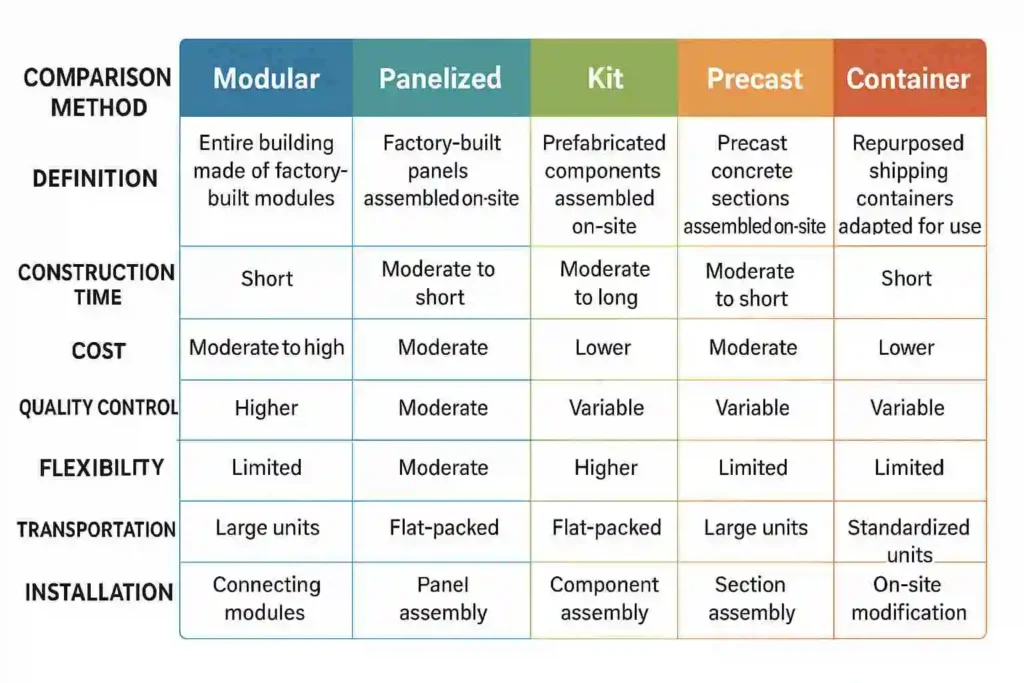
Comparison of prefab housing methods including luxury container houses.
Modular vs. Panelized vs. Kit Prefabricated Houses
The terms “prefabricated home” and “prefabricated building” are often used as a catchall for several distinct construction methods, each with its own benefits.
- Modular Prefab Homes: This is the most common form of prefabricated construction. The homes are built in three-dimensional sections, or modules, at an off-site factory and then transported to the building site. Once on-site, the modules are connected to form the final structure. This method provides a high degree of design flexibility and a swift on-site assembly process, making it ideal for urban infill lots and complex designs.
- Panelized and Kit-Based Readymade Homes: Panelized homes are built with pre-constructed wall panels that are assembled on-site. This method offers a balance between the speed of factory-built construction and the on-site flexibility of a stick-built home. Kit homes take this a step further, with the manufacturer providing all the components—from the lumber and trusses to the screws and fasteners—in a comprehensive kit that the buyer can assemble themselves. This approach is perfect for do-it-yourself enthusiasts and offers a significant opportunity for cost savings.
- Precast Houses and Concrete Options: Precast houses and precast concrete homes are gaining traction for their exceptional durability and rapid installation. Concrete panels are manufactured off-site and then assembled with a crane. This method is popular in Europe and Asia due to its inherent strength and resistance to natural disasters, making it a compelling choice for regions prone to earthquakes or high winds.
Specialty Prefabricated Houses and Unique Designs
Beyond the primary categories, specific prefabricated styles have captured the public imagination and serve a growing number of niche needs.
- Prefabricated Container Homes: Homes built from recycled shipping containers are a testament to the industry’s innovation. While they offer a unique aesthetic and are extremely durable, they present specific challenges related to permits and zoning. However, their robust steel structure makes them exceptionally resilient to extreme weather conditions, including tornadoes, making them a popular choice in certain regions.1
- Wooden Prefabricated Houses: For buyers prioritizing a connection to nature and sustainable materials, prefabricated wooden houses offer a compelling solution. Wood’s natural insulation properties, low carbon footprint, and aesthetic appeal make it a popular choice for eco-conscious buyers.1 These homes are also praised for their rapid assembly and the warm, inviting atmosphere they create.
Technology & Innovation in Prefabricated Houses
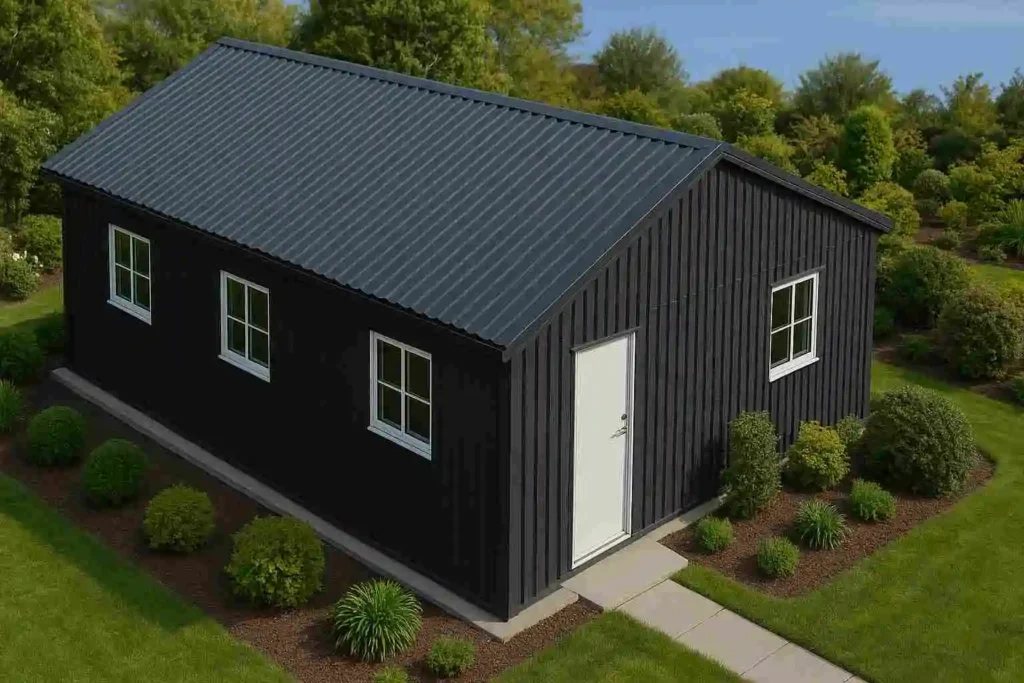
Contemporary black prefab container home with white door.
Modern prefabricated houses are more than just a different way to build; they are a canvas for integrating advanced materials and smart technologies. This is a core part of the clear problem and solution that positions these homes as superior to traditional builds.
- Advanced Materials: The use of materials such as cross-laminated timber (CLT) is transforming the industry. CLT panels offer exceptional strength and sustainability, providing a low-carbon alternative to steel and concrete.1 Similarly, smart glass technology can automatically tint to reduce glare and solar heat gain, significantly improving energy efficiency and comfort.
- Smart Integration: The easy integration of smart home features is a key selling point for modern modular homes. Systems like Dvele’s proprietary Dvele IQ™ go beyond simple convenience by monitoring air quality, humidity, and energy consumption in real-time, providing homeowners with data-driven insights and a powerful sense of security and peace of mind.1
- Future Materials: The industry is on the cusp of a new wave of innovation, with technologies such as 3D printing and carbon-neutral concrete on the horizon.1 These advancements promise to further reduce material waste, accelerate build times, and create even more sustainable and resilient housing options for the future.
Durability and Eco-Friendly Benefits of Prefabricated Houses
In the high-stakes world of home building, trust is not an abstract concept; it is built through trusted certifications and a demonstrated commitment to quality. The most common misconceptions about prefabricated homes—that they are “cheap” or “flimsy”—are a direct result of a lack of transparent, credible information.1 A comprehensive article must clearly explain these myths by embedding trust signals and quantifiable data that prove a home’s durability, sustainability, and longevity.
Why Prefabricated Houses Offer Superior Durability and Disaster Safety
Modern prefabricated houses are not flimsy. They are engineered to be strong and last for decades. The building parts are built to withstand the rigors of transportation, a process that puts more stress on a home’s frame than most natural disasters ever will.1 As a result, prefabricated homes often perform better in extreme weather events than their site-built counterparts. Leading companies like Global Modulars explicitly market their “hurricane-proof” properties, a direct appeal to buyers in high-risk regions.1 By design, the tight, sealed seams and strong building methods make these structures incredibly resistant to high winds, earthquakes, and fire, ensuring the safety and security of the occupants.1
The Eco-Friendly Benefits of Prefabricated Houses
Sustainability is built into every prefabricated house. From reduced waste to energy savings, it is a major benefit for buyers.
- Waste Reduction: The climate-controlled factory allows for a streamlined workflow and precise cutting of materials, which reduces material waste to as little as 1%. This is a massive improvement over traditional construction, which can generate as much as 30% of a project’s waste.
- Energy Efficiency: The superior insulation and tight building envelopes of prefabricated homes significantly reduce energy consumption and lower utility bills. These homes are designed to be airtight, eliminating the thermal gaps that plague traditional construction and allowing for the efficient integration of solar panels and rainwater harvesting systems, making them an ideal choice for the eco-conscious buyer.
- Environmental Impact: By reducing on-site traffic, noise, and environmental disturbance, the prefabricated model minimizes its carbon footprint. The ability to reuse and relocate certain structures also contributes to a more sustainable, circular approach to building.
Ensuring Quality in Prefabricated Houses: Certifications & Standards
The most powerful way to build credibility is to provide third-party validation of a manufacturer’s claims. An article should highlight the importance of specific certifications and explain what they mean for the buyer.1
- International Standards: Look for manufacturers who adhere to standards such as ISO 9001 Quality Management Certification for Quality Management and ISO 14001 for Environmental Management. These certifications are verified by independent third parties and signal a commitment to consistent, high-quality processes.1
- Green Building Certifications: Certifications like LEED for Homes, a green building standard for new residential construction, and TRA Certification, which validates adherence to the ANSI ICC 700-2008 National Green Building Standard, provide independent verification of a home’s sustainability and energy efficiency.1
- Regional Certifications: Buyers in the United States should seek manufacturers that build to the International Residential Code (IRC) or, for manufactured homes, the HUD Code.1 In Europe, the CE Mark confirms compliance with all structural and safety requirements.1
Case Studies & Client Success Stories with Prefabricated Houses
Real-world examples provide the kind of social proof that generic marketing claims can never achieve. By showcasing a portfolio of successful projects and including authentic client testimonials, a brand can build the trust necessary to drive conversions.1 These stories should highlight how prefabricated homes have addressed specific challenges, such as providing affordable housing solutions in India or delivering luxury, eco-conscious retreats in the United States.1 Including reviews that address a minor, resolved issue can add a layer of authenticity that is more compelling than a page of exclusively perfect reviews.
How to Choose the Right Prefabricated Houses Builder
As a potential buyer moves from researching the basics to making a final decision, their questions become more specific and high stakes. This is the final stage of the buyer journey, where the content must provide actionable guidance and concrete solutions to overcome any remaining anxieties. By addressing these final concerns with transparency and expertise, an article can successfully guide a user to conversion and reinforce its position as a trusted partner.
Warranties & Aftercare for Prefabricated Houses
A key, often-overlooked content gap is the topic of warranties and aftercare. Modern prefabricated homes are covered by the same types of warranties as traditional homes, including structural, material, and appliance warranties. The most reputable builders will offer a comprehensive warranty that covers both the factory-built components and the on-site installation. It is crucial for buyers to ask about the specifics of the warranty program, including what is covered, for how long, and what the process is for a claim.
Top Questions to Ask Your Prefabricated Houses Builder
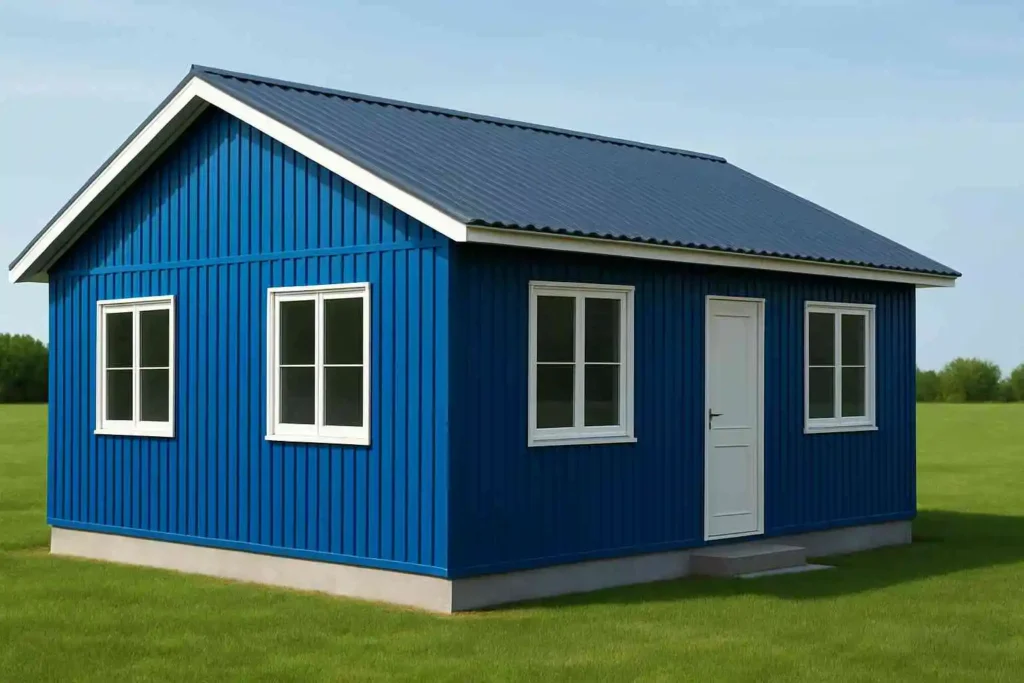
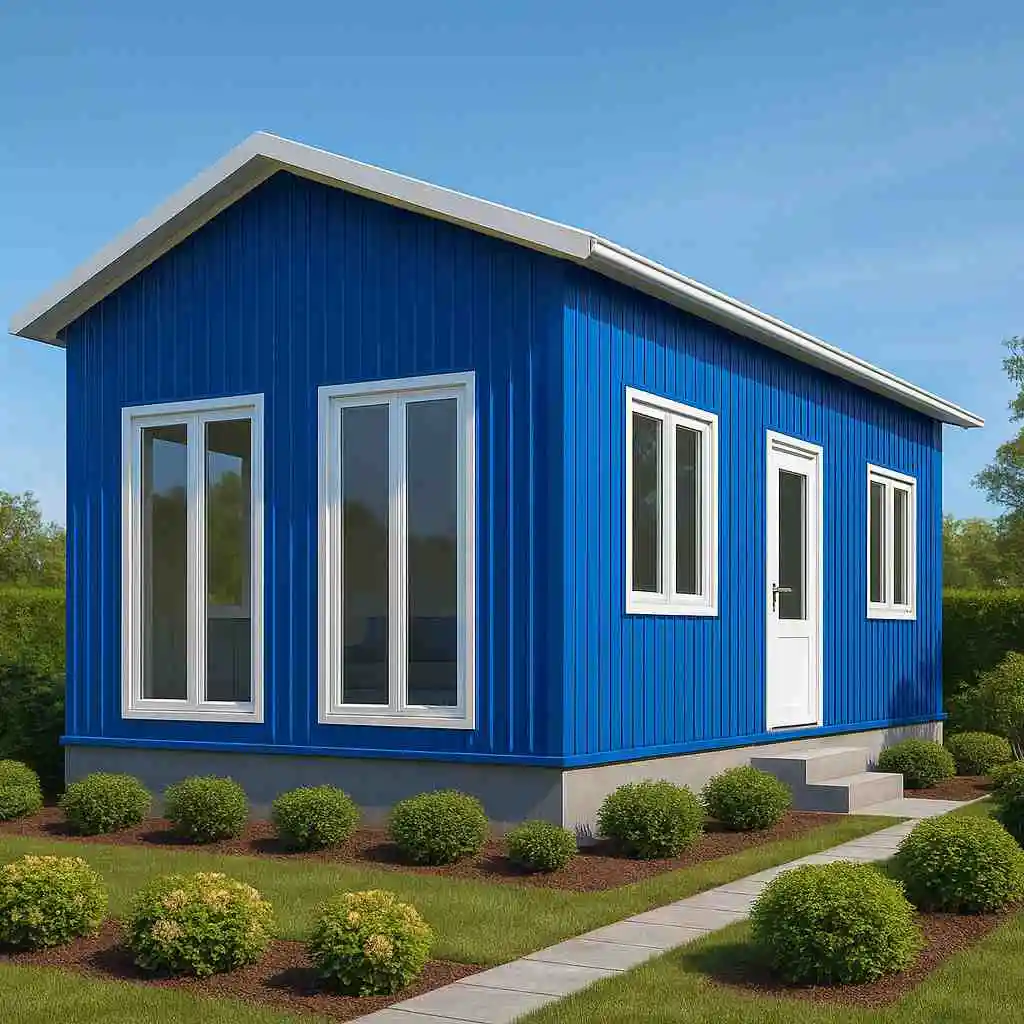
Elegant blue prefab container house with durable steel finish.
Helping buyers with a practical checklist of questions to ask a builder can transform them from a passive researcher into a confident, informed consumer. This is a powerful trust-building exercise that demonstrates a commitment to the buyer’s success. A recommended checklist would include:
How many years of experience does your company have in delivering prefabricated houses, and how many projects have you completed successfully?
Are you certified to international standards such as ISO 9001 and ISO 14001 for prefabricated houses construction?
Can you provide a portfolio of completed prefabricated houses and references from past clients?
What is the full scope of your warranty for prefabricated houses, and what is your process for addressing issues after installation?
How transparent is your pricing for prefabricated houses, and what is included in the base cost versus a customization?
Frequently Asked Questions (FAQ) on Prefabricated Houses
A comprehensive, schema-optimized FAQ section is a vital component of a high-performing article. It directly answers the most common queries, reduce buyer worries, and signals to search engines that the article is a definitive resource.
What is the lifespan of prefabricated houses?
Modern prefabricated houses, built to the same local and state building codes as traditional homes, have an expected lifespan of 50-100 years or more.
Which foundation works best for prefab homes?
Prefabricated homes require the same permanent foundations as traditional homes, including slab-on-grade, crawl spaces, or basements, depending on the specific site and design.
What is the average cost of prefabricated houses?
The cost varies widely by region and design, but prefabricated homes are often more cost-effective than traditional construction. Base costs can range from ₹1,000 to ₹3,000 per square foot in India, to $100 to $300 in the United States.1
Are prefab homes customizable?
Yes, modern prefabricated homes are highly customizable, with a wide range of floor plans, finishes, and architectural styles to choose from.1
Can prefabricated houses increase in value?
When built on a permanent foundation and in compliance with local building codes, modern prefabricated homes appreciate in value at the same rate as traditional homes in the same area.
Are prefabricated houses safe in disasters?
Due to their robust, off-site construction and engineering for transportation, prefabricated homes are often more resilient to extreme weather conditions, including hurricanes and earthquakes, than traditional homes.1
How do insurance and mortgages work for prefab homes?
Because they are built to the same codes as traditional homes, modern prefabricated homes are eligible for conventional mortgages and insurance policies.
Can prefab homes be relocated or expanded?
While technically possible, relocating a modular home can be complex and expensive. However, many modular designs are built to be easily expanded or reconfigured with additional modules, providing a flexible solution for growing families.1
The Future of Prefabricated Houses: Next Steps for Buyers
The prefabricated housing industry stands at a pivotal moment, offering a powerful, forward-thinking solution to some of the most pressing challenges of our time. By embracing the principles of efficiency, sustainability, and quality control, prefabricated homes have transcended their historical roots as temporary structures and have become a durable, permanent, and often luxurious choice for modern living. They offer not just a home but a promise of cost certainty, superior durability, and a lower environmental footprint.
This guide has explored the full spectrum of prefabricated housing, from the transparent cost and financing models to the streamlined building process and the innovative materials that define the future of construction. The analysis confirms that a proactive, data-driven approach that directly addresses buyer anxieties and provides quantifiable value is the key to establishing authority and trust. By transparently detailing everything from regional costs to specific certifications, this resource transforms from a generic overview into a definitive, go-to guide for a global audience.
For those ready to move from research to action, the next step is to engage with a professional who can provide a personalized plan.
Get Your Free Prefab Home Cost Estimate
Schedule a Free Consultation with a Prefab Specialist
Shipping and Delivery Information
At SAMAN Portable Office Solutions, we are committed to ensuring a seamless shipping experience for our customers. Our shipping and delivery policy has been crafted to provide you with clear details and expectations when you place an order for our portable cabins or container offices.
Delivery Timeline
Once your order is confirmed, we will process and dispatch your product within 15 to 21 working days. This timeline is calculated from the date we receive your order and ensures that your product is fabricated, inspected, and packed securely for transportation. We strive to adhere strictly to this delivery window, guaranteeing that your order reaches you in a timely manner.
Shipping Costs
Our shipping charges are structured based on the size and type of the trailer used for delivery. Below are the detailed rates:
- For a 40 Feet Open Trailer: The cost is ₹80 per kilometer, excluding Over Dimensional Cargo (ODC) and Regional Transport Office (RTO) charges.
- For a 20 Feet Open Trailer: The cost is ₹60 per kilometer, also excluding ODC and RTO fees.
Note: ODC and RTO charges may vary depending on your location and state regulations. We ensure transparency in our billing and will provide you with an accurate estimate before shipment.
Within Bangalore Shipping Rates
For customers within the Bangalore region, we offer competitive fixed shipping rates for hassle-free delivery:
- 40 Feet Open Trailer: ₹15,000
- 20 Feet Open Trailer: ₹10,000
These rates are designed to be cost-effective while ensuring your product reaches its destination safely and securely. We work with reliable transport partners to provide efficient and on-time delivery services within Bangalore.
At SAMAN Portable Office Solutions, customer satisfaction is our priority. For any queries related to shipping or delivery, please feel free to contact our customer support team. We are here to assist you every step of the way.
Reviews
Clear filtersThere are no reviews yet.