
















Used Container Office Buying Guide: What to Inspect Before You Pay in India

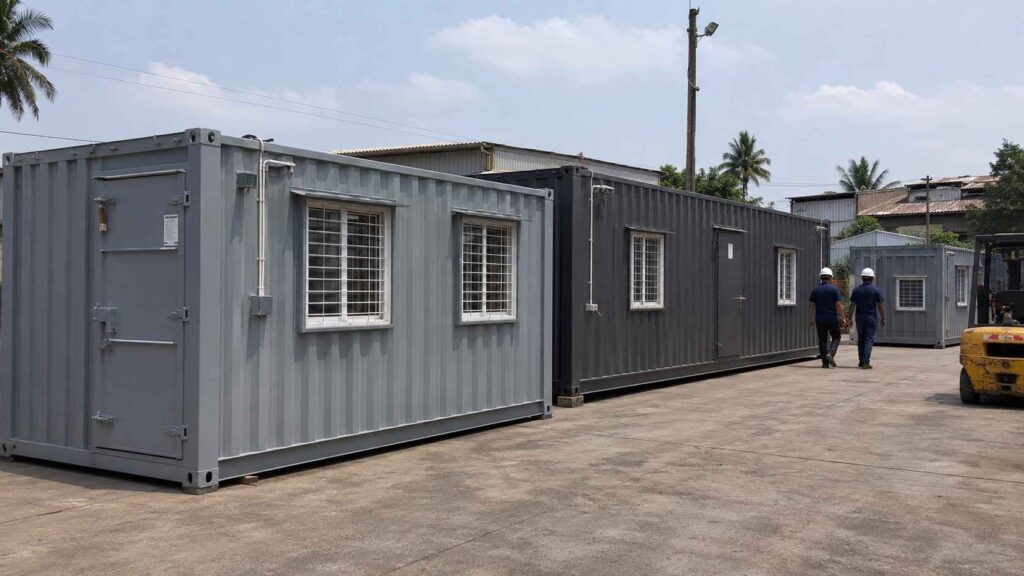
A used container office buying guide that’s worth its name has to do one thing competitors duck — separate the three different things buyers in India keep calling “second hand container office”: a used shipping container shell you retrofit yourself, an already-fitted used office unit (rare in India), and a brand-new pre-fab from a manufacturer that costs less than buyers expect. This guide is written from inside the factory that builds the new-build alternative, so the “when used wins, when new wins” math runs honestly in both directions — based on what actually leaves the yards in Mundra, Nhava Sheva, Chennai, and the secondary markets in Ludhiana and Surat.
How a Used Container Office Actually Reaches You in India — Three Paths Most Buyers Don’t Know They Have
Most buyers searching for a used container office assume they’re choosing between two things: new or used. There are actually three paths, and each has a different price, lead time, warranty, and risk profile.
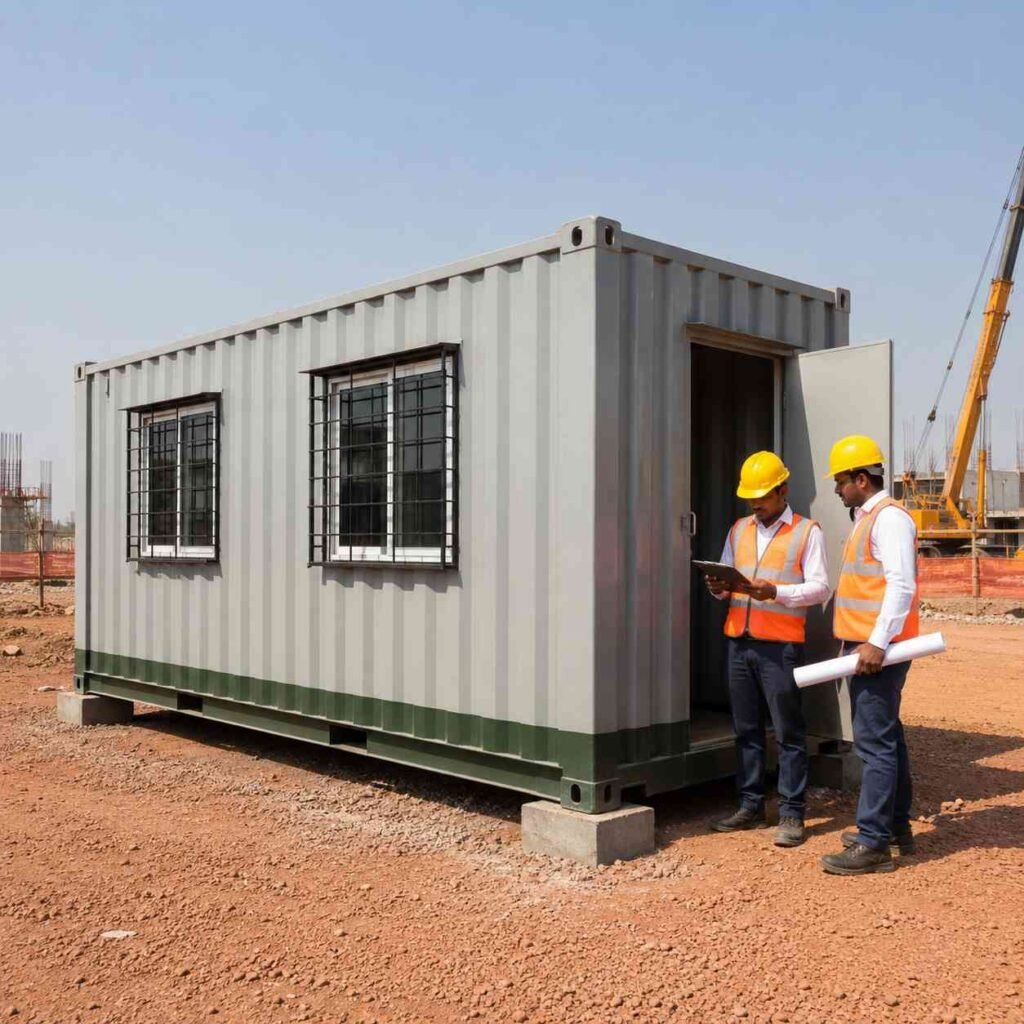
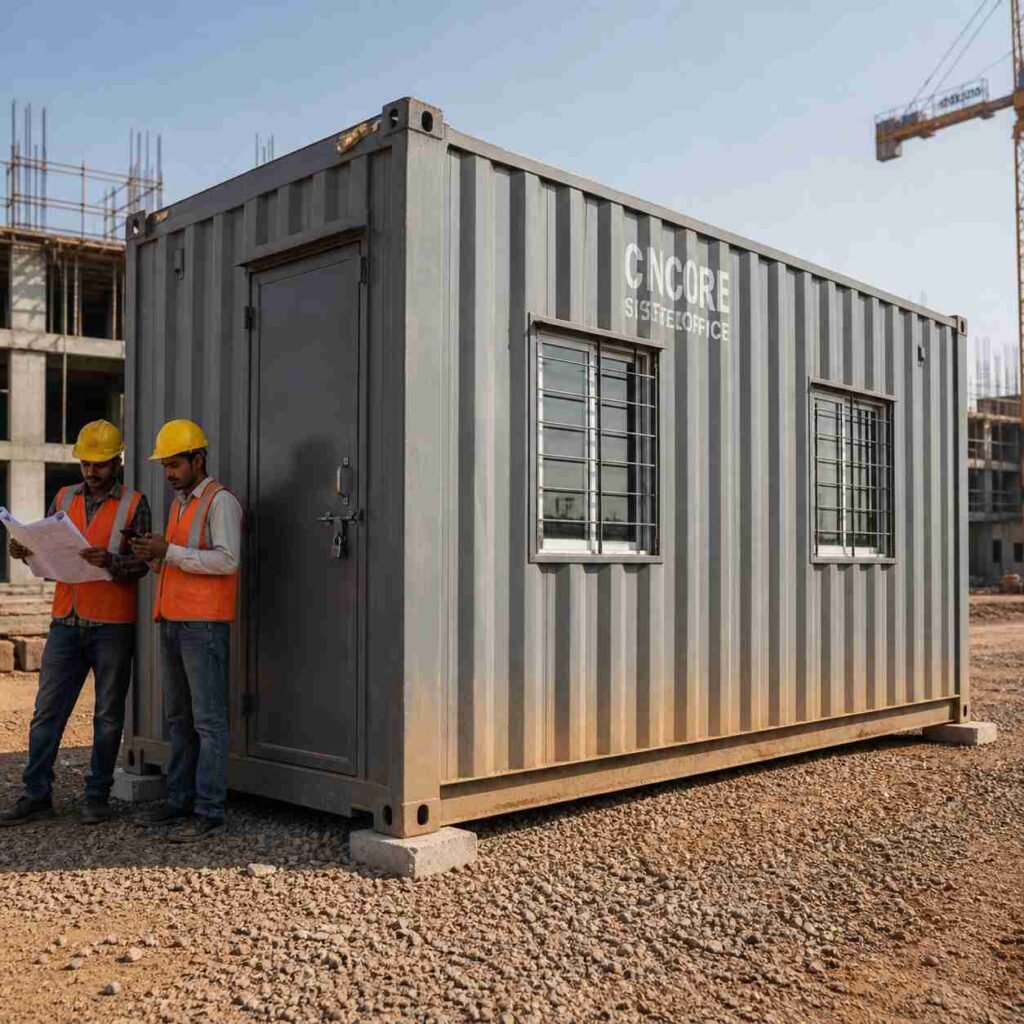
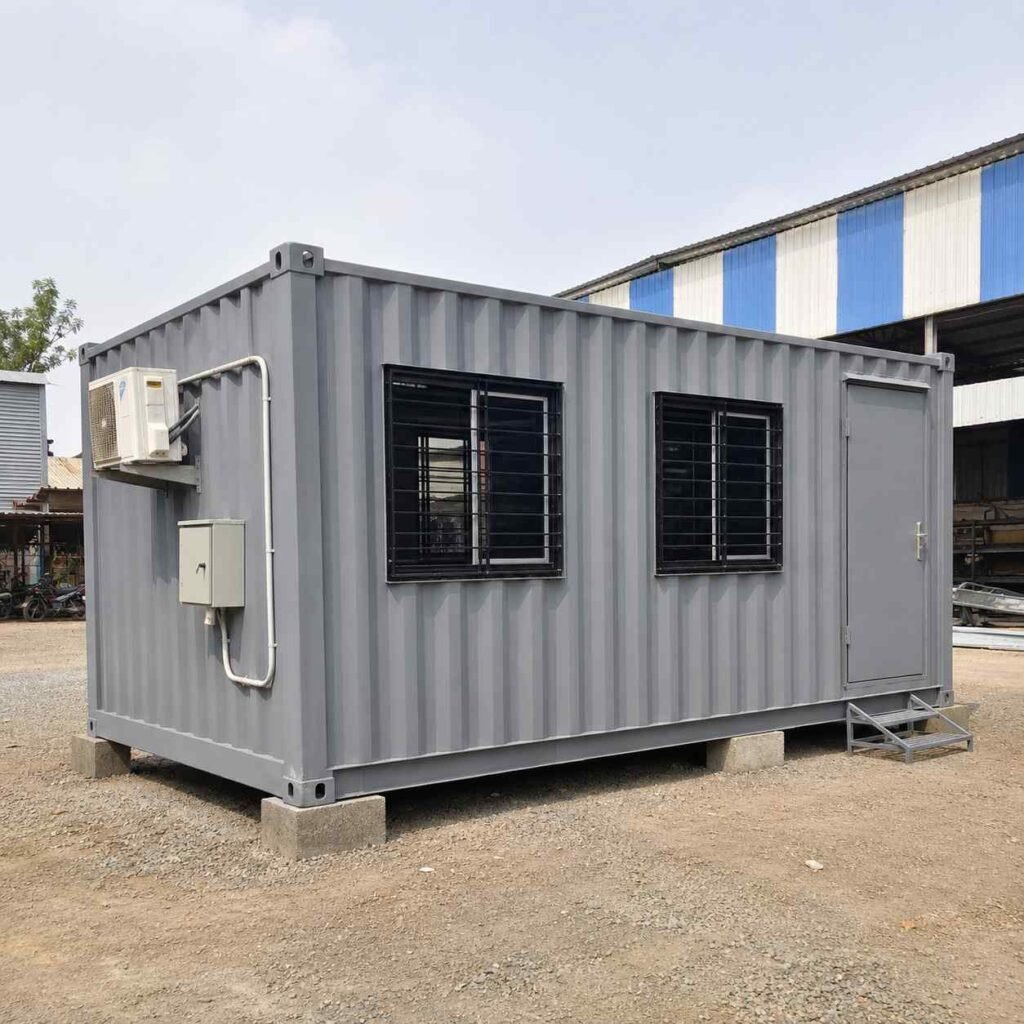
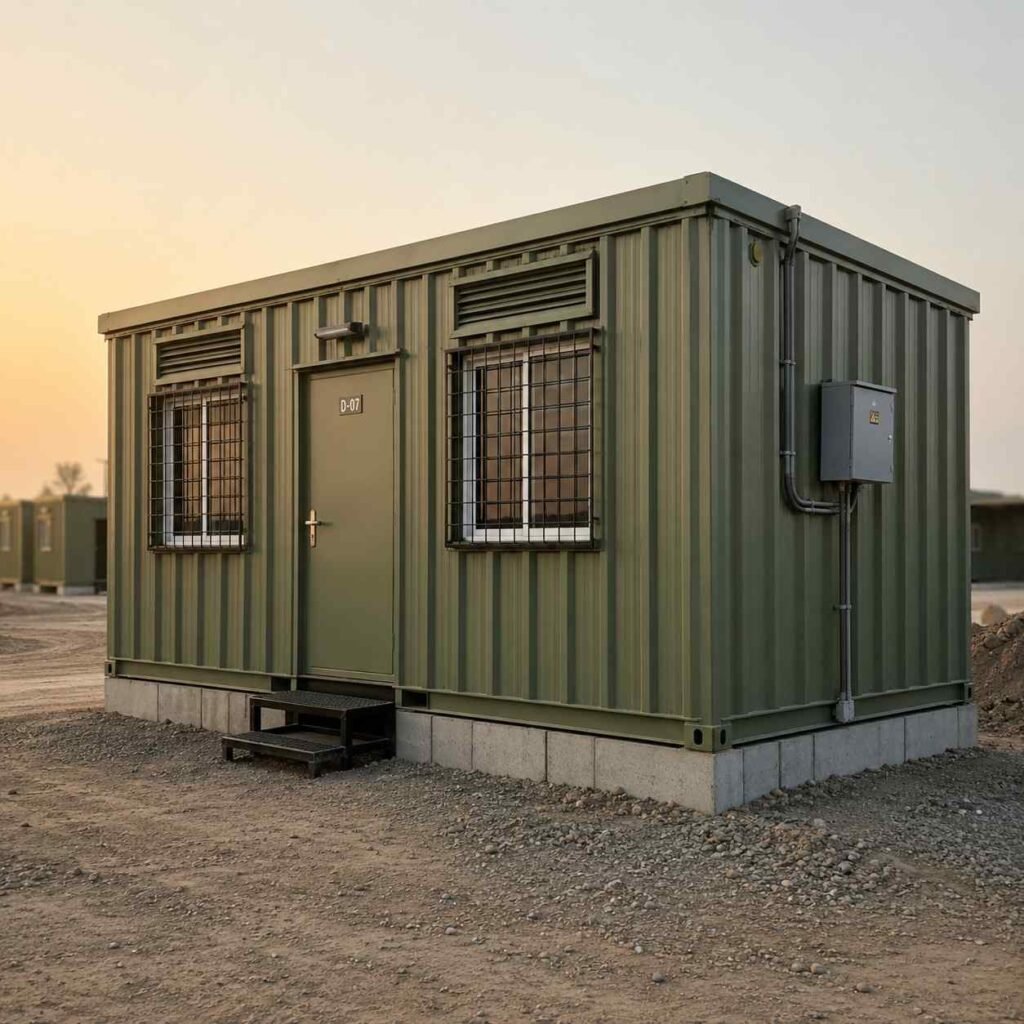
Path 1 — Used shipping container shell + your own retrofit. This is the dominant path in India. You buy a 20ft or 40ft Cor-Ten steel shipping container from a yard (Mundra, Nhava Sheva, Chennai, Kolkata, or a secondary broker), then commission an electrician, carpenter, and AC technician to convert the steel box into an office. Cheapest capex. Highest project-management burden. Zero warranty on the conversion unless the retrofit contractor offers one.
Path 2 — Used container office, already fitted out. Genuinely rare in India because EPC contractors usually re-use their office cabins on the next site rather than selling them. When these do appear (typically through equipment-resale yards or auction listings), they’re hard to inspect because the conversion work is hidden behind interior cladding. Highest hidden-defect risk.
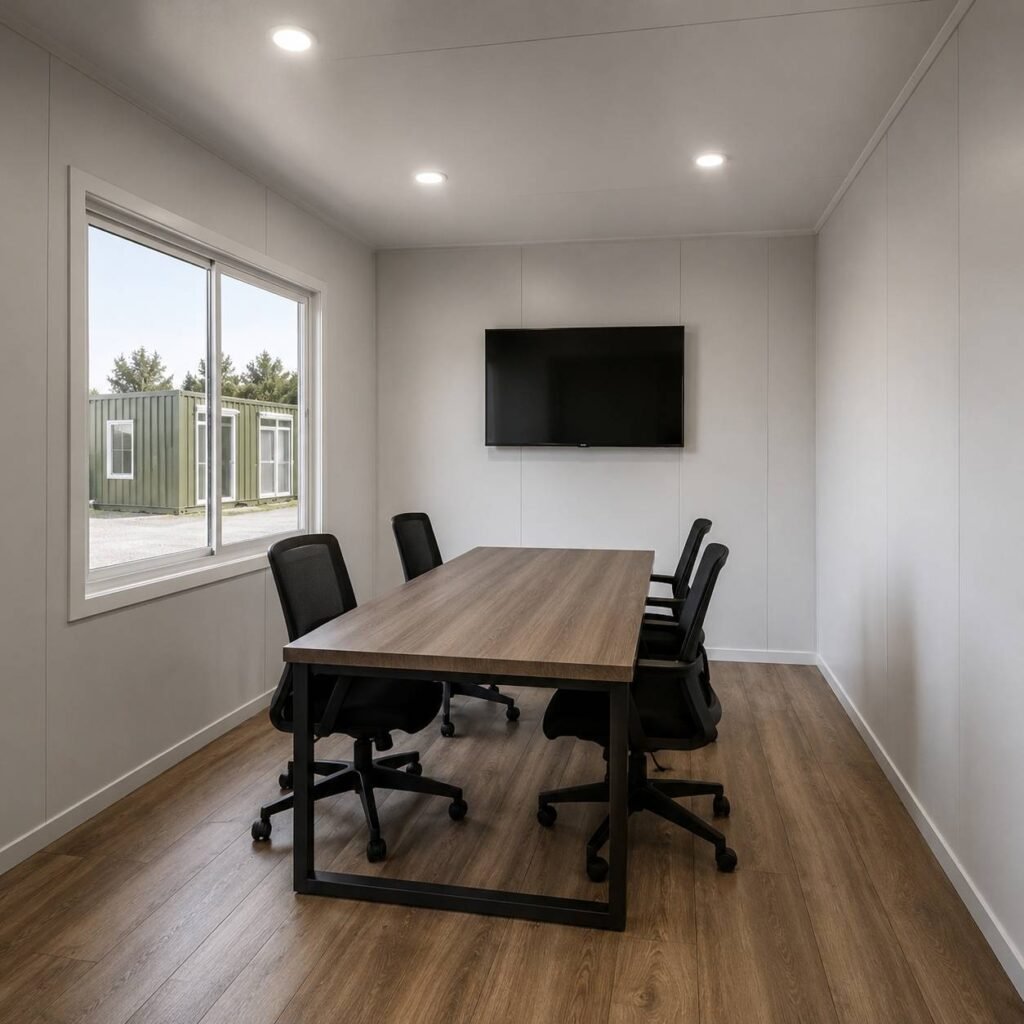
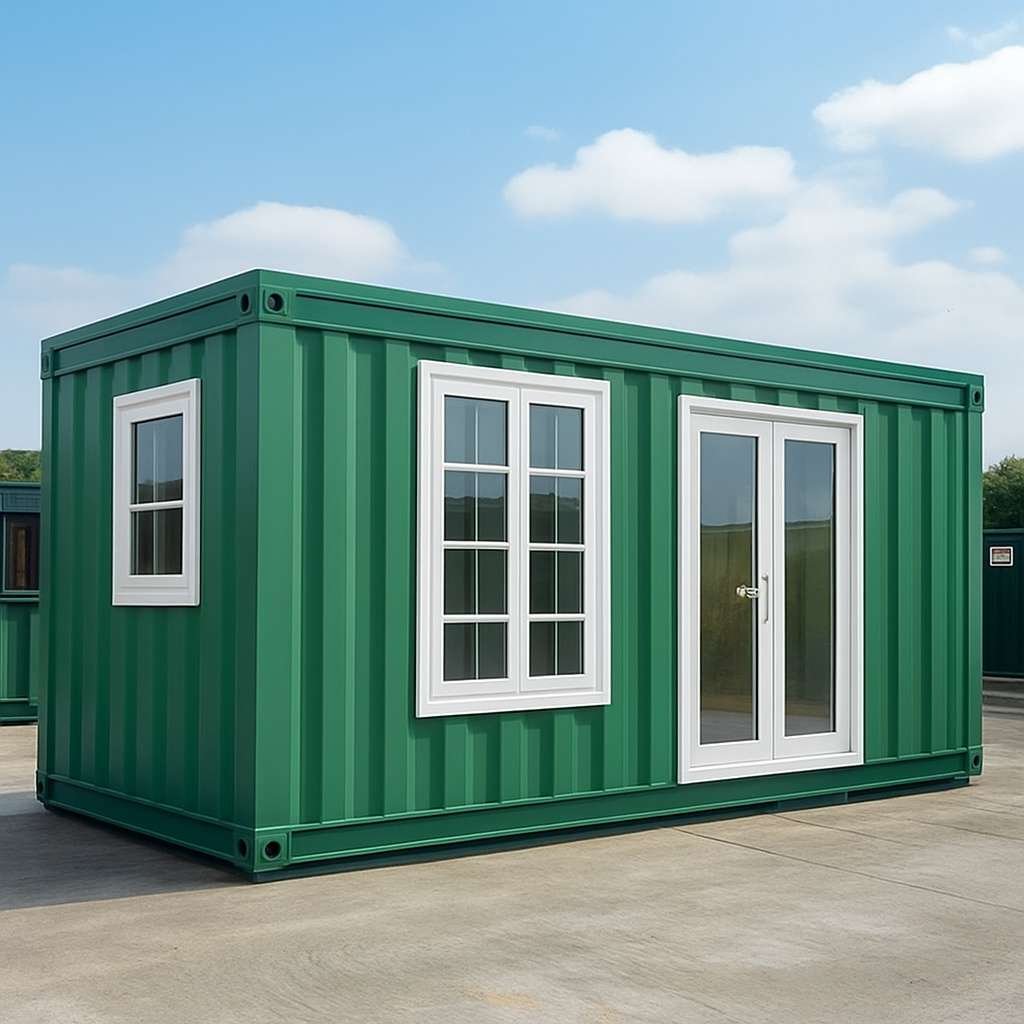
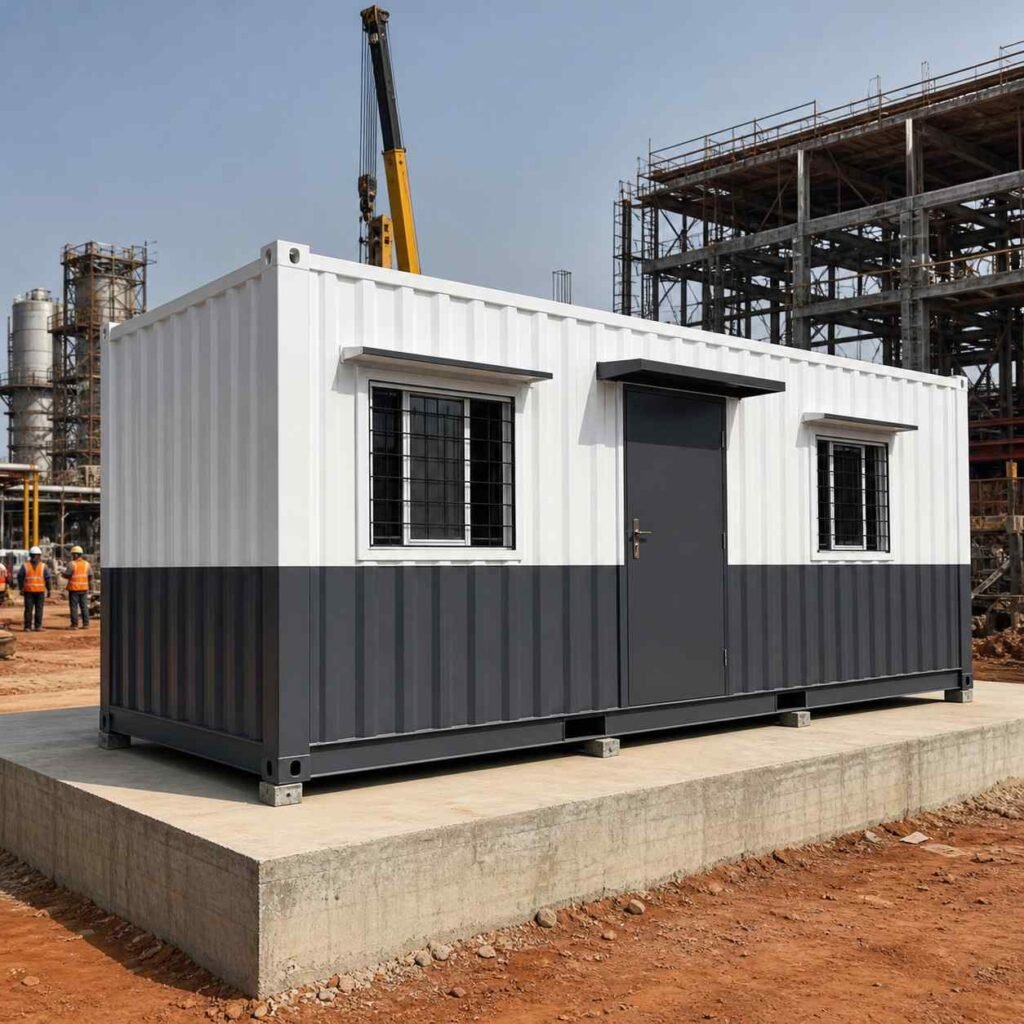
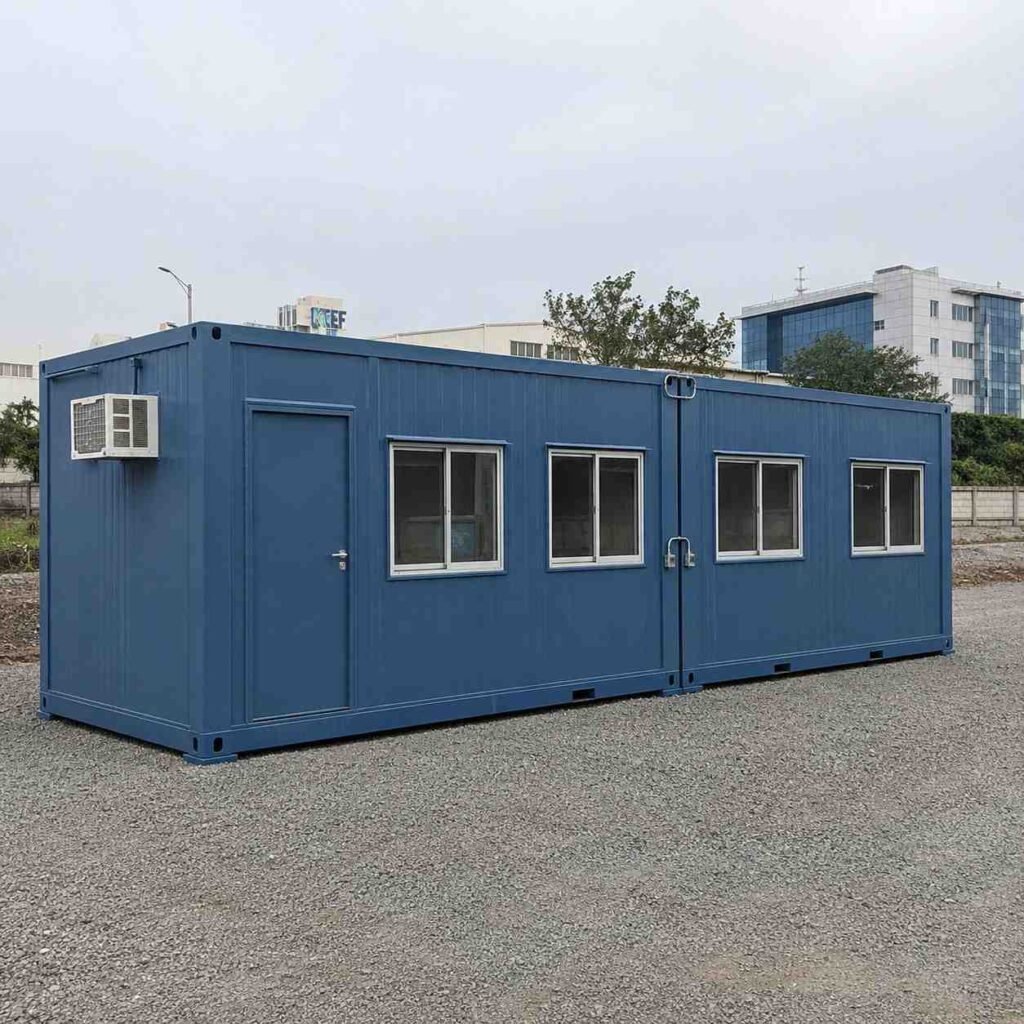
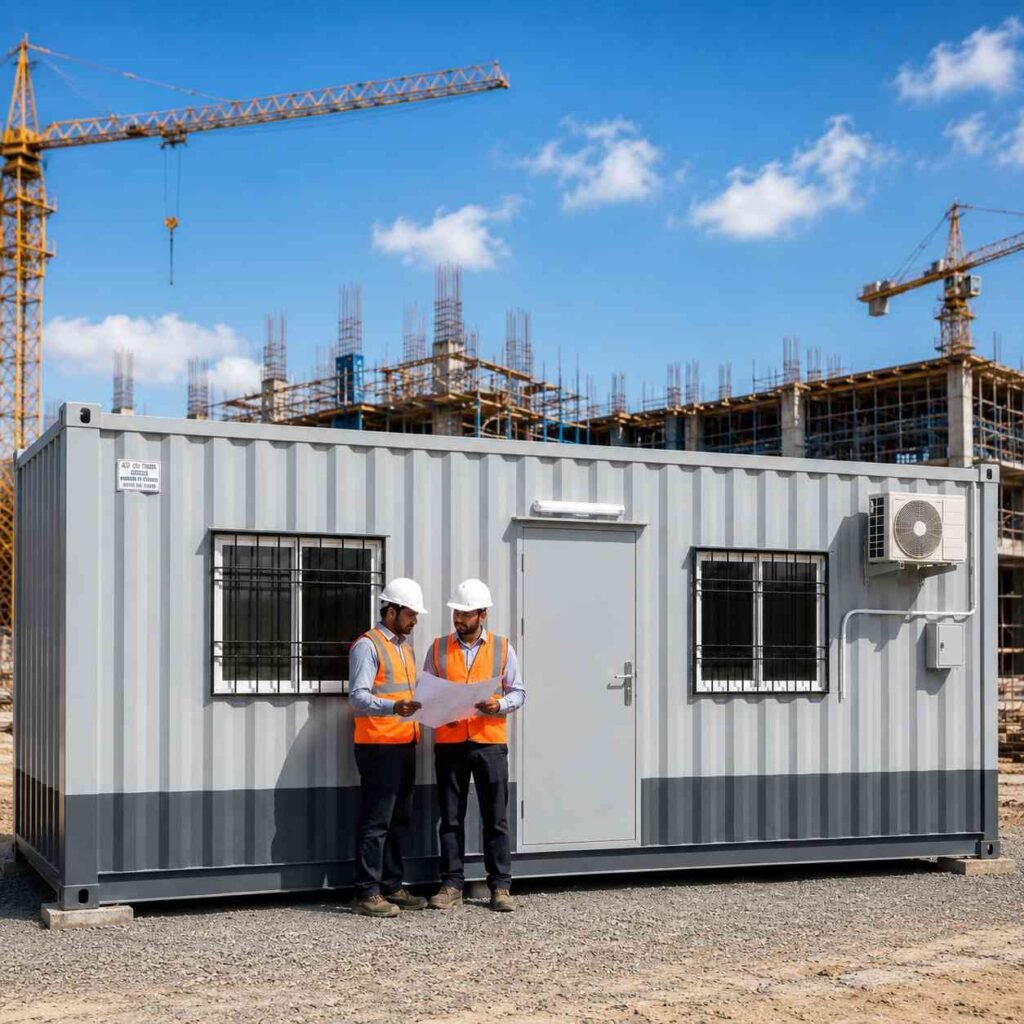
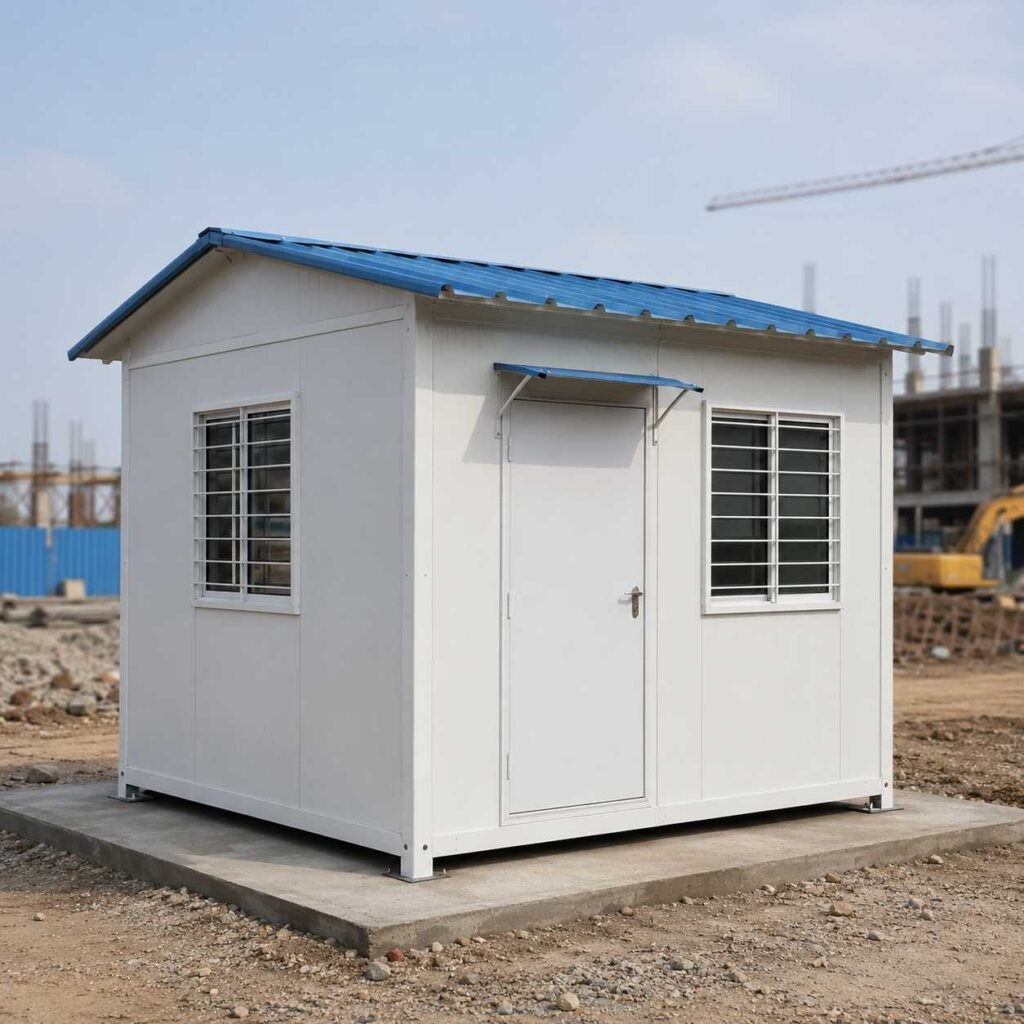
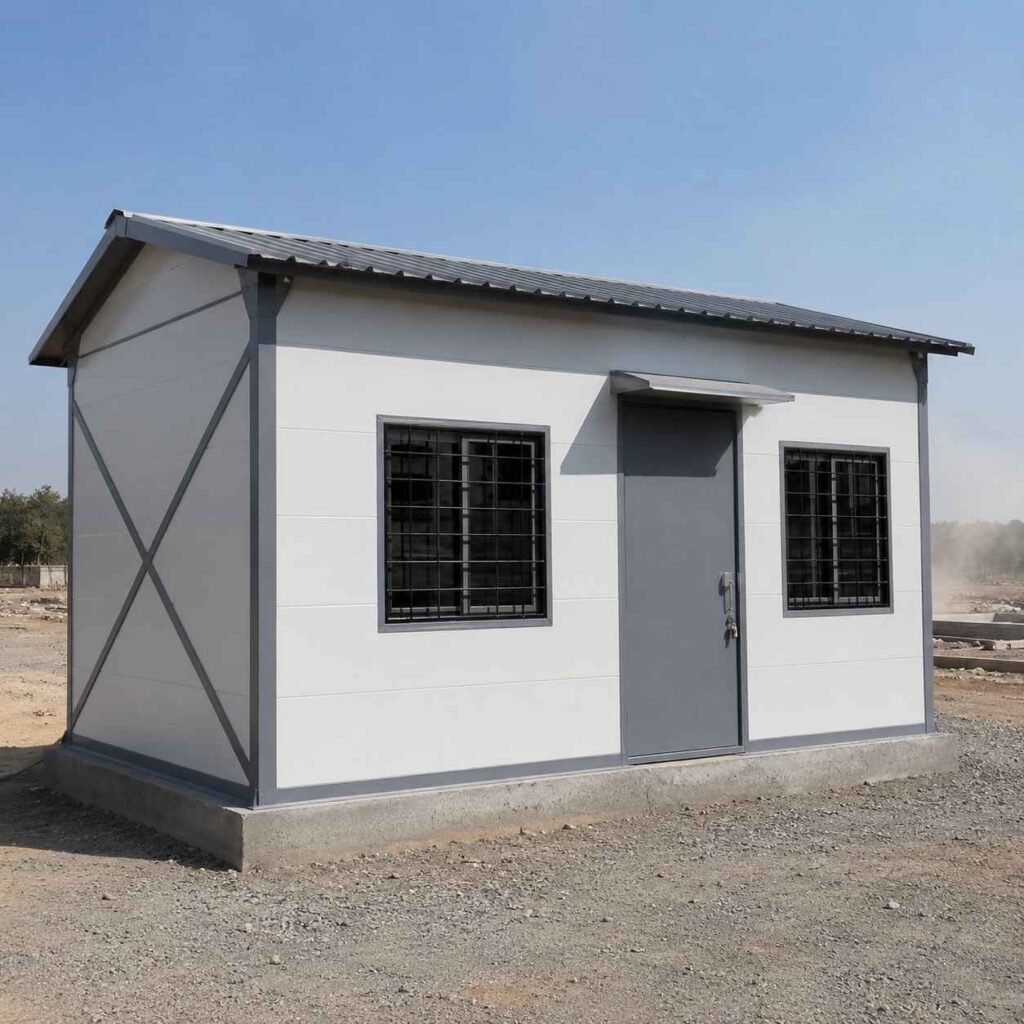
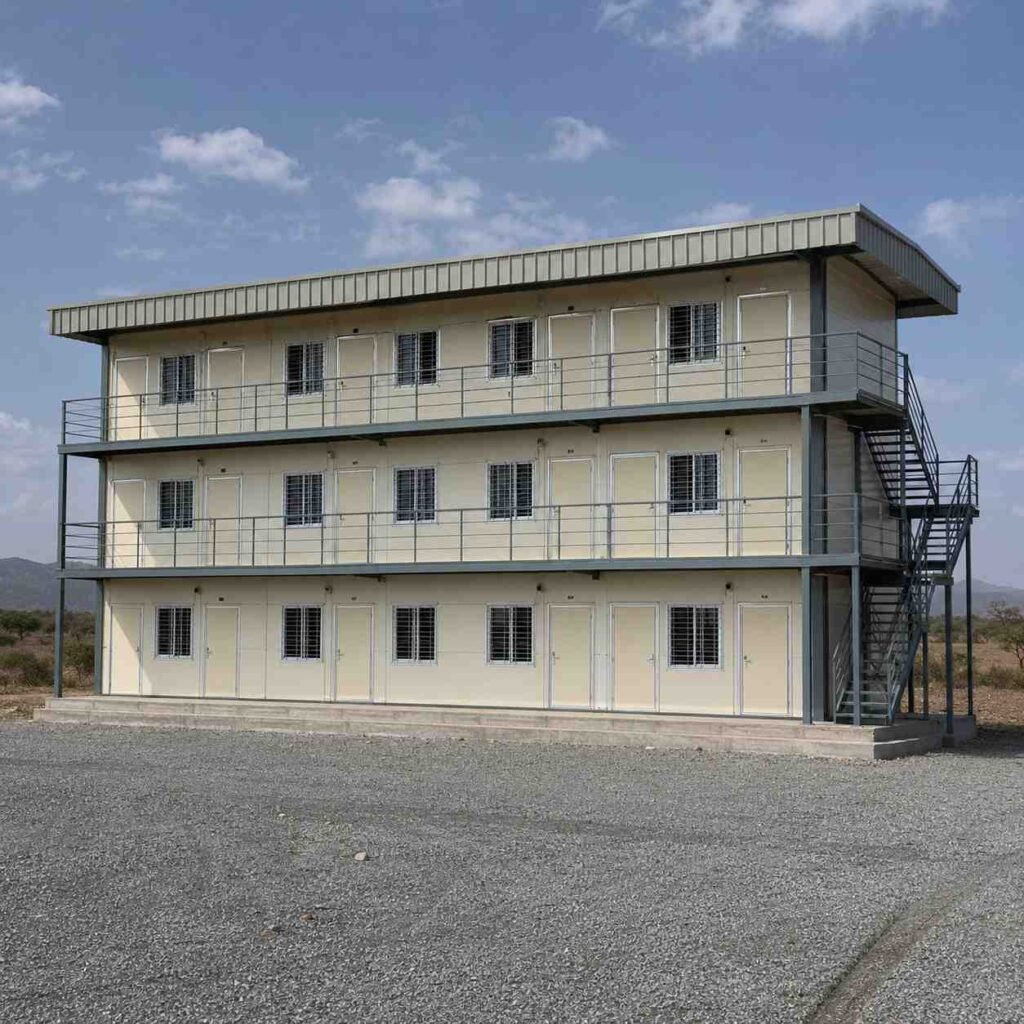
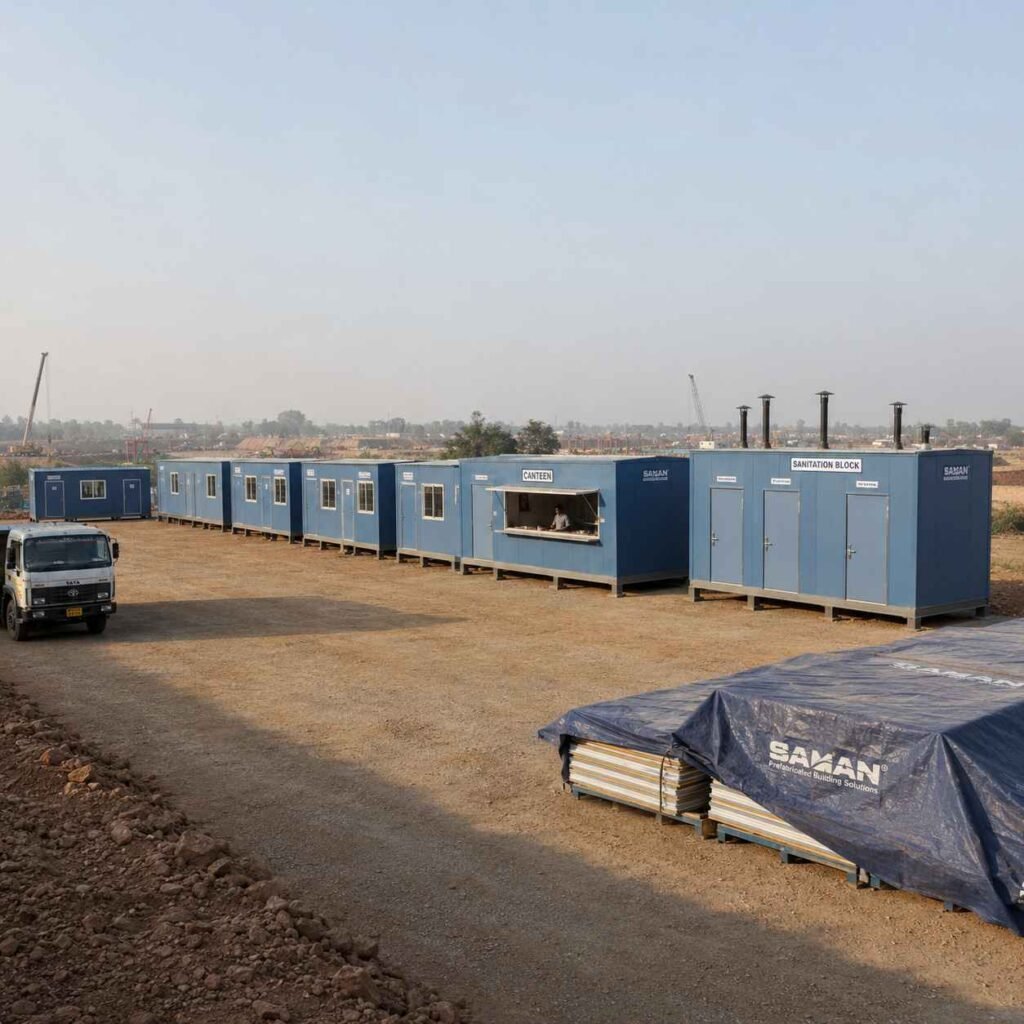
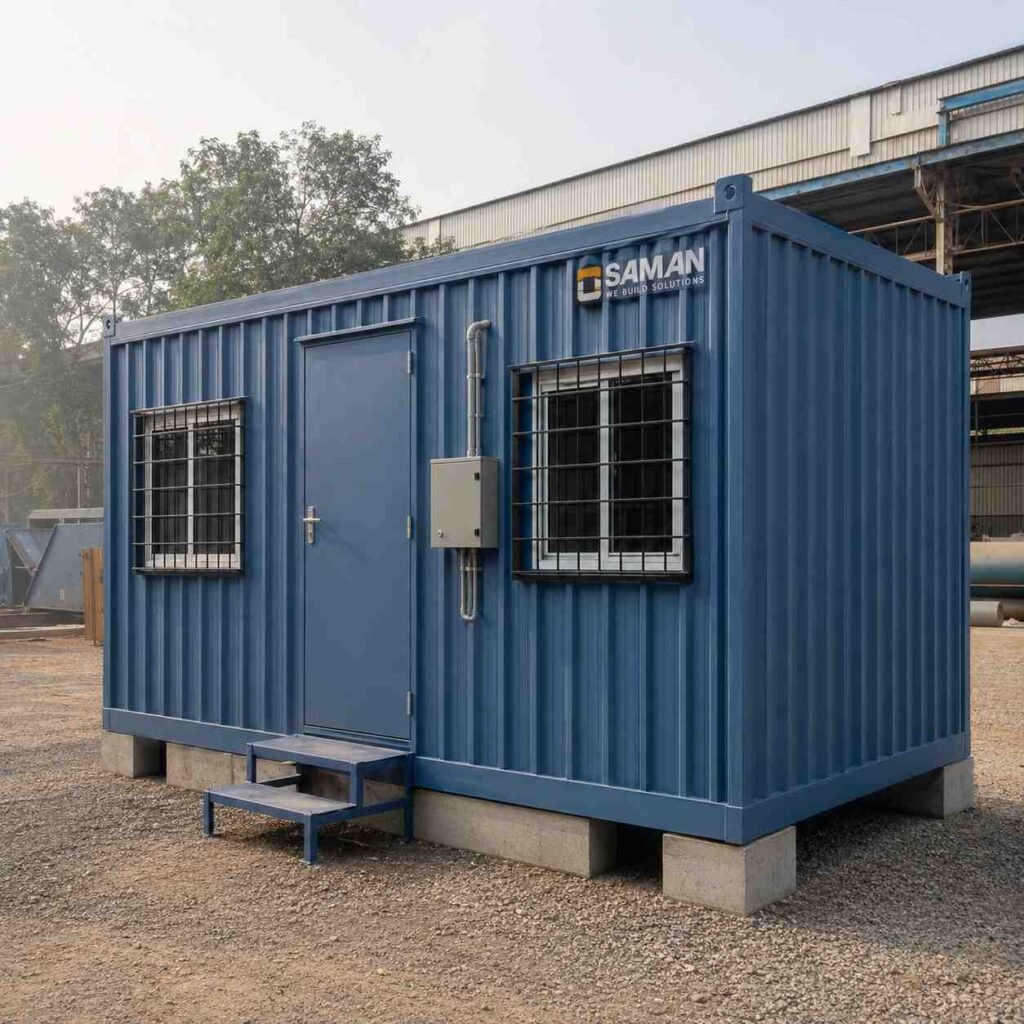
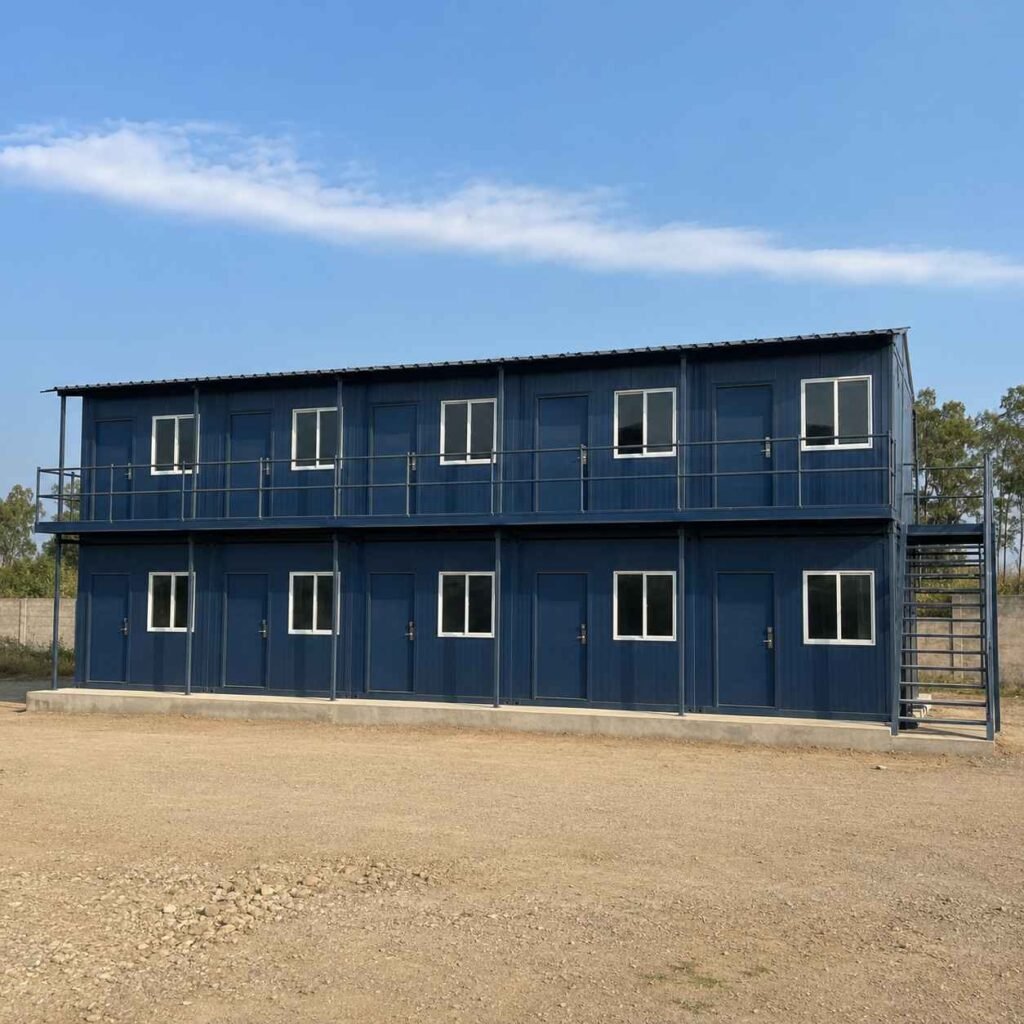
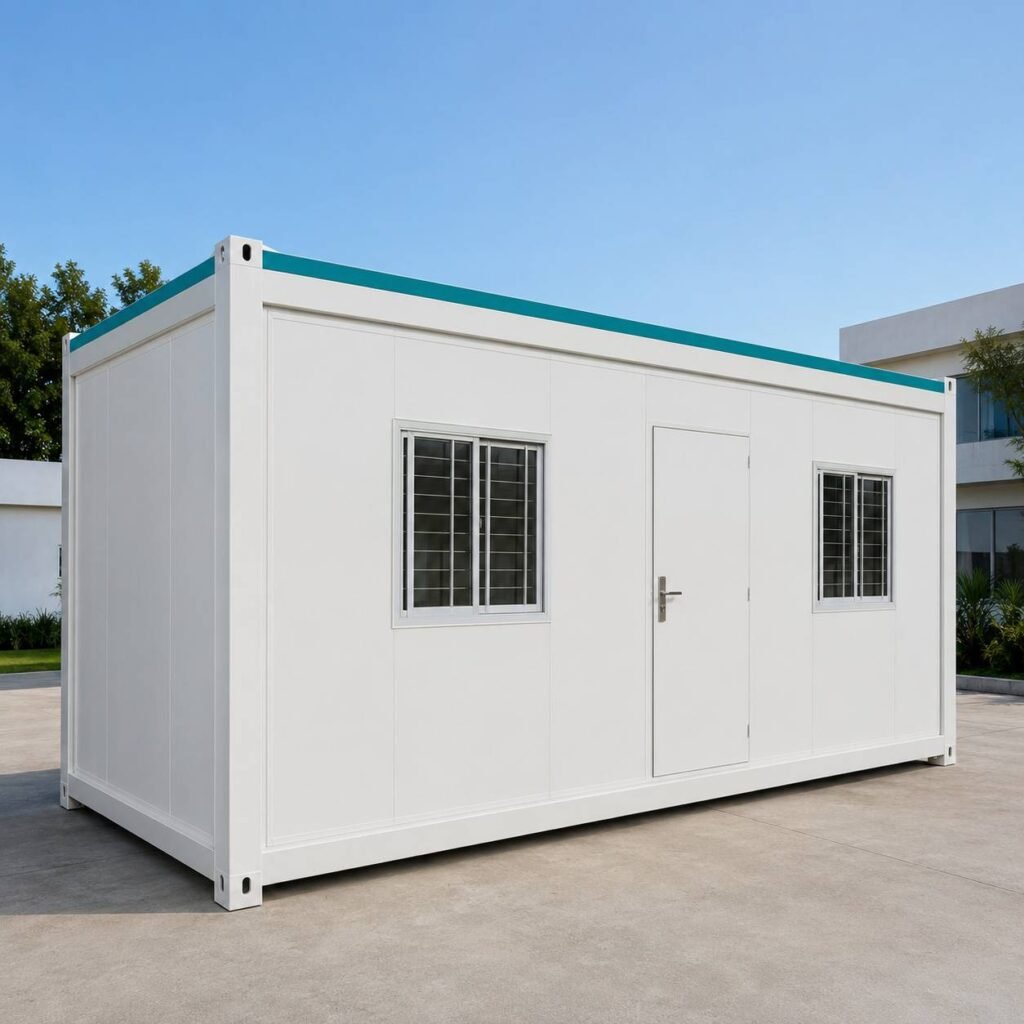
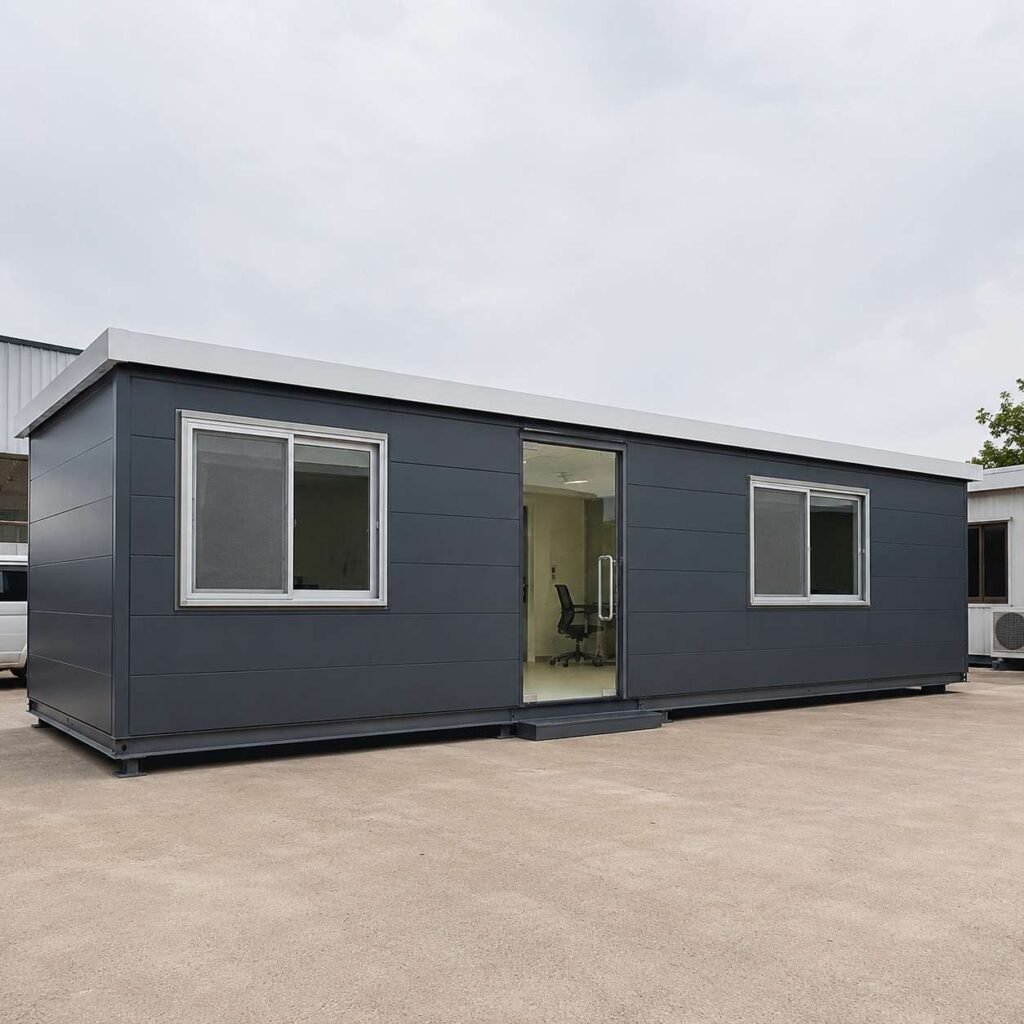
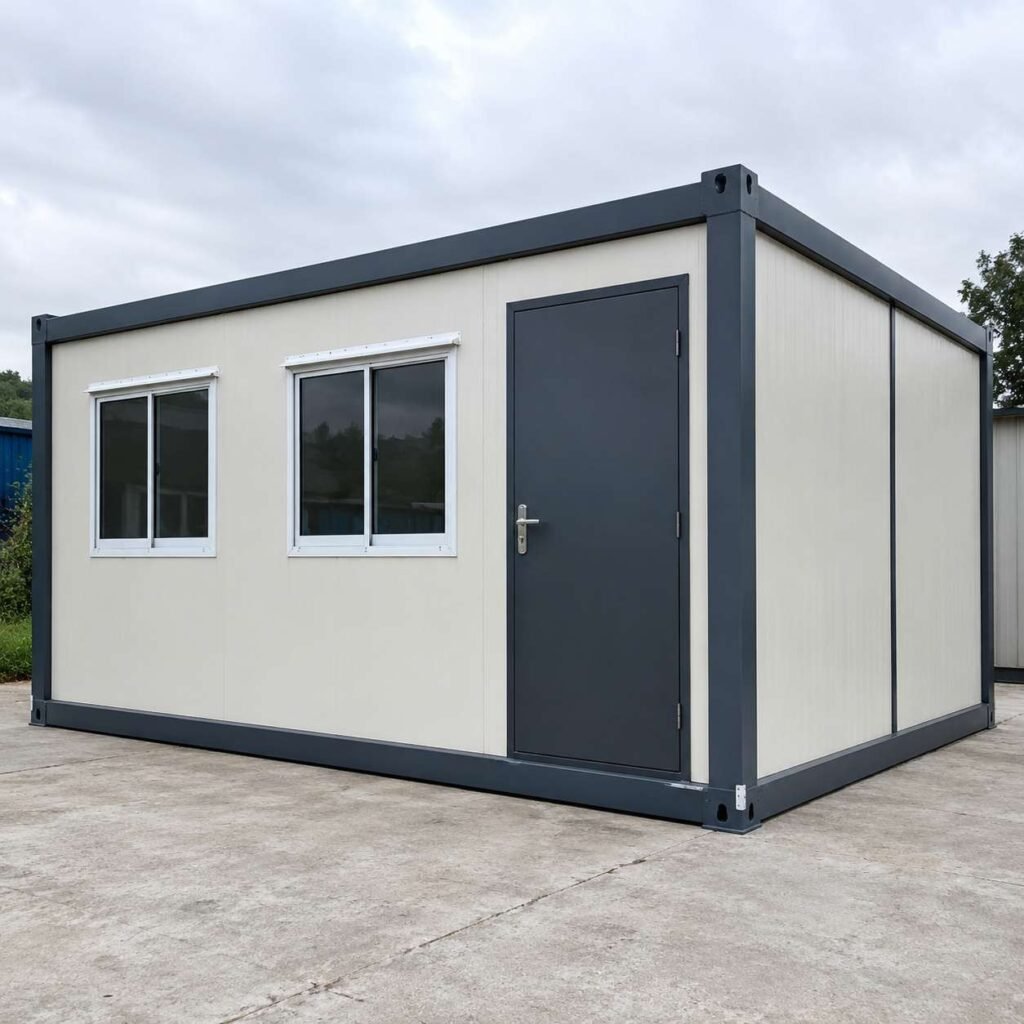
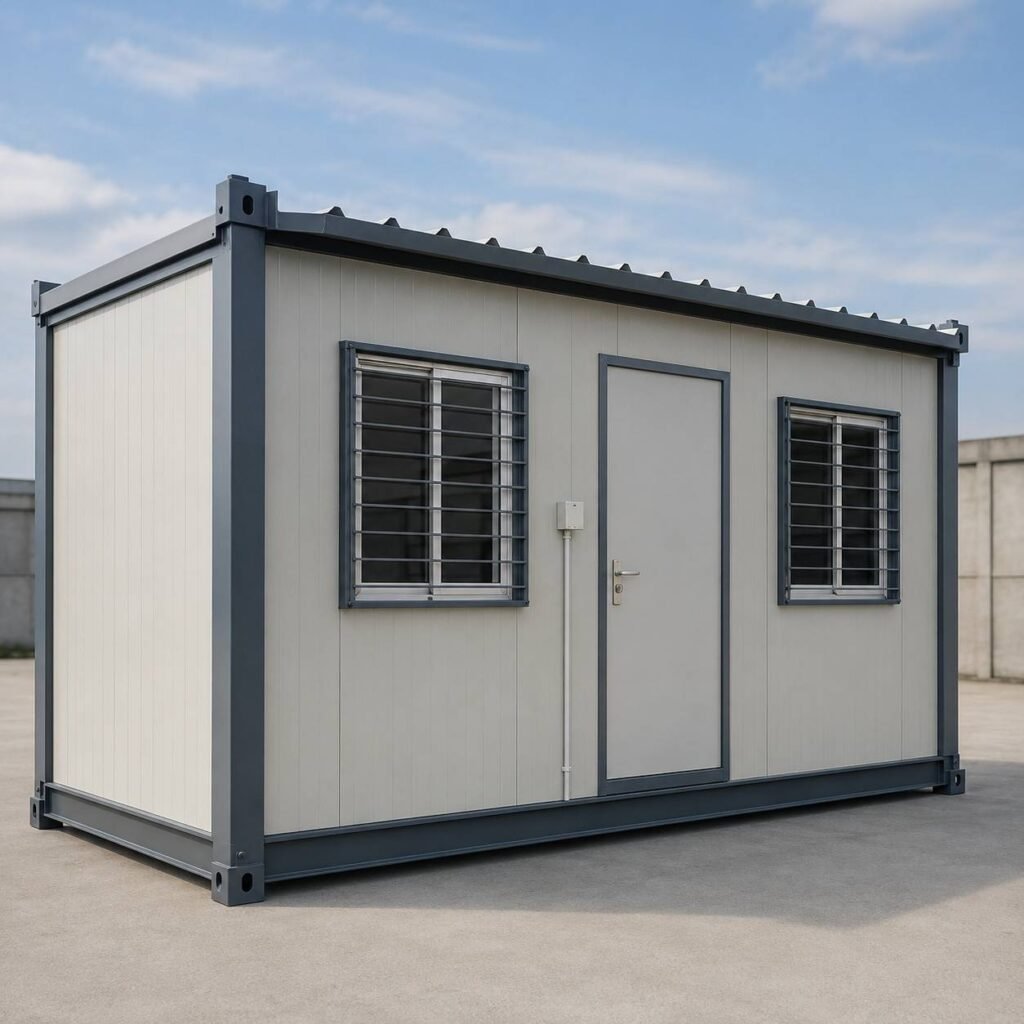
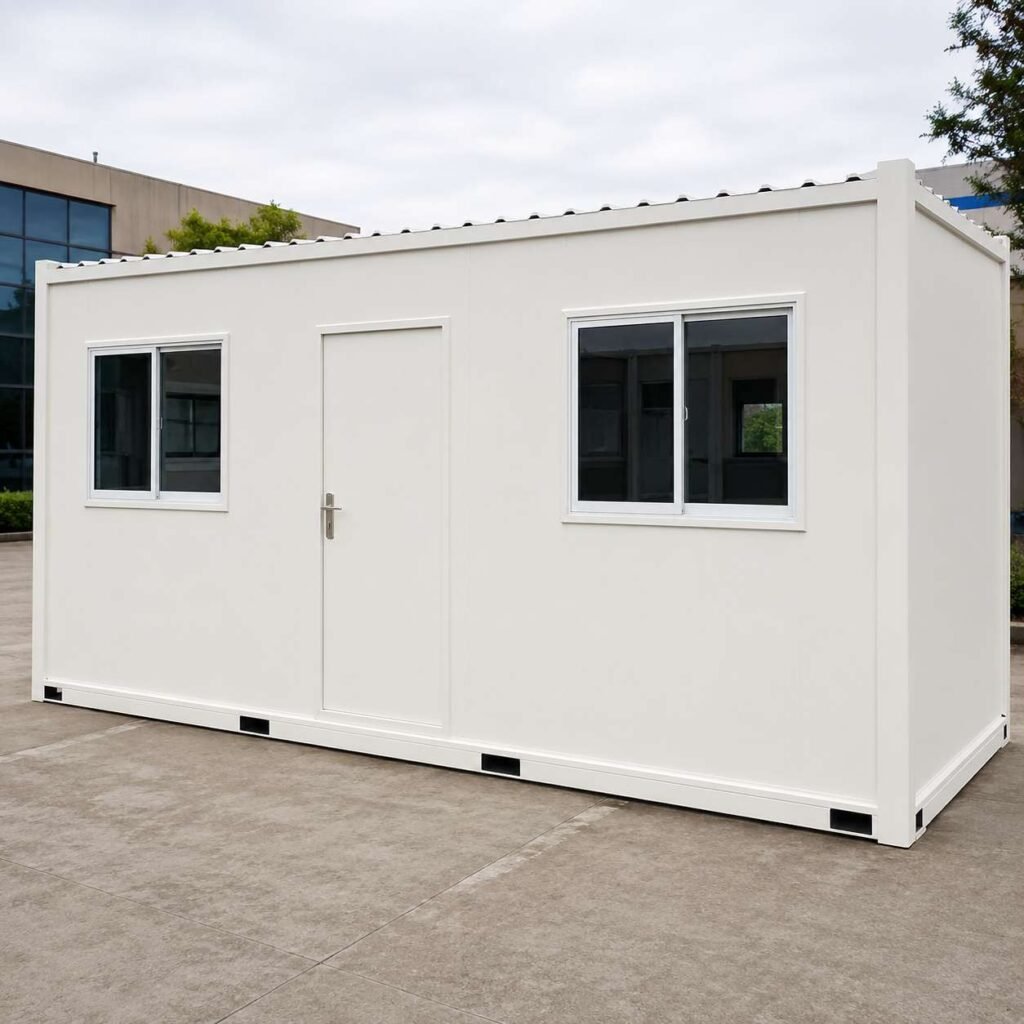
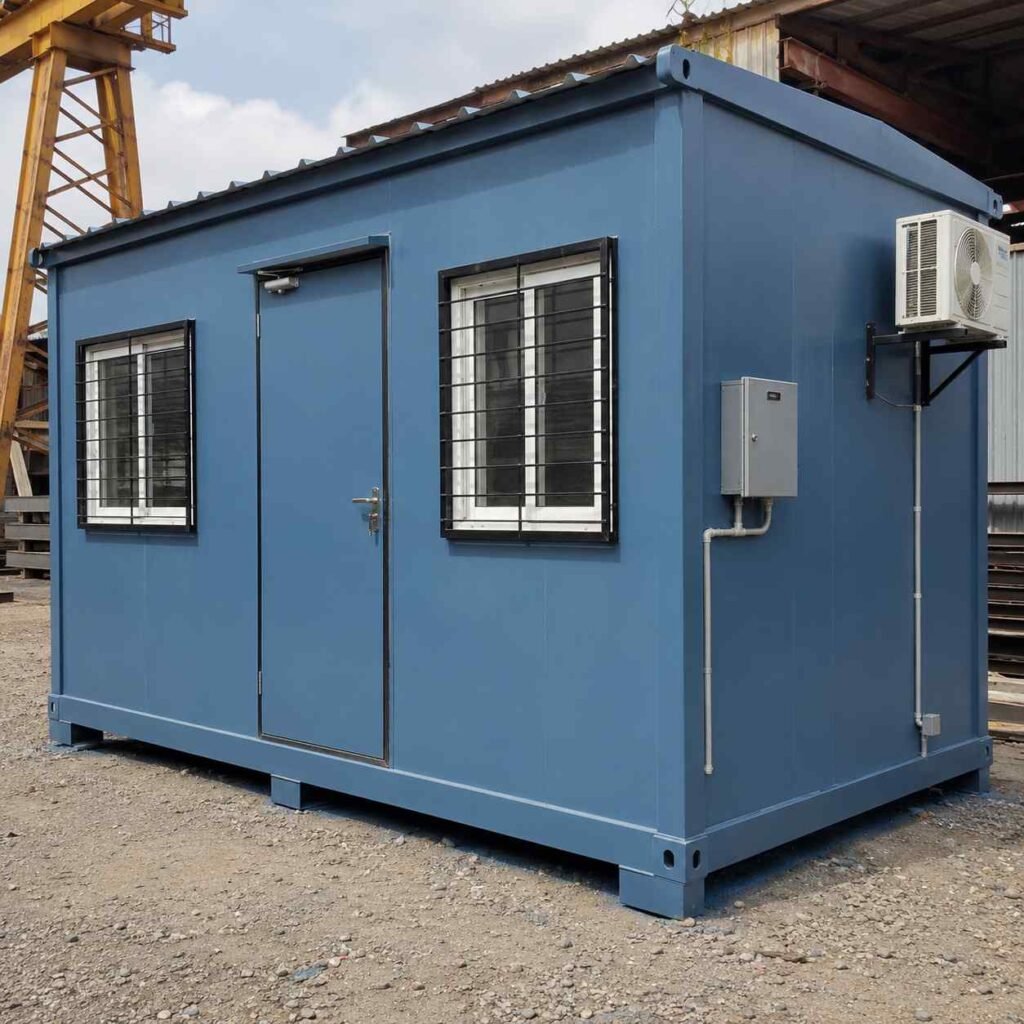
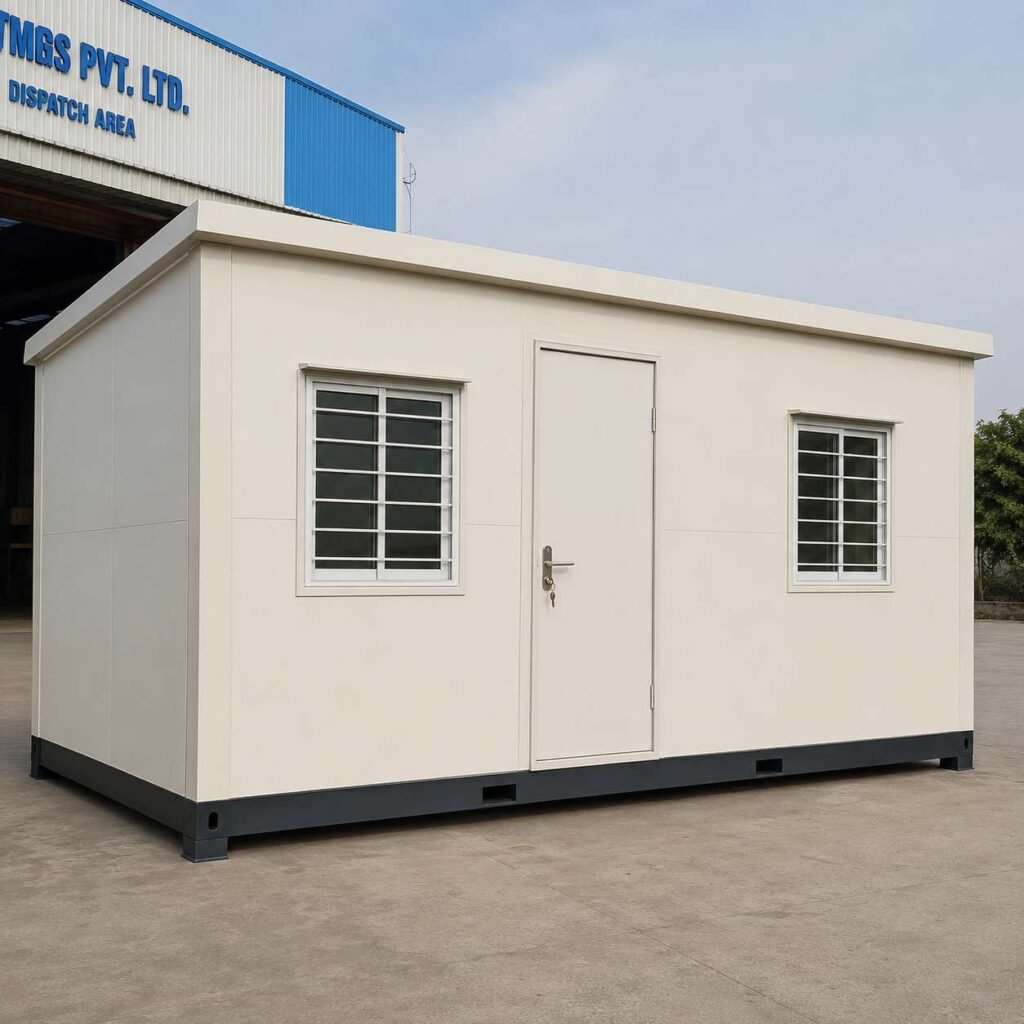
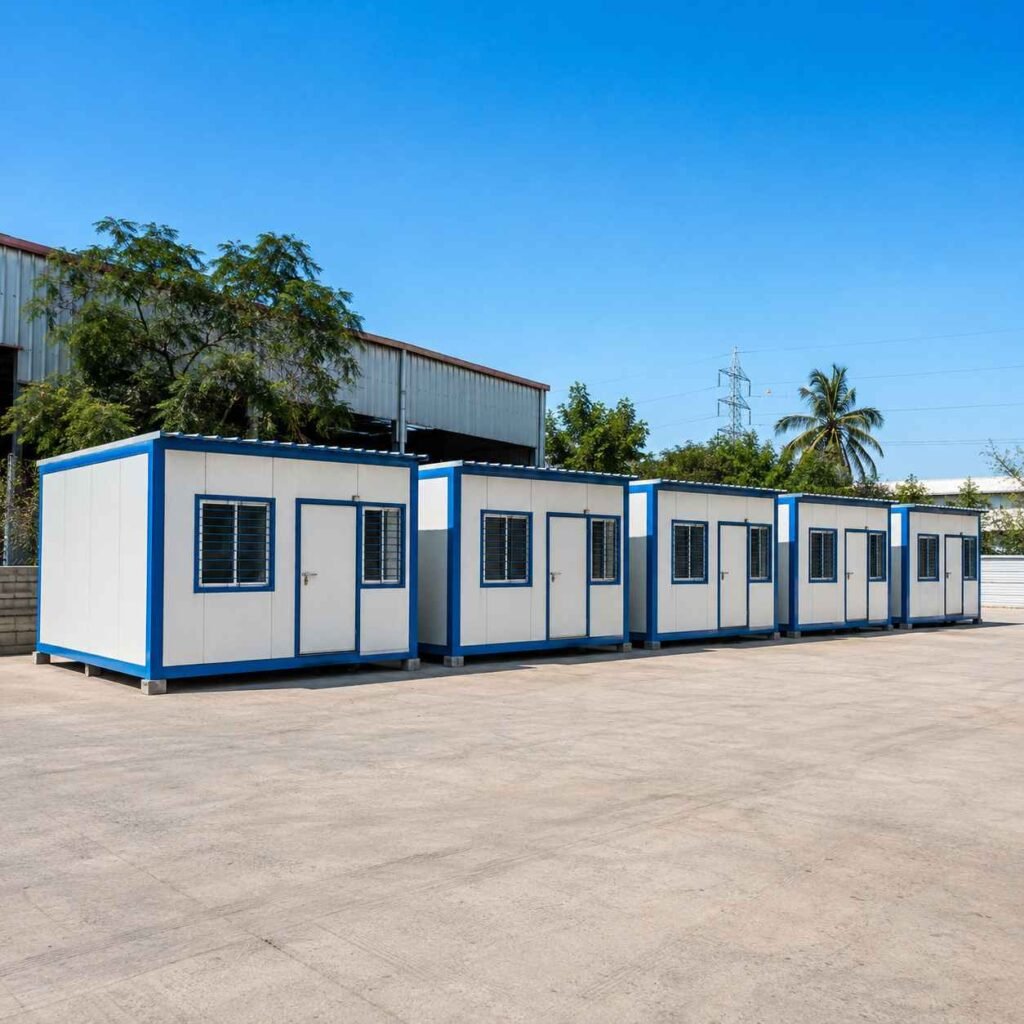
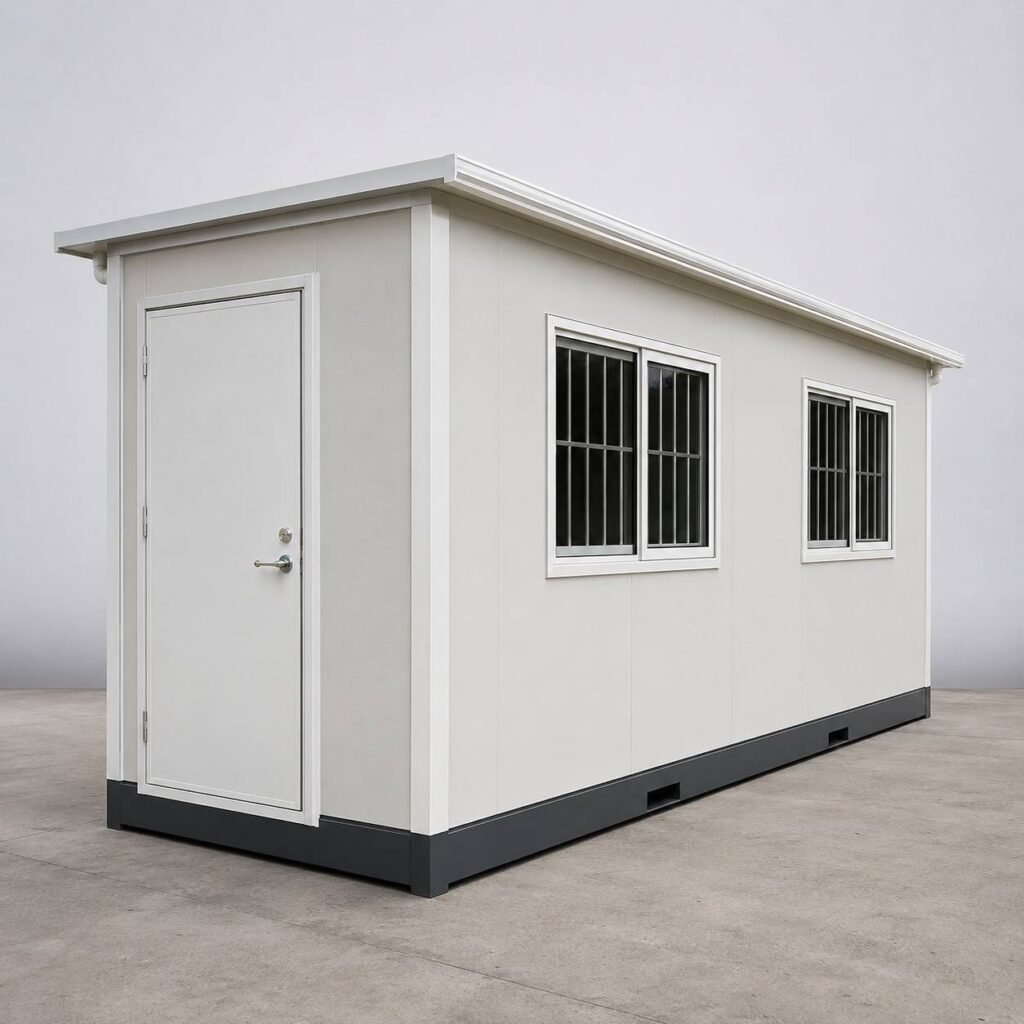
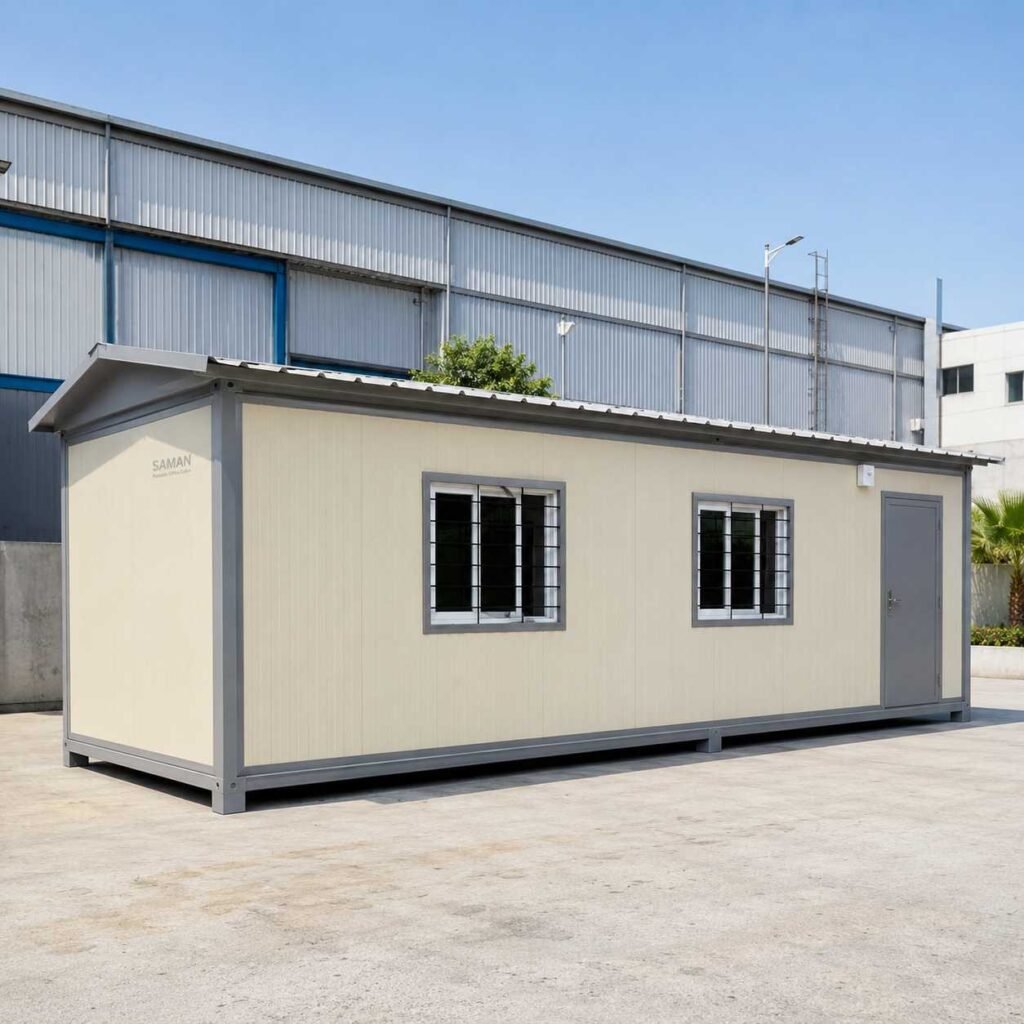
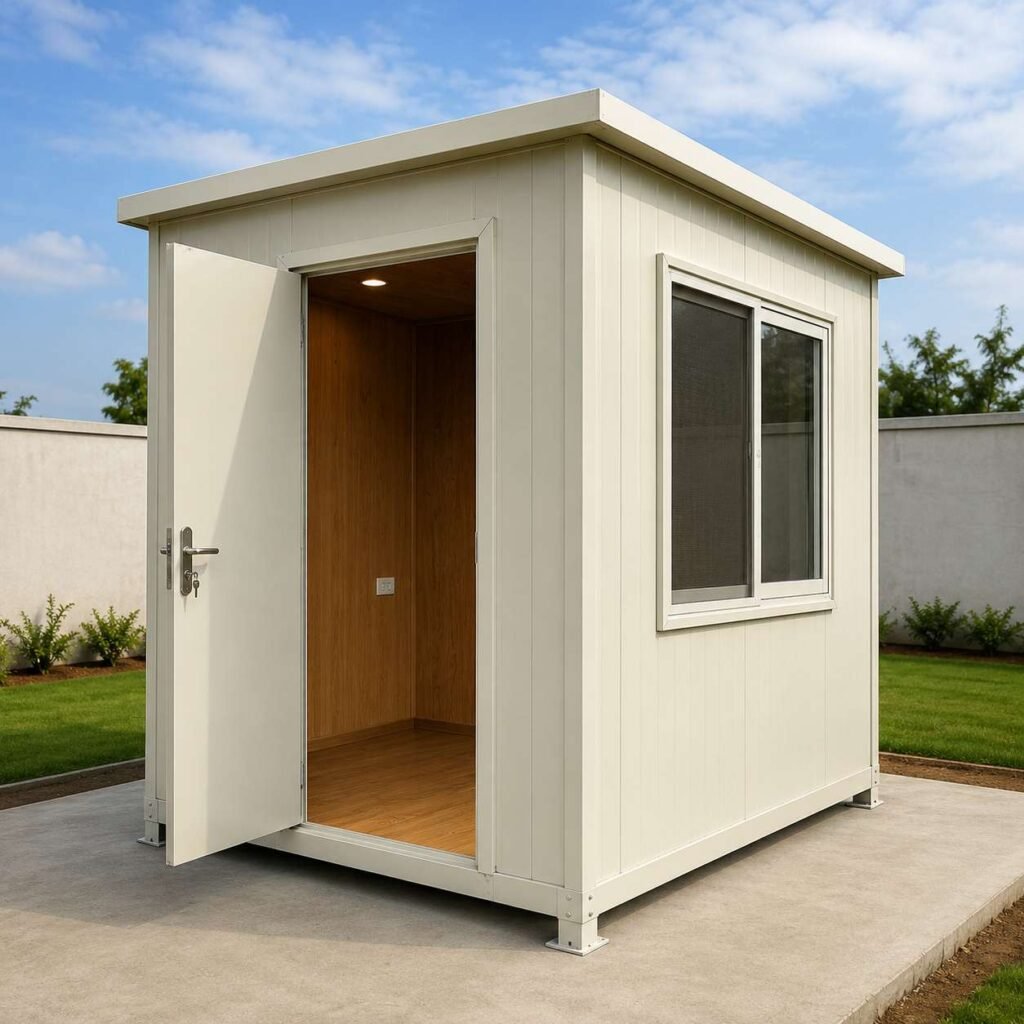
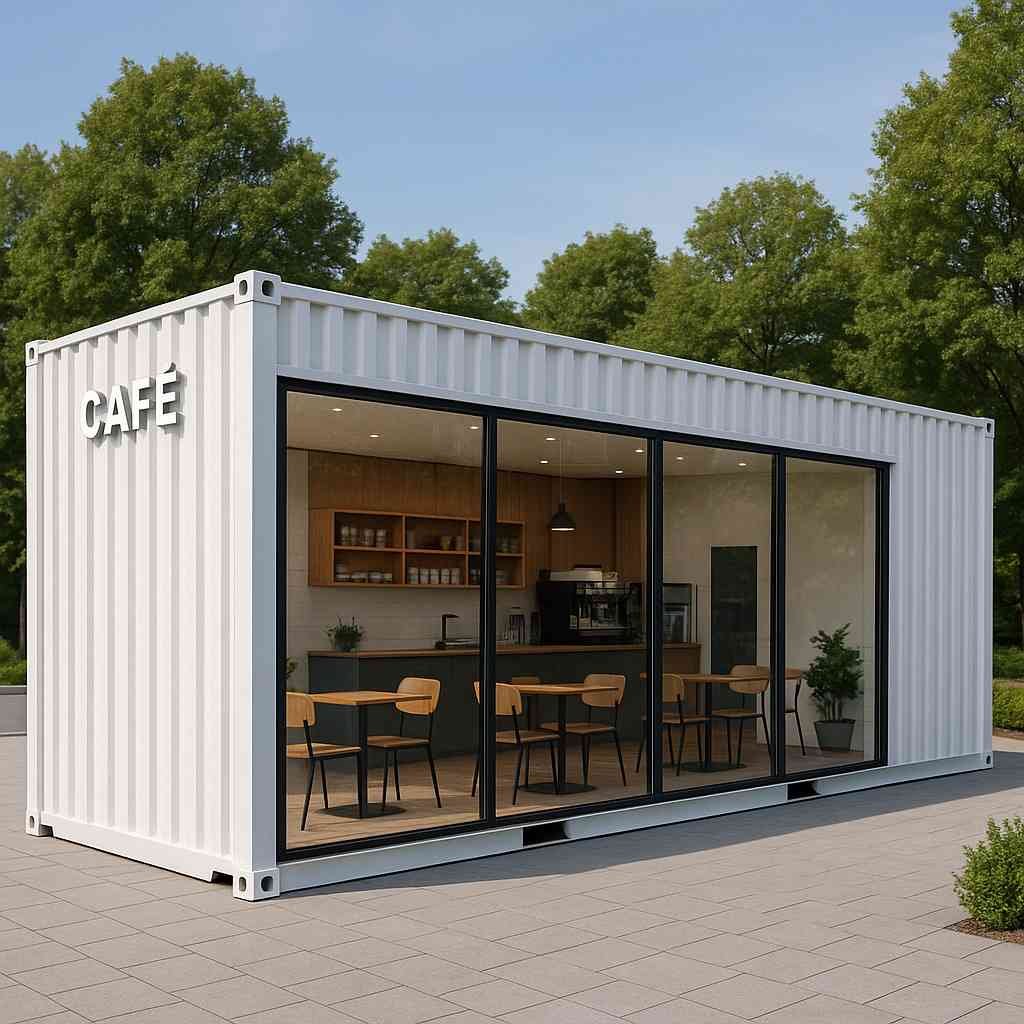
Path 3 — Brand-new pre-fabricated container office from a manufacturer. A 20ft factory-fitted container office from a registered Indian manufacturer starts at around Rs 2,15,000 — which is often within 20–30% of the all-in cost of Path 1 once retrofit, transport, and your time are honestly counted. Comes with a structural warranty and a tax invoice.
Most of this guide is about Path 1 — because that’s where buyers lose money to inspection misses they didn’t know to make. But the closing section comes back to the three-path question with a cost-of-ownership crossover that often surprises first-time buyers.
What a Used Container Office Costs in India in 2026 — Honest Yard-to-Site Prices
Yard prices for used container office for sale listings in India move on three factors: container size, condition grade, and how the container reached the yard (port-discharge versus inland secondary market).
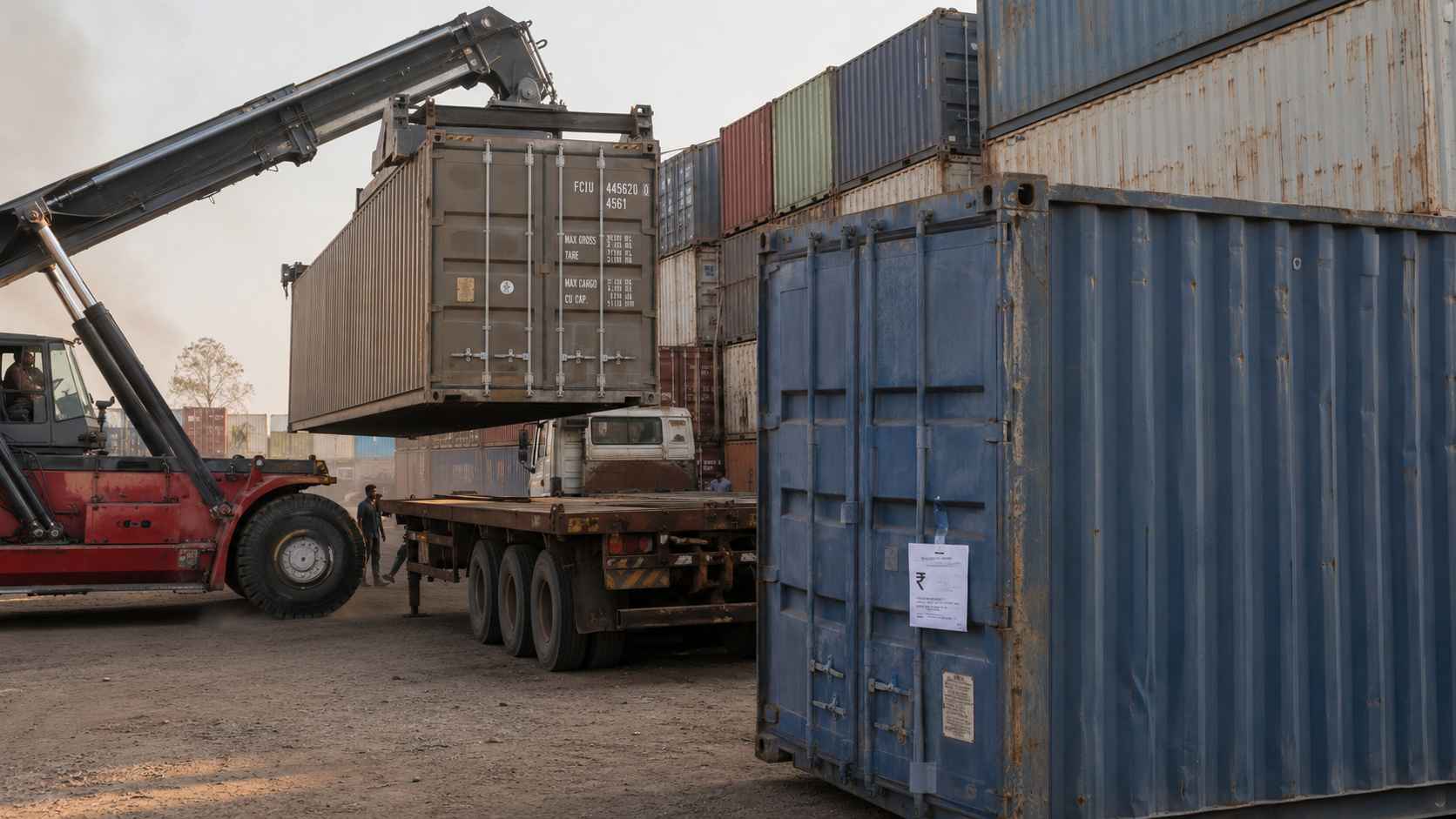
A 20ft used shipping container shell in cargo-worthy or wind-and-watertight (WWT) condition typically lists at Rs 1,40,000–1,80,000 at port yards. The same 20ft in “used / good condition” (light surface rust, minor floor wear, doors functional but gaskets aged) drops to Rs 1,00,000–1,30,000. A 40ft cargo-worthy unit runs Rs 2,30,000–2,80,000; the same 40ft in used condition lists at Rs 1,60,000–2,10,000.
Add transport — port-to-site movement inside India costs Rs 30,000–70,000 depending on distance and whether the destination is reachable by 40ft trailer. Site-delivered totals look like this:
| Container Variant | Condition Grade | Yard Price (INR) | Site-Delivered (INR) |
|---|---|---|---|
| 20ft used shell | Cargo-worthy / WWT | 1,40,000 – 1,80,000 | 1,75,000 – 2,30,000 |
| 20ft used shell | Used / good condition | 1,00,000 – 1,30,000 | 1,30,000 – 1,75,000 |
| 40ft used shell | Cargo-worthy / WWT | 2,30,000 – 2,80,000 | 2,80,000 – 3,50,000 |
| 40ft used shell | Used / good condition | 1,60,000 – 2,10,000 | 2,10,000 – 2,75,000 |
| 20ft used, already-fitted | Refurbished container office | 2,50,000 – 3,80,000 | 3,00,000 – 4,50,000 |
These are shell-only or fitted-only prices. They do not include the office retrofit — that’s covered in section five. For a full new-build cost decomposition by line item, we publish the line-by-line container office cost breakdown separately; this guide stays focused on the used-decision.
A Six-Point Structural Inspection — What to Check at the Yard Before You Pay
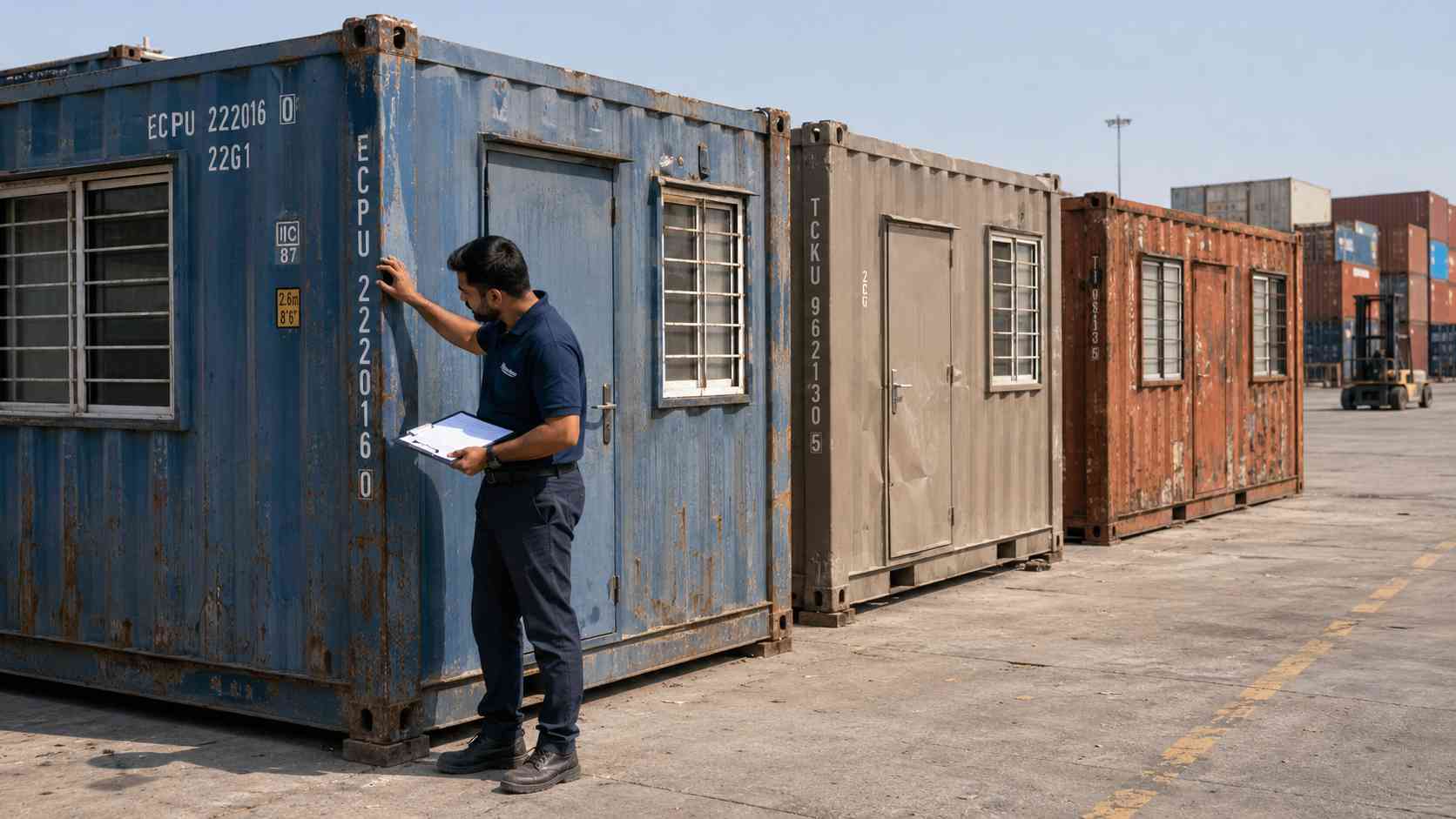
A used shipping container office starts with a steel shell that’s already lived a 10–15 year sea-trade life. Cor-Ten steel is forgiving — the alloy resists corrosion better than ordinary mild steel — but it isn’t indestructible. The six points below are the inspection that separates a structurally sound unit from a unit that will cost you more in repairs than the discount saved you.
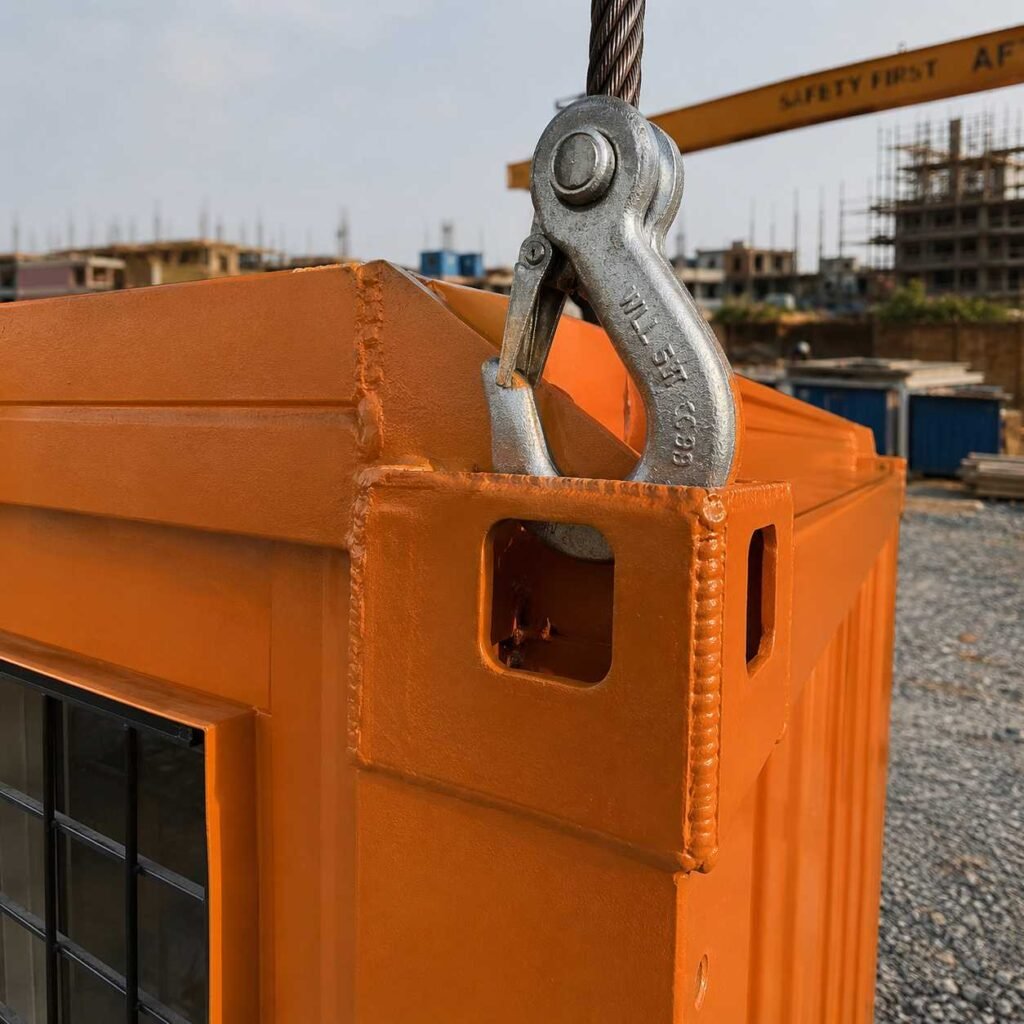
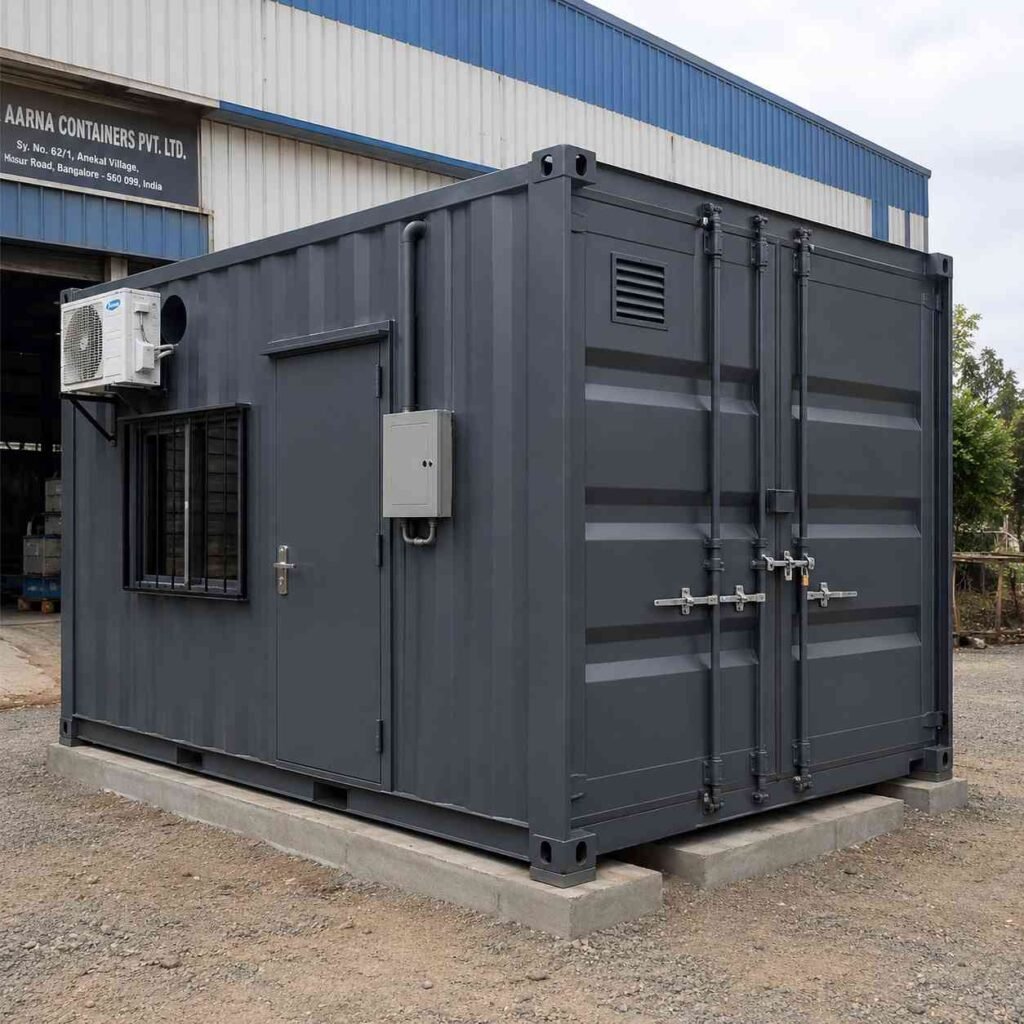
One — ISO corner castings. All eight corner castings (four top, four bottom) must be free of cracking, distortion, or weld repairs. These are the load-transfer points that take crane and stacking forces. A cracked casting is a structural reject — walk away.
Two — Bottom rail and forklift pockets. Run a magnet along the bottom rail under the doors. Heavy rust scale, perforation, or visible patches indicate the rail has been compromised — common on containers stored on damp ground. Forklift pockets should be open and undeformed.
Three — Floor plywood. A standard shipping container floor is 28mm marine-grade plywood treated for IMO compliance. Lift the floor cover and look for soft spots, rot, oil saturation, or evidence of pesticide soak (some containers are fumigated for export and carry chemical residue). For office use, factor in a Rs 25,000–40,000 floor replacement on most used 20ft units regardless of how clean it looks.
Four — Side walls and roof corrugation. Surface rust on Cor-Ten weathering steel is normal and is largely cosmetic up to ~1mm deep. What you’re looking for is through-pitting, dents that have cracked the steel, and weld patches. A unit with three or more obvious weld patches has had structural intervention — pay accordingly or pass.
Five — Roof beams and water pooling. Check the roof for ponding (water pooling indicates beam sag). Inside, look at the roof beams from below — any rust streaking down from a beam means water is entering at that point. A leaking roof on a used container office is a permanent problem; weld repairs rarely seal cleanly.
Six — Door gear, gaskets, and locking rod assembly. Open and close both doors fully. The cam handles should engage smoothly; the rubber gaskets should compress without cracking; the locking rods should rotate without binding. Failed door gear typically costs Rs 8,000–15,000 per door pair to refurbish, and a non-watertight door means a wet office every monsoon.
Do all six in person. Photos sent over WhatsApp by a yard salesman are not an inspection.
Yard Grades Decoded — How “Cargo-Worthy”, “WWT”, and “Used” Translate at Indian Container Yards
The global shipping-container industry uses four grades: 1-Trip (one-time-use new), WWT (wind-and-watertight), CW (cargo-worthy, also called Multi-Trip), and AS-IS. Indian yards rarely use these terms verbatim. Translating between the two vocabularies is part of buying intelligently.
“Export-quality” or “new condition” at an Indian yard usually maps to 1-Trip — a container that has made one cargo voyage from China or Korea to an Indian port. Cosmetically near-new. Premium pricing. Often misrepresented; ask for the original Bayplan or container-history sheet.
“Cargo-worthy” or “good condition” at an Indian yard maps to WWT / CW. The unit is structurally sound, watertight, and could load cargo for international shipment. This is the right grade for an office conversion — the watertight integrity matters more than cosmetic finish.
“Used” or “used condition” at an Indian yard is broader. It can mean a sound container with cosmetic age, or it can mean a container with patches, replaced corners, or rust scale. Ask specifically whether the yard has done a CSC re-certification or any structural repair.
“Scrap-grade” or “as-is” is the bottom tier — containers withdrawn from cargo service because they no longer meet WWT. These cost half of cargo-worthy. They can still work for a non-critical site office if you accept water ingress in monsoon, but they are not a sound foundation for a refurbished container office that has to last five years.
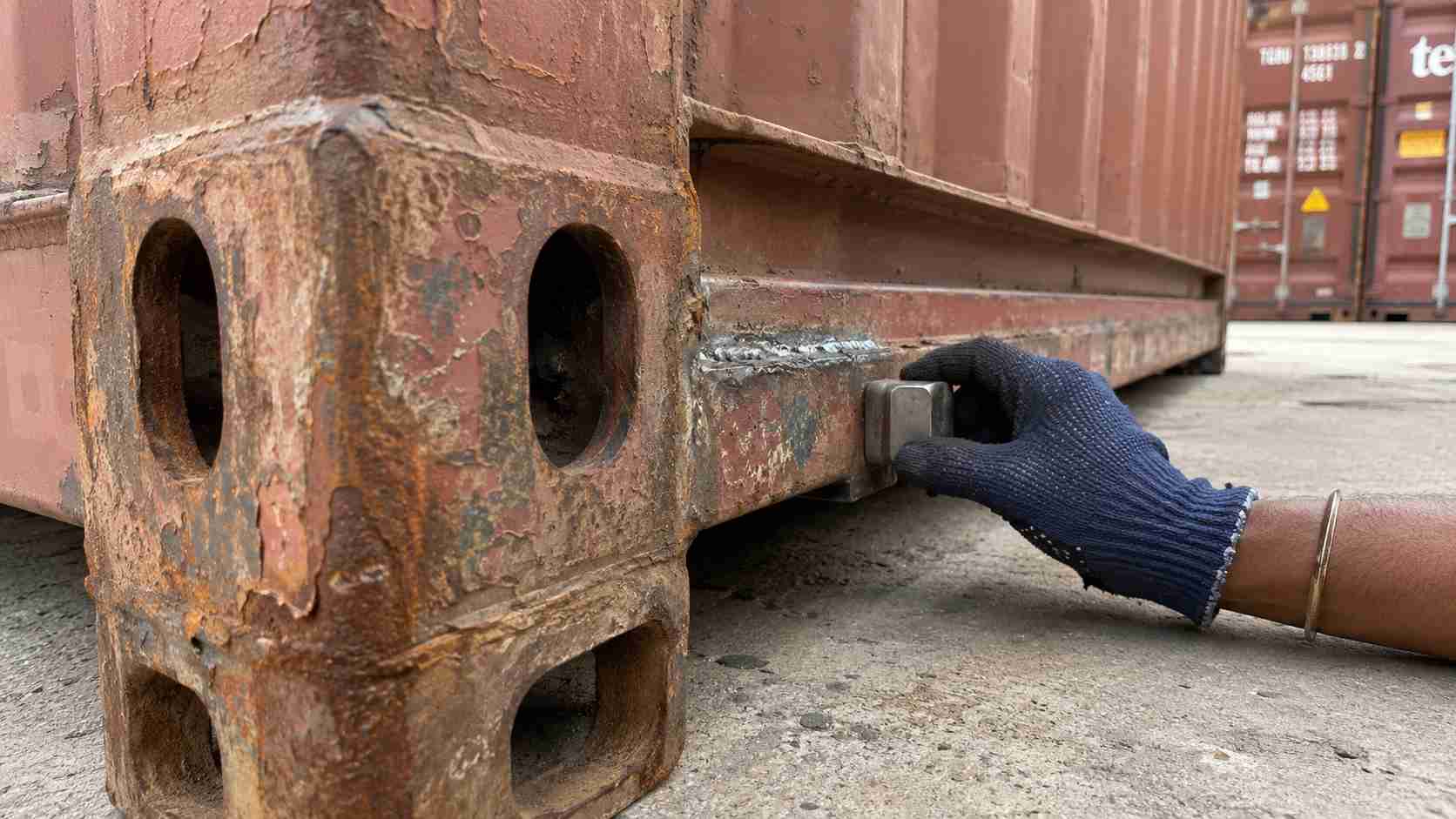
The grade question matters because of price gap and warranty asymmetry. A second hand container office sold by a yard carries no warranty — implicit or explicit. If the floor rots or a side wall pinholes after eighteen months, that’s your cost.
The Retrofit Layer — What Converting a Used Shell Into an Office Actually Costs in Indian Rupees
This is the cost almost no SERP competitor quantifies for India. Buying the shell is half the project. Office conversion adds Rs 80,000–1,80,000 depending on specification, and the timeline runs three to five weeks of separately-managed contractor work.
Realistic line items on a 20ft used container office retrofit, in INR:
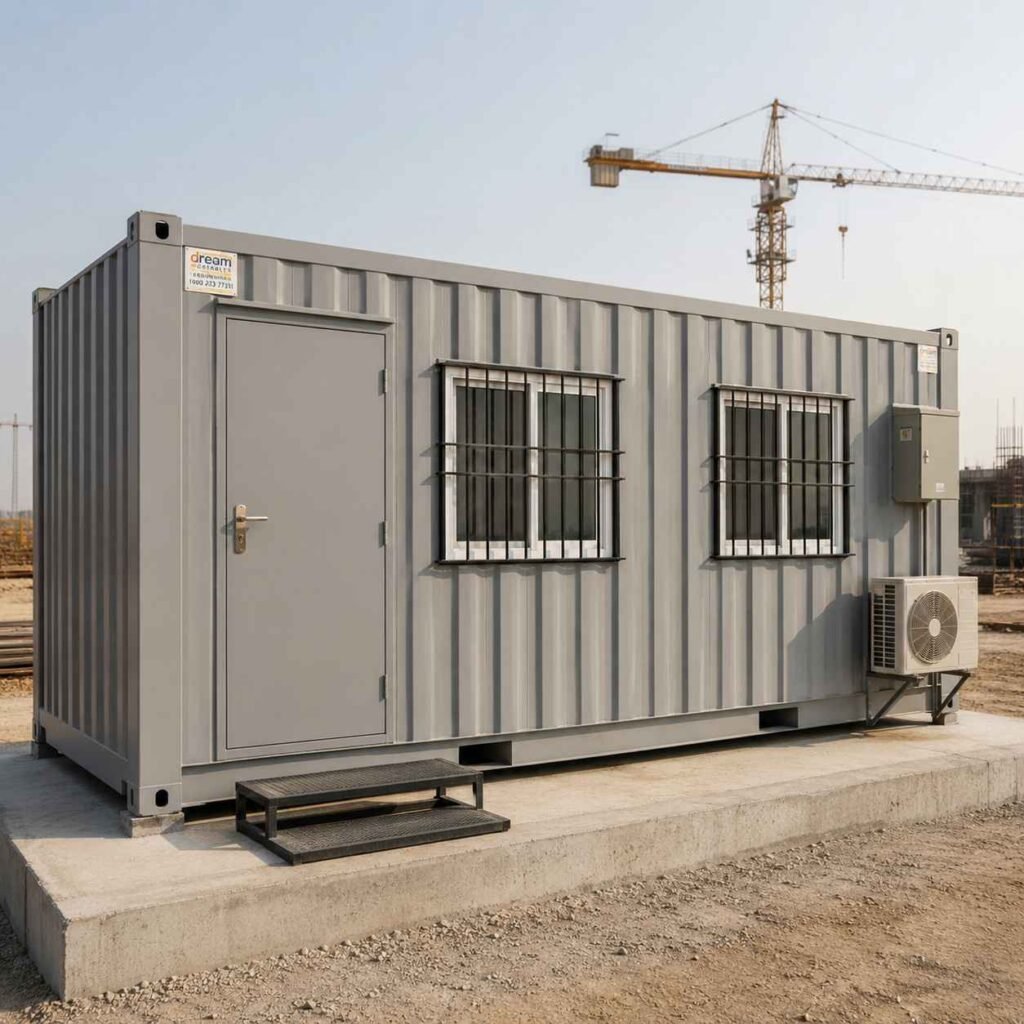
Wall insulation and interior lining (PUF panel or rockwool + 0.5mm GI sheet) — Rs 25,000–45,000. Without insulation, an uninsulated steel shell hits 50°C inside on a Delhi summer afternoon and is unusable.
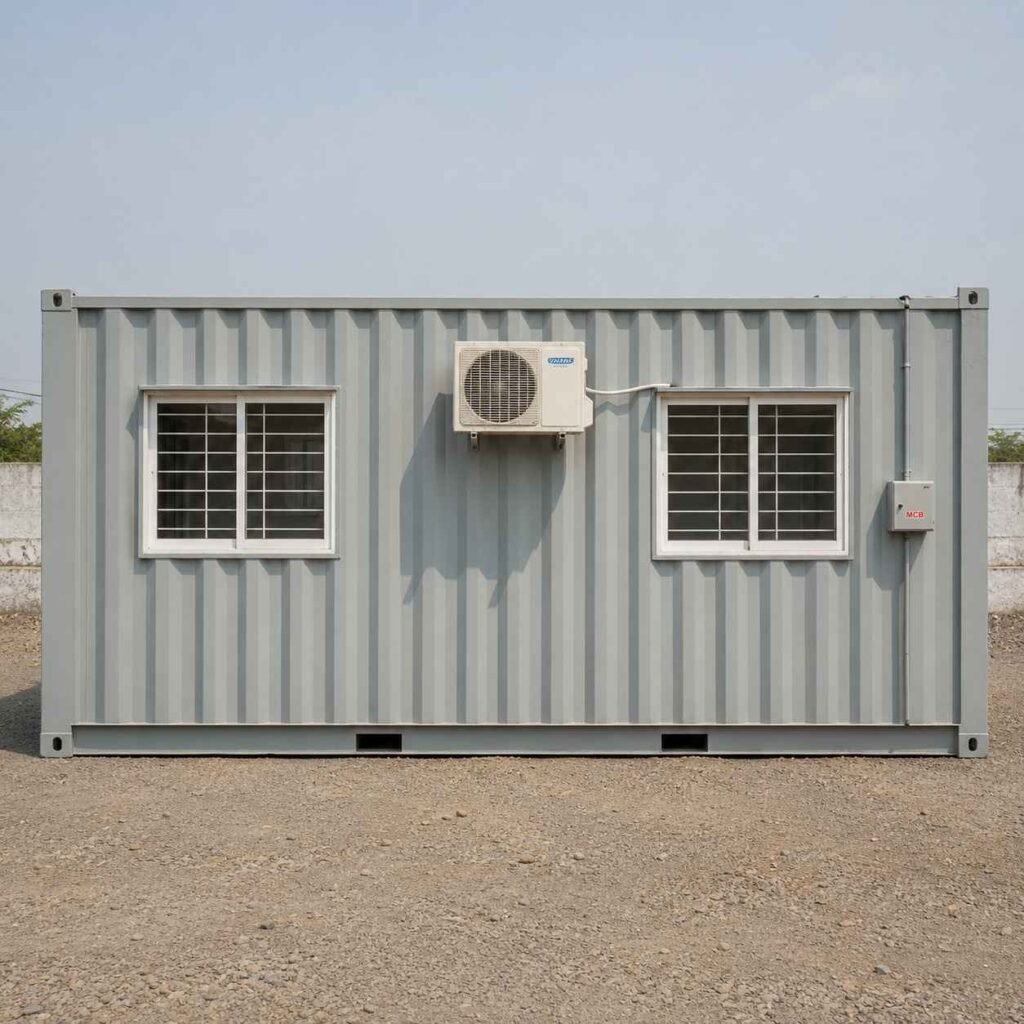
Windows (2–3 sliding aluminium windows with grills) — Rs 12,000–22,000 supplied and fitted. Cutting wall openings into Cor-Ten steel requires plasma or angle grinder work and reinforcement of the opening edge.
Electricals (1.5 kW load — lights, fans, sockets, AC point, ELCB-MCB panel) — Rs 18,000–35,000. Specify copper wiring, not aluminium. Insist on a written wiring diagram for any future fault tracing.
Wall-mounted split AC (1 ton) — Rs 32,000–45,000 supplied and installed, including the wall sleeve and drainage.
Interior paint and floor finish (vinyl or epoxy over existing plywood) — Rs 12,000–22,000.
Door (man-door cut into side wall if container doors are too heavy to use as office entry) — Rs 15,000–25,000.
Plumbing if you’re adding a toilet — Rs 25,000–45,000 for fixtures and connections, plus drainage routing.
A clean 20ft retrofit lands at Rs 95,000–1,40,000. Add a toilet and it crosses Rs 1,40,000. Compared to the Rs 1,30,000–1,75,000 site-delivered shell from section two, the all-in Path 1 total for a 20ft used container office in cargo-worthy condition is Rs 2,25,000–3,15,000. Hold that figure for the closing comparison.
GST, HSN, and the Procurement Paperwork Used-Container Buyers Get Wrong
Three procurement details cost India buyers money quietly because they aren’t on the SERP guides written for US or UK buyers.
GST on the shell. Used shipping containers fall under HSN code 8609 (“containers, including containers for the transport of fluids, specially designed and equipped for carriage by one or more modes of transport”). Used containers are taxed at the same 18% IGST as new containers — the “used” status does not lower the GST band. If a yard offers you an “off-the-books” cash price below GST, the savings come with a long downstream tail: no invoice means no input-tax-credit eligibility for your business, no insurance claim path, and no proof of ownership for site-permit applications.
GST on the conversion. The office retrofit, when billed by a registered contractor, falls under HSN 94060099 (“prefabricated buildings — other”) at 18% IGST. Some buyers split shell and conversion across an unregistered shell-seller and an unregistered retrofit contractor to avoid GST entirely. The downside is again the missing input tax credit and the absence of any contractual recourse if either party doesn’t deliver.
E-way bill for inter-state movement. Any container valued over Rs 50,000 moving across state lines needs an e-way bill generated against a valid GSTIN. If your yard seller can’t produce an e-way bill — or asks you to generate one against your buyer GSTIN with a confected supplier name — the transaction has a paperwork problem you don’t want.
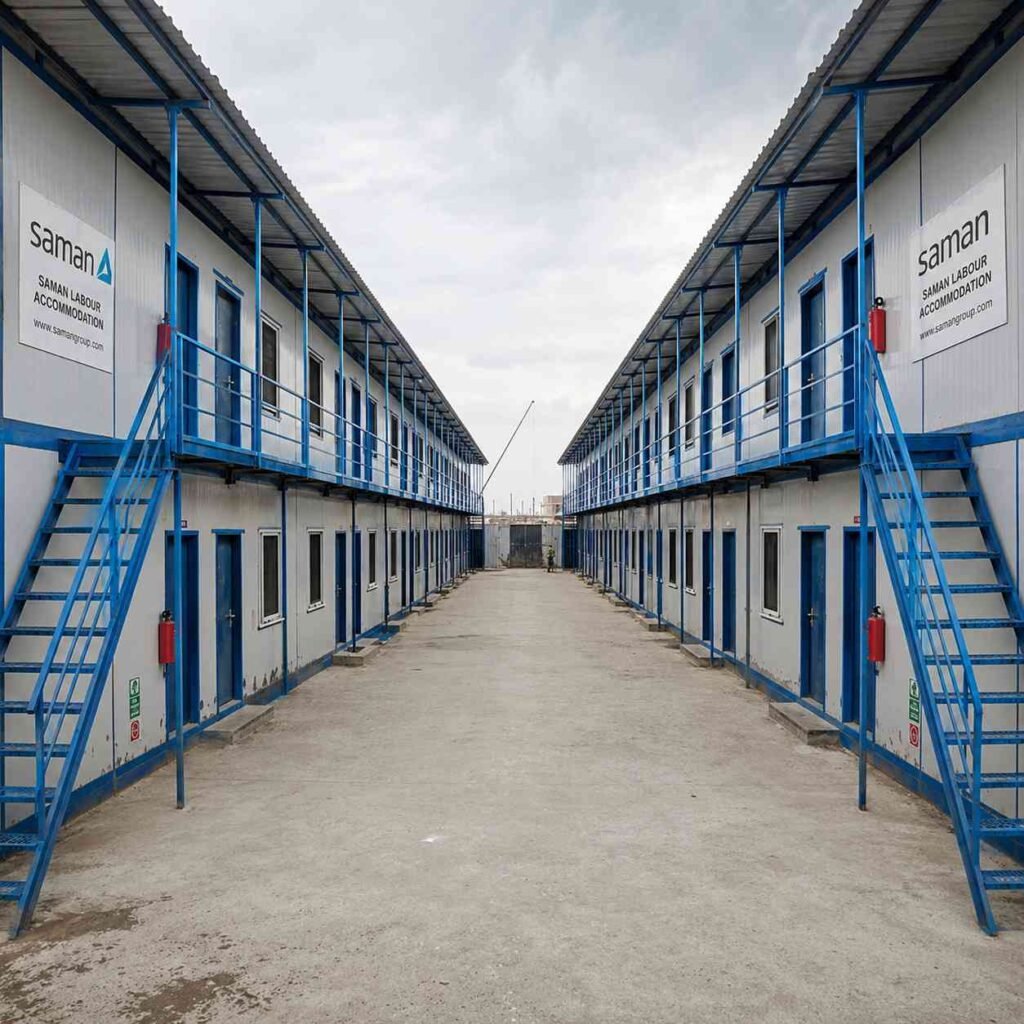
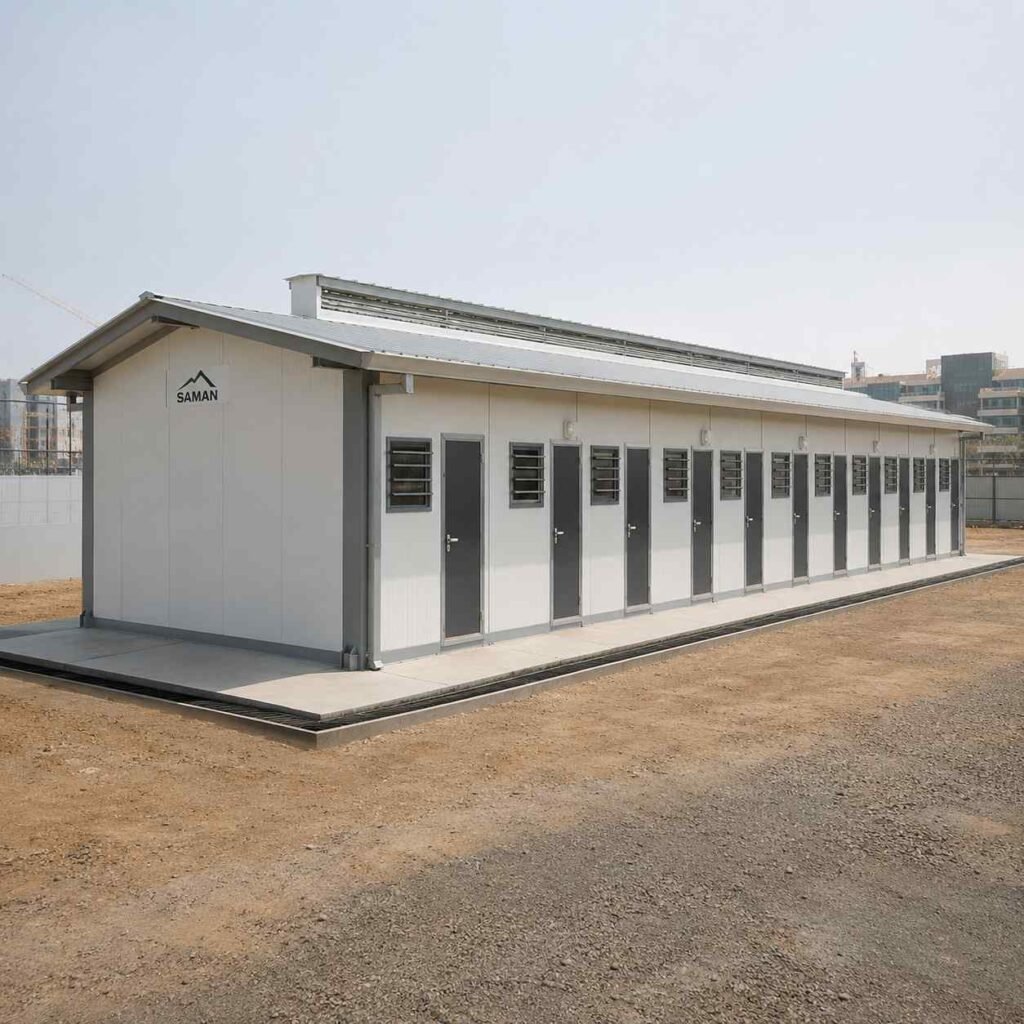
The warranty asymmetry. A used container office from a yard comes with zero warranty in practice. The retrofit contractor may offer one year on workmanship if asked. By contrast, a manufacturer-built new container office carries the SAMAN factory warranty — five years on the structural frame and base, one to two years on finishing items (wiring, plumbing, painting, panels, doors, windows, locks, fixtures, roof). The warranty math is not zero versus 25 years; it’s “you and your retrofit guys are on your own” versus “factory call-back available if anything fails.” On a six-year-old used unit, that asymmetry hits the day something fails.
When New Beats Used — The Two-Year Cost-of-Ownership Crossover
Path 1 (used shell + retrofit) wins on day-one capex. The total — Rs 2,25,000–3,15,000 for a 20ft cargo-worthy + clean retrofit — undercuts a comparable new pre-fab. That gap is real and is why used keeps existing as a market.
Year two and three the gap narrows. Sea-life containers in inland use start showing seam pin-holes, gasket failures, and floor weakness; small fixes accumulate to Rs 15,000–35,000 per year on a decade-old shell exposed to a real Indian climate cycle. The retrofit wiring is not under any contractor warranty after year one and a half. The doors stop closing watertight by year three on most yard-sourced units.
Year three onwards, a new pre-fab from a manufacturer pulls ahead in any honest TCO accounting. Predictable maintenance, structural warranty still active, factory part availability for fittings, and full procurement paperwork. The Rs 2,15,000 entry point on a new 20ft factory-fitted container office — represented by our factory-fitted Container Office Cabin range, with 40ft variants like the 40ft container site office configuration for EPC and infrastructure projects — closes the gap with used unless your project genuinely needs the lowest possible day-one number.
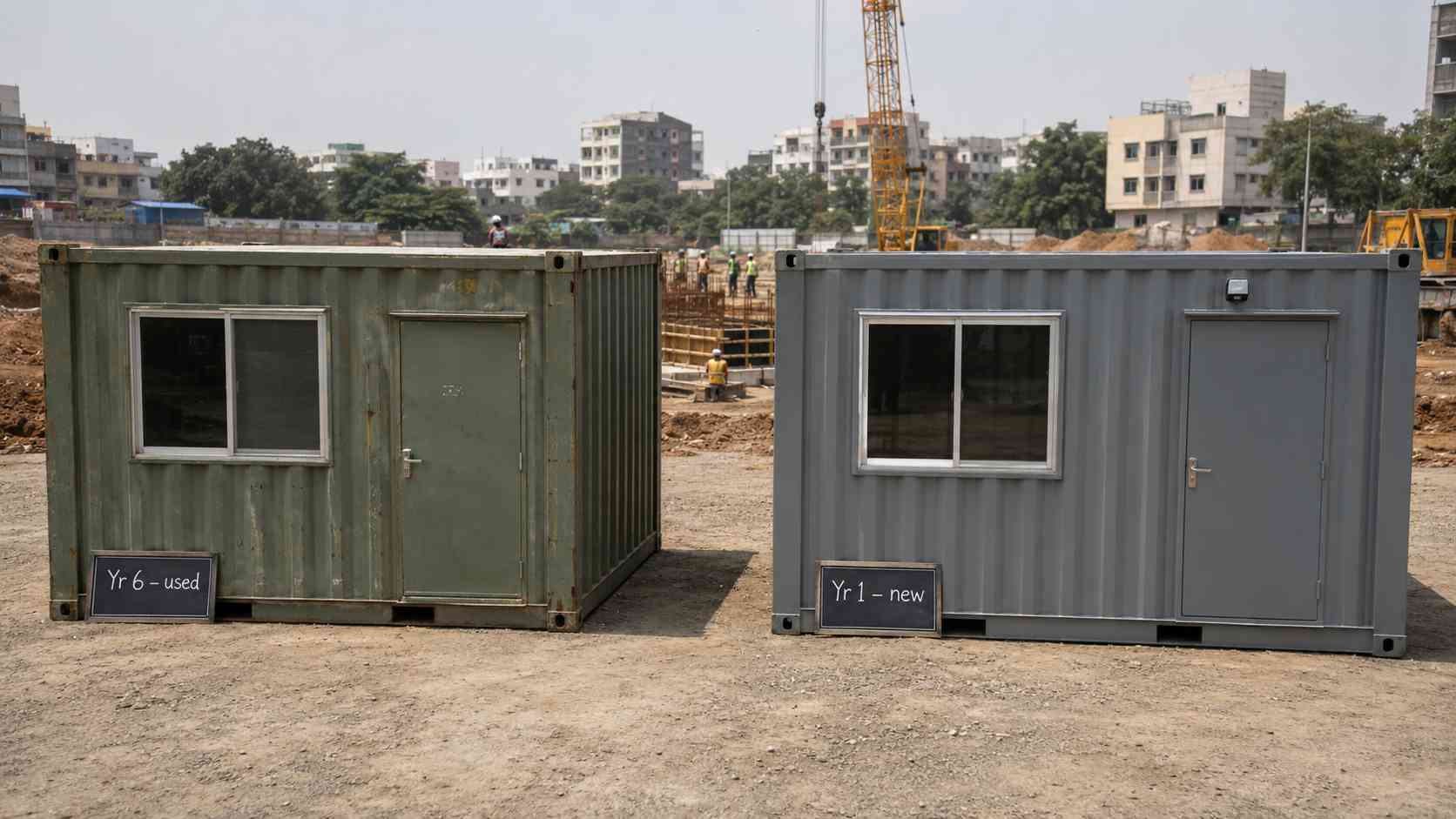
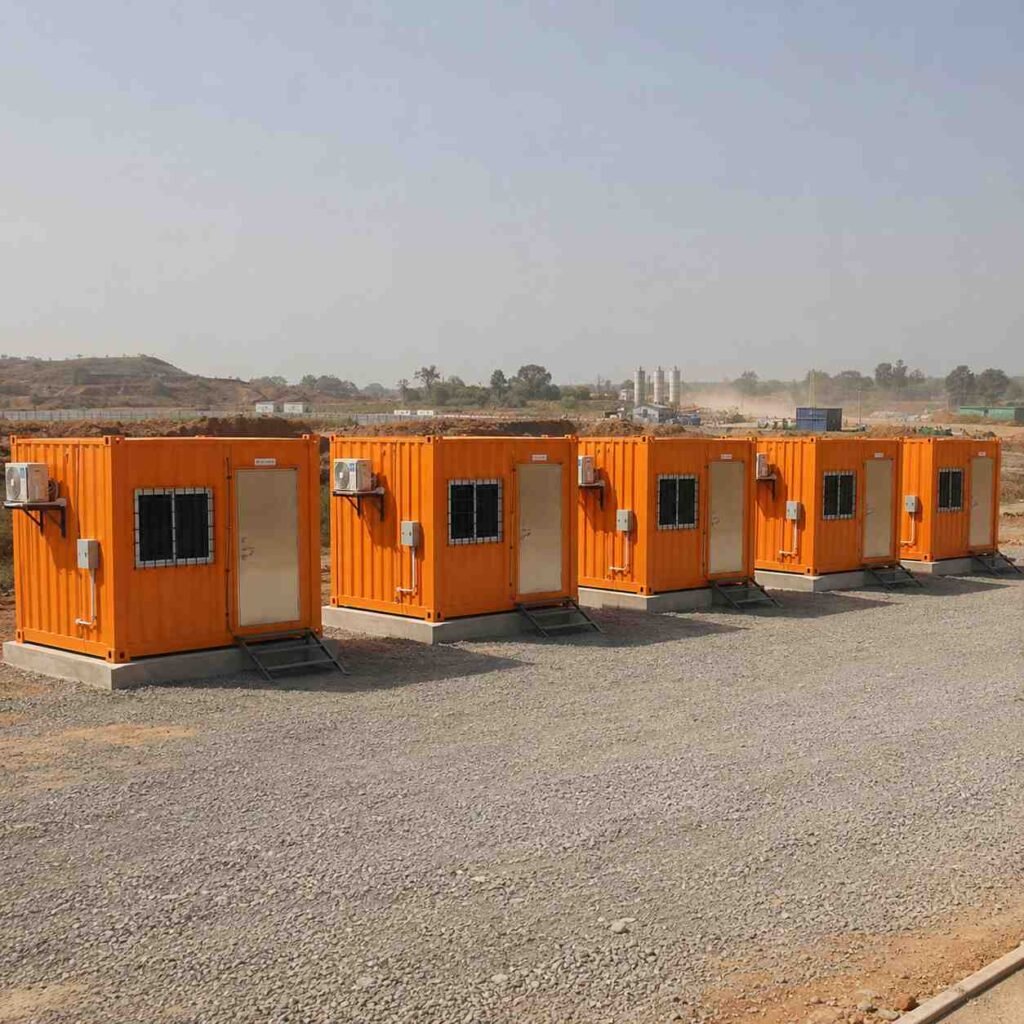
When used wins: short-duration projects (under 18 months) where the unit will be sold or scrapped at end; tight-budget pilots where capex matters more than residual value; buyers with their own retrofit team and engineering oversight.
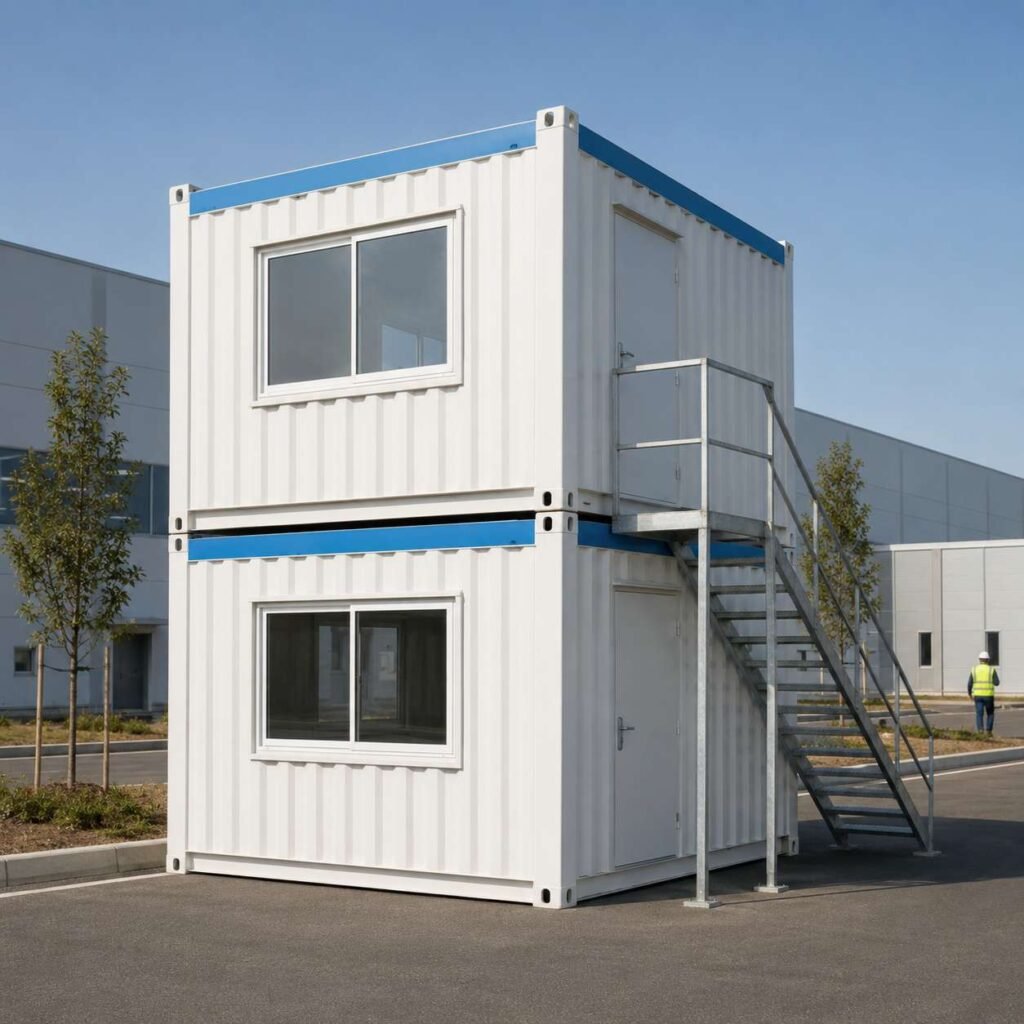
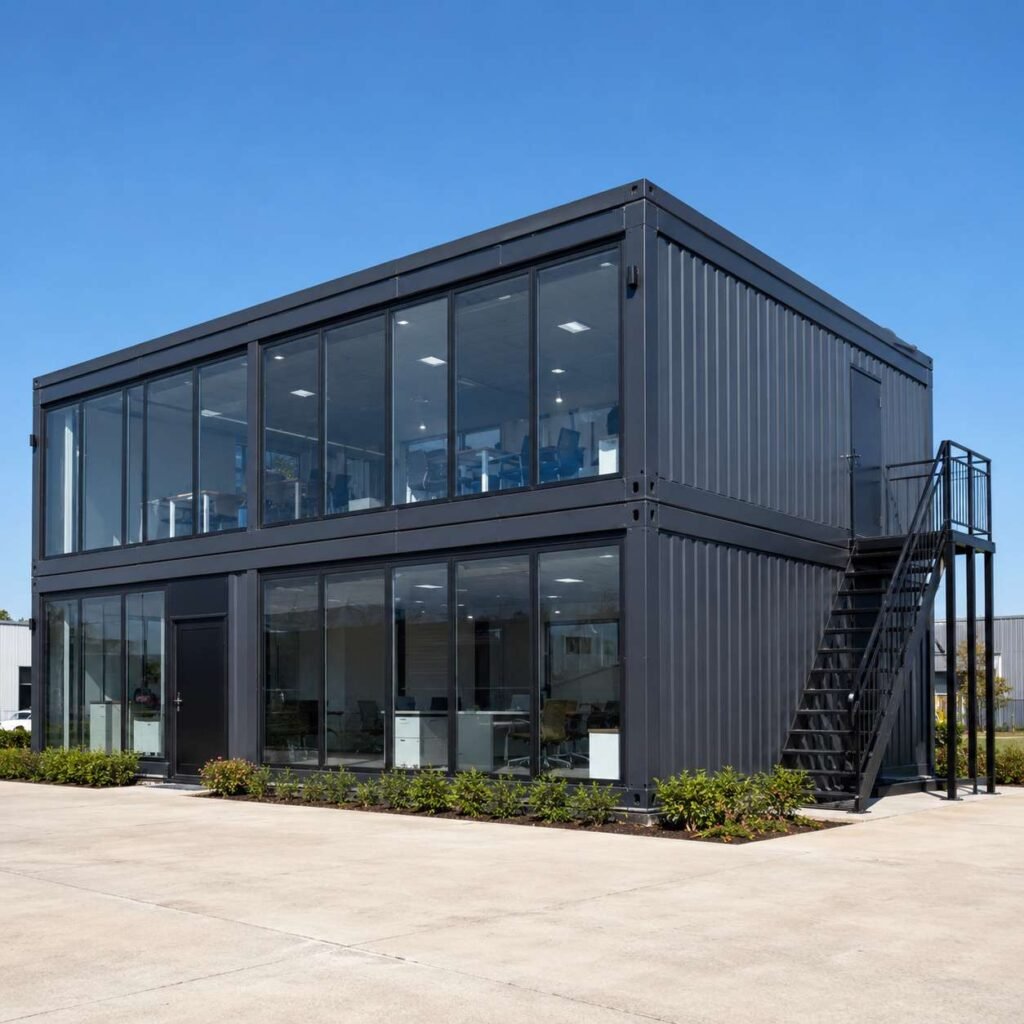
When new wins: projects over two years; offices that need a tax invoice for input credit; sites requiring statutory approvals where the seller’s GSTIN matters; buyers who don’t want the project management of running parallel contractor crews. For most of these cases, our broader range of prefabricated office containers lays out the size and configuration options.
Frequently Asked Questions About Buying a Used Container Office in India
How much does a used container office cost in India?
A 20ft used shipping container shell in cargo-worthy condition is typically Rs 1,40,000–1,80,000 at port yards in 2026, plus Rs 30,000–70,000 transport to site, plus Rs 95,000–1,40,000 for office retrofit (insulation, windows, electricals, AC, paint, flooring). All-in for a clean 20ft used container office: Rs 2,25,000–3,15,000. A 40ft equivalent lands at Rs 3,80,000–5,50,000 all-in. Already-fitted refurbished units, when available, run Rs 3,00,000–4,50,000 for a 20ft but carry hidden-defect risk because the conversion work is concealed.
Is it safe to buy a used shipping container for office use?
Structurally, a cargo-worthy used container with sound ISO corner castings, no roof sag, no perforated bottom rail, and intact 28mm marine-plywood floor is a sound starting point. The risk is not the steel — Cor-Ten weathering steel is engineered for two-decade marine service. The risk is in what you cannot see: prior cargo residue (especially on containers used for pesticide, chemical, or animal cargo), unreported weld repairs, and concealed water-entry points. Do the six-point structural inspection in person before paying, and request CSC documentation if available.
What’s the difference between a used shipping container and a refurbished container office?
A used shipping container is the empty steel shell, sold by the yard with no office conversion. A refurbished container office means someone has already done the conversion — insulation, electricals, windows, AC, interior finish — and is reselling the fitted unit. In India, the second category is rare because EPC contractors generally redeploy their fitted cabins to the next project rather than selling them. When you do see “refurbished container office” listed, the refurb history matters more than the price.
Does GST apply to a used shipping container in India?
Yes. Used shipping containers fall under HSN 8609 and are taxed at 18% IGST, the same band as new containers. The office retrofit, when billed by a registered contractor, falls under HSN 94060099 at 18% IGST. Off-the-books transactions without GST may look cheaper but cost you input-tax-credit eligibility, insurance claim path, and contractual recourse — all things that matter the day something goes wrong.
Talk to SAMAN About a New-Build Alternative
Talking with a SAMAN engineer about a new-build alternative to a used container office takes ten minutes and gives you a real comparison number for your specific size, layout, and site.
Bangalore manufacturing unit
Call +91 80886 85440 or WhatsApp +91 88616 22859
Delhi NCR manufacturing unit
Call +91 87960 39938 or WhatsApp +91 97089 89937