


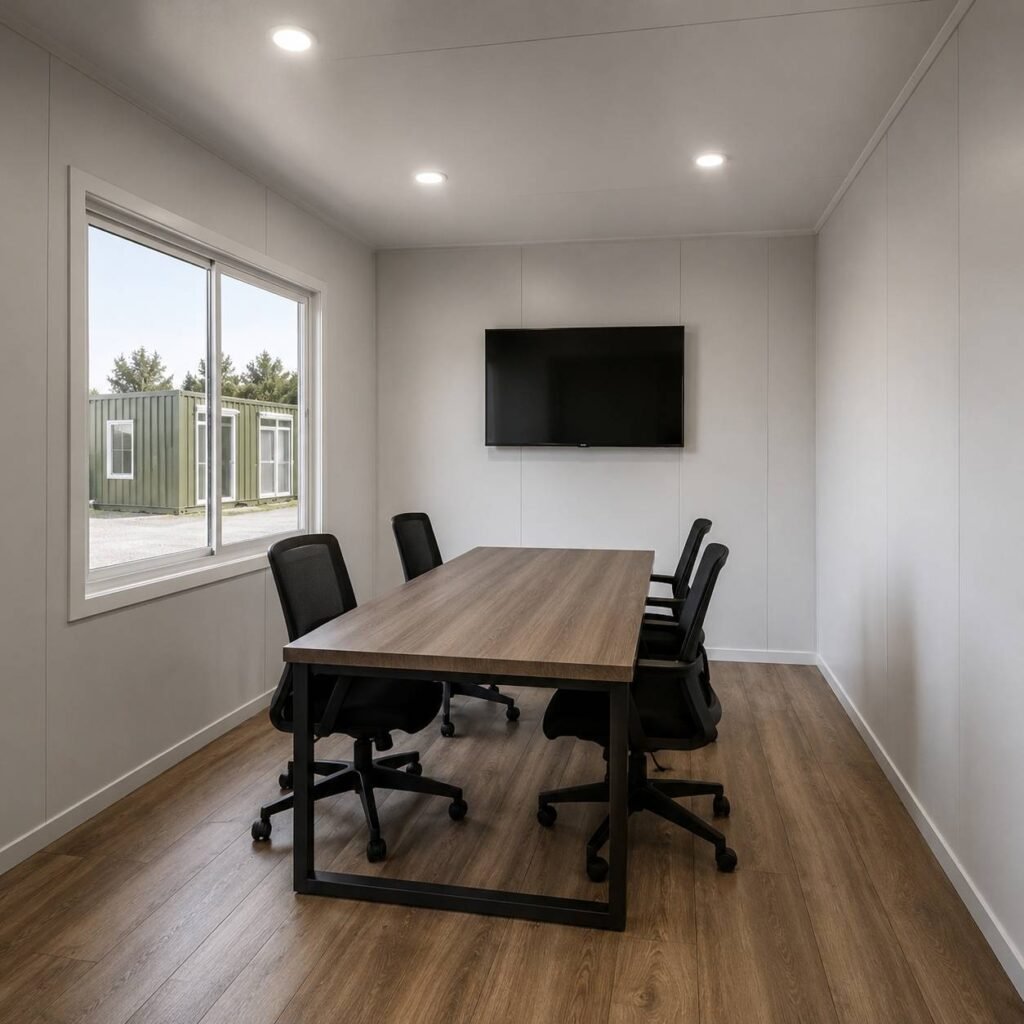
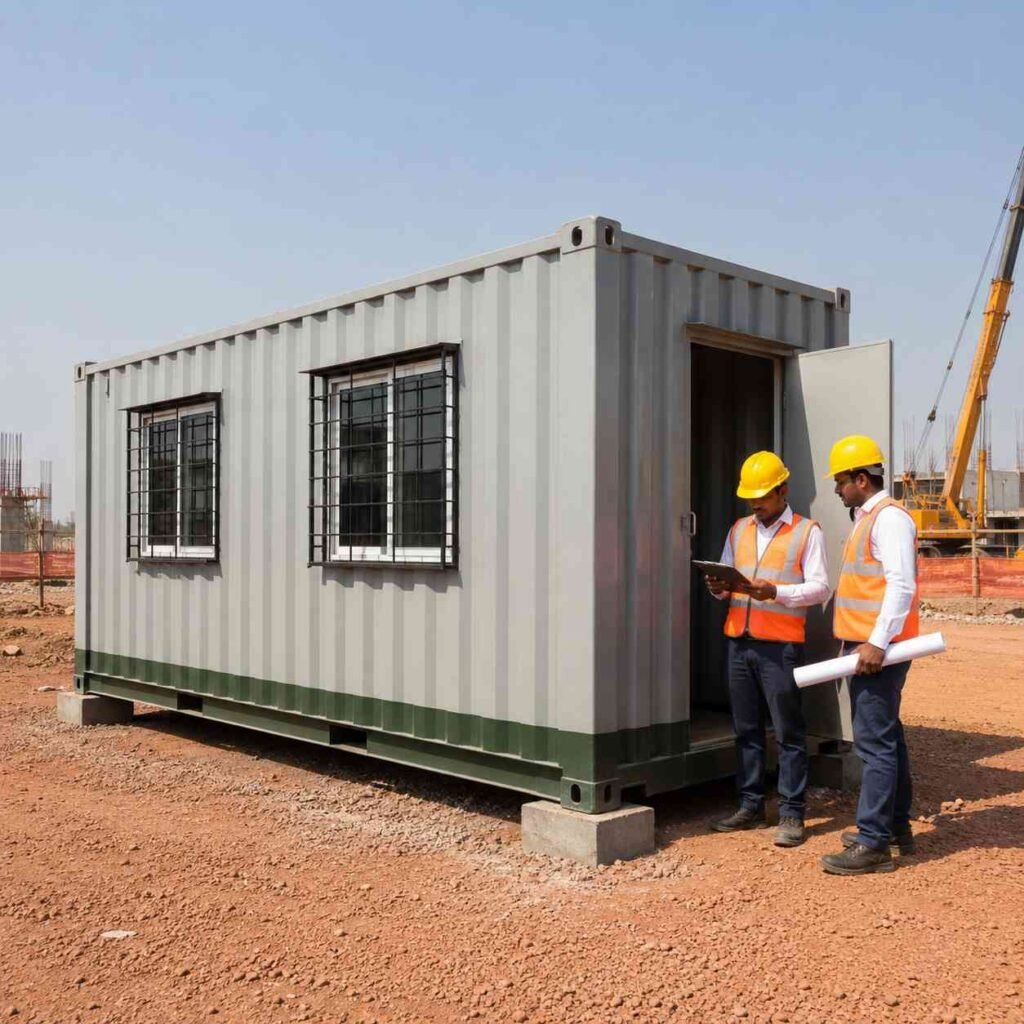
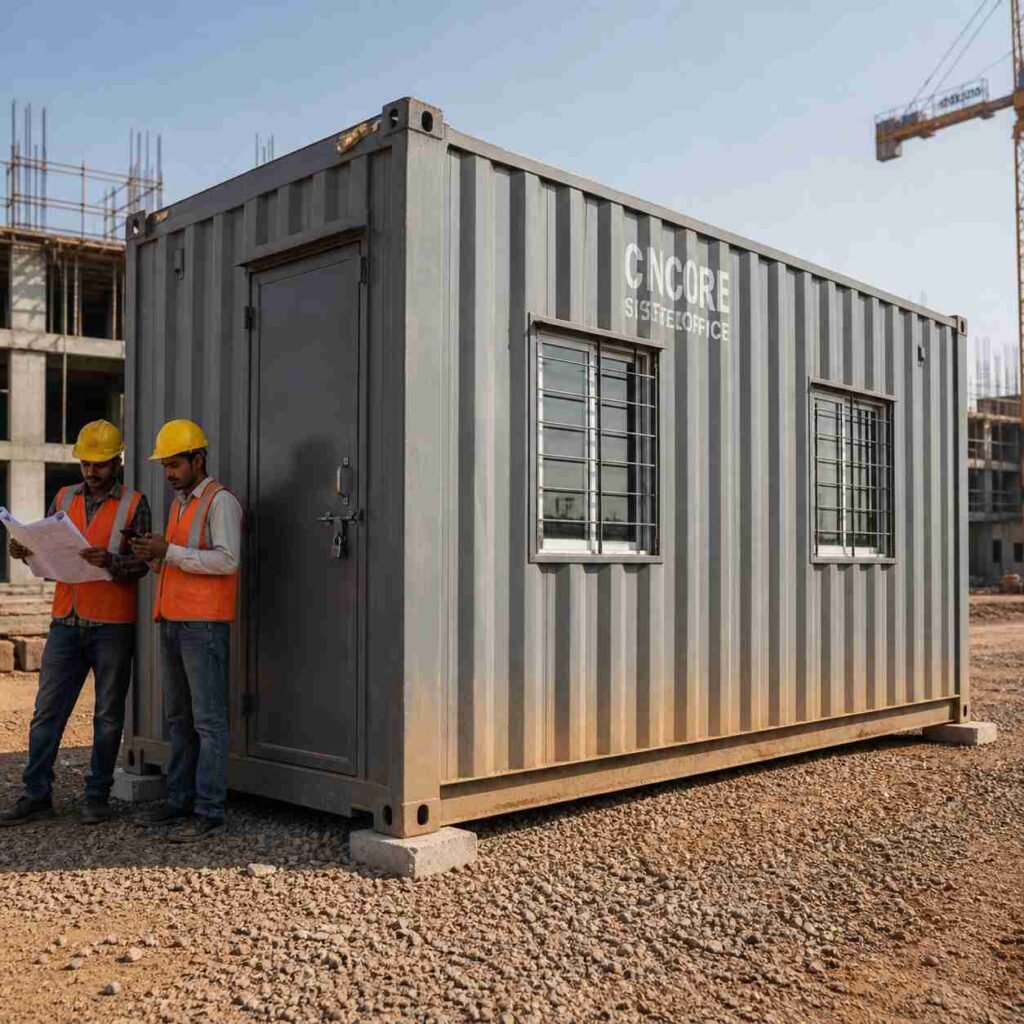
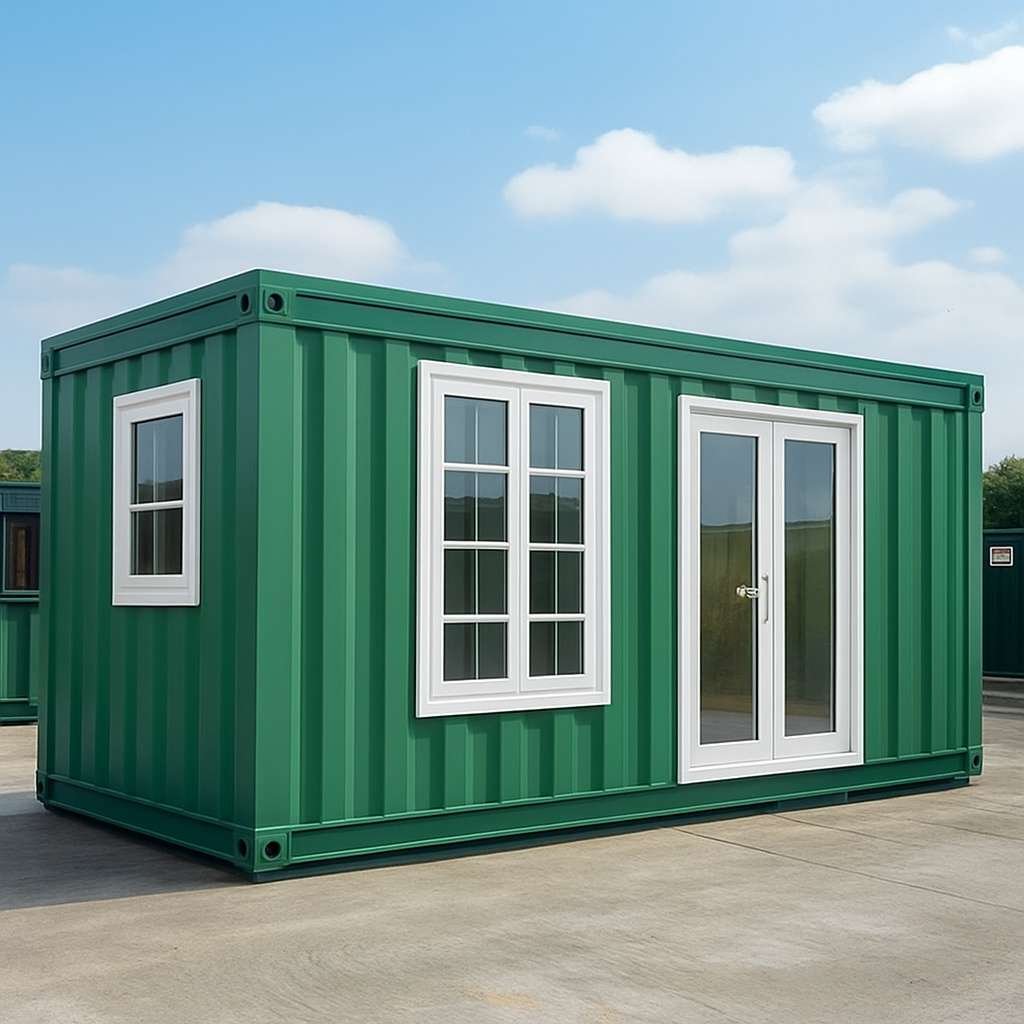
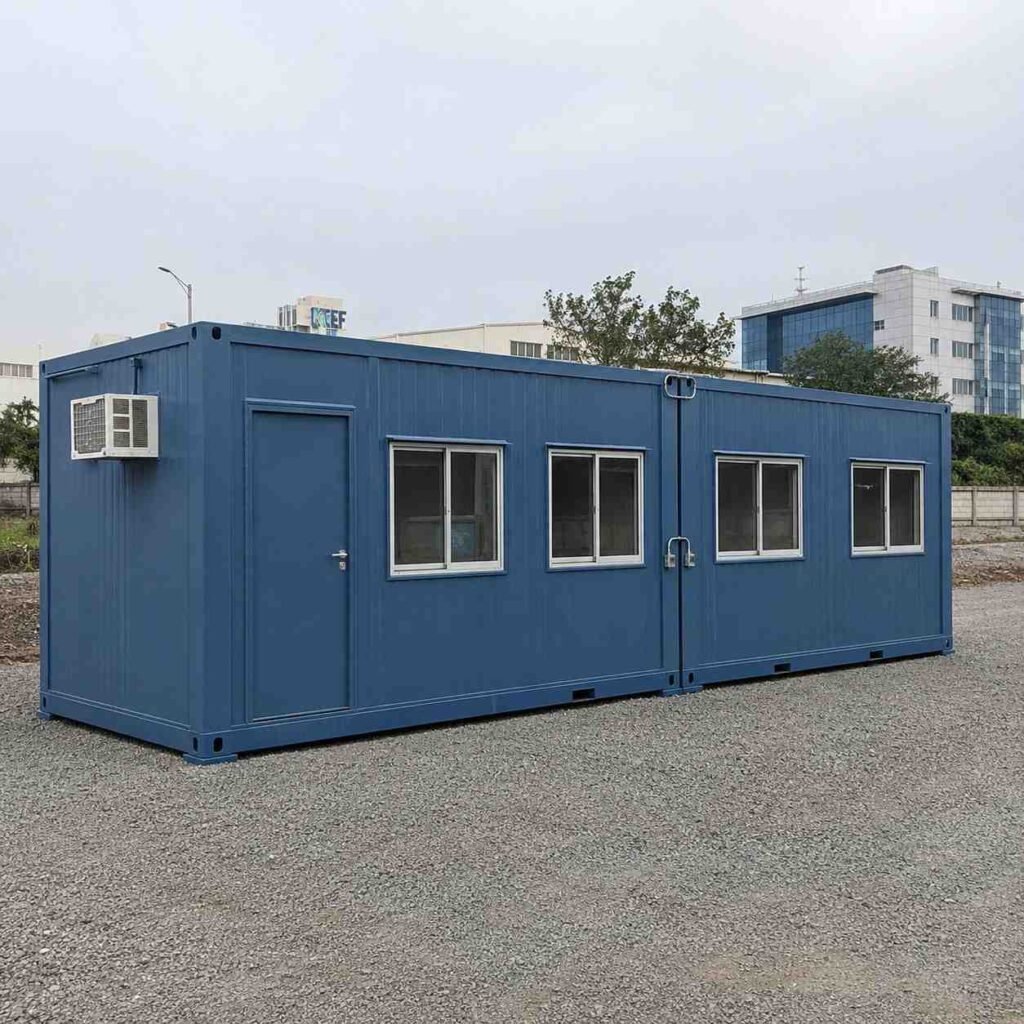

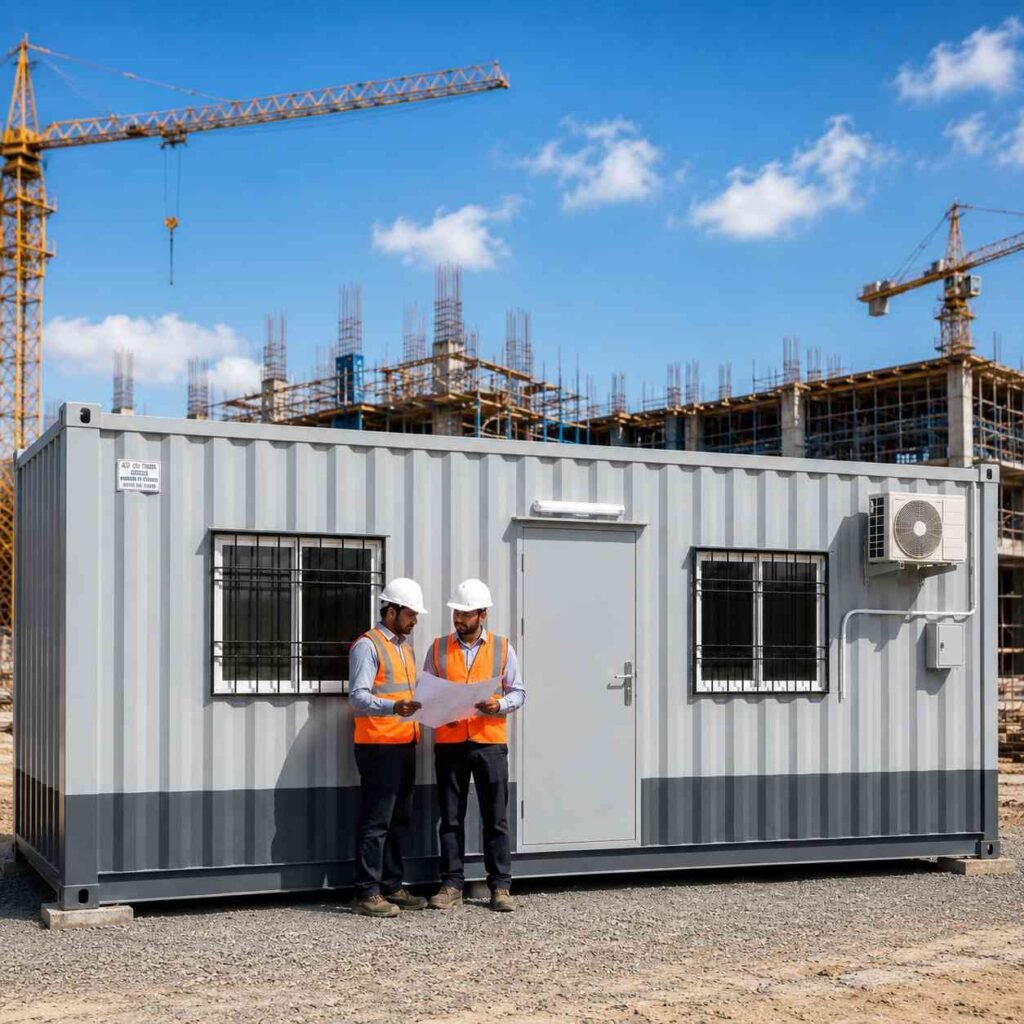
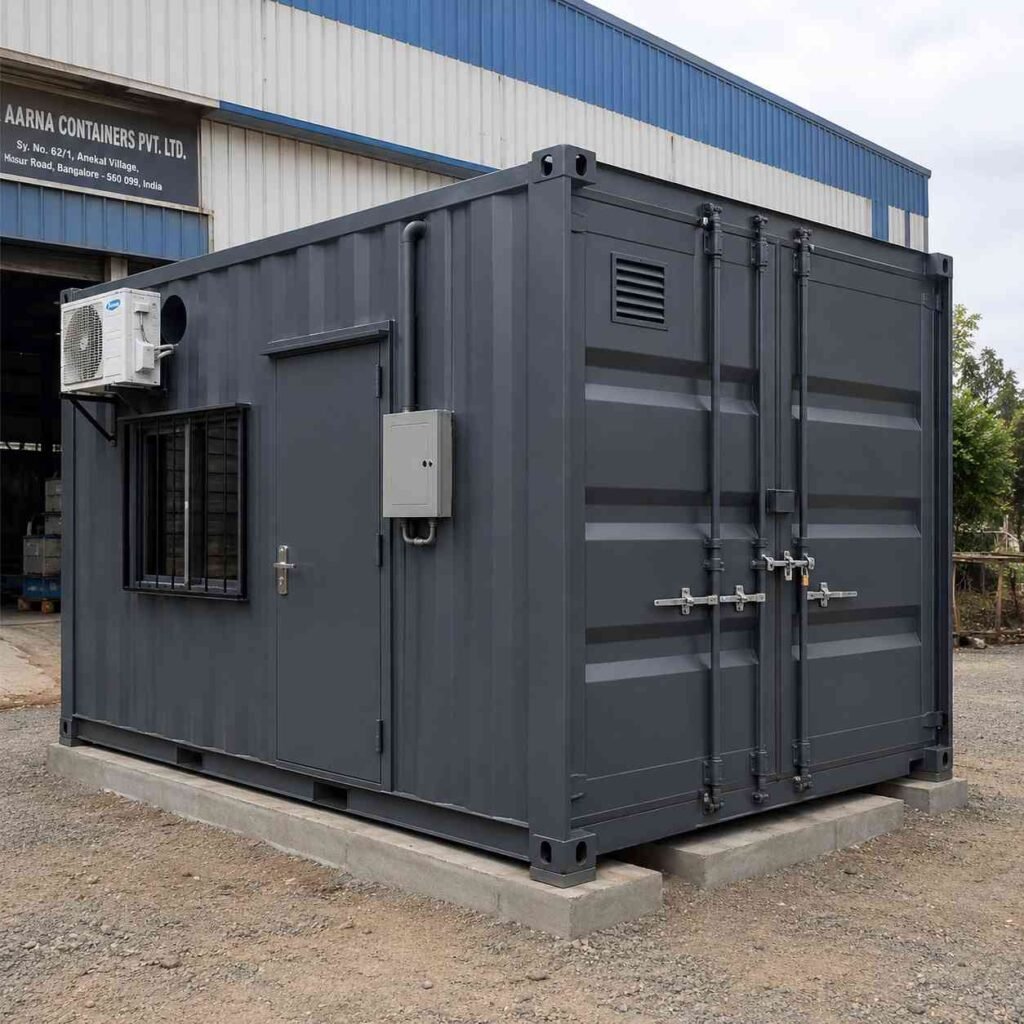


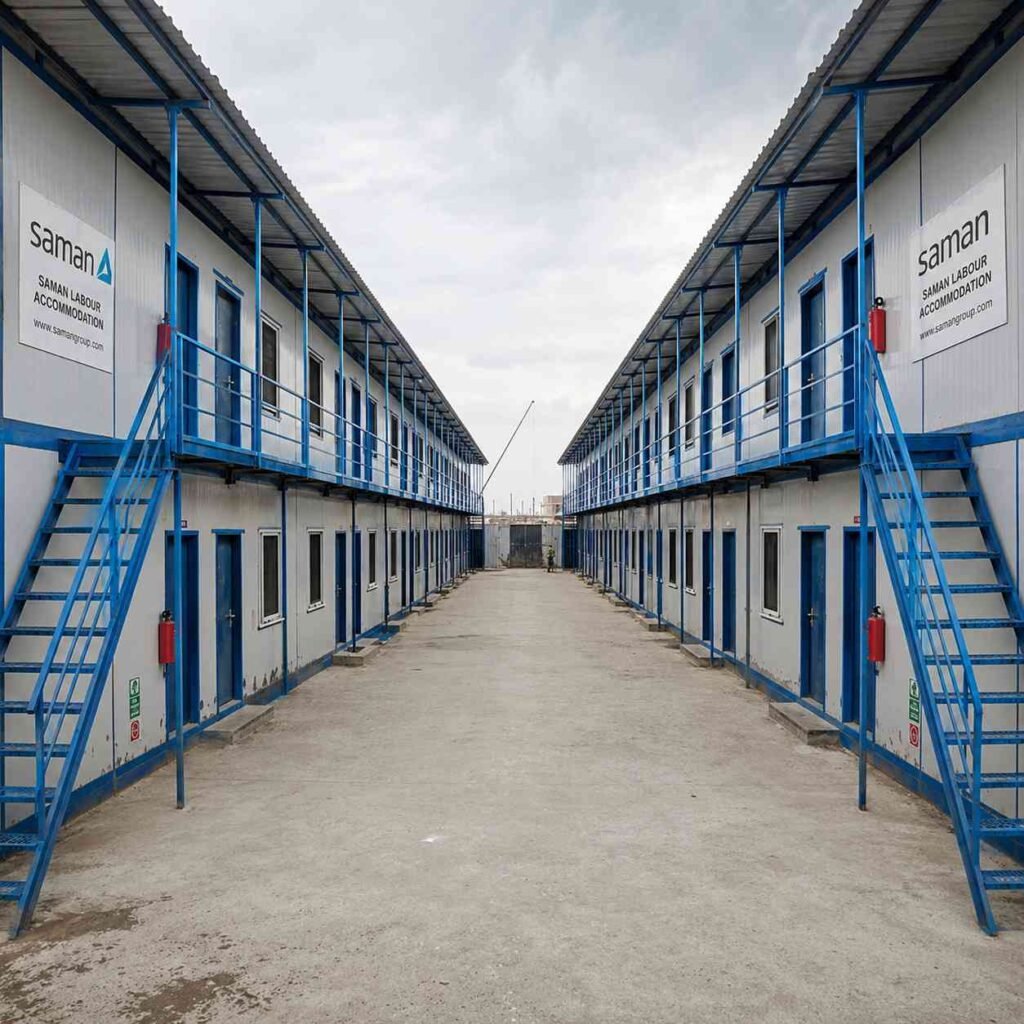
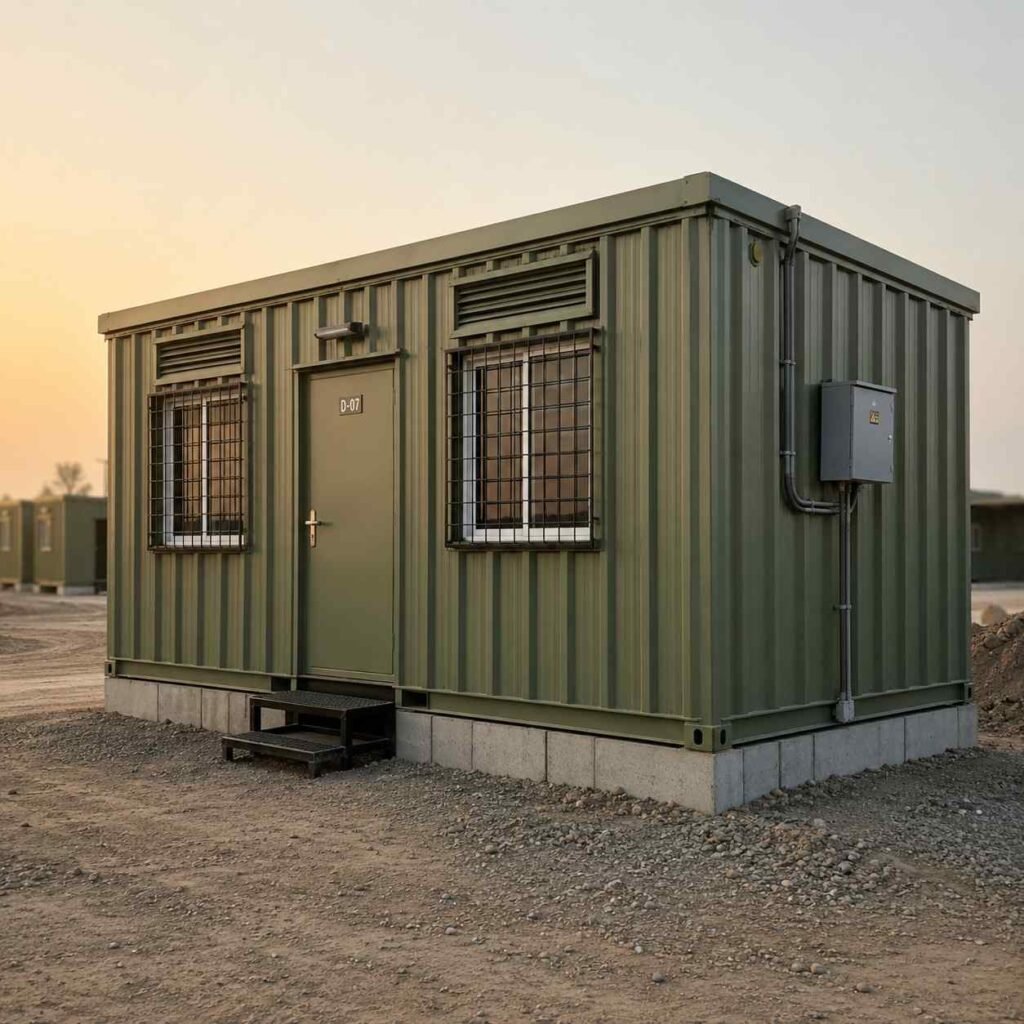

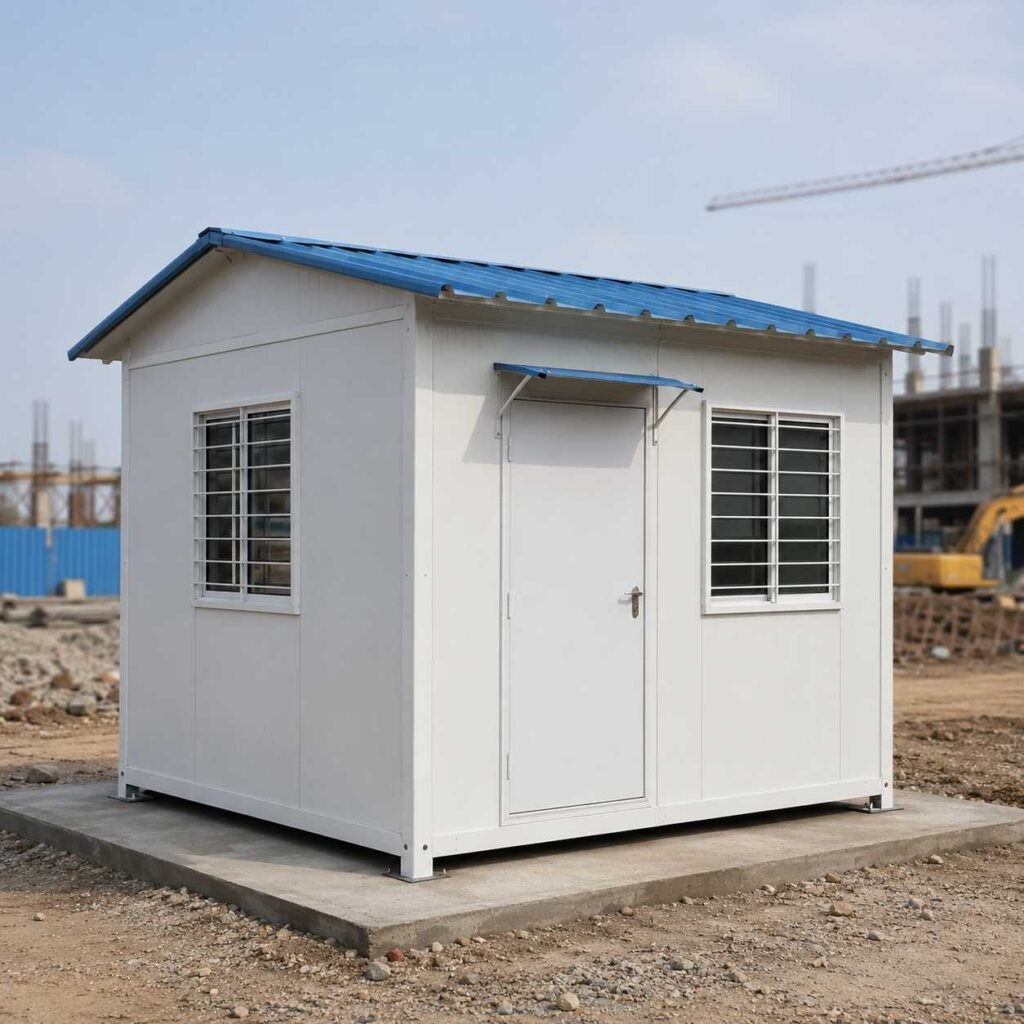
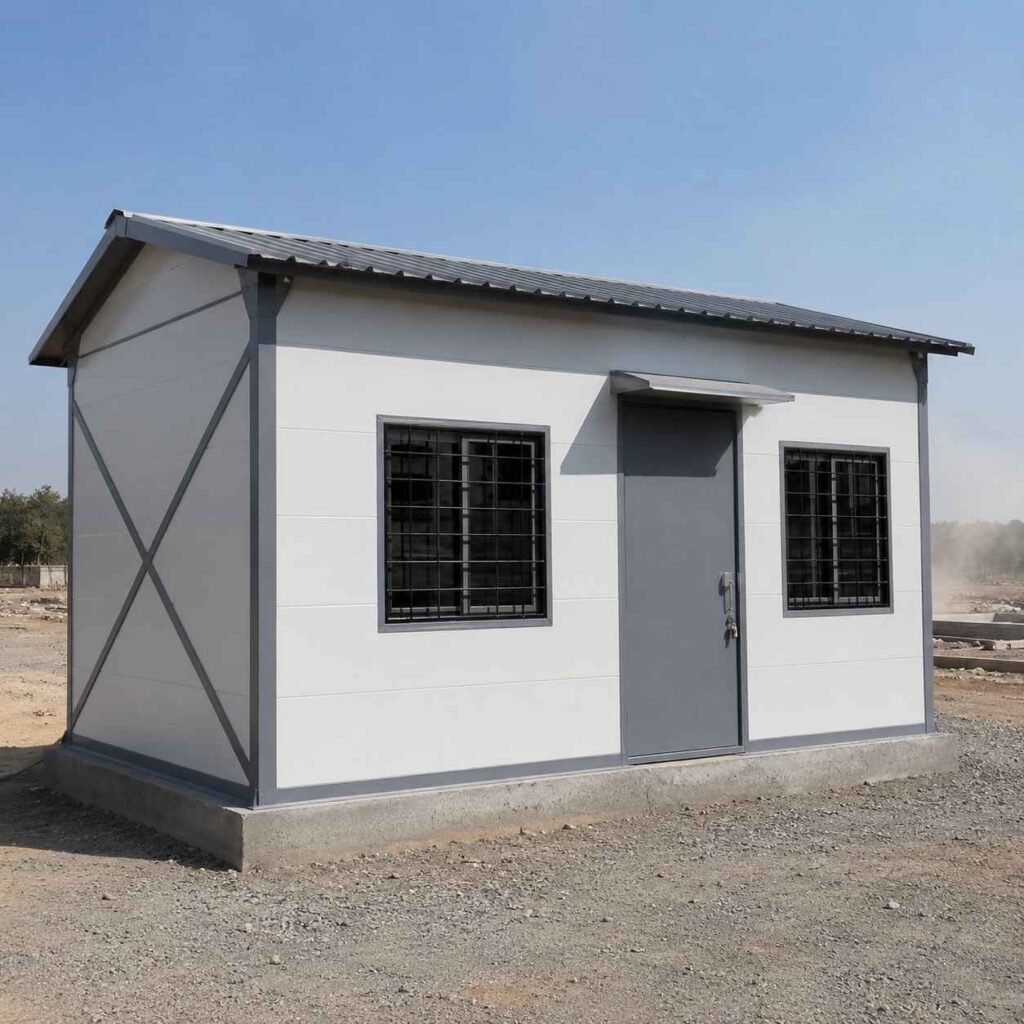
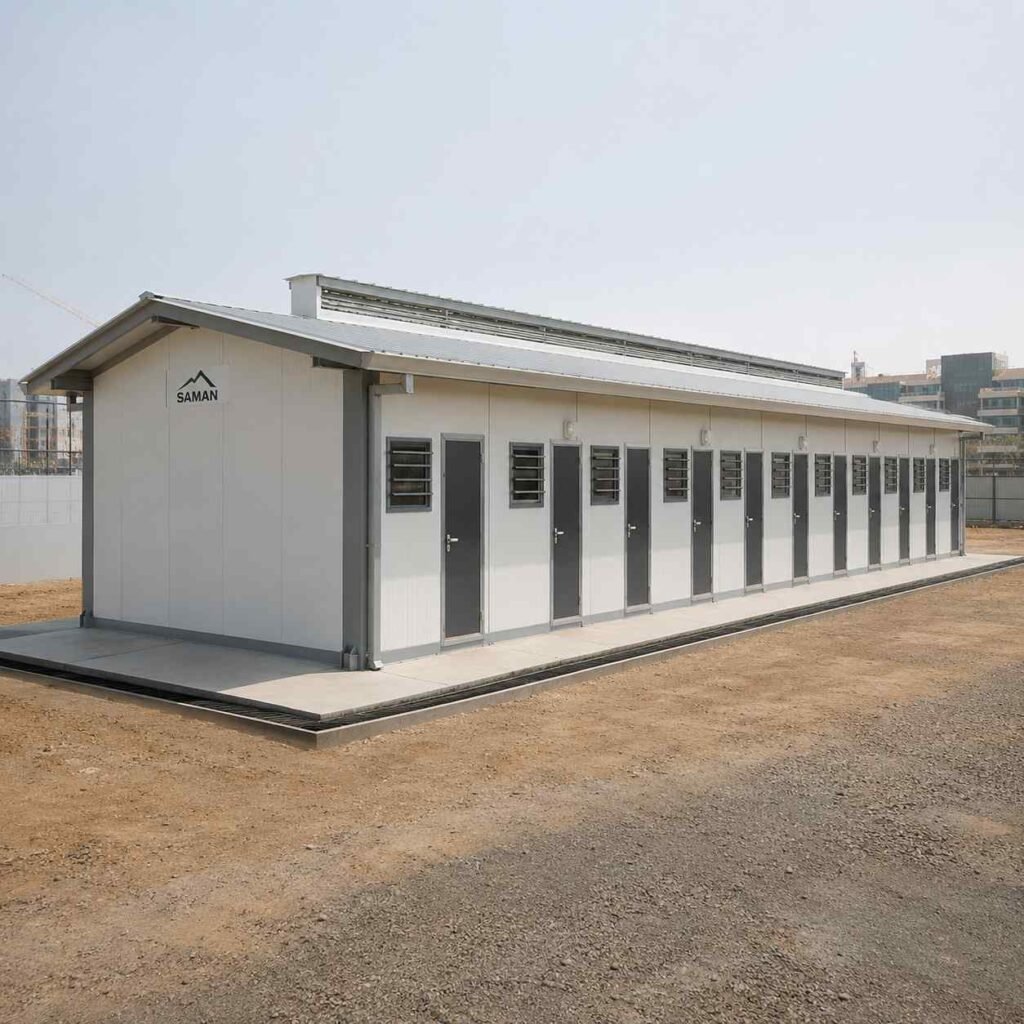
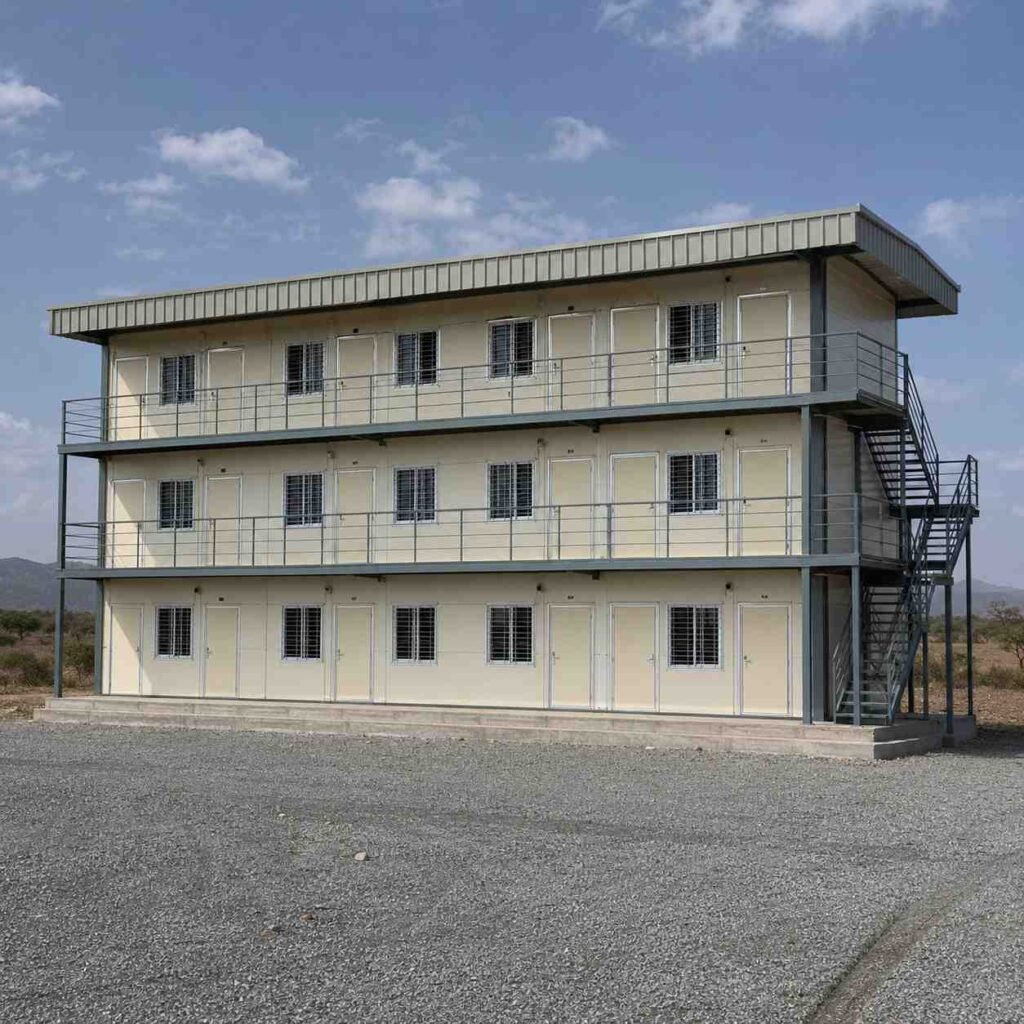
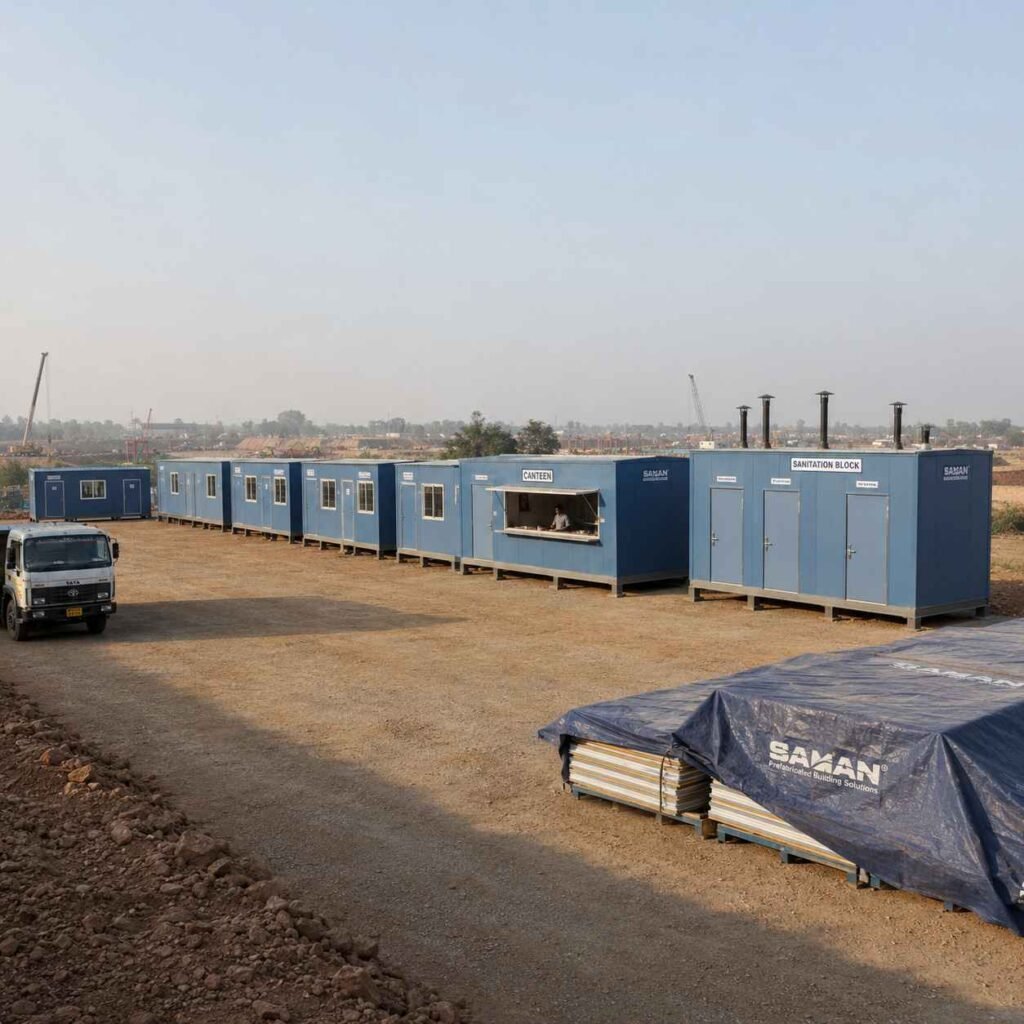
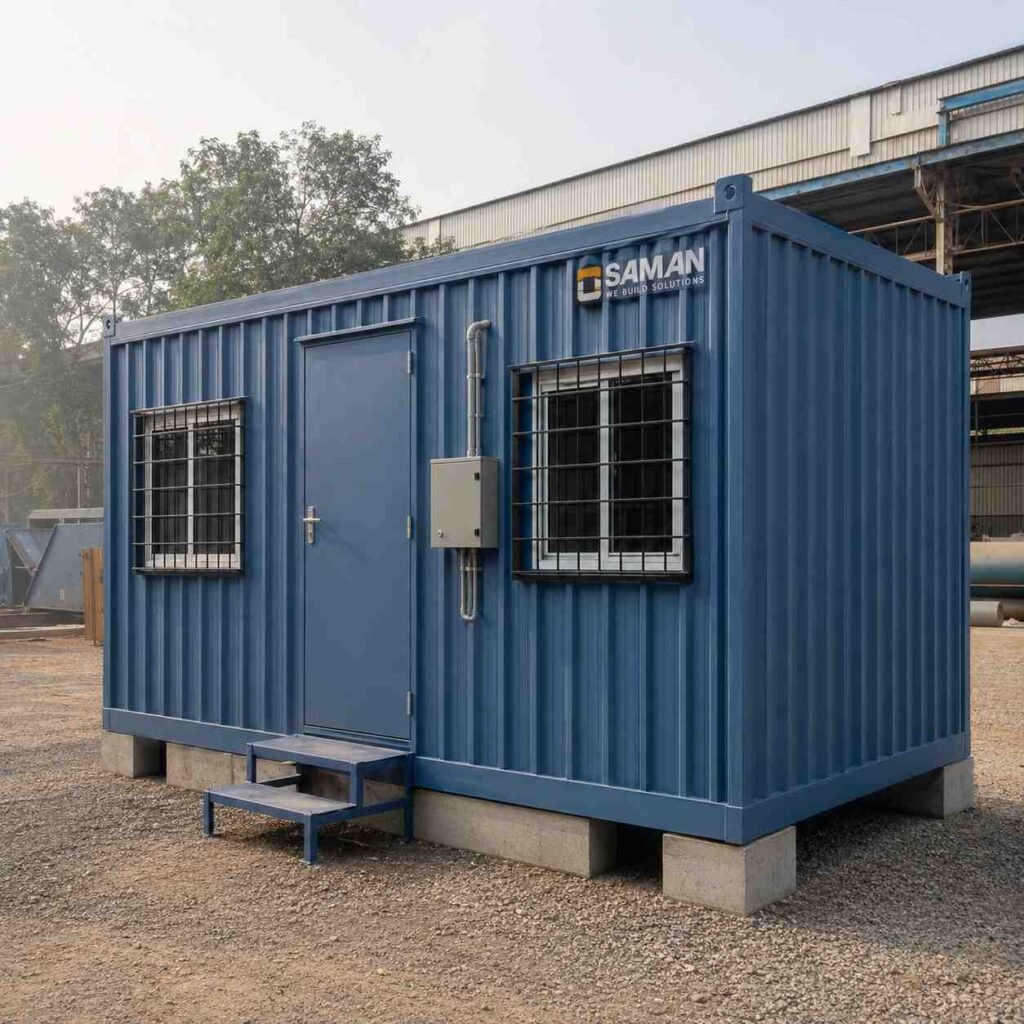
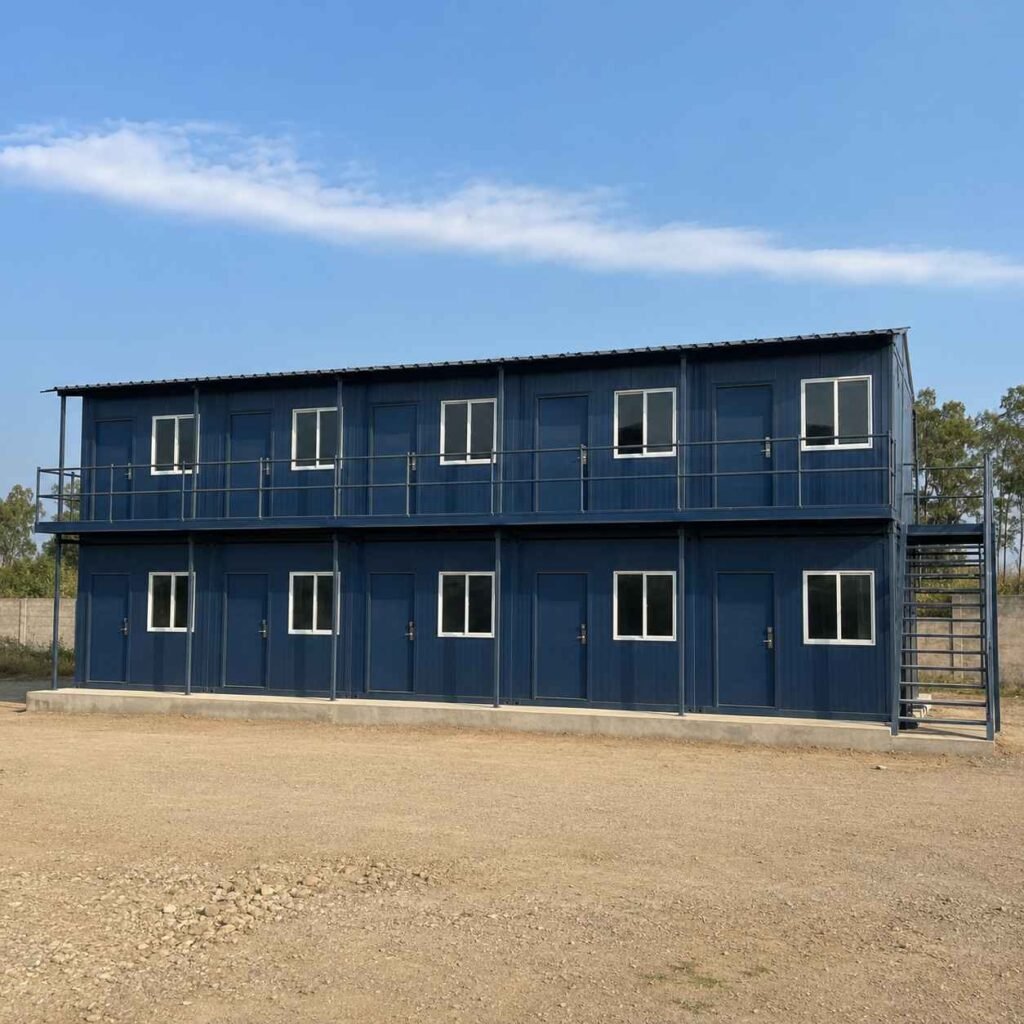
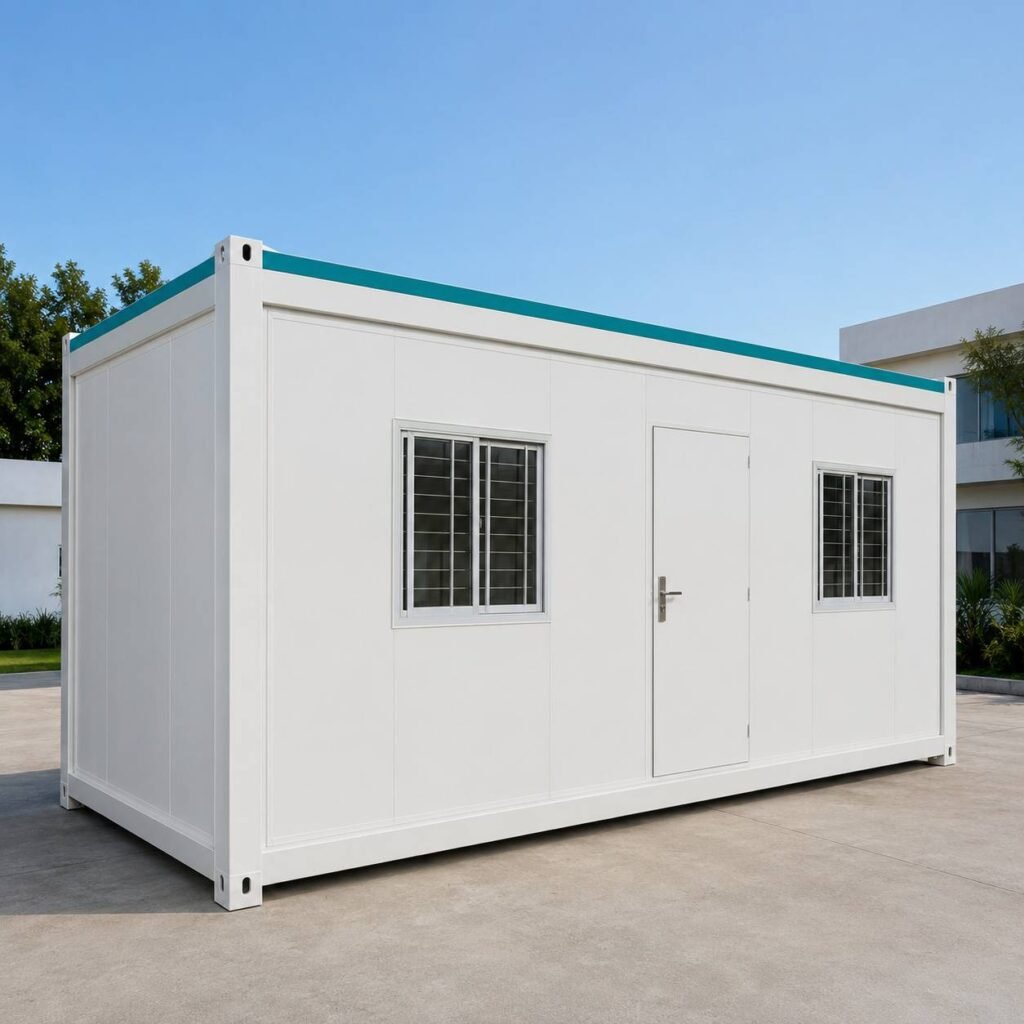
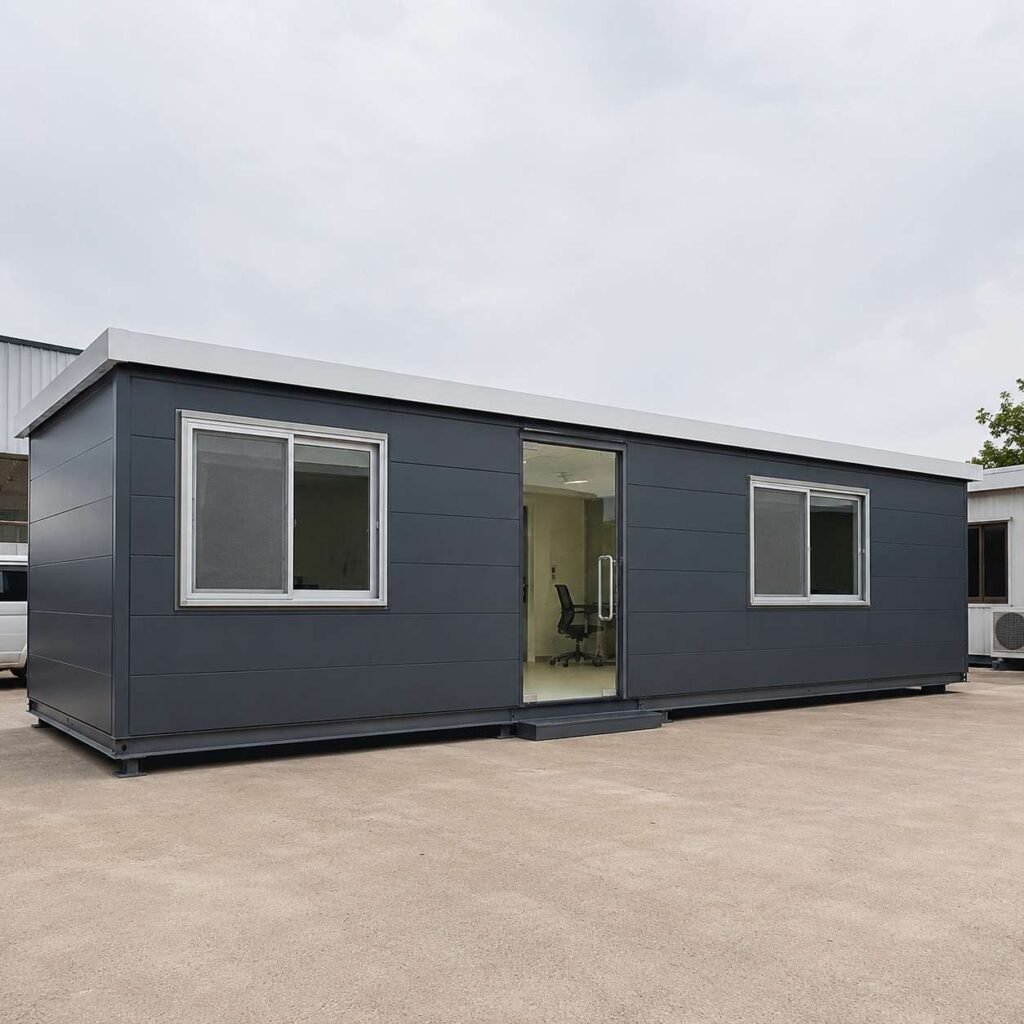

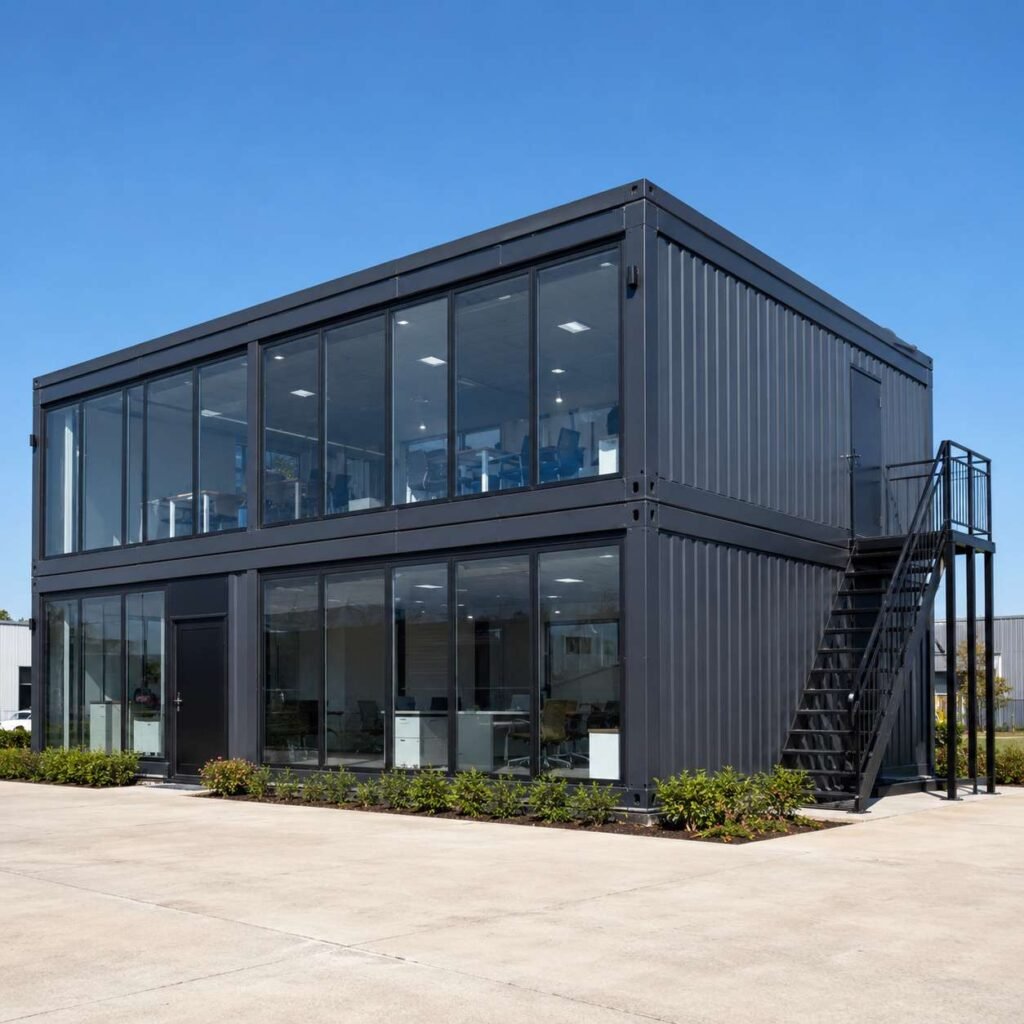
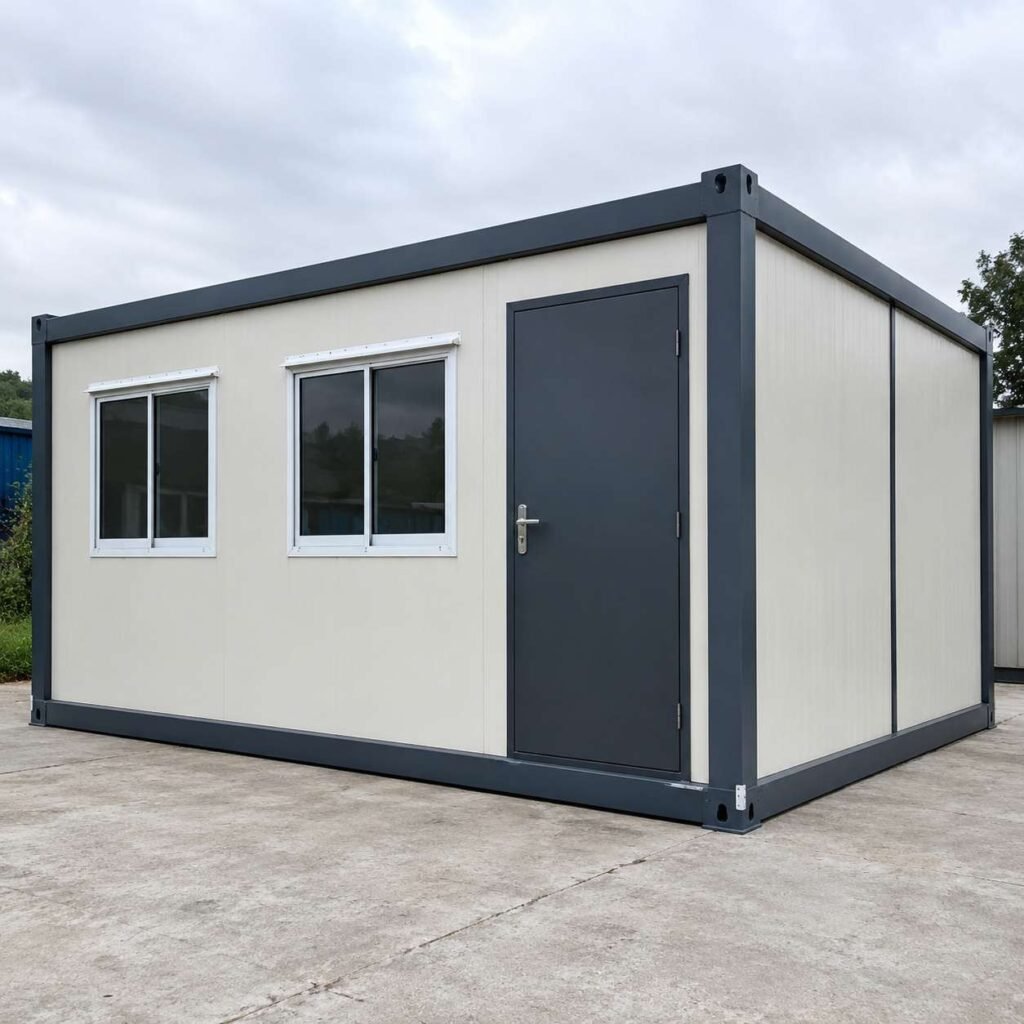
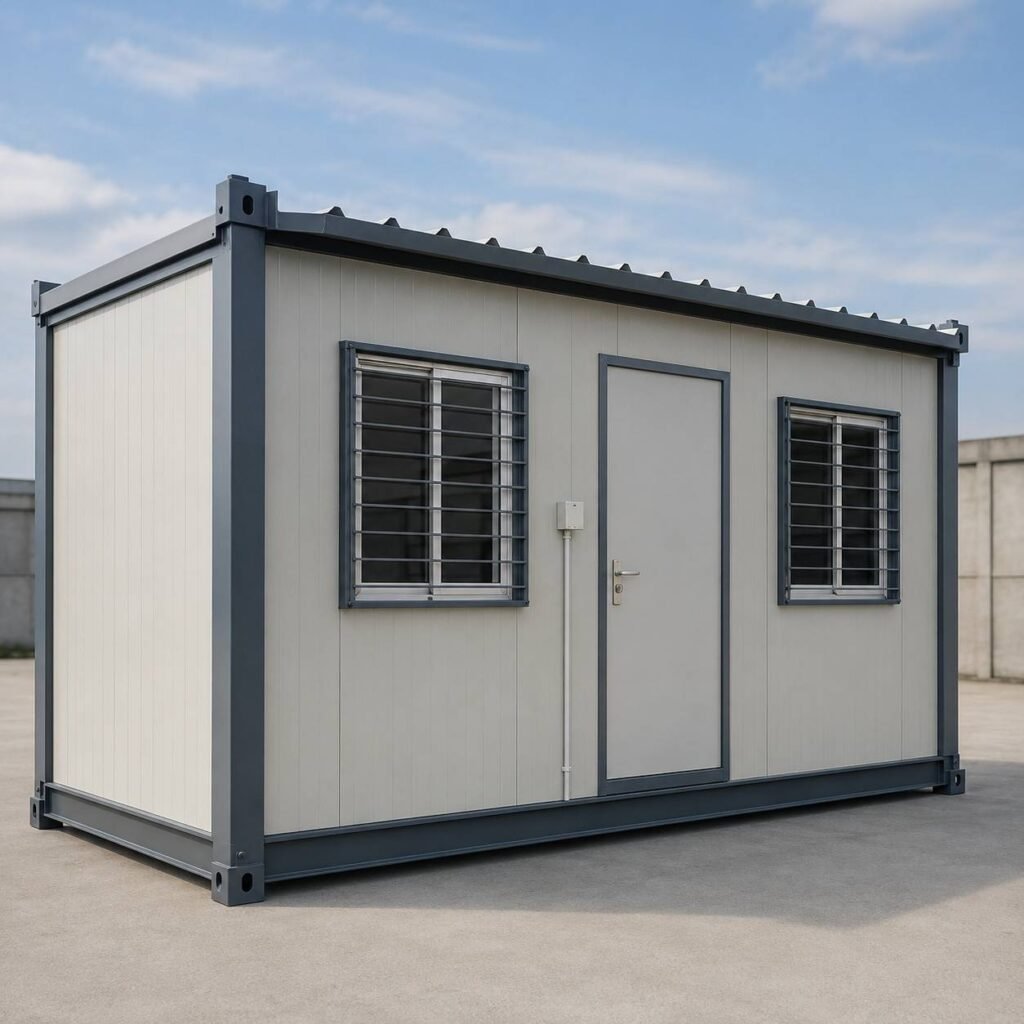

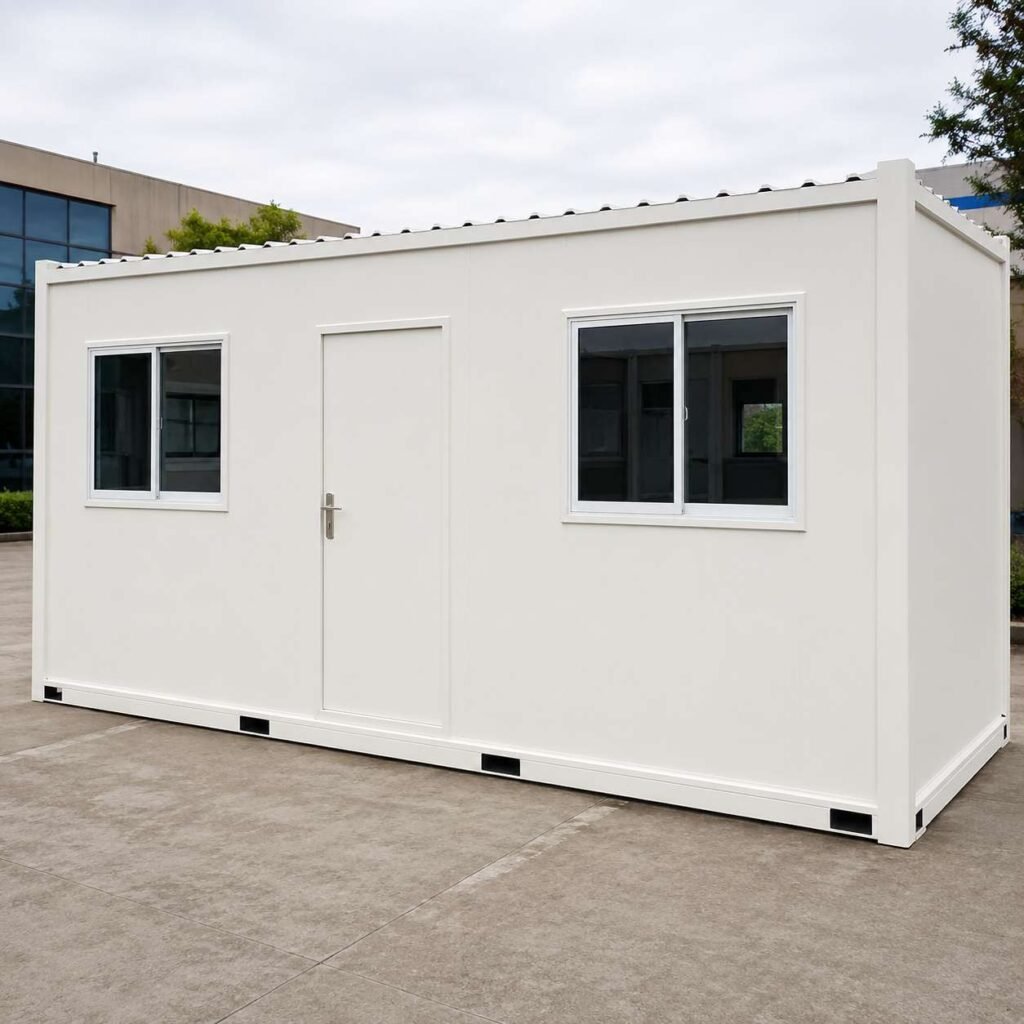

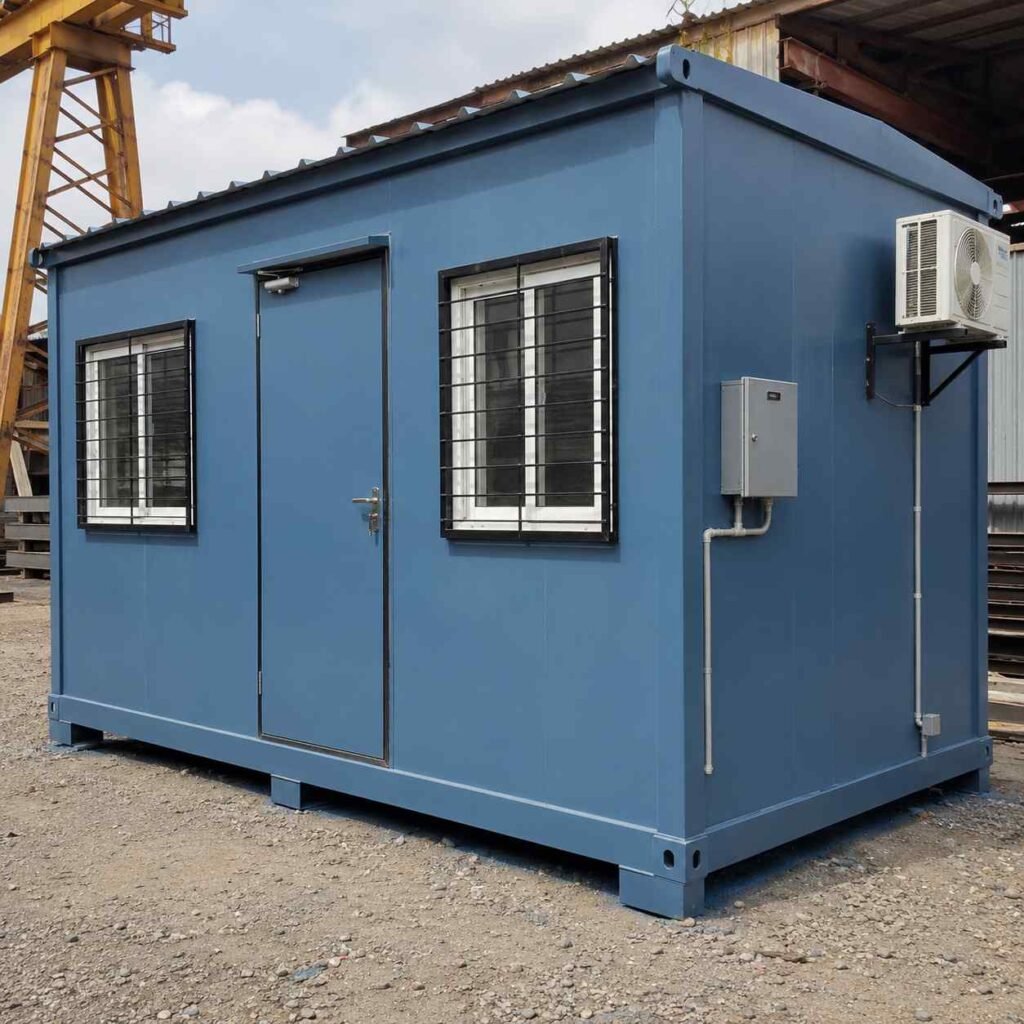
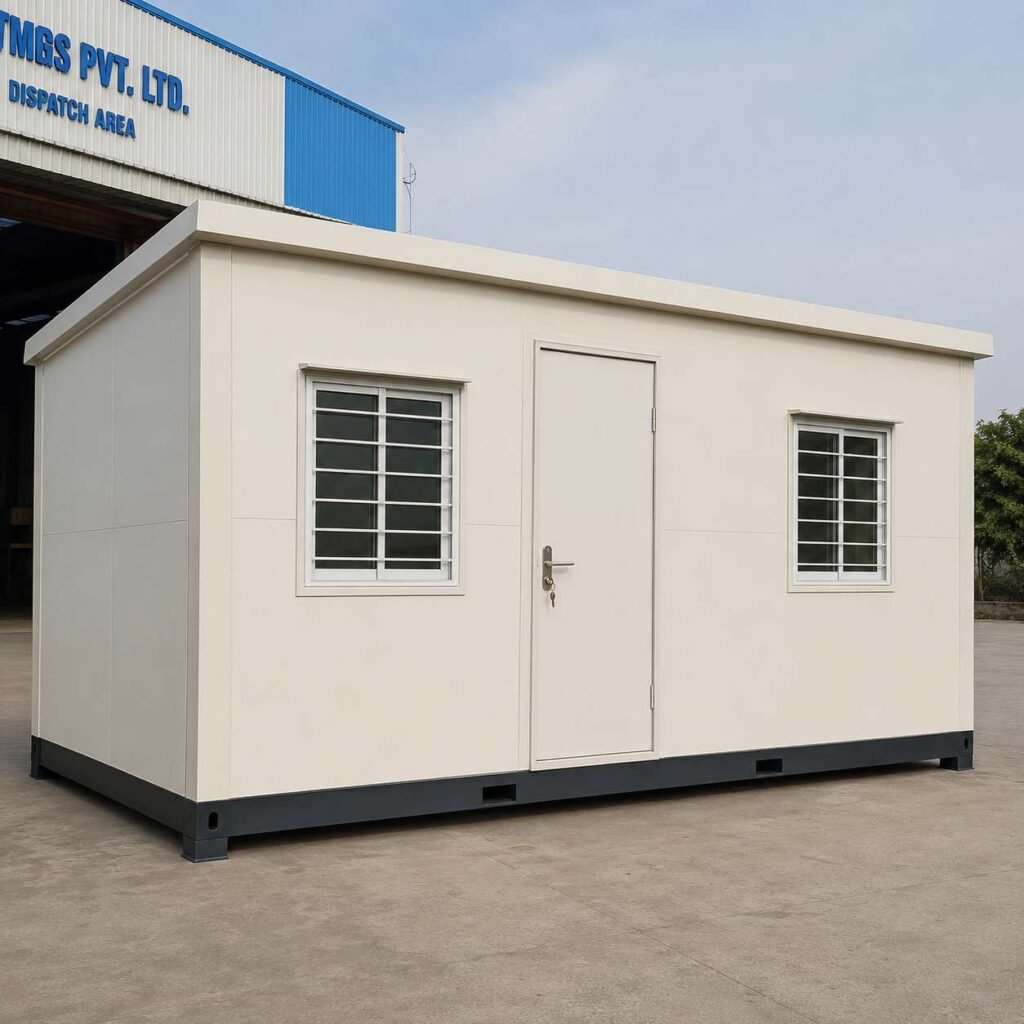
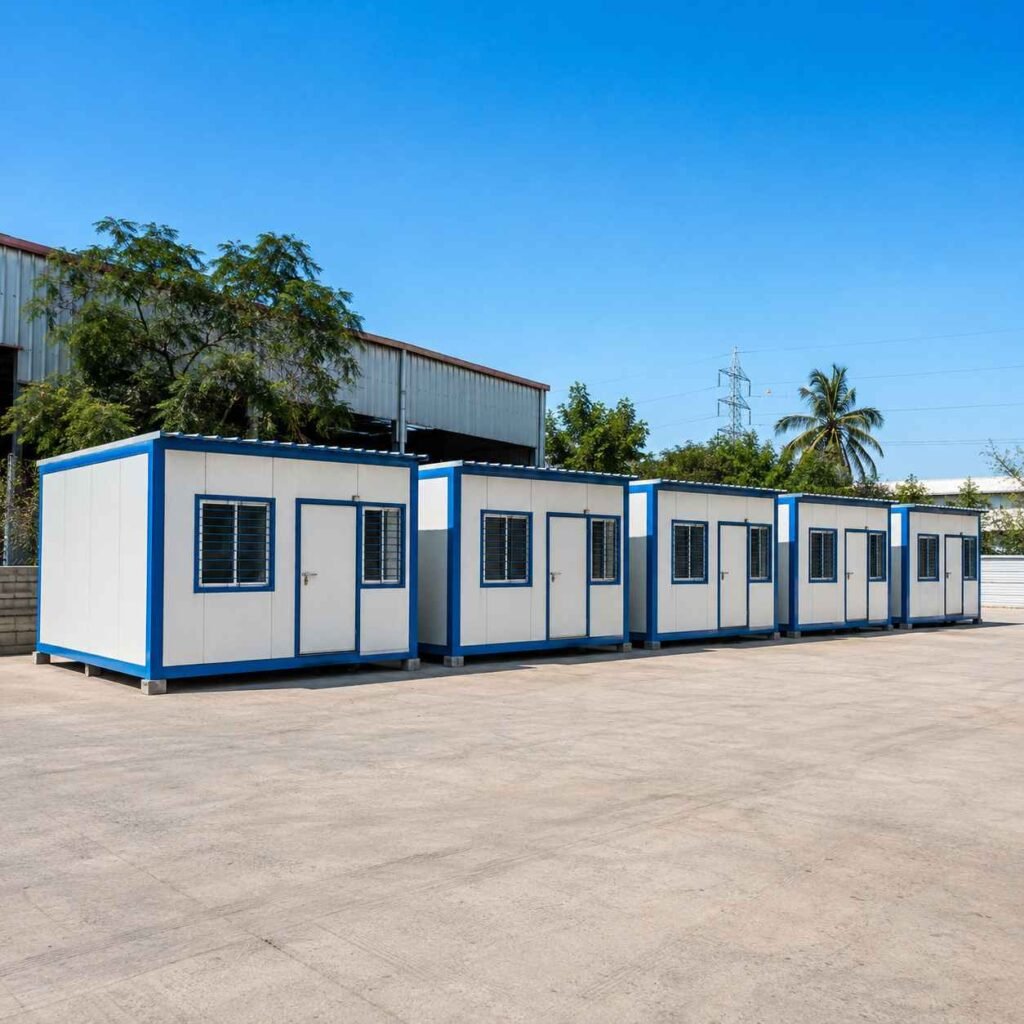
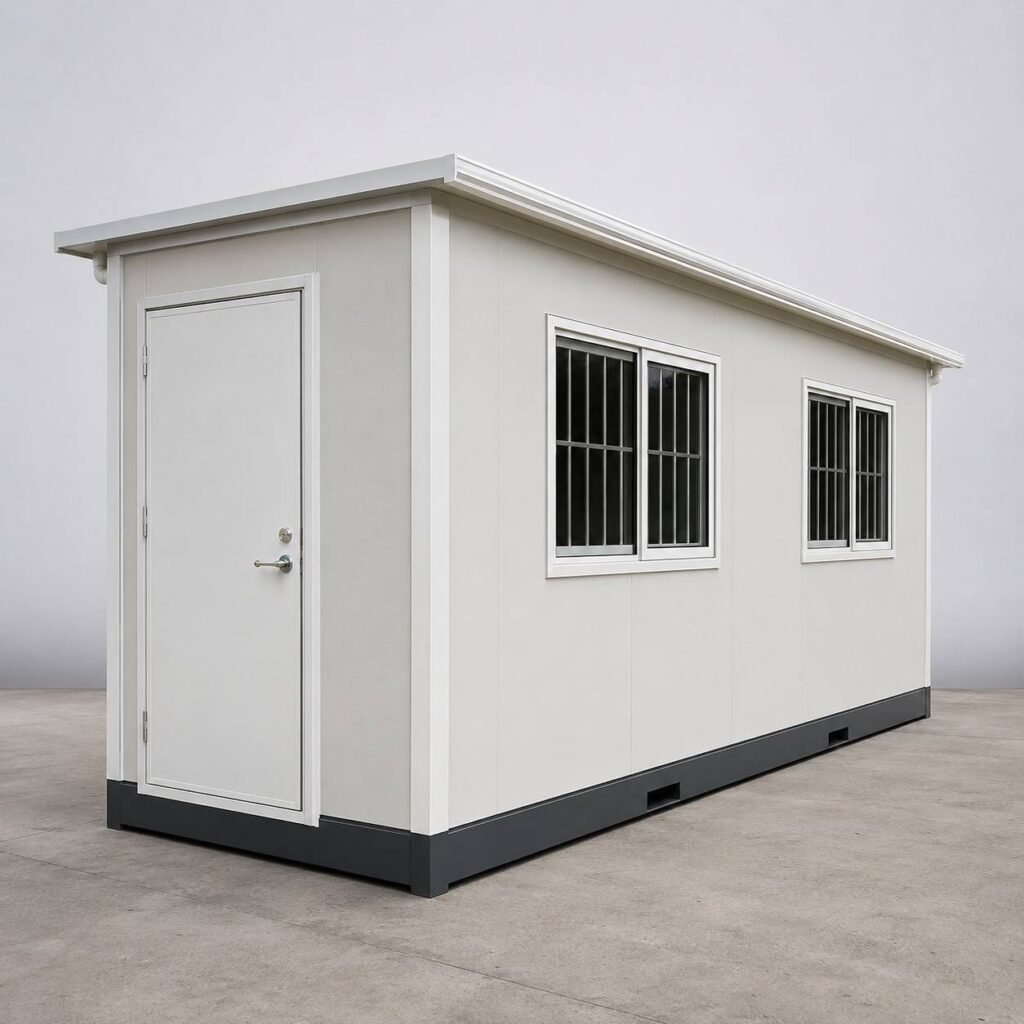
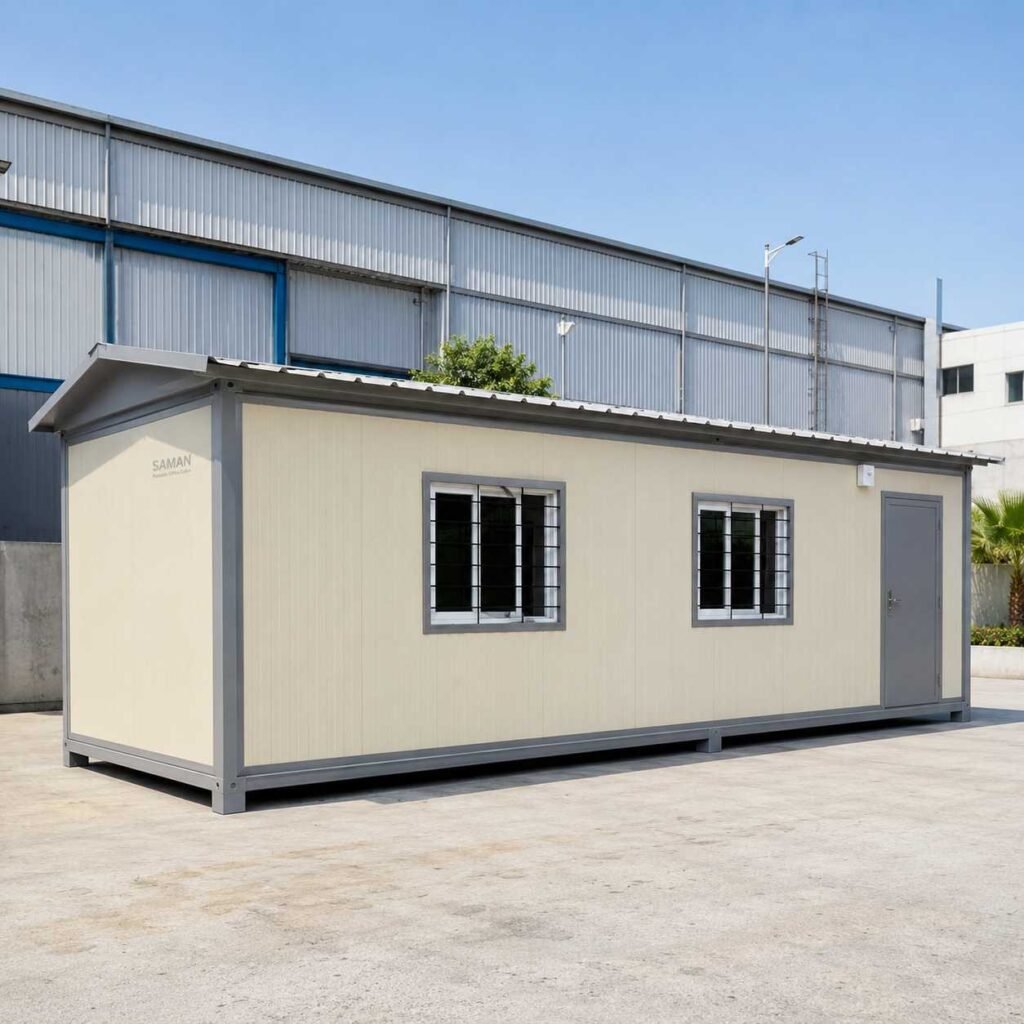
















A cargo container house from SAMAN is a permanent residence built by refitting a heavy-duty cargo-grade shipping container — IS 2062 corten steel construction, CSC-plated at origin, engineered for sea-cargo dynamic loads, then converted with 50 mm PUF insulation, finished interiors, and residential-grade electricals at our Bangalore or Greater Noida factory. The configured unit starts at ₹9,25,000 for a 40 × 16 × 9 ft (≈640 sq ft) shell, scales to ₹9,85,000 with finish upgrades, and arrives at your site in 28 to 35 working days. This page explains what cargo-grade origin actually means, where the certifications come from, and where this build sits in our container house range.
What is a cargo container house, and how is it different from a regular shipping container home?
A cargo container house is a permanent residence built by refitting an actual cargo-grade shipping container — typically IS 2062 corten steel, CSC-plated, originally engineered for sea-cargo dynamic loads. It differs from a regular shipping container home by the certified higher steel grade, deeper wall corrugations, and documented structural certification.
The phrase “container home” gets used loosely in the Indian market. Some products advertised under that label are built on new mild-steel framing dressed to look like a container; others are conversions of generic shipping containers; only a smaller share start from a properly cargo-graded ISO container that was certified for international freight before becoming a home. Those three options behave very differently over a 20-year residential life, and the difference shows up in the steel grade, the wall corrugation depth, and the documentation you receive at handover.
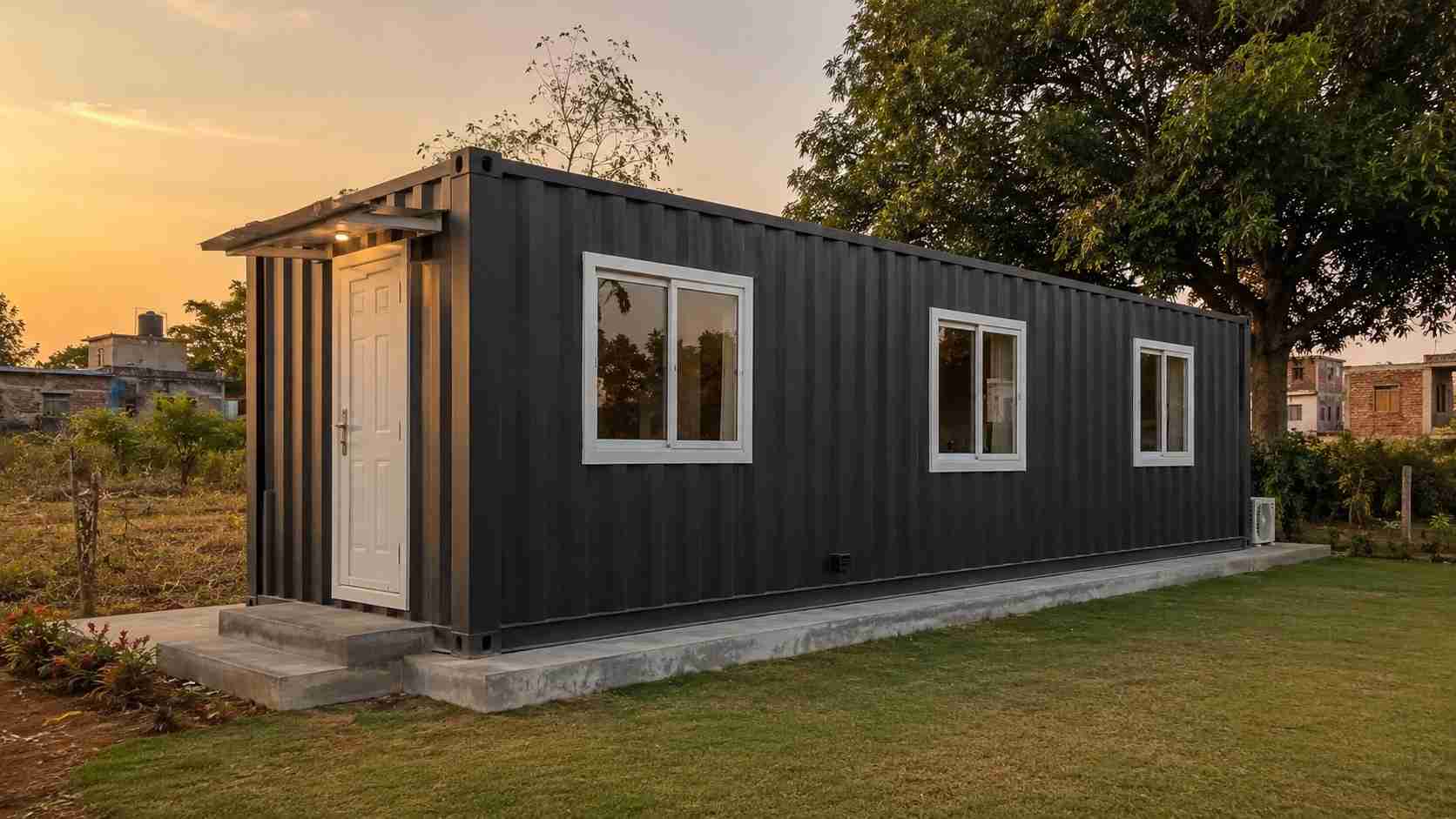
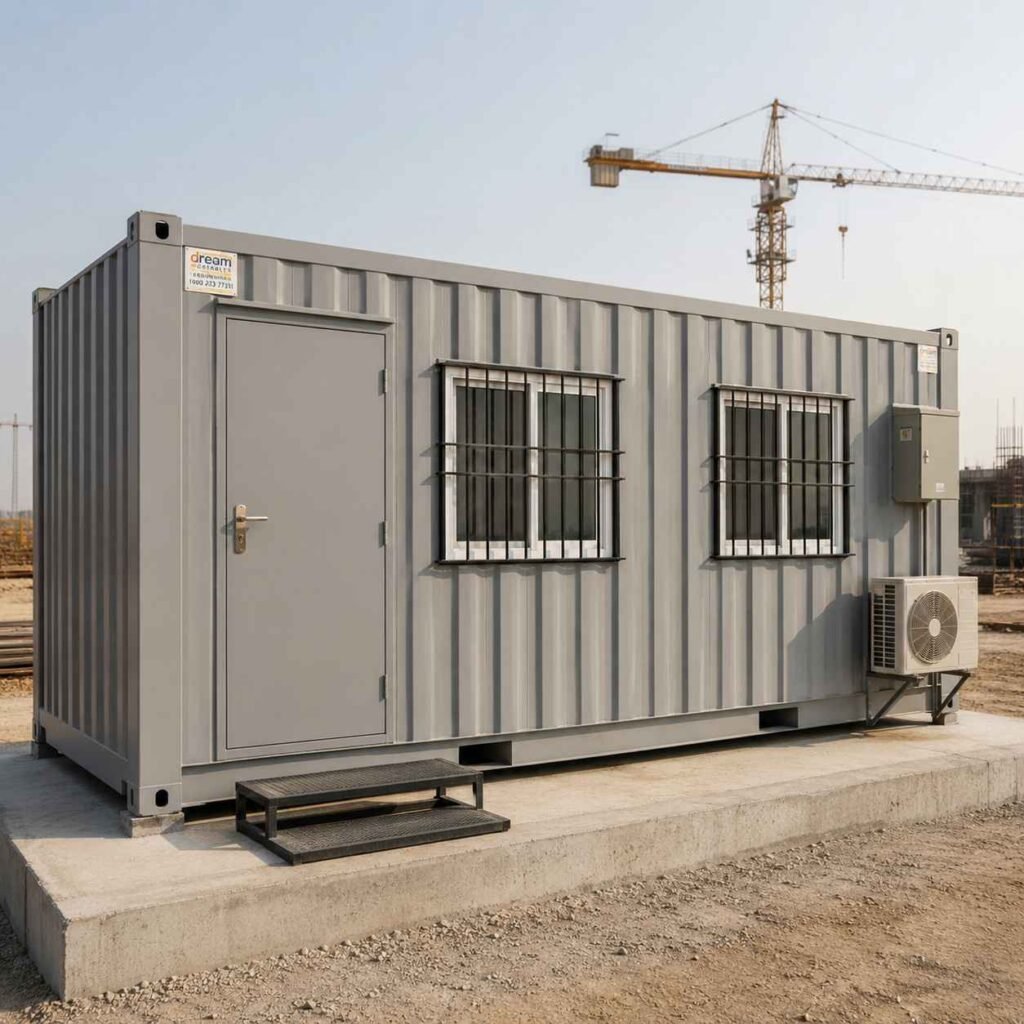
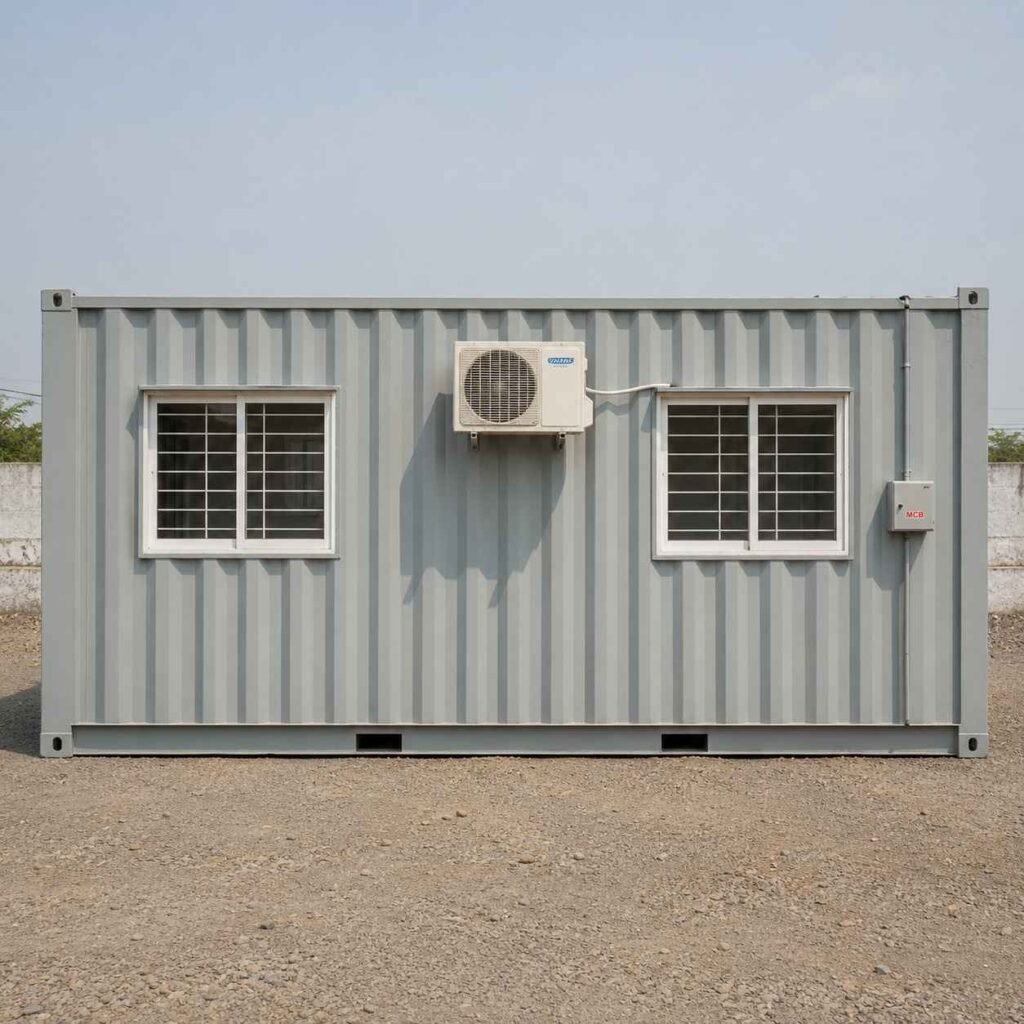
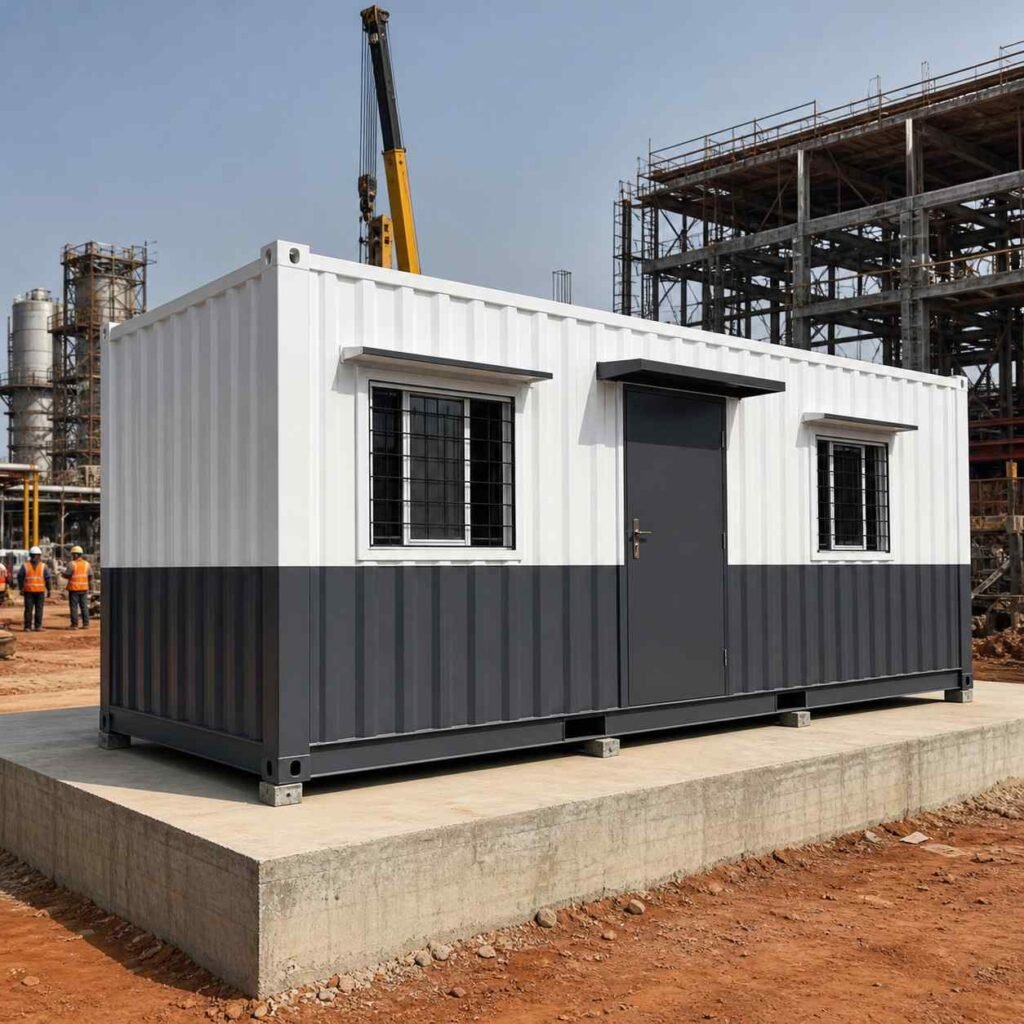
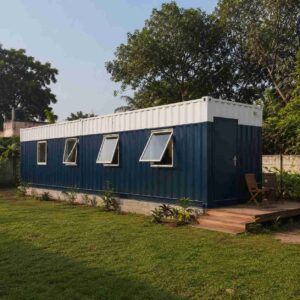
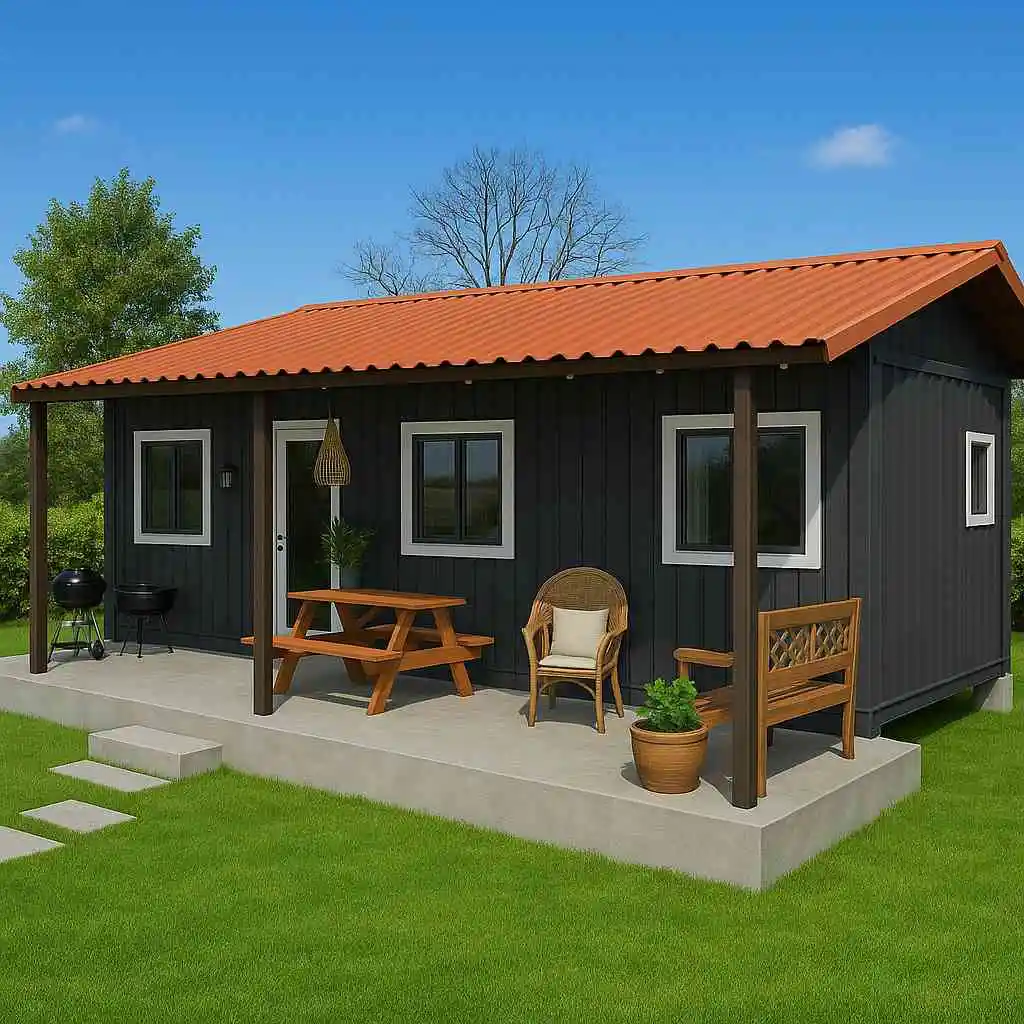
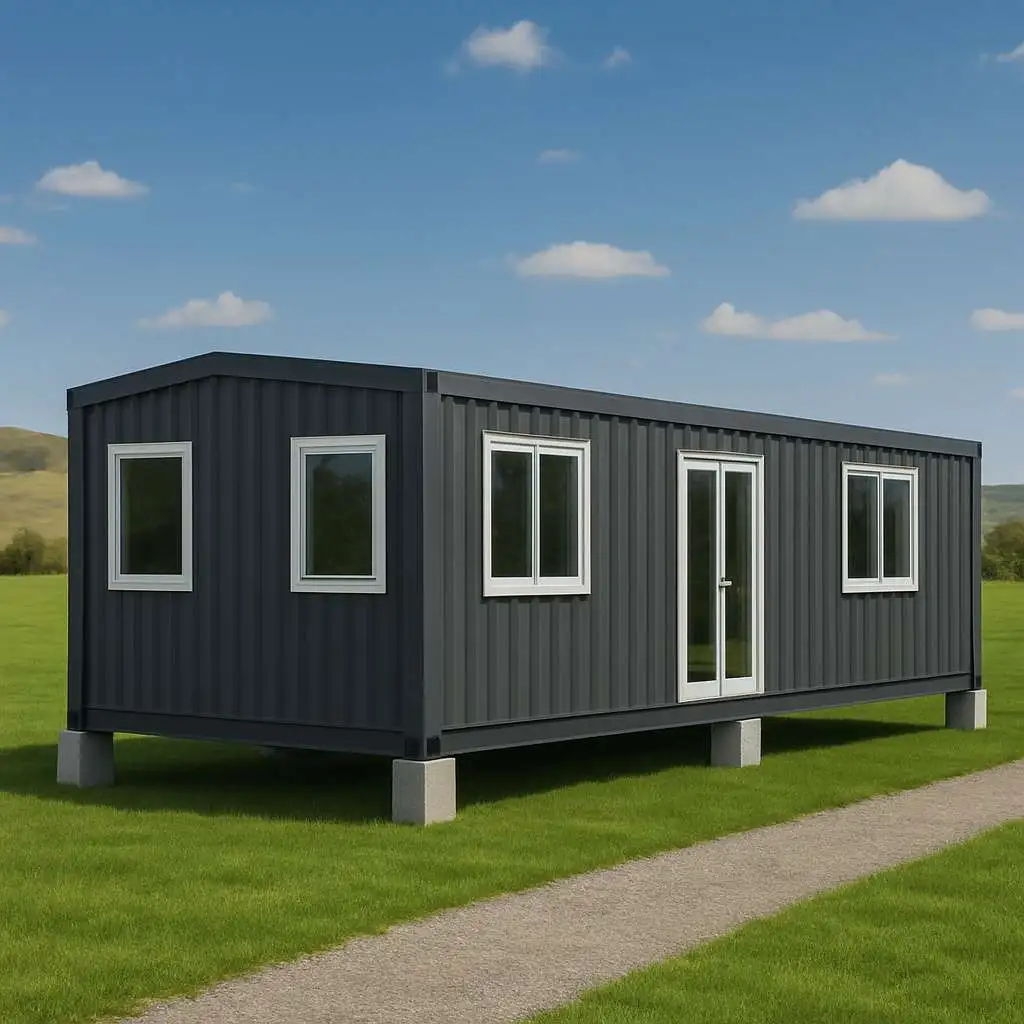
A 40 × 16 ft cargo container house in residential use on a peri-urban Karnataka plot — the “third category” — an actual cargo-grade ISO container converted into a permanent home.
SAMAN’s cargo container home sits in the third category. The shell that becomes your home was an ISO 1496-1 freight container before our factory took it through anti-rust treatment, insulation, interior fit-out, and exterior finishing. The CSC plate originally bolted to the corner casting stays attached and verifiable. You’re getting an actual cargo container, not a steel-frame impression of one.
Cargo-grade certifications you can verify: CSC plate, IS 2062 corten, ISO 1496-1, ASTM B117
The certification documentation is what separates a heavy-duty container house from a cosmetically similar new-built unit. Each of the four standards below has a specific role in the buying decision, and each is verifiable rather than a marketing claim.
CSC plate (Container Safety Convention)
Every cargo-grade ISO container carries a CSC plate bolted to its left-hand cargo door or its corner casting. The plate documents the manufacturing year, the load-bearing class, and the last structural recertification. When SAMAN delivers your unit, the CSC plate remains attached and visible — photograph it at handover. Asking to inspect the CSC plate is the single fastest way to verify whether a unit is genuinely cargo-grade or simply container-styled.
IS 2062 corten steel
The container shell uses IS 2062 grade corten — the corrosion-resistant alloy specified by the Bureau of Indian Standards for outdoor structural steel exposed to weather and salt. Corten reaches a stable surface oxide and stops actively rusting; it does not need annual repainting. In residential service, this translates to a documented 15 to 20 year service life baseline — substantially lower maintenance than a generic mild-steel container or a new-built MS-frame unit. The ASTM B117 salt spray rating that corten passes is what makes coastal placement viable.
ISO 1496-1 structural certification
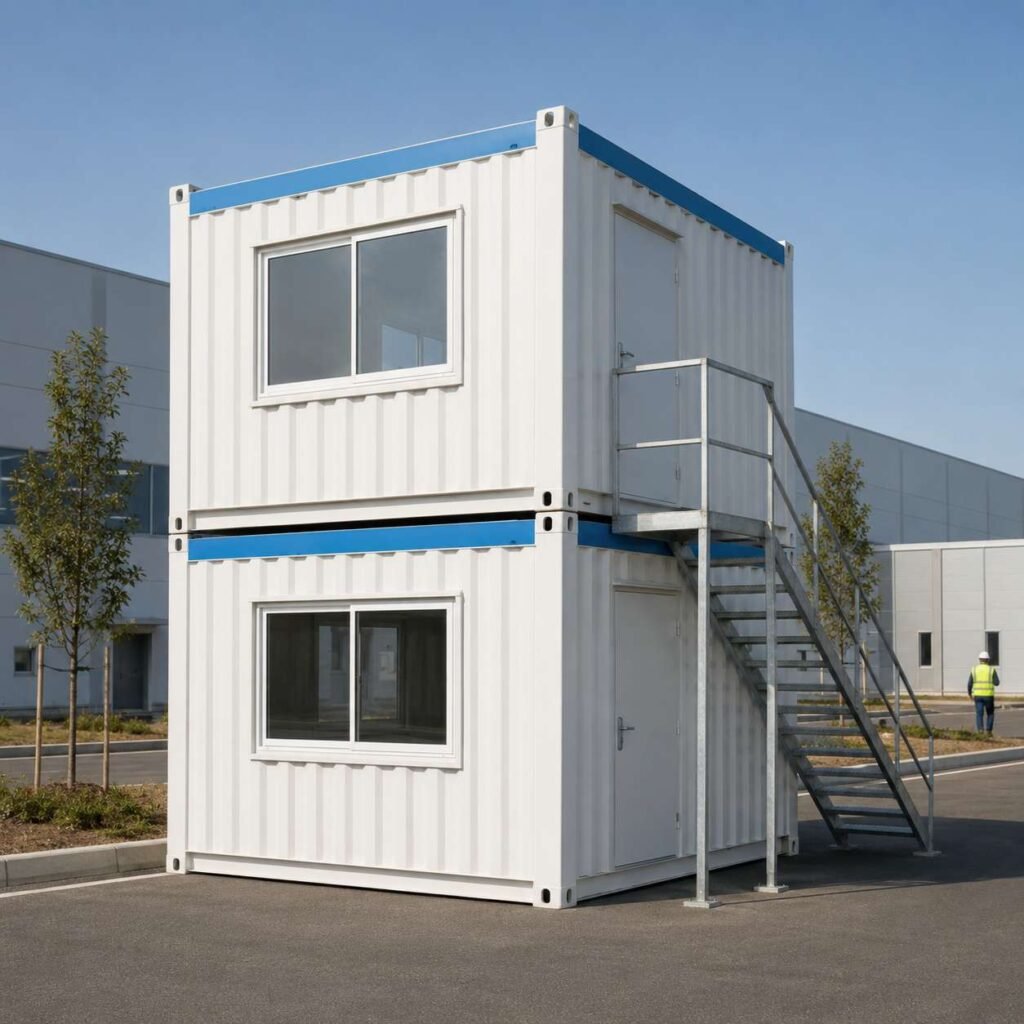
ISO 1496-1 is the international structural standard for freight container handling — the test regime that proves the container survived stack loads, crane lifts, and trans-ocean dynamic shocks before it became a home. For buyers planning future relocation or two-unit stacking, the ISO 1496-1 certification matters because the structural envelope is already proven for those loads.
Pre-dispatch verification
SAMAN shares a pre-dispatch checklist with every order. You can inspect — in person or via photographs — the CSC plate, the IS 2062 stamp on the corten skin, and the structural condition of the cargo doors and corner castings before the unit leaves the factory.
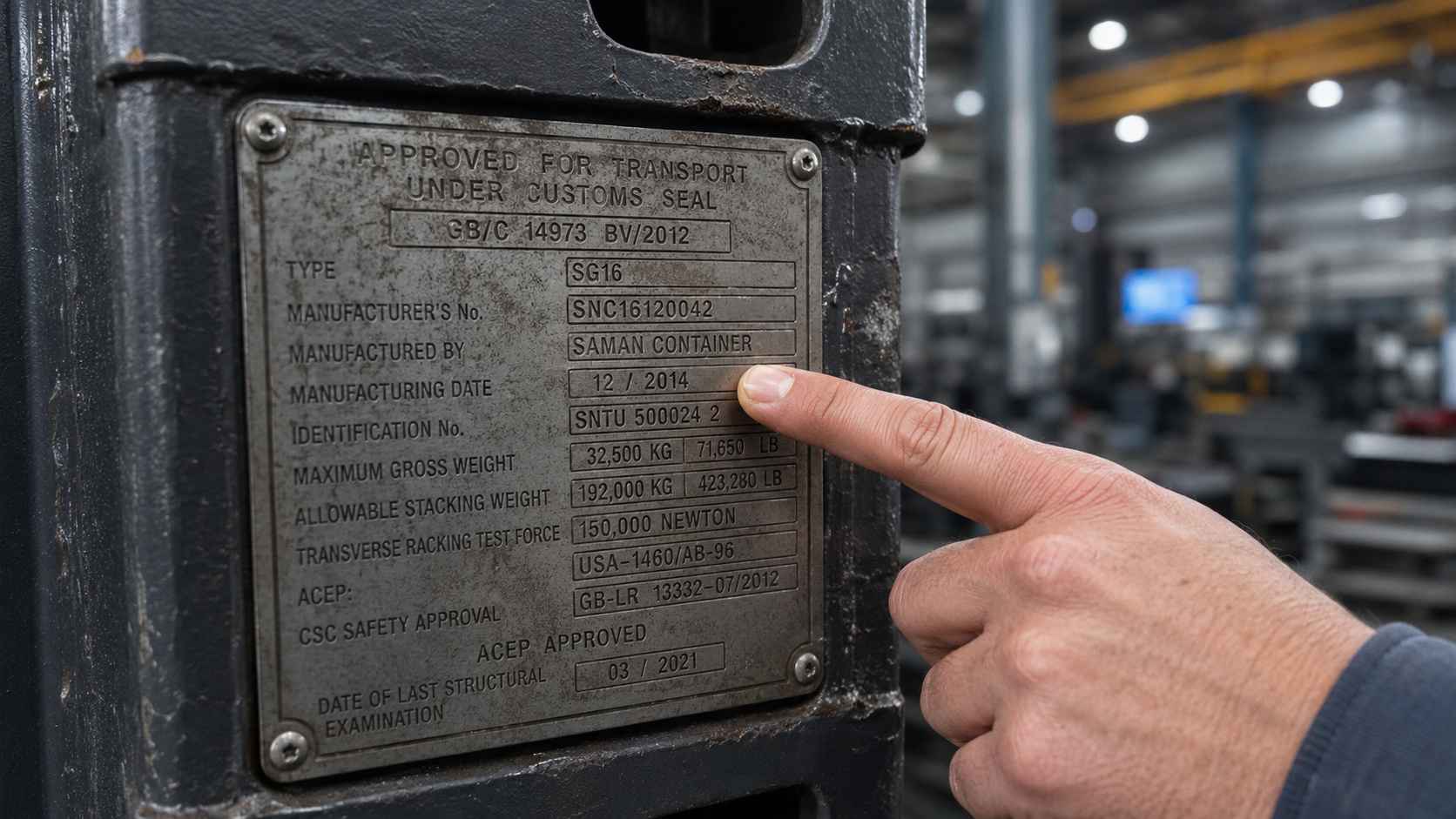
The CSC plate — verifiable at handover. Manufacturing year, load class, and structural recertification stamped on every cargo-grade unit.
How a cargo container house compares with the two alternatives most buyers consider:
| Dimension | Cargo-grade container house | Regular shipping container conversion | New-built MS-frame container-style |
|---|---|---|---|
| Steel grade | IS 2062 corten | Generic mild steel | Mild steel + anti-corrosion paint |
| Documented certification | CSC plate + ISO 1496-1 | CSC plate only (varies) | None inherent — self-cert only |
| Wall corrugation | Deep sea-cargo profile | Standard corrugation | Flat sandwich panel |
| Baseline service life | 15–20 yr without annual repaint | 10–12 yr with regular repaint | 20–25 yr with maintenance + repaint |
₹9,25,000 for a 40 × 16 × 9 ft cargo container house: what’s included, what’s site work, what’s optional
The starting price on this page is the real factory-out cost of the configured base unit. Here is what ₹9,25,000 buys, what scopes lift the configuration to the ₹9,85,000 upper, and what you organise separately on site. A clear scope split saves both sides surprises at dispatch.
At ₹9,25,000 (configured base): The IS 2062 corten container shell at 40 × 16 × 9 ft (≈640 sq ft built-up), factory anti-rust treatment on the original floor channels and structural seams, 50 mm PUF insulated sandwich panel on all walls and the roof, plywood substrate flooring with vinyl plank finish, pre-wired electrical with lighting points and 1.5-ton AC provision, a compact wet area with WC and washbasin, two openable windows with mosquito mesh and one powder-coated steel residential door, factory-painted exterior, road transport from our Bangalore or Greater Noida facility within the standard delivery zone, and crane placement on your prepared plinth with utility tie-in.
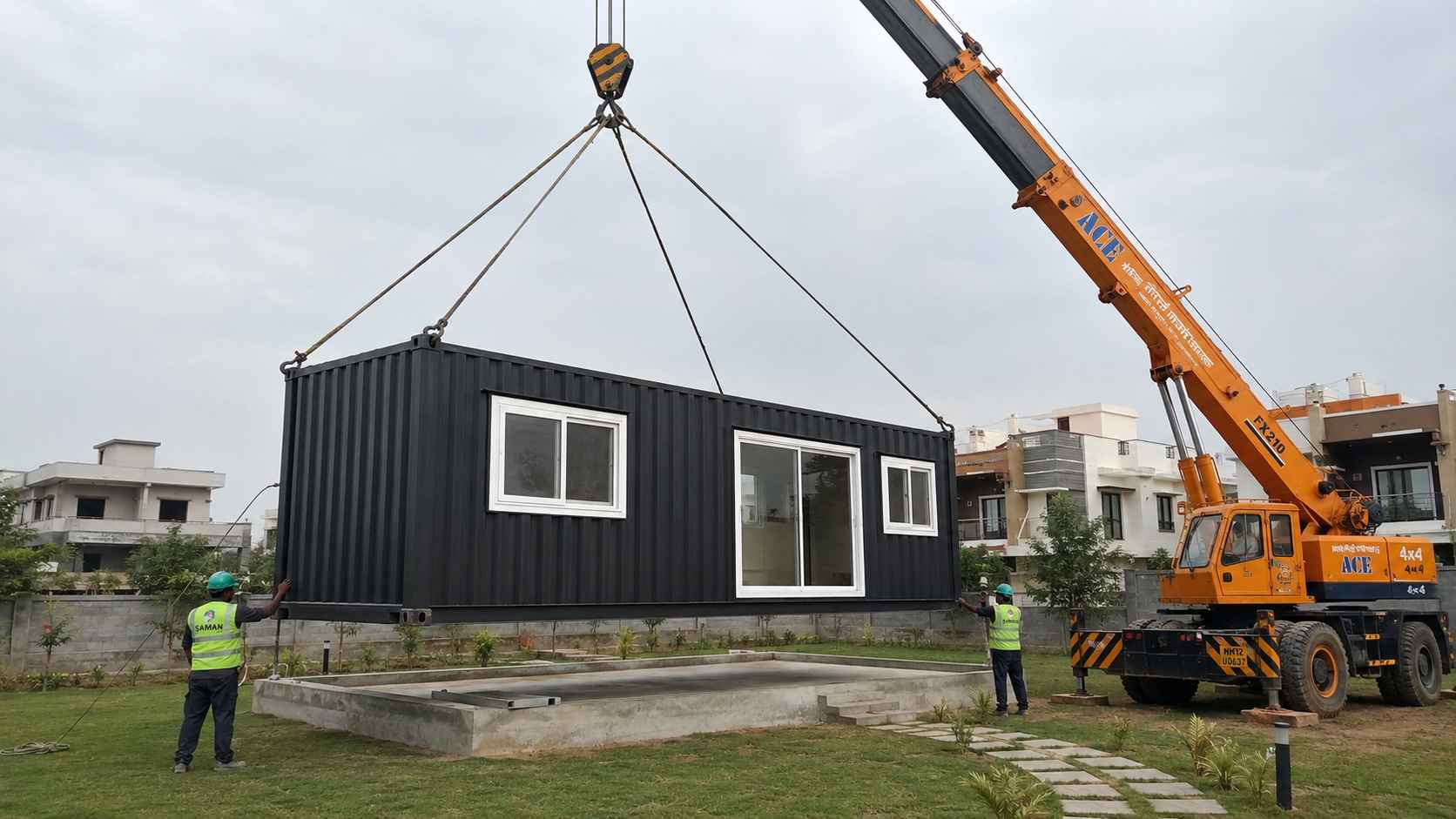
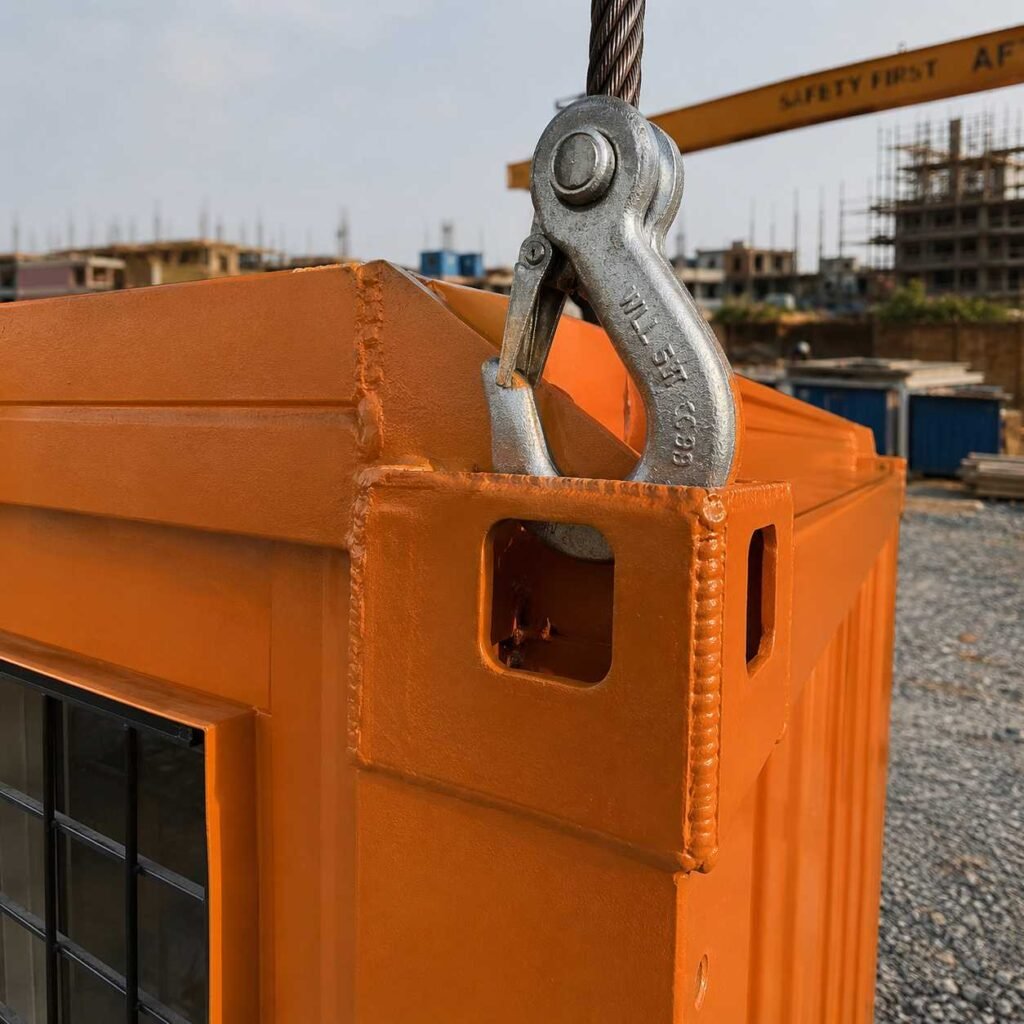
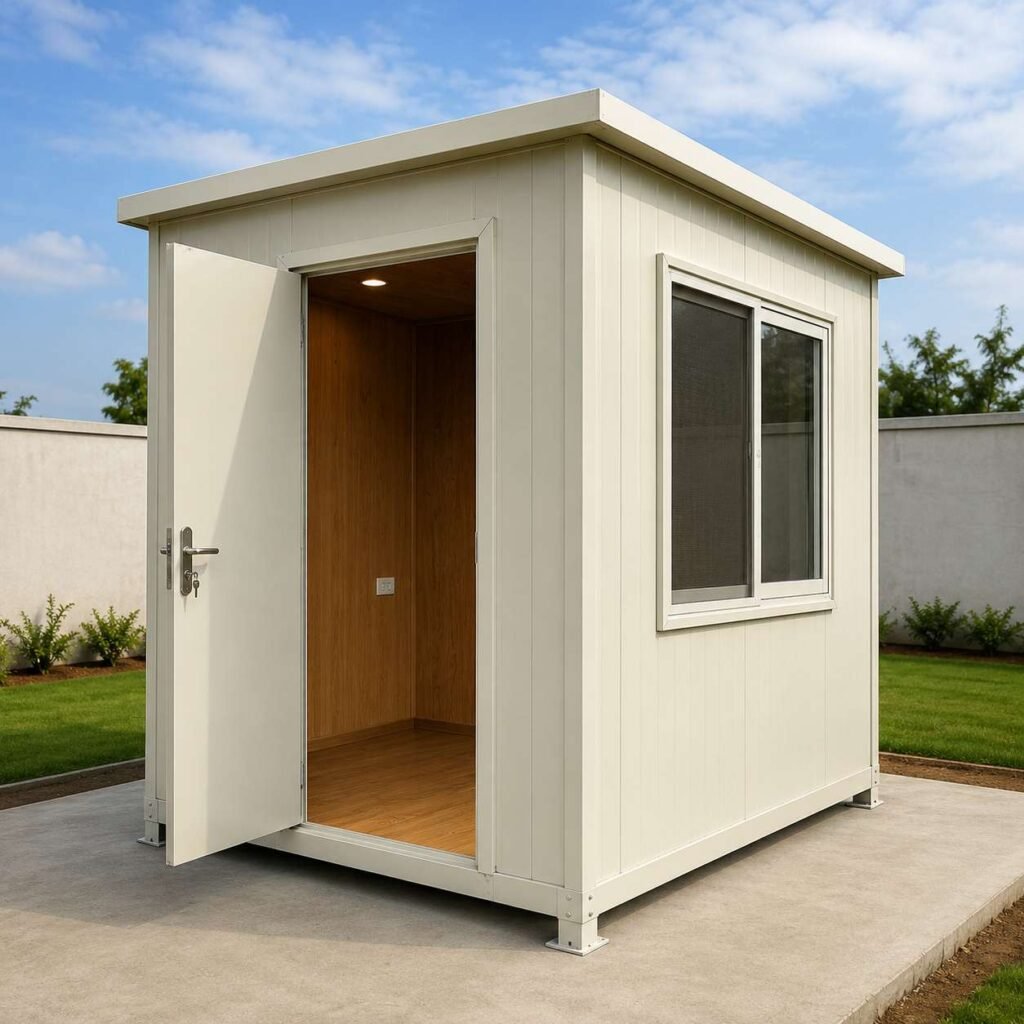
Crane-set on your prepared plinth — the moment a 40 × 16 ft cargo container house arrives at the owner’s residential site.
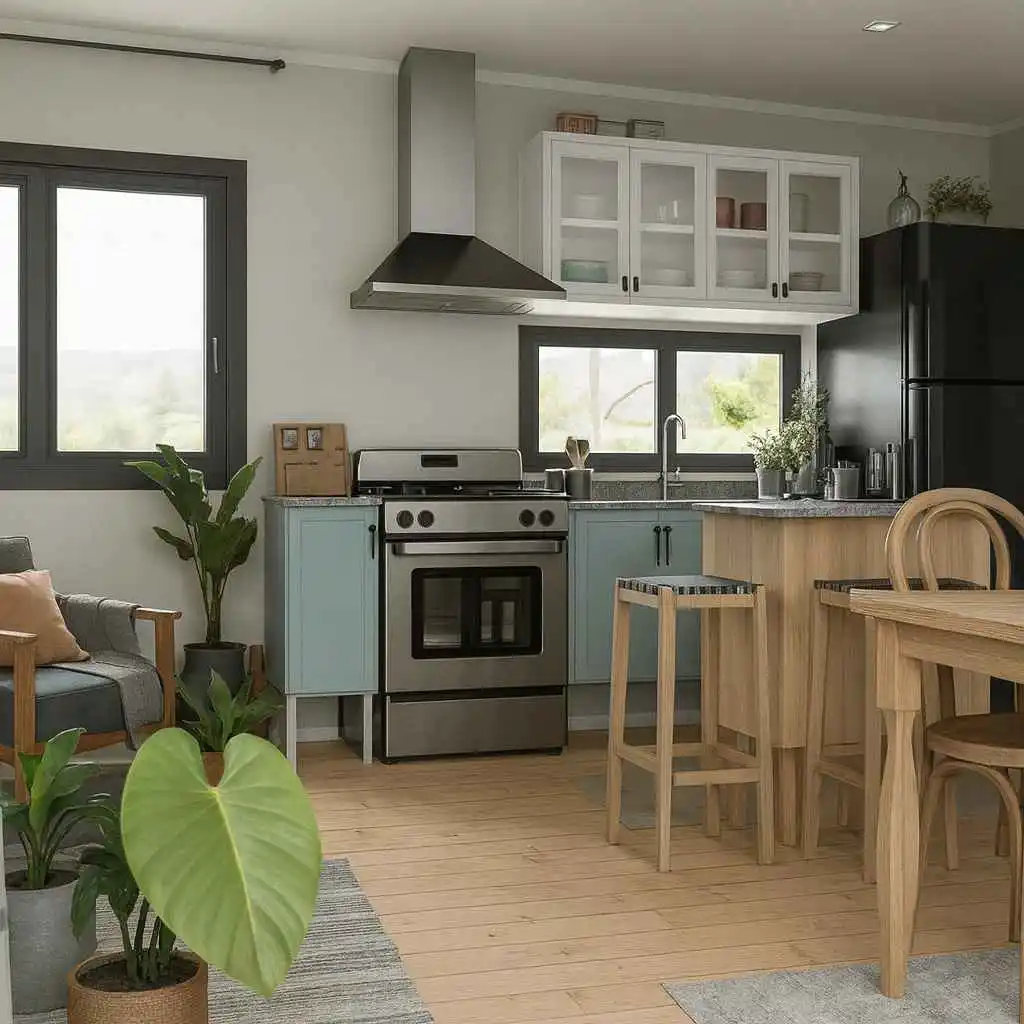
Up to ₹9,85,000 (configured upper): Exterior cladding upgrade (wood-grain effect or two-tone), additional windows or larger glazing, kitchen platform with sink and chimney point, higher electrical-point density for a small home-office corner, premium door hardware.
What you arrange on site (drawings supplied with order): A level RCC plinth or concrete pier-block footing at the load-bearing corners; water inlet (25 mm) and waste outlet (110 mm) stubs at the wet-area corner; an electrical service connection within 6 metres of the unit, sized for a 5 kW load; trailer-access route from the public road with no overhead obstructions under 14 ft; municipal building plan sanction where applicable.
What is quoted separately: Transport surcharge beyond the standard delivery zone; plinth construction (executed by your civil contractor against our drawing); municipal approval support (we provide structural drawings; the filing is yours).
The cargo container house price is fixed at order confirmation against your chosen configuration. There is no separate transport invoice within the standard zone and no surprise hardware billing at handover.
Common conversion problems on a cargo container house, and how SAMAN handles each
Cargo container conversions have a real set of problems. Pages that pretend otherwise are signalling marketing, not engineering. Here are the five problems buyers most often surface during pre-order conversations, and how each is handled before the unit leaves the factory.
Floor-channel rust at the original cargo-floor seam
The original cargo-container floor sits on transverse channels welded to the corten frame. These channels accumulate moisture in transit and at dockside storage, and untreated, they become the first rust point on the unit. SAMAN’s factory process strips, treats, and seals these channels before the plywood substrate goes down, and the floor finish itself isolates the residential surface from any future channel moisture. The ASTM B117 salt-spray rating of the IS 2062 corten means even untreated channels resist corrosion better than mild steel, but we treat them anyway.
Cold-bridge condensation at steel-frame thermal junctions
Steel conducts heat. Where the interior insulation panel meets the structural corten frame — at the corner castings, the door frames, and the window cut-outs — you get a thermal bridge that can collect summer condensation overnight. SAMAN installation includes a thermal-break detail at every framing junction: the 50 mm PUF panel runs continuous behind the surface finish, and the junction is sealed rather than butt-joined.
Indian-summer heat retention and AC load
A bare cargo container in a 42°C exterior reaches uncomfortable interior temperatures within hours. The 50 mm PUF panel has a thermal conductivity around 0.022 W/m·K — at that spec, a properly shaded 640 sq ft unit conditions comfortably to 24°C on a single 1.5-ton split AC under 42°C ambient. Roof matters more than walls in Indian summers because solar load is highest overhead, so we use the same insulated panel on the roof, with an option to add a shade structure for inland-Karnataka or Rajasthan placements.
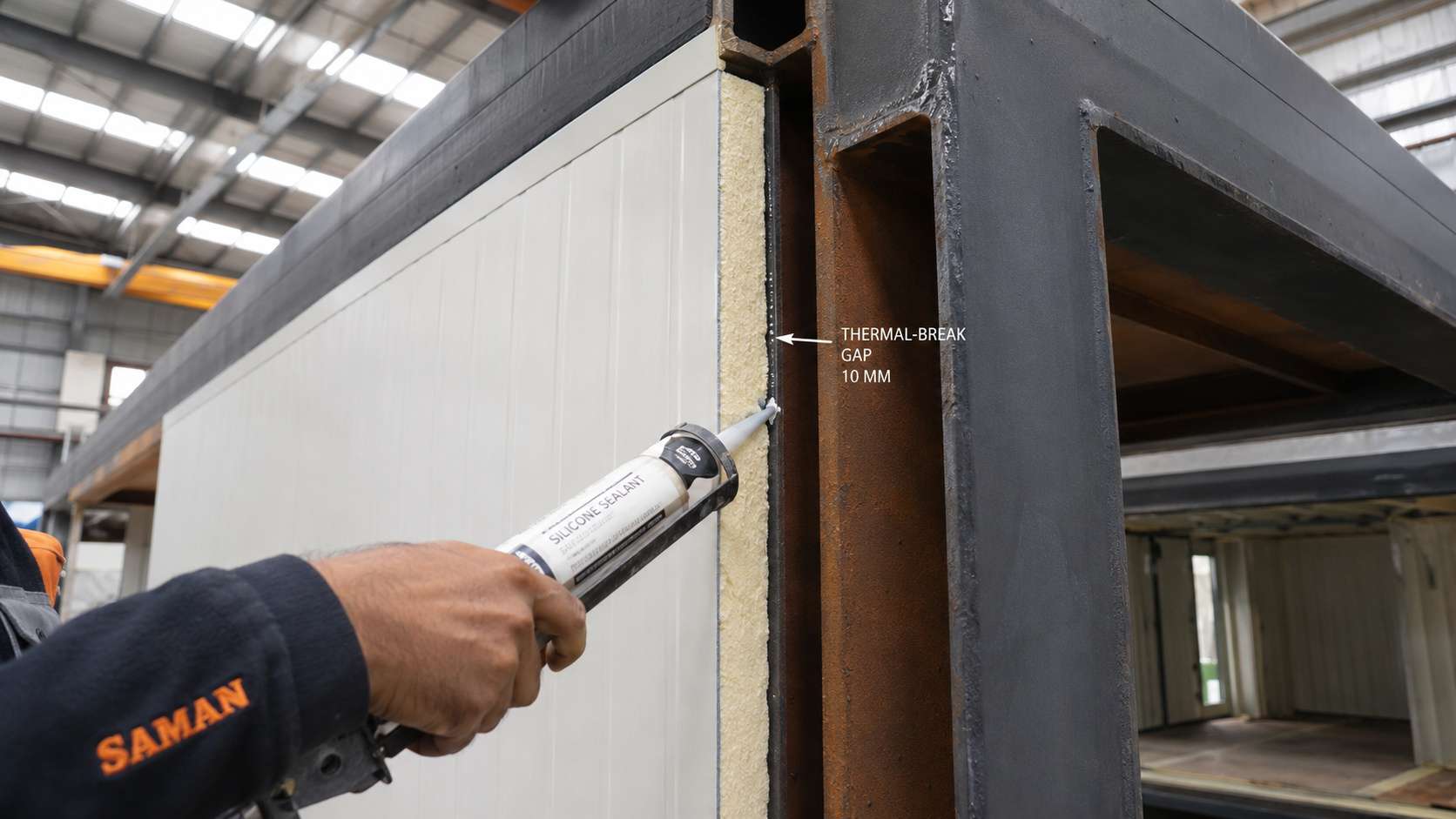
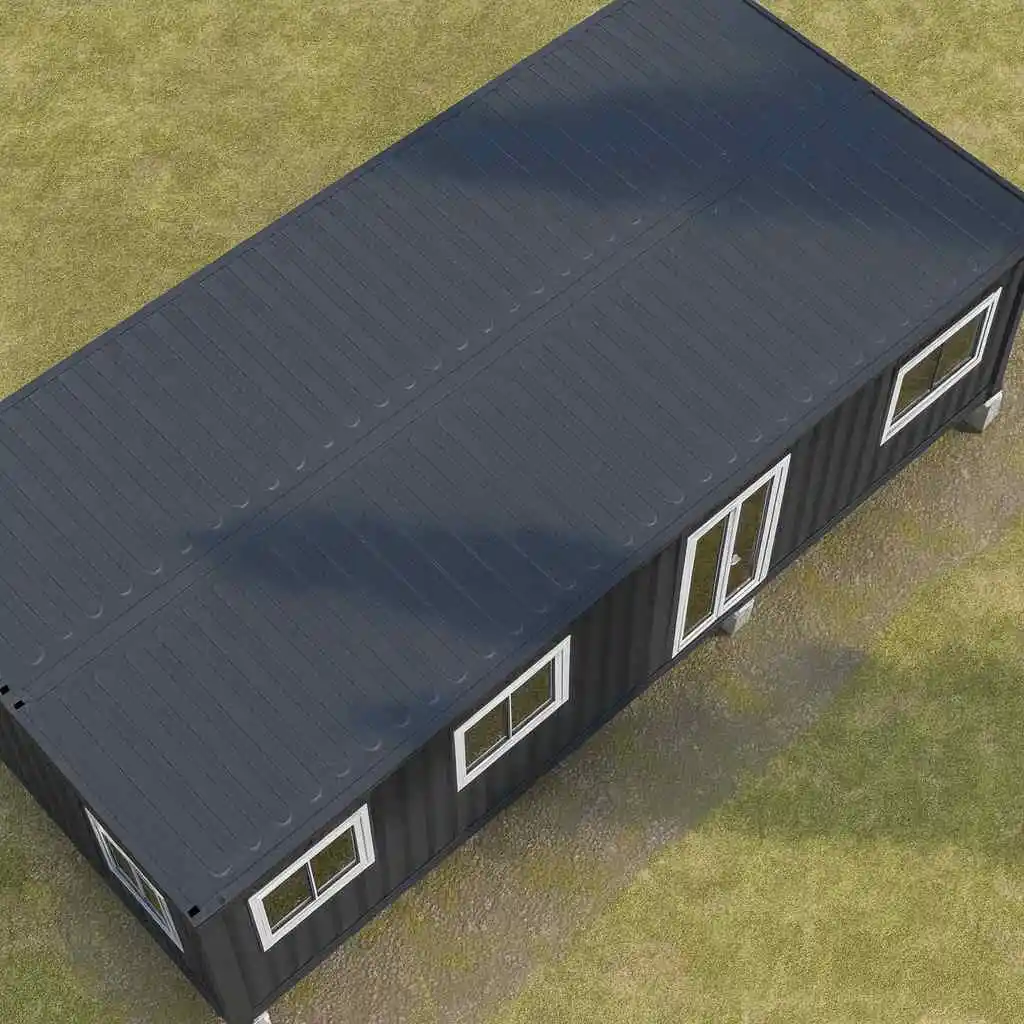
50 mm PUF panel with thermal-break detailing at every corten-frame junction — how SAMAN handles cold-bridge condensation before it starts.
Monsoon water-tightness at corrugated joints
The corten panel joints and the door/window weatherstripping are the watertight envelope. SAMAN factory-seals every panel joint with silicone before the unit ships, and the original cargo joint geometry is designed to shed water by sloped overlap. Monsoon performance is fine provided site installation seats the unit level on the plinth, which our installation team verifies before handover.
Original cargo-door operational complexity
The cargo end of an ISO container has two heavy steel doors built to lock against sea-cargo theft. They are not residential-grade. Buyers have two options: SAMAN seals the cargo doors and finishes over them externally — recommended for permanent residential, cleanest exterior, no mechanism to maintain — or replaces them with a residential-grade single door at the cargo end. The replacement is a buyer-cost option scoped at design alignment.
15 to 20 year residential service life: maintenance schedule for a permanent cargo container house
The corten advantage shows up in maintenance burden, not in the headline lifespan. Most container houses last a long time. The question is how much repainting and inspection you sign up for to get there.
The IS 2062 corten skin of a SAMAN cargo container house is engineered for a 15 to 20 year service life without annual repainting. The ASTM B117 corrosion-resistance baseline means the steel reaches a stable surface oxide and stops actively rusting — you maintain it, you don’t fight it.
With recommended maintenance, the realistic service life extends to 25+ years: exterior repaint every 5 to 7 years (not annual), annual silicone-joint inspection at panel seams, annual electrical earthing check, and annual inspection of CSC corner castings and door hardware.
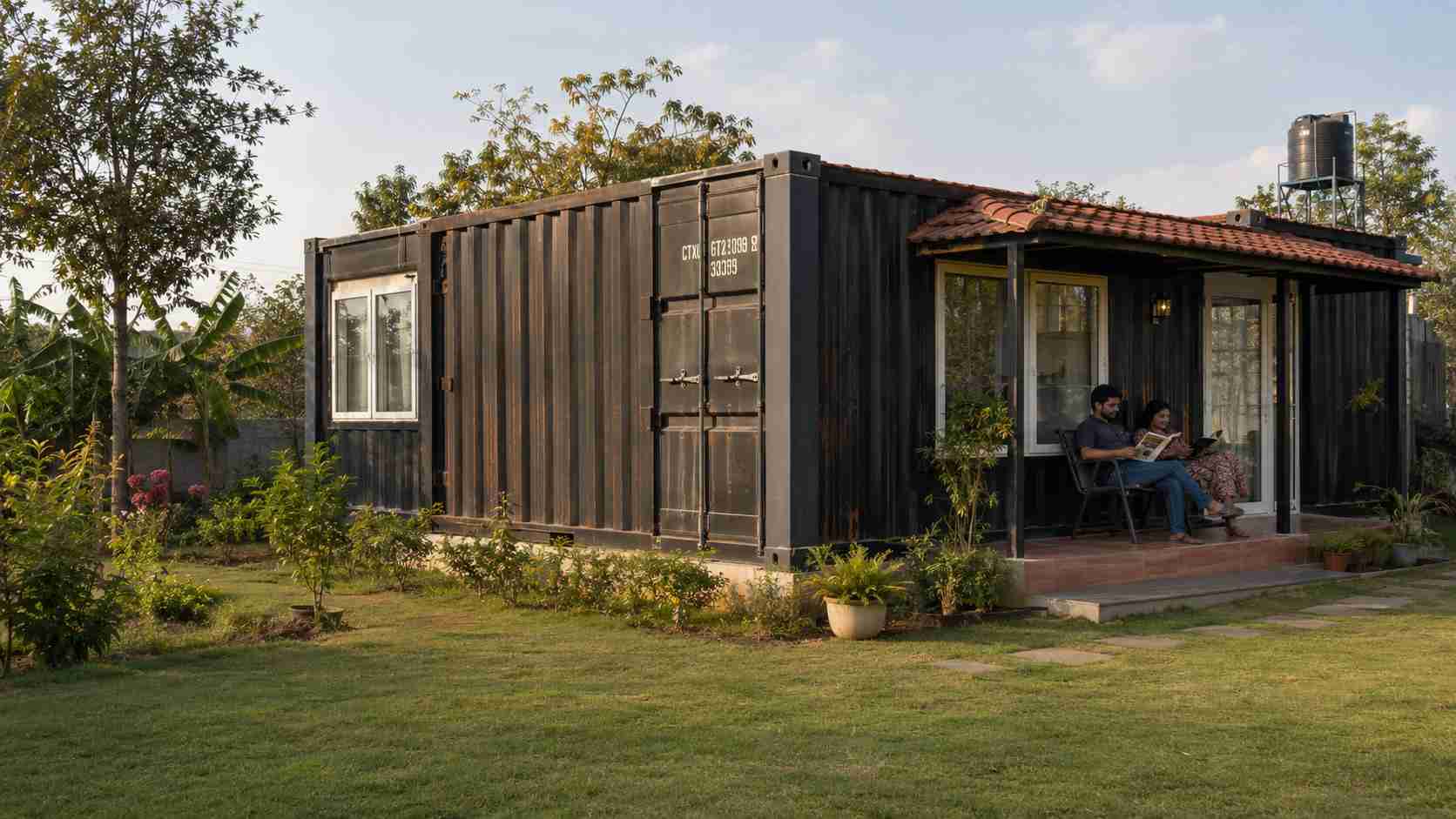
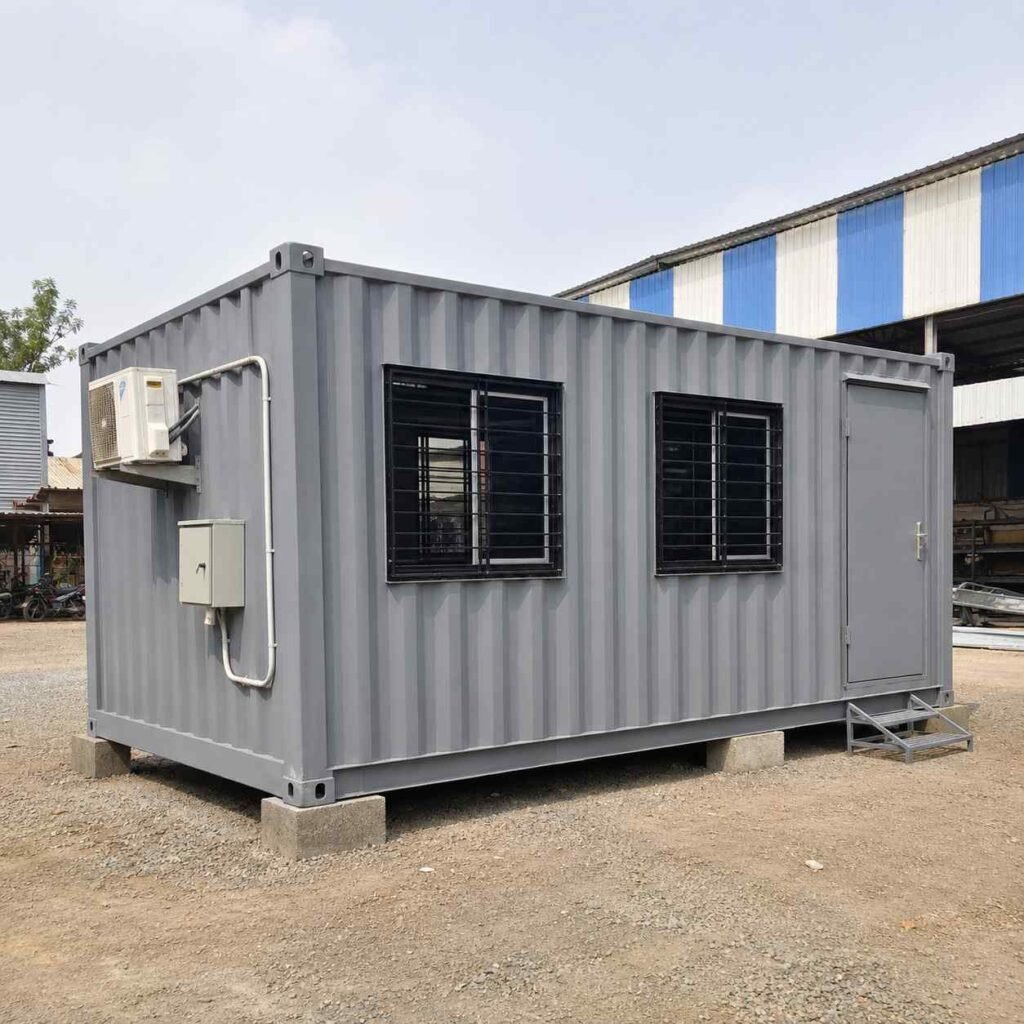
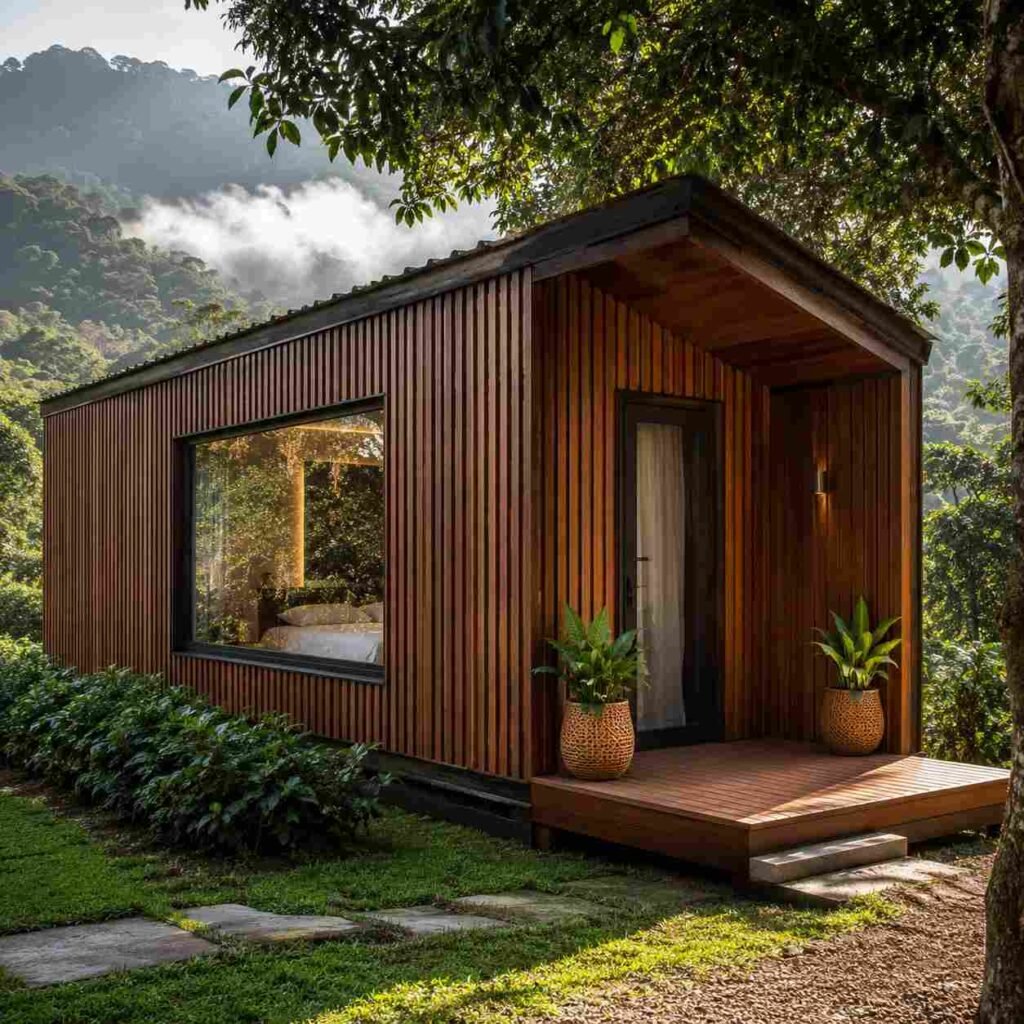
Six years in residential use — corten reaches a stable oxide patina, not active rust. The 15-to-20-year baseline service life delivered in real life.
Coastal footnote. For sites within 5 km of saltwater (Mumbai, Chennai, Vizag, Kochi, Goa, Mangalore), tighten the exterior repaint schedule to every 4 years and inspect the corner castings annually for chloride-driven pitting. The corten itself handles salt better than mild steel — that is what the ASTM B117 rating documents — but maintenance windows shorten in salt-exposed environments.
The maintenance baseline matters more than buyers usually anticipate at quotation time. A generic mild-steel container conversion needs annual repaint cycles to hit 12 years of service. A new-built MS-frame container-style unit needs paint maintenance and a tighter inspection regime for welded joints. The cargo-grade corten skin is the lowest-effort permanent residential envelope of the three options.
When a cargo container house is the right call, and when prefab container homes or our other tiers fit better
The cargo container house is the right call when material origin and certification matter to your buying decision, when 640 sq ft single-unit footprint suits the brief, and when you want the lowest-maintenance permanent residential envelope at a mid-tier price. Farmhouse builds, weekend residences, and single permanent homes on owned plots are where most cargo-grade orders land.
It is not the right call when the brief is genuinely different. Three SAMAN options handle the briefs that fall outside this page:
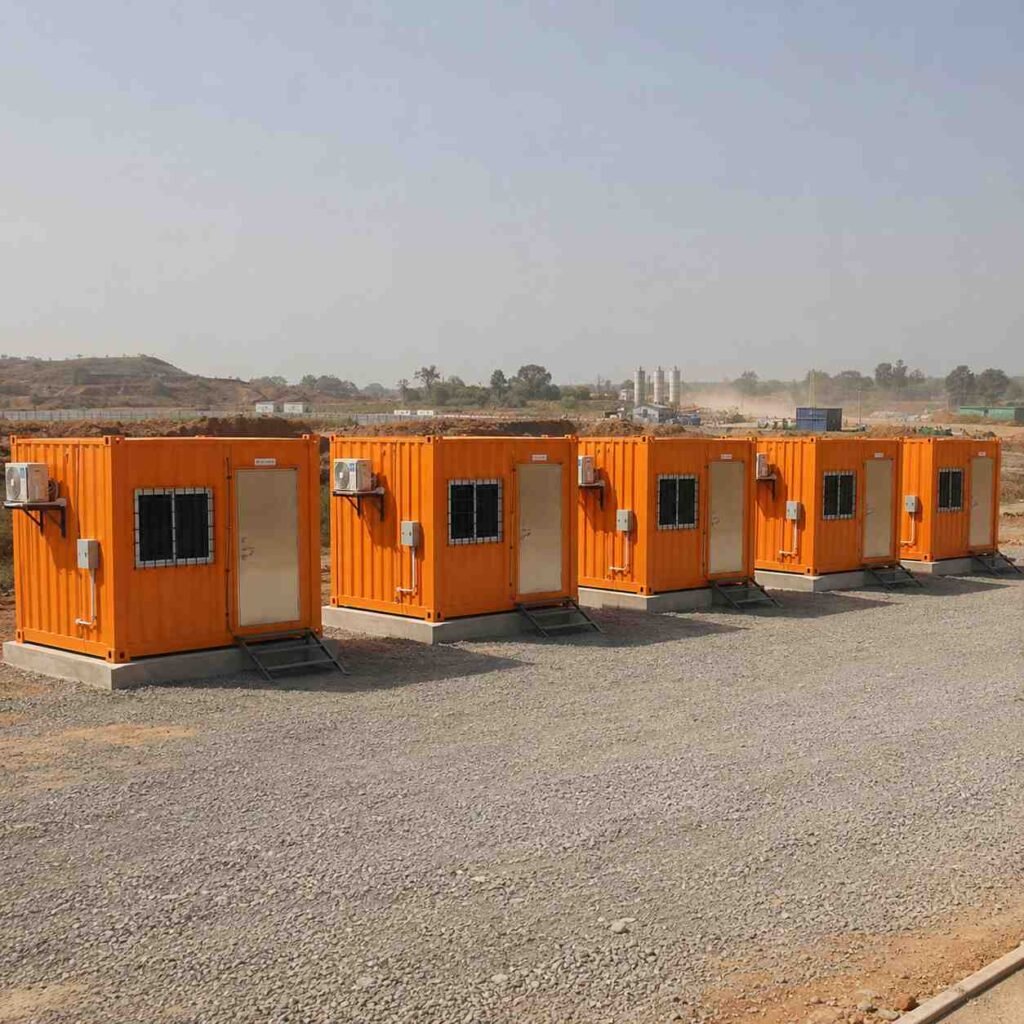
For a single-or-colony build at ₹8.65 lakh per unit on new mild-steel framing in container form-factor — 480 sq ft footprint, procurement scaling from one family residence to a 20-unit project camp — the prefab container homes line is built for that brief.
For a designer finish ladder from ₹5.15 lakh with villa-grade interiors, premium kitchen and bath fittings, and multi-unit villa configurations, the luxury container houses page covers the finish-tier decision.
For a fully-fitted interior at the ₹13.25 lakh tier — 40 × 12 ft factory-finished home with complete fittings inventory at delivery — the prefabricated container house line is interior-first procurement.
Earlier in research and not yet ready to specify a tier? Our container house overview covers the full residential container range with BHK mapping, brick-vs-container basics, and decision tree across all 13 subpages.
Frequently Asked Questions
These questions are the most common pre-order queries on cargo container house enquiries; answers are anchored to the ₹9,25,000 to ₹9,85,000 configured 40 × 16 × 9 ft unit.
What is a cargo container house, and how is it different from a regular shipping container home?
A cargo container house is built by refitting an actual cargo-grade ISO shipping container — IS 2062 corten steel, CSC-plated, originally engineered for sea-cargo dynamic loads. A regular shipping container home uses a generic shipping container without the certified higher steel grade or documented structural certification. The differences in steel grade, wall corrugation, and certification documentation translate to lower maintenance burden and longer service life over a 20-year residential horizon.
How much does a cargo container house cost in India?
A SAMAN cargo container house starts at ₹9,25,000 for the configured 40 × 16 × 9 ft (≈640 sq ft) base unit — inclusive of the IS 2062 corten shell, factory anti-rust treatment, 50 mm PUF insulation, plywood-and-vinyl flooring, pre-wired electrical, a compact wet area, two windows and one door, exterior paint, road transport within the standard zone, and crane placement on your plinth. The upper bound at ₹9,85,000 covers configuration upgrades. Site work (plinth, plumbing stubs, electrical service) and municipal approval are scoped separately.
How long does a cargo container house last for permanent residential use?
The IS 2062 corten skin gives a baseline service life of 15 to 20 years without annual repainting — corten reaches a stable surface oxide and resists further corrosion under ASTM B117 salt-spray conditions. With recommended maintenance (exterior repaint every 5 to 7 years, annual silicone-joint inspection, annual electrical earthing check), the realistic service life extends to 25+ years. Coastal placements within 5 km of saltwater should tighten the repaint cycle to every 4 years.
Does a cargo container house stay cool in Indian summers and run an AC efficiently?
Yes. The 50 mm PUF insulated panel on all walls and the roof has a thermal conductivity around 0.022 W/m·K. A properly shaded 640 sq ft SAMAN cargo container house conditions comfortably to 24°C on a single 1.5-ton split AC under 42°C ambient. Roof insulation matters more than walls in Indian summers because solar load is highest overhead — we use the same insulated panel on the roof, with the option of an external shade structure for hot-dry inland sites.
How is a cargo container house different from your prefab container homes?
Two different products at adjacent price points. The cargo container house at ₹9.25 lakh is built from an actual cargo-grade ISO container with documented CSC + IS 2062 + ISO 1496-1 certification, 40 × 16 ft (≈640 sq ft), and the lower-maintenance baseline of corten. The prefab container home at ₹8.65 lakh is built on new mild-steel framing in container form-factor, 30 × 20 ft (≈480 sq ft), and covers both single-family and 5-to-20-unit colony procurement. Different material origin, different footprint, different procurement logic.
Configure your cargo container house
Share your site location, plinth-ready status, and configuration preferences within the ₹9,25,000 to ₹9,85,000 band — our design team will share a layout drawing and a buildable quote within 48 hours. Call 080886 85440, WhatsApp +91 9708989937, or email sales@samanportable.com.
| Weight | 2560 kg |
|---|---|
| Dimensions | 1219.2 × 487.68 × 274.32 cm |
Shipping and Delivery Information
At SAMAN Portable Office Solutions, we are committed to ensuring a seamless shipping experience for our customers. Our shipping and delivery policy has been crafted to provide you with clear details and expectations when you place an order for our portable cabins or container offices.
Delivery Timeline
Once your order is confirmed, we will process and dispatch your product within 15 to 21 working days. This timeline is calculated from the date we receive your order and ensures that your product is fabricated, inspected, and packed securely for transportation. We strive to adhere strictly to this delivery window, guaranteeing that your order reaches you in a timely manner.
Shipping Costs
Our shipping charges are structured based on the size and type of the trailer used for delivery. Below are the detailed rates:
- For a 40 Feet Open Trailer: The cost is ₹80 per kilometer, excluding Over Dimensional Cargo (ODC) and Regional Transport Office (RTO) charges.
- For a 20 Feet Open Trailer: The cost is ₹60 per kilometer, also excluding ODC and RTO fees.
Note: ODC and RTO charges may vary depending on your location and state regulations. We ensure transparency in our billing and will provide you with an accurate estimate before shipment.
Within Bangalore Shipping Rates
For customers within the Bangalore region, we offer competitive fixed shipping rates for hassle-free delivery:
- 40 Feet Open Trailer: ₹15,000
- 20 Feet Open Trailer: ₹10,000
These rates are designed to be cost-effective while ensuring your product reaches its destination safely and securely. We work with reliable transport partners to provide efficient and on-time delivery services within Bangalore.
At SAMAN Portable Office Solutions, customer satisfaction is our priority. For any queries related to shipping or delivery, please feel free to contact our customer support team. We are here to assist you every step of the way.
Reviews
Clear filtersThere are no reviews yet.